

P0141 on 2003-2006 Mercedes-Benz E-Class: O2 Sensor Heater Fixes & Causes
This code means the heater inside the passenger-side downstream (post-catalytic converter) oxygen sensor has failed. The most likely fix is replacing the sensor. However, it is critical to first check the sensor's electrical connector for oil, a common issue on this engine that requires a separate repair.
- P0141 on this E-Class points to a problem with the heater in the passenger-side, post-catalytic converter O2 sensor.
- Before replacing the sensor, you MUST inspect its electrical connector for engine oil.
- If oil is present, you must also replace the leaking camshaft position sensors and install protective pigtail harnesses to prevent a repeat failure.
- The most common fix is replacing the O2 sensor (Bosch is the OEM brand), but only after verifying the absence of or resolving the oil contamination issue.
- This is a DIY-friendly repair with the correct tools (O2 sensor socket) and diagnostic steps.
What's Unique About the 2003-2006 Mercedes-Benz E-Class
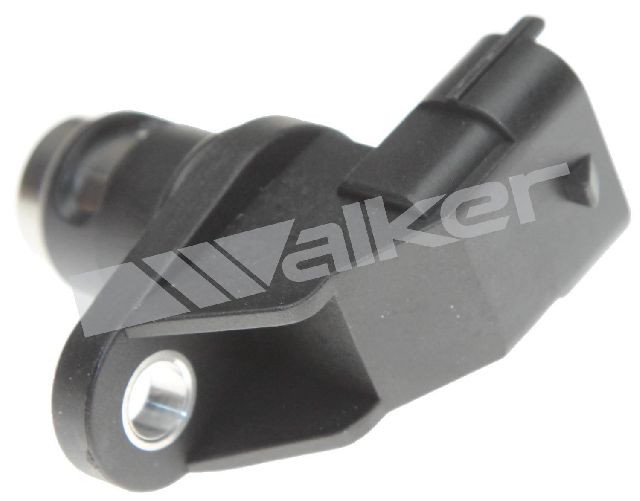
While the P0141 code is common across many cars, on Mercedes-Benz vehicles with the M112 engine, it is frequently caused by a unique problem: leaking camshaft adjuster magnets (often misidentified as camshaft position sensors). Oil from these magnets seeps into the engine's wiring harness and travels, through capillary action, all the way to the oxygen sensor connector. This oil contamination can short out the heater circuit, leading to the P0141 code. Simply replacing the O2 sensor without checking for and fixing the oil leak will likely result in the new sensor failing prematurely. There is a known Mercedes TSB (LI07.07-P-052324) that addresses this oil migration issue, though the full text is not widely public.
Symptoms You May Notice
- Check Engine Light is illuminated
- Failing a vehicle emissions test
- Slightly reduced fuel economy
- Rough idle in some cases
- Replacing the O2 sensor without checking for oil in the harness. The new sensor will likely fail again if the underlying oil leak from the camshaft adjuster magnets is not resolved.
Most Likely Causes
- Failed Oxygen Sensor 🔴 High Probability → Shop Oxygen Sensor The internal heating element of the sensor is a wear item and eventually burns out after many heat cycles. This is a normal failure mode for a vehicle of this age.
How to confirm: Disconnect the sensor and measure the resistance between the two heater wires (typically the two wires of the same color, often white) using a multimeter. A healthy sensor should read between 5-10 ohms. An open circuit (infinite resistance) or a short (near zero resistance) confirms the heater has failed.
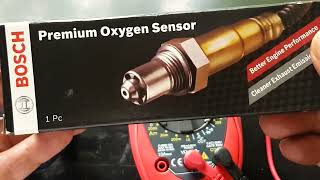
Typical fix: Replace the Bank 1, Sensor 2 oxygen sensor. A torque of 50 Nm is recommended for installation. 🎬 Watch: Step-by-step guide to replacing your downstream O2 sensors.
Est. part cost: $60-$120 - Oil Contamination in Wiring Harness 🔴 High Probability The M112 engine is known for oil leaks from the camshaft adjuster magnets. This oil wicks through the wiring harness and contaminates connectors downstream, including the O2 sensor connector, causing a short circuit.
How to confirm: Unplug the Bank 1, Sensor 2 oxygen sensor and visually inspect the electrical connector on both the sensor side and the harness side. The presence of engine oil is a clear sign of this issue. One owner on MBWorld noted this exact scenario during their P0141 repair.
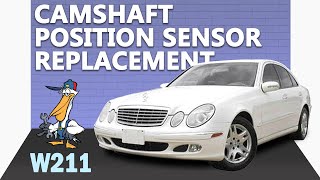
Typical fix: First, replace the leaking camshaft adjuster magnets and their seals. Install special 'pigtail' adapter harnesses (Mercedes part number A2711502733) at the cam magnets 🎬 See how oil wicks through the harness and how to stop it. to stop future oil migration. Thoroughly clean the oil out of the O2 sensor connector with electrical contact cleaner. If the O2 sensor has been fouled, it must also be replaced.
Est. part cost: $50-$100 for cam sensors and pigtails - Damaged Wiring or Blown Fuse ⚪ Low Probability
How to confirm: Visually inspect the wiring leading to the O2 sensor for any signs of melting, chafing, or physical damage. Check the vehicle's fuse box for a blown fuse related to the emissions or O2 sensor circuits (refer to the owner's manual or fuse diagram for locations, often labeled 'AF heater' or specifically Fuse 57 in the front SAM).
Typical fix: Repair the damaged section of wiring. Replace the blown fuse and investigate the cause of the overcurrent condition.
Est. part cost: $5-$20
Rare But Worth Checking
- Faulty Engine Control Unit (ECU): This is very rare. The ECU's internal driver for the heater circuit can fail. This should only be considered after all other possibilities (sensor, wiring, fuses, oil contamination) have been thoroughly ruled out.
Diagnosis Steps
- Scan the vehicle with an OBD-II scanner to confirm the P0141 code is present.
- Locate the Bank 1, Sensor 2 oxygen sensor. On a LHD E-Class, it is on the passenger side, downstream of the catalytic converter.
- Disconnect the sensor's electrical connector. Visually inspect both sides of the connector for any signs of engine oil. This is a critical step on this vehicle.
- If oil is present, the source (leaking camshaft adjuster magnets) must be identified and repaired. The harness connector must be thoroughly cleaned with electrical contact cleaner. It's highly recommended to install pigtail harnesses (A2711502733) at the magnets.
- If no oil is present, inspect the wiring and connector for physical damage, corrosion, or melting.
- Using a multimeter, test the resistance of the heater circuit on the sensor itself (between the two same-colored wires). The reading should be between 5-10 ohms. If it reads as an open circuit (infinite resistance), the sensor's heater is bad and the sensor must be replaced.
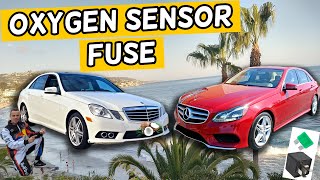
- If the sensor resistance is good, check for a blown fuse in the O2 sensor heater circuit. On the W211, this is typically Fuse 57 (15A) in the Front SAM 🎬 Watch this video to quickly locate your O2 sensor fuses. (engine bay fuse box).
- If the fuse is good, check for 12V power at the harness-side connector with the key on, engine off. If power is missing, there is a wiring issue between the fuse/relay and the sensor.
- If all checks pass, the most likely culprit is still an intermittent failure in the O2 sensor. Replacement is the next logical step.
Parts You'll Likely Need
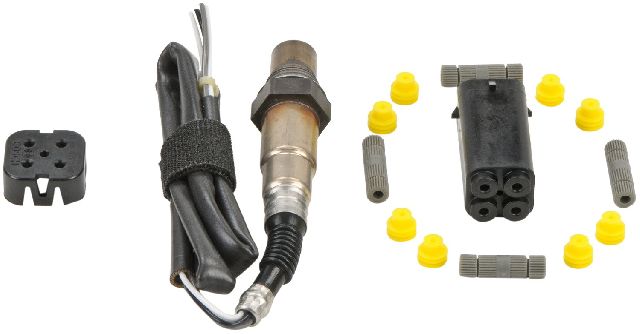
- Oxygen Sensor (Bank 1, Sensor 2)
(OEM #A0035427018)— This is the most common failure point. The internal heating element fails from age or oil contamination.
Trusted brands: Bosch (OEM supplier, part number 17016 or 0258017016)
OEM price range: $100-$150
Aftermarket price range: $60-$120 - Camshaft Adjuster Magnet Pigtail Harness
(OEM #A2711502733)— If oil is found in the O2 sensor connector, it is migrating from leaking cam adjuster magnets. These pigtails are installed at the magnets to stop the oil from contaminating the main engine harness.
Trusted brands: Genuine Mercedes-Benz, VEMO
OEM price range: $25-$40 each
Aftermarket price range: $15-$30 each
Related Codes That Often Appear With This One
- P0161 — P0161 is the identical 'Heater Circuit Malfunction' code but for Bank 2, Sensor 2 (driver's side). If both sides fail at the same time, it could point to a common power or ground issue, or simply that both sensors have reached the end of their service life.
Technical Service Bulletins (TSBs) & Recalls
- A relevant Dealer Technical Bulletin (DTB) for oil contamination in the transmission from a faulty radiator is P-B-27.55/50f.
- A rumored TSB for the engine oil wicking issue is LI07.07-P-052324.
Platform-Specific Known Issues
- The M112 V6 engine family is widely known for developing oil leaks at the camshaft adjuster magnets. Due to capillary action, this oil can travel through the entire engine wiring harness, contaminating various sensors and even the ECU. Finding oil in the O2 sensor connector is a strong indicator of this problem.
Mechanic-Grade Diagnostic Values
- O2 Sensor Heater Element Resistance — expected: 5-10 Ohms at room temperature. Failure: Infinite resistance (open circuit) or near-zero Ohms (short circuit).
- Heater Circuit Voltage at Harness Connector — expected: ~12V (system voltage) with Key On, Engine Off. Failure: No voltage indicates a problem with the power supply, likely a blown fuse or wiring issue.
- Heater Circuit Fuse — expected: Fuse 57 (15A) in the Front SAM (Signal Acquisition Module) should be intact.. Failure: A blown fuse indicates a short circuit, often caused by oil contamination or melted wiring.
- System Voltage (Engine Running) — expected: 13.5V - 14.5V. Failure: Voltage below 13.2V when running may indicate a failing alternator, which can trigger false heater circuit codes.
Hidden / Shadow Codes Worth Checking
- N/A (Enhanced Fault Description): While no specific 'shadow code' is common, a dealer-level scanner (STAR/XENTRY) provides more detail than a generic P-code. It may specify 'heater circuit current too high/low' or 'open circuit', which helps pinpoint the electrical fault more accurately. (see via Mercedes-Benz STAR/XENTRY diagnostic system.)
Scan Tool Commands That Help
- Mercedes-Benz STAR/XENTRY: Guided Test for P0141 / O2 Sensor Heater Actuation — This command allows a technician to manually activate the O2 sensor's heater circuit. It's used to confirm if the ECU driver is functional and if the wiring can carry the load, effectively isolating the fault to the sensor itself if the command works but the sensor doesn't heat up.
Wiring & Ground Locations
- Fuse 57 (f57) — In the Front SAM (Signal Acquisition and Actuation Module), which is the main fuse box in the engine compartment, typically on the driver's side.. This 15A fuse is the direct power source for the O2 sensor heater circuits. If it blows, the heaters will not function. It often blows due to short circuits from oil contamination or melted wiring.
- ME-SFI Control Unit — Located in the electronics box in the engine compartment, usually on the passenger side.. The ground for the O2 sensor heater is not a constant chassis ground. It is a pulse-width modulated (PWM) ground controlled by the ME-SFI (ECU). This means testing the ground wire for continuity to the chassis will give an incorrect reading. The circuit must be tested for voltage between the power and ground wires or diagnosed with a capable scan tool.
- W15/2 — Right front footwell ground point.. While the heater circuit ground is controlled by the ECU, poor body grounds can cause floating voltages and unpredictable electrical issues throughout the vehicle. Ensuring main ground points like this are clean and tight is a good practice when diagnosing any electrical fault.
Real Owner Repair Stories
- MBWorld.org Forums (2004 E320 with 102k miles) — Check Engine Light with codes P0131, P0141, P0151. Also had intermittent 'Battery protection' warnings.
❌ Tried (didn't work) Initially suspected bad gasoline. The CEL was intermittent.
✅ What actually fixed it The underlying issue was a weak battery that was dropping to 10.5V on startup. Replacing the main battery resolved the intermittent O2 sensor codes. This highlights that low system voltage can cause the ECU to misinterpret sensor heater performance. - PeachParts Mercedes-Benz Forum (2000 C280 (M112 engine)) — Check Engine Light with P0141 and P0161 (both downstream heater circuits).
❌ Tried (didn't work) The owner was hesitant to replace both sensors, suspecting a common cause since both failed simultaneously.
✅ What actually fixed it The codes appeared after a cold start and did not return after being cleared. The final suspicion was an intermittent common power supply issue or simply an anomaly, as the problem did not recur after 100+ miles. This shows the fault can sometimes be transient. - MBWorld.org Forums (2003 W203 C180 Kompressor) — Check Engine Light with P0141 and rough idle.
❌ Tried (didn't work) Clearing the code would result in it returning on every restart.
✅ What actually fixed it The owner replaced the Bank 1 Sensor 2 O2 sensor, which fixed the code. However, upon inspection, oil was found in the old sensor's connector. The final, complete repair required tracing this oil back to leaking camshaft adjuster magnets and installing the preventative pigtail harnesses.
OEM Part Supersession History
Bosch 17016→N/A - Still current— N/A
Heads up: Ensure you are using Bosch 17016 (or the equivalent OEM part A0035427018). Other sensors like the Bosch 17017 may have a similar appearance but different connector types or cable lengths and are not correct for this application. Using universal sensors that require splicing wires is a common cause of repeat failures due to improper connections.
Diagnostic Flowchart
Other Known Issues on This Vehicle
Issues unrelated to this code that are worth knowing about as an owner of this generation:
- Sensotronic Brake Control (SBC) Pump Failure 🔴 High — The pump has a pre-programmed service life based on brake actuations. Failure is inevitable, typically occurring around 100,000-200,000 miles. It will trigger a red 'Brake Defective Stop Vehicle' warning. (Ref: Mercedes-Benz extended the warranty on the SBC unit to 25 years with unlimited mileage, and many owners have had it replaced for free, even if the work was done at an independent shop.)
- Valeo Radiator Glycol Contamination 🔴 High — Affects early W211 models (primarily 2003-early 2004) equipped with a Valeo brand radiator. A faulty crimp in the integrated transmission cooler can leak coolant (glycol) into the automatic transmission fluid. (Ref: There was no official recall, but a Dealer Technical Bulletin (DTB) P-B-27.55/50f was issued. The fix involves a glycol test of the ATF; if positive, the radiator and potentially the torque converter and entire transmission need replacement.)
- M112/M113 Harmonic Balancer Failure 🔴 High — The rubber bonding the inner and outer rings of the crankshaft pulley (harmonic balancer) degrades and fails, typically between 70k-120k miles. This can cause the pulley to separate, shredding the belt and potentially damaging the front timing cover and oil pan. (Ref: A recall was issued in some markets for early part numbers (e.g., 112 035 00 00, 112 035 06 00). Owners are advised to visually inspect the rubber for cracks.)
Used vs. New Parts: Buying Guide for This Vehicle
When a used part is the smart pick: A used part is generally not recommended for this repair. The primary failure items are electronic sensors with a finite lifespan or parts contaminated by oil. A used wiring harness pigtail could be considered if a section of your vehicle's harness is physically damaged (e.g., melted), but cleaning your existing connectors is usually sufficient.
Donor-vehicle mileage cap: roughly under 80000 miles for the part to have meaningful remaining life.
What to inspect on the donor part:
- For a harness section: Inspect for any signs of oil saturation, brittleness in the insulation, melted plastic, or corrosion on the pins.
- Avoid any parts that appear to have come from a vehicle with major oil leaks.
OEM-only on this vehicle (don't cheap out):
- Oxygen Sensor: Strongly recommend using the OEM supplier (Bosch) or a genuine Mercedes part. Aftermarket sensors have a high rate of incompatibility or early failure on European vehicles.
- Camshaft Adjuster Magnets: Use genuine or OEM supplier parts to ensure a long-lasting seal against oil leaks.
Aftermarket brands forum-validated for this vehicle:
- Bosch (OES for the oxygen sensor)
- Denso (High-quality alternative for oxygen sensors)
- NTK (High-quality alternative for oxygen sensors)
Brands owners have reported issues with on this vehicle:
- Unnamed or generic 'white-box' sensors from online marketplaces.
- Any 'universal' sensor that requires you to splice wires. The connections are difficult to seal properly and are a frequent point of failure.
Real Owner Stories
Aggregated from forums and TSBs cited above. Mileages and costs reflect what owners reported in those sources.
2003-2005 Mercedes-Benz C320 (W203) M112 3.2L V6
Symptoms: Check Engine Lamp ON with code P0141; discovered oil had contaminated the electrical connector.
What fixed it: Identified leaking camshaft adjuster magnets as the source of oil wicking. Replaced the magnets, installed pigtail adapter harnesses (A2711502733), and cleaned the O2 sensor connector with electrical contact cleaner.
Source hint: MBWorld.org - 'Check Engine Lamp ON - Code P0141 FIXED'
2003-2006 Mercedes-Benz E-Class (W211)
Symptoms: Multiple O2 sensor codes appearing simultaneously, including P0131, P0141, and P0151.
What fixed it: The discussion highlighted checking the battery strength as a weak battery was initially suspected for the multiple codes.
Source hint: MBWorld.org - 'O2 sensor codes. Three at once (P0131, P0141, P0151)'
Related OBD-II Codes
Frequently Asked Questions
Is there a specific TSB for the oil wicking issue on the M112 engine that causes P0141?
What is the specific Mercedes-Benz part number for the 'pigtail' harnesses used to prevent oil migration?
Where is the fuse for the Bank 1, Sensor 2 oxygen sensor heater located on a W211 E-Class?
How can I confirm if my P0141 code is caused by a failed sensor heater or a wiring issue?
Does the M112 engine have a known issue with the crankshaft pulley that I should check while fixing emissions codes?
What is the correct torque specification for installing a new oxygen sensor on this vehicle?
Helpful Videos

We Have This Part in Stock


The information in this article is provided for general reference and educational purposes only. Vehicle specifications, procedures, and part compatibility can vary by production date, trim level, and region. Always consult your vehicle's factory service manual and verify part numbers before purchasing or performing repairs. Safety-critical components such as airbags, seat belts, and braking systems should be installed by a qualified professional.
- Mercedes-Benz E-Class:
- 🧭 Diagnostic Flowchart
- 🎬 Helpful Videos
- 🛍️ Shop This Part
- What's Unique About the 2003-2006 Mercedes-Benz E-Class
- Symptoms You May Notice
- Most Likely Causes
- Rare But Worth Checking
- Diagnosis Steps
- Parts You'll Likely Need
- Related Codes That Often Appear With This One
- Technical Service Bulletins (TSBs) & Recalls
- Platform-Specific Known Issues
- Mechanic-Grade Diagnostic Values
- Hidden / Shadow Codes Worth Checking
- Scan Tool Commands That Help
- Wiring & Ground Locations
- Real Owner Repair Stories
- OEM Part Supersession History
- Other Known Issues on This Vehicle
- Used vs. New Parts: Buying Guide for This Vehicle
- Real Owner Stories
- 2003-2005 Mercedes-Benz C320 (W203) M112 3.2L V6
- 2003-2006 Mercedes-Benz E-Class (W211)
- Related OBD-II Codes
- Frequently Asked Questions
- 🎟️ Get 5% Off