

P0141 on 2017-2024 Subaru Impreza: O2 Sensor Heater Circuit Causes and Fixes
This code almost always means the heater element inside the rear (downstream) oxygen sensor has failed. Replacing the sensor is the typical fix. Expect to pay $100-$180 for an OEM part (Subaru #22690AB010) or $50-$100 for a quality aftermarket replacement like Denso #234-4513. Before replacing, check the A/F heater fuse in the under-hood fuse box.
- P0141 on a 2017-2024 Impreza points directly to a fault in the rear O2 sensor's heater.
- The most common fix is to replace the rear (downstream) O2 sensor, OEM part number 22690AB010 or a quality aftermarket equivalent like Denso 234-4513.
- Before buying a new sensor, perform a quick visual inspection of the wiring for damage and check the 'A/F Heater' fuse in the under-hood fuse box.
- This is a DIY-friendly repair with a difficulty of 2 out of 5. You will likely need a special 22mm (7/8") O2 sensor socket to perform the replacement.
- Do not confuse this with the front (upstream) sensor, which is a different part and will not fix this specific code.
- Avoid cheap, unbranded sensors from online marketplaces as they have a high failure rate; stick with OEM, Denso, or NTK.
What's Unique About the 2017-2024 Subaru IMPREZA

For the 2017-2024 Impreza with the 2.0L FB20D engine, the P0141 code is a very common and straightforward issue. Subaru has acknowledged this through Technical Service Bulletin (TSB) #09-115-24R, 🎬 Watch: Common causes and fixes for the P0141 code. which introduced a redesigned rear oxygen sensor. The new sensor features an 'optimized coating application to help prevent cracking within the internal surfaces,' which reduces the chance of short or open circuits that cause the P0141 code. Despite the new part, the underlying cause remains the same: the sensor's heater element fails due to heat cycles and age. The issue is almost always the sensor itself.
Diagnostic Flowchart

Tap your situation to follow the diagnostic path that matches what you're seeing on this vehicle.
Symptoms You May Notice
- Check Engine Light is on
- Failing a vehicle emissions test
- Potentially a slight decrease in fuel economy
- On some Subaru models, the activation of the Check Engine Light for an emissions fault like P0141 may also disable features like Cruise Control and EyeSight as a precaution.
- Replacing the wrong oxygen sensor (e.g., the front/upstream Air/Fuel Ratio sensor). P0141 specifically refers to Bank 1, Sensor 2, which is the rear/downstream sensor.
- Replacing the catalytic converter. While other codes might point to a bad converter, P0141 is specific to the sensor's heater circuit, not the converter's efficiency.
- Using cheap, unbranded aftermarket sensors. Many owners report that low-quality sensors from sources like Amazon or eBay are often faulty out of the box or fail quickly. Sticking to OEM or reputable brands like Denso/NTK is highly recommended.
Most Likely Causes

- Failed Rear Oxygen Sensor (Bank 1, Sensor 2) 🔴 High Probability → Shop Oxygen Sensor The internal heater element is subjected to thousands of heat cycles and eventually burns out. TSB #09-115-24R indicates an issue with potential internal cracking on internal surfaces, which the redesigned part aims to fix.
How to confirm: Unplug the sensor and test the resistance across the two heater circuit pins (usually the two wires of the same color) with a multimeter. An open circuit (infinite resistance or 'OL') confirms the heater has failed. A good sensor should have a resistance between 2 and 10 ohms.
Typical fix: Replace the rear (downstream) oxygen sensor. Use an O2 sensor socket for easier removal.
Est. part cost: $100-$180 - Damaged Wiring or Connector 🟡 Medium Probability The sensor is located under the vehicle and is exposed to road debris, moisture, and heat, which can damage the wiring harness or corrode the connector pins over time. The connector is often clipped to a bracket on the frame rail or transmission.
How to confirm: Visually inspect the wiring harness from the sensor to its connection point for any signs of breaks, melting, or chafing. Unplug the connector and check for corrosion, moisture, or bent pins.
Typical fix: Repair the damaged section of the wiring harness or clean/replace the connector. If a sensor is replaced multiple times and the code returns, a wiring issue is highly likely.
Est. part cost: $10-$50 - Blown Fuse ⚪ Low Probability A short in the heater circuit wiring or a faulty sensor can cause the corresponding fuse to blow as a protective measure.
How to confirm: Locate the fuse for the O2 sensor heater circuit. It is typically in the under-hood fuse box and may be labeled 'A/F Heater' or similar. Check the owner's manual for the exact location and test the fuse for continuity.
Typical fix: Replace the blown fuse. If it blows again, a short circuit in the wiring or sensor must be diagnosed and repaired.
Est. part cost: $1-$5
Rare But Worth Checking
- Faulty Engine Control Module (ECM): → Shop Engine Control Module (ECM) This is extremely rare. The ECM's driver for the heater circuit can fail, but all other potential causes should be exhaustively ruled out before considering ECM replacement.
- Loose Gas Cap: While a loose gas cap typically triggers an EVAP system code (like P0457), some owners have anecdotally reported a P0141 code appearing and then clearing after tightening the gas cap. This is not a direct cause but worth checking as it is a zero-cost fix.
Diagnosis Steps
- Read the code with an OBD-II scanner to confirm P0141 is present.
- Visually inspect the rear oxygen sensor's wiring harness and connector for any obvious damage, melting, or corrosion.
- Check the fuse box under the hood for a blown fuse related to the O2 sensor or 'A/F heater' circuit.
- If the wiring and fuse are okay, disconnect the sensor. Use a multimeter set to Ohms (Ω) to measure the resistance between the two heater pins on the sensor side (typically the two wires of the same color). A reading of 'OL' (over-limit/infinite) means the heater element is broken and the sensor must be replaced. A normal reading is typically between 2 and 10 ohms.
- With the key on and engine off, check for 12V power at the corresponding pin on the harness-side connector. If no power is present, the issue lies upstream in the wiring or fuse box.
- If power and ground are present at the harness and the sensor's heater resistance is within spec, there may be an intermittent connection issue or a rare ECM fault.
Parts You'll Likely Need
- Rear Oxygen Sensor (Downstream)
(OEM #22690AB010)— This is the component that contains the heater element that fails and triggers the P0141 code. The OEM part was updated to be more durable per TSB 09-115-24R.
Trusted brands: Subaru (OEM), Denso (OEM Manufacturer) #234-4513, NTK #24651
OEM price range: $120-$180
Aftermarket price range: $50-$115
Related Codes That Often Appear With This One
- P0137 — Both codes relate to the Bank 1 Sensor 2. P0137 indicates low voltage, which can occur alongside a heater fault. This is mentioned in TSB #09-115-24R.
- P0138 — Both codes relate to the Bank 1 Sensor 2. P0138 indicates high voltage. This is mentioned in TSB #09-115-24R.
- P0140 — Both codes relate to the Bank 1 Sensor 2. P0140 indicates no activity from the sensor, which can be a consequence of the heater not working. This is mentioned in TSB #09-115-24R.
Technical Service Bulletins (TSBs) & Recalls
- 09-115-24: Mentions P0141 in a list of O2 Sensor Circuit codes for Bank 1 Sensor 2.
- 09-115-24R: A revision of the above TSB, also listing P0141. It details that new sensors have an 'optimized coating' to prevent internal cracks and short circuits. It applies to 2017-24 Impreza & Crosstrek, among other models.
Platform-Specific Known Issues
- Subaru Technical Service Bulletin (TSB) #09-115-24R lists P0141 along with P0137, P0138, and P0140. It announces a redesigned sensor to address these codes, caused by potential internal cracking leading to open/short circuits. The part number itself did not change, but newer stock from Denso is of the improved design.
Mechanic-Grade Diagnostic Values
- Rear O2 Sensor Heater Element Resistance — expected: Between 2 and 10 Ohms when cold. Some sources cite a tighter range of 5-8 Ohms.. Failure: A reading of infinite resistance (OL) indicates an open circuit (burned out element). A reading near zero indicates a short circuit.
- Voltage at Harness Connector (Heater Power Pin) — expected: 12V (battery voltage) with key on, engine off.. Failure: 0V or significantly low voltage indicates a problem with the fuse, relay, or wiring from the power distribution box.
- Voltage at Harness Connector (Heater Ground/Control Pin) — expected: This is a duty-cycled ground controlled by the ECM. With a multimeter, it may show a fluctuating voltage or an average voltage (e.g., 7V). With an oscilloscope, a square wave will be visible when the heater is active.. Failure: A constant 0V or 12V may indicate a wiring short or a failed ECM driver.
- Live Data - Rear O2 Sensor Voltage (Sensor Signal, not Heater) — expected: After warm-up, should be a relatively stable voltage, typically between 0.6V and 0.8V. It does not oscillate rapidly like the front sensor.. Failure: Voltage that is stuck low (near 0V) or high (near 1V) can indicate a sensor or wiring issue, though this is not directly related to the P0141 heater code.
Scan Tool Commands That Help
- Subaru Select Monitor (SSM) or equivalent professional scanner: Current Data Display > O2 Heater Diagnosis — This live data parameter will show the status of the heater circuit as 'ON' or 'OFF' as commanded by the ECM. This helps confirm if the ECM is attempting to activate the heater. If the command is 'ON' but the heater isn't working (confirmed by other tests), it points to the sensor or wiring. If the command is always 'OFF', it could suggest an ECM logic issue.
Wiring & Ground Locations
- Rear O2 Sensor Connector (B55) — The sensor is located on the exhaust pipe, just after the catalytic converter. The wiring harness runs up the passenger side of the transmission and the main connector is typically clipped to a bracket on top of the transmission bellhousing.. This connector is a common point for moisture intrusion or damage. A poor connection here will interrupt the heater circuit and cause a P0141 code.
- Main Engine Ground — On the FB20D engine, a primary engine ground strap bolts to the top of the engine block near the starter motor, on the right (passenger) side.. A loose or corroded main engine ground can cause a multitude of floating ground issues and erratic behavior in various sensors, including the oxygen sensors, which rely on a solid ground reference.
- Heater Circuit Wiring — The two heater wires on the sensor itself are typically the same color (e.g., two white or two black wires). These correspond to the power and ground control pins on the vehicle's harness. The extension harness that runs along the transmission is a straight-through connection (Pin 1 to Pin 1, etc.), though wire colors may not match from one side to the other.. Correctly identifying the two heater circuit wires is essential for performing resistance and voltage tests.
Real Owner Repair Stories
- Ultimate Subaru Message Board (Subaru (model not specified, but general principle applies)) — P0141 code and a rough idle.
❌ Tried (didn't work) Initial diagnosis focused on the O2 sensor itself.
✅ What actually fixed it The P0141 code was resolved by finding and properly seating the O2 sensor's wiring harness connector. The separate rough idle issue was caused by an intake manifold leak, confirming that P0141 does not typically cause driveability problems. - Reddit r/WRX (2006 Subaru WRX) — Recurring bad oxygen sensor code after replacing the sensor with a cheap aftermarket part and hardwiring it.
❌ Tried (didn't work) Replacing the sensor with a cheap Bosch unit and cutting off the factory connector.
✅ What actually fixed it The owner ordered a proper Denso (OEM equivalent) sensor and a new female connector plug to restore the factory wiring configuration. It was confirmed that the extension harness on top of the transmission is a straight pin-to-pin connection, which is critical for wiring the new plug correctly. - Reddit r/SubaruForester (2020 Subaru Forester (shares platform/engine with Impreza)) — Intermittent P0141 Check Engine Light that would turn off on its own after a few drive cycles.
❌ Tried (didn't work) Replacing the gas cap. Waiting for the light to be on to take it to the dealer, but it would turn off.
✅ What actually fixed it The user was advised by others that this is a classic symptom of a failing O2 sensor heater. The intermittent nature is common as the heater element begins to fail. The final fix is to replace the sensor, even if the light is not currently illuminated.
Helpful Videos

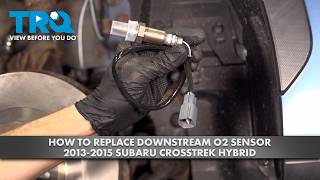
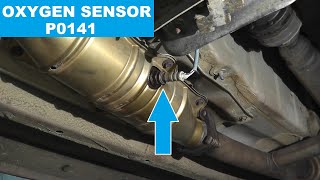
We Have This Part in Stock
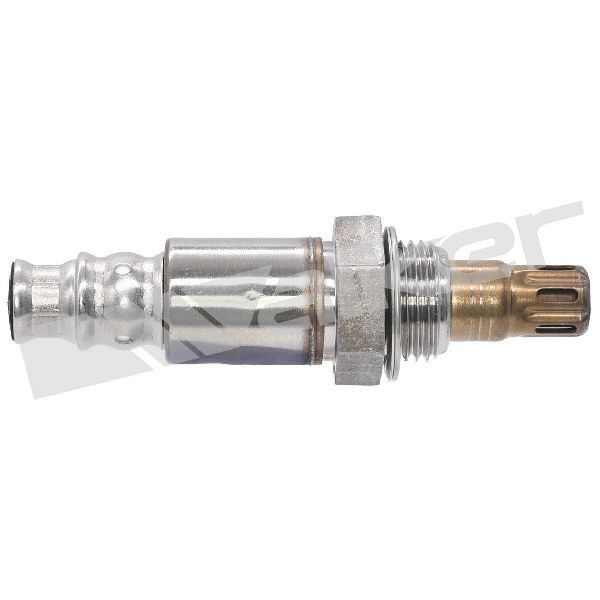
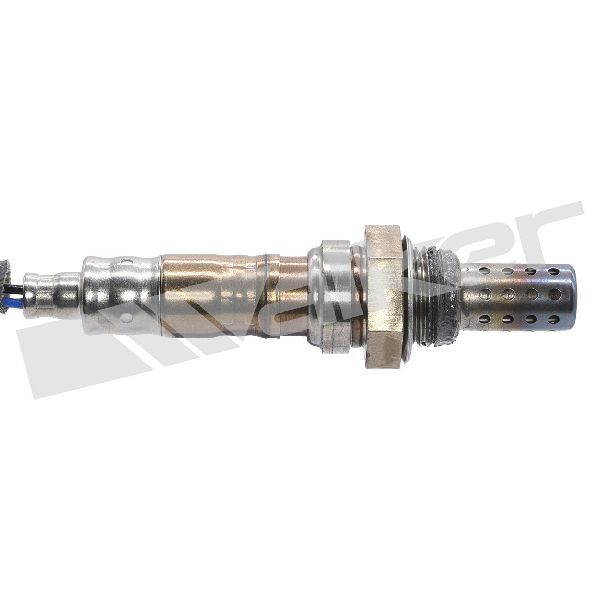

The information in this article is provided for general reference and educational purposes only. Vehicle specifications, procedures, and part compatibility can vary by production date, trim level, and region. Always consult your vehicle's factory service manual and verify part numbers before purchasing or performing repairs. Safety-critical components such as airbags, seat belts, and braking systems should be installed by a qualified professional.
- Subaru IMPREZA:
- 🧭 Diagnostic Flowchart
- 🎬 Helpful Videos
- 🛍️ Shop This Part
- What's Unique About the 2017-2024 Subaru IMPREZA
- Symptoms You May Notice
- Most Likely Causes
- Rare But Worth Checking
- Diagnosis Steps
- Parts You'll Likely Need
- Related Codes That Often Appear With This One
- Technical Service Bulletins (TSBs) & Recalls
- Platform-Specific Known Issues
- Mechanic-Grade Diagnostic Values
- Scan Tool Commands That Help
- Wiring & Ground Locations
- Real Owner Repair Stories
- 🎟️ Get 5% Off