

P0141 on 2017-2024 Subaru Impreza: O2 Sensor Heater Circuit Causes and Fixes
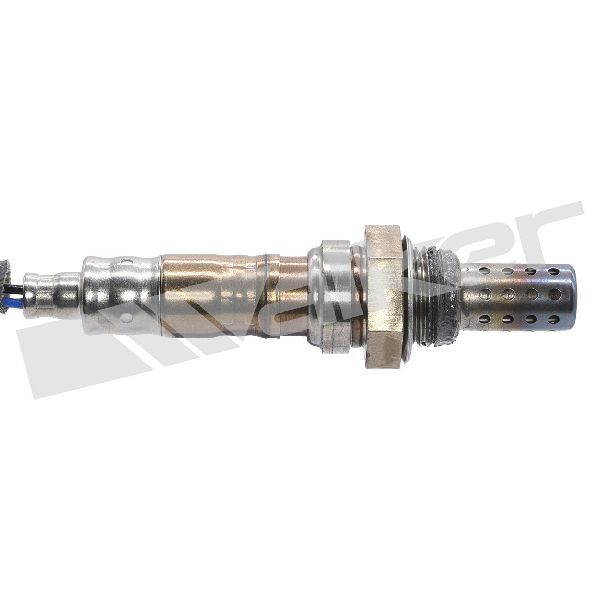
On a 2017-2024 Impreza, P0141 almost always means the internal heater in the rear (downstream) oxygen sensor has failed. The most common fix is to replace the sensor. Expect to pay around $100-$180 for an OEM part (Subaru #22690AB010) or $50-$100 for a quality aftermarket replacement from brands like Denso (#234-4513) or NTK.
- P0141 on a 2017-2024 Impreza almost always means you need a new rear oxygen sensor.
- Before buying any parts, check the 'A/F Heater' fuse in the fuse box under the hood.
- Use a quality OEM, Denso, or NTK replacement sensor (Part #22690AB010 or Denso #234-4513) for a reliable fix. Avoid cheap, unbranded sensors as they are a common cause of repeat failures.
- This is a DIY-friendly job, but you will need a special 22mm (7/8") slotted oxygen sensor socket. Penetrating oil and a breaker bar are recommended as the sensor can be seized in the exhaust pipe.
- You can continue to drive the car as long as the light isn't flashing, but you will fail an emissions test and your cruise control may be disabled until it's fixed.
What's Unique About the 2017-2024 Subaru Impreza
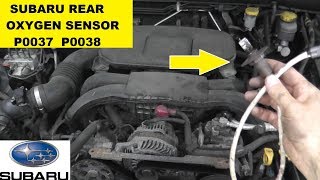
For the 2017-2024 Impreza, the P0141 code is a very common and straightforward issue. 🎬 Watch: A simple explanation of the P0141 heater circuit fault. The failure of the rear O2 sensor's heater element is a known issue, and Subaru has released a redesigned sensor to improve durability. Despite the updated part, the root cause remains the same: the sensor's internal heater simply wears out from countless heat cycles. The diagnosis is typically direct, with the sensor itself being the culprit in over 90% of cases.
Symptoms You May Notice
- Check Engine Light is on
- Vehicle will fail an emissions test
- Cruise control and/or EyeSight systems may be disabled as a precaution
- Slight decrease in fuel economy
- The Check Engine Light may turn on and off intermittently, especially with changes in ambient temperature (e.g., only appearing on cold days).
- Replacing the front (upstream) Air/Fuel Ratio sensor. P0141 is specific to the rear (downstream) sensor.
- Replacing the catalytic converter. A bad converter typically sets a P0420 code, not a P0141 heater circuit code.
- Using cheap, unbranded aftermarket sensors. Many owners on forums report that low-quality sensors from online marketplaces are often faulty out of the box or fail quickly, causing the code to return. Sticking to OEM, Denso, or NTK is highly recommended.
Most Likely Causes
- Failed Rear Oxygen Sensor 🔴 High Probability → Shop Oxygen Sensor The internal heater element is a known failure point due to age and heat cycles. Subaru has acknowledged this across multiple models and introduced a redesigned sensor for better longevity.
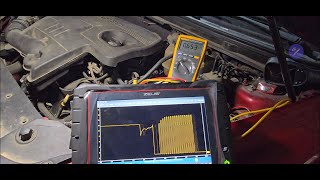
How to confirm: With a multimeter, disconnect the sensor and measure the resistance between the two heater pins (usually the two wires of the same color). 🎬 See how to test oxygen sensor heater circuits with a multimeter. A reading of 'OL' (over-limit) or infinite resistance indicates an open circuit and a failed heater. The expected resistance is typically low, between 2 and 10 ohms when cold.
Typical fix: Replace the rear (Bank 1, Sensor 2) oxygen sensor. 🎬 Watch: How to replace the rear oxygen sensor on a Subaru.
Est. part cost: $50-$180 - Blown Fuse ⚪ Low Probability
How to confirm: Locate the fuse for the O2 sensor heater circuit, labeled 'A/F Heater', in the under-hood fuse box. On the 2012-2016 generation, which is similar, this was fuse #12 in the passenger compartment, but for the 2017+ models, it is confirmed to be in the engine bay box. Visually inspect the fuse or test it for continuity.
Typical fix: Replace the blown fuse. If the new fuse blows immediately, it indicates a short circuit in the wiring or the sensor itself that needs to be diagnosed.
Est. part cost: $1-$5 - Damaged Wiring or Connector ⚪ Low Probability The sensor wiring is located under the vehicle and can be susceptible to damage from road debris, corrosion, or improper repairs. The main connector is often clipped to a bracket on top of the transmission bellhousing and can be a point of failure.
How to confirm: Visually inspect the wiring harness and connector leading to the rear O2 sensor for any signs of fraying, melting, corrosion, or loose pins. Check for 12V power at the harness-side connector with the ignition on. If a new sensor doesn't fix the code, a wiring fault is the next logical step.
Typical fix: Repair the damaged section of wiring or clean/replace the connector.
Est. part cost: $10-$50
Rare But Worth Checking
- Faulty Engine Control Module (ECM): → Shop Engine Control Module (ECM) This is extremely rare. Before condemning the ECM, all other possibilities (sensor, wiring, fuses) must be exhaustively ruled out by a professional.
Diagnosis Steps
- Scan for any other DTCs. Address other codes first if they are present.
- Visually inspect the rear oxygen sensor's wiring harness and connector for any obvious damage, melting, or corrosion. The connector is often found clipped to the top of the transmission.
- Locate the 'A/F Heater' fuse in the under-hood fuse box and verify it is not blown.
- Disconnect the O2 sensor. With the key on and engine off, use a multimeter to check for 12V power on the heater circuit pin of the vehicle's harness connector.
- On the sensor side of the connector, measure the resistance between the two heater pins (typically the two wires of the same color). A reading of infinity or 'OL' confirms the heater element has failed. A normal reading is usually between 2 and 10 ohms.
- If the sensor's resistance is good but power is missing at the harness, there is a wiring issue between the fuse box and the sensor that must be traced.
- If all wiring and fuses are good, and the sensor's heater element has failed its resistance test, replace the rear oxygen sensor.
Parts You'll Likely Need
- Rear Oxygen Sensor (Bank 1, Sensor 2)
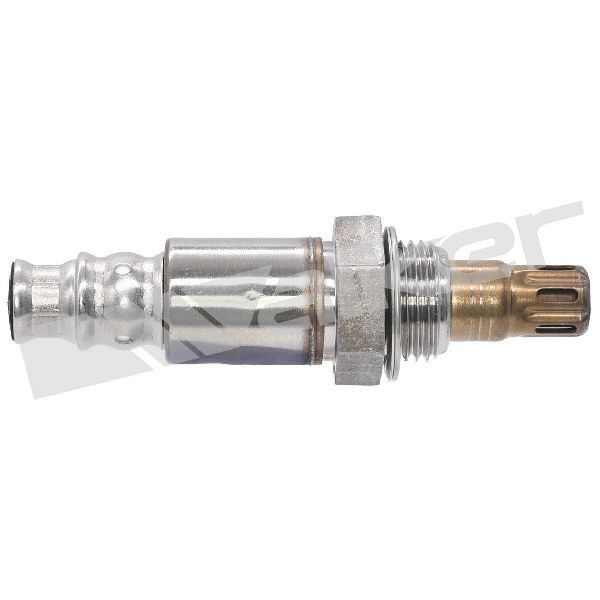
(OEM #22690AB010)— This is the most common failure for code P0141, as the internal heater element burns out over time.
Trusted brands: Denso (OEM supplier, part #234-4513), NTK
OEM price range: $100-$180
Aftermarket price range: $50-$100
Technical Service Bulletins (TSBs) & Recalls
- TSB 09-115-24R: While the number appears to be a document ID, this bulletin is widely referenced for other models like the Outback and Crosstrek. It discusses a redesigned rear oxygen sensor with an 'optimized coating application to help prevent cracking' that can lead to heater circuit faults (P0141) and other O2 sensor codes. This indicates Subaru is aware of the issue and the fix is an improved part.
- TSB Bulletin #09-115-24: This manufacturer service bulletin explicitly lists P0141 (O2 Sensor Heater Circuit Bank 1 Sensor 2) as a primary diagnostic concern alongside related voltage and activity codes for the rear sensor.
Platform-Specific Known Issues
- On some Subaru models, an emissions fault like P0141 can cause the vehicle to disable the Cruise Control and EyeSight systems as a safety precaution. This functionality is typically restored once the code is cleared and the fault is fixed.
- The issue can be intermittent, especially in its early stages. Some owners report the Check Engine Light only comes on during cold weather, then turns off by itself after a day or two, which can make diagnosis frustrating if the code is not stored.
Mechanic-Grade Diagnostic Values
- Rear O2 Sensor Heater Element Resistance — expected: 2 to 10 Ohms when cold. Some service data specifies a tighter range of 4-6 Ohms.. Failure: A reading of 'OL' (infinite resistance) indicates a burned-out open circuit. A reading near 0 Ohms indicates a short circuit.
- Voltage at Harness Connector (Heater Power Pin) — expected: Approximately 12V (battery voltage) with key on, engine off.. Failure: A reading of 0V indicates a blown fuse or open wire. A reading significantly lower than battery voltage (e.g., 6-7V) indicates high resistance in the power supply wiring, often due to corrosion.
- Scan Tool Heater Monitoring — expected: Sensor temperature should reach operating temperature (approx. 600°F) within 2 minutes of a cold start.. Failure: A slow or non-existent temperature rise on the scan tool's live data stream for Bank 1 Sensor 2 confirms the heater is not functioning.
Scan Tool Commands That Help
- Subaru Select Monitor (SSM) or equivalent: Heater Actuation Test (e.g., PCM -> Actuation Test -> Heater Bank 1 Sensor 2) — This bidirectional command allows a technician to manually force the O2 sensor's heater circuit ON. It is used to confirm if the ECM, fuse, relay, and wiring are capable of delivering power to the sensor, isolating the fault to either the sensor itself or the upstream circuit.
Wiring & Ground Locations
- E25 — The 4-pin harness-side connector for the rear O2 sensor, often located under the vehicle on the passenger side and clipped to the underbody or frame.. This is the primary point for testing voltage from the vehicle harness and resistance on the sensor. Corrosion or damage at this connector is a common cause of failure.
- Exhaust Ground Strap — A braided metal strap connecting the exhaust system to the vehicle chassis or engine block.. While not part of the heater circuit itself, a corroded or broken exhaust ground strap is a known Subaru issue that can cause various electrical and sensor-related faults. It should be inspected as part of a thorough diagnosis.
- Heater Circuit Ground Control — The ground side of the heater circuit is not a constant chassis ground; it is controlled (switched on and off) by the Engine Control Module (ECM).. This means testing for ground at the harness connector with the key off will show an open circuit. The ECM provides the ground path only when it commands the heater to turn on. A technician can test this by checking for a pulsing ground signal with the engine running.
Real Owner Repair Stories
- Reddit user on r/subaru (2021 Subaru Outback 2.5L) — P0141 code that returned 72 seconds after startup, even after replacing the sensor.
❌ Tried (didn't work) Replacing the rear O2 sensor., Clearing the code., Cleaning the nearby ground cable.
✅ What actually fixed it The user diagnosed the problem as a voltage drop in the wiring harness, measuring only 6.7-7V at the heater power pin instead of the required ~12V. The final fix was to repair the wiring to restore full voltage. - Ultimate Subaru Message Board user (Subaru (model not specified)) — P0141 code and a separate rough idle issue.
❌ Tried (didn't work) Initial diagnosis focused on the sensor being faulty.
✅ What actually fixed it The P0141 code was resolved by finding and properly seating the O2 sensor's wiring harness connector, which was loose. The separate rough idle was fixed by repairing an intake manifold vacuum leak, confirming the two issues were unrelated. - The Subaru Forums user (2019 Impreza 2.0L with 40k miles) — Recurring P0141 code and fluctuating RPMs.
❌ Tried (didn't work) Replacing the OEM rear O2 sensor twice at the dealer.
✅ What actually fixed it The user was still diagnosing, but the community consensus was that the dealer was repeatedly misdiagnosing the issue. The actual cause was almost certainly a wiring problem (lack of 12V power or a bad ground) that was being overlooked in favor of just replacing the sensor again.
OEM Part Supersession History
22690AB010→22690AB010 (Redesigned)— Subaru TSB 09-115-24R announces a redesigned sensor to address internal cracking that leads to heater circuit faults. The new sensor has an 'optimized coating application' for improved durability.
Heads up: The OEM part number did not change. The new, improved part can be identified by the updated Denso part number engraved on the sensor body itself. Using the old-stock version of the part may lead to a repeat failure.
Model Year Variations Within This Range
- 2017-2024: No significant variations related to P0141 exist within this generation. The cause, diagnosis, and repair are consistent across all model years in this range, as confirmed by TSB 09-115-24R which applies to the entire generation.
Diagnostic Flowchart
Real Owner Stories
Aggregated from forums and TSBs cited above. Mileages and costs reflect what owners reported in those sources.
2019 Subaru Impreza 2.0 DOHC — 40000 miles
Symptoms: Check engine light came on with code P0141. The RPMs were also going up and down until the dealer performed a hard reset.
What fixed it: Problem was not solved after multiple repairs. The owner replaced the same OE sensor twice in two years, but the P0141 code returned.
Cost: $700
Source hint: The Subaru Forums
2019 Subaru Impreza Premium
Symptoms: Experienced an intermittent check engine light that would appear for a day when the weather got cold, then go away by the time they reached a shop. Scanned at AutoZone as Secondary DTC: P0141 O2 Heater Circuit.
What fixed it: No fix reported by the owner, though community members suggested the heater circuit was failing and would eventually require sensor replacement.
Source hint: Reddit r/subaruimpreza
Subaru Impreza/Crosstrek
Symptoms: P0141 code was present, but bench-testing the O2 sensors showed they were still producing voltage.
What fixed it: Discovered the root cause was not the sensor itself, but a poorly seated wiring harness connector.
Source hint: Ultimate Subaru Message Board
2018-2024 Subaru Crosstrek (2.0L)
Symptoms: P0141 OBD code appeared. Owner was advised it was safe to drive for short trips as long as the light wasn't flashing.
What fixed it: Replaced the sensor with an OEM NTK or Denso unit. Used a breaker bar and O2 sensor socket to remove the stubborn original sensor.
Source hint: Reddit r/Crosstrek
Related OBD-II Codes
Frequently Asked Questions
Why did my Cruise Control and EyeSight stop working when the P0141 code appeared on my Impreza?
Is there a TSB for the P0141 code on my 2017-2024 Impreza?
Where is the fuse for the O2 sensor heater located on the 2017+ Impreza?
My check engine light only comes on during cold weather and then turns off. Could this still be P0141?
I replaced the rear O2 sensor on my Impreza but the P0141 code came back. What else could it be?
What brand of oxygen sensor should I use for my Impreza or Crosstrek?
Helpful Videos

We Have This Part in Stock

The information in this article is provided for general reference and educational purposes only. Vehicle specifications, procedures, and part compatibility can vary by production date, trim level, and region. Always consult your vehicle's factory service manual and verify part numbers before purchasing or performing repairs. Safety-critical components such as airbags, seat belts, and braking systems should be installed by a qualified professional.
- Subaru Impreza:
- 🧭 Diagnostic Flowchart
- 🎬 Helpful Videos
- 🛍️ Shop This Part
- What's Unique About the 2017-2024 Subaru Impreza
- Symptoms You May Notice
- Most Likely Causes
- Rare But Worth Checking
- Diagnosis Steps
- Parts You'll Likely Need
- Technical Service Bulletins (TSBs) & Recalls
- Platform-Specific Known Issues
- Mechanic-Grade Diagnostic Values
- Scan Tool Commands That Help
- Wiring & Ground Locations
- Real Owner Repair Stories
- OEM Part Supersession History
- Model Year Variations Within This Range
- Real Owner Stories
- 2019 Subaru Impreza 2.0 DOHC — 40000 miles
- 2019 Subaru Impreza Premium
- Subaru Impreza/Crosstrek
- 2018-2024 Subaru Crosstrek (2.0L)
- Related OBD-II Codes
- Frequently Asked Questions
- 🎟️ Get 5% Off