

P0141 on 2020-2024 Subaru Outback 2.5L: O2 Sensor Heater Circuit Causes and Fixes
On a 2020-2024 Subaru Outback, P0141 almost always means the rear oxygen sensor's internal heater has failed. This is a known issue covered by a Technical Service Bulletin (TSB 09-115-24R). Replacing the rear O2 sensor with the updated OEM part is the definitive fix, costing around $150-$270 for the part. The repair is considered DIY-friendly.
- P0141 on a 2020-2024 Outback is almost certainly a failed rear oxygen sensor due to a known design flaw.
- A Subaru Technical Service Bulletin (TSB 09-115-24R) exists for this exact problem.
- For a lasting repair, use the updated OEM Denso sensor (Subaru P/N 22690AB08A).
- The repair is DIY-friendly with the right tool (a 22mm or 7/8" O2 sensor socket) and can be done in about an hour.
- Before replacing the sensor, perform a quick visual check of the wiring and the related 'A/F Heater' fuse, and confirm 12V at the harness.
What's Unique About the 2020-2024 Subaru Outback
For this specific generation of Subaru Outback, the P0141 code is not just a random failure; it's a well-documented issue. Subaru issued Technical Service Bulletin #09-115-24R acknowledging a weakness in the original rear O2 sensors across several models, including the 2020-2024 Outback. The TSB states the original parts were prone to internal cracks, leading to heater circuit failure (short/open circuits). The fix involves a redesigned sensor with an 'optimized coating' that is more durable, making the use of the specific updated OEM part highly recommended over standard aftermarket options.
Symptoms You May Notice
- Check Engine Light is on
- Vehicle will fail an emissions test
- Cruise control, EyeSight, Hill Assist, and other driver aids may be disabled (a common Subaru behavior when any engine code is present)
- Slight potential for reduced fuel economy
- No noticeable difference in driving performance
- Replacing the front Air/Fuel Ratio sensor (Sensor 1). P0141 is specific to the rear sensor (Sensor 2).
- Using a cheap, universal aftermarket O2 sensor. Subaru ECUs can be sensitive, and a non-compliant sensor may not fix the code or could fail prematurely.
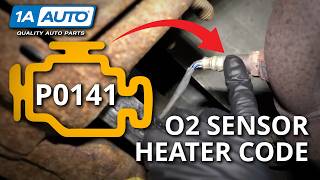
- Replacing the catalytic converter. P0141 is an electrical fault with the sensor's heater, not a measurement of converter efficiency. 🎬 Watch: Understanding the P0141 heater circuit malfunction
Most Likely Causes
- Failed Rear Oxygen Sensor (Bank 1, Sensor 2) 🔴 High Probability → Shop Oxygen Sensor Subaru issued TSB #09-115-24R for a known weakness in the original sensor design that can lead to internal cracks and short circuits in the heater element. The redesigned part has an improved internal coating for durability.
How to confirm: Unplug the sensor and use a multimeter to test the resistance between the two heater pins (usually the two same-colored wires). A failed sensor will typically show infinite resistance (open circuit). A good sensor should read between 4-10 ohms when cold. 🎬 See how to test the heater circuit with a multimeter Some sources give a wider range of 3-25 ohms.
Typical fix: Replace the rear (downstream) oxygen sensor with the updated OEM part (Subaru P/N 22690AB08A).
Est. part cost: $150-$270
Rare But Worth Checking
- Damaged Wiring or Connector: The O2 sensor wiring runs under the vehicle and is susceptible to road debris, heat damage from the exhaust, or corrosion. A Reddit user with a 2021 Outback reported that even after replacing the sensor, the P0141 code returned because the harness was only supplying ~7V instead of the required 12V, indicating a wiring fault. Always perform a visual inspection and check for voltage at the harness before replacing parts.
- Blown Fuse: The O2 sensor heater circuit is protected by a fuse (often labeled 'A/F Heater' or similar in the fuse box). While rare for it to blow without another cause, it's a quick and easy check.
- Corroded or Broken Exhaust Ground Strap: Subaru engines rely on clean ground connections for proper sensor function. A corroded or broken ground strap can cause various electrical issues, including sensor heater faults. This is worth inspecting, especially on vehicles from regions with road salt.
Diagnosis Steps
- Read the code with an OBD-II scanner to confirm P0141 is present. Note any other codes, as P0137, P0138, and P0140 are often related and covered by the same TSB.
- Visually inspect the rear oxygen sensor's wiring harness and connector for any signs of damage, melting, or corrosion. The connector is often located on the frame rail.
- Check the fuse for the O2 sensor heater circuit in the engine bay fuse box. It is often labeled 'A/F Heater'.
- If the wiring and fuse are okay, disconnect the sensor and test the resistance of the heater circuit using a multimeter. The heater pins are typically the two wires of the same color. An open circuit (infinite resistance) or a reading outside the 4-10 ohm range confirms the sensor has failed.
- If resistance is within spec, check for 12V power at the harness connector with the ignition on. If there is low or no power, there is a wiring issue between the fuse box and the sensor, as documented in some owner experiences.
- If all checks pass but the code persists, the sensor is the culprit, as confirmed by TSB 09-115-24R. Replace the rear oxygen sensor.
Parts You'll Likely Need
- Rear Oxygen Sensor (Bank 1, Sensor 2)
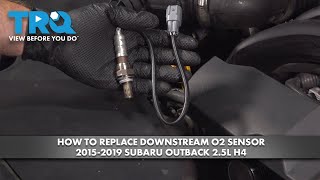
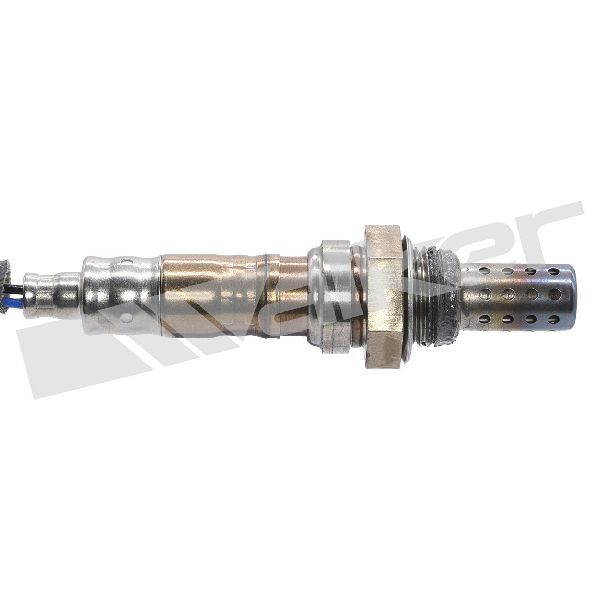
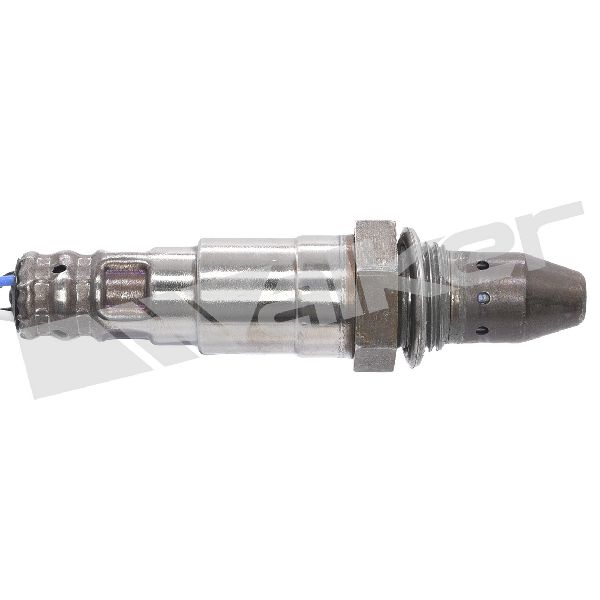
(OEM #22690AB08A)— This is the most common failure point for code P0141 on this vehicle, as confirmed by Subaru TSB #09-115-24R. This part number corresponds to the redesigned, more durable sensor that supersedes the original part (22690AB070). 🎬 Watch: Step-by-step downstream O2 sensor replacement guide
Trusted brands: Subaru (OEM), Denso (OEM manufacturer), NTK
OEM price range: $165-$270
Aftermarket price range: $75-$150
Related Codes That Often Appear With This One
- P0137 (O2 Sensor Circuit Low Voltage)
- P0138 (O2 Sensor Circuit High Voltage)
- P0140 (O2 Sensor Circuit No Activity Detected)
Technical Service Bulletins (TSBs) & Recalls
- 09-115-24R: Describes a known issue with the rear O2 sensor on 2020-24 Outback 2.5L models (among others), leading to codes P0137, P0138, P0140, and P0141. It introduces a redesigned part to prevent internal cracking and heater circuit failures.
- TSB Bulletin #09-115-24: This manufacturer bulletin specifically identifies P0141 (O2 Sensor Heater Circuit Bank 1 Sensor 2) alongside related codes P0137, P0138, and P0140 as symptoms of the rear oxygen sensor failure.
Platform-Specific Known Issues
- Subaru Technical Service Bulletin (TSB) #09-115-24R was issued for this exact problem, indicating a known weakness in the original sensor design that was subsequently corrected with an improved part with an 'optimized coating'.
Mechanic-Grade Diagnostic Values
- Rear O2 Sensor Heater Element Resistance — expected: 4 to 10 Ohms when cold. Some sources cite a wider acceptable range of 3-25 Ohms.. Failure: Infinite resistance ('OL' on a multimeter) indicates an open circuit. A reading far outside the expected range also indicates failure.
- Harness Connector Voltage (Heater Power Pin) — expected: Approximately 12V (Battery Voltage) with Key On, Engine Off.. Failure: Significantly low voltage (e.g., 6-7V as seen in a real-world case) or no voltage points to a wiring, fuse, or relay issue upstream of the sensor.
- Live Data: O2 Sensor (B1S2) Voltage — expected: After warm-up, a healthy downstream sensor should show a relatively stable voltage, typically between 0.5V and 0.7V.. Failure: A voltage reading that is stuck high (near 1.2V), low (near 0.03V), or flat (stuck around 0.45V) can indicate a sensor or circuit fault.
Hidden / Shadow Codes Worth Checking
- Mode $06, Test ID $41: This is not a DTC, but a system monitor for the O2 Sensor Circuit (B1S2). It tracks values like maximum and minimum output voltage. A failure here can provide deeper diagnostic data on the sensor's health, sometimes before the main P0141 code is set. (see via Advanced OBD-II scanner capable of displaying Mode $06 data, or the Subaru Select Monitor (SSM).)
Scan Tool Commands That Help
- Subaru Select Monitor (SSM): O2 Heater Diagnosis — This is a specific self-test status flag within the OBD System menu. A technician can view if the 'O2 Heater Diagnosis' monitor has completed ('Complete' or 'Incomplete'). This helps confirm if the ECM has been able to successfully test the circuit since the last code clear.
Wiring & Ground Locations
- Rear O2 Sensor Connector (E25) — Underneath the vehicle, after the catalytic converter. The connector itself is often located on the frame rail or on top of the transmission, sometimes behind a heat shield.. This is the primary point for testing voltage and resistance. It is exposed to road debris and heat, making it a potential point of failure due to corrosion or damage.
- Exhaust Ground Strap — A braided metal strap connecting the exhaust system (often near the mid-pipe or transmission) to the vehicle's frame or subframe.. Provides a dedicated ground path for the O2 sensor. If this strap is broken or corroded, the sensor's heater circuit can become unreliable and trigger a fault code.
- Main Engine Grounds — On top of the intake manifold, secured by 12mm bolts. These ground the main engine wiring harness.. The ECM and its sensor circuits, including the O2 sensor heater power relay, rely on a clean engine ground path. A poor connection here can cause a wide range of electrical issues, including low voltage to sensor circuits.
Real Owner Repair Stories
- Reddit user on r/subaru (2021 Subaru Outback 2.5L) — Check Engine Light with code P0141 returned immediately (72 seconds after startup) even after clearing.
❌ Tried (didn't work) Replacing the rear O2 sensor (Bank 1, Sensor 2), Clearing the DTC with a scanner, Cleaning the ground cable near the sensor
✅ What actually fixed it The user diagnosed a low voltage condition at the sensor's harness connector, reading only 6.7-7V instead of the expected ~12V. The final fix required tracing and repairing a high-resistance fault in the power supply wire between the fuse box and the sensor.
OEM Part Supersession History
22690AB070→22690AB08A— The original part was prone to internal cracking. The redesigned part (22690AB08A) was introduced via TSB 09-115-24R and features an 'optimized coating' for improved durability against this failure mode.
Diagnostic Flowchart
Other Known Issues on This Vehicle
Issues unrelated to this code that are worth knowing about as an owner of this generation:
- Parasitic Battery Drain 🔴 High — Widespread issue across many 2015-2022 models, including the Outback. Often caused by a faulty Data Communication Module (DCM) that fails to shut down. (Ref: Multiple TSBs exist, including 07-207-22R and a warranty extension for the DCM (e.g., TSB 15-317-24). A class-action lawsuit was settled.)
- Spontaneously Cracking Windshields 🟠 Medium — Common complaint where small impacts lead to large cracks, often affecting EyeSight camera calibration. Affects 2020-2022 Outbacks among other models. (Ref: A class-action lawsuit was settled, resulting in an extended warranty for qualifying windshield replacements.)
- Starlink Infotainment System Glitches 🟠 Medium — Frequent owner complaints of freezing, phantom touches, black screens, and unresponsive controls on 2019-2023 models. (Ref: Multiple class-action lawsuits have been filed and settled over the years for Starlink issues. Software updates have been released but problems persist for some.)
- Auto Start/Stop System Issues 🟡 Low — Owners report the system can be sluggish or contribute to battery strain, leading many to disable it or notice issues when the battery is weak.
- Power Rear Gate (Liftgate) Failure 🟡 Low — Reports of the rear liftgate failing to open/close, beeping erratically, or reversing without command. Often related to software, alignment, or low battery voltage. (Ref: Subaru has issued service information related to control module logic and initialization.)
Used vs. New Parts: Buying Guide for This Vehicle
When a used part is the smart pick: For this specific repair, a used part is NOT recommended. The original part has a known design flaw addressed by a TSB. A used sensor from a junkyard is highly likely to be the failure-prone original part (22690AB070) or a part that is already near the end of its service life.
What to inspect on the donor part:
- Not applicable, as a used sensor is not advised for this repair.
OEM-only on this vehicle (don't cheap out):
- Rear Oxygen Sensor (Bank 1, Sensor 2)
Aftermarket brands forum-validated for this vehicle:
- Denso (OEM supplier for Subaru)
- NTK (Also a high-quality OEM supplier to Subaru for other sensors)
Brands owners have reported issues with on this vehicle:
- Generic or unbranded 'Amazon' or 'eBay' sensors. Forum and video reports indicate these can fail to resolve the code, fail prematurely, or have incorrect resistance values for the sensitive Subaru ECU.
Real Owner Stories
Aggregated from forums and TSBs cited above. Mileages and costs reflect what owners reported in those sources.
2021 Subaru Forester — 90000 miles
Symptoms: A downstream O2 sensor "heating circuit" error code come up consistently on cold start.
What fixed it: The user discovered a completely corroded and severed grounding strap from the exhaust heat shield to the frame, located near the O2 sensor. Replacing the strap with copper wire resolved the code.
Source hint: reddit thread title: late model forester oxygen sensor issues! SOLVED with the ins and outs!
2023 Subaru Outback Onyx
Symptoms: Check engine light with code P0141; dealer quoted nearly $600 for repair.
What fixed it: Identified the need for the updated OEM part number 22690AB08A as specified in TSB 09-115-24R.
Source hint: r/subaru - 2023 Outback Onyx
2014 Subaru Forester XT
Symptoms: P0141 code present; dealer quoted $644 for repair.
What fixed it: Owner replaced the sensor themselves using an NTK sensor from Rock Auto in about an hour.
Cost: $75-$75
Source hint: r/SubaruForester - 2014 Forester XT
2021 Subaru Outback 2.5L
Symptoms: The P0141 code returned even after replacing the sensor.
What fixed it: Investigation revealed a wiring issue causing a voltage drop to the heater circuit, which was reading ~7V instead of the required 12V.
Source hint: r/subaru - 2021 Outback 2.5L
Related OBD-II Codes
Frequently Asked Questions
Is there a Technical Service Bulletin for the P0141 code on my 2020-2024 Subaru Outback 2.5L?
Why did my EyeSight and Cruise Control stop working when the P0141 code appeared?
What is the specific part number for the redesigned Subaru rear oxygen sensor?
Can I test the sensor myself before buying a new one?
I replaced the sensor but the P0141 code is still there. What else should I check?
Does this P0141 issue affect other Subaru models besides the Outback?
Helpful Videos
We Have This Part in Stock

The information in this article is provided for general reference and educational purposes only. Vehicle specifications, procedures, and part compatibility can vary by production date, trim level, and region. Always consult your vehicle's factory service manual and verify part numbers before purchasing or performing repairs. Safety-critical components such as airbags, seat belts, and braking systems should be installed by a qualified professional.
- Subaru Outback:
- 🧭 Diagnostic Flowchart
- 🎬 Helpful Videos
- 🛍️ Shop This Part
- What's Unique About the 2020-2024 Subaru Outback
- Symptoms You May Notice
- Most Likely Causes
- Rare But Worth Checking
- Diagnosis Steps
- Parts You'll Likely Need
- Related Codes That Often Appear With This One
- Technical Service Bulletins (TSBs) & Recalls
- Platform-Specific Known Issues
- Mechanic-Grade Diagnostic Values
- Hidden / Shadow Codes Worth Checking
- Scan Tool Commands That Help
- Wiring & Ground Locations
- Real Owner Repair Stories
- OEM Part Supersession History
- Other Known Issues on This Vehicle
- Used vs. New Parts: Buying Guide for This Vehicle
- Real Owner Stories
- 2021 Subaru Forester — 90000 miles
- 2023 Subaru Outback Onyx
- 2014 Subaru Forester XT
- 2021 Subaru Outback 2.5L
- Related OBD-II Codes
- Frequently Asked Questions
- 🎟️ Get 5% Off