

P0141 on 2002-2006 Toyota Camry 2.4L: O2 Sensor Heater Causes and Fixes
On a 2002-2006 Camry 2.4L, P0141 almost always means the downstream oxygen sensor's internal heater has failed. The most common fix is replacing the sensor itself. Expect to pay $50-$90 for a quality aftermarket part (like Denso) and consider it a 2/5 difficulty DIY job.
- P0141 on this Camry almost always means you need a new downstream (post-catalytic converter) oxygen sensor.
- Before buying a new sensor, take 5 minutes to check the 'A/F HTR' or 'EFI' fuse in the engine bay fuse box.
- The most difficult part of this DIY job is accessing the sensor's electrical connector, which is inside the car under the driver's side carpet.
- Use a direct-fit sensor from a reputable brand like Denso (part #234-4260 is a common choice) to avoid wiring issues.
- Do not mistake this for a catalytic converter (P0420) or upstream sensor problem; this code is specific to the downstream sensor's heater.
What's Unique About the 2002-2006 Toyota Camry
For the 2002-2006 Camry (XV30 generation) with the 2.4L 2AZ-FE engine, the failure is almost always the original Denso sensor's heater element giving out after years of heat cycles. The most notable platform-specific quirk is the location of the sensor's electrical connector. While the sensor itself is in the exhaust pipe under the car, its wiring passes through a grommet in the floor, and the connector is located inside the cabin, under the carpet near the driver's seat. This requires pulling back the interior carpet to disconnect it, which is an unusual step compared to many other vehicles where the connector is also under the car.
Symptoms You May Notice
- Check Engine Light is on
- Failing a state emissions inspection
- Slight potential decrease in fuel economy
- Rough idle (rare)
- Replacing the catalytic converter. P0141 is for the sensor's heater circuit, not the converter's efficiency (which is code P0420).
- Replacing the upstream Air/Fuel Ratio sensor (Bank 1, Sensor 1). This code is specific to the downstream sensor (Sensor 2) located after the catalytic converter.
Most Likely Causes
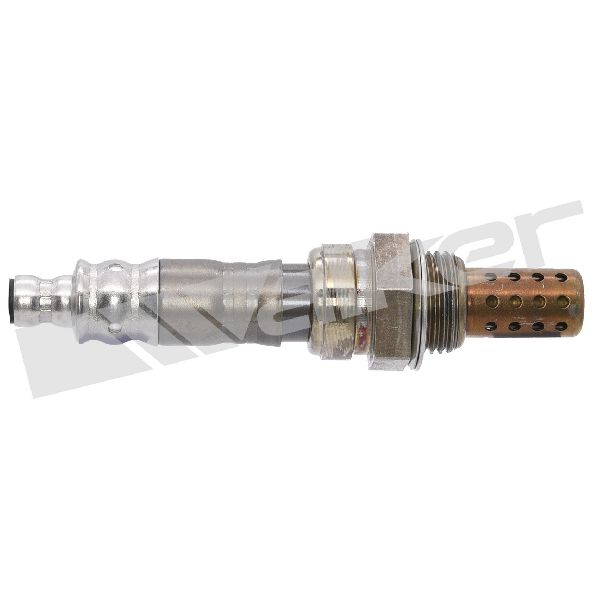
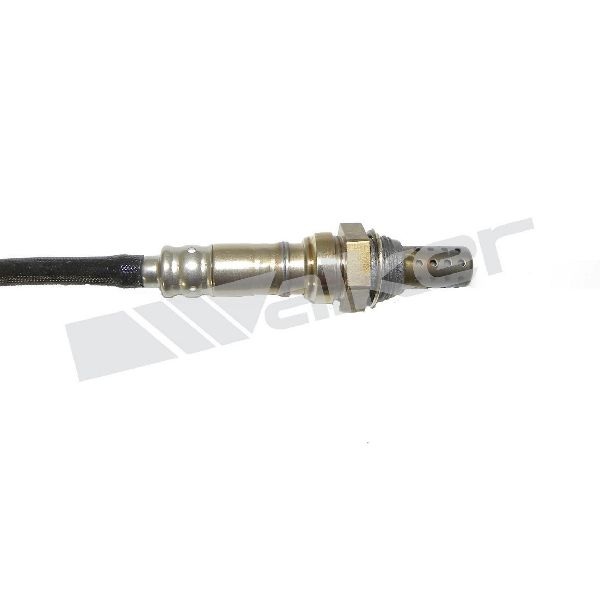
- Failed Downstream Oxygen Sensor (Bank 1, Sensor 2) 🔴 High Probability → Shop Oxygen Sensor The internal heater element in the original Denso sensor fails over time due to constant heat cycles. It's a common wear-and-tear item.
How to confirm: Disconnect the sensor and measure the resistance between the two same-colored heater wires (usually black) with a multimeter. A healthy sensor should read between 11-16 ohms when at room temperature. Some sources give a wider acceptable range of 5-20 ohms. An open circuit (infinite resistance) or a dead short (zero ohms) confirms the sensor's heater element is bad.
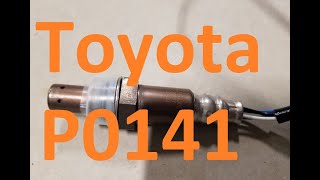
Typical fix: Replace the downstream oxygen sensor. The connector is located inside the car, under the driver's side carpet. An oxygen sensor socket is recommended for removal. 🎬 Watch: How to replace the downstream sensor
Est. part cost: $50 - $90 - Blown Fuse ⚪ Low Probability
How to confirm: Check the fuse box in the engine compartment (left side, often in front of the battery) for a blown fuse. It is typically a 15A or 20A fuse labeled 'A/F HTR' or 'EFI'. If the fuse is blown, it may indicate a short in the wiring or the sensor itself.
Typical fix: Replace the blown fuse after diagnosing the underlying cause of the short. If the new fuse blows immediately, a short circuit is present. If no short is found, the fuse may have failed from age.
Est. part cost: $1 - $5 - Damaged Wiring or Connector ⚪ Low Probability The wiring harness under the car can be damaged by road debris, improper jacking, or contact with hot exhaust components. The connector inside the cabin is generally well-protected but should be checked for corrosion or loose pins.
How to confirm: Visually inspect the wiring harness from the oxygen sensor to where it enters the cabin through the floor grommet. Look for any signs of melting, chafing, or breaks. Check the connector pins (inside the cabin) for corrosion or damage.
Typical fix: Repair the damaged section of wiring or replace the connector pigtail.
Est. part cost: $10 - $30
Rare But Worth Checking
- Faulty Engine Control Module (ECM): → Shop Engine Control Module (ECM) This is extremely rare. Before considering the ECM, all other possibilities (sensor, wiring, fuses) must be exhaustively ruled out by a professional. A forum user on CamryForums.com detailed a long diagnostic journey where multiple sensor replacements and wiring checks failed to resolve the code, which was ultimately fixed by replacing the ECM. This should be the absolute last resort.
Diagnosis Steps
- Read the code with an OBD-II scanner to confirm P0141 is present and check for any other codes.
- Check the fuse. Locate the fuse box in the engine bay and inspect the fuse labeled 'A/F HTR' or 'EFI'. Replace if blown, but investigate for a short circuit if it blows again.
- Visually inspect the wiring. Look at the O2 sensor wiring under the car for any obvious damage like melting, cuts, or corrosion.
- Test the sensor's heater circuit. Pull back the carpet on the driver's side to access the sensor connector. Disconnect it and use a multimeter set to Ohms to measure the resistance between the two same-colored wires (usually black) on the sensor side. The reading should be between 11-16 ohms. If you get an open loop (no reading) or a dead short, the sensor has failed.
- Test for power at the harness. With the sensor disconnected and the ignition key in the 'ON' position, use a multimeter to check for battery voltage (approx. 12V) at one of the heater circuit pins on the vehicle's harness connector. If there is no voltage, a wiring or fuse issue upstream is likely.
- If the sensor tests good and power is present, the problem is likely an intermittent wiring issue or, in very rare cases, the ECM itself.
Parts You'll Likely Need
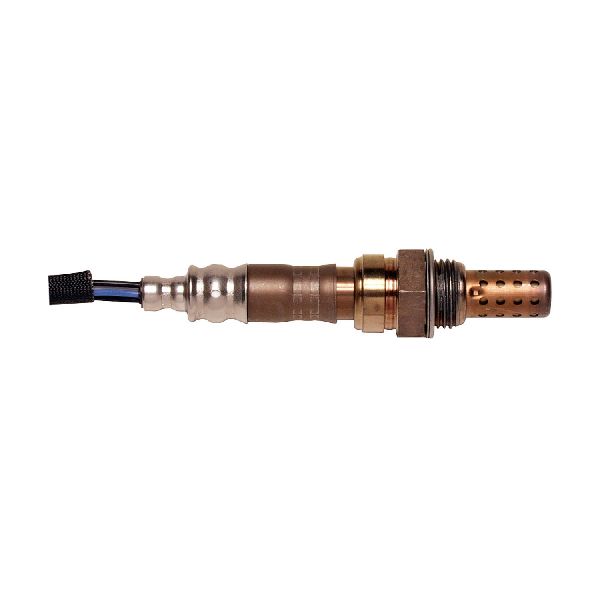
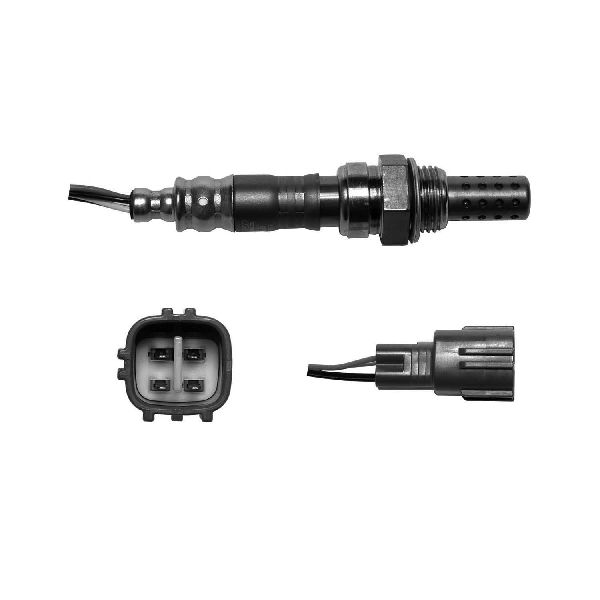
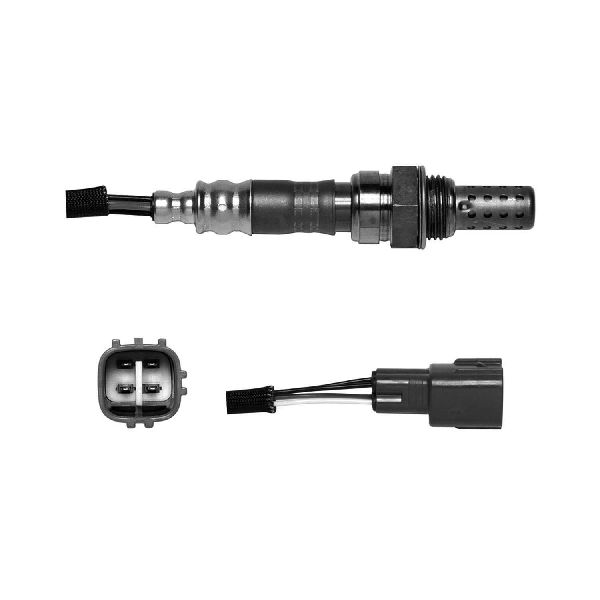
- Downstream Oxygen Sensor (Bank 1, Sensor 2)
(OEM #89465-33330 (superseded by 89465-33331))— This is the most common failure point for code P0141, as the internal heater element burns out over time.
Trusted brands: Denso (OEM Supplier, Part #234-4260), Bosch (Part #13441), NGK/NTK
OEM price range: $150-$220
Aftermarket price range: $50-$90
Related Codes That Often Appear With This One
- P0136 — This code indicates a general circuit malfunction for the same sensor (Bank 1, Sensor 2). Damaged wiring could potentially trigger both the heater code (P0141) and the general circuit code.
- P0420 — While P0141 doesn't cause P0420, a failing O2 sensor can sometimes mask or accompany a P0420 code, as the sensor's job is to monitor the catalytic converter's efficiency. It's common to resolve P0141 first before addressing a P0420.
Technical Service Bulletins (TSBs) & Recalls
- T-SB-0015-11: Describes the expensive repair procedure for stripped head bolt threads in the 2.4L 2AZ-FE engine block, a known issue for this vehicle.
Platform-Specific Known Issues
- The electrical connector for the downstream O2 sensor on the 2.4L engine is located inside the vehicle, under the driver's side carpet, not under the car.
- The 2AZ-FE engine in this generation is known for stripped head bolt threads in the engine block, an unrelated but serious potential issue for owners to be aware of.
Mechanic-Grade Diagnostic Values
- Downstream O2 Sensor (B1S2) Heater Resistance — expected: 11 to 16 Ω at ambient temperature (approx. 68°F / 20°C). Some sources state a broader but acceptable range of 5-20 Ω.. Failure: An open circuit (infinite resistance, 'OL' on multimeter) or a dead short (near 0 Ω) indicates a failed heater element.
- Heater Circuit Voltage at Harness Connector (KOEO) — expected: Approximately 12V (battery voltage) on one of the two heater pins (typically same-colored wires).. Failure: Voltage below 10V or no voltage suggests a blown 'A/F HTR' or 'EFI' fuse, a bad relay, or an open in the power supply wire.
- Heater Circuit Ground Signal (ECM Control) — expected: When testing the ground control wire from the ECM with a test light connected to the battery positive, the light should pulse after starting the vehicle. This indicates the ECM is attempting to control the heater.. Failure: No pulsing light indicates a potential wiring issue between the connector and the ECM, or a fault in the ECM's driver circuit.
- Continuity from ECM to O2 Sensor Connector — expected: Less than 1.0 Ω.. Failure: High resistance indicates a break or corrosion in the wire between the ECM's HT1B terminal and the sensor connector.
Scan Tool Commands That Help
- Toyota Techstream: Active Test for O2 Sensor Heater — A bidirectional scanner like Techstream can command the O2 sensor heater circuit ON and OFF. This is useful for confirming if the ECM driver and wiring are capable of activating the circuit, helping to isolate the fault to the sensor itself if the command is sent but the circuit doesn't respond as expected (e.g., no current draw).
Wiring & Ground Locations
- B1S2 Heater Ground Wire — At the sensor-side of the 4-pin connector located under the driver's side carpet.. One of the two wires for the heater circuit is a ground. A specific test guide identifies this as being on PIN A, with a Pink wire with a Black stripe. This is crucial for correctly performing resistance and voltage checks.
- ECM Terminal HT1B — On the Engine Control Module (ECM) connector E7, which is located behind the right side of the dashboard.. This is the specific pin on the ECM that provides the ground control for the Bank 1 Sensor 2 heater. For advanced diagnostics, checking continuity between this pin and the corresponding pin at the sensor connector can definitively rule out a wiring break.
- A/F HTR or EFI Fuse — In the engine room junction block (fuse box) on the left side of the engine compartment.. This fuse supplies the 12V power to the oxygen sensor's heater circuit. If it's blown, the heater will not operate and will trigger P0141.
OEM Part Supersession History
89465-33330→89465-33331— Standard part number update by Toyota for inventory or minor revision.
Model Year Variations Within This Range
- 2005-2006: The 2005 model year received a mid-cycle refresh which included a new grille, taillights, and interior trim. While the 2AZ-FE engine and the P0141 diagnostic procedure remained the same, there were structural reinforcements to the frame starting in 2004 for better side-impact protection. These changes do not affect the diagnosis or repair of code P0141.
Diagnostic Flowchart
Other Known Issues on This Vehicle
Issues unrelated to this code that are worth knowing about as an owner of this generation:
- Stripped Cylinder Head Bolt Threads 🔴 High — A well-documented design flaw on 2002-2006 2AZ-FE engines. The aluminum block threads for the steel head bolts can pull out, causing coolant leaks at the rear of the engine. Repair is very expensive and involves installing thread inserts like Time-Serts or an NS300L kit. (Ref: T-SB-0015-11)
- Excessive Oil Consumption 🟠 Medium — More prevalent in later 2006-2011 models, but can occur in this generation. Caused by faulty piston ring design. Toyota issued a warranty enhancement (ZE7) for this issue, but it has since expired. Owners often report needing to add a quart of oil every 1,200-1,500 miles. (Ref: T-SB-0094-11)
- Transmission Shift Hesitation / Harsh Shifting 🟡 Low — Owners of 2002-2006 models, particularly with the U241E automatic transmission, report issues like a 'flare' or hesitation when shifting from 2nd to 3rd gear, or harsh downshifts. It's often related to hydraulic wear in the valve body or a failing solenoid and becomes more common over 150,000 miles. In some rare cases, a faulty ECM was the root cause.
- Carbon Buildup in Throttle Body 🟡 Low — Can cause a rough or unstable idle, particularly after the battery has been disconnected. This is a common maintenance item where the throttle body needs to be cleaned to restore smooth idle.
Used vs. New Parts: Buying Guide for This Vehicle
When a used part is the smart pick: For this repair, buying a used oxygen sensor is NOT recommended. O2 sensors are wear-and-tear items with a finite lifespan. The internal heating element that causes P0141 fails from age and heat cycles, so a used sensor has a high probability of failing soon after installation. The only used parts that might make sense are a replacement wiring connector pigtail or a fuse from a junkyard.
What to inspect on the donor part:
- Not applicable for the sensor itself.
- If sourcing a connector, inspect for any signs of corrosion, melted plastic, or brittle wires.
Aftermarket brands forum-validated for this vehicle:
- Denso (This is the Original Equipment Manufacturer; the Denso aftermarket part is identical to the Toyota-branded one).
- NTK (Also a highly regarded OEM supplier for many Japanese vehicles).
Brands owners have reported issues with on this vehicle:
- Generic, unbranded, or 'universal' sensors that require splicing wires. While they may work temporarily, forum users frequently report premature failures or incorrect readings with non-direct-fit sensors on Toyota vehicles.
Real Owner Stories
Aggregated from forums and TSBs cited above. Mileages and costs reflect what owners reported in those sources.
2002-2006 Toyota Camry 2.4L 2AZ-FE
Symptoms: The owner experienced a persistent P0141 code that would not go away even after replacing the sensor and checking the wiring.
What fixed it: A shop diagnosis determined the root cause was a faulty ECM.
Source hint: CamryForums - P0141 Code Won't Go Away!
2002-2008 Toyota Camry Solara 2.4L 2AZ-FE
Symptoms: DTC P0141 O2 Sensor Heater Circuit Malfunction (Bank 1, Sensor 2).
What fixed it: Replacing the failed sensor heater with a Denso unit.
Source hint: ToyotaNation - General P0141 Discussion
2002-2006 Toyota Camry 2.4L 2AZ-FE — ~150000 miles
Symptoms: Transmission shift 'flare' or hesitation when shifting from 2nd to 3rd gear, or harsh downshifts.
What fixed it: This is a known transmission issue often related to hydraulic wear in the valve body or a failing solenoid, rather than the P0141 code.
Source hint: vehicle_specific_issues / known_issues
Related OBD-II Codes
Frequently Asked Questions
Where is the downstream oxygen sensor connector located on my 2.4L Camry?
What brand of oxygen sensor should I use for my 2AZ-FE engine?
Does T-SB-0015-11 relate to my P0141 code?
Which fuse should I check for a P0141 code on my Camry?
What is the correct resistance for a healthy downstream O2 sensor on this model?
Can I fix the P0141 code by cleaning my throttle body?
Helpful Videos


We Have This Part in Stock


The information in this article is provided for general reference and educational purposes only. Vehicle specifications, procedures, and part compatibility can vary by production date, trim level, and region. Always consult your vehicle's factory service manual and verify part numbers before purchasing or performing repairs. Safety-critical components such as airbags, seat belts, and braking systems should be installed by a qualified professional.
- Toyota Camry:
- 🧭 Diagnostic Flowchart
- 🎬 Helpful Videos
- 🛍️ Shop This Part
- What's Unique About the 2002-2006 Toyota Camry
- Symptoms You May Notice
- Most Likely Causes
- Rare But Worth Checking
- Diagnosis Steps
- Parts You'll Likely Need
- Related Codes That Often Appear With This One
- Technical Service Bulletins (TSBs) & Recalls
- Platform-Specific Known Issues
- Mechanic-Grade Diagnostic Values
- Scan Tool Commands That Help
- Wiring & Ground Locations
- OEM Part Supersession History
- Model Year Variations Within This Range
- Other Known Issues on This Vehicle
- Used vs. New Parts: Buying Guide for This Vehicle
- Real Owner Stories
- 2002-2006 Toyota Camry 2.4L 2AZ-FE
- 2002-2008 Toyota Camry Solara 2.4L 2AZ-FE
- 2002-2006 Toyota Camry 2.4L 2AZ-FE — ~150000 miles
- Related OBD-II Codes
- Frequently Asked Questions
- 🎟️ Get 5% Off