

P0141 on 2007-2011 Toyota Camry 3.5L V6: O2 Sensor Heater Circuit Causes and Fixes
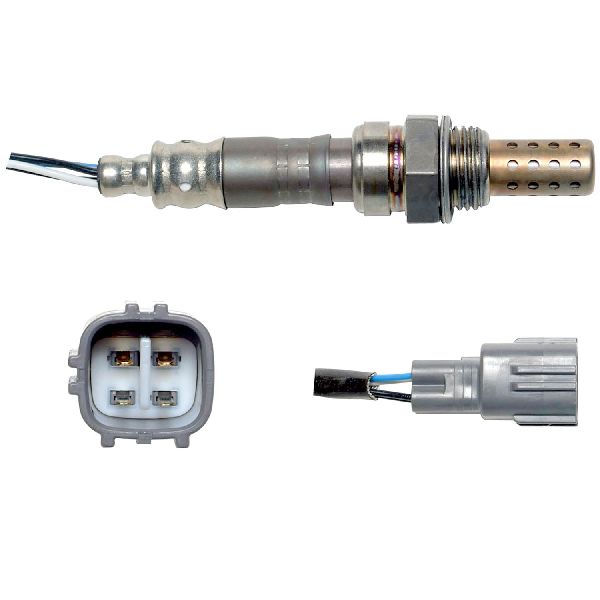
This code almost always means the heater inside the rear-most oxygen sensor on the firewall side (Bank 1, Sensor 2) has failed. Replacing the sensor is the typical fix. Accessing this specific sensor is difficult. Expect to pay $60-$120 for a quality aftermarket part (like Denso 234-4261) or $160-$220 for an OEM part. It's a challenging DIY job (3.5/5 difficulty) due to tight access.
- P0141 points specifically to the heater circuit in the oxygen sensor after the catalytic converter on the firewall side of the engine.
- The most likely cause is a failed oxygen sensor that needs to be replaced.
- Before buying any parts, check the 'A/F HTR' fuse in the engine bay fuse box.
- Accessing the Bank 1, Sensor 2 is physically difficult and may require special tools.
What's Unique About the 2007-2011 Toyota Camry
On the 2GR-FE V6 engine in this Camry generation, P0141 is a very common and straightforward code that rarely points to a complex issue. The cause is almost always the sensor itself failing due to age. The primary challenge is not diagnosis, but physical access to the sensor on the rear exhaust bank (Bank 1), which is tucked between the engine and the firewall. Many owners report difficulty reaching it without specialized tools like flexible-head ratchets and O2 sensor sockets.
Symptoms You May Notice
- Check Engine Light is illuminated.
- Inability to pass a vehicle emissions test.
- Slightly reduced fuel economy, particularly during the engine warm-up phase.
- Replacing the catalytic converter. P0141 is specific to the sensor's heater circuit, not the efficiency of the converter (which would trigger a P0420 or P0430 code).
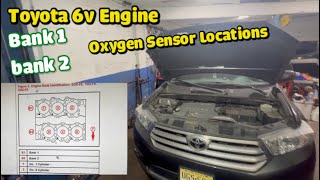
- Replacing the wrong oxygen sensor. This code is for Bank 1 (firewall side), Sensor 2 (post-catalytic converter). Do not replace the upstream sensor 🎬 Watch: Identify the correct sensor locations on the V6 engine (Sensor 1) or the sensors on Bank 2 (radiator side).
Most Likely Causes
- Failed Oxygen Sensor (Internal Heater Burnout) 🔴 High Probability → Shop Oxygen Sensor The internal heating element is a common failure point on high-mileage oxygen sensors due to constant heat cycles. This is the most frequent cause for P0141 on this vehicle.
How to confirm: Disconnect the sensor and measure the resistance between the two heater pins (usually the two wires of the same color, often black). A reading of infinity (open circuit) or well outside the typical 5-16 Ohm range confirms failure.
Typical fix: Replace the Bank 1, Sensor 2 oxygen sensor. The Denso aftermarket part #234-4261 is a direct-fit equivalent to the OEM part.
Est. part cost: $60-$220 - Blown Fuse 🟡 Medium Probability A short circuit in the wiring for any of the O2 sensors can blow the shared fuse, which will trigger a heater code. This is a common point of failure for multiple heater circuit codes appearing at once.
How to confirm: Inspect the fuse labeled 'A/F HTR' in the under-hood fuse box. If it's blown, a short circuit is likely present in the wiring of one of the O2 sensors.
Typical fix: Replace the blown fuse after inspecting wiring for shorts. If the fuse blows again, a wiring issue needs to be traced.
Est. part cost: $1-$5 - Damaged Wiring or Connector ⚪ Low Probability The wiring harness runs under the vehicle and is exposed to heat and road debris, which can cause chafing, melting, or corrosion over time, especially given the tight confines near the rear exhaust manifold.
How to confirm: Visually inspect the wiring harness and connector leading to the Bank 1, Sensor 2 for any signs of physical damage, melting, or corrosion. Check for 12V power at the harness connector with the key on.
Typical fix: Repair the damaged section of wiring or clean/replace the connector.
Est. part cost: $10-$50
Rare But Worth Checking
- Faulty Engine Control Module (ECM): → Shop Engine Control Module (ECM) This is extremely rare. The ECM should only be considered after all other possibilities (sensor, fuse, wiring) have been definitively ruled out. Forum discussions show this is sometimes suggested by shops, but it is rarely the actual cause.
Diagnosis Steps
- Read the code with an OBD-II scanner to confirm P0141 is present.
- Locate the engine bay fuse box and inspect the 'A/F HTR' fuse. If it is blown, replace it and see if the code returns. If it does, suspect a short circuit in one of the O2 sensor harnesses.
- If the fuse is good, safely raise the vehicle and locate the Bank 1, Sensor 2 oxygen sensor. It is on the exhaust pipe coming from the cylinder bank near the firewall, after the catalytic converter.
- Visually inspect the sensor's wiring and connector for any obvious signs of damage, such as melting, chafing, or corrosion.
- Disconnect the sensor. With the ignition key in the 'ON' position (engine off), use a multimeter to verify that there is 12V power being supplied to the heater circuit on the vehicle's harness side.
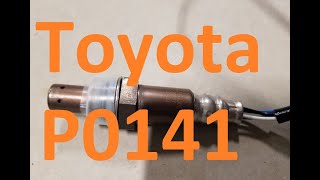
- Using a multimeter set to Ohms, measure the resistance across the two heater pins on the sensor itself (typically the two wires of the same color). A healthy sensor should read between 5 and 16 Ohms depending on temperature. An open circuit (infinite resistance) or a direct short (zero resistance) confirms the sensor has failed. 🎬 See this video for a walkthrough of the P0141 diagnosis
- If the sensor tests good but there is no power at the harness, the problem lies in the wiring between the fuse box and the sensor, or a faulty relay.
Parts You'll Likely Need
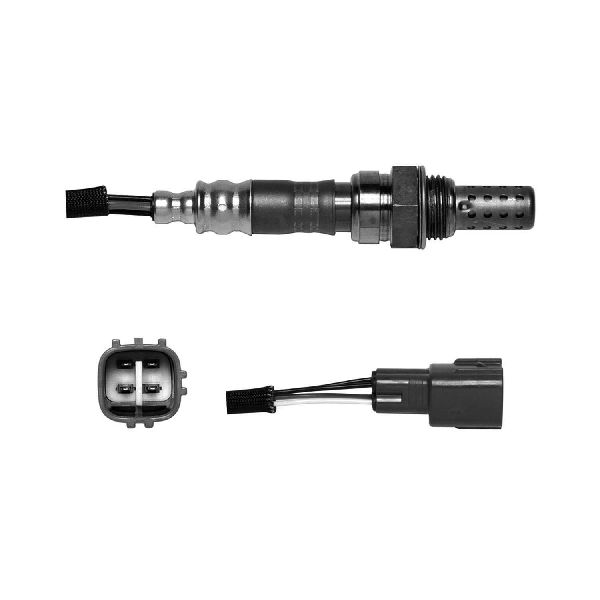
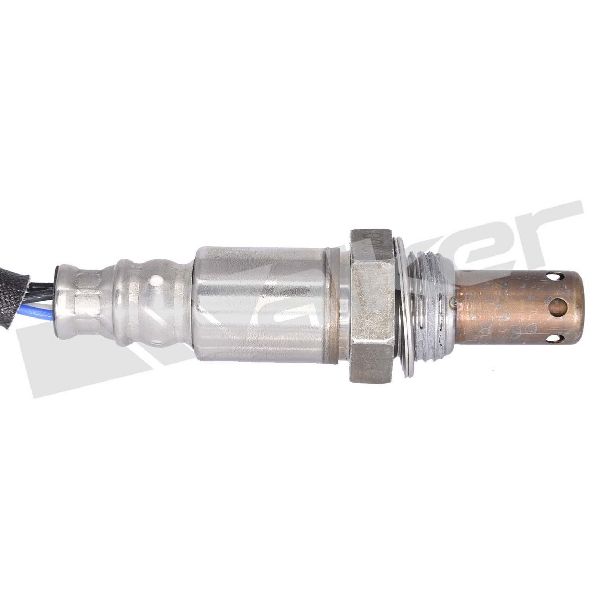
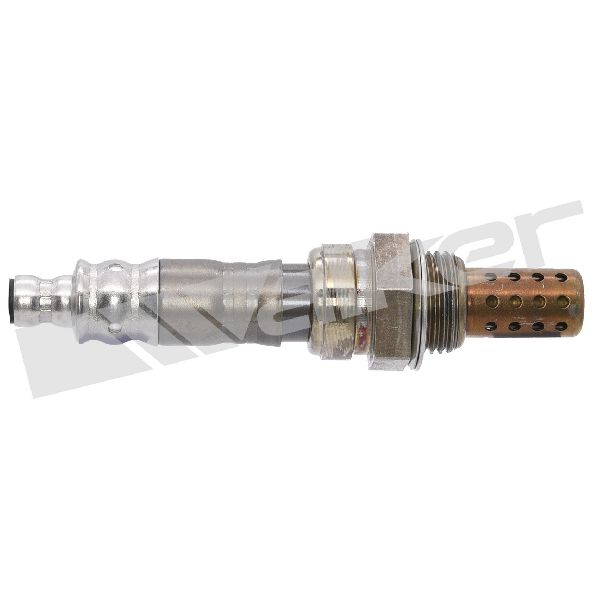
- Oxygen Sensor (Bank 1, Sensor 2)
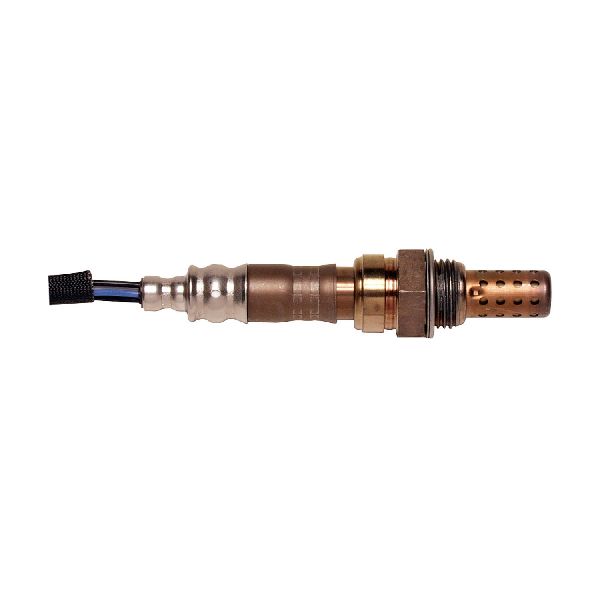
(OEM #89465-06120)— This is the downstream oxygen sensor for the rear bank. Its internal heater is the most common failure point for code P0141.
Trusted brands: Denso (OEM supplier, p/n 234-4261), NGK/NTK, Bosch
OEM price range: $160-$220
Aftermarket price range: $60-$120
Related Codes That Often Appear With This One
- P0161 — This is the heater circuit code for Bank 2, Sensor 2. If both appear together, it strongly suggests a common cause like a blown 'A/F HTR' fuse that powers both sensor heaters.
- P0135 — This is the heater circuit code for Bank 1, Sensor 1 (the upstream sensor). Seeing it with P0141 could also point to a shared fuse or a broader wiring issue on Bank 1.
Technical Service Bulletins (TSBs) & Recalls
- EG045-07 - Acknowledges potential issues with O2 sensor heater circuits on 2007-2008 models with the 2GR-FE engine family.
Platform-Specific Known Issues
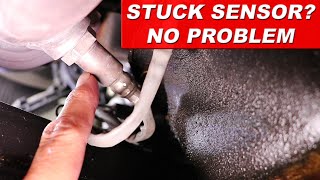
- Difficult Access to Bank 1 Sensor 2: The primary complaint from owners performing this repair is the extremely limited access to the sensor. It is located on the rear exhaust manifold between the engine and the firewall, requiring work from both above and below the car. Specialized tools like O2 sensor sockets, universal joints, and long extensions are often necessary. 🎬 Watch: How to remove and install the Bank 1 sensor
Mechanic-Grade Diagnostic Values
- O2 Sensor Heater Resistance — expected: 5 to 16 Ω at 68°F (20°C). Some sources state up to 20 Ω.. Failure: An open circuit (infinite resistance) or a direct short (near zero resistance) indicates a failed heater element.
- Heater Circuit Voltage at Harness Connector — expected: 10 - 14 Volts (Battery Voltage) with Key On, Engine Off (KOEO).. Failure: 0V indicates a problem upstream, such as a blown A/F HTR fuse, a bad EFI relay, or a break in the power wire.
- ECM Voltage at HT1B terminal — expected: 9 - 14 V with ignition switch ON.. Failure: No voltage when the rest of the circuit is confirmed good can point towards an internal ECM fault.
- Live Data - O2S B1 S2 Voltage — expected: Should fluctuate, but typically holds between 0.1V and 0.9V when driving at a steady speed (e.g., 44 mph).. Failure: A flatline voltage or a value stuck at either extreme can indicate a sensor or circuit issue, though this is more for sensor performance than the heater circuit itself.
Scan Tool Commands That Help
- Toyota Techstream: Active Test: Control the Heated Oxygen Sensor Heater — This function allows a technician to manually command the B1S2 heater circuit ON and OFF. It is used to verify if the ECM driver, wiring, and sensor heater work when commanded. The technician can monitor the heater status and voltage drop to confirm operation.
Wiring & Ground Locations
- ECM Connector Pin HT1B — On the Engine Control Module (ECM), which is located on the firewall behind the engine on the V6 Camry.. This is the specific terminal on the ECM that provides the ground-side control for the Bank 1, Sensor 2 heater circuit. Technicians can test for voltage or continuity at this pin to diagnose a faulty ECM driver or a break in the control wire.
- Engine Ground Points (General) — The 2GR-FE engine has two primary grounding points for the harness on the valve covers. One is on the front (radiator side) valve cover, grounding to the chassis near the strut tower. The second is on the rear (firewall side) valve cover, also grounding to the chassis.. A poor or missing engine ground can cause a variety of spurious electrical issues and false sensor readings. While not a direct cause of a single heater code, verifying these main grounds are clean and tight is a crucial step in any electrical diagnosis.
- A/F HTR Fuse — Located in the under-hood fuse box (Engine Room R/B).. This fuse supplies the 12V power to the heater elements for the oxygen sensors. If it blows, one or more heater circuit codes (like P0141 and P0161) will be triggered.
Real Owner Repair Stories
- CamryForums user (1999 Toyota Camry XLE V6 (similar architecture)) — Persistent P0141 Check Engine Light.
❌ Tried (didn't work) Replaced all O2 sensors with new Denso parts., Replaced the Bank 1 Sensor 2 a second time., Shop confirmed wiring between sensor and ECM was good., Shop observed intermittent ground signal from ECM to the O2 heater.
✅ What actually fixed it The Engine Control Module (ECM) was faulty and had to be replaced. After replacement, the code was cleared and did not return.
OEM Part Supersession History
89465-33440→N/A - This is a common OEM part number for the B1S2 sensor for this application.— N/A
Heads up: The part number 89465-06120, cited in pass 2, is incorrect for the 2007-2011 V6 model; it fits the earlier 2004-2006 4-cylinder Camry. Using the wrong sensor, even if it physically fits, can result in persistent codes. Always verify fitment with the VIN.
Diagnostic Flowchart
Other Known Issues on This Vehicle
Issues unrelated to this code that are worth knowing about as an owner of this generation:
- Rupturing VVT-i Oil Supply Hose (Bank 1) 🔴 High — Common on 2007-early 2010 models with the original rubber/metal hose. Failure can be sudden and lead to catastrophic engine failure from oil starvation. (Ref: Limited Service Campaign (LSC) to replace the rubber hose with an all-metal line (part #15772-31030).)
- Melting/Sticky Dashboard 🟡 Low — Very common in climates with high heat and humidity. The dashboard surface degrades, becomes shiny, sticky, and can crack. (Ref: Warranty Enhancement Program ZE6 was issued to cover replacement.)
- Automatic Transmission (U660E) Hesitation or Harsh Shifting 🟠 Medium — Reported by some owners, can manifest as a delay when shifting into drive, harsh downshifts, or shuddering. Often related to fluid condition, but can also indicate internal wear. (Ref: No specific recall, but a known issue with the U660E transmission.)
- Water Pump Failure 🟠 Medium — The water pump can be a failure point, sometimes occurring prematurely. A leak is identified by crusty pink/white residue around the pump area.
Used vs. New Parts: Buying Guide for This Vehicle
When a used part is the smart pick: For this specific repair, a used oxygen sensor is almost never a smart choice. O2 sensors are wear items with a finite lifespan, and their failure is chemical and thermal, not just mechanical. A used sensor from a junkyard has unknown remaining life and may fail shortly after installation. A used ECM, in the rare event it is needed, is a viable option if it comes with a warranty and is the exact same part number.
Donor-vehicle mileage cap: roughly under 80000 miles for the part to have meaningful remaining life.
What to inspect on the donor part:
- For a used ECM: Match the part number exactly. Check for any signs of water damage or corrosion on the case and pins.
- For a used wiring harness pigtail (if repairing a connector): Ensure the wires are flexible, not brittle, and the locking tab on the connector is intact.
OEM-only on this vehicle (don't cheap out):
- Engine Control Module (ECM) - While a used OEM unit can work, aftermarket or rebuilt ECMs for this platform are not widely trusted and can introduce new problems. Stick to a new or known-good used OEM unit.
Aftermarket brands forum-validated for this vehicle:
- Denso (is the OEM supplier for Toyota, often available cheaper in a Denso box than a Toyota box).
- NGK / NTK (is another highly respected OEM supplier for many Japanese vehicles).
Brands owners have reported issues with on this vehicle:
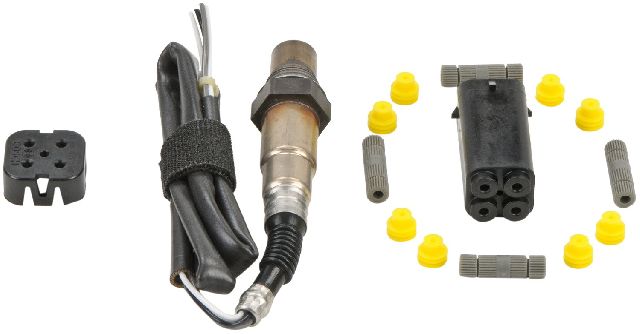
- Universal O2 Sensors (require splicing wires and are a common source of installation error and premature failure).
- Unbranded or generic 'white-box' sensors from online marketplaces often fail quickly or are not calibrated correctly for the vehicle, leading to persistent codes.
Real Owner Stories
Aggregated from forums and TSBs cited above. Mileages and costs reflect what owners reported in those sources.
2007 Toyota Camry 3.5L V6
Symptoms: The P0141 code won't go away. The owner is dealing with the Bank 1 Sensor 2 heater circuit issue.
What fixed it: The owner sought advice on troubleshooting the heater circuit, which involves checking the A/F HTR fuse and measuring resistance on the sensor pins.
Source hint: https://www.camryforums.com/forum/engine-transmission-12/p0141-code-wont-go-away-97063/
2008 Toyota Camry 2GR-FE V6
Symptoms: Difficulty accessing the sensor located on the rear exhaust manifold near the firewall; required working from both above and below the car.
What fixed it: Replacement of the Bank 1 Sensor 2 using specialized tools like O2 sensor sockets and long extensions.
Source hint: vehicle_specific_issues: Difficult Access to Bank 1 Sensor 2
Related OBD-II Codes
Frequently Asked Questions
Does TSB EG045-07 apply to my 2007 Toyota Camry with the 3.5L V6?
Which specific oxygen sensor do I need to replace for a P0141 code on my Camry V6?
Is there a fuse I should check before replacing the sensor on my 2010 Camry?
Why is it so difficult to reach the Bank 1 Sensor 2 on this vehicle?
Can I use a universal oxygen sensor to fix the P0141 code?
Are there any other major issues I should look out for on my 2007-2011 Camry V6 while fixing this?
Helpful Videos


We Have This Part in Stock

The information in this article is provided for general reference and educational purposes only. Vehicle specifications, procedures, and part compatibility can vary by production date, trim level, and region. Always consult your vehicle's factory service manual and verify part numbers before purchasing or performing repairs. Safety-critical components such as airbags, seat belts, and braking systems should be installed by a qualified professional.
- Toyota Camry:
- 🧭 Diagnostic Flowchart
- 🎬 Helpful Videos
- 🛍️ Shop This Part
- What's Unique About the 2007-2011 Toyota Camry
- Symptoms You May Notice
- Most Likely Causes
- Rare But Worth Checking
- Diagnosis Steps
- Parts You'll Likely Need
- Related Codes That Often Appear With This One
- Technical Service Bulletins (TSBs) & Recalls
- Platform-Specific Known Issues
- Mechanic-Grade Diagnostic Values
- Scan Tool Commands That Help
- Wiring & Ground Locations
- Real Owner Repair Stories
- OEM Part Supersession History
- Other Known Issues on This Vehicle
- Used vs. New Parts: Buying Guide for This Vehicle
- Real Owner Stories
- 2007 Toyota Camry 3.5L V6
- 2008 Toyota Camry 2GR-FE V6
- Related OBD-II Codes
- Frequently Asked Questions
- 🎟️ Get 5% Off