

P0141 on 2010-2015 Toyota Prius: O2 Sensor Heater Circuit Causes and Fixes
On a 2010-2015 Prius, code P0141 almost always means the downstream oxygen sensor (Bank 1, Sensor 2) has failed. The internal heater element burns out, triggering the check engine light. Before replacing, check the 'A/F HTR' fuse in the engine bay fuse box. Replacing the sensor is the typical fix, costing around $60-$120 for a direct-fit Denso aftermarket part (P/N 234-4521) or $150-$250 for the OEM Toyota part (P/N 89465-47070). It's a straightforward DIY job for most.
- P0141 points to a problem with the heater in the downstream O2 sensor, not the sensor's ability to read oxygen levels.
- The most likely cause by a wide margin is a failed oxygen sensor.
- Before buying a new sensor, take 5 minutes to check the 'A/F HTR' fuse in the engine bay fuse box.
- This is a DIY-friendly repair. The sensor is usually accessible on the exhaust pipe under the car. You may need a special 22mm slotted socket to remove and install it. Soaking the threads with penetrating oil beforehand is recommended.
- Ignoring the code won't leave you stranded, but it will prevent you from passing an emissions test.
What's Unique About the 2010-2015 Toyota Prius
For the third-generation Prius, this code is a very common and straightforward issue. There are no platform-specific oddities; the cause is almost always the same as on any other conventional vehicle: the heater element in the downstream O2 sensor simply wears out over time. The 2ZR-FXE engine is an inline four-cylinder, so it only has one bank, making "Bank 1" the only bank and simplifying diagnosis. Forum users on PriusChat consistently report that this code is resolved by a simple sensor replacement.
Symptoms You May Notice
- Check Engine Light is on
- Failure to pass an emissions inspection/smog test
- Slightly decreased fuel economy (often not noticeable by the driver)
- Replacing the wrong oxygen sensor. The Prius has an upstream sensor (Bank 1, Sensor 1), which is an Air/Fuel Ratio Sensor, and the downstream sensor (Bank 1, Sensor 2). P0141 specifically refers to the downstream sensor after the catalytic converter.
- Replacing the sensor without checking the fuse first. A blown 'A/F HEATER' fuse will cause the code to appear immediately, even with a new sensor.
Most Likely Causes
- Failed Downstream Oxygen Sensor 🔴 High Probability → Shop Oxygen Sensor The internal heater element, much like a light bulb filament, has a finite lifespan and eventually burns out from thousands of heating and cooling cycles. This is a common wear-and-tear item.
How to confirm: Disconnect the sensor and test the resistance between the two heater wires (usually the two wires of the same color). A reading of 'OL' (Open Loop) or infinite resistance on a multimeter confirms the heater is broken. A good sensor for this vehicle typically has a resistance between 11 and 16 ohms at 68°F (20°C), though some sources state a broader range of 5-20 ohms is acceptable.
Typical fix: Replace the Bank 1, Sensor 2 oxygen sensor. It is highly recommended to use the OEM part or a Denso-branded aftermarket sensor, as Denso is the original equipment manufacturer for Toyota.
Est. part cost: $60-$250 - Damaged Wiring or Connector 🟡 Medium Probability The sensor wiring is located under the car and is exposed to road debris, moisture, and exhaust heat, which can cause it to become brittle, frayed, or corroded over time. The connector pins can also become corroded, leading to a poor connection.
How to confirm: Visually inspect the wiring harness leading to the sensor for any signs of physical damage, melting, or corrosion at the connector pins. Perform a voltage drop test on the power and ground wires if a visual inspection is inconclusive.
Typical fix: Repair the damaged section of the wire or replace the connector pigtail.
Est. part cost: $15-$40 - Blown Fuse ⚪ Low Probability A short circuit in the sensor's heater element or its wiring can cause the associated fuse to blow as a protective measure.
How to confirm: Locate the fuse box in the engine compartment on the driver's side. Check the fuse labeled 'A/F HEATER'. On some Toyota models, this is a 25A fuse. Also check for an associated 'A/F HEATER' relay if present. Visually inspect the fuse or use a multimeter to check for continuity.
Typical fix: Replace the blown fuse after identifying and fixing the underlying short circuit. If the fuse blows again immediately, a short to ground in the heater circuit wiring is likely.
Est. part cost: $1-$5
Rare But Worth Checking
- Faulty Engine Control Module (ECM): → Shop Engine Control Module (ECM) This is extremely rare. The ECM's driver circuit for the heater can fail, but all other potential causes should be exhaustively ruled out before considering ECM replacement. This should be the last diagnostic step.
Diagnosis Steps
- Read the code with an OBD-II scanner to confirm P0141 is the only code present.
- Open the hood and locate the fuse box on the driver's side. Check the fuse labeled for the Air/Fuel or O2 sensor heater ('A/F HTR'). If it's blown, inspect the sensor wiring for a short circuit before replacing the fuse.
- If the fuse is good, safely raise the vehicle and locate the downstream oxygen sensor (Bank 1, Sensor 2). It is installed in the exhaust pipe just after the main catalytic converter.
- Visually inspect the sensor's wiring harness and connector for any obvious damage, such as frayed wires, melting, or corrosion.
- If the wiring looks okay, disconnect the sensor. Test the resistance of the heater circuit on the sensor side. Use a multimeter on the two pins that lead to the heater (typically two wires of the same color, often black). A good sensor will show a resistance between 11-16 ohms at room temperature. An infinite resistance reading ('OL') means the heater is broken and the sensor must be replaced.
- If the sensor's resistance is within spec, the problem is likely in the vehicle's wiring or power supply. Reconnect the sensor, turn the ignition to ON (engine off), and carefully back-probe the harness-side connector to check for 12V power at the heater power wire.
- If power and ground are present at the harness and the sensor resistance is good, the issue could be a rare failure in the ECM's monitoring circuit, but this is highly unlikely.
Parts You'll Likely Need
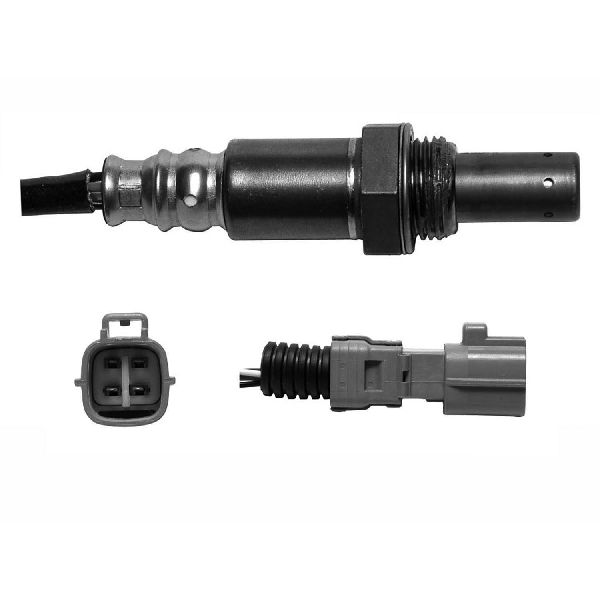
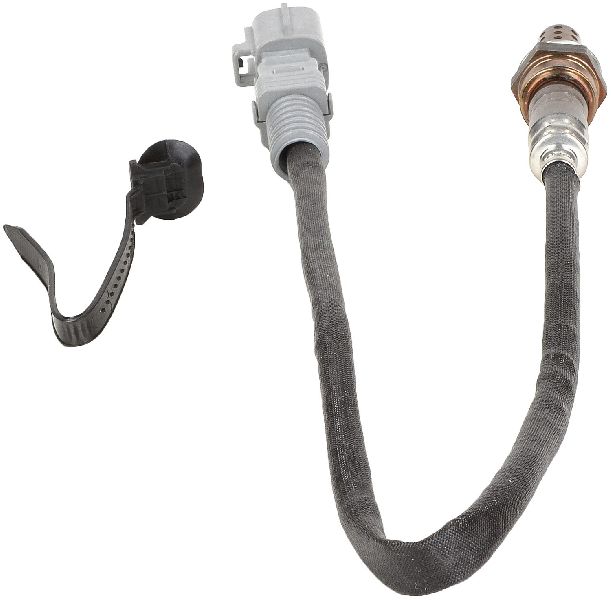
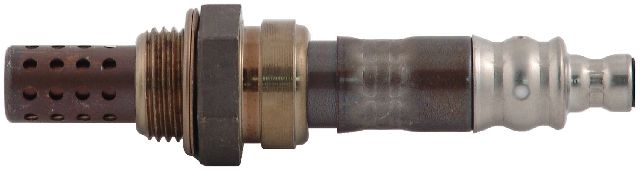
- Downstream Oxygen Sensor (Bank 1, Sensor 2)
(OEM #89465-47070)— This is the most common failure point for code P0141, as the internal heater element burns out over time.
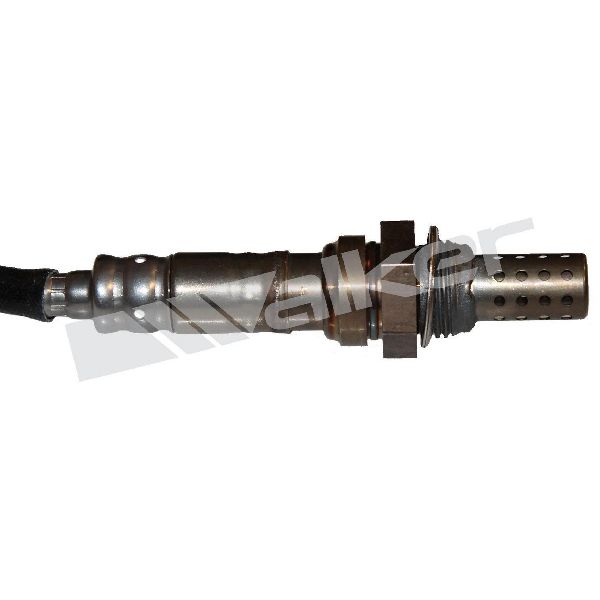
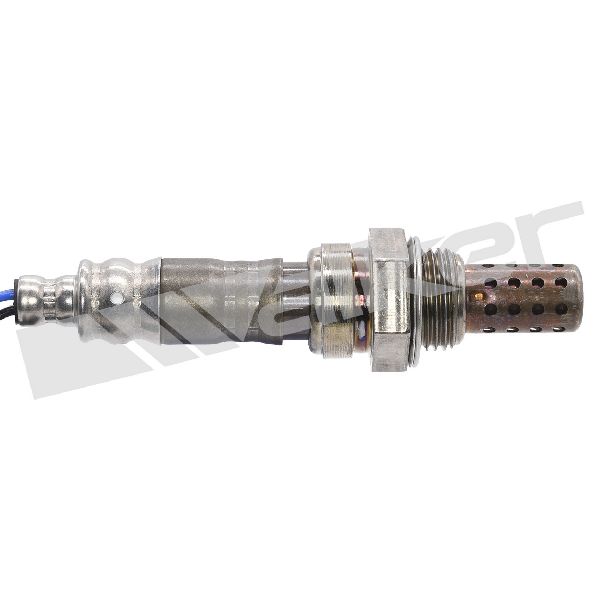
Trusted brands: Denso (OEM Manufacturer), Bosch, Walker Products, NGK/NTK
OEM price range: $150-$250
Aftermarket price range: $60-$120
Platform-Specific Known Issues
- Aftermarket Sensor Compatibility: Owners on PriusChat forums strongly advise using a Denso-branded sensor for replacement. While other brands are available, some users report premature failures or incompatibility issues with non-Denso parts. Since Denso is the original equipment manufacturer for Toyota, using their direct-fit part (like Denso 234-4521) is the safest bet for a lasting repair.
Mechanic-Grade Diagnostic Values
- Downstream O2 Sensor (B1S2) Heater Resistance — expected: 11 to 16 Ω at 20°C (68°F). Failure: Infinite resistance (Open Loop / 'OL') or a reading far outside the specified range.
- Downstream O2 Sensor (B1S2) Heater Current Draw — expected: The ECM expects the current to be within a specific range. A fault is set if the current is less than 0.25A or exceeds 2A.. Failure: A current reading outside of the 0.25A to 2A range will trigger a fault code.
- Voltage at B1S2 Harness Connector (Heater Power Pin) — expected: 9 - 14 V with ignition switch ON.. Failure: 0V or significantly low voltage indicates a problem with the power supply from the EFI relay or a wiring issue.
Scan Tool Commands That Help
- Toyota Techstream: Active Test: Control the O2 Sensor Heater — This function allows a technician to manually command the O2 sensor heater ON and OFF. It is used to verify the functionality of the entire circuit. By turning the heater on, you can monitor the voltage drop and current draw in real-time to confirm if the sensor, wiring, and ECM driver are all working correctly.
- Toyota Techstream: Utility: All Readiness — After a repair, this function is used to check the status of the onboard diagnostic monitors. By selecting P0141, you can see if the ECM's self-test for the O2 heater circuit has completed and passed ('NORMAL') or if it has detected a fault ('ABNORMAL'), confirming if the fix was successful without extensive driving.
Wiring & Ground Locations
- B1S2 Connector (E10) — The downstream O2 sensor connector is typically accessed from inside the passenger compartment. For some models, this requires pulling back the carpet near the center console or passenger footwell area to expose the harness.. This is the primary connection point for testing. The heater circuit wires are typically pins 1 and 2 (often two black wires). Pin 1 (+B) should have battery voltage with key on, and Pin 2 (HT) is the control wire to the ECM.
- Engine Ground Points — On the 2ZR-FXE engine, there are several key ground wire clusters. One is located on the engine block itself, and two others are on the chassis frame near the engine harness, often near the inverter case or strut tower.. A poor engine or chassis ground can cause a variety of electrical issues, including incorrect sensor readings and heater circuit faults. Verifying these grounds are clean and tight is a crucial step if direct sensor and wiring tests are inconclusive.
- Inverter Case Ground — The bolts holding the inverter cover onto the inverter case, located right beside the engine bay fuse box, serve as an excellent and primary ground point for the 12V system.. Since the DC/DC converter in the inverter is the source of the 12V power, this is a critical ground. A user on PriusChat noted this is a reliable point for testing and even jump-starting, confirming its importance as a solid ground reference for all 12V circuits, including sensor heaters.
OEM Part Supersession History
89465-47070→89465-47070— No supersession found. The part number remains current for the specified vehicle range.
Diagnostic Flowchart
Other Known Issues on This Vehicle
Issues unrelated to this code that are worth knowing about as an owner of this generation:
- Excessive Oil Consumption 🔴 High — Common on engines over 100,000 miles. Caused by low-tension piston rings and clogged oil drain holes in the pistons. Toyota's threshold for a problem is consumption of 1 quart per 1,200 miles. (Ref: T-SB-0168-16 (Inspection Procedure), T-SB-0169-16 (Repair Procedure))
- EGR System Clogging 🟠 Medium — Very common, typically requires cleaning every 80,000-120,000 miles. Carbon buildup clogs the EGR valve, cooler, and intake manifold passages, leading to rough idle, engine shudder, and potentially head gasket failure if ignored. (Ref: T-SB-0075-13 (addresses P0401 code related to EGR flow))
- Brake Actuator / Booster Failure 🔴 High — A significant issue for 2010-2015 models. The brake actuator assembly, which contains an electric pump and accumulator, can fail, leading to a loss of braking assist and multiple warning lights. It's an expensive repair. (Ref: Recall issued for some 2010 models for a potential crack in the brake pressure accumulator. Toyota also initiated a Warranty Enhancement Program (ZE1) for this issue, but coverage may have expired.)
- Hybrid Inverter Failure 🔴 High — The Intelligent Power Module (IPM) within the inverter can fail from thermal stress, causing the vehicle to stall or enter a low-power "limp-home" mode. (Ref: Multiple recalls (e.g., 14V053000, 18V684000) and a warranty extension program (to 15 years/unlimited miles) were issued to address this.)
- Combination Meter (Dashboard) Failure 🟡 Low — More common on the previous generation but still occurs on Gen 3. The main display can go blank due to a failed capacitor on the circuit board. It's often repairable by soldering a new capacitor.
Used vs. New Parts: Buying Guide for This Vehicle
When a used part is the smart pick: For this repair, a used part is almost never a smart choice. The oxygen sensor is a wear-and-tear item with a finite lifespan, similar to a light bulb or brake pads. The internal heater element is the component that fails, and a used sensor from a junkyard has an unknown amount of life left and could fail shortly after installation.
Donor-vehicle mileage cap: roughly under 20000 miles for the part to have meaningful remaining life.
What to inspect on the donor part:
- If forced to use a used part, source it from the lowest-mileage vehicle possible.
- Visually inspect the sensor tip for heavy white, black, or oily deposits, which indicate contamination and a high likelihood of poor performance.
- Check that the wiring and connector are completely intact with no signs of melting, fraying, or corrosion.
OEM-only on this vehicle (don't cheap out):
- While not strictly 'OEM-only', community consensus is overwhelmingly in favor of using the OEM manufacturer's part.
Aftermarket brands forum-validated for this vehicle:
- Denso (This is the Original Equipment Manufacturer for Toyota; the Denso aftermarket part is often identical to the Toyota-branded part but costs less).
- NGK/NTK (A highly reputable alternative brand also known for quality sensors).
Brands owners have reported issues with on this vehicle:
- Generic or unbranded 'universal' sensors that require cutting and splicing wires. These are a frequent source of problems due to improper connections and potential incompatibility with the Prius's sensitive electronics.
Real Owner Stories
Aggregated from forums and TSBs cited above. Mileages and costs reflect what owners reported in those sources.
2010 Toyota Prius 1.8L Hybrid
Symptoms: Check Engine Light on with codes P0031, P0102, and P0403.
What fixed it: The dealer found a fault in the sensor circuit; while the specific fix for P0141 is usually sensor replacement, this owner's case involved multiple circuit codes being diagnosed at the dealership.
Source hint: PriusChat owner report
2010-2015 Toyota Prius 1.8L Hybrid — ~120000 miles
Symptoms: The original sensor was removed and found to be stamped with both 'TOYOTA' and 'DENSO' part numbers.
What fixed it: Replacement with a Denso-branded O2 sensor to ensure OEM compatibility.
Source hint: Reddit r/prius: Question about Denso O2 sensors
2011-2017 Lexus CT200h 1.8L Hybrid
Symptoms: P0141 code triggered on the identical 2ZR-FXE powertrain platform.
What fixed it: Replacing the downstream O2 sensor (Toyota P/N 89465-47070).
Source hint: Platform mates: 2011-2017 Lexus CT200h
Related OBD-II Codes
Frequently Asked Questions
Which brand of oxygen sensor should I use for my 2010-2015 Prius to fix P0141?
Where is the fuse for the oxygen sensor heater located on the Gen 3 Prius?
What is the correct resistance for a healthy Bank 1 Sensor 2 heater on this vehicle?
Does the Lexus CT200h suffer from the same P0141 issue as the Prius?
Could my Prius's oil consumption issue be related to the P0141 code?
Is there a TSB for the P0141 code on the 2010 Prius?
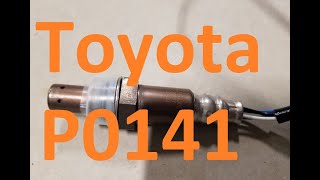
Helpful Videos
We Have This Part in Stock


The information in this article is provided for general reference and educational purposes only. Vehicle specifications, procedures, and part compatibility can vary by production date, trim level, and region. Always consult your vehicle's factory service manual and verify part numbers before purchasing or performing repairs. Safety-critical components such as airbags, seat belts, and braking systems should be installed by a qualified professional.
- Toyota Prius:
- 🧭 Diagnostic Flowchart
- 🎬 Helpful Videos
- 🛍️ Shop This Part
- What's Unique About the 2010-2015 Toyota Prius
- Symptoms You May Notice
- Most Likely Causes
- Rare But Worth Checking
- Diagnosis Steps
- Parts You'll Likely Need
- Platform-Specific Known Issues
- Mechanic-Grade Diagnostic Values
- Scan Tool Commands That Help
- Wiring & Ground Locations
- OEM Part Supersession History
- Other Known Issues on This Vehicle
- Used vs. New Parts: Buying Guide for This Vehicle
- Real Owner Stories
- 2010 Toyota Prius 1.8L Hybrid
- 2010-2015 Toyota Prius 1.8L Hybrid — ~120000 miles
- 2011-2017 Lexus CT200h 1.8L Hybrid
- Related OBD-II Codes
- Frequently Asked Questions
- 🎟️ Get 5% Off