

P0141 on 2011-2018 Volvo S60: O2 Sensor Heater Circuit Malfunction Causes and Fixes
On a 2011-2018 Volvo S60, code P0141 almost always means the rear (downstream) oxygen sensor has failed. The internal heater circuit, which is crucial for bringing the sensor to operating temperature quickly, burns out and triggers the check engine light. Replacing the Bank 1, Sensor 2 O2 sensor is the most common fix. It's a straightforward DIY job for many, with aftermarket parts costing between $100-$200.
- P0141 on your S60 means the rear O2 sensor's internal heater has failed.
- Your car is safe to drive, but you will fail an emissions test and may experience slightly worse fuel economy.
- The most common and effective fix is to replace the rear (downstream) oxygen sensor, also known as Bank 1, Sensor 2.
- This is a DIY-friendly repair for many, requiring basic tools and a 22mm (7/8") O2 sensor socket.
- Always verify the correct part number for your specific engine (5-cyl, 6-cyl, or 4-cyl Drive-E) before purchasing.
What's Unique About the 2011-2018 Volvo S60
The 2011-2018 Volvo S60 (P3 platform) used a variety of engines, including the 5-cylinder (T5), 6-cylinder (T6), and the later 4-cylinder Drive-E series introduced around 2015. For all these inline engines, "Bank 1" is the only bank, and "Sensor 2" is always the downstream sensor after the catalytic converter. While the P0141 code's meaning is consistent, the exact OEM part number for the rear O2 sensor varies by engine type and model year. The failure is almost always the sensor itself, as the heater element is a common wear item subjected to thousands of heat cycles.
Symptoms You May Notice
- Check Engine Light is on.
- Vehicle will fail an emissions test.
- Slight decrease in fuel economy over time, though it may not be noticeable to the driver.
- In rare cases, a rough idle on cold starts.
- Replacing the front (upstream) oxygen sensor instead of the rear (downstream) one. P0141 specifically refers to Sensor 2, which is post-catalytic converter.
- Replacing the catalytic converter. This code points to the sensor's heater circuit, not the performance of the converter itself.
Most Likely Causes
- Failed Rear (Downstream) Oxygen Sensor 🔴 High Probability → Shop Oxygen Sensor The internal heater element of an O2 sensor is a wear-and-tear component that is subjected to thousands of heat cycles. Over time, the element simply burns out like an old light bulb, creating an open circuit.
How to confirm: The most definitive test is to measure the resistance of the heater circuit at the sensor's electrical connector. Disconnect the sensor and use a multimeter on the two heater pins (often the same color wires). A good sensor typically has a resistance of 4-20 ohms. An infinite resistance reading (open circuit) confirms the heater has failed. Most DIYers opt to replace the sensor as the primary diagnostic step due to its high failure rate.
Typical fix: Replace the Bank 1, Sensor 2 oxygen sensor. This requires an O2 sensor socket (typically 22mm or 7/8") to re 🎬 See this walkthrough on how to replace a downstream sensor.move.
Est. part cost: $80-$250 - Damaged Wiring or Connector ⚪ Low Probability The sensor and its wiring are located under the vehicle and are exposed to road debris, water, and extreme heat from the exhaust. Wires can become frayed, melted against the exhaust pipe, or the connector pins can corrode.
How to confirm: Visually inspect the entire wiring harness leading from the rear O2 sensor up into the chassis. Look for any signs of physical damage, melting, or corrosion in the connector pins. Check for voltage (12V) and ground at the harness-side connector with the ignition on.
Typical fix: Repair the damaged section of the wiring harness or clean/replace the connector.
Est. part cost: $5-$50 - Blown Fuse ⚪ Low Probability
How to confirm: Consult the owner's manual or the fuse box cover to locate the fuse for the O2 sensor heater circuit. On this platform, it is often in the engine compartment fuse box. It may be labeled 'Lambda sensor' or similar. Pull the fuse and visually inspect it or test for continuity with a multimeter.
Typical fix: Replace the blown fuse. If the new fuse blows immediately, it indicates a short circuit in the wiring or the sensor itself that must be diagnosed.
Est. part cost: $1-$5
Rare But Worth Checking
- Faulty Engine Control Module (ECM): → Shop Engine Control Module (ECM) This is extremely rare. Before suspecting the ECM, all other possibilities (sensor, wiring, fuses) must be exhaustively ruled out. An ECM fault would typically be accompanied by other, more erratic issues and codes.
Diagnosis Steps
- Confirm the code P0141 is present using an OBD-II scanner.
- Visually inspect the wiring and connector for the rear oxygen sensor (Sensor 2). It is located on the exhaust pipe after the catalytic converter. Check for any signs of melting, chafing, or corrosion.
- Check the fuse related to the oxygen sensor heater circuit. Refer to your Volvo's owner's manual for the fuse box diagram, which is located in the engine compartment. The fuse may be labeled 'Lambda sensor'.
- If the wiring and fuse are okay, test the sensor's internal heater. Disconnect the sensor and use a multimeter to measure the resistance between the two heater circuit pins on the sensor side (often the two wires of the same color). A good sensor typically has a resistance between 4-20 ohms. An open circuit (infinite resistance) or a short (near zero ohms) confirms the heater has failed.
- If resistance is within spec, check for power and ground at the vehicle-side connector. With the ignition on (engine off), one pin should have battery voltage (~12V) and another should have a good ground.
- If voltage or ground is missing, the issue is in the vehicle's wiring or the ECM's driver circuit. If power and ground are present and the sensor resistance is good, the sensor may still be failing intermittently under load, and replacement is the next logical step.
Parts You'll Likely Need
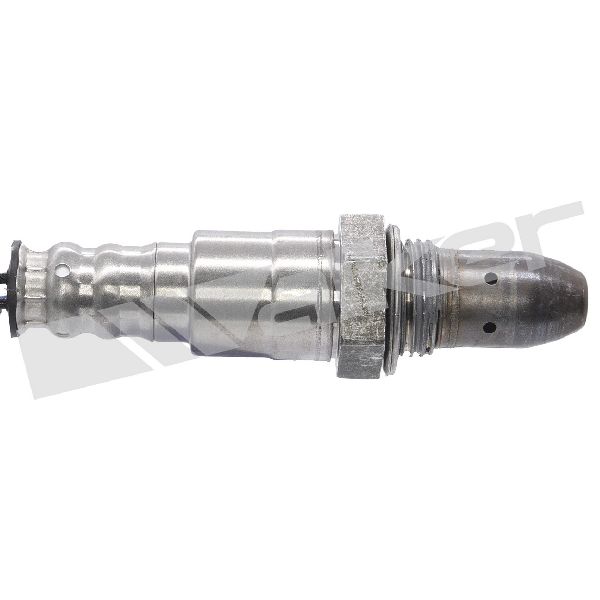
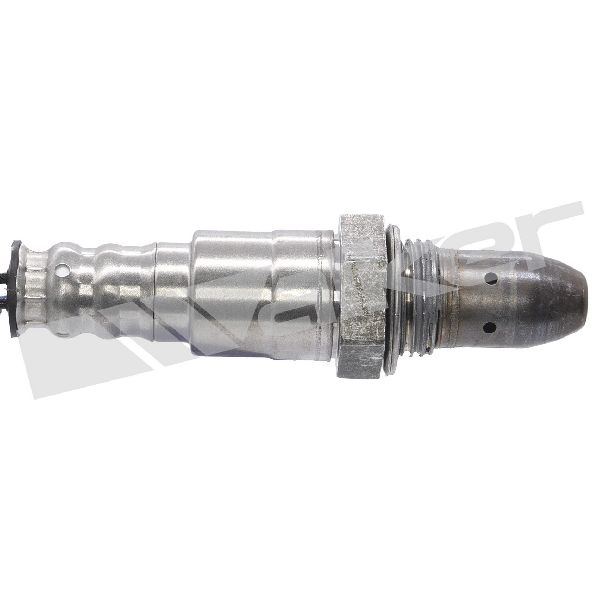
- Rear Oxygen Sensor (Bank 1, Sensor 2)
(OEM #Varies by engine. Examples: 30774700, 31330752, 30774757. Always verify with VIN.)— This is the component that contains the heater circuit reported as faulty by the P0141 code. It is the most common point of failure.
Trusted brands: Bosch (often OEM), Denso, NTK
OEM price range: $180-$300
Aftermarket price range: $80-$200
Mechanic-Grade Diagnostic Values
- Rear O2 Sensor Heater Circuit Resistance — expected: 4-6 ohms. Failure: Infinite resistance (open circuit) or near-zero resistance (short circuit).
- Voltage at Heater Circuit Power Supply Wire — expected: ~12V (Battery Voltage) with ignition on, engine off.. Failure: Significantly less than 12V, or no voltage, indicates a problem with the fuse, relay, or wiring from the ECM.
- Ground Circuit Control from ECM (via VIDA) — expected: The ECM provides a pulse-width modulated (PWM) ground to control heater temperature. A test light connected to the ground control wire should pulse.. Failure: No pulse or a steady light indicates a potential ECM driver failure or a wiring issue between the ECM and sensor.
Hidden / Shadow Codes Worth Checking
- ECM-P014100: Volvo's Engine Control Module (ECM) will store the code with its own module prefix and two additional digits for status/subtype information. The meaning remains 'O2 Sensor Heater Circuit Malfunction'. (see via A Volvo-specific scanner like VIDA/DiCE is required to see the module-specific prefix. Standard OBD-II readers will only show 'P0141'.)
Scan Tool Commands That Help
- Volvo VIDA/DiCE: Component Activation: Heated oxygen sensor (HO2S) preheating, rear — After verifying wiring and the fuse are good, a technician can use VIDA to command the rear O2 sensor heater circuit to turn on. This directly tests the ECM's ability to send the signal and can help isolate the fault to the sensor itself if the command is sent but the sensor doesn't heat up (or draw current).
Wiring & Ground Locations
- Fuse F23 — In the engine compartment fuse box (under the hood). It is a 15A mini fuse.. This fuse specifically provides power to the heater circuits for both the front and rear oxygen sensors. If this fuse is blown, neither heater will work, and you may see P0135 in addition to P0141.
- Ground Point 31/4 — On the engine block itself. This is a primary engine ground.. A poor engine ground can cause a variety of sensor issues due to incorrect voltage references. While not a direct cause of an open heater circuit, a corroded or loose engine ground strap can lead to erratic sensor behavior and codes.
- Ground Point 31/2 — On the left (driver's side for LHD) MacPherson strut tower in the engine bay.. This is a major chassis ground point. The ECM and other critical components are referenced to chassis ground, and poor contact here can cause widespread electrical issues, including sensor faults.
Real Owner Repair Stories
- Volvo Forums user discussion (Volvo S60 (year not specified, but P0137/P0141 codes apply)) — Check Engine Light with codes P0137 (O2 Sensor Circuit Low Voltage Bank 1 Sensor 2) and P0141.
❌ Tried (didn't work) The user initially assumed the sensor was bad because it was disconnected.
✅ What actually fixed it The user was informed that an unplugged sensor would cause both a low voltage/no signal code (P0137) and a heater circuit code (P0141) because both circuits are open. The fix is to replace the sensor and ensure it is properly connected. - NHTSA ODI #10389991 (Cross-model reference: Volvo V70XC) — An owner reported that the check engine light and service light were on due to throttle position sensor and oxygen sensor defects, specifically citing troubleshooting codes P1171, P1132, and P0141.
OEM Part Supersession History
Varies greatly→Varies greatly— Standard part evolution and supplier changes.
Heads up: Volvo uses 'Variant Codes' to specify the correct part for a given VIN, even within the same model year and engine. These codes (e.g., CC02, GH08) are noted on the vehicle's VIN plate and are critical for ordering the correct sensor. Ordering a sensor without matching the variant code can lead to a part that fits physically but has incorrect heater resistance or signal calibration.
Model Year Variations Within This Range
- 2015-2018: The introduction of the 4-cylinder Drive-E engines (e.g., B4204T) brought entirely different oxygen sensors compared to the earlier 5-cylinder (B5254T) and 6-cylinder (B6304T) engines. The physical design, connector, and electronic specifications are not interchangeable. Always confirm the part number against the VIN and engine type.
Diagnostic Flowchart
Other Known Issues on This Vehicle
Issues unrelated to this code that are worth knowing about as an owner of this generation:
- Excessive Oil Consumption (Drive-E Engines) 🔴 High — Common on 2015-2016 4-cylinder Drive-E engines, often appearing after 70,000 miles. Caused by carbon clogging low-tension piston rings. (Ref: Volvo issued extended warranty coverage and TSB TJ 31233 for this issue, involving an oil consumption test and potential piston/ring replacement.)
- Clogged PCV / Breather System 🟠 Medium — Common across all engine types with age and mileage, especially if oil changes are neglected. Leads to high crankcase pressure.
- Automatic Transmission Shift Quality Issues 🟠 Medium — Some owners report rough shifting, delayed engagement, or harshness, particularly with the Aisin-Warner transmissions if fluid is not maintained.
- Front Upper Strut Mount Failure 🟡 Low — Can fail over time, causing noise over bumps. A relatively common wear-and-tear item on the P3 platform.
Used vs. New Parts: Buying Guide for This Vehicle
When a used part is the smart pick: Never. A used oxygen sensor is not a recommended repair part.
What to inspect on the donor part:
- Not applicable. The internal heater element and sensing element have a finite lifespan. Installing a used sensor is installing a part that is already partially worn out and may fail soon, forcing you to do the job twice.
Aftermarket brands forum-validated for this vehicle:
- Bosch (often the Original Equipment Manufacturer for Volvo)
- Denso
- NTK/NGK
Brands owners have reported issues with on this vehicle:
- Generic, unbranded, or 'no-name' sensors from online marketplaces. These often have incorrect heater resistances, leading to an immediate return of the P0141 code, or fail prematurely.
Real Owner Stories
Aggregated from forums and TSBs cited above. Mileages and costs reflect what owners reported in those sources.
Volvo S60 P3 Platform
Symptoms: The check engine light for P0141 appears after a cold start and can be reset, but returns on the next cold start.
What fixed it: Replacement of the rear O2 sensor (heater circuit was confirmed as the issue).
Source hint: Volvo Owners Club Forum - P0141 lamda still
2015-2016 Volvo S60 Drive-E — ~75000 miles
Symptoms: Excessive oil consumption often appearing after 70,000 miles.
What fixed it: Oil consumption test and potential piston/ring replacement under TSB TJ 31233.
Source hint: TSB TJ 31233
Related OBD-II Codes
Frequently Asked Questions
Where is the fuse for the oxygen sensor heater circuit located on my 2011-2018 Volvo S60?
Which specific oxygen sensor needs to be replaced for a P0141 code on this platform?
What are the recommended aftermarket brands for a replacement O2 sensor for my S60?
Can I use a used O2 sensor from a donor V60 or XC60 to fix this?
Does the oil consumption issue on 2015-2016 Drive-E engines relate to P0141?
What size tool do I need to remove the rear O2 sensor on my Volvo?
Helpful Videos
We Have This Part in Stock

The information in this article is provided for general reference and educational purposes only. Vehicle specifications, procedures, and part compatibility can vary by production date, trim level, and region. Always consult your vehicle's factory service manual and verify part numbers before purchasing or performing repairs. Safety-critical components such as airbags, seat belts, and braking systems should be installed by a qualified professional.
- Volvo S60:
- 🧭 Diagnostic Flowchart
- 🎬 Helpful Videos
- 🛍️ Shop This Part
- What's Unique About the 2011-2018 Volvo S60
- Symptoms You May Notice
- Most Likely Causes
- Rare But Worth Checking
- Diagnosis Steps
- Parts You'll Likely Need
- Mechanic-Grade Diagnostic Values
- Hidden / Shadow Codes Worth Checking
- Scan Tool Commands That Help
- Wiring & Ground Locations
- Real Owner Repair Stories
- OEM Part Supersession History
- Model Year Variations Within This Range
- Other Known Issues on This Vehicle
- Used vs. New Parts: Buying Guide for This Vehicle
- Real Owner Stories
- Volvo S60 P3 Platform
- 2015-2016 Volvo S60 Drive-E — ~75000 miles
- Related OBD-II Codes
- Frequently Asked Questions
- 🎟️ Get 5% Off