

P0142 on 2013-2016 Jaguar XJ: O2 Sensor Circuit Malfunction Causes and Fixes
On a 2013-2016 Jaguar XJ, code P0142 is most often caused by either a faulty Bank 1 Sensor 3 oxygen sensor or a known software glitch in the engine computer. Before replacing parts, check with a dealer for a required software update, as this may be the only fix needed, particularly on 2013-2015 models.
- P0142 on a 2013-2016 Jaguar XJ points to a fault with the rearmost oxygen sensor on the passenger side exhaust.
- Crucially, Jaguar has identified a software glitch that can cause this code, especially on 2013-2015 models. Your first step should be to check if a PCM software update is needed.
- If the software needs updating and the code is active, the official Jaguar procedure is to replace the sensor *and* update the software.
- The OEM part number for the sensor has been updated several times; the latest number is T2H48050.
- This issue is also common on other JLR vehicles with the same 3.0L V6 and 5.0L V8 engines, such as the F-Type and Range Rover.
What's Unique About the 2013-2016 Jaguar XJ
For this specific generation of Jaguar XJ (and related models like the XF and F-Type with the 3.0L and 5.0L engines), Jaguar issued Technical Service Bulletin JTB-00392-NAS-3 acknowledging that a software error within the Powertrain Control Module (PCM) can falsely trigger P0142 and many other oxygen sensor faults on 2013-2015 models. This is a critical distinction, as the root cause may not be a physical part failure. The TSB instructs technicians that if a relevant DTC like P0142 is stored, they should first replace the indicated sensor and *then* perform the PCM software update. Ignoring this two-step process can lead to the code returning. Owners often must specifically mention the TSB to service advisors to get the update performed.
Diagnostic Flowchart
Tap your situation to follow the diagnostic path that matches what you're seeing on this vehicle.
Symptoms You May Notice
- Check Engine Light is on
- Reduced fuel economy
- Vehicle will fail an emissions test
- Slightly rough idle in some cases
- In rare cases, sluggish acceleration or misfires may be noticed.
- Replacing the oxygen sensor without first checking for required PCM software updates. The TSB from Jaguar makes it clear that a software glitch can be the sole cause of the fault, especially on 2013-2015 models.
- Replacing the sensor and not performing the software update afterward, which can cause the code to return according to the TSB procedure.
Most Likely Causes
- Outdated Powertrain Control Module (PCM) Software 🔴 High Probability → Shop Engine Control Module (ECM) Jaguar released Technical Service Bulletin JTB-00392-NAS-3 specifically identifying a software error as the cause for this and other O2 sensor codes on 2013-2015 models with the 3.0L V6 and 5.0L V8 engines.
How to confirm: A Jaguar dealer or a qualified independent shop with access to Jaguar's TOPIx system can check your vehicle's VIN to see if a software update is available and required. The TSB specifies this action if a customer expresses concern about the check engine light with this code.
Typical fix: The PCM must be reprogrammed with the latest software version. This is typically a dealer or specialist-level repair requiring a JLR-approved diagnostic tool and battery maintainer. The cost 🎬 Watch: How a PCM reflash is performed using JLR software. for this service is often equivalent to one hour of labor, around $175-$250.
Est. part cost: $0 - Faulty Bank 1, Sensor 3 Oxygen Sensor 🔴 High Probability → Shop Oxygen Sensor Oxygen sensors are wear items that operate in a harsh exhaust environment. 🎬 Check out these pro tips for removing stuck oxygen sensors. Their internal heating elements can fail, or the sensing element can degrade over time. Land Rover, which uses the same engines and sensors, issued TSBs acknowledging manufacturing defects that cause premature failure.
How to confirm: After confirming the PCM software is up-to-date (or if the TSB doesn't apply), a technician can use a scan tool to monitor the sensor's live voltage data. A sensor that is unresponsive or has a fixed voltage is faulty. The sensor's internal resistance can also be tested with a multimeter.
Typical fix: Replace the Bank 1, Sensor 3 oxygen sensor. Per TSB JTB-00392-NAS-3, if the code is active, the sensor should be replaced *before* the software is updated.
Est. part cost: $70-$300 - Damaged Wiring or Connectors 🟡 Medium Probability The sensor wiring runs under the vehicle near the hot exhaust, making it susceptible to heat damage, corrosion, or physical damage from road debris. The connectors can also become contaminated with dirt and moisture.
How to confirm: Visually inspect the wiring harness and connector leading to the Bank 1, Sensor 3 O2 sensor. Look for any signs of melting, chafing, corrosion on the pins, or breaks in the wire. A multimeter can be used to check for continuity from the sensor connector back to the PCM.
Typical fix: Repair the damaged section of the wiring harness or replace the connector pigtail.
Est. part cost: $15-$50 - Exhaust Leak ⚪ Low Probability
How to confirm: Listen for hissing or ticking sounds from the exhaust system, especially when the engine is cold. A visual inspection may reveal black soot marks around a leaking gasket or crack in the pipe upstream of the sensor. An exhaust leak can introduce unmetered oxygen, causing incorrect sensor readings.
Typical fix: Replace the leaking exhaust gasket or repair the cracked pipe.
Est. part cost: $20-$100
Rare But Worth Checking
- Faulty Powertrain Control Module (PCM): → Shop Engine Control Module (ECM) This is extremely rare. Before condemning the PCM, all other possibilities, especially software updates, sensor failure, and wiring issues, must be exhaustively ruled out. Some repair services can test and repair the original module for a few hundred dollars.
Diagnosis Steps
- Check with a Jaguar dealer or specialist to see if your vehicle's VIN has an open service action for a PCM software update related to TSB JTB-00392-NAS-3 (for 2013-2015 models) or SSM72477.
- If an update is available and the code is currently active, the official procedure is to replace the faulty sensor first, then perform the software update.
- If the software is current or the TSB does not apply, perform a full visual inspection of the Bank 1, Sensor 3 oxygen sensor and its wiring harness. Look for any signs of melting, corrosion, or physical damage.
- Connect a diagnostic scan tool and observe the live data stream for the Bank 1, Sensor 3 O2 sensor. The voltage should fluctuate. If it is stuck at a specific voltage (e.g., below 0.2V or above 0.8V) or shows no activity, the sensor or its circuit is faulty.
- Using a multimeter, test the sensor's heater circuit for correct resistance. It should typically be between 12 Ω and 30 Ω.
- Check for continuity and voltage at the sensor's connector to rule out a wiring issue between the sensor and the PCM.
- Carefully inspect the exhaust system for any leaks between the engine and the Bank 1, Sensor 3 location.
- If the wiring and exhaust are intact, and the software is up-to-date, the oxygen sensor itself is the most likely culprit and should be replaced.
Parts You'll Likely Need
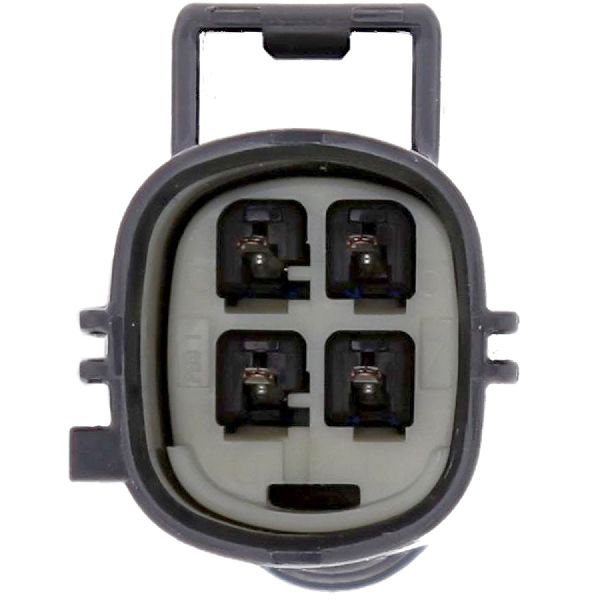
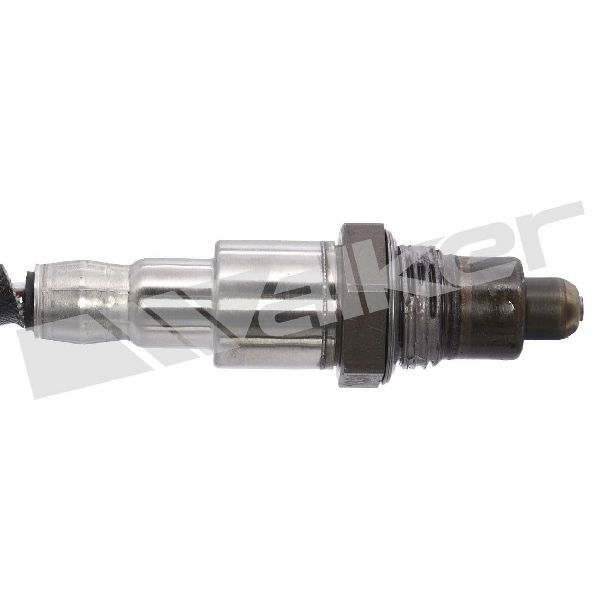
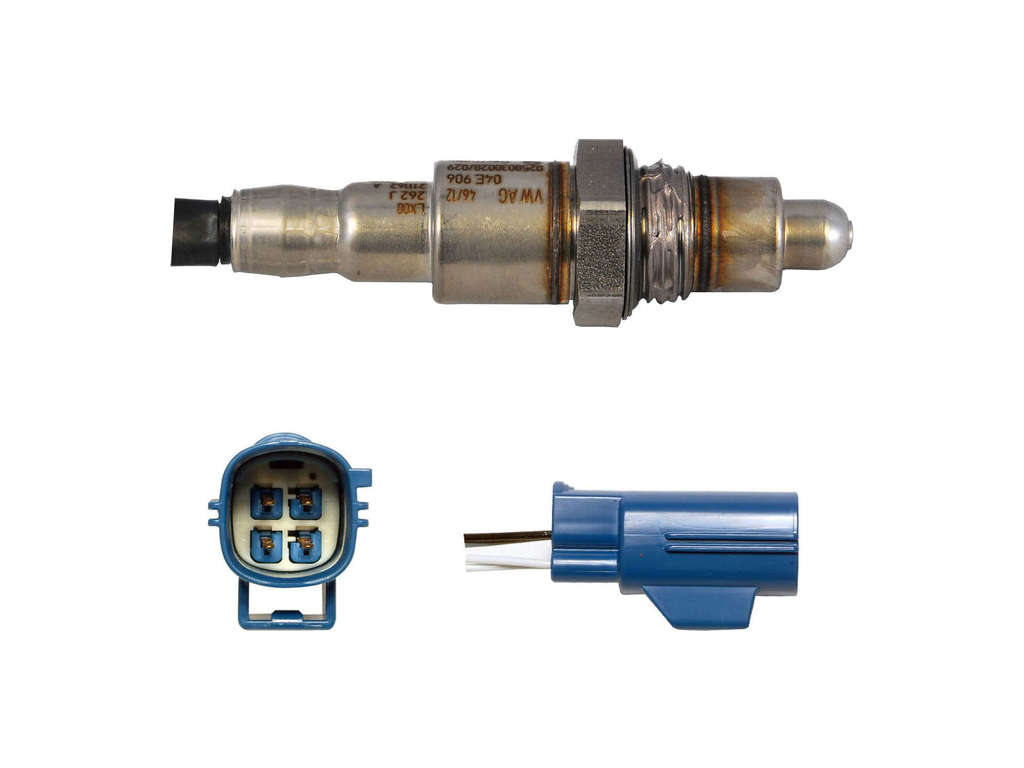
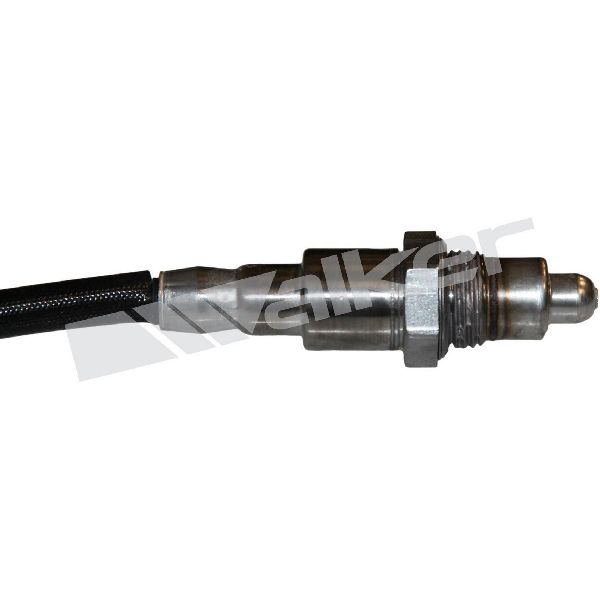
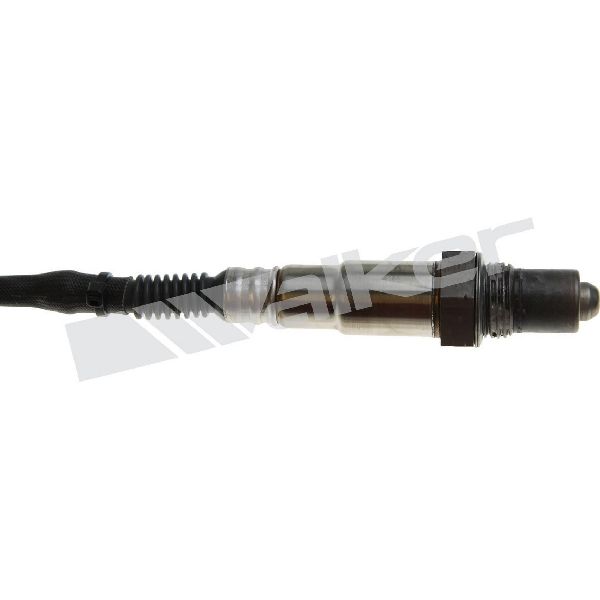
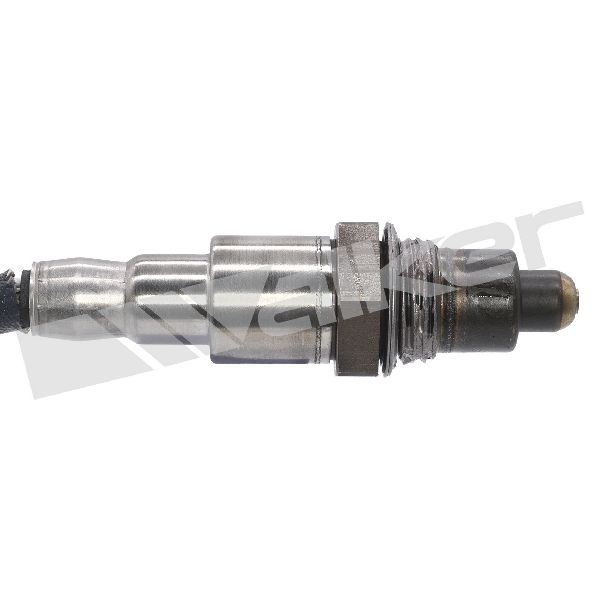
- Bank 1, Sensor 3 Oxygen Sensor
(OEM #C2D23702)— This is the sensor identified by the trouble code. It is a common wear item and is the primary hardware component that fails, triggering P0142 when software is not the issue. This part has been superseded by C2D54166, and then by T2H48050.
Trusted brands: Jaguar (OEM), Bosch (e.g., 16032), NTK, Denso (e.g., 234-4792)
OEM price range: $250-$300
Aftermarket price range: $70-$150
Related Codes That Often Appear With This One
- P0042, P0043, P0044, P0143, P0144, P0147 — These are all codes related to the Bank 1 downstream oxygen sensors (Sensor 2 and 3). Jaguar's TSB JTB-00392-NAS-3 lists them together as being potentially caused by the same PCM software error.
- P0062, P0161, P0162, etc. — These are the equivalent codes for the Bank 2 (driver's side) sensors. The software issue described in the TSB can affect sensors on both banks.
Technical Service Bulletins (TSBs) & Recalls
- JTB-00392-NAS-3: States that for 2013-2015 XJ, XF, and F-Type models, a range of O2 sensor codes, including P0142, can be caused by a PCM software error. It advises replacing the indicated sensor if a code is stored, then updating the PCM software.
- SSM72477: A general service message for 2013-2015 models indicating that a Check Engine Light may be present with one or more codes stored relating to the heated oxygen sensors, reinforcing the known issue. [NHTSA Record]
Platform-Specific Known Issues
- A software error in the Powertrain Control Module (PCM) is a known cause for this code on 2013-2015 models, as documented in Jaguar TSB JTB-00392-NAS-3. The official fix requires replacing the sensor if the code is active, followed by a mandatory software update.
- There is an extended emissions warranty in North America on some model years that may cover the replacement of faulty oxygen sensors. Owners have reported getting sensors replaced under this warranty.
Mechanic-Grade Diagnostic Values
- Downstream O2 Sensor Signal Voltage (at operating temp) — expected: Should hover steadily between 0.1V and 0.9V. A good sensor's voltage changes rapidly, typically between 0.2V and 0.7V.. Failure: Voltage is stuck, unresponsive, or shows no activity. A fully warm sensor should not stay at 0.45V.
- O2 Sensor Heater Circuit Resistance — expected: Typically between 12 Ω and 30 Ω.. Failure: A reading of less than 5 Ω indicates a short circuit; a reading greater than 1 kΩ indicates an open circuit.
- O2 Sensor Heater Circuit Current — expected: A steady current of approximately 0.5–1.0 A when active.. Failure: No current draw or an erratic/excessive current draw.
Hidden / Shadow Codes Worth Checking
- N/A (Symptom-based Grouping): In the Jaguar SDD diagnostic software, DTCs that do not directly correlate with the symptoms entered by the technician may be filed under an 'Unrelated Events' tab. A technician must check this area to ensure no relevant codes are missed. (see via Jaguar SDD (Symptom Driven Diagnostics) dealer software)
Scan Tool Commands That Help
- Jaguar SDD (Symptom Driven Diagnostics): Configure existing module - Powertrain control module — This function is used to perform the software update as specified in TSB JTB-00392-NAS-3 to resolve false O2 sensor codes on 2013-2015 models.
- Jaguar IDS (Integrated Diagnostic System): O2 Sensor Orientation — This function internally remaps the O2 sensor inputs within the ECU. It can be used to correct situations where sensor wiring may have been swapped. It is also a potential cause of misdiagnosis if the orientation is set opposite to the physical wiring diagram and a technician 'corrects' the wiring, causing the car to run poorly.
Real Owner Repair Stories
- Jag-lovers Forums (1997 Jaguar XJR-6 (older model, but demonstrates a key principle)) — Poor fuel economy (17 MPG).
❌ Tried (didn't work) The owner discovered the two downstream O2 sensors were wired opposite to the factory wiring diagram. When he 'corrected' the wiring to match the diagram, the car ran terribly, with missing and lunging, and short-term fuel trim went to -25%.
✅ What actually fixed it The owner had to revert the wiring back to the 'incorrect' configuration. This implies the ECU had been programmed (via a function like 'O2 Sensor Orientation') to accept the swapped sensor inputs, making the 'wrong' wiring the correct setup for that specific vehicle. - Jaguar Forums (Jaguar X350/X358) — Failed O2 sensor readings on Torque app, no DTCs present in the main diagnostic scan.
❌ Tried (didn't work) The owner noted the previous owner had installed very cheap (£23) O2 sensors from eBay.
✅ What actually fixed it The owner ordered and installed all four genuine Denso O2 sensors, which resolved the issue. This highlights the importance of using high-quality OEM or equivalent sensors, as cheap universal parts can fail to communicate properly with the Jaguar ECU.
"I Checked Everything" — The Actual Cause
- While not a smoke test issue, a common dead-end for this circuit code is when a technician replaces the sensor and verifies the wiring is correct according to the diagram, yet the code persists. The actual cause in this scenario is often either the required PCM software update (per TSB JTB-00392-NAS-3) has not been performed, or the ECU's internal 'O2 Sensor Orientation' is set opposite to the physical wiring, a setting only visible with dealer-level tools.
OEM Part Supersession History
C2D23702→C2D54166, which was then superseded by T2H48050.— Standard part evolution for improved reliability or manufacturing process. No specific reason was documented in the search results.
Heads up: None found. The latest part number, T2H48050, appears to be a direct replacement for the earlier versions.
Model Year Variations Within This Range
- 2013-2015: These model years are specifically called out in TSB JTB-00392-NAS-3 as being prone to a software error causing false P0142 codes. Diagnosis for these years should prioritize checking for the software update.
- 2016: The 2016 model year is NOT listed in the primary software TSB. For a 2016 vehicle, P0142 is more likely to be a standard hardware failure (faulty sensor, wiring issue) rather than the specific software glitch affecting earlier models. The diagnostic approach should treat it as a conventional fault first.
Helpful Videos
We Have This Part in Stock

The information in this article is provided for general reference and educational purposes only. Vehicle specifications, procedures, and part compatibility can vary by production date, trim level, and region. Always consult your vehicle's factory service manual and verify part numbers before purchasing or performing repairs. Safety-critical components such as airbags, seat belts, and braking systems should be installed by a qualified professional.
- Jaguar XJ:
- 🧭 Diagnostic Flowchart
- 🎬 Helpful Videos
- 🛍️ Shop This Part
- What's Unique About the 2013-2016 Jaguar XJ
- Symptoms You May Notice
- Most Likely Causes
- Rare But Worth Checking
- Diagnosis Steps
- Parts You'll Likely Need
- Related Codes That Often Appear With This One
- Technical Service Bulletins (TSBs) & Recalls
- Platform-Specific Known Issues
- Mechanic-Grade Diagnostic Values
- Hidden / Shadow Codes Worth Checking
- Scan Tool Commands That Help
- Real Owner Repair Stories
- "I Checked Everything" — The Actual Cause
- OEM Part Supersession History
- Model Year Variations Within This Range
- 🎟️ Get 5% Off