

P0147 on 2013-2016 Land Rover Range Rover: O2 Sensor Heater Circuit Fixes
P0147 on a 2013-2016 Range Rover indicates a fault in the heater circuit of the rearmost oxygen sensor on Bank 1 (passenger side). The most common fix is replacing the faulty O2 sensor itself. However, Land Rover has issued technical service bulletins (TSBs) suggesting a software update may be needed or that the sensor could fail from thermal shock when exposed to water.
- P0147 points to a failure in the heater circuit of the rearmost oxygen sensor on the passenger side.
- The most common solution is to replace the oxygen sensor (Part # LR035747 or equivalent).
- Before replacing parts, check the fuse for the O2 sensor heater circuit.
- Be aware of Land Rover TSBs that suggest a software update might be the correct fix, especially on 2014 models.
- A thorough visual inspection of the wiring and connector for damage is a critical diagnostic step.
What's Unique About the 2013-2016 Land Rover RANGE ROVER

For the L405 Range Rover, a P0147 code isn't always a straightforward sensor failure. Land Rover issued Technical Service Bulletin LTB00671NAS3 for 2014-2015 models with the 3.0L V6 engine, indicating that this and related codes could be triggered by 'thermal shock' when water contacts the hot sensor, necessitating a sensor replacement and an ECM software update to prevent recurrence. Another TSB (SSM72448) notes that diagnosis may find no fault with the wiring or connectors, pointing towards the sensor itself or a software glitch. The 5.0L V8 Supercharged models on this platform often use a six-sensor layout (three per bank), making 'Sensor 3' a specific, rearmost sensor located near the transfer case.
Diagnostic Flowchart

Tap your situation to follow the diagnostic path that matches what you're seeing on this vehicle.
Symptoms You May Notice
- Check Engine Light (MIL) is illuminated.
- Vehicle fails an emissions test.
- Potentially reduced fuel economy, with some reports of a 1-3% drop.
- Rough idle, especially during cold starts (less common).
- Replacing the wrong oxygen sensor. On V8 models with six sensors, it's crucial to identify Bank 1 (passenger side) and Sensor 3 (the rearmost one, near the transfer case).
- Replacing the sensor without performing the required ECM software update on affected 3.0L V6 models, leading to a repeat failure.
Most Likely Causes

- Failed Oxygen Sensor (Bank 1, Sensor 3) 🔴 High Probability → Shop Oxygen Sensor The sensor's internal heater element can burn out. Land Rover TSBs explicitly state these sensors are susceptible to failure from 'thermal shock' when water from puddles or off-roading contacts the hot sensor housing.
How to confirm: Disconnect the sensor and measure the resistance across the two heater circuit pins. A healthy sensor typically reads between 2-15 Ohms. An open circuit (infinite resistance) or a short (near-zero resistance) confirms the heater has failed.
Typical fix: Replace the Bank 1, Sensor 3 oxygen sensor. For 2014-2015 3.0L V6 models, an ECM software update should also be performed per TSB LTB00671NAS3/5 to prevent recurrence.
Est. part cost: $85-$250 - Damaged Wiring or Corroded Connector 🟡 Medium Probability The wiring for Sensor 3 runs underneath the vehicle near the transfer case, exposing it to heat, moisture, and road debris. This can cause wires to fray, melt on the exhaust, or the connector pins to corrode.
How to confirm: Visually inspect the wiring harness and connector for the sensor. Check for burned, chafed, or broken wires. Test for battery voltage (10-14V) and ground at the connector with the ignition on.
Typical fix: Repair the damaged section of the wiring harness or clean/replace the connector.
Est. part cost: $10-$100 - Engine Control Module (ECM) Software Issue ⚪ Low Probability → Shop Engine Control Module (ECM) TSB LTB00671NAS3/5 specifically states that for certain 2014-2015 models with the 3.0L V6, this code may be stored erroneously due to over-sensitivity. The prescribed fix is a software update to the ECM.
How to confirm: A Land Rover dealership or qualified independent shop with access to the SDD system can check if your vehicle's ECM software is up to date and if TSB LTB00671NAS3/5 applies to your VIN.
Typical fix: Update the Engine Control Module (ECM) software using the JLR SDD diagnostic tool.
Est. part cost: $0-$250 - Blown Fuse ⚪ Low Probability
How to confirm: Locate the fuse for the oxygen sensor heater circuits in the vehicle's fuse box (check owner's manual for location) and check for continuity.
Typical fix: Replace the blown fuse. If it blows again, a short circuit in the wiring or the sensor itself is the likely cause.
Est. part cost: $1-$5
Rare But Worth Checking
- Faulty Engine Control Module (ECM): → Shop Engine Control Module (ECM) This is very rare. The ECM's internal driver for the heater circuit can fail. This should only be considered after all other possibilities (sensor, wiring, fuses, software) have been exhaustively ruled out.
Diagnosis Steps
- Read the fault codes with an OBD-II scanner and note any other codes present.
- Inspect the fuse for the O2 sensor heater circuit.
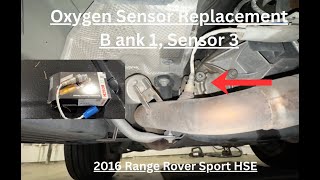
- Raise the vehicle safely (off-road height can provide sufficient clearance) and visually inspect the Bank 1, Sensor 3 (passenger side, rearmost, near the transfer case) oxygen sensor, its connector, and wiring for any signs of physical damage, melting, or corrosion.
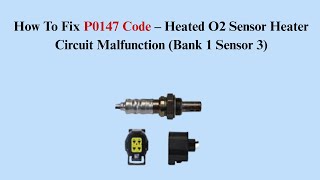
- Disconnect the sensor and measure the resistance of the heater circuit using a multimeter. A reading between 2-15 Ohms is typical; infinite or near-zero Ohms indicates a bad sensor. 🎬 Watch: How to diagnose and fix the P0147 code.
- With the sensor disconnected and ignition on, check for battery voltage (approx. 12V) and a good ground signal at the vehicle's harness connector.
- If the sensor and wiring test good, check with a Land Rover dealer or specialist for any applicable software updates, specifically referencing TSB LTB00671NAS3/5 for 2014-2015 3.0L V6 models.
- If the sensor is good but power is missing from the harness, trace the wiring back towards the ECM to check for breaks or shorts. Check for continuity from the ECM pin to the sensor connector.
- A 22mm offset oxygen sensor socket or a 22mm wrench is required for removal and installation.
Parts You'll Likely Need
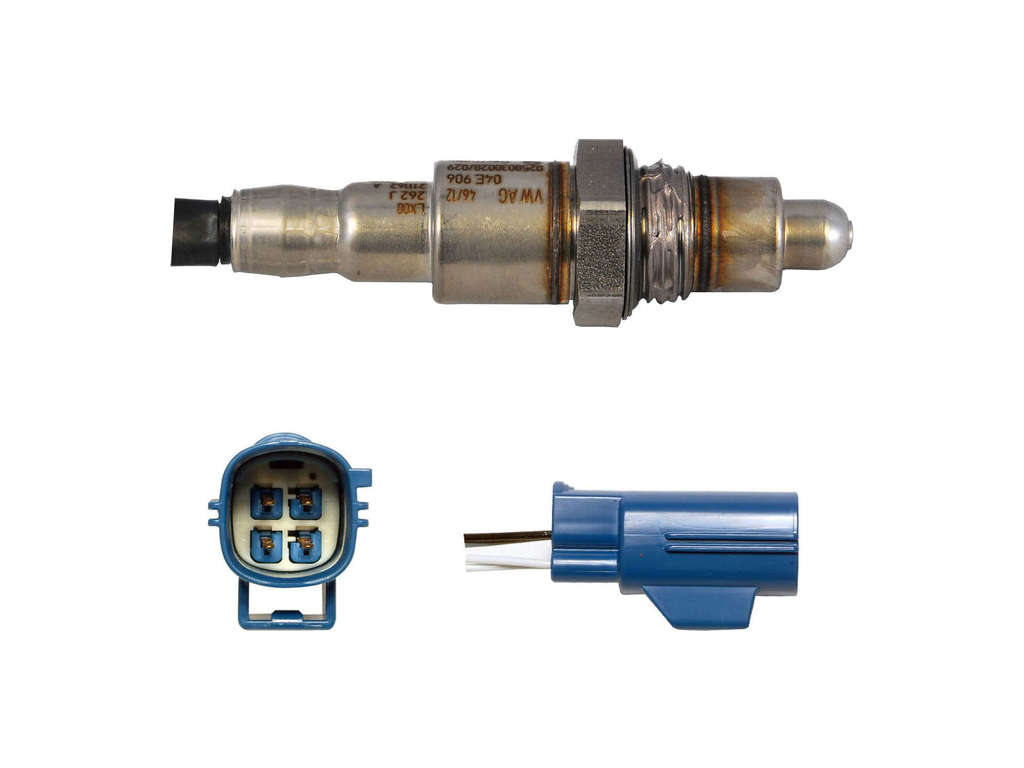
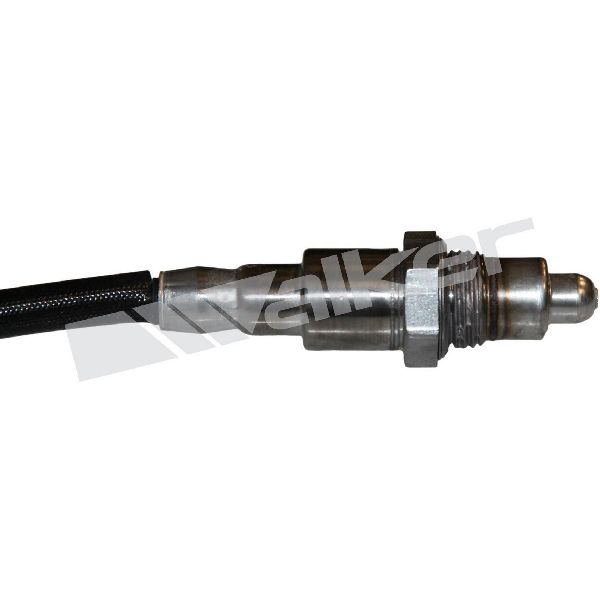
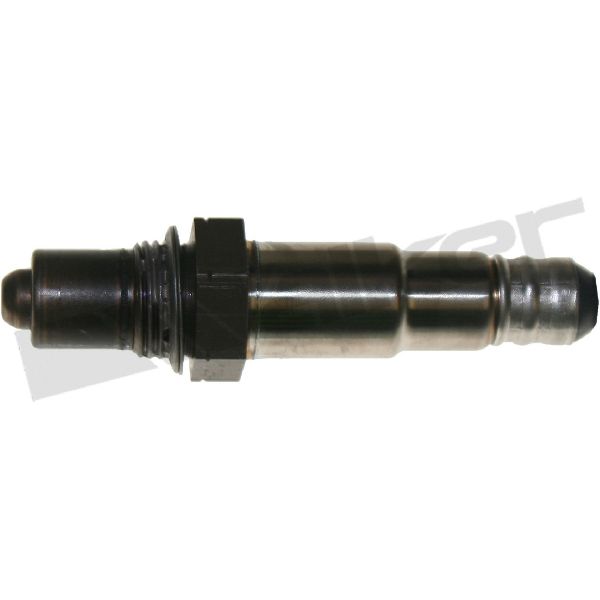
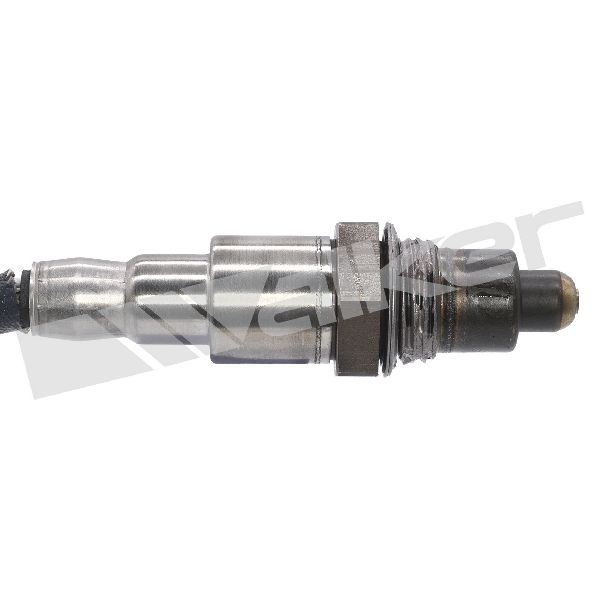
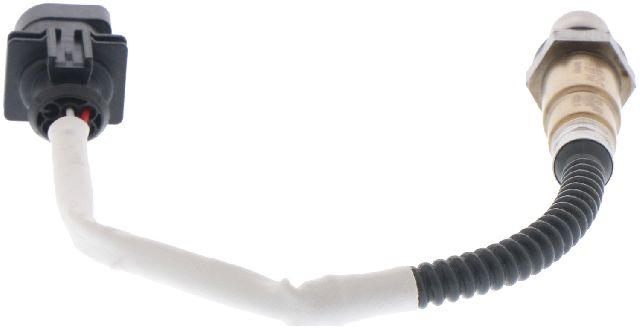
- Oxygen Sensor (Bank 1, Sensor 3)
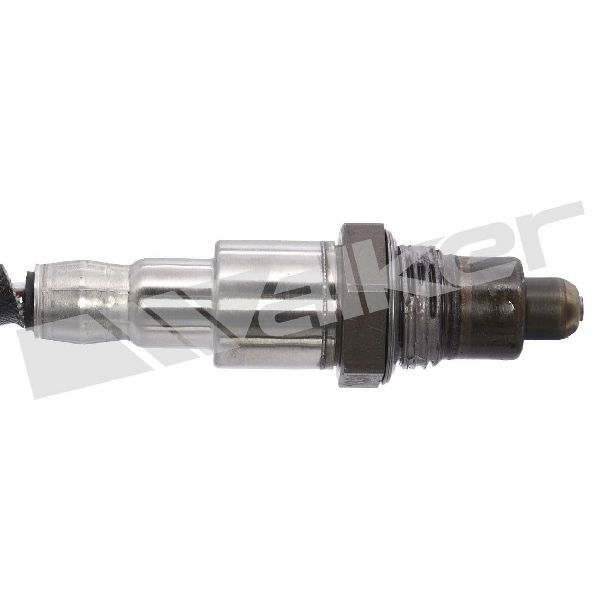
(OEM #LR035747)— The internal heater element is the most common point of failure, often due to burnout or thermal shock as identified by Land Rover.
Trusted brands: Genuine Land Rover, Bosch, Denso, NTK
OEM price range: $150-$250
Aftermarket price range: $85-$180
Related Codes That Often Appear With This One
- P0167 — This is the identical heater circuit malfunction code but for Bank 2, Sensor 3. They often appear together, suggesting a common cause like a software issue (as noted in TSB LTB00671NAS3/5) or a shared power/ground circuit problem.
- P0142, P0143, P0144 — These are other circuit-related codes for the same sensor (Bank 1, Sensor 3). TSB LTB00671NAS3 groups them together, indicating they can be triggered by the same thermal shock fault condition.
Technical Service Bulletins (TSBs) & Recalls
- LTB00671NAS5: Engine MIL Illuminated With Heated Oxygen Sensor-Related DTCs Stored
- LTB00671NAS3: Engine MIL Illuminated With DTC...P0147...Stored
- SSM72448: ...P0147...UPON DIAGNOSIS NO FAULT IS FOUND WITH THE WIRING HARNESS OR CONNECTOR
Platform-Specific Known Issues
- TSB LTB00671NAS3/5: Thermal Shock Failure on 3.0L V6: Affects 2014-2015 Range Rover and Range Rover Sport models with the 3.0L V6. The MIL may illuminate with P0147 (and other related codes) stored. The cause is cited as thermal shock from water contacting the hot sensor. The official fix requires replacing the affected sensor AND performing an ECM software update to prevent recurrence.
- TSB SSM72448: Diagnosis Finds No Wiring Fault: Notes that for a range of O2 sensor codes including P0147, diagnosis may reveal no faults with the wiring harness or connectors, suggesting the issue lies with the sensor itself or the ECM software. This reinforces that a good-looking wire isn't always a good wire, but often the sensor is the true culprit.
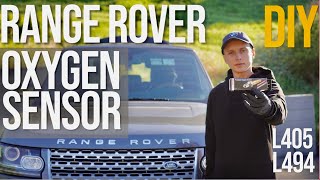
- Real-World Repair: DIY Replacement: Multiple YouTube videos, including one from the channel 'Fixty', demonstrate the replacement of the Bank 1, Sensor 3 O2 sensor on L405 and L494 platforms. The videos confirm the sensor's location on the passenger side, rear of the exhaust system near the transfer case, and show that it is accessible from underneath the vehicle, often just by raising the air suspension 🎬 See this DIY replacement walkthrough for the L405 platform. to off-road height.
Mechanic-Grade Diagnostic Values
- O2 Sensor Heater Element Resistance — expected: 5-15 Ohms, 2-10 Ohms, or approximately 6 Ohms.. Failure: An open circuit (infinite resistance) or a short circuit (near zero resistance) indicates a failed heater element.
- Voltage at Harness Connector (Heater Circuit) — expected: Approximately 12V (or a 5V reference on some systems) with the ignition on and the ECM commanding the heater on.. Failure: A reading below 9V suggests a supply issue, while zero volts indicates an open in the supply circuit.
- Wiring Continuity (ECM to Sensor Connector) — expected: Less than 0.1 Ohms.. Failure: Resistance greater than 0.1 Ohms indicates damage or corrosion in the wiring harness.
Scan Tool Commands That Help
- JLR SDD (Symptom Driven Diagnostics): Read Diagnostic Trouble Codes (DTC), Configure existing module - Engine Control Module. — This is the official dealer tool used to read codes, identify the vehicle, and perform required software updates as specified in TSBs like LTB00671NAS5.
- Advanced Aftermarket Scanners (e.g., iCarsoft, Thinkdiag): O2 Sensor Heater Actuation Test / Bi-Directional Test. — This function allows a technician to manually command the O2 sensor heater circuit on and off. By monitoring live data for voltage drop and heater status changes, it confirms if the ECM driver and wiring are functioning correctly before condemning the sensor itself.
Wiring & Ground Locations
- General Chassis Earth Points — Key locations for main earth leads on the L405 chassis include behind the battery in the engine bay, in the passenger and driver side footwells behind trim panels, and main engine-to-chassis ground straps.. While a specific ground point for the O2 heater circuit is not documented in public diagrams, a poor or corroded main chassis or engine ground can cause a variety of intermittent and low-voltage electrical faults, including heater circuit codes. A video on a 5.0L Supercharged L405 showed widespread electrical faults being resolved by cleaning corroded earth leads.
Real Owner Repair Stories
- YouTube channel 'Fixty' (2013-2021 Range Rover L405 / Sport L494 with V6 or V8 gasoline engine.) — Check Engine Light with code for Bank 1, Sensor 3.
✅ What actually fixed it The problem was resolved by replacing the Bank 1, Sensor 3 oxygen sensor. The video confirms the location as the passenger side (US), rearmost sensor, accessible from underneath by raising the vehicle to off-road height. A 22mm wrench was used for removal.
OEM Part Supersession History
LR035747→LR140079— Part number update/consolidation.
Heads up: LR035747 and LR140079 are listed as having the same fitment. LR098291 is also listed as an OEM reference number. The OEM part is made by Bosch, and cross-references to Bosch P/N 0258030025 and Ford engineering number CPLA9G444GA.
Model Year Variations Within This Range
- 2013-2014: Part number LR035747 is specified for vehicles 'To vin ha343439' on some Land Rover parts sites, suggesting a potential change in part for later VINs within the model year range.
- 2014-2015: Models with the 3.0L V6 engine within a specific VIN range may require an ECM software update in addition to sensor replacement to fix P0147, per TSB LTB00671NAS5.
Helpful Videos


We Have This Part in Stock

The information in this article is provided for general reference and educational purposes only. Vehicle specifications, procedures, and part compatibility can vary by production date, trim level, and region. Always consult your vehicle's factory service manual and verify part numbers before purchasing or performing repairs. Safety-critical components such as airbags, seat belts, and braking systems should be installed by a qualified professional.
- Land Rover RANGE ROVER:
- 🧭 Diagnostic Flowchart
- 🎬 Helpful Videos
- 🛍️ Shop This Part
- What's Unique About the 2013-2016 Land Rover RANGE ROVER
- Symptoms You May Notice
- Most Likely Causes
- Rare But Worth Checking
- Diagnosis Steps
- Parts You'll Likely Need
- Related Codes That Often Appear With This One
- Technical Service Bulletins (TSBs) & Recalls
- Platform-Specific Known Issues
- Mechanic-Grade Diagnostic Values
- Scan Tool Commands That Help
- Wiring & Ground Locations
- Real Owner Repair Stories
- OEM Part Supersession History
- Model Year Variations Within This Range
- 🎟️ Get 5% Off