

P0148 on 2012-2018 Ford Focus ST: Fuel Delivery Error Causes and Fixes
On a 2012-2018 Ford Focus ST, code P0148 almost always points to a problem with the high-pressure fuel system. The most common causes are a failing High-Pressure Fuel Pump (HPFP) or a faulty fuel pressure sensor. Expect to diagnose the issue before buying parts, as an HPFP can be costly. This code is often seen with P0087 (Fuel Rail Pressure Too Low).
- P0148 on a Focus ST points to a fuel delivery problem, most often on the high-pressure side of the direct injection system.
- The most likely culprits are a failing High-Pressure Fuel Pump (HPFP) or a bad fuel pressure sensor.
- Before replacing parts, use a scan tool to monitor desired vs. actual fuel rail pressure to pinpoint the problem.
- Check for open recalls, as both wiring (14S17) and canister purge valve (18S32) issues have affected these vehicles and can cause similar symptoms.
- Do not drive the vehicle extensively with this code, as it can lead to stalling and potential damage to the expensive HPFP.
What's Unique About the 2012-2018 Ford Focus
The 2.0L EcoBoost is a direct-injection engine, meaning it relies on extremely high fuel pressures (up to ~2200 PSI) to operate correctly. Unlike a traditional port-injected car, the Focus ST has a cam-driven High-Pressure Fuel Pump (HPFP) that is a known weak point. When this pump begins to fail, it cannot keep up with the fuel demand from the engine, especially in performance situations, which is a primary trigger for the P0148 code. Owner experiences frequently point to either the HPFP or related sensors as the culprit, rather than the in-tank fuel pump.
Symptoms You May Notice
- Check Engine Light is on
- Hesitation or stumbling during acceleration, especially above 3,500 RPM.
- Loss of engine power, especially under boost
- Rough or fluctuating idle
- Engine stalling, sometimes without warning
- Increased fuel consumption
- Hard starting, requiring extended cranking.
- Replacing the in-tank fuel pump when the High-Pressure Fuel Pump (HPFP) is the actual cause.
- Replacing fuel injectors when the issue is a lack of pressure, not faulty injectors.
- Replacing the HPFP when the actual fault is a much cheaper and easier to replace low-pressure fuel sensor.
Most Likely Causes
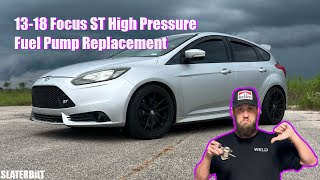
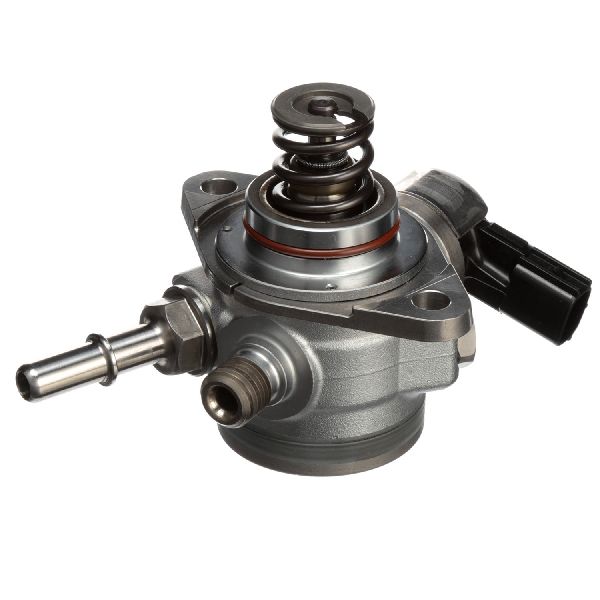
- Failing High-Pressure Fuel Pump (HPFP) 🔴 High Probability → Shop Fuel Pump The mechanically-driven HPFP is a known failure point on this platform. It can wear out internally or the cam follower can be damaged, leading to insufficient pressure. This is the most common cause for P0148 and the related P0087 code.
How to confirm: Use a capable OBD-II scanner (like FORScan) to monitor live data for 'Fuel Rail Pressure' and 'Desired Fuel Rail Pressure'. Under load (e.g., a wide-open throttle pull in 3rd gear, where safe), if the actual pressure cannot keep up with the desired pressure and drops significantly, the HPFP is likely weak. At idle, desired pressure should be around 800-2200 PSI; if the actual pressure is near the low-side pressure (e.g., under 100 PSI), the HPFP has failed.
Typical fix: Replacement of the High-Pressure Fuel Pump. It is critical to also inspect and replace the camshaft follower (tappet) and the pump's O-ring during replacement to prevent premature failure of the new pump. An oil change is also recommended to remove any fuel that may have contaminated the oil.
Est. part cost: $200-$600 - Faulty Fuel Pressure Sensor 🟡 Medium Probability → Shop Fuel Pressure Sensor Sensors can fail over time, sending incorrect readings to the PCM. There is a low-pressure fuel sensor on the line feeding the HPFP and a high-pressure sensor on the fuel rail. The low-pressure sensor is a common failure point on many EcoBoost engines and can cause these codes.
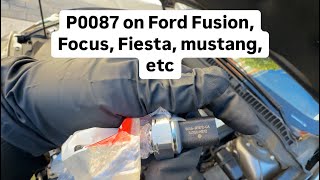
How to confirm: Check the fuel pressure reading with the key on, engine off. It should show a plausible reading, not zero or an impossibly high number. If the reading is erratic or stuck on a specific value (e.g., 109 PSI) while actual pressure changes, the sensor is suspect. A video for other Ford EcoBoost engines suggests a revised low-pressure sensor part number (BU5A-9F972-CA, which supersedes BU5A-9F972-BA) may solve these codes.
Typical fix: Replace the faulty fuel pressure sensor. The high-pressure sensor is on the fuel rail. The low-pressure sensor (Motorcraft CM-5250 / BU5Z-9F972-B) is on the feed line to the HPFP, near the firewall.
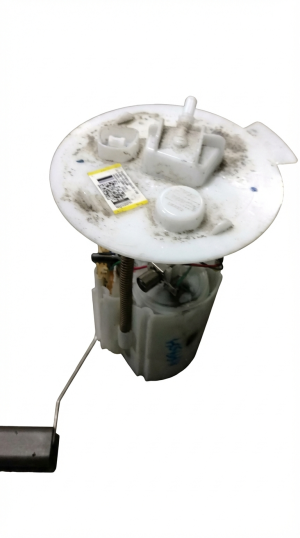
Est. part cost: $50-$150 - Weak In-Tank Low-Pressure Fuel Pump ⚪ Low Probability → Shop Fuel Pump The HPFP cannot generate high pressure if it is not being fed enough fuel from the in-tank pump. While less common than HPFP failure, a weak in-tank pump can starve the high-pressure side.
How to confirm: Test the low-side fuel pressure using a mechanical gauge or a scan tool. It should be within the manufacturer's specified range (typically 60-85 PSI for a Focus ST) before the HPFP. If low-side pressure is weak, the in-tank pump is the likely cause.
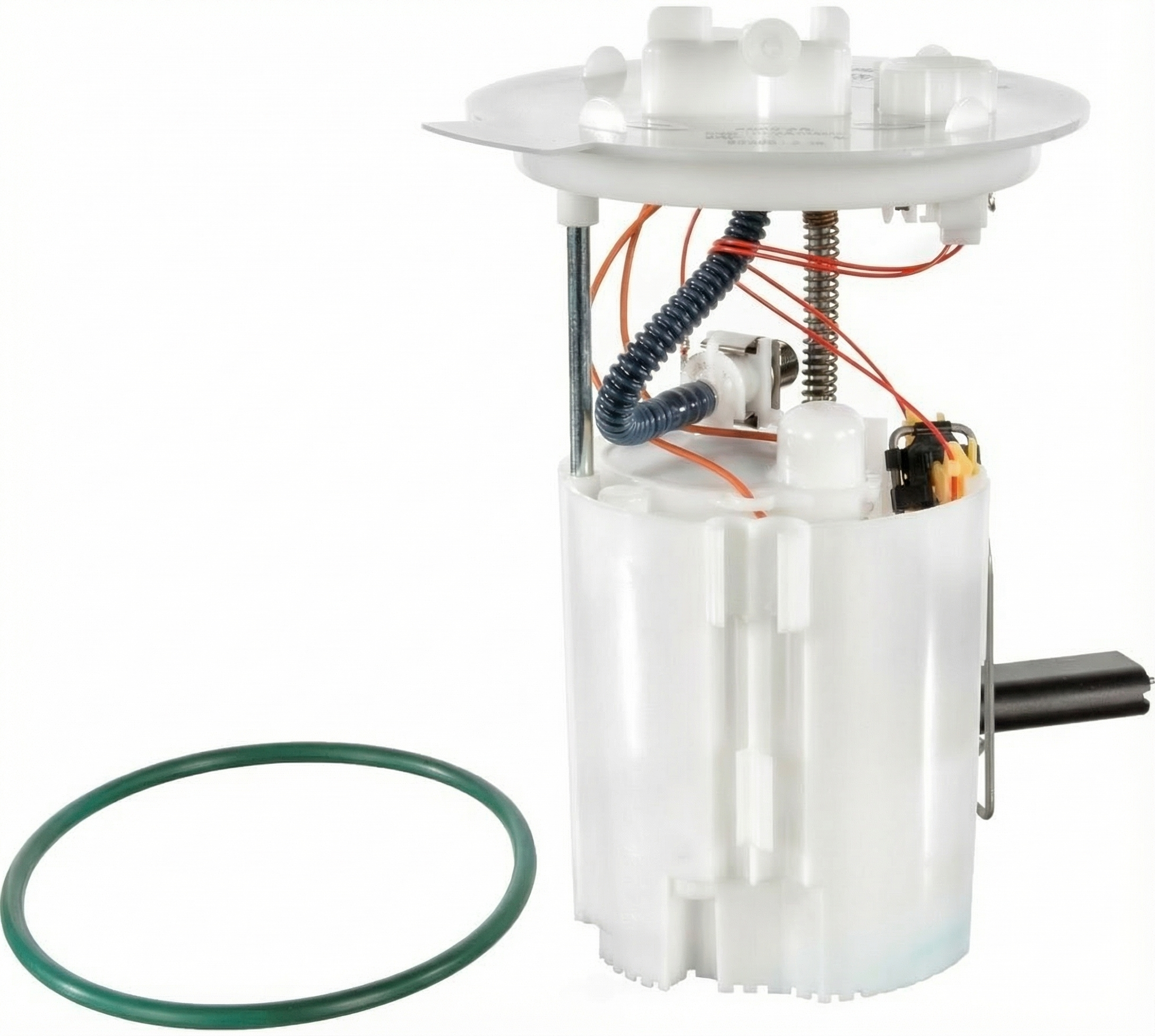
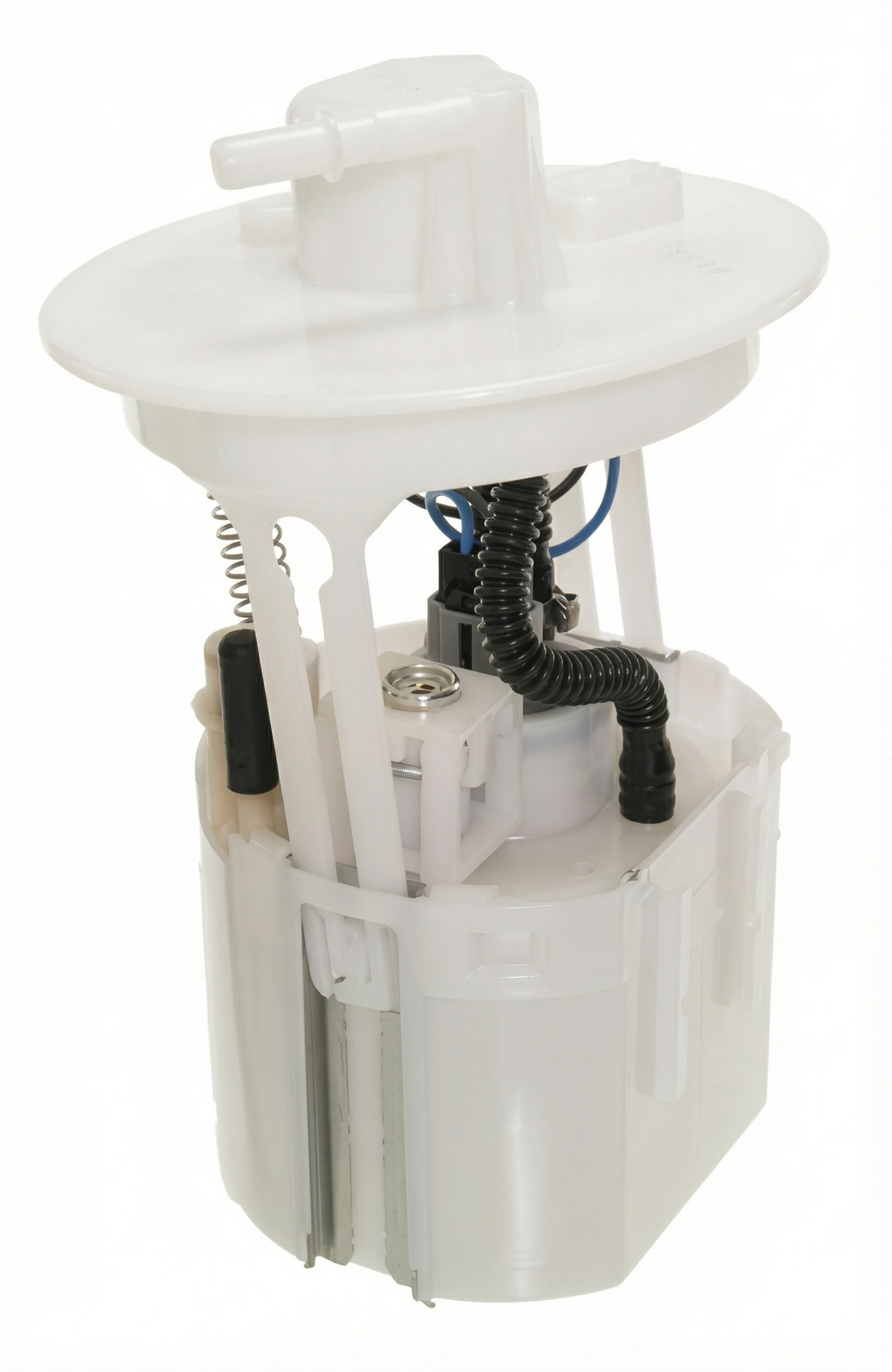
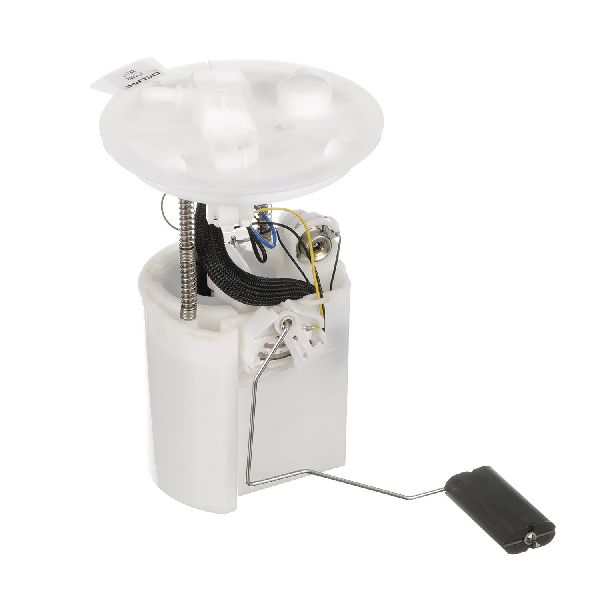
Typical fix: Replace the in-tank fuel pump assembly.
Est. part cost: $200-$400
Rare But Worth Checking
- Wiring Harness Issues: For 2013-2014 models, Ford issued a recall (14S17) for defective wiring harness splices (specifically S132 and S133) that could cause stalling and erratic engine behavior, sometimes triggering fuel-related codes. TSB 13-09-07 also addresses this, noting it can cause codes P0106 and P0236. Check if this recall was performed on your vehicle.
- Clogged Fuel Filter: → Shop Fuel Filter The fuel filter is integrated into the in-tank fuel pump assembly and is considered non-serviceable. While a clog is possible, it's uncommon and would typically require replacing the entire pump assembly.
- Damaged Camshaft Lobe/Follower: In severe cases, the follower that rides on the camshaft to drive the HPFP can fail, destroying both the pump and the camshaft lobe. This is a major engine repair that may require camshaft replacement or even a new long block.
Diagnosis Steps
- Check for other stored DTCs. Codes like P0087 or P0088 can provide more specific clues.
- Connect a scan tool (FORScan is recommended for Fords) and monitor live data for 'Fuel Rail Pressure', 'Desired Fuel Rail Pressure', and 'Low Side Fuel Pressure'.
- With the key on and engine off, verify the fuel rail pressure sensor is reading a baseline pressure and not zero or an abnormally high value.
- Start the engine and observe the pressure at idle. It should be stable and match the desired pressure. Watch for a low-side pressure that is stuck or doesn't react.
- If possible and safe, perform a test drive while logging data. Under acceleration, watch to see if the actual high pressure drops significantly while the desired pressure remains high. This points to a pump or filter issue.
- If pressure is consistently low, inspect the wiring and connectors for the HPFP and both fuel pressure sensors, especially checking for completion of recall 14S17 on 2013-2014 models.
- If the high-pressure side seems okay, test the pressure of the low-pressure in-tank fuel pump to ensure it's supplying enough fuel to the HPFP (should be 60-85 PSI).
- If replacing the HPFP, ALWAYS inspect the camshaft follower (tappet) and the camshaft lobe for any signs of wear or damage. Replace the follower with the pump.
Parts You'll Likely Need
- High-Pressure Fuel Pump (HPFP)
(OEM #CM5E-9D376-CB)— This is the most common component to fail and cause a P0148 code on the 2.0L EcoBoost engine due to the high stress it's under.
Trusted brands: Motorcraft, Bosch
OEM price range: $450-$600
Aftermarket price range: $200-$450 - Low-Pressure Fuel Sensor
(OEM #CM-5250 (Motorcraft), BU5Z-9F972-B (Ford), BU5A-9F972-CA (Revised))— This sensor, located on the line feeding the HPFP, is a common failure point that can send incorrect data, triggering the code even if the pump is healthy.
Trusted brands: Motorcraft, Bosch
OEM price range: $60-$100
Aftermarket price range: $35-$70 - High-Pressure Fuel Rail Sensor — This sensor provides the critical feedback to the PCM. If it fails, it can send incorrect data, triggering the code. It is less common to fail than the low-pressure sensor or HPFP.
Trusted brands: Motorcraft, Bosch, Delphi
OEM price range: $100-$150
Aftermarket price range: $40-$100
Related Codes That Often Appear With This One
- P0087 — This code means 'Fuel Rail/System Pressure - Too Low,' which is a more specific version of the P0148 delivery error. They often appear together when the HPFP is failing.
- P0088 — 'Fuel Rail/System Pressure - Too High' can appear if the fuel pressure sensor is failing and sending erratic signals, or if the pressure control actuator is stuck.
- P053F — 'Cold Start Fuel Pressure Performance' can be triggered alongside P0148 and P0087, often pointing to severe wear on the HPFP or camshaft.
Technical Service Bulletins (TSBs) & Recalls
- TSB 13-09-07: Precursor to recall 14S17, this add
Platform-Specific Known Issues
- Recall 14S17 / TSB 13-09-07: Affecting 2013-2014 models, this recall addressed faulty wiring harness splices that could cause stalling and various drivability issues, including codes related to the MAP sensor.
- Recall 18S32 / NHTSA 18V735: This recall was for a malfunctioning Canister Purge Valve (CPV) that could stick open, creating excessive vacuum and deforming the fuel tank, leading to stalling and inaccurate fuel gauge readings. While not directly causing P0148, it's a critical fuel system issue for 2012-2018 models.
Mechanic-Grade Diagnostic Values
- Low-Pressure Fuel System Pressure (In-tank pump output) — expected: 60-85 PSI. Failure: Pressure below 60 PSI indicates a weak in-tank pump or clogged filter.
- High-Pressure Fuel System Pressure (HPFP output at idle) — expected: ~800 - 2200 PSI. Failure: Pressure that does not match desired pressure, or drops to low-side pressure (under 100 PSI), indicates a failed HPFP.
- Low-Pressure Fuel Sensor Voltage (KOEO or while running) — expected: Varies with pressure, should not be static.. Failure: Voltage is stuck at a specific value (e.g., 4.82v) or the reading on a scan tool is frozen (e.g., 109 PSI) even when actual pressure changes.
- High-Pressure Fuel Sensor Voltage — expected: Typically 0.5V - 4.5V, proportional to pressure.. Failure: Voltage is zero, stuck at 5V, or does not correlate with pressure readings from a mechanical gauge.
Scan Tool Commands That Help
- FORScan / Ford IDS: Fuel Pump Command (On/Off) — Can be used to test the low-pressure in-tank fuel pump's operation and check for voltage at the pump without starting the engine.
- FORScan / Ford IDS: Live Data Logging (PIDs: FRP, FRP_DSD, FLP) — Essential for diagnosis. Logging Fuel Rail Pressure (FRP), Desired Fuel Rail Pressure (FRP_DSD), and Low-Side Fuel Pressure (FLP) during a wide-open throttle pull is the primary method to confirm if the HPFP can keep up with demand.
Wiring & Ground Locations
- Passenger Compartment Fuse F56 — In the fuse panel located below the glove box on the right-hand side of the passenger footwell.. This 20A fuse supplies power to the in-tank low-pressure fuel pump. A blown fuse will prevent the pump from running, starving the HPFP of fuel and causing P0148.
- Engine Bay Grounds (under airbox) — After removing the airbox, there are two primary ground points on the chassis frame rail.. These grounds are critical for various engine sensors. Poor contact due to paint or corrosion can cause erratic sensor readings, potentially triggering false codes. Cleaning these grounds to bare metal is a common preventative and diagnostic step.
- Transmission Ground Strap — A ground wire runs from the chassis (often near the battery/airbox) to a bolt on the transmission bell housing.. This is a main ground for the engine/transmission assembly. If it's loose, corroded, or disconnected (often forgotten during clutch/transmission work), it can cause a wide range of electrical issues, including no-start conditions and sensor-related fault codes.
Real Owner Repair Stories
- YouTube channel 'Irfan Chaudhry' (2016 Ford Fusion (with similar EcoBoost fuel system)) — Check engine light with codes P0087 and P0148, hesitation, jerking, shaking, and misfires at startup.
❌ Tried (didn't work) Replacing the high-pressure fuel pump (HPFP), Replacing the low-pressure in-tank fuel pump, Replacing the fuel pump module
✅ What actually fixed it The low-pressure fuel sensor was faulty. It was stuck reading 109 PSI, causing the computer to command less fuel from the pumps, which in turn starved the engine. Replacing the sensor resolved all symptoms and codes.
OEM Part Supersession History
BU5A-9F972-BA→BU5A-9F972-CA, BU5Z-9F972-B, Motorcraft CM-5250— The original low-pressure fuel sensor was prone to failure. The revised part (ending in -CA) is noted by technicians as the proper fix.
Heads up: The old part number BU5A-9F972-BA should be avoided. The revised part BU5A-9F972-CA is the recommended replacement.
Model Year Variations Within This Range
- 2015-2018: The Focus ST received a significant facelift for the 2015 model year. This included revised exterior and interior styling, a new flat-bottom steering wheel, and the introduction of the SYNC 3 infotainment system (on ST2/ST3 trims) replacing the older MyFord Touch. While the core 2.0L EcoBoost engine and fuel system remained largely the same, some electrical components and software calibrations may differ.
- 2013-2014: These pre-facelift models are subject to Recall 14S17 for a wiring harness splice issue that can cause stalling and various DTCs. This is a critical check for these specific years. [Pass 2 Data]
Diagnostic Flowchart
Other Known Issues on This Vehicle
Issues unrelated to this code that are worth knowing about as an owner of this generation:
- Canister Purge Valve (CPV) Failure 🔴 High — Extremely common across all model years, leading to a major recall. (Ref: Recall 18S32 / NHTSA 18V735)
- Engine Wiring Harness Splice Failure 🔴 High — Common on 2013-2014 models, causing stalling and various drivability problems. (Ref: Recall 14S17 / TSB 13-09-07)
- Cracked Cylinder Head (Exhaust Manifold Side) 🔴 High — A known, but less frequent, issue where the integrated exhaust manifold in the cylinder head can crack, often requiring cylinder head replacement.
- Manual Transmission Synchronizer Failure 🟠 Medium — Some owners report issues with weak synchronizers in the Getrag 6-speed manual, leading to grinding or difficulty shifting into gear.
- Low-Speed Pre-Ignition (LSPI) 🟠 Medium — A risk inherent to small-displacement, turbocharged direct-injection engines. Can cause engine damage if lugging the engine at low RPM in high gear.
Used vs. New Parts: Buying Guide for This Vehicle
When a used part is the smart pick: For this repair, using a used part is generally not recommended for the electronic sensors or the mechanical pumps. The failure rate of these components is high enough that a used part carries significant risk of being near the end of its life.
Donor-vehicle mileage cap: roughly under 40000 miles for the part to have meaningful remaining life.
What to inspect on the donor part:
- For a High-Pressure Fuel Pump (HPFP), there are no reliable visual cues. It's a high-risk used part.
- For sensors, ensure the connector pins are clean, straight, and free of corrosion.
- Ask for the donor vehicle's VIN to check for accident history or flood damage.
OEM-only on this vehicle (don't cheap out):
- High-Pressure Fuel Pump (HPFP)
- Low-Pressure Fuel Sensor
- High-Pressure Fuel Rail Sensor
Aftermarket brands forum-validated for this vehicle:
- Bosch (Often the OEM supplier for the HPFP and sensors)
- Motorcraft (Ford's official parts brand)
- Xtreme-DI (XDI) (For performance upgrades, not standard replacement)
- Nostrum High Performance (For performance upgrades, not standard replacement)
Brands owners have reported issues with on this vehicle:
- Unbranded, no-name parts from online marketplaces are a significant risk. Given the critical nature of the fuel system, sticking to OEM or reputable OEM-supplier brands is highly advised to avoid repeat failures or engine damage.
Real Owner Stories
Aggregated from forums and TSBs cited above. Mileages and costs reflect what owners reported in those sources.
2015 Ford Focus ST 2.0L EcoBoost
Symptoms: Loss of power above 3500 RPM and code P0087.
What fixed it: Replacement of the High-Pressure Fuel Pump (HPFP) with an OEM or Bosch 66800 unit.
Source hint: Reddit r/FocusST - P0087, losing power at 3500 RPM
2016 Ford Fusion 2.0L EcoBoost
Symptoms: Stall and low power with codes P0087 and P0148; the owner had already replaced both fuel pumps but the issue remained. The sensor reading was stuck.
What fixed it: Replacement of the low-side fuel pressure sensor (Part CM-5250).
Source hint: YouTube - Ford Fusion 2016 Stall, Low Power P0087, P0148 = Low Side Fuel Pressure Sensor
2013-2014 Ford Focus ST 2.0L EcoBoost
Symptoms: Stalling and various drivability issues related to the MAP sensor and wiring harness.
What fixed it: Repair of engine wiring harness splices under Recall 14S17 / TSB 13-09-07.
Source hint: Recall 14S17 / TSB 13-09-07
Related OBD-II Codes
Frequently Asked Questions
My 2013 Focus ST is stalling and has MAP sensor codes; could this be related to P0148?
Is there a specific fuel pressure sensor part number recommended for the 2.0L EcoBoost?
Could the fuel tank deformation recall on my 2014 Focus ST cause a P0148 code?
What should the fuel rail pressure be at idle on my Focus ST?
What is the correct low-side fuel pressure for a Focus ST?
When replacing the HPFP, are there other parts I must replace?
Helpful Videos

Used OEM Parts in Stock
New Aftermarket Parts Available



The information in this article is provided for general reference and educational purposes only. Vehicle specifications, procedures, and part compatibility can vary by production date, trim level, and region. Always consult your vehicle's factory service manual and verify part numbers before purchasing or performing repairs. Safety-critical components such as airbags, seat belts, and braking systems should be installed by a qualified professional.
- Ford Focus:
- 🧭 Diagnostic Flowchart
- 🎬 Helpful Videos
- 🛍️ Shop This Part
- What's Unique About the 2012-2018 Ford Focus
- Symptoms You May Notice
- Most Likely Causes
- Rare But Worth Checking
- Diagnosis Steps
- Parts You'll Likely Need
- Related Codes That Often Appear With This One
- Technical Service Bulletins (TSBs) & Recalls
- Platform-Specific Known Issues
- Mechanic-Grade Diagnostic Values
- Scan Tool Commands That Help
- Wiring & Ground Locations
- Real Owner Repair Stories
- OEM Part Supersession History
- Model Year Variations Within This Range
- Other Known Issues on This Vehicle
- Used vs. New Parts: Buying Guide for This Vehicle
- Real Owner Stories
- 2015 Ford Focus ST 2.0L EcoBoost
- 2016 Ford Fusion 2.0L EcoBoost
- 2013-2014 Ford Focus ST 2.0L EcoBoost
- Related OBD-II Codes
- Frequently Asked Questions
- 🎟️ Get 5% Off