

P0148 on 2015-2021 Volkswagen Golf: Fuel Delivery Error Causes and Fixes
P0148 on a VW Golf indicates a 'Fuel Delivery Error,' most often caused by a failing high-pressure fuel pump (HPFP) or a faulty in-tank low-pressure fuel pump (LPFP). It is frequently seen with code P0087 (Fuel Rail Pressure Too Low). Diagnosis should focus on testing both pumps and their electrical connectors, with the HPFP being a common failure point on TSI engines and the LPFP being known for causing a no-start on inclines.
- P0148 on your Golf is a serious fuel delivery error that should be addressed immediately to prevent stalling and potential engine damage.
- The code is almost always accompanied by P0087 (Fuel Rail Pressure Too Low), confirming a lack of fuel pressure.
- The two most likely causes are a failing High-Pressure Fuel Pump (HPFP) on the engine or a failing Low-Pressure Fuel Pump (LPFP) in the tank.
- Check for the specific symptom of the car failing to start on a hill with low fuel; this points directly to a known LPFP issue covered by a VW Tech Tip.
- Diagnosis requires monitoring fuel pressure with a scan tool to determine which part of the system is failing; professional service is recommended.
What's Unique About the 2015-2021 Volkswagen Golf
For the Mk7/Mk7.5 Golf generation with TSI engines (EA211 and EA888 families), the fuel system is robust but has known wear items. The high-pressure fuel pump (HPFP) is driven by the camshaft and is a frequent cause of fuel pressure issues over time, especially when paired with code P0087. Additionally, Volkswagen has acknowledged a specific issue in TSB 20-18-01TT where the in-tank low-pressure fuel pump can fail to hold pressure, causing a no-start condition when the car is parked on an incline with less than a quarter tank of fuel, which directly triggers the P0148 code.
Generation note: The 2015-2021 year range primarily covers the Volkswagen Golf Mk7 and the facelifted Mk7.5. The engines (1.4T, 1.8T, 2.0T TSI) are from the EA211 and EA888 families, which share similar fuel system designs. The causes and fixes are generally consistent across this generation, with many documented cases on the popular EA888 Gen 3 engine.
Symptoms You May Notice
- Check Engine Light is on
- EPC (Electronic Power Control) light may be on
- Engine hesitation or loss of power, especially during acceleration
- Engine stalls or runs rough, sometimes entering 'limp mode'
- Hard starting, long crank, or a crank-no-start condition
- Vehicle fails to start when parked on an incline with low fuel
- Strong smell of fuel from the engine bay or exhaust
- Black smoke from the exhaust
- Reduced fuel economy
- Replacing the fuel pressure sensor (G247) when the issue is a weak fuel pump.
- Replacing only the low-pressure pump when the high-pressure pump is the actual failure point, or vice-versa.
- Replacing a fuel pump when the actual fault is electrical, such as a bad ground or loose pins in the G247 sensor connector.
Most Likely Causes
- Failing High-Pressure Fuel Pump (HPFP) 🔴 High Probability → Shop Fuel Pump The HPFP is a mechanical pump driven by the camshaft and is a known wear item on VW/Audi direct-injection engines. Its internal components can wear out, or the diaphragm can weaken, preventing it from holding pressure under demand.
How to confirm: Using a scan tool (like VCDS), log 'Requested Fuel Rail Pressure' vs. 'Actual Fuel Rail Pressure' during a wide-open throttle pull in 3rd gear. If the actual pressure consistently falls more than 10-15 bar below the requested pressure, the HPFP is likely failing. High-pressure at idle should be around 40 bar (580 PSI) and can exceed 200 bar (2900 PSI) under load.
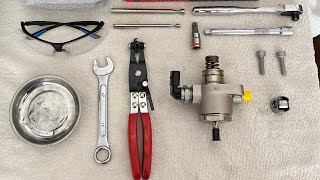
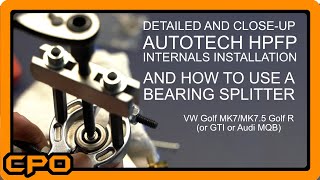
Typical fix: Replace the high-pressure fuel pump. It is highly recommended to also replace the cam follower (tappet) at the same time, as a worn follower can cause the new pump to fail.
Est. part cost: $250-$650 - Failing In-Tank Low-Pressure Fuel Pump (LPFP) 🟡 Medium Probability → Shop Fuel Pump VW issued Tech Tip 20-18-01TT (2050135) for a condition where a valve within the in-tank pump assembly fails. This prevents it from retaining fuel when parked on an incline with a low tank, causing a no-start and storing code P0148. Consistently running the tank near empty can also cause premature failure as the pump is cooled by the fuel.
How to confirm: Confirm if the no-start issue only occurs on an incline with less than 1/4 tank of fuel; if the car starts on a flat surface, the LPFP is the likely cause per the TSB. Otherwise, test low-pressure fuel system pressure, which should be between 4.0 and 6.0 bar (58-87 PSI) key-on, engine-off.
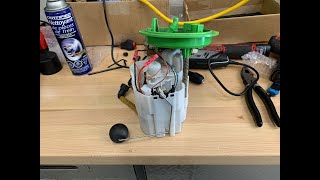
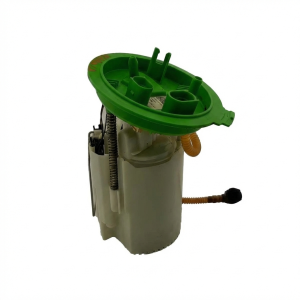
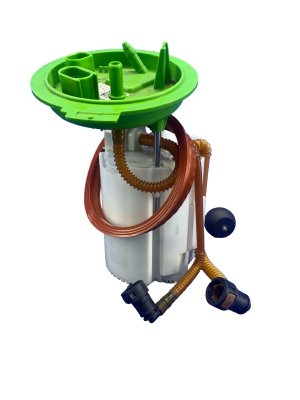
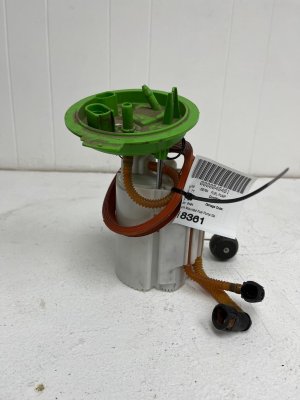
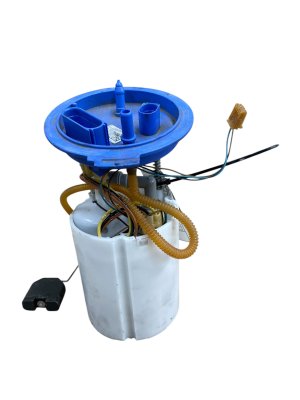
Typical fix: Replace the in-tank fuel pump assembly. 🎬 Watch: How to install a new in-tank low-pressure fuel pump. The fuel filter is often integrated into this assembly.
Est. part cost: $200-$500 - Clogged Fuel Filter ⚪ Low Probability → Shop Fuel Filter The fuel filter is a maintenance item that is often overlooked. On many Mk7 models, the filter is integrated into the LPFP assembly in the tank. A severely clogged filter can restrict fuel flow to the HPFP, starving it of fuel and causing a pressure drop.
How to confirm: Check vehicle service records. If the filter is old or integrated with the original LPFP, replacement is a good preventative measure. Pressure testing before and after a standalone filter (if equipped) can confirm a restriction.
Typical fix: Replace the fuel filter or the entire LPFP assembly if integrated.
Est. part cost: $30-$80
Rare But Worth Checking
- Faulty Fuel Pressure Sensor (G247): → Shop Fuel Pressure Sensor A faulty sensor on the high-pressure rail can send incorrect data to the ECM. More commonly, owners have found that the electrical connector pins for the G247 sensor can become loose, causing an intermittent poor connection and triggering P0148/P0087 even with healthy pumps.
- Faulty Fuel Pump Control Module (J538): → Shop Fuel Pump This module, located under the rear seat, controls the in-tank low-pressure pump. A failure in the module or its wiring/ground connection can cut or reduce power to the pump, leading to a fuel delivery error that can be misdiagnosed as a failed pump.
- Leaking Fuel Injector: A fuel injector stuck open can cause a drop in fuel rail pressure, which the system may interpret as a delivery error. This would typically be accompanied by misfire codes (P0300-P0304), a strong fuel smell, and a noticeable drop in rail pressure after shutting the engine off. Manufacturer service bulletin #VIN4APIN20210225 notes that P0148 can be accompanied by a fuel odor or leak in the rear part of the vehicle, even without a punctured tank or hoses.
Diagnosis Steps
- Connect a professional OBD-II scanner (like VCDS or OBDeleven) to read fault codes and check for related codes, especially P0087.
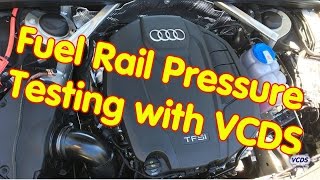
- Use the scanner's live data function to monitor 'Requested Fuel Rail Pressure' and 'Actual Fuel Rail Pressure' (e.g., VCDS Group 106). 🎬 Watch: How to perform a fuel rail pressure test using VCDS.
- Log these values at idle, during gentle acceleration, and under heavy load. A significant, sustained lag in actual pressure points to a weak HPFP or fuel starvation from the LPFP.
- If the vehicle exhibits the 'no-start on incline' symptom with less than 1/4 tank, test the theory by parking on a flat surface. If it starts, the in-tank low-pressure pump is the primary suspect per VW TSB 20-18-01TT.
- Test the low-pressure fuel system. With the key on and engine off, pressure should be between 4.0 and 6.0 bar (58-87 PSI).
- Inspect the electrical connector and wiring for the high-pressure rail sensor (G247). Check for loose pins or corrosion, as this is a known, tricky-to-diagnose issue.
- Inspect wiring and connectors for the Fuel Pump Control Module (J538) under the rear seat for damage or corrosion.
- If a fuel injector is suspected, perform a leak-down test by monitoring rail pressure after the engine is shut off. A steady drop indicates a leak.
Parts You'll Likely Need
- High-Pressure Fuel Pump (HPFP)
(OEM #06L127025R / 06L127025T (for EA888 Gen 3, verify by VIN))— This is a very common failure point on TSI engines that directly causes P0148 and P0087 codes.
Trusted brands: Bosch, Hitachi, Genuine VW/Audi
OEM price range: $400-$700
Aftermarket price range: $250-$500 - In-Tank Low-Pressure Fuel Pump (LPFP) Assembly
(OEM #5QM919051H / 5Q0919051BH (verify by VIN))— Fails in a specific manner (losing prime on inclines) that is documented by Volkswagen and directly causes P0148. A user confirmed part 5QM919051H fixed their issue.
Trusted brands: VDO, Continental, Genuine VW/Audi
OEM price range: $300-$500
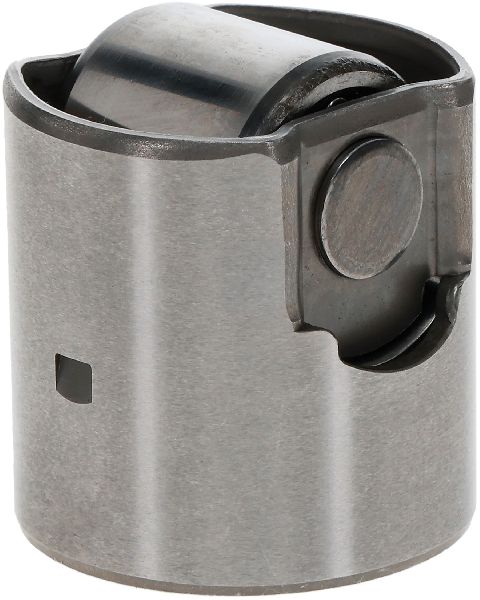
Aftermarket price range: $200-$350 - HPFP Cam Follower / Tappet
(OEM #06L109311 (for EA888 Gen 3))— This is a critical wear item that rides on the camshaft to drive the HPFP. It should always be inspected and replaced when replacing the HPFP to prevent premature failure of the new pump and potential camshaft damage.
Trusted brands: INA, Genuine VW/Audi
OEM price range: $40-$70
Aftermarket price range: $25-$50
Related Codes That Often Appear With This One
- P0087 — This code for 'Fuel Rail/System Pressure - Too Low' is very specific and almost always appears with the more general P0148, confirming that the delivery error is a lack of pressure.
- P053F — This code for 'Cold Start Fuel Pressure Performance' is mentioned in VW TSBs alongside P0148 and P0087, indicating the fuel pressure problem is also present during cold starts.
- P0300-P0304 — These are random or specific cylinder misfire codes. Insufficient fuel pressure leads to a lean air-fuel mixture, which can cause misfires, especially under load.
Technical Service Bulletins (TSBs) & Recalls
- 20-18-01TT / 2050135: Crank / No Start while parked on an incline / decline, DTC P0148 may be stored. The TSB advises technicians to duplicate the condition by parking on an incline. If the vehicle then starts on a flat surface, the in-tank fuel pump assembly should be replaced.
- Bulletin #VIN4APIN20210324: Notes that customers may report a MIL-on with codes P0087, P0148, and/or P053F, which may be accompanied by front suspension noise or MFI cluster warnings.
- Bulletin #VIN4APIN20210316: Documents cases where P0148 is present alongside fuel odors or leaks in the rear of the vehicle and wind noise from the side mirror or door area.
- Bulletin #VIN4APIN20210304: Describes reports of P0148 and P0087 occurring in conjunction with equipment issues such as the radio freezing, rebooting, or having a blank display.
Platform-Specific Known Issues
- Crank/No-Start on Incline (TSB 20-18-01TT): A known issue documented in Volkswagen Tech Tip 20-18-01TT (also 2050135) describes a crank/no-start condition when the vehicle is parked on an incline with less than 1/4 tank of fuel. The cause is a faulty check valve within the in-tank low-pressure fuel pump assembly, which allows fuel to drain away from the pump's pickup. The official fix is to replace the entire LPFP assembly.
Mechanic-Grade Diagnostic Values
- Low-Pressure Fuel System (LPFP) Duty Cycle at Idle — expected: Should not exceed 60%. Failure: A duty cycle consistently over 60% at idle suggests the pump is working too hard to maintain pressure, indicating a weak LPFP or a clogged filter.
- High-Pressure Fuel System (HPFP) at Idle — expected: ~40-50 bar (~580-725 PSI). Failure: Pressure significantly lower than 40 bar, potentially dropping to the low-pressure system's level (6-10 bar), points to a failing HPFP.
- HPFP Fuel Pressure Regulator Valve (N276) Resistance — expected: Approximately 1 to 5 Ω. Failure: A reading outside this range indicates a faulty regulator valve on the HPFP. Always verify with the specific repair manual for your engine.
- HPFP Fuel Metering Valve (N290) Resistance — expected: Approximately 0.8 to 5 Ω. Failure: A reading outside this range indicates a faulty metering valve on the HPFP. Always verify with the specific repair manual for your engine.
- G247 Fuel Pressure Sensor vs. External Gauge — expected: The scan tool's live data should match the reading from a pressure tester (like VAS 6394).. Failure: If the pressure deviation between the scan tool and the physical gauge is greater than 5 bar, the G247 sensor is faulty.
Hidden / Shadow Codes Worth Checking
- P119A / 004506: This is a VW-specific code for 'Fuel Pressure Sensor (G247): Malfunction'. It is more precise than the generic P0148 and points directly to a potential issue with the high-pressure sensor or its circuit. (see via Professional OBD-II scanners like VCDS or OBDeleven will display these manufacturer-specific codes.)
Scan Tool Commands That Help
- VCDS / ODIS: Final Control Diagnosis for Fuel Pump — This is a bidirectional test found under 'Engine Electronics' that directly commands the in-tank low-pressure fuel pump (LPFP) to run. It is used to verify if the pump is functional at all, separate from any commands from the control module during normal operation. The pump should be heard running quietly.
Wiring & Ground Locations
- J538 — Fuel Pump Control Module, located under the rear seat, often beneath a cover in the floor pan.. This module directly powers and controls the in-tank low-pressure fuel pump. A failure of the module, its power supply, or its ground can cut fuel flow and trigger P0148, mimicking a failed pump.
- J538 Connector (T10N) — The 10-pin connector at the Fuel Pump Control Module.. Specific pins can be tested for faults. Pin T10N/1 is the power supply, T10N/2 is the signal wire from the ECM, and T10N/6 is the ground. A bad ground on T10N/6 is a known failure point.
- J538 Ground Trace — The ground wire from the J538 module (Pin T10N/6) runs back to the Engine Control Module (ECM) at pin T94/30 on the 94-pin connector.. If the ground at the module seems okay, a continuity test of this wire back to the ECM is the next step to find a potential open circuit.
- G247 Connector — The electrical connector on the High-Pressure Fuel Rail Sensor, located on the fuel rail on the engine.. The internal clamping of the pins in this connector can loosen over time, causing an intermittent connection. This sends erratic pressure readings to the ECM, triggering P0148/P0087 even when the pumps and sensor are perfectly healthy.
Real Owner Repair Stories
- GOLFMK7 forum user (2015 VW GTI (Mk7)) — Intermittent P0087 code, engine would struggle at idle.
❌ Tried (didn't work) Initial diagnosis suggested replacing the low-pressure or high-pressure fuel pumps.
✅ What actually fixed it The issue was traced to loose internal clamping of the pins in the high-pressure rail sensor's (G247) electrical plug. Replacing the pins/securing the connection in the connector resolved the fault without replacing any major components. - 2CarPros user story (2018 Volkswagen Beetle (TSI engine)) — P0148 Fuel Delivery Error, no-start or stall.
❌ Tried (didn't work) Replacing the fuel filter, which worked temporarily but then clogged again.
✅ What actually fixed it The root cause was contamination in the fuel tank. The new filter was becoming clogged by debris from the tank. The final fix was to drain and clean the fuel tank completely before installing another new filter. - Reddit user in /r/Volkswagen (via Go-Parts summary) (VW GTI (related platform)) — Persistent P0148 and P0087 codes.
❌ Tried (didn't work) Replacing the low-pressure fuel pump (LPFP)., Replacing the high-pressure fuel pump (HPFP).
✅ What actually fixed it The problem was a faulty Fuel Pump Control Module (J538). Replacing the control module, not the pumps it controls, finally resolved the issue.
"I Checked Everything" — The Actual Cause
- A smoke test is not applicable for this fuel pressure code. The equivalent scenario is when fuel pumps are replaced, but the code persists. In documented cases, the actual cause was electrical, not mechanical. One owner found loose pins in the G247 high-pressure sensor connector, causing false readings. Another owner found the Fuel Pump Control Module (J538) was faulty, not the pump it was controlling. These electrical issues will not be found by pressure tests or replacing pumps.
OEM Part Supersession History
5QM-919-051→5QM-919-051-H— This is the updated part number for the in-tank low-pressure fuel pump assembly. The original part is associated with the failure described in TSB 20-18-01TT (no-start on incline).
Heads up: Using the old part number may lead to a recurrence of the known incline-start issue.Varies (e.g., BWA engine sensor)→Varies (e.g., BYD engine sensor)— Sensor calibration differences between engine codes.
Heads up: While from an older platform (Mk5), it's a critical lesson: Fuel Pressure Sensors (G247) can be physically identical but electronically different between engine codes (e.g., K03 vs K04 turbo engines). Using the wrong sensor can cause persistent lean codes and poor fuel economy. Always verify the part number by VIN.
Model Year Variations Within This Range
- 2018+: Later model year 2.0T engines may be the EA888 Gen 3B, which uses a 'Budack Cycle' (modified Miller cycle) for improved efficiency, as opposed to the earlier Gen 3's standard Otto cycle. The Gen 3B has a higher compression ratio (11.7:1 vs 9.8:1), different pistons, and smaller intake valves. While no specific P0148 failure pattern is tied to this change, the different operating parameters and internal components are important to be aware of during diagnosis.
- 2015-2018 vs 2019+: The 2.0T engine codes changed during the Mk7.5 facelift. Pre-facelift GTIs (2015-2018) typically use CXCA or CXCB engine codes, while facelift models (2019+) use the DKFA engine code, which aligns with the introduction of the Gen 3B engine variant.
Diagnostic Flowchart
Used vs. New Parts: Buying Guide for This Vehicle
When a used part is the smart pick: For this repair, used parts are generally not recommended for the fuel pumps themselves due to being critical wear items. However, a used Fuel Pump Control Module (J538) or a wiring harness pigtail from a low-mileage, non-corroded donor vehicle can be a cost-effective option.
Donor-vehicle mileage cap: roughly under 80000 miles for the part to have meaningful remaining life.
What to inspect on the donor part:
- Check module and connectors for any signs of corrosion, water intrusion, or heat damage.
- Ensure wiring insulation is flexible and not brittle or cracked.
- Verify the donor vehicle was not in a flood or fire.
OEM-only on this vehicle (don't cheap out):
- High-Pressure Fuel Pump (HPFP)
- HPFP Cam Follower
Aftermarket brands forum-validated for this vehicle:
- Bosch or Hitachi for stock replacement HPFP (often the OEM supplier).
- VDO or Continental for the LPFP assembly (often the OEM supplier).
- INA for the HPFP cam follower.
- For performance HPFP *upgrades*, brands like APR, 034Motorsport, and Integrated Engineering are well-regarded in the community.
Brands owners have reported issues with on this vehicle:
- Unbranded, 'white-box' fuel pumps and sensors from major online marketplaces are highly discouraged due to high failure rates and inconsistent quality control.
Real Owner Stories
Aggregated from forums and TSBs cited above. Mileages and costs reflect what owners reported in those sources.
Volkswagen GTI — 6600 miles
Symptoms: The Check Engine Light came on.
What fixed it: The dealer diagnosed and replaced the failed High-Pressure Fuel Pump (HPFP) under warranty.
Source hint: golfmk7.com: HPFP Failure @ 6600 miles
2023 Jetta GLI — 340 miles
Symptoms: Stalling at idle and experiencing a long crank condition.
What fixed it: A new Fuel Pump/Sender Unit (Part Number 5QM919051H) was installed.
Source hint: Reddit r/JettaGLI: 2023 GLI P0148
Volkswagen Golf Mk7
Symptoms: Intermittent P0087 and P0148 codes after considering both fuel pumps as the cause.
What fixed it: The problem was traced to loose pins inside the electrical connector for the high-pressure fuel rail sensor (G247).
Source hint: golfmk7.com: Intermittent P0087 - The fix
2015-2021 Volkswagen Golf
Symptoms: A crank-no-start condition specifically when the vehicle is parked on an incline with less than a quarter tank of fuel.
What fixed it: Replacement of the entire in-tank low-pressure fuel pump (LPFP) assembly.
Source hint: TSB 20-18-01TT / 2050135
Related OBD-II Codes
Frequently Asked Questions
My 2019 Golf won't start when parked on a hill with low fuel. Is this a known VW issue?
I have code P0148. How do I know if it's the high-pressure (HPFP) or low-pressure (LPFP) fuel pump?
If I need to replace the High-Pressure Fuel Pump (HPFP), what other part should I replace at the same time?
What are the correct fuel pressure specifications for my Golf TSI?
My fuel pumps seem fine, but the P0148 code keeps coming back. What else could be the cause?
Does this P0148 fuel delivery issue affect other cars besides the Golf?
Helpful Videos

Used OEM Parts in Stock
New Aftermarket Parts Available


The information in this article is provided for general reference and educational purposes only. Vehicle specifications, procedures, and part compatibility can vary by production date, trim level, and region. Always consult your vehicle's factory service manual and verify part numbers before purchasing or performing repairs. Safety-critical components such as airbags, seat belts, and braking systems should be installed by a qualified professional.
- Volkswagen Golf:
- 🧭 Diagnostic Flowchart
- 🎬 Helpful Videos
- 🛍️ Shop This Part
- What's Unique About the 2015-2021 Volkswagen Golf
- Symptoms You May Notice
- Most Likely Causes
- Rare But Worth Checking
- Diagnosis Steps
- Parts You'll Likely Need
- Related Codes That Often Appear With This One
- Technical Service Bulletins (TSBs) & Recalls
- Platform-Specific Known Issues
- Mechanic-Grade Diagnostic Values
- Hidden / Shadow Codes Worth Checking
- Scan Tool Commands That Help
- Wiring & Ground Locations
- Real Owner Repair Stories
- "I Checked Everything" — The Actual Cause
- OEM Part Supersession History
- Model Year Variations Within This Range
- Used vs. New Parts: Buying Guide for This Vehicle
- Real Owner Stories
- Volkswagen GTI — 6600 miles
- 2023 Jetta GLI — 340 miles
- Volkswagen Golf Mk7
- 2015-2021 Volkswagen Golf
- Related OBD-II Codes
- Frequently Asked Questions
- 🎟️ Get 5% Off