

P0149 on 2015-2020 Audi A3 2.0L TDI & TSI: Fuel Timing Error Causes and Fixes
P0149 means 'Fuel Timing Error'. On 2.0L TDI diesel engines, this is a critical warning of imminent High-Pressure Fuel Pump (HPFP) failure, a very expensive repair. On 2.0L TSI gasoline engines, it indicates a fuel pressure problem, most often a failing HPFP, which is a more straightforward and less costly fix.
- P0149 is a critical code that should be addressed immediately. Do not drive the vehicle.
- The cause and repair are completely different for TDI vs. TSI engines. Correctly identifying your engine is the first step.
- For TDI owners, the first and most important check is for metal glitter in the fuel filter. This confirms a catastrophic HPFP failure.
- For TSI owners, P0149 is almost always a symptom of P0087 (Low Fuel Pressure), making the HPFP the most likely culprit.
- This is not a DIY-friendly repair for either engine. The complexity and high pressures involved require professional service.
What's Unique About the 2015-2020 Audi A3
On this Audi A3 platform, the meaning of P0149 is split into two distinct paths. For the 2.0L TDI (diesel), this code is a notorious red flag for a catastrophic High-Pressure Fuel Pump (HPFP) failure, which can send metal debris throughout the entire fuel system. For the 2.0L TSI (gasoline) engine, P0149 is almost always a secondary code caused by low fuel pressure (P0087), pointing to a failing HPFP but typically without the system-wide contamination seen in the diesels.
Symptoms You May Notice
- Engine is hard to start or has long crank times
- Significant loss of engine power and poor acceleration
- Engine hesitation, stumbling, or surging
- Rough or unstable idle
- Engine stalling unexpectedly
- Decreased fuel economy
- Check Engine Light is on
- Flashing glow plug light (on TDI models)
- Whistling noise from the engine bay (TDI HPFP failure)
- Replacing only the fuel filter on a TDI model. If metal is in the system, a new filter will just become clogged again immediately.
- Replacing fuel injectors on a TSI model without addressing the root cause, which is usually the HPFP failing to supply adequate pressure.
- Replacing the HPFP on a TSI without first testing the in-tank low-pressure pump, which could be the actual cause of the fuel starvation.
Most Likely Causes
- Catastrophic High-Pressure Fuel Pump (HPFP) Failure (2.0L TDI ONLY) 🔴 High Probability → Shop Fuel Pump The Bosch CP4 series high-pressure fuel pumps used in many VW/Audi TDI engines are known for a failure mode where internal components disintegrate, contaminating the entire fuel system with metal particles. This is sometimes attributed to the lower lubricity of US diesel fuel compared to European standards for which the pump was designed.
How to confirm: The definitive diagnostic step is to inspect the fuel filter housing for metallic flakes or 'glitter'. An alternative method is to remove the fuel metering valve (N290 on TDI) from the HPFP and inspect its mesh screen and the pump bore for shavings. If metal is present, the HPFP has failed and has contaminated the system. This is often referred to as a 'disco party' in the fuel tank.
Typical fix: This is an extensive and very expensive repair. It requires the replacement of the HPFP, all four fuel injectors, the fuel rail, the in-tank lift pump, and all high and low-pressure fuel lines. The fuel tank must also be removed and thoroughly cleaned. Owners should check if their vehicle is covered by the 'Dieselgate' Extended Emissions Warranty, which covers the entire fuel system.
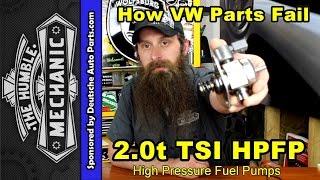
Est. part cost: $2500-$5000 - Failing High-Pressure Fuel Pump (HPFP) (2.0L TSI ONLY) 🔴 High Probability → Shop Fuel Pump The HPFP on the EA888 Gen 3 engine is a common failure item. It can wear out internally, becoming unable to generate the high pressure commanded by the ECM, which disrupts injection timing.
How to confirm: This code is almost always accompanied by P0087 'Fuel Rail/System Pressure - Too Low'. A technician will use a scan tool to monitor requested vs. actual fuel rail pressure. If actual pressure is significantly lower than requested under load, and the low-pressure pump is supplying adequate fuel, the HPFP is faulty.
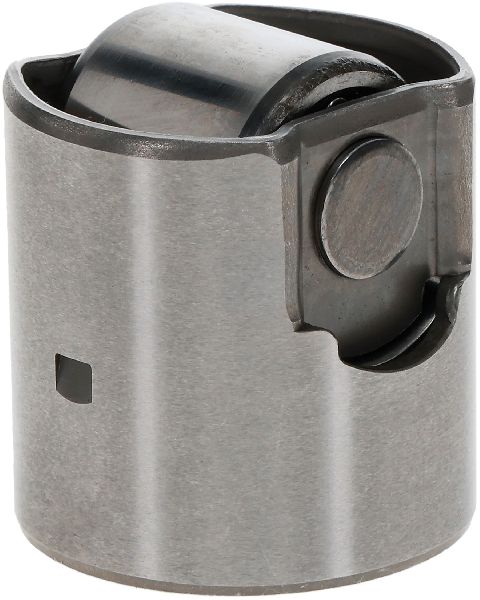
Typical fix: Replace the High-Pressure Fuel Pump (HPFP). It is also wise to inspect and replace the small cam follower that drives the pump at the same time, although follower failure is less common on this generation than on prior EA113 engines.
Est. part cost: $250-$600 - Failing Fuel Rail Pressure Sensor (G247) ⚪ Low Probability → Shop Fuel Pressure Sensor While less common than pump failure, the sensor that reads the fuel rail pressure can fail or have a loose connector, sending incorrect data to the ECM and causing it to set a timing fault.
How to confirm: Diagnosis involves checking the sensor's connector for a secure fit, then testing its voltage output against specifications and comparing its readings to a manual pressure gauge. This is typically done after confirming the fuel pumps are working correctly.
Typical fix: Replace the fuel rail pressure sensor.
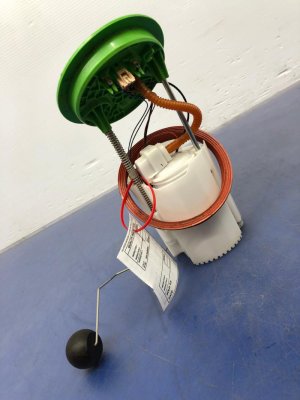
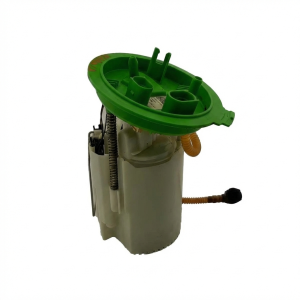
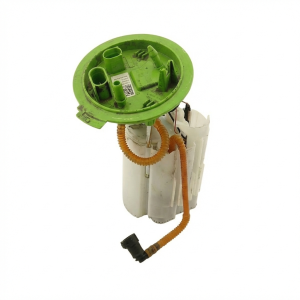
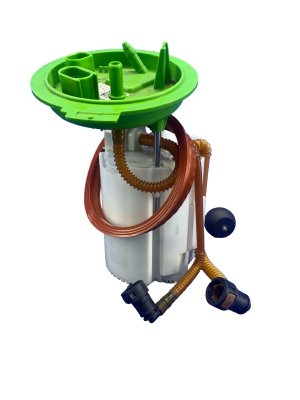
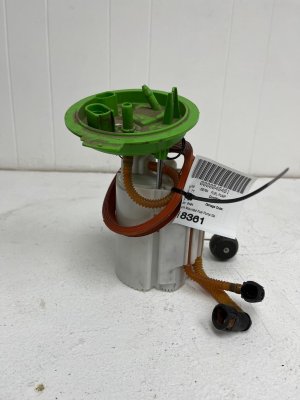
Est. part cost: $50-$150 - Failing In-Tank Low-Pressure Fuel Pump (LPFP) ⚪ Low Probability → Shop Fuel Pump The HPFP cannot function if it is starved of fuel from the tank. A weak or failing LPFP can cause a drop in high-side pressure that mimics HPFP failure.
How to confirm: A technician will test the output pressure of the in-tank pump at the connection to the HPFP. It must meet a specific pressure (typically 4-6 bar) to be considered good.
Typical fix: Replace the in-tank low-pressure fuel pump.
Est. part cost: $200-$400
Rare But Worth Checking
- Mechanical Engine Timing Issue: Although rare, if the timing chain has stretched or skipped a tooth, the correlation between the crankshaft, camshaft, and fuel pump can be lost, triggering a P0149 code. This would typically be accompanied by other timing correlation codes (e.g., P0016).
- Leaking Fuel Injector (TDI): → Shop Fuel Injector A fuel injector that is leaking internally back to the return line can prevent the entire rail from reaching its target pressure. This will set a P0087 and can subsequently trigger P0149. A leak-off test can identify the faulty injector.
Diagnosis Steps
- Scan the ECM for all stored fault codes. Note if P0087 or other fuel/timing codes are present. The combination of P0149 and P0087 strongly points to a fuel delivery problem.
- FOR 2.0L TDI ONLY: Carefully open the fuel filter housing and inspect the fuel for any signs of metallic particles or a silver/grey 'glitter'. If metal is found, stop diagnosis; the HPFP has failed and contaminated the system. Contact an Audi dealer to check for 'Dieselgate' extended warranty coverage.
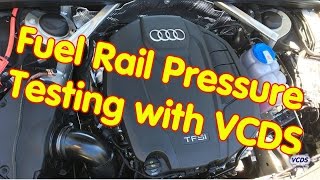
- FOR 2.0L TSI ONLY: Using a diagnostic scan tool (like VCDS), monitor the requested vs. actual fuel rail pressure in the measuring blocks. Also monitor the low-pressure fuel system requested vs. actual pressure.
- Test the pressure of the in-tank low-pressure fuel pump to ensure it is supplying adequate volume and pressure to the HPFP (should be 4-6 bar).
- If the low-pressure side is healthy but the high-pressure side cannot meet the requested pressure under load, the HPFP is the primary suspect.
- Inspect the wiring and connectors to the fuel rail pressure sensor (G247) and the HPFP's fuel metering actuator (N276) for any damage or corrosion. A loose G247 connector is a known issue.
- If fuel pressures are stable and correct but the code persists, investigate mechanical timing by checking cam/crank correlation with a scan tool or oscilloscope.
Parts You'll Likely Need
- High-Pressure Fuel Pump (HPFP) - 2.0L TSI
(OEM #06L127027C (or superseding numbers like 06L127027B))— This is the most common cause of P0149 on TSI (performance degradation) engines.
Trusted brands: Bosch, Hitachi, Bremmen Parts
OEM price range: $500-$900
Aftermarket price range: $250-$600 - High-Pressure Fuel Pump (HPFP) - 2.0L TDI
(OEM #04L127021 (Bosch CP4.1))— This is the cause of P0149 on TDI engines, typically due to catastrophic failure.
Trusted brands: Bosch
OEM price range: $800-$1200
Aftermarket price range: $500-$800 - Complete Fuel System Kit (TDI HPFP Failure) — Required for TDI models when the HPFP fails and contaminates the system with metal. Includes HPFP, injectors, rail, lines, and lift pump.
Trusted brands: Bosch
OEM price range: $2500-$4000
Aftermarket price range: $1800-$3000 - Fuel Rail Pressure Sensor
(OEM #06J906051D)— A less common but possible cause if the sensor is sending incorrect data to the ECM.
Trusted brands: Bosch, Delphi
OEM price range: $100-$200
Aftermarket price range: $50-$120
Related Codes That Often Appear With This One
- P0087 — Stands for 'Fuel Rail/System Pressure - Too Low'. This is the most common companion code and is the direct cause of P0149. The low pressure prevents the ECM from controlling fuel timing correctly.
- P053F — Stands for 'Cold Start Fuel Pressure Performance'. It often appears with P0149 and P0087, as the failing fuel system struggles most to build pressure during a cold start.
- P0300-P0304 — These are random or specific cylinder misfire codes. Insufficient fuel pressure leads to a lean air/fuel mixture, which causes misfires.
Technical Service Bulletins (TSBs) & Recalls
- VW 'Dieselgate' Extended Emissions Warranty: For 2015 models with engine codes CRUA and CVCA, an extended warranty was put in place after the emissions modification. This warranty covers the entire fuel system, including the HPFP and injectors, for the greater of 11 years/162,000 miles or 5 years/60,000 miles from the modification date. Owners should check their VIN with an Audi dealer to confirm coverage.
Platform-Specific Known Issues
- 2.0L TDI: These engines were subject to an extended emissions warranty as part of the 'Dieselgate' settlement. In some cases, this warranty may cover the failure of the HPFP. Owners should check their vehicle's VIN for warranty applicability before paying for repairs.
Mechanic-Grade Diagnostic Values
- Low-Pressure Fuel Pump (LPFP) Pressure (TDI & TSI) — expected: 4.0 to 6.0 bar. Failure: Pressure below 4.0 bar indicates a failing LPFP or control module issue.
- High-Pressure Fuel Rail (TSI) at Idle — expected: ~40 bar (580 PSI). Failure: Pressure significantly lower, such as 6-10 bar, indicates a failing HPFP.
- High-Pressure Fuel Rail (TDI) during Cranking — expected: Greater than 250-300 bar. Failure: Inability to reach this pressure during cranking points to an HPFP or injector leak issue.
- Fuel Rail Pressure Sensor (G247) Supply Voltage — expected: ~5.0 V between terminals 1 and 3 with ignition on, connector unplugged.. Failure: No voltage or incorrect voltage points to a wiring or ECM issue.
- Fuel Metering Valve (N276 on TSI HPFP) Resistance — expected: A low resistance reading, approximately 2 ohms.. Failure: A reading of 0 ohms indicates a shorted coil and a failed valve/HPFP.
- Wiring Harness Resistance (G247 to ECM) — expected: Max 1.5 Ohms. Failure: Higher resistance indicates corrosion or a break in the wire, requiring harness repair.
Scan Tool Commands That Help
- VCDS (Ross-Tech): Measuring Blocks (or Advanced Measuring Values for UDS modules) — Essential for diagnosing P0149. Use to monitor 'Fuel pressure' (high pressure) and 'Fuel Rail Pressure: actual' vs 'specified'. Key groups include 106, 140, and 230. A large deviation between actual and specified pressure under load confirms a fuel delivery issue.
- VCDS (Ross-Tech): Fuel Pump Electronics - Output Test — This allows the technician to activate the in-tank low-pressure fuel pump (LPFP) on command to verify its operation and test its pressure output independently of the engine running.
- VCDS (Ross-Tech): Leakage Test of High Pressure System — After getting the engine to operating temperature, shut it off and monitor fuel rail pressure in Measuring Block 106. The pressure should rise due to heat soak and then hold steady. A rapid drop in pressure indicates a leak from an injector or a check valve in the HPFP.
Wiring & Ground Locations
- Ground Connection 131 — In the engine compartment wiring harness.. This is a primary ground point for various engine sensors. A corroded or loose connection at this point can cause erratic sensor readings, including from the fuel pressure sensor (G247) or HPFP actuator (N276), leading to incorrect data and fault codes.
- G247 Sensor Connector — On the end of the high-pressure fuel rail.. The G247 sensor has a 3-pin connector. Pin 1 is 5V reference, Pin 2 is the signal wire to the ECM, and Pin 3 is the sensor ground. Testing voltage and resistance at these specific pins is critical for diagnosing a faulty sensor versus a wiring problem.
- N276/N290 Actuator Connector — On the High-Pressure Fuel Pump (HPFP).. This 2-pin connector provides the PWM signal from the ECM to regulate fuel pressure. Checking for battery voltage at Pin 1 (with ignition on) and testing the resistance of the solenoid itself are key diagnostic steps. A fault here means the ECM cannot control fuel pressure, directly causing P0149.
Real Owner Repair Stories
- AudiWorld Forums user Tstealth32 (Audi S4 (uses two HPFPs similar to TSI design)) — Check engine light, very rough engine, code for N276 fuel pressure regulating valve - short to plus.
❌ Tried (didn't work) Initial diagnosis was unclear if one or both pumps were bad.
✅ What actually fixed it The user measured the resistance of the N276 valve on the HPFPs and found they read 0 ohms, indicating a dead short. New pumps read approximately 2 ohms. Replacing both HPFPs resolved all symptoms and codes. - Ross-Tech Forums user Alan (2010 Audi A3 2.0L TDI (CFFB Engine)) — Long crank, rev limit when stationary, P0087 (Fuel Pressure Too Low) when driven over 2500 RPM.
❌ Tried (didn't work) Replaced fuel filter., Checked for air in fuel., Confirmed low-pressure pump was healthy (4 bar)., Performed injector back-leakage test, which showed no issues., Inspected HPFP metering valve bore for swarf (metal shavings) and found it to be clean.
✅ What actually fixed it The forum thread concluded with expert advice pointing towards an internal failure of the single-piston CP4.1 pump, even in the absence of visible metal shavings in the metering valve. The final diagnosis was a worn HPFP unable to meet pressure demand under load, requiring pump replacement.
OEM Part Supersession History
06L127027A, 06L127027B→06L127027C— Revisions to the TSI High-Pressure Fuel Pump to improve reliability and performance.
Heads up: The latest revision (06L127027C) is generally backward compatible with earlier models in this generation that used the previous part numbers.06J906054B→06J906051D— Revision to the G247 fuel rail pressure sensor for improved accuracy and durability.
Heads up: These sensors are not always interchangeable across different engine families despite fitting. Using the wrong sensor can lead to persistent lean/rich codes and pressure faults. Always verify the correct part number by VIN.
Diagnostic Flowchart
Other Known Issues on This Vehicle
Issues unrelated to this code that are worth knowing about as an owner of this generation:
- Water Pump & Thermostat Housing Failure (TSI & TDI) 🔴 High — Very common, often occurs between 60,000-80,000 miles. The plastic housing becomes brittle and cracks, causing coolant leaks. (Ref: No recall, but revised parts are available.)
- DSG Mechatronic Unit Failure 🔴 High — Can occur at various mileages. Symptoms include jerky shifting, delayed gear engagement, and flashing gear indicator ('PRNDS'). Can be very expensive to repair. (Ref: Various TSBs exist depending on the specific fault.)
- Carbon Buildup on Intake Valves (TSI) 🟠 Medium — A known issue for all direct-injection engines. The EA888 Gen 3 is improved with dual injection but can still require cleaning every 60,000-80,000 miles to prevent performance loss and misfires.
- PCV Valve Failure (TSI) 🟠 Medium — Common failure item. A failed PCV diaphragm can cause a loud squealing noise, rough idle, increased oil consumption, and lean fault codes.
- Sunroof Leaks/Rattles 🟡 Low — Common complaint. The sunroof drains can become clogged, leading to water leaking into the cabin, or the frame can develop rattles over time.
- Diesel Particulate Filter (DPF) Clogging (TDI) 🟠 Medium — More common for vehicles used primarily for short, city-based trips, which prevents the DPF from completing its regeneration cycle.
Used vs. New Parts: Buying Guide for This Vehicle
When a used part is the smart pick: For TSI engines, a low-mileage used HPFP from a reputable salvage yard can be a cost-effective option, as they do not typically suffer the same catastrophic failure mode as the TDI pumps. Used sensors like the G247 are also generally safe bets. For TDI models, NO used fuel system parts should be considered due to the high risk of contamination.
Donor-vehicle mileage cap: roughly under 50000 miles for the part to have meaningful remaining life.
What to inspect on the donor part:
- For a used TSI HPFP, inspect the cam follower tip for any wear or scoring.
- Check electrical connectors on any used part for signs of corrosion, bent pins, or heat damage.
- Ask for the VIN of the donor vehicle to verify low mileage and confirm it wasn't wrecked due to an engine fire or other related issue.
OEM-only on this vehicle (don't cheap out):
- High-Pressure Fuel Pump (HPFP) for TDI models. Due to the catastrophic failure mode of the Bosch CP4, only a new OEM pump or a kit from a highly reputable specialist should be used.
- Fuel Injectors (TDI & TSI). Remanufactured injectors can be problematic. New OEM/Bosch injectors are the safest bet to ensure proper function and avoid future issues.
Aftermarket brands forum-validated for this vehicle:
- Bosch (OEM supplier for pumps and sensors)
- Hitachi (HPFP for TSI)
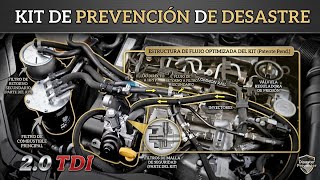
- For TDI owners concerned about CP4 failure, 'Disaster Prevention Kits' from brands like S&S Diesel Motorsport or other specialists are a well-regarded modification, though they don't prevent the pump from failing, they prevent it from destroying the entire fuel system.
Brands owners have reported issues with on this vehicle:
- Unbranded, white-box HPFPs or sensors from online marketplaces. The fuel system operates under extreme pressure and tight tolerances; poor quality parts are a significant safety and reliability risk.
Real Owner Stories
Aggregated from forums and TSBs cited above. Mileages and costs reflect what owners reported in those sources.
2015 Audi A3 2.0 TDI
Symptoms: Owner noted P0087 and P0149 codes and suspected the High-Pressure Fuel Pump (HPFP).
What fixed it: While the HPFP is often the suspect, in a similar case documented by 'baz meredith', the issue was actually resolved by replacing a leaking fuel injector after the HPFP was confirmed to be functional.
Source hint: https://www.audi-sport.net/xf/threads/p0087-fuel-rail-system-pressure-too-low-and-p0149-fuel-timing-error.429008/ and YouTube video by 'baz meredith'
2015 Volkswagen GTI 2.0L TSI (EA888 Gen 3)
Symptoms: Experienced a 'trifecta' of codes including P0087, P0149, and P053F along with an EPC light.
What fixed it: The failure was traced to a failed High-Pressure Fuel Pump (HPFP).
Source hint: https://www.vwvortex.com/threads/2015-gti-p0087-p0149-p053f-and-epc-light.9493987/
2015 Volkswagen Passat TDI (EA288)
Symptoms: Vehicle threw codes P0087 and P0149.
What fixed it: The diagnosis required checking for metal shavings ('glitter') from the CP4 pump in the fuel system.
Source hint: https://forums.tdiclub.com/index.php?threads/2015-passat-tdi-sel-p0087-and-p0149.499039/
Related OBD-II Codes
Frequently Asked Questions
I have a 2015 Audi A3 TDI with code P0149; is this covered under the 'Dieselgate' warranty?
What should I look for in the fuel filter of my A3 TDI to confirm a P0149 failure?
My A3 2.0L TSI has P0149 and P0087. Is the cam follower the likely culprit?
Can a loose connector cause the P0149 fuel timing code on an Audi A3?
Why does the TDI HPFP fail more often in the US than in Europe?
Helpful Videos


Used OEM Parts in Stock
New Aftermarket Parts Available



The information in this article is provided for general reference and educational purposes only. Vehicle specifications, procedures, and part compatibility can vary by production date, trim level, and region. Always consult your vehicle's factory service manual and verify part numbers before purchasing or performing repairs. Safety-critical components such as airbags, seat belts, and braking systems should be installed by a qualified professional.
- Audi A3:
- 🧭 Diagnostic Flowchart
- 🎬 Helpful Videos
- 🛍️ Shop This Part
- What's Unique About the 2015-2020 Audi A3
- Symptoms You May Notice
- Most Likely Causes
- Rare But Worth Checking
- Diagnosis Steps
- Parts You'll Likely Need
- Related Codes That Often Appear With This One
- Technical Service Bulletins (TSBs) & Recalls
- Platform-Specific Known Issues
- Mechanic-Grade Diagnostic Values
- Scan Tool Commands That Help
- Wiring & Ground Locations
- Real Owner Repair Stories
- OEM Part Supersession History
- Other Known Issues on This Vehicle
- Used vs. New Parts: Buying Guide for This Vehicle
- Real Owner Stories
- 2015 Audi A3 2.0 TDI
- 2015 Volkswagen GTI 2.0L TSI (EA888 Gen 3)
- 2015 Volkswagen Passat TDI (EA288)
- Related OBD-II Codes
- Frequently Asked Questions
- 🎟️ Get 5% Off