

P0149 on 2016-2022 Chevrolet Colorado 2.8L Duramax: Fuel Timing Error Causes and Fixes
On the 2.8L Duramax, P0149 means the engine's computer has detected an error in the high-pressure fuel pump's timing. This is most often caused by a failing Fuel Pressure Regulator (also called a quantity control valve or fuel metering valve) on the pump itself, air in the fuel lines from a bad filter housing or improper bleeding, or a clogged fuel filter. Less commonly, it can be a failing high-pressure pump.
- P0149 on your Colorado Duramax indicates a fuel timing problem, most often linked to the fuel pressure regulator on the high-pressure pump.
- Before attempting expensive repairs, always start with the basics: check the fuel filter and ensure the system is properly bled of any air.
- Driving with this code can lead to stalling and potential damage to the expensive high-pressure fuel system.
- Diagnosis requires a scan tool capable of reading live fuel pressure data to compare what the ECM is requesting versus what the system is actually delivering.
- Do not immediately assume the entire high-pressure pump has failed; the serviceable regulator is a more frequent and much cheaper cause.
What's Unique About the 2016-2022 Chevrolet Colorado
The LWN 2.8L Duramax uses a high-pressure common-rail fuel system, which is crucial for its performance and emissions compliance. While the Pass 2 data mentioned a Bosch CP4.2 pump, sources indicate the LWN actually uses a Denso system. Code P0149 on this engine often points to issues with the components that control fuel volume and pressure, such as the fuel pressure regulator (quantity control valve) located on the high-pressure fuel pump. Unlike some other diesel engines where this code might immediately suggest a slipped mechanical timing gear, on the Colorado, it's frequently related to the electronic controls or fuel supply issues like air intrusion. Air can easily enter the system via the plastic fuel filter housing, which is a known weak point.
Symptoms You May Notice
- Check Engine Light illuminated
- Reduced engine power or entering 'limp mode'
- Hesitation or stumbling during acceleration
- Rough or unstable idle
- Difficulty starting, extended cranking, or a no-start condition
- Increased fuel consumption
- Engine stalling, especially under load
- Replacing the entire high-pressure fuel pump when only the serviceable fuel pressure regulator was at fault.
- Replacing fuel injectors, which are less likely to be the root cause for this specific timing code on this engine, though they can be damaged by a failing HPFP.
Most Likely Causes
- Failing Fuel Pressure Regulator (Quantity Control Valve) 🔴 High Probability The fuel pressure regulator, mounted on the high-pressure fuel pump, directly controls the amount of fuel entering the pump. It's a common failure point that can become sticky or fail electronically, causing the pressure and timing to become erratic. It is also referred to as a fuel metering valve or suction control valve (SCV).
How to confirm: Use a diagnostic scan tool to monitor desired vs. actual fuel rail pressure. A significant deviation, erratic actual pressure reading, or a pressure that drops sharply under acceleration when the desired pressure is high points to a failing regulator.
Typical fix: Replace the fuel pressure regulator on the high-pressure fuel pump. This is serviceable separately from the pump. The OEM part is made by Bosch.
Est. part cost: $150-$300 - Air in the Fuel System 🟡 Medium Probability Air can be introduced during a fuel filter change if not bled properly. A very common source of air leaks is the plastic fuel filter housing itself, including the water-in-fuel sensor seal or the bleeder screw. Small cracks in the housing or degraded O-rings can let air in, especially as the system ages.
How to confirm: After a filter change, ensure the system is bled using the manual primer pump on top of the filter housing until fuel with no bubbles comes out of the bleeder screw. For persistent issues, install a section of clear fuel line before the HPFP to visually check for air bubbles while the engine is running. A vacuum gauge on the low-pressure side can also detect leaks (should hold steady vacuum).
Typical fix: Properly bleed the fuel system. If a leak is present, identify and repair the source. This often involves replacing the entire fuel filter housing assembly or its associated seals.
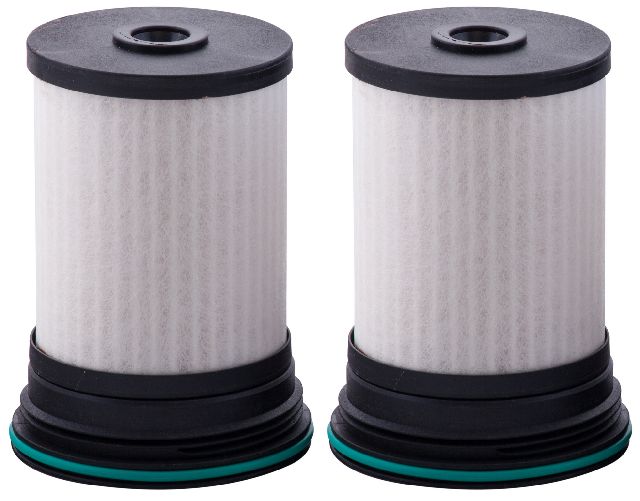
Est. part cost: $10-$250 - Clogged or Dirty Fuel Filter 🟡 Medium Probability → Shop Fuel Filter A restricted fuel filter can starve the high-pressure pump of fuel, causing it to be unable to meet the pressure commanded by the ECM, which can be interpreted as a timing error. This is a standard maintenance item that is often overlooked.
How to confirm: Check the fuel filter life monitor in the driver information center. If it is near 0% or if maintenance history is unknown, replace it. A fuel pressure/vacuum gauge on the low-pressure side can also confirm a restriction (high vacuum reading).
Typical fix: Replace the fuel filter and reset the filter life monitor. Always follow the proper bleeding procedure after replacement.
Est. part cost: $40-$80 - Failing High-Pressure Fuel Pump (HPFP) ⚪ Low Probability → Shop Fuel Pump While less common than the regulator, the high-pressure pump itself can fail internally. This is a much more catastrophic and expensive failure.
How to confirm: This is typically diagnosed after ruling out the regulator, air in the system, and fuel supply restrictions. If the regulator is new and the system is bled, but pressure commands are still not met, the pump is the likely culprit. A fuel sample may show metal debris if the pump is failing.
Typical fix: Replace the high-pressure fuel pump. This is a very labor-intensive job that often requires replacement of the injectors and fuel lines to prevent contamination of the new pump.
Est. part cost: $700-$1500
Rare But Worth Checking
- Faulty Fuel Rail Pressure Sensor: → Shop Fuel Pressure Sensor The sensor that reads the fuel pressure could be sending incorrect data to the ECM, making the computer believe there is a timing issue when there isn't. This is less common than the parts that actually control the pressure. TSB 20-NA-197 notes that corrosion at this sensor's connector can cause related fuel pressure codes.
- Wiring or Connector Issues: Damage to the wiring or a poor connection at the fuel pressure regulator or fuel rail pressure sensor can cause intermittent and incorrect signals, leading to the P0149 code. TSB 21-NA-149 discusses general engine harness chafing issues on related GM trucks that can cause various DTCs.
Diagnosis Steps
- Check for any other stored DTCs. Address codes like P0087 or P228C as part of the diagnosis.
- Using a scan tool, monitor the 'Desired Fuel Rail Pressure' and 'Actual Fuel Rail Pressure' parameters while the engine is running.
- Observe if the actual pressure is significantly different from the desired pressure, or if it is erratic, especially during acceleration.
- Check the vehicle's fuel filter life. If it is low or its history is unknown, replace the fuel filter and properly bleed the system using the manual primer.
- After bleeding, re-check the pressure readings. If the problem persists, inspect all fuel lines between the tank and the high-pressure pump for any signs of leaks, kinks, or damage.
- Carefully inspect the fuel filter housing for cracks or leaks around the bleeder screw and water-in-fuel sensor. Consider installing a clear line to check for air bubbles.
- If no external leaks are found and the fuel supply is good, the next logical step is to suspect the fuel pressure regulator on the high-pressure pump.
- If replacing the regulator does not solve the issue, the high-pressure fuel pump itself may be at fault. This is the last resort after all other possibilities are exhausted.
- As a final, less common possibility, inspect the wiring and connectors for the fuel rail pressure sensor and the fuel pressure regulator for any damage or corrosion, referencing TSB 20-NA-197.
Parts You'll Likely Need
- Fuel Pressure Regulator (Quantity Control Valve)
(OEM #12676099 (GM), 0928400831 (Bosch))— This is the most common failure point for a P0149 code on this engine. It directly controls fuel volume and pressure, and when it fails, it causes the exact symptoms and conditions for this code.
Trusted brands: ACDelco (GM), Bosch
OEM price range: $200-$300
Aftermarket price range: $150-$250 - Fuel Filter
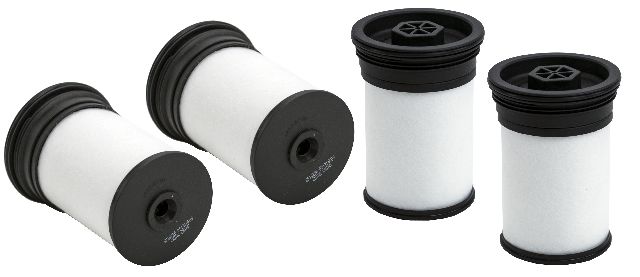
(OEM #23303535 (ACDelco TP1015))— A restricted fuel filter can cause fuel starvation to the high-pressure pump, leading to pressure and timing errors. It's a critical maintenance item that must be changed regularly.
Trusted brands: ACDelco, Wix, Donaldson
OEM price range: $50-$80
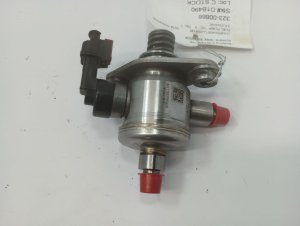
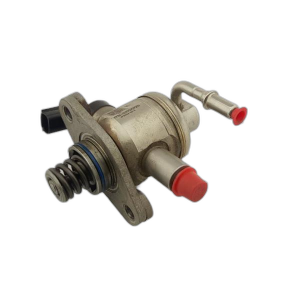
Aftermarket price range: $40-$60 - High-Pressure Fuel Pump
(OEM #12676098 (GM), 0445010853 (Bosch))— If the regulator and fuel supply are confirmed to be good, the pump itself may have failed internally, requiring replacement. This is the most expensive and labor-intensive job that often requires replacement of the injectors and fuel lines to prevent contamination of the new pump.
Trusted brands: ACDelco (GM), Bosch
OEM price range: $700-$1500
Aftermarket price range: $500-$1000
Related Codes That Often Appear With This One
- P0087 — P0087 (Fuel Rail/System Pressure - Too Low) is often seen with P0149 because the underlying cause, such as a failing pump, regulator, or air in the system, prevents the system from reaching the commanded pressure, which the ECM can interpret as both a low pressure and a timing fault.
- P228C — P228C (Fuel Pressure Regulator 1 Control Performance - Low Pressure) points more directly at the regulator's inability to maintain pressure and can accompany P0149.
Technical Service Bulletins (TSBs) & Recalls
- TSB 20-NA-197: Addresses MIL illumination with various fuel pressure codes (including P0087) due to corrosion or damage at the fuel pressure sensor electrical connector. This TSB was updated to include the Colorado.
- TSB 18-NA-361: Discusses finding metal particles in the fuel system and provides a flushing procedure. While not directly for P0149, it's relevant if a failing HPFP is suspected.
Platform-Specific Known Issues
- Air Leak at Fuel Filter Housing: → Shop Fuel Filter The OEM plastic fuel filter housing is a known weak point. Over time, it can develop hairline cracks or the seals for the bleeder screw and water-in-fuel sensor can degrade, allowing air to be sucked into the fuel system. This is a very common cause of P0149 and P0087 after a fuel filter change or on higher-mileage trucks. Many owners opt for an upgraded billet aluminum bleeder screw to prevent this.
Mechanic-Grade Diagnostic Values
- Low-Pressure Fuel System (Lift Pump) Pressure — expected: 70-75 PSI. Failure: Pressure below this range indicates a weak in-tank lift pump or a restriction (like a clogged filter) starving the high-pressure pump.
- Fuel Rail Pressure Sensor (FRP) Voltage (Key On, Engine Off) — expected: Approximately 0.5V. Failure: A significantly different voltage at KOEO can indicate a biased or failed sensor. For example, some Duramax platforms expect 1.5V-1.8V, but others expect near 0 PSI (and thus lower voltage). A reading that doesn't change with pressure is a failed sensor.
- Fuel Rail Pressure (Cranking) — expected: Must exceed ~2,900 PSI (20 MPa). Failure: If the rail pressure does not build to at least this level while cranking, the ECM will not command the injectors to fire, resulting in a no-start condition. This points to a severe supply issue, a failed regulator, or a failed high-pressure pump.
- Fuel Pressure Regulator (SCV) Resistance — expected: 2.0 to 3.5 Ohms. Failure: A reading outside this range indicates a failed solenoid coil in the regulator. This is a direct electrical test of the component.
Scan Tool Commands That Help
- GDS2 (GM Global Diagnostic System 2): Fuel Pump On/Off Command — This bidirectional control allows a technician to manually activate the low-pressure in-tank fuel pump without the engine running. It is used to verify the lift pump's operation and to check for fuel delivery to the high-pressure pump, helping to isolate a failed lift pump or a wiring issue.
- GDS2 (GM Global Diagnostic System 2): Fuel Rail Pressure Control — This function allows the technician to command a specific fuel rail pressure and observe if the actual pressure (read by the sensor) matches the command. A large discrepancy points to a faulty fuel pressure regulator, a weak high-pressure pump, or a significant leak.
- GDS2 (GM Global Diagnostic System 2): Cylinder Power Balance / Injector Balance Test — While less common for P0149, if an injector is leaking excessively and bleeding off rail pressure, it could contribute to this fault. This test analyzes crankshaft speed variations to identify underperforming cylinders, which could be caused by a bad injector.
Wiring & Ground Locations
- Fuel Rail Pressure (FRP) Sensor Connector — On the driver's side of the engine, located on the fuel rail toward the back near the firewall. It may be under a foam shroud covering the fuel lines.. The FRP sensor provides the actual pressure reading to the ECM. Corrosion or damage to this connector or its wiring can cause incorrect signals, leading the ECM to believe there is a timing/pressure fault when the mechanical system is fine.
- Fuel Pressure Regulator (SCV) Connector — Mounted on the high-pressure fuel pump (HPFP).. This connector sends the ECM's command to the regulator. A poor connection here means the ECM cannot control fuel pressure, directly causing a P0149. On some Duramax platforms (though not confirmed for LWN), this 2-pin connector is physically identical to the alternator connector, creating a risk of being swapped during service.
- ECM Connector C1 (Pin 37) — At the Engine Control Module (ECM).. Pin 37 on the C1 connector is the control circuit for the low-pressure fuel pump relay (Circuit 465, D-GN/WH wire). A fault in this circuit could disable the lift pump, starving the HPFP and causing low pressure codes.
Real Owner Repair Stories
- Reddit user in r/mechanic (Chevrolet Colorado (year not specified, but behavior matches this generation)) — Reduced engine power, service stabilitrack message, vehicle won't exceed ~30 mph after quick acceleration. Codes clear after sitting for a few hours or with a scan tool.
❌ Tried (didn't work) Replaced the fuel pump (low-pressure), Tested the fuel pressure regulator (it tested 'good' initially)
✅ What actually fixed it The high-pressure fuel pump was the final cause. Its internal resistance was changing drastically when it got hot, a problem not caught during a cold test. Replacing the high-pressure fuel pump with an OEM unit resolved the issue permanently.
Model Year Variations Within This Range
- 2016-2022: While the core engine and fuel system remained consistent from 2016-2022 in North America, there were no significant mechanical changes that would alter the diagnosis of P0149. The engine was discontinued for the Colorado/Canyon after the 2022 model year.
Diagnostic Flowchart
Other Known Issues on This Vehicle
Issues unrelated to this code that are worth knowing about as an owner of this generation:
- 6L50 Torque Converter Shudder 🟠 Medium — Very common, especially on 2016-2018 models. Can occur as early as 30,000 miles. Often feels like driving over rumble strips at light throttle. (Ref: Multiple TSBs exist, including 18-NA-358 and 16-NA-175, which often recommend a specific fluid flush procedure with a revised transmission fluid.)
- DEF System Failures 🔴 High — Common, particularly in colder climates where the DEF tank heater is prone to failure, which can lead to a 'limp mode' or no-start condition.
- Cracked Flexplate 🟠 Medium — Less common than other issues but a known potential failure point, especially on trucks that tow heavy loads. Can cause a knocking sound from the bellhousing area.
- Timing Belt Replacement 🔴 High → Shop Engine Timing Chain — This is a required maintenance item, not a failure. However, the LWN is an interference engine, so a snapped belt will cause catastrophic engine damage. The service interval is 150,000 miles, but many specialists recommend replacement closer to 100,000 miles as a precaution.
- EGR and Intake Soot Buildup 🟠 Medium — Common on all modern diesels, including the LWN. Short-trip driving cycles exacerbate the issue, leading to clogged EGR valves and intake manifolds, causing poor performance and other codes.
Used vs. New Parts: Buying Guide for This Vehicle
When a used part is the smart pick: For this repair, a used fuel filter housing assembly could be a cost-effective option, provided it is thoroughly inspected for cracks, especially around the bleeder screw and sensor ports. Other large mechanical components like fuel lines or the fuel rail (without sensors) are also generally safe to source from a reputable salvage yard.
Donor-vehicle mileage cap: roughly under 75000 miles for the part to have meaningful remaining life.
What to inspect on the donor part:
- For a fuel filter housing, check for any hairline cracks or signs of plastic fatigue.
- Ensure all threaded ports (for sensors, bleeder screw) are intact and not cross-threaded.
- Verify the donor vehicle was not in a severe front-end collision that could have stressed fuel system components.
- Ask for the donor vehicle's mileage; lower is always better for any fuel system part.
OEM-only on this vehicle (don't cheap out):
- High-Pressure Fuel Pump (HPFP)
- Fuel Pressure Regulator (Quantity Control Valve)
- Fuel Rail Pressure Sensor
Aftermarket brands forum-validated for this vehicle:
- Bosch (often the OEM supplier for regulators and pumps, even in a Denso system)
- ACDelco (GM's official parts brand)
- Wix, Donaldson, ACDelco (for fuel filters)
Brands owners have reported issues with on this vehicle:
- Unbranded, 'white-box' electronic sensors or regulators from online marketplaces. The precision required for high-pressure fuel systems makes these a significant risk for poor performance or premature failure.
Real Owner Stories
Aggregated from forums and TSBs cited above. Mileages and costs reflect what owners reported in those sources.
2018 Chevrolet Colorado 2.8L Duramax
Symptoms: The vehicle triggered P0149 and P0087 codes. Discussion identified the fuel pressure regulator on the CP4 pump as the likely cause.
What fixed it: Replacement of the fuel pressure regulator on the high-pressure fuel pump.
Source hint: ColoradoFans.com thread titled 'P0149 Fuel Timing Error - 2018 Duramax'
2016-2022 Chevrolet Colorado 2.8L Duramax
Symptoms: P0149 and P0087 codes appeared after the truck sat for one week.
What fixed it: Diagnostic path suggested starting with the fuel filter and checking for air leaks before moving to the fuel pressure regulator.
Source hint: ColoradoFans.com thread titled 'P0149 and P0087 Codes'
2016-2022 Chevrolet Colorado 2.8L Duramax
Symptoms: Hard starts and fuel pressure codes caused by air intrusion into the fuel system.
What fixed it: Bleeding the fuel system using the hand primer and addressing air leaks at the fuel filter housing.
Source hint: YouTube video 'Duramax 2.8L Fuel Filter Housing Air Leak Fix'
Related OBD-II Codes
Frequently Asked Questions
Does TSB 20-NA-197 apply to my Chevrolet Colorado if I have fuel pressure codes?
Can I replace just the fuel pressure regulator on my 2.8L Duramax, or do I need a whole new high-pressure pump?
Why did P0149 appear immediately after I changed my fuel filters?
Is there a specific part brand recommended for the fuel pressure regulator?
What should I check if I suspect metal debris is causing my fuel timing issues?
Is there a common hardware failure on the fuel filter housing I should look for?
Helpful Videos
![What is P0149 Engine Code [Quick Guide]](https://img.youtube.com/vi/WHw3pBDXDk8/mqdefault.jpg)
Used OEM Parts in Stock
New Aftermarket Parts Available

The information in this article is provided for general reference and educational purposes only. Vehicle specifications, procedures, and part compatibility can vary by production date, trim level, and region. Always consult your vehicle's factory service manual and verify part numbers before purchasing or performing repairs. Safety-critical components such as airbags, seat belts, and braking systems should be installed by a qualified professional.
- Chevrolet Colorado:
- 🧭 Diagnostic Flowchart
- 🎬 Helpful Videos
- 🛍️ Shop This Part
- What's Unique About the 2016-2022 Chevrolet Colorado
- Symptoms You May Notice
- Most Likely Causes
- Rare But Worth Checking
- Diagnosis Steps
- Parts You'll Likely Need
- Related Codes That Often Appear With This One
- Technical Service Bulletins (TSBs) & Recalls
- Platform-Specific Known Issues
- Mechanic-Grade Diagnostic Values
- Scan Tool Commands That Help
- Wiring & Ground Locations
- Real Owner Repair Stories
- Model Year Variations Within This Range
- Other Known Issues on This Vehicle
- Used vs. New Parts: Buying Guide for This Vehicle
- Real Owner Stories
- 2018 Chevrolet Colorado 2.8L Duramax
- 2016-2022 Chevrolet Colorado 2.8L Duramax
- 2016-2022 Chevrolet Colorado 2.8L Duramax
- Related OBD-II Codes
- Frequently Asked Questions
- 🎟️ Get 5% Off