

P0149 on 2014-2020 Chevrolet Suburban: Fuel Timing Error Causes and Fixes
On the 2014-2020 Suburban with the 5.3L or 6.2L V8, code P0149 almost always points to a failing High-Pressure Fuel Pump (HPFP). This pump is located under the intake manifold and is a moderate to high difficulty DIY job. Expect to pay $300-$500 for an OEM pump and required fuel line. A strong smell of gasoline in the engine oil is the definitive sign of this failure.
- P0149 on your Suburban means there's a serious issue in the high-pressure fuel system, most likely a failing High-Pressure Fuel Pump (HPFP).
- Before buying parts, pull the oil dipstick and smell it. A strong gasoline smell confirms the HPFP is leaking internally and must be replaced.
- When replacing the HPFP, you MUST also replace the single-use high-pressure fuel feed line to prevent dangerous leaks.
- This repair requires removing the intake manifold, so new intake gaskets are also required.
- If the oil was contaminated with fuel, an oil and filter change is a mandatory final step of the repair.
What's Unique About the 2014-2020 Chevrolet Suburban
The 2014-2020 Suburban belongs to the K2XX generation and uses a gasoline direct injection (GDI) fuel system. Unlike older port injection systems, these engines have two fuel pumps: a low-pressure pump in the tank and a high-pressure fuel pump (HPFP) driven by a dedicated lobe on the camshaft. Code P0149 on this platform almost exclusively relates to the high-pressure side of the system. The HPFP is a common failure point and can leak fuel internally into the crankcase, causing this code along with rich conditions (P0172/P0175) and fuel-contaminated engine oil.
Symptoms You May Notice
- Check Engine Light is on
- Engine runs rough or idles poorly
- Hesitation or stumbling during acceleration
- Noticeable loss of engine power
- Vehicle may enter a reduced power 'limp mode'
- Difficulty starting the engine, or extended cranking time
- Increased fuel consumption
- Strong smell of gasoline in the engine oil, and an oil level that appears too high on the dipstick
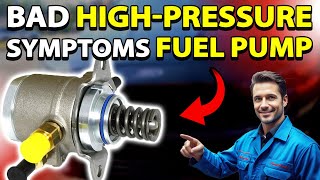
- Black smoke from the exhaust 🎬 Watch: Common symptoms of a failing HPFP
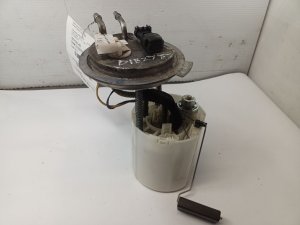
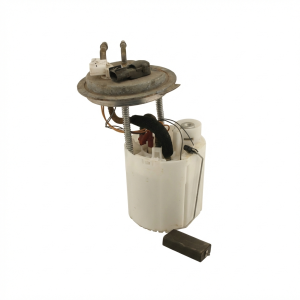
- Replacing the in-tank low-pressure fuel pump. While a failing low-pressure pump can cause performance issues, P0149 on this GDI engine is specifically related to the high-pressure side.
- Replacing fuel injectors without proper diagnosis. While an injector can be the cause, the HPFP is a much more common failure point for this code.
Most Likely Causes
- Failing High-Pressure Fuel Pump (HPFP) 🔴 High Probability → Shop Fuel Pump The HPFP is a mechanically complex component driven by a camshaft lobe, operating under extreme pressure. Wear and tear, particularly of the internal seals, can lead to failure. This allows high-pressure fuel to leak past the pump's piston and directly into the engine crankcase.
How to confirm: Use a scan tool to monitor commanded vs. actual fuel rail pressure. A significant deviation points to a pump or sensor issue. The most definitive test is to check the engine oil for the smell of gasoline, which confirms an internal HPFP leak. This may also be accompanied by rich codes P0172 and P0175. GM TSB PIP5158A also addresses 🎬 See how a leaking HPFP causes rich conditions this condition of fuel contamination in the oil.
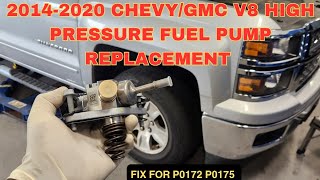
Typical fix: Replace the High-Pressure Fuel Pump, the one-time-use high-pressure fuel feed pipe, and the intake manifold gaskets. 🎬 Watch this step-by-step HPFP replacement walkthrough An oil and filter change is mandatory to remove the fuel-contaminated oil. It is also wise to inspect the camshaft lobe that drives the pump for any scoring or wear.
Est. part cost: $350-$600 - Faulty Fuel Rail Pressure Sensor 🟡 Medium Probability → Shop Fuel Pressure Sensor The sensor operates in a high-heat, high-pressure environment and can fail electronically, sending incorrect readings to the ECM.
How to confirm: With the engine off, the fuel rail pressure sensor reading on a scan tool should be close to 0 PSI. If it shows high pressure when the engine is off, or if the reading is erratic while running (and pump performance is verified), the sensor is likely faulty.
Typical fix: Replace the fuel rail pressure sensor.
Est. part cost: $50-$100 - Chafed or Damaged Wiring Harness ⚪ Low Probability Engine vibrations and heat can cause wiring harnesses to rub against engine components or the firewall, leading to shorts or open circuits. The harness for the HPFP is located at the back of the engine, a common area for chafing.
How to confirm: Visually inspect the wiring harness for the HPFP and fuel rail pressure sensor, paying close attention to areas where it passes near the back of the engine and the firewall. Check for continuity with a multimeter.
Typical fix: Repair or replace the damaged section of the wiring harness.
Est. part cost: $10-$50
Rare But Worth Checking
- Failing Fuel Injector: → Shop Fuel Injector A leaking or clogged fuel injector can cause localized pressure drops and affect timing, but this is less common than an HPFP failure for this specific code. GM has specific procedures for identifying and replacing flow-matched injectors.
- Faulty Engine Control Module (ECM): → Shop Engine Control Module (ECM) This is extremely rare. The ECM should only be considered after all other possibilities, including wiring, have been exhaustively ruled out by a professional.
Diagnosis Steps
- Check for other stored DTCs. Codes like P0087, P0172, or P0175 are highly informative.
- Using a capable OBD-II scanner, monitor live data for 'Commanded Fuel Rail Pressure' and 'Actual Fuel Rail Pressure' while the engine is running. Note any large discrepancies.
- Turn the engine off. Pull the oil dipstick and smell it for gasoline. A strong fuel smell is a clear indicator of a failed HPFP leaking into the crankcase.
- If no fuel smell is present, carefully inspect the wiring harness for the HPFP and fuel rail pressure sensor for any signs of chafing, melting, or corrosion, especially near the firewall.
- Test the fuel rail pressure sensor by observing its reading with the engine off after the system has depressurized. It should read at or near zero.
- If the sensor and wiring are good, and there are significant discrepancies in commanded vs. actual fuel pressure, the High-Pressure Fuel Pump is the most likely culprit.
- During HPFP replacement, inspect the dedicated lobe on the camshaft that drives the pump for any signs of abnormal wear, scoring, or damage.
Parts You'll Likely Need
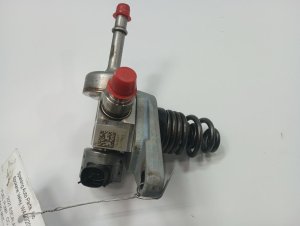
- High-Pressure Fuel Pump
(OEM #12711662 (latest); supersedes 12697966, 12688606, 12680255, 12672919, 12669519, 12625817)— This is the most common component to fail and cause code P0149 on this platform.
Trusted brands: ACDelco, Bosch
OEM price range: $300-$500
Aftermarket price range: $200-$400 - High-Pressure Fuel Feed Pipe/Line
(OEM #12677004 (latest); supersedes 12673077, 12618337)— This is a one-time-use 'stretch' fitting. It MUST be replaced anytime it is disconnected to prevent catastrophic high-pressure fuel leaks.
Trusted brands: ACDelco, Standard Motor Products
OEM price range: $30-$50
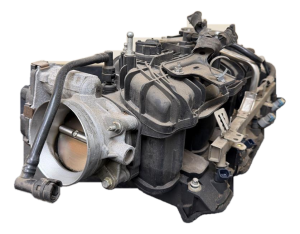
Aftermarket price range: $20-$40 - Intake Manifold Gasket Set — The intake manifold must be removed to access the HPFP. The gaskets should always be replaced to prevent vacuum leaks.
Trusted brands: ACDelco, Fel-Pro (MS97086)
OEM price range: $40-$70
Aftermarket price range: $25-$50
Related Codes That Often Appear With This One
- P0087 — Stands for 'Fuel Rail/System Pressure - Too Low.' This code often appears with P0149 as it directly indicates the HPFP is failing to generate the pressure commanded by the ECM.
- P0172 / P0175 — Stands for 'System Too Rich (Bank 1 / Bank 2).' These codes appear when the HPFP fails by leaking fuel internally into the crankcase. The excess fuel vapor is pulled into the intake via the PCV system, causing a rich condition that the oxygen sensors detect.
Technical Service Bulletins (TSBs) & Recalls
- PIP5158A: Diagnostic aid for finding fuel in crankcase oil, pointing towards HPFP failure.
- 16-NA-383: Information on rough idle or misfire due to excessive intake valve carbon deposits, a separate but common GDI engine issue.
- Recall N140222: Some early 2014 models had a recall for the HPFP. While this specific recall is old, it highlights the known weakness of this component.
Mechanic-Grade Diagnostic Values
- Low-Pressure Fuel System (In-tank pump) — expected: At idle, pressure should be around 43.5 PSI (3 bar). Under load, it can vary up to ~60 PSI. The system is controlled by a Fuel Pump Control Module (FPCM).. Failure: Pressure that is significantly below 40 PSI at idle or does not increase with engine load can indicate a weak in-tank pump, but this does not typically cause P0149 alone.
- High-Pressure Fuel System (HPFP) — expected: At idle, pressure should be between 550-750 PSI. During cranking, it should build to at least 430 PSI. Pressure can exceed 2,000 PSI under high load.. Failure: A large, persistent discrepancy between 'Commanded Fuel Rail Pressure' and 'Actual Fuel Rail Pressure' on a scan tool. Actual pressure significantly lower than commanded pressure points to a failing HPFP. Erratic readings or pressure that bleeds off quickly after shutdown can also indicate a problem.
- Fuel Timing Solenoid (HPFP Actuator) Resistance — expected: Between 10 Ω and 20 Ω across the coil terminals.. Failure: Resistance outside of this range, or a reading of over 10 kΩ to ground, indicates a faulty solenoid/actuator on the pump.
Scan Tool Commands That Help
- GDS2 (Global Diagnostic System 2): Diagnostic Data Display > Fuel System Data — This is the primary tool for diagnosing P0149. It allows a technician to view 'Commanded Fuel Rail Pressure' and 'Fuel Rail Pressure' (actual) side-by-side in real-time to spot discrepancies that confirm a pump or sensor issue.
- GDS2 (Global Diagnostic System 2): Fuel Pump Enable/Disable — Used to safely relieve fuel pressure before servicing the high-pressure system. The technician can start the engine and then use the scan tool to disable the fuel pump, letting the engine run until it stalls from fuel starvation.
Wiring & Ground Locations
- HPFP Actuator Connector (X161) — At the rear of the engine, under the intake manifold, connecting directly to the High-Pressure Fuel Pump.. This is the two-wire connector for the solenoid that controls the fuel pump's output. Pin 1 (YE wire) is the high control signal from the ECM (X3, Pin 16). Damage to this wiring will directly cause timing and pressure control faults.
- Fuel Rail Pressure Sensor Connector (X160) — Located on the fuel rail, also under the intake manifold.. This sensor provides the 'Actual Fuel Rail Pressure' reading to the ECM. Pin 2 (BN/YE wire) is the signal wire to the ECM (X3, Pin 3). A bad connection or faulty sensor here will cause the ECM to see a mismatch and set P0149.
- G103 / G104 — Located on the cowl, at the left rear (G103, above brake booster) and right rear of the engine compartment.. These are primary grounds for the Body Control Module (BCM) and Instrument Panel Cluster (IPC). While not a direct cause, poor grounds here can create electrical noise and voltage irregularities that can affect various module communications.
- Frame Grounds (Behind Front Wheels) — On the frame rail directly behind both front wheels.. These are major chassis grounds that are notoriously exposed to road spray and corrosion. A high-resistance ground here can cause a host of difficult-to-diagnose electrical issues, including erratic sensor readings.
Real Owner Repair Stories
- GM-Trucks.com user 'JoeyBagOfDonuts' (2017 Chevrolet Silverado 5.3L L83) — Engine stumbles, no check engine light after initial repair, but negative fuel trims (-15/-16), and HPFP pressure bouncing between 550-750psi at idle.
❌ Tried (didn't work) Replacing the high-pressure fuel pump (this cleared initial misfire codes but not the stumble), Swapping various air management sensors from a known-good truck
✅ What actually fixed it The user's diagnostic process pointed towards a fuel pressure regulation issue even after replacing the HPFP. While the final fix wasn't posted in the thread, the data provided (erratic HPFP pressure, negative trims) strongly reinforces that the root cause lies within the high-pressure fuel system components (new pump, sensor, or wiring) rather than elsewhere. The pressure drop after shutdown (to 12-14psi) was a key diagnostic clue.
OEM Part Supersession History
12625817, 12669519, 12672919, 12680255, 12688606, 12697966→12711662 (which is now superseded by 12744840 as of late 2023/early 2024)— GM frequently updates part numbers to reflect design improvements, material changes, or manufacturing updates aimed at increasing durability and resolving known failure modes, such as internal seal leakage.
Heads up: While all listed numbers are for the same application, it is critical to always use the latest available part number (currently 12744840) to get the most recent design revisions.
Model Year Variations Within This Range
- 2019-2020: Starting in 2019, some L84 (5.3L) and L87 (6.2L) engines began replacing the L83/L86. These newer engines use Dynamic Fuel Management (DFM) instead of Active Fuel Management (AFM). While the core HPFP design and failure mode are similar, there may be subtle differences in the Fuel Pump Control Module (FPCM) logic and software.
Diagnostic Flowchart
Other Known Issues on This Vehicle
Issues unrelated to this code that are worth knowing about as an owner of this generation:
- 8L90 Transmission Torque Converter Shudder 🔴 High — Widespread on 2015-2019 models with 8-speed transmissions, often appearing between 30,000-60,000 miles. Feels like driving over rumble strips at light throttle. (Ref: TSB 18-NA-355: Recommends a specific transmission fluid flush with Mobil 1 LV ATF HP (Blue Label) fluid.)
- A/C Condenser Leak 🔴 High — Very common on 2014-2017 models. The condenser can crack, leading to a loss of refrigerant and A/C failure. (Ref: Special Coverage Adjustment N172086200 (expired for many). Owners report paying $1200+ for out-of-warranty repairs.)
- AFM/DFM Lifter Failure 🔴 High — A known issue across Gen V V8s. Collapsed lifters for the Active/Dynamic Fuel Management system can cause ticking, misfires, and require significant engine repair. (Ref: TSB PIP5423B addresses related diagnostic codes (P0106/P0506) that can be caused by broken valve springs, a related valvetrain issue.)
- Intake Valve Carbon Buildup 🟠 Medium — Inherent to all GDI engines, including the L83/L86. Over time, carbon deposits build up on the back of intake valves, potentially causing rough idle or misfires. (Ref: TSB 16-NA-383 discusses diagnosis and cleaning procedures for carbon buildup causing drivability issues.)
- Brake Vacuum Pump Failure 🔴 High — Affects 2014-2018 models. A failing vacuum pump leads to reduced brake assist and a hard pedal feel, increasing stopping distances. (Ref: Recall N192268490. Dealers reprogram the EBCM and may replace the pump if necessary.)
Used vs. New Parts: Buying Guide for This Vehicle
When a used part is the smart pick: For this specific repair, a used part is almost never a smart choice. The only exception might be sourcing a wiring harness connector pigtail if the original is damaged.
Donor-vehicle mileage cap: roughly under 30000 miles for the part to have meaningful remaining life.
What to inspect on the donor part:
- Verify the part number is the latest superseded version.
- Obtain the VIN of the donor vehicle to check for mileage and recall history.
- Inspect the electrical connector for clean, straight pins.
- If possible, inspect the roller tappet that rides on the camshaft for any scoring or pitting.
OEM-only on this vehicle (don't cheap out):
- High-Pressure Fuel Pump (HPFP)
- High-Pressure Fuel Feed Pipe/Line
Aftermarket brands forum-validated for this vehicle:
- Bosch (Often the OEM supplier to GM for this component)
Brands owners have reported issues with on this vehicle:
- Unknown, no-name brands from online marketplaces. The risk of premature failure and catastrophic fuel-in-oil leaks is extremely high with unverified parts. The labor involved in the replacement is too intensive to risk using a low-quality pump.
Real Owner Stories
Aggregated from forums and TSBs cited above. Mileages and costs reflect what owners reported in those sources.
2014 Chevrolet Suburban L83 5.3L
Symptoms: Vehicle had difficulty starting with extended cranking time and a strong smell of gasoline in the engine oil; the oil level appeared too high on the dipstick.
What fixed it: Replacement of the High-Pressure Fuel Pump (HPFP) and the one-time-use high-pressure fuel feed pipe, followed by an oil and filter change as per TSB PIP5158A.
Source hint: TSB PIP5158A and Recall N140222
2015-2017 Chevrolet Suburban
Symptoms: Owner reported paying over $1200 for repairs after the A/C stopped working due to a cracked condenser, though this was separate from the engine performance issues.
What fixed it:
Cost: $1200-$1300
Source hint: gm-trucks.com - 'A/C Condenser' thread (Topic ID 200888)
Related OBD-II Codes
Frequently Asked Questions
My 2014 Suburban is having trouble starting and the oil smells like gas. Is there a recall for this?
I have a P0149 and my Suburban is in 'limp mode.' Could this be related to the intake valves?
What parts do I need to replace if the High-Pressure Fuel Pump (HPFP) has failed on my 5.3L L83 engine?
Can a bad wiring harness cause P0149 on the 2015-2020 Suburban?
How can I tell if the Fuel Rail Pressure Sensor is the problem instead of the pump?
Is the P0149 code related to the 'rumble strip' feeling I have while driving?
Helpful Videos
We Have This Part in Stock

The information in this article is provided for general reference and educational purposes only. Vehicle specifications, procedures, and part compatibility can vary by production date, trim level, and region. Always consult your vehicle's factory service manual and verify part numbers before purchasing or performing repairs. Safety-critical components such as airbags, seat belts, and braking systems should be installed by a qualified professional.
- Chevrolet Suburban:
- 🧭 Diagnostic Flowchart
- 🎬 Helpful Videos
- 🛍️ Shop This Part
- What's Unique About the 2014-2020 Chevrolet Suburban
- Symptoms You May Notice
- Most Likely Causes
- Rare But Worth Checking
- Diagnosis Steps
- Parts You'll Likely Need
- Related Codes That Often Appear With This One
- Technical Service Bulletins (TSBs) & Recalls
- Mechanic-Grade Diagnostic Values
- Scan Tool Commands That Help
- Wiring & Ground Locations
- Real Owner Repair Stories
- OEM Part Supersession History
- Model Year Variations Within This Range
- Other Known Issues on This Vehicle
- Used vs. New Parts: Buying Guide for This Vehicle
- Real Owner Stories
- 2014 Chevrolet Suburban L83 5.3L
- 2015-2017 Chevrolet Suburban
- Related OBD-II Codes
- Frequently Asked Questions
- 🎟️ Get 5% Off