

P0149 on 2011-2022 Ford Ranger Duratorq: Fuel Timing Error Causes and Fixes
On a Ford Ranger with a 2.2L or 3.2L Duratorq engine, code P0149 almost always indicates a failing high-pressure fuel pump (HPFP). This is a serious issue that can lead to a no-start condition or sudden stalling. A professional repair can be costly, especially if the failing pump has contaminated the fuel system with metal debris. Immediate diagnosis is critical to avoid escalating a pump replacement into a full fuel system rebuild costing thousands.
- P0149 on a 2.2L or 3.2L Ranger is a serious code that points to a critical fuel system problem, most often the high-pressure fuel pump.
- Do not continue to drive the vehicle. A sudden stall is a major safety risk, and you could cause catastrophic, expensive damage to the entire fuel system.
- The first diagnostic step is to replace the fuel filter and check the old filter for metal shavings. This simple check can confirm a failed pump.
- Due to the complexity and danger of the high-pressure fuel system, professional diagnosis and repair are strongly recommended.
What's Unique About the 2011-2022 Ford Ranger
The 2.2L and 3.2L Duratorq TDCi engines in the T6 Ranger rely on a high-pressure common-rail fuel system. The high-pressure fuel pump (HPFP) is a known weak point on this platform. Failure of this pump is the most common reason for a P0149 code and can be a catastrophic event, as it can send metal particles (swarf) throughout the entire fuel system, requiring the replacement of the pump, fuel lines, and all injectors. This failure mode is so common that checking the fuel filter for metallic debris is the first and most crucial diagnostic step.
Generation note: This guide covers the Ford Ranger (T6) generation, sold from 2011 to 2022 in international markets. This includes the pre-facelift (PX1: 2011-2015) and post-facelift (PX2/PX3: 2015-2022) models equipped with the 2.2L (P4AT) and 3.2L (P5AT) Duratorq diesel engines.
Symptoms You May Notice
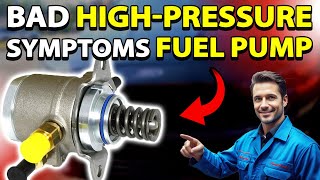
🎬 Watch: Common symptoms of a failing high-pressure fuel pump- Engine cranks but will not start, or is very hard to start
- Engine stalls unexpectedly, sometimes while driving, especially at low RPMs or when coming to a stop
- Reduced engine power and performance, possibly entering 'limp mode'
- Rough or unstable idle
- Hesitation or surging during acceleration
- Increased fuel consumption
- Engine knocking or 'pinging' noises, which can sound like excessive diesel clatter
- Illuminated Check Engine Light (Malfunction Indicator Lamp) or flashing glow plug light
- Replacing fuel injectors when the root cause is the high-pressure pump failing and sending debris to the injectors.
- Replacing the fuel rail pressure sensor without first confirming the high-pressure pump can build and hold pressure.
- Replacing the entire HPFP when only the more accessible and cheaper Suction Control Valve (SCV) was faulty.
Most Likely Causes
- High-Pressure Fuel Pump (HPFP) Failure 🔴 High Probability → Shop Fuel Pump The HPFP is a widely documented common failure point on the 2.2L and 3.2L Duratorq engines. Internal components, such as rollers and cams, can wear and disintegrate, leading to an inability to generate the required pressure at the correct time. This is often exacerbated by fuel contamination or poor fuel lubricity.
How to confirm: Use a diagnostic scan tool to monitor 'Commanded Fuel Rail Pressure' vs. 'Actual Fuel Rail Pressure'. A significant lag or inability for the actual pressure to meet the commanded pressure points to a failing HPFP. A critical step is to inspect the fuel filter for fine metallic particles ('swarf'), which is a definitive sign of pump disintegration. Use a magnet to test if the shavings are ferrous (steel), which confirms internal pump wear.
Typical fix: Replacement of the high-pressure fuel pump. If metal debris is found, the entire fuel system (injectors, fuel rail, lines, and potentially the in-tank lift pump) must be replaced and the fuel tank cleaned to prevent repeat failure. This is an extensive and costly repair.
Est. part cost: $500 - $1500 for the pump alone; $3000 - $8000+ for a full system replacement. - Faulty Suction Control Valve (SCV) 🟡 Medium Probability The SCV, mounted on the HPFP, regulates the volume of fuel entering the pump. It is a known failure point on these engines and can stick or fail electronically, causing erratic fuel pressure that the PCM interprets as a timing error. Symptoms often include surging, stalling at low speeds, and rough idle.
How to confirm: Monitor fuel rail pressure with a scan tool; if it's highly erratic at idle or doesn't respond smoothly to throttle input, the SCV is a prime suspect. The SCV can often fail without producing metal debris, distinguishing it from a full HPFP failure.
Typical fix: Replacement of the Suction Control Valve. This is a much simpler and cheaper repair than replacing the entire HPFP. It is typically mounted to the back of the pump with two screws. An ECU relearn procedure is recommended after replacement.
Est. part cost: $100 - $300 - Air in the Fuel System 🟡 Medium Probability Leaks in fuel lines, a poorly sealed fuel filter housing (especially a cracked housing or missing O-ring), or a weak in-tank lift pump can introduce air into the fuel system. This air compresses in the high-pressure pump, causing a delay in pressure buildup and triggering a timing fault.
How to confirm: Visually inspect all fuel lines and the fuel filter housing for signs of leaks or damage. Check for the presence of air bubbles in any clear sections of the fuel line. A cracked secondary fuel filter housing is a known issue.
Typical fix: Repairing the source of the air leak, which could be as simple as replacing a fuel filter seal or the entire filter housing, or could involve replacing a cracked fuel line.
Est. part cost: $10 - $200 - Faulty Fuel Rail Pressure Sensor ⚪ Low Probability → Shop Fuel Pressure Sensor
How to confirm: If the scan tool shows erratic or nonsensical fuel pressure readings (e.g., max pressure with the engine off) that do not align with engine behavior, the sensor may be at fault. Test the sensor's wiring and connector for damage or corrosion.
Typical fix: Replacement of the fuel rail pressure sensor.
Est. part cost: $50 - $150 - Stretched Timing Chain ⚪ Low Probability → Shop Engine Timing Chain
How to confirm: The high-pressure fuel pump is mechanically driven by the engine's timing chain. If the chain has stretched, it can alter the timing of the pump relative to the crankshaft and camshaft, causing a P0149 code. This would typically be accompanied by other timing-related codes (e.g., cam/crank correlation faults) and engine rattling noises, especially on startup.
Typical fix: Replacement of the timing chain, guides, and tensioners.
Est. part cost: $400 - $800
Rare But Worth Checking
- Faulty Powertrain Control Module (PCM): → Shop Engine Control Module (ECM) This is extremely rare. Before condemning the PCM, all other possibilities related to the fuel pump, sensors, wiring, and mechanical timing must be exhaustively ruled out.
- Wiring Harness Issues: Damage or corrosion in the wiring to the HPFP's suction control valve or the fuel rail pressure sensor can cause intermittent signals, leading to the P0149 code.
Diagnosis Steps
- Scan for all stored Diagnostic Trouble Codes (DTCs). Note any other codes, especially P0087 or P1564, as they provide critical context.
- Using a scan tool, monitor live data for 'Commanded Fuel Rail Pressure' and 'Actual Fuel Rail Pressure' during cranking and at idle. Note any significant discrepancies or erratic behavior.
- CRITICAL STEP: Replace the fuel filter. Carefully inspect the contents of the old filter housing for any signs of metallic debris or 'glitter'. Cut the old filter paper open and spread it out for a thorough inspection. The presence of metal shavings confirms HPFP failure and means the entire system is likely contaminated.
- If no metal is found, investigate the low-pressure fuel system. Check for fuel leaks, damaged lines, and ensure the in-tank lift pump is providing adequate pressure to the HPFP. Check for air bubbles in the fuel supply.
- If the low-pressure side is healthy and there is no metal, suspect the Suction Control Valve (SCV). Test its operation via the scan tool if possible, or consider replacement as it's a common failure point that won't necessarily produce debris.
- Visually inspect the wiring harness and connectors for the fuel rail pressure sensor and the high-pressure fuel pump's control actuator (SCV) for any damage, corrosion, or loose connections.
- If all fuel system components test correctly, investigate the possibility of a mechanical timing issue (e.g., stretched timing chain), especially if you hear rattling noises from the engine.
Parts You'll Likely Need
- High-Pressure Fuel Pump (HPFP)
(OEM #FB3Z9A543J)— This is the most frequent cause of P0149 on the Duratorq engine platform.
Trusted brands: Ford (Motorcraft), Bosch, VDO
OEM price range: $800-$1500
Related Codes That Often Appear With This One
- P0087 — Stands for 'Fuel Rail/System Pressure - Too Low.' This code is very common with P0149 as a failing HPFP cannot build sufficient pressure, which the PCM interprets as both a pressure fault (P0087) and a timing fault (P0149).
- P008A — Stands for 'Low Pressure Fuel System Pressure - Too Low.' This points to a problem with the in-tank lift pump or a clogged primary fuel filter, which can starve the HPFP of fuel, causing it to set a P0149.
- P1564 — A Ford-specific code for 'Injection Pump Control Module Requesting Reduced Fuelling.' When seen with P0149, it strongly points to a fault within the HPFP or its integrated control solenoid/SCV.
Platform-Specific Known Issues
- A failing high-pressure fuel pump on these engines can disintegrate internally, sending metal particles (swarf) through the entire fuel system. This contaminates the fuel rail, lines, and injectors, necessitating a complete system replacement that can cost thousands of dollars. This is not a rare occurrence but a well-documented pattern failure for this powertrain.
- The Suction Control Valve (SCV) on the HPFP is a separate, common failure point that can cause identical symptoms without the catastrophic mechanical failure of the main pump. Proper diagnosis is key to avoiding an unnecessarily expensive repair.
Mechanic-Grade Diagnostic Values
- High-Pressure Fuel Rail Pressure during engine cranking — expected: Should build to a minimum of 200 bar (20,000 kPa) almost instantly.. Failure: Slow pressure build-up or failure to reach the minimum pressure indicates a weak HPFP or a significant leak.
- High-Pressure Fuel Rail Pressure at warm idle — expected: Stable at approximately 23,500 kPa (3,400 psi).. Failure: Pressure that is significantly lower, higher, or fluctuates erratically points to a fault with the HPFP or SCV.
- Suction Control Valve (SCV) electrical resistance — expected: 2.0 to 3.5 Ohms between the two pins on the valve connector.. Failure: A reading outside this range (open circuit or short) indicates an electrical failure of the SCV solenoid.
- Fuel Rail Pressure (FRP) Sensor signal voltage at idle — expected: Approximately 1.1V to 1.3V.. Failure: Voltage that is stuck, erratic, or does not increase with engine RPM suggests a faulty sensor or wiring issue.
- Fuel Rail Pressure (FRP) Sensor reference voltage (Key On, Engine Off) — expected: A steady 5.0 Volts.. Failure: No voltage or significantly low voltage points to a wiring or PCM issue, not a sensor fault.
Hidden / Shadow Codes Worth Checking
- P1564: Injection Pump Control Module Requesting Reduced Fuelling. This Ford-specific code indicates the pump's own internal electronics have detected a fault and commanded a limp mode. Its presence strongly corroborates a fault within the HPFP itself. (see via A professional-grade scan tool (like Ford IDS or FORScan) is typically required to view these manufacturer-specific codes.)
- P1666: Injection Pump Control Module/ECM Crank Reference Synchronization. When this code appears alongside P0149, it points strongly toward a mechanical timing issue between the injection pump and the crankshaft, such as a stretched or jumped timing chain. (see via A professional-grade scan tool is needed to access this manufacturer-specific code.)
Scan Tool Commands That Help
- Ford IDS, FORScan, or equivalent high-end scanner: Pump Learn / Adaptation Reset — This procedure is required after replacing the Suction Control Valve (SCV). The PCM needs to learn the flow characteristics of the new valve to accurately control fuel pressure. Failure to perform this reset can lead to persistent fuel pressure issues even with a new part.
- Ford IDS or equivalent high-end scanner: Fuel Volume Control Valve (VCV) Command / Output State Control — This bidirectional test allows a technician to manually command the SCV (also called VCV) to different duty cycles while monitoring the effect on actual fuel pressure. It is used to functionally test if the valve is responding correctly to PCM commands, helping to isolate a faulty valve from a wiring or PCM driver issue.
Real Owner Repair Stories
- YouTube Diagnosis Video (Ford Ranger 3.2L Duratorq) — Engine stalls while driving but restarts after a short while. Initial codes found were P228D (Fuel Pressure Too High) and P2291 (Low Fuel Pressure During Cranking).
❌ Tried (didn't work) Clearing the codes. The codes did not immediately return, but the underlying stalling problem persisted.
✅ What actually fixed it The in-tank primary fuel pump's filter sock was found to be severely clogged with debris. This restricted fuel flow to the high-pressure pump, causing pressure instability and stalling. Cleaning the tank and replacing the primary filter resolved the issue. - Go-Parts.com Case Study (Similar System) (2011 Ram 2500 6.7L Cummins) — Intermittent P0149, hesitation, and stalling.
❌ Tried (didn't work) Replacement of the entire high-pressure fuel pump ($1,200 part).
✅ What actually fixed it The issue was traced to a faulty Fuel Control Actuator (FCA), the Cummins equivalent of the Ranger's Suction Control Valve (SCV). Replacing the much cheaper FCA ($150 part) solved the problem completely. This highlights a common misdiagnosis where the entire pump is replaced when only the control valve is bad.
"I Checked Everything" — The Actual Cause
- In one documented case on a 3.2L Ranger, the vehicle experienced stalling and fuel pressure codes. All high-pressure system diagnostics appeared inconclusive. The root cause was discovered only after dropping the fuel tank: the primary in-tank fuel pump's filter sock was completely clogged with debris, starving the high-pressure pump for fuel. This is a classic example of a low-pressure system fault causing a high-pressure system code that technicians can miss if they focus only on the HPFP and injectors.
Model Year Variations Within This Range
- 2011-2022: The T6 Ranger platform had two major facelifts: the PX MkII in 2015 and the PX MkIII in 2018. While these updates brought cosmetic changes, new infotainment systems (SYNC 2 and later SYNC 3), and eventually the new 2.0L Bi-Turbo engine option, the core 2.2L and 3.2L Duratorq engine's high-pressure fuel system remained fundamentally the same. The causes and diagnostic procedures for P0149 are consistent across all model years from 2011-2022 for these specific engines.
Diagnostic Flowchart
Other Known Issues on This Vehicle
Issues unrelated to this code that are worth knowing about as an owner of this generation:
- EGR Cooler Failure 🔴 High — Common, especially on 2011-2015 models. Can fail and leak coolant into the intake/exhaust, potentially causing catastrophic engine damage (hydrolock). (Ref: Ford has issued TSBs (e.g., 17-2028 for sticking EGR valves) and customer satisfaction programs in some regions for EGR-related issues.)
- 6R80 Automatic Transmission Problems 🟠 Medium — Widespread reports of harsh shifting, RPM flaring between gears, and torque converter shudder as mileage increases. Often related to valve body wear or fluid breakdown.
- Cracked Pistons / Injector Failure 🔴 High — Failing injectors can create a 'torch' effect, leading to holes or cracks in the piston crown. Recommended to service or replace injectors around 100,000-150,000 km as preventative maintenance.
- Oil Pump Failure 🔴 High — More common on early (pre-2016) models. Can lead to a sudden loss of oil pressure and complete engine failure.
- Split Intercooler Hoses 🟡 Low — The factory rubber intercooler hoses are prone to splitting or developing leaks, causing a significant loss of power, black smoke, and limp mode.
Used vs. New Parts: Buying Guide for This Vehicle
When a used part is the smart pick: A used Suction Control Valve (SCV) can be a cost-effective option IF, and only if, the donor vehicle did not suffer a catastrophic High-Pressure Fuel Pump (HPFP) failure. If the original fault is confirmed to be purely electronic with the SCV and there is zero metal contamination in the fuel filter, a used SCV from a reputable dismantler is a reasonable choice.
Donor-vehicle mileage cap: roughly under 80000 miles for the part to have meaningful remaining life.
What to inspect on the donor part:
- Ask for the vehicle's history; specifically, if it was running when dismantled.
- Request to see the fuel filter from the donor vehicle to inspect for metal shavings.
- Physically inspect the SCV's electrical connector for corrosion or damage.
- Ensure the small filter screen on the SCV itself is clean and free of debris.
OEM-only on this vehicle (don't cheap out):
- High-Pressure Fuel Pump (HPFP)
- Fuel Injectors
- Fuel Rail
Aftermarket brands forum-validated for this vehicle:
- Bosch (Often the OEM supplier)
- VDO / Continental (Often the OEM supplier)
- Denso
Brands owners have reported issues with on this vehicle:
- Unnamed, no-brand 'white box' parts from online marketplaces should be avoided for critical high-pressure fuel system components.
Real Owner Stories
Aggregated from forums and TSBs cited above. Mileages and costs reflect what owners reported in those sources.
Ford Transit 2.2L Duratorq
Symptoms: The owner experienced a no-start condition immediately after the vehicle had run low on fuel, which triggered the P0149 code.
What fixed it: The issue was linked to fuel starvation precipitating pump timing errors.
Source hint: Ford Transit Forum - 'View topic - 90 T350 P0149 Fuel timing error'
Ford Transit 2.2L Duratorq
Symptoms: The vehicle displayed P0149 and P1564 codes simultaneously, indicating a timing control solenoid fault within the pump.
What fixed it: The codes together pointed directly at a failure within the fuel injection pump.
Source hint: Ford Transit Forum - 'View topic - P0149 Timing control Solenoid faults.'
Related OBD-II Codes
Frequently Asked Questions
I found 'glitter' in my fuel filter housing on my 3.2L Ranger. What does this mean?
My Ranger is stalling at low RPMs and has a rough idle, but there's no metal in the fuel. Could it be something cheaper than the pump?
Can a fuel filter change really fix a P0149 timing error on a Ford Ranger?
Is the P0149 code related to the timing chain on the Duratorq engine?
Why does my Ranger enter 'limp mode' with a flashing glow plug light?
Does the Mazda BT-50 suffer from the same P0149 issues as the Ford Ranger?
Helpful Videos
Used OEM Parts in Stock
New Aftermarket Parts Available


The information in this article is provided for general reference and educational purposes only. Vehicle specifications, procedures, and part compatibility can vary by production date, trim level, and region. Always consult your vehicle's factory service manual and verify part numbers before purchasing or performing repairs. Safety-critical components such as airbags, seat belts, and braking systems should be installed by a qualified professional.
- Ford Ranger:
- 🧭 Diagnostic Flowchart
- 🎬 Helpful Videos
- 🛍️ Shop This Part
- What's Unique About the 2011-2022 Ford Ranger
- Symptoms You May Notice
- Most Likely Causes
- Rare But Worth Checking
- Diagnosis Steps
- Parts You'll Likely Need
- Related Codes That Often Appear With This One
- Platform-Specific Known Issues
- Mechanic-Grade Diagnostic Values
- Hidden / Shadow Codes Worth Checking
- Scan Tool Commands That Help
- Real Owner Repair Stories
- "I Checked Everything" — The Actual Cause
- Model Year Variations Within This Range
- Other Known Issues on This Vehicle
- Used vs. New Parts: Buying Guide for This Vehicle
- Real Owner Stories
- Ford Transit 2.2L Duratorq
- Ford Transit 2.2L Duratorq
- Related OBD-II Codes
- Frequently Asked Questions
- 🎟️ Get 5% Off