

P0149 on 2014-2024 GMC Sierra: Fuel Timing Error Causes and Fixes
On 2014-2024 GMC Sierra trucks, P0149 indicates a fuel timing error. For 2014-2016 LML Duramax engines, this is a critical warning of impending catastrophic failure of the Bosch CP4.2 high-pressure fuel pump, a repair that can cost $10,000+. For gas engines and 2017+ L5P Duramax, it typically points to a failing high-pressure fuel pump (HPFP) or related sensor. Stop driving immediately to prevent further, more expensive damage.
- P0149 on a 2014-2024 GMC Sierra indicates a serious issue with the high-pressure fuel system.
- The most likely cause is a failing high-pressure fuel pump (HPFP) or injection pump.
- DO NOT continue to drive the vehicle. A pump failure can contaminate the entire fuel system, drastically increasing repair costs.
- Before replacing the expensive pump, thoroughly inspect the wiring harness for chafing, especially near the firewall.
- This is not a beginner-friendly DIY repair due to the extreme pressures and special tools involved. Professional service is strongly recommended.
What's Unique About the 2014-2024 GMC Sierra
For this generation of GMC Sierra, the cause of P0149 is highly dependent on the engine. On 2014-2016 models with the LML Duramax engine, this code is a notorious precursor to the failure of the Bosch CP4.2 injection pump. This pump is known to disintegrate internally, sending metal shavings throughout the entire fuel system, turning a pump replacement into a full system rebuild costing upwards of $10,000. In contrast, the 2017+ L5P Duramax uses a much more reliable Denso HP4 pump, where P0149 is less common and less likely to be catastrophic. On the direct-injection gas engines (5.3L, 6.2L), P0149 also points to the high-pressure fuel pump, though failure is typically contained to the pump itself. Across all engines, chafed wiring harnesses near the firewall and on various engine brackets are a known issue that can cause intermittent signals and trigger this code, as outlined in GM TSB 21-NA-149.
Generation note: This guide covers the third generation (K2XX, 2014-2018) and fourth generation (T1XX, 2019-2024) GMC Sierra. The most critical distinction is the engine. Duramax engines from 2014-2016 are the LML type with the failure-prone Bosch CP4.2 pump. Duramax engines from 2017-2024 are the L5P type with the more robust Denso HP4 pump. Gas engines across these years use similar direct-injection HPFP technology, but part numbers differ.
Symptoms You May Notice
- Check Engine Light is on
- Reduced engine power or entering 'limp mode'
- Engine runs rough, idles poorly, or stalls
- Hesitation or stumbling during acceleration
- Engine cranks but will not start, or has a long crank time
- Noticeable decrease in fuel economy
- Black smoke from the exhaust
- Loud or unusual noise from the injection pump
- Replacing the fuel rail pressure sensor without confirming it's faulty. The sensor is usually reporting the problem accurately, it is not the cause.
- Replacing fuel injectors on an LML Duramax without replacing the rest of the fuel system. 🎬 See how a CP3 conversion permanently fixes this issue If the CP4 pump failed, new injectors will be destroyed by leftover metal debris.
- Replacing the in-tank low-pressure fuel pump. While this can cause a no-start, P0149 specifically relates to a timing/pressure error in the high-pressure system.
Most Likely Causes
- Failing High-Pressure Fuel Pump (HPFP) / Injection Pump 🔴 High Probability → Shop Fuel Pump On 2014-2016 LML Duramax, the Bosch CP4.2 pump is a well-documented, widespread failure point due to design flaws and sensitivity to US diesel fuel lubricity. On gas engines and 2017+ L5P Duramax, the pumps are more reliable but still operate under immense stress and can fail from wear.
How to confirm: Use a diagnostic scan tool to monitor desired vs. actual fuel rail pressure. A significant deviation, especially under load, points to a weak pump. For Duramax, check the fuel filter housing for metallic 'glitter'—a definitive sign of pump self-destruction.
Typical fix: For gas engines and L5P Duramax, replacement of the HPFP. For LML Duramax, if metal is present, a complete fuel system replacement is required (pump, injectors, rails, lines, and tank cleaning).
Est. part cost: $500-$1500 (Gas/L5P Pump Only), $3500-$5000+ (LML Full System Kit) - Chafed or Damaged Wiring Harness 🟡 Medium Probability GM has issued TSBs (#21-NA-149) regarding harnesses rubbing on engine brackets, cylinder heads, and the firewall on these trucks. Engine vibration causes the loom to wear through, shorting wires for the fuel pressure regulator or sensors.
How to confirm: Visually inspect the wiring harness leading to the high-pressure fuel pump, fuel rail pressure sensor, and ECM. Pay close attention to contact points near the driver's side upper control arm, shock tower, and back of the engine.
Typical fix: Repairing the damaged wires and re-routing the harness with protective loom and securement.
Est. part cost: $10-$50 - Faulty Fuel Pressure Regulator / Control Actuator 🟡 Medium Probability This component, often mounted on the high-pressure pump, controls the fuel pressure. It can fail electronically or mechanically, leading to incorrect pressure and timing.
How to confirm: A scan tool may show erratic fuel pressure readings that don't correspond to engine load. On some models, the regulator can be commanded by the scan tool to test its function. For the L5P Duramax, the regulator is PWM controlled; zero volts at the connector commands maximum pressure.
Typical fix: Replacement of the fuel pressure control actuator/regulator. On LML and L5P pumps, it is often included with a new pump assembly.
Est. part cost: $150-$400 - Air in the Fuel System ⚪ Low Probability More common on pre-L5P Duramax diesels which used a vacuum-style fuel system. A leak on the suction side (e.g., a loose fuel filter housing) can introduce air, which compresses and prevents the system from reaching commanded pressure.
How to confirm: Check for recent fuel filter service. Inspect all fuel lines for leaks. A proper bleeding procedure must be performed after any fuel system service.
Typical fix: Bleeding the fuel system and correcting the source of the air intrusion (e.g., loose filter, cracked line).
Est. part cost: $0-$100
Rare But Worth Checking
- Faulty Powertrain Control Module (PCM): → Shop Engine Control Module (ECM) This is rare, but a PCM with faulty driver circuits or corrupted software can incorrectly interpret sensor data and set a P0149 code. This should only be considered after all other mechanical and wiring possibilities have been exhausted.
Diagnosis Steps
- Connect a professional-grade OBD-II scanner and verify that P0149 is the primary code. Note any other codes, especially P0087 or P228C.
- Monitor live data. Observe 'Commanded Fuel Rail Pressure' and 'Actual Fuel Rail Pressure'. At idle, they should be very close. Briefly raise the RPM and watch for the actual pressure to lag significantly behind the commanded pressure. A large, persistent gap indicates a pump or major leak issue.
- FOR DURAMAX: Immediately check the fuel filter for metal shavings. Open the water drain on the filter housing and collect a sample in a clean, clear container. Swirl the sample in the light and look for a 'glitter' or metallic sheen. If metal is present, the HPFP has failed and the full system needs replacement. STOP all further diagnosis to prevent spreading debris.
- Perform a thorough visual inspection of the entire fuel system, looking for any signs of leaks from the high-pressure pump, lines, or rails.
- Carefully inspect the engine wiring harness per TSB #21-NA-149. Check for chafing at the back of the engine, near the firewall, on the driver's side cylinder head, and around the ECM/TCM bracket. Disconnect and inspect connectors for corrosion or damage.
- If no metal is found and wiring is intact, further diagnosis on the fuel pressure regulator and fuel timing solenoid may be needed using a bi-directional scan tool.
- If the pump is replaced, it is critical to inspect for metal debris. If found, the entire fuel system (lines, rails, injectors) must be cleaned or replaced to prevent repeat failure.
Parts You'll Likely Need
- High-Pressure Fuel Pump (Injection Pump)
(OEM #LML Duramax (2014-16): 12678393 (Bosch CP4.2). L5P Duramax (2017+): 12701094 (Denso HP4).)— This is the most common failure point. On LML engines, it's a catastrophic failure; on others, it's a high-wear item.
Trusted brands: ACDelco, Bosch, Denso
OEM price range: $800-$1800
Aftermarket price range: $500-$1200 - LML Duramax Fuel System 'Disaster' Kit — If the LML CP4.2 pump fails and contaminates the system, this all-in-one kit is the only correct repair. It includes the pump, all 8 injectors, fuel rails, and all high-pressure lines.
Trusted brands: ACDelco, Standard Motor Products, Bosch
OEM price range: $4000-$5500
Aftermarket price range: $3000-$4500 - High-Pressure Fuel Pump (Gas V8)
(OEM #12677329, 12625817 (check by VIN))— The primary failure point for P0149 on the 5.3L and 6.2L direct-injected gas engines.
Trusted brands: ACDelco, GM Genuine
OEM price range: $400-$700
Aftermarket price range: $250-$500
Related Codes That Often Appear With This One
- P0087 — Stands for 'Fuel Rail/System Pressure - Too Low'. This code often appears with P0149 because a failing pump cannot build enough pressure, which the ECM interprets as both a low pressure condition and a timing error.
- P228C — Stands for 'Fuel Pressure Regulator 1 Exceeded Control Limits - Pressure Too Low'. This is another code that points directly to the system's inability to build commanded fuel pressure, often seen with P0149 and P0087 during HPFP failure.
Technical Service Bulletins (TSBs) & Recalls
- TSB #21-NA-149: Details various locations where the engine wiring harness can chafe on underhood components, causing a wide variety of DTCs, including those related to the fuel system.
- TSB #PIP5212 (and subsequent revisions): While primarily for engine overheating, this TSB series for 2014-2015 trucks addresses various engine-related issues and diagnostic paths that can be relevant when multiple symptoms are present.
- TSB #19-NA-218: Addresses ticking noises from the engine, often related to failing AFM/DFM lifters. While not directly for P0149, a severe mechanical issue like a failing valvetrain can sometimes cause erratic running that may be misdiagnosed.
Platform-Specific Known Issues
- LML Duramax (2014-2016) Bosch CP4.2 Catastrophic Failure: The P0149 code on an LML engine is extremely serious. The Bosch CP4.2 pump is known to fail without warning, sending metal debris through the entire fuel system. This requires a full system replacement costing $8,000-$12,000+. The presence of metal flakes in the fuel filter confirms this failure. Do not simply replace the pump; the entire system must be replaced to avoid immediate repeat failure.
- L5P Duramax (2017-2024) Denso HP4 Reliability: GM switched to a Denso HP4 pump for the L5P engine, which is significantly more reliable than the previous CP4. While a P0149 code on an L5P can still indicate a failed pump, it is far less likely to be a catastrophic, system-wide contamination event. Diagnosis should still be taken seriously, but the prognosis is generally much better than for an LML.
Mechanic-Grade Diagnostic Values
- Low-Pressure Fuel System (Gas & Diesel) — expected: Must be at least 73 PSI (500 kPa) during a key-on, engine-off pump command test.. Failure: Pressure below 73 PSI indicates a weak in-tank lift pump, which can starve the high-pressure pump.
- High-Pressure Fuel System (Gas V8 at Idle) — expected: Scan tool should show between 2.0–5.0 MPa (290–725 PSI).. Failure: Pressure that is unstable, significantly lower than the target, or does not increase with RPM points to a failing HPFP.
- Fuel Rail Pressure Sensor Voltage (Gas V8, KOEO) — expected: Approximately 0.5V after the system has had time to depressurize.. Failure: A high voltage reading with the engine off suggests a shorted sensor or wiring, which can trick the ECM.
- Fuel Rail Pressure Sensor Voltage (Gas V8, at Idle) — expected: Approximately 1.32V.. Failure: Voltage that does not correlate with actual pressure changes indicates a faulty sensor.
- Fuel Pressure Regulator (L5P Duramax) — expected: This is a Pulse Width Modulated (PWM) component. Voltage readings are less useful than commanding it with a scan tool.. Failure: Reading zero volts at the connector commands maximum fuel pressure. An inability to control pressure via a bidirectional scan tool points to a faulty regulator or wiring.
Scan Tool Commands That Help
- GDS2 (GM Global Diagnostic System): Diagnostic Data Display — Use this function to monitor 'Commanded Fuel Rail Pressure' vs. 'Actual Fuel Rail Pressure' in real-time. This is the primary method for identifying a performance gap in the high-pressure fuel pump.
- GDS2 (GM Global Diagnostic System): Fuel System Tests / Actuator Tests — To command the fuel pressure regulator (solenoid) to specific duty cycles. This helps determine if the regulator is responding correctly or if it is stuck, which can help differentiate between a pump failure and a regulator failure.
- GDS2 (GM Global Diagnostic System): Data Bus Diagnostic Tool — If communication errors are suspected or multiple seemingly unrelated codes are present with P0149, this tool can be used to check the health of the vehicle's data networks. A 'wiggle test' on harnesses can be performed while monitoring the bus status.
Wiring & Ground Locations
- TSB 21-NA-149 Chafe Point 1 — The ECM/TCM black metal bracket, located in the engine bay, typically on the driver's side.. An unsecured branch of the engine harness can rub through on the sharp edge of this bracket, shorting or opening circuits related to fuel pressure sensors or the fuel pump control module.
- TSB 21-NA-149 Chafe Point 2 — The driver's side upper control arm.. The harness can get pinched or rub against the upper control arm due to suspension travel and engine movement, causing intermittent faults that are hard to trace.
- TSB 21-NA-149 Chafe Point 3 — The shock tower bolt on the driver's side.. The harness can vibrate against the exposed stud of the shock tower bolt, wearing through the insulation and causing a short to ground.
OEM Part Supersession History
12625817→12677329, 12709451 (Verify by VIN)— Internal design and material updates to improve reliability and address failure modes.
Heads up: While later part numbers may physically fit older models, there can be calibration differences. Always use the part number specified for the vehicle's VIN. Upgrading a gas V8 to an LT4 pump requires ECU tuning.
Model Year Variations Within This Range
- 2014-2018 (K2XX) vs. 2019-2024 (T1XX): The transition from the K2XX to the T1XX platform in 2019 involved a completely new frame and electrical architecture (Global A to Global B). While the engines are similar, wiring harness routing, connector locations, and module locations are different, which is critical when diagnosing wiring-related P0149 codes. TSB 21-NA-149 applies to both platforms but the specific chafe points can vary.
- 2014-2016 (LML) vs. 2017-2024 (L5P): The most significant change is the injection pump on Duramax engines. The 2014-2016 LML uses the failure-prone Bosch CP4.2. The 2017+ L5P uses the much more robust Denso HP4 pump. Diagnosis for P0149 on an LML should immediately focus on CP4 failure, while on an L5P, other causes like sensors or wiring are more likely, although pump failure can still occur.
Diagnostic Flowchart
Other Known Issues on This Vehicle
Issues unrelated to this code that are worth knowing about as an owner of this generation:
- AFM/DFM V8 Lifter Failure 🔴 High — Common on 5.3L & 6.2L V8s, especially 2019+ models, often occurring between 60,000 and 120,000 miles. Can lead to misfires, ticking noises, and require engine top-end rebuild. (Ref: TSB #19-NA-218 addresses engine ticking noises related to lifters.)
- 8-Speed & 10-Speed Transmission Shudder ('Chevy Shake') 🟠 Medium — Widespread on 2015-2019 models with the 8-speed (8L90) and also present on some 10-speed transmissions. Feels like driving over rumble strips at light throttle. (Ref: TSB #18-NA-355 recommends a specific transmission fluid flush with Mobil 1 Synthetic LV ATF HP (Blue Label) to resolve the shudder.)
- A/C Condenser Failure 🟠 Medium — Common on 2014-2018 (K2XX) models. The condenser is prone to developing leaks, leading to a loss of refrigerant and cooling performance.
- Brake Vacuum Pump Failure 🔴 High — Affects 2014-2018 models, leading to a hard brake pedal and increased stopping distances. (Ref: Subject to a major safety recall (NHTSA Recall #19V645000).)
- Peeling Exterior Clear Coat 🟡 Low — Noted on various model years, particularly around window trim and on the roof. This is a cosmetic issue but is a frequent owner complaint.
Used vs. New Parts: Buying Guide for This Vehicle
When a used part is the smart pick: For P0149, used parts are generally not recommended for the core fuel system components. However, a used ECM or wiring harness from a low-mileage, non-crashed vehicle can be a cost-effective option if diagnosed as the fault, but it may require programming by a dealer.
Donor-vehicle mileage cap: roughly under 50000 miles for the part to have meaningful remaining life.
What to inspect on the donor part:
- For a wiring harness, inspect for any signs of previous chafing, repairs, brittle loom, or corrosion on connectors.
- For an ECM, ensure the donor vehicle had no flood damage and the part number is an exact match.
- NEVER buy a used high-pressure fuel pump (especially LML CP4) or fuel injectors, as their history is unknown and they could be contaminated with metal debris.
OEM-only on this vehicle (don't cheap out):
- High-Pressure Fuel Pump (HPFP)
- Fuel Injectors
- Fuel Pressure Regulator
Aftermarket brands forum-validated for this vehicle:
- S&S Diesel Motorsport (For CP4 to CP3 conversion kits or Disaster Prevention Kits on LML Duramax).
- Exergy Performance (For upgraded fuel pressure regulators with improved screens).
- Lingenfelter or Armageddon (For upgraded HPFPs on high-performance gas V8 applications, requires tuning).
Brands owners have reported issues with on this vehicle:
- Unnamed, no-brand 'remanufactured' or 'new' CP4.2 pumps from online marketplaces. The risk of poor quality control and immediate failure is extremely high.
Real Owner Stories
Aggregated from forums and TSBs cited above. Mileages and costs reflect what owners reported in those sources.
2014-2016 GMC Sierra LML Duramax
Symptoms: The Bosch CP4.2 pump failed without warning, and the owner found metal flakes in the fuel filter during inspection.
What fixed it: A full fuel system replacement including the pump, injectors, rails, and lines, plus tank cleaning.
Cost: $8,000-$12,000+
Source hint: vehicle_specific_issues: LML Duramax (2014-2016) Bosch CP4.2 Catastrophic Failure
2015 GMC Sierra 2500HD Duramax
Symptoms: The truck threw codes P0087 and P0149; upon inspection, the owner discovered metal in the fuel system.
What fixed it: The owner had to decide between a full factory system replacement or a CP3 conversion to prevent future failures.
Source hint: duramaxforum.com: A thread titled 'P0087 and P0149... here we go'
2014-2018 GMC Sierra 5.3L/6.2L Gas
Symptoms: Check engine light with P0149 and symptoms of a failing high-pressure fuel pump.
What fixed it: Replacement of the high-pressure fuel pump (HPFP) only.
Cost: $1,500-$2,500
Source hint: gm-trucks.com: Discussions on gas engine models (5.3L/6.2L) with P0149
2019 GMC Sierra 1500 5.3L
Symptoms: Severe mechanical issues and erratic running originally thought to be fuel related but identified as lifter failure.
What fixed it: Lifter replacement.
Cost: $4,000-$10,000
Source hint: reddit.com/r/gmcsierra: A user with a 2019 5.3L reported lifter failure
Related OBD-II Codes
Frequently Asked Questions
My 2015 LML Duramax has a P0149 code; is it true I might need to replace the entire fuel system?
Does TSB #21-NA-149 apply to the P0149 code on my GMC Sierra?
Is the fuel pump in my 2020 Sierra L5P Duramax as prone to failure as the older models?
Where should I check for wiring damage on my 2014-2024 Sierra to fix this code?
Can a ticking noise in my engine be related to the P0149 fuel timing code?
How can I confirm if my high-pressure fuel pump is failing without taking it apart?
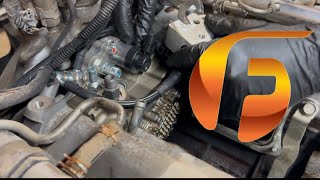
Helpful Videos
Used OEM Parts in Stock
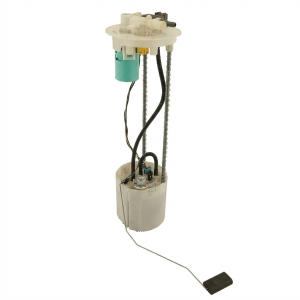
New Aftermarket Parts Available

The information in this article is provided for general reference and educational purposes only. Vehicle specifications, procedures, and part compatibility can vary by production date, trim level, and region. Always consult your vehicle's factory service manual and verify part numbers before purchasing or performing repairs. Safety-critical components such as airbags, seat belts, and braking systems should be installed by a qualified professional.
- GMC Sierra:
- 🧭 Diagnostic Flowchart
- 🎬 Helpful Videos
- 🛍️ Shop This Part
- What's Unique About the 2014-2024 GMC Sierra
- Symptoms You May Notice
- Most Likely Causes
- Rare But Worth Checking
- Diagnosis Steps
- Parts You'll Likely Need
- Related Codes That Often Appear With This One
- Technical Service Bulletins (TSBs) & Recalls
- Platform-Specific Known Issues
- Mechanic-Grade Diagnostic Values
- Scan Tool Commands That Help
- Wiring & Ground Locations
- OEM Part Supersession History
- Model Year Variations Within This Range
- Other Known Issues on This Vehicle
- Used vs. New Parts: Buying Guide for This Vehicle
- Real Owner Stories
- 2014-2016 GMC Sierra LML Duramax
- 2015 GMC Sierra 2500HD Duramax
- 2014-2018 GMC Sierra 5.3L/6.2L Gas
- 2019 GMC Sierra 1500 5.3L
- Related OBD-II Codes
- Frequently Asked Questions
- 🎟️ Get 5% Off