

P0149 on 2011-2020 Kia Optima GDI: Fuel Timing Error Causes and Fixes
On a 2011-2020 Kia Optima with a GDI engine, code P0149 almost always means the high-pressure fuel pump (HPFP) is failing. This is a very common problem, often accompanied by code P0087. Expect to replace the HPFP and its cam follower, costing around $250-$450 for parts.
- P0149 on your GDI Optima is a strong signal that the high-pressure fuel pump (HPFP) is failing.
- When this code appears, especially with P0087, the HPFP should be your primary suspect.
- Always check your engine oil for a gasoline smell; if present, stop driving the vehicle to avoid severe engine damage.
- When replacing the HPFP, you must also replace the camshaft follower (tappet) and the single-use high-pressure fuel pipe to do the job correctly and safely.
What's Unique About the 2011-2020 Kia Optima
The Theta II GDI engines used in this era of Kia Optima have a widely documented history of high-pressure fuel pump (HPFP) failures. Unlike traditional fuel injection, GDI systems use this second, engine-driven pump to create immense fuel pressure, sometimes over 2,000 PSI. The HPFP is a known weak point, making P0149 a very common and platform-specific issue. The failure is so frequent that it's the first thing to suspect, often appearing with code P0087 (Fuel Rail Pressure Too Low), which is a near-certain confirmation of HPFP failure.
Generation note: This issue affects both the third generation (TF, 2011-2015) and fourth generation (JF, 2016-2020) Kia Optima models equipped with 2.4L and 2.0L GDI engines. The underlying cause, failure of the high-pressure fuel pump, is common to both generations as part of the systemic issues with the Theta II engine family.
Symptoms You May Notice
- Hesitation or stumbling when accelerating.
- Sudden loss of engine power, sometimes called 'limp mode'.
- Rough or unstable idle.
- Engine stalling, especially at low speeds or when stopping.
- Engine cranks for a long time but refuses to start, or requires multiple attempts.
- Check Engine Light is on.
- Decreased fuel economy.
- Strong smell of fuel in the engine oil, indicating a failed internal pump seal.
- A mechanical ticking or rattling noise from the top of the engine that changes with RPM, which could be the failing pump or worn tappet.
- Replacing fuel injectors. While injectors can fail, they are not the primary cause of a system-wide pressure-related code like P0149.
- Replacing only the in-tank (low-pressure) fuel pump without diagnosing the high-pressure system first. A user on a forum replaced the in-tank pump for P0087 but the issue persisted, pointing to the HPFP.
Most Likely Causes
- Failing High-Pressure Fuel Pump (HPFP) 🔴 High Probability → Shop Fuel Pump The HPFP on the Theta II GDI engine is a widely recognized weak point with a documented history of premature failure, leading to multiple lawsuits and warranty extensions.
How to confirm: Use a scan tool to monitor 'Desired Fuel Rail Pressure' vs. 'Actual Fuel Rail Pressure'. Under acceleration, the actual pressure will fail to keep up with the desired pressure. Also, check the engine oil for a strong smell of gasoline, which indicates the pump's internal seal has failed and is leaking fuel into the crankcase.
Typical fix: Replace the high-pressure fuel pump, the cam follower (tappet) it rides on, and the single-use high-pressure fuel pipe.
Est. part cost: $250-$450 - Worn Camshaft Follower (Tappet) 🟡 Medium Probability The HPFP is driven by a lobe on the camshaft via a small bucket tappet. This follower can wear down or be damaged by a seizing pump, reducing the pump's stroke and causing low pressure. It is considered a mandatory replacement item when servicing the HPFP.
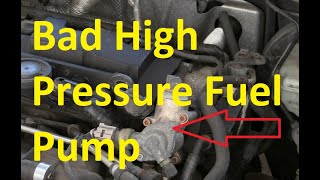
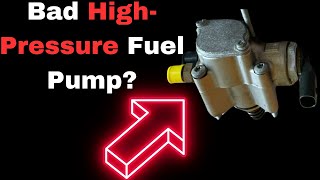
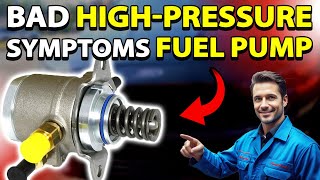
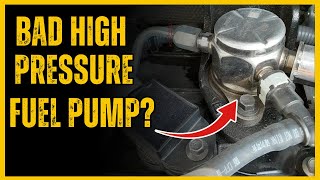
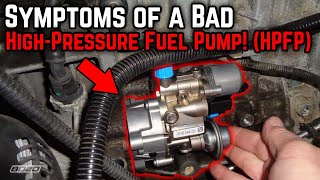
How to confirm: Visually inspect the tappet and the camshaft lobe for scoring, dishing, or obvious wear when the HPFP is removed. The surface should be smooth and flat. This part should always be inspected and typically replaced during HPFP service. 🎬 Watch: Step-by-step HPFP and cam follower replacement guide
Typical fix: Replace the camshaft follower. If the camshaft lobe is also damaged, the camshaft must be replaced, which is a much larger repair.
Est. part cost: $20-$50 - Low-Pressure Fuel System Fault ⚪ Low Probability A warranty extension was issued for some models for a cracking low-pressure fuel filter housing, which can starve the HPFP of fuel. While less common than HPFP failure, the in-tank pump must supply adequate pressure (around 50-65 PSI) for the HPFP to function.
How to confirm: Perform a low-pressure fuel system test to ensure adequate fuel is being supplied to the HPFP. Expected pressure at idle is around 49-66 PSI. If the low-side pressure is weak, the HPFP cannot reach its target pressure.
Typical fix: Replace the in-tank fuel filter or the entire low-pressure fuel pump assembly.
Est. part cost: $100-$300
Rare But Worth Checking
- Leaking High-Pressure Fuel Pipe: → Shop Fuel Line Recall SC172 was issued for 2011-2017 models because this pipe could be damaged, misaligned, or improperly torqued during a previous engine replacement, causing a dangerous fuel leak and a drop in pressure.
- Faulty Fuel Rail Pressure Sensor: → Shop Fuel Pressure Sensor It is possible for the sensor to fail and report incorrect pressure readings to the ECM, triggering codes. However, it is far more likely that the pump itself is the mechanical point of failure. A bad sensor might also trigger code P0191 or P0193.
Diagnosis Steps
- Check for other diagnostic trouble codes. P0087 is a strong indicator of the root cause.
- Using a capable scan tool, view live data for 'Desired Fuel Rail Pressure' and 'Actual Fuel Rail Pressure'.
- While safely parked, observe the pressure readings at idle. Then, briefly and sharply increase engine RPM. A healthy system will show the actual pressure closely tracking the desired pressure. 🎬 Watch: How to tell if your HPFP is going bad A failing HPFP will cause the actual pressure to lag significantly or drop.
- Turn off the engine and check the oil dipstick. A strong smell of raw gasoline in the oil is a definitive sign of HPFP failure, where fuel is leaking past the internal seals into the crankcase.
- Check the low-pressure fuel system. Connect a fuel pressure gauge to the low-pressure line to ensure the in-tank pump is delivering adequate pressure (typically 49-66 PSI) to the HPFP.
- Visually inspect the area around the HPFP (on top of the engine) and the connecting hard line for any signs of external fuel leaks, as noted in recall SC172.
- If replacing the HPFP, ALWAYS inspect the camshaft follower (tappet) and the camshaft lobe for wear or damage. A worn tappet will cause a new pump to fail or perform poorly.
Parts You'll Likely Need
- High-Pressure Fuel Pump (HPFP)
(OEM #35320-2G740 (supersedes 35320-2G720, 35320-2G730))— This is the most common point of failure for code P0149 on this specific vehicle. Part numbers 35320-2G720 and 35320-2G740 are often used interchangeably.
Trusted brands: Kia/Hyundai (OEM), Bosch, Delphi
OEM price range: $350-$500
Aftermarket price range: $200-$350 - Camshaft Follower / Tappet
(OEM #35325-2G700 (Roller Tappet))— This part is the interface between the camshaft and the HPFP. It is a critical wear item that should be replaced alongside the HPFP to ensure proper function and prevent repeat failure. Note: Some older parts lists may show bucket-style tappets (e.g., 22226-2G002), but the roller tappet is common for this application. Always verify by VIN.
Trusted brands: Kia/Hyundai (OEM)
OEM price range: $20-$50
Aftermarket price range: $15-$30 - High-Pressure Fuel Pipe
(OEM #35305-2G700 (Varies by year/engine))— This is a single-use, torque-to-yield part. It must be replaced any time it is removed to prevent a high-pressure fuel leak, which is a significant fire hazard. This was the subject of recall SC172. 🎬 See this 2016-2018 Optima fuel pump replacement walkthrough
Trusted brands: Kia/Hyundai (OEM)
OEM price range: $30-$60
Related Codes That Often Appear With This One
- P0087 — P0087 (Fuel Rail/System Pressure - Too Low) is a direct confirmation of the condition causing P0149. Seeing both codes together makes a failing HPFP the near-certain cause.
- P030x (e.g., P0301, P0302) — Misfire codes can occur when fuel pressure is too low, causing lean conditions and incomplete combustion in one or more cylinders.
- P0191 — P0191 (Fuel Rail Pressure Sensor Circuit Range/Performance) can appear if the pressure is so low it's outside the sensor's expected range, or if the sensor itself is faulty.
Technical Service Bulletins (TSBs) & Recalls
- SC172 - Safety Recall Campaign for High Pressure Fuel Pipe inspection and replacement on 2011-2017 Optima models, often after a prior engine replacement.
- FUE061 - Technical Service Bulletin related to a warranty extension for the low-pressure fuel pump filter assembly on 2016-2020 Optima models.
- ENG222 - TSB outlining the procedure for diagnosing excessive oil consumption on Theta II, Gamma, and Nu engines.
Platform-Specific Known Issues
- A widespread, documented history of premature High-Pressure Fuel Pump (HPFP) failures on Theta II GDI engines.
- Safety Recall SC172 was issued for potential high-pressure fuel pipe leaks on 2011-2017 models that had a previous engine replacement.
- Warranty Extension related to TSB FUE061 for the low-pressure fuel pump filter assembly on 2016-2020 Optima models.
- Class-action lawsuits and lifetime warranty extensions related to catastrophic rod bearing failure in the Theta II GDI engine.
Mechanic-Grade Diagnostic Values
- Low-Pressure Fuel System (In-tank pump) — expected: 495-520 kPa (72-75 PSI) at the feed line to the HPFP.. Failure: Pressure below this range indicates a failing in-tank pump or clogged filter, starving the HPFP.
- High-Pressure Fuel System (Fuel Rail) — expected: 290 - 3,626 PSI (20 - 250 bar), varies with load. At idle, should be around 40 bar (580 PSI).. Failure: Actual pressure on a scan tool significantly lagging or failing to meet desired pressure under load. If the high-pressure system is not working at all, pressure will be around 4.5 bar.
- Fuel Rail Pressure Sensor (FRPS) Voltage - Key On, Engine Off — expected: ~0.5V. Failure: A reading significantly different from 0.5V with the engine off suggests a sensor or wiring issue.
- Fuel Rail Pressure Sensor (FRPS) Voltage - Engine at Idle — expected: ~1.2V to 1.5V. Failure: Voltage that is stuck low or high and does not correspond to pressure changes.
- Fuel Rail Pressure Sensor (FRPS) Voltage - Snap Acceleration — expected: Should jump towards 3.5V - 3.8V. Failure: Voltage fails to increase with a sharp increase in RPM, indicating the sensor is not reading the pressure rise.
- Fuel Rail Pressure Sensor (FRPS) 5V Reference — expected: A steady 5.0V on the reference wire from the ECM.. Failure: Voltage that is not 5.0V indicates a wiring or ECM problem.
Scan Tool Commands That Help
- Kia GDS (Global Diagnostic System): Actuation Test: Fuel Pump Relay — To manually command the low-pressure fuel pump on (with engine off) to verify its operation audibly and to test for low-side fuel pressure without starting the engine.
- Kia GDS (Global Diagnostic System): Actuation Test: Injector Disable — If misfires (P030x) are present with P0149, this allows a technician to disable individual injectors to see if it affects engine performance, helping to isolate a problematic cylinder. However, P0149 is a system-wide pressure issue, so this is more for secondary diagnosis.
- Kia GDS (Global Diagnostic System): Live Data Graphing — Essential for diagnosing P0149. Graphing 'Desired Fuel Rail Pressure' vs. 'Actual Fuel Rail Pressure' provides a clear visual of the HPFP's inability to keep up with demand during a throttle snap.
Wiring & Ground Locations
- Fuel Rail Pressure Sensor Connector — Located on the end of the high-pressure fuel rail, underneath the intake manifold. The intake manifold must be removed for access.. This is the primary sensor providing data for this code. A bad connection, or corrosion in the connector, can mimic a pressure fault. Wires include a 5V reference, a ground, and a signal wire back to the ECM.
- Engine Ground Points — Key grounding points for the engine management system are typically on the cylinder head, engine block, and intake manifold.. A poor engine ground can introduce electrical noise and cause erratic sensor readings, including from the fuel rail pressure sensor, potentially leading to incorrect diagnostic codes.
- ECM/PCM Connectors — The Engine Control Module (PCM) is typically located in the engine bay. Specific pinouts for the fuel rail pressure sensor signal can be found in vehicle-specific wiring diagrams.. Verifying continuity and checking for high resistance between the sensor connector and the ECM connector is a critical step to rule out a wiring harness issue before condemning the sensor or ECM.
Real Owner Repair Stories
- YouTube user 'Eli Tech' (Kia Optima 2.4L GDI (year not specified, but within range)) — Codes P0087 and P0193.
❌ Tried (didn't work) The vehicle had a new, but aftermarket, fuel rail pressure sensor installed previously.
✅ What actually fixed it The aftermarket fuel rail pressure sensor was faulty. With the key on engine off, the scan tool showed 800 PSI, a clear indication of a bad sensor reading. Replacing the faulty aftermarket sensor with the original OEM sensor resolved the codes and incorrect pressure readings.
OEM Part Supersession History
35320-2G720→35320-2G730, then 35320-2G740— Standard part revisions and updates by the manufacturer. The later part numbers are the currently supplied service replacements.
Heads up: Part numbers 35320-2G720, 35320-2G730, and 35320-2G740 are generally considered functionally identical and interchangeable for the specified Optima models. No major fitment or performance differences are noted between these revisions.
Model Year Variations Within This Range
- 2011-2020 (Varies): The Theta II GDI engine may use either a flat 'bucket' style cam follower or a 'roller' style follower for the HPFP. While the roller tappet (35325-2G700) is common for this application, it is critical to verify by VIN which style is correct for the specific vehicle, as they are not interchangeable. Using the wrong follower will lead to rapid failure of the follower and/or the HPFP.
Diagnostic Flowchart
Other Known Issues on This Vehicle
Issues unrelated to this code that are worth knowing about as an owner of this generation:
- Catastrophic Engine Failure (Rod Bearing Wear) 🔴 High — Extremely common across 2011-2019 models with the 2.0L & 2.4L Theta II GDI engines. This defect led to massive class-action lawsuits and warranty extensions. (Ref: Multiple recalls (e.g., SC147/17V-224) and a lifetime engine warranty settlement for qualifying vehicles.)
- Excessive Oil Consumption 🔴 High — Widespread issue, often considered a precursor to engine failure. Owners report needing to add a quart of oil every 1,000 miles or less. (Ref: TSB ENG222 (Rev 2) provides a diagnostic procedure for excessive oil consumption. Warranty claims for this issue are often difficult unless the KSDS (Knock Sensor Detection System) update has been performed and the engine fails.)
- Intake Valve Carbon Buildup 🟠 Medium — An inherent issue with all GDI engines, as fuel is not sprayed over the intake valves to clean them. Symptoms like rough idle, hesitation, and reduced fuel economy can appear, typically after 40,000-60,000 miles. (Ref: No specific recall, but regular professional cleaning (walnut blasting or chemical cleaning) is recommended as preventative maintenance.)
Used vs. New Parts: Buying Guide for This Vehicle
When a used part is the smart pick: For this specific failure, purchasing a used High-Pressure Fuel Pump (HPFP) is strongly discouraged. Given the extremely high failure rate of this component on Theta II engines, a used part from a salvage yard is highly likely to have significant wear or be near failure itself. The labor involved in the replacement makes it unwise to risk using a part with an unknown history.
Donor-vehicle mileage cap: roughly under 15000 miles for the part to have meaningful remaining life.
What to inspect on the donor part:
- If forced to consider a used pump, only select one from a very low-mileage vehicle that was wrecked for reasons unrelated to the engine.
- Demand proof of the donor vehicle's mileage from the VIN.
- Avoid any pump that shows external corrosion or damage to the electrical connector.
OEM-only on this vehicle (don't cheap out):
- High-Pressure Fuel Pump (HPFP)
- Camshaft Follower / Tappet
- High-Pressure Fuel Pipe
Aftermarket brands forum-validated for this vehicle:
- Bosch (Often the OEM supplier)
- Delphi
Brands owners have reported issues with on this vehicle:
- Unnamed, low-cost brands from online marketplaces (e.g., Amazon, eBay, Vevor) are frequently cited in forums as being unreliable, failing quickly, or being dead-on-arrival.
- Airtex has been reported by some users to have quality control issues, such as noisy operation or premature failure of internal check valves.
Real Owner Stories
Aggregated from forums and TSBs cited above. Mileages and costs reflect what owners reported in those sources.
2013 Kia Optima EX
Symptoms: The vehicle experienced stalling and hesitation; the scan tool showed both P0087 and P0149 codes.
What fixed it: Replacement of the High-Pressure Fuel Pump (HPFP).
Source hint: Optima Forums thread titled '2013 Optima EX P0087 and P0149 - Optima Forums'
2012 Kia Optima
Symptoms: Long engine crank times even after the in-tank fuel pump was replaced.
What fixed it: Diagnosis required differentiating between low-pressure and high-pressure systems, pointing toward the HPFP system rather than the in-tank pump.
Source hint: Car Troubleshooting Forum thread titled 'Code P0087 on 2012 Kia Optima - Car Troubleshooting Forum'
2013 Kia Optima — 170000 miles
Symptoms: Code P0087 appeared after a prior engine replacement. The owner replaced the in-tank pump and other parts without success.
What fixed it: The High-Pressure Fuel Pump (HPFP) was identified as the actual culprit despite other parts being replaced first.
Source hint: Reddit r/MechanicAdvice - P0087 Code. Replaced Many Parts - Help!
Related OBD-II Codes
Frequently Asked Questions
Is there a recall for the high-pressure fuel pipe on my 2011-2017 Kia Optima?
My 2016 Optima is having fuel delivery issues; is the fuel filter covered under warranty?
Why does my Optima oil smell like gasoline when the P0149 code is present?
Should I replace the cam follower when I install a new high-pressure fuel pump?
Does the Theta II engine in my Optima have a history of fuel pump problems?
What is the expected fuel pressure for the low-pressure system on a Kia Optima?
Helpful Videos


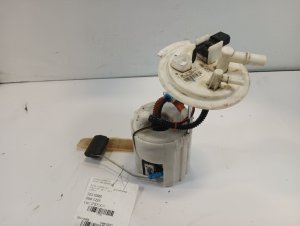
Used OEM Parts in Stock
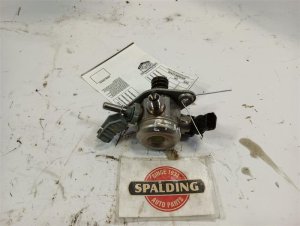
New Aftermarket Parts Available


The information in this article is provided for general reference and educational purposes only. Vehicle specifications, procedures, and part compatibility can vary by production date, trim level, and region. Always consult your vehicle's factory service manual and verify part numbers before purchasing or performing repairs. Safety-critical components such as airbags, seat belts, and braking systems should be installed by a qualified professional.
- Kia Optima:
- 🧭 Diagnostic Flowchart
- 🎬 Helpful Videos
- 🛍️ Shop This Part
- What's Unique About the 2011-2020 Kia Optima
- Symptoms You May Notice
- Most Likely Causes
- Rare But Worth Checking
- Diagnosis Steps
- Parts You'll Likely Need
- Related Codes That Often Appear With This One
- Technical Service Bulletins (TSBs) & Recalls
- Platform-Specific Known Issues
- Mechanic-Grade Diagnostic Values
- Scan Tool Commands That Help
- Wiring & Ground Locations
- Real Owner Repair Stories
- OEM Part Supersession History
- Model Year Variations Within This Range
- Other Known Issues on This Vehicle
- Used vs. New Parts: Buying Guide for This Vehicle
- Real Owner Stories
- 2013 Kia Optima EX
- 2012 Kia Optima
- 2013 Kia Optima — 170000 miles
- Related OBD-II Codes
- Frequently Asked Questions
- 🎟️ Get 5% Off