

P0149 on 2012-2014 Volkswagen Beetle: Fuel Timing Error Causes and Fixes
P0149 on a 2012-2014 VW Beetle means 'Fuel Timing Error' and is almost always triggered alongside P0087 (Fuel Pressure Too Low). This combination strongly points to a failing High-Pressure Fuel Pump (HPFP), a common issue on these direct-injection engines. The failure is often the pump itself or the camshaft follower that drives it. Expect to pay $250-$500 for a new HPFP.
- P0149 on a 2012-2014 Beetle is a 'Fuel Timing Error' that is almost always a symptom of a deeper problem: low fuel pressure (P0087).
- The most likely cause is a failing High-Pressure Fuel Pump (HPFP) or its associated cam follower.
- Diagnosis involves checking live fuel pressure data with a scan tool to see if the actual pressure is falling below the requested pressure.
- Before replacing the expensive HPFP, always inspect the inexpensive cam follower, as it is a common wear item.
- This repair is best left to professionals due to the danger of working with high-pressure fuel systems.
What's Unique About the 2012-2014 Volkswagen BEETLE
The 2012-2014 Beetle with the 2.0T TSI engine uses a direct-injection system where fuel is delivered under extremely high pressure (often over 2,000 PSI). The High-Pressure Fuel Pump (HPFP) is a known failure point on many VW/Audi EA888 engines of this era. The manufacturer's own service bulletins for the Beetle repeatedly group P0149 with low fuel pressure codes (P0087, P053F), confirming that this is a recognized fault pattern related to the high-pressure fuel system. The issue is so common that the Ross-Tech Wiki, a highly respected resource for VW/Audi diagnostics, specifically calls out checking for worn camshaft components when P0087 is present on these engines.
Diagnostic Flowchart
Tap your situation to follow the diagnostic path that matches what you're seeing on this vehicle.
Symptoms You May Notice
- Check Engine Light is on
- Engine hesitates or stumbles on acceleration
- Noticeable loss of engine power, feels like the turbo isn't working
- Engine runs rough, misfires, or stalls
- Hard starting or extended cranking time, especially when cold
- Decreased fuel economy
- Loud ticking or whining noise from the engine bay, near the HPFP
- Strong smell of gasoline in the engine oil, indicating a leaking HPFP seal
- Replacing fuel injectors first. While faulty injectors can cause timing issues, the strong correlation with low-pressure code P0087 on this car makes the fuel pump system the primary suspect.
- Replacing only the fuel filter. While a clogged filter can contribute to low pressure, it's less likely to be the sole cause of the P0149/P0087 combination on a direct-injection system compared to an HPFP or cam follower failure.
Most Likely Causes
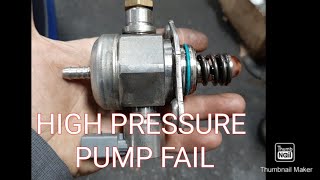
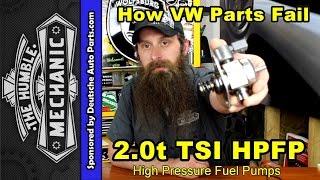
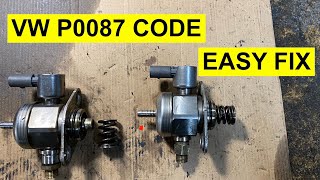
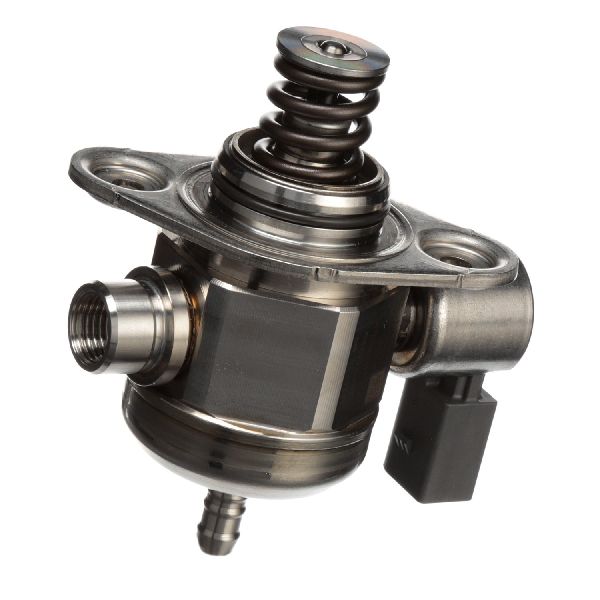
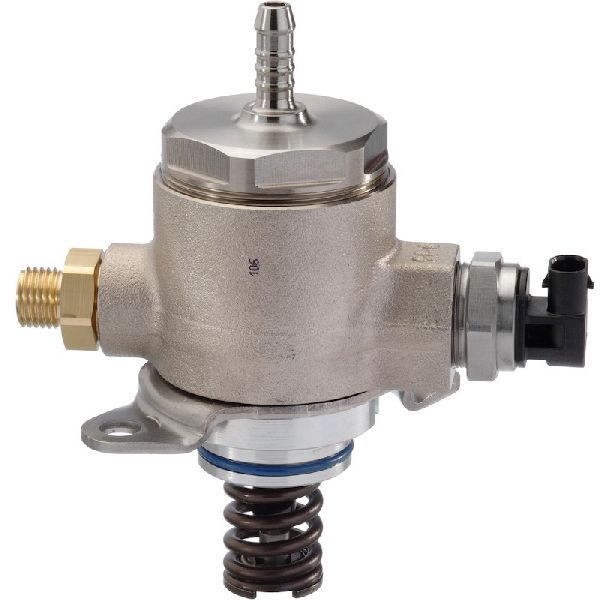
- Failing High-Pressure Fuel Pump (HPFP) 🔴 High Probability → Shop Fuel Pump The HPFP is a known weak point on this generation of VW direct-injection engines. It is responsible for generating the high pressure needed for injection, and its failure directly causes low pressure (P0087) and timing errors (P0149). A common failure mode is the internal plunger breaking off from the main body 🎬 Watch: See how these high pressure fuel pumps typically fail. of the pump.
How to confirm: Use a capable scan tool to monitor requested vs. actual fuel rail pressure. If the actual pressure is significantly lower than requested, especially under load, the HPFP is a primary suspect. A visual inspection upon removal may reveal a broken plunger, which is a definitive sign of failure.
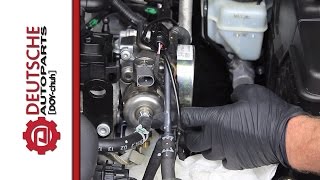
Typical fix: Replace the High-Pressure Fuel Pump and the cam follower. 🎬 See this step-by-step walkthrough for replacing the HPFP yourself.
Est. part cost: $250-$500 - Worn HPFP Cam Follower (Tappet) 🟡 Medium Probability → Shop Fuel Pump The HPFP is driven by a lobe on the camshaft via a small metal follower. This part is designed to wear over time and is a very common failure point on VW/Audi 2.0T engines. If it wears through, it can no longer properly actuate the pump, and can even send metal shavings into the engine.
How to confirm: Remove the HPFP (typically held by two or three bolts) and visually inspect the cam follower for a worn-through or dished-out surface. This is a relatively quick and definitive check. Any visible wear warrants replacement.
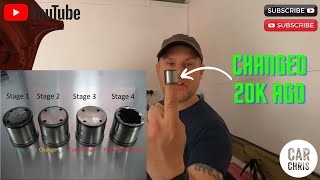
Typical fix: Replace the HPFP cam follower. It is highly recommended to replace this part whenever the HPFP is replaced, or as preventative maintenance every 30,000-40,000 miles. 🎬 Watch: How to inspect and replace the cam follower.
Est. part cost: $20-$50 - Faulty Fuel Rail Pressure Sensor (G247) ⚪ Low Probability → Shop Fuel Pressure Sensor
How to confirm: Compare the fuel pressure reading from the scan tool with a reading from a mechanical fuel pressure gauge. If the readings differ significantly, the sensor is likely faulty. VW also has a TSB (2027458) for an improved sensor for the related 2.0T FSI engine, indicating sensor issues are not unheard of.
Typical fix: Replace the fuel pressure sensor located on the fuel rail.
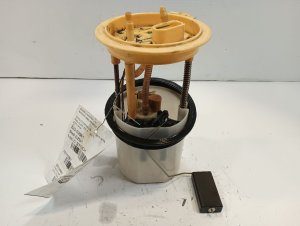
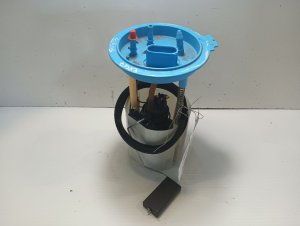
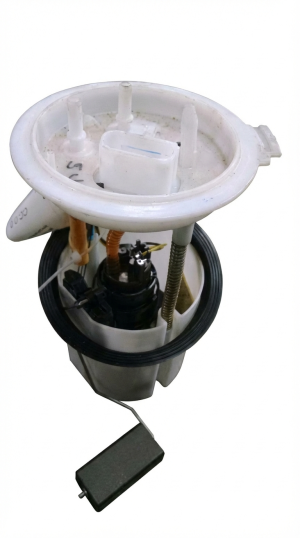
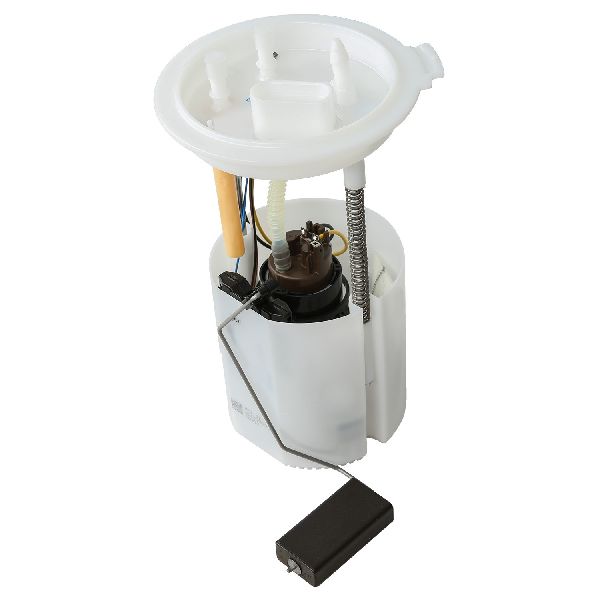
Est. part cost: $50-$150 - Failing In-Tank Low-Pressure Fuel Pump ⚪ Low Probability → Shop Fuel Pump
How to confirm: Test the pressure of the low-pressure fuel system before it enters the HPFP. The pressure should be stable, typically around 4-7 bar (58-101 PSI). If the pressure is low or erratic, the in-tank pump is not supplying enough fuel for the HPFP to function correctly.
Typical fix: Replace the in-tank fuel pump assembly.
Est. part cost: $150-$300
Rare But Worth Checking
- Stretched Timing Chain / Worn Camshaft Lobe: → Shop Engine Timing Chain A VW Tech Tip document notes that if camshaft adaptation values exceed 8 degrees, the base engine timing is off. This causes the HPFP, which is driven by the camshaft, to be out of time, triggering fuel timing codes. Additionally, severe wear on the camshaft lobe that drives the HPFP follower can also cause low pressure. This is mentioned in VW TSB 2015153. This is a more complex and expensive repair.
- Engine Control Module (ECM) Issue: → Shop Engine Control Module (ECM) In very rare cases, a software glitch or internal failure in the ECM can cause incorrect fuel timing calculations. This should only be considered after all mechanical and sensor-related causes have been ruled out.
Diagnosis Steps
- Confirm codes: Use an OBD-II scanner to verify P0149 is present, and check for accompanying codes like P0087, P053F, or P030x.
- Monitor Live Fuel Pressure Data: Use a scan tool (like VCDS) to view 'Requested Fuel Rail Pressure' and 'Actual Fuel Rail Pressure'.
- Test Under Load: While safely driving, perform a wide-open throttle pull in a middle gear. If 'Actual' pressure drops significantly below 'Requested' pressure, it confirms a fuel delivery shortfall.
- Check for Fuel in Oil: Remove the oil cap or dipstick and smell for a strong gasoline odor. This can indicate a failed seal on the HPFP, which is a common failure point.
- Inspect HPFP Cam Follower: Before replacing the expensive pump, remove the HPFP and inspect the cam follower. If it is worn, cracked, or has a hole in it, replace it. This is a very common and relatively inexpensive failure point.
- Inspect HPFP Plunger: While the pump is removed, check that the spring-loaded plunger at the bottom is intact. A known failure is for this plunger to break off.
- Test Low-Pressure System: If the follower and HPFP appear okay, test the pressure from the in-tank (low-pressure) fuel pump to ensure it's supplying adequate pressure (approx. 4-7 bar or 58-101 PSI) to the HPFP.
- Isolate the HPFP: If the low-pressure system is healthy and the cam follower is intact, the High-Pressure Fuel Pump itself is the most likely cause of the problem.
Parts You'll Likely Need
- High-Pressure Fuel Pump (HPFP)
(OEM #06H127025Q (Bosch is the OEM supplier))— This is the most common component to fail and directly cause the P0149/P0087 code combination on this engine.
Trusted brands: Bosch, Hitachi
OEM price range: $400-$550
Aftermarket price range: $250-$400 - HPFP Cam Follower / Tappet
(OEM #06L109311 (or older 06H109311B))— This is a critical wear item that directly impacts the HPFP's performance. It should always be inspected and replaced when servicing the HPFP.
Trusted brands: INA, Genuine Volkswagen
OEM price range: $40-$60
Aftermarket price range: $20-$40
Related Codes That Often Appear With This One
- P0087 — Fuel Rail/System Pressure - Too Low. This code is the root cause. The low pressure from a failing pump or follower prevents the system from achieving correct injection timing, which then triggers P0149.
- P053F — Cold Start Fuel Pressure Performance. This code is also directly related to the fuel system's inability to build or hold pressure, especially during a cold start, and is cited in the same TSBs as P0149 and P0087.
- P0300-P0304 — Random or specific cylinder misfire codes. Incorrect fuel pressure and timing lead to poor combustion, which results in engine misfires.
Technical Service Bulletins (TSBs) & Recalls
- VIN4APIN20211013: Notes customer complaint of MIL-on with P0087, P0149, and P053F in the ECM.
- VIN4APIN20211026: Cites customer states MIL-on with P0087, P0149, and P053F in the ECM.
- VIN4APIN20210913: Mentions customer states MIL-on with P0087, P0149, and P053F in the ECM.
- VIN4APIN20210819: Lists customer states MIL-on with P0087, P0149, and P053F in the ECM.
- VW TSB
Platform-Specific Known Issues
- Multiple Technical Service Bulletins (TSBs) from Volkswagen list P0149 in conjunction with P0087 and P053F for customer complaints of a check engine light (MIL-on). This confirms the manufacturer is aware of this specific pattern of fuel system faults.
- A more detailed TSB, 2015153, addresses P0087 caused by a worn intake camshaft lobe, which drives the fuel pump. This is a more severe version of the same root problem.
Mechanic-Grade Diagnostic Values
- High-Pressure Fuel Rail at Idle (engine warm) — expected: Approx. 40-50 bar (580-725 PSI). Failure: A reading of 6-10 bar indicates a likely HPFP failure.
- High-Pressure Fuel Rail under load (WOT) — expected: Rises with engine speed, up to 110-170 bar (1600-2465 PSI).. Failure: Failure to rise significantly above idle pressure.
- Low-Pressure Fuel Pump (in-tank) supply to HPFP — expected: 4.0 - 7.0 bar (58 - 101 PSI).. Failure: Pressure below 4.0 bar (58 PSI) indicates a failing LPFP or a clogged filter.
- G247 Fuel Pressure Sensor - Wiring Check — expected: With ignition on and sensor disconnected: Terminal 1 to Battery (+) should be Battery Voltage, Terminal 2 to Ground should be Battery Voltage, Terminal 3 to Ground should be ~5V.. Failure: Readings not matching specified values point to a wiring issue or a bad ECM.
Scan Tool Commands That Help
- VCDS (VAG-COM): Measuring Value Block (MVB) 106 — To monitor 'Fuel Rail Pressure (Actual)' on CAN-based engine controllers. This is a primary step to see if the actual pressure matches the specified pressure.
- VCDS (VAG-COM): Measuring Value Block (MVB) 140 — An alternative block for viewing fuel pressure data. Field 3 shows fuel rail pressure.
- VCDS (VAG-COM): Advanced Measuring Values (UDS Modules) — For newer UDS protocol controllers, use this function and search for 'Fuel high pressure actual value' to get the same data as MVB 106 on older cars.
- VCDS (VAG-COM): Output Test on HPFP Solenoid — To check the electrical function of the HPFP's solenoid. A clicking sound during the test indicates the solenoid is being commanded correctly. A lack of clicking could mean a bad solenoid or a wiring issue.
Wiring & Ground Locations
- GND 1 — In engine compartment, left side, below the battery tray (battery to body ground).. A poor main body ground can cause a variety of electrical issues, including erratic sensor readings and module performance.
- GND 2 — On top of the transmission, near the engine block.. This is a primary engine/transmission ground. A bad connection here can directly affect engine sensor readings and actuator functions.
- GND 32 (ECM) — In the center plenum, below the ECM.. This is the specific ground for the Engine Control Module. A fault here could directly cause miscalculation or incorrect readings related to fuel timing and pressure.
- Fuel Pump Control Module (J538) — Under the rear seat, provides power to the in-tank low-pressure fuel pump.. Failure of this module can cause the low-pressure pump to stop working, starving the HPFP of fuel and causing P0087/P0149. Overheating is a common failure mode for this module.
Real Owner Repair Stories
- YouTube video by 'Shop Life', 2017 (2010 Volkswagen GTI 2.0T (engine is highly similar to the Beetle's)) — Low power, extended crank, P0087 and P053F codes. Scan tool showed actual fuel rail pressure at 6.5 bar, while spec was 40-60 bar.
❌ Tried (didn't work) Diagnosis confirmed low-side fuel pressure was good (94 PSI) and the fuel rail pressure sensor was reading correctly. A bidirectional test of the HPFP solenoid confirmed it was clicking, indicating electrical control was okay.
✅ What actually fixed it Upon removing the High-Pressure Fuel Pump, the technician found the pump's plunger shaft had broken completely off from the main body of the pump. This was a definitive mechanical failure. Replacing the HPFP resolved the issue. - vwvortex.com forum user (2009 Volkswagen CC 2.0T TSI) — P0087 (Fuel rail system pressure too low) and P0172 (System too rich).
❌ Tried (didn't work) The owner first replaced the HPFP and the fuel rail pressure sensor, but the codes returned.
✅ What actually fixed it The owner then tested the low-pressure fuel pump and found its output was under 50 PSI. After replacing the low-pressure fuel pump, the pressure rose to 80-90 PSI, and the high-side rail pressure reached 160-170 bar at higher RPM. The final fix pointed towards the low-pressure side (LPFP or its control module) being the root cause.
OEM Part Supersession History
06H127025E / G / K / M / N / P→06H127025Q— Multiple revisions to improve reliability and performance of the High-Pressure Fuel Pump.
Heads up: Early 2.0T TSI engines used a different style fitting. When replacing an early pump (like 06H127025K) with the newer 06H127025Q, an adapter fitting (PN: 06E127065G) is also required.06H109311B→06L109311— Updated design for the HPFP cam follower (tappet) to improve wear resistance.
Model Year Variations Within This Range
- 2012-2014: The 2012-2014 VW Beetle with the 2.0T engine can have either a Gen 1 or Gen 2 EA888 TSI engine, as the transition happened during this period. While the P0149 fault pattern is similar, Gen 2 engines are particularly known for high oil consumption due to piston ring design, which is a separate issue to be aware of. The core failure of the HPFP and cam follower is common to both generations within this vehicle's model years.
Helpful Videos
Used OEM Parts in Stock
New Aftermarket Parts Available



The information in this article is provided for general reference and educational purposes only. Vehicle specifications, procedures, and part compatibility can vary by production date, trim level, and region. Always consult your vehicle's factory service manual and verify part numbers before purchasing or performing repairs. Safety-critical components such as airbags, seat belts, and braking systems should be installed by a qualified professional.
- Volkswagen BEETLE:
- 🧭 Diagnostic Flowchart
- 🎬 Helpful Videos
- 🛍️ Shop This Part
- What's Unique About the 2012-2014 Volkswagen BEETLE
- Symptoms You May Notice
- Most Likely Causes
- Rare But Worth Checking
- Diagnosis Steps
- Parts You'll Likely Need
- Related Codes That Often Appear With This One
- Technical Service Bulletins (TSBs) & Recalls
- Platform-Specific Known Issues
- Mechanic-Grade Diagnostic Values
- Scan Tool Commands That Help
- Wiring & Ground Locations
- Real Owner Repair Stories
- OEM Part Supersession History
- Model Year Variations Within This Range
- 🎟️ Get 5% Off