

P0149 on 2014 Volkswagen Beetle Convertible: Fuel Timing Error Causes and Fixes
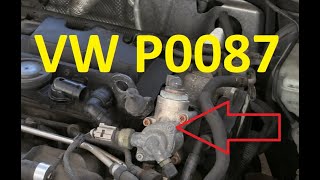
On a 2014 VW Beetle with a direct-injection engine (1.8T/2.0T), P0149 means 'Fuel Timing Error' and almost always appears with P0087 (Fuel Pressure Too Low). The most common cause is a failing High-Pressure Fuel Pump (HPFP) or a worn cam follower. Expect a repair cost of $500-$1200.
- P0149 on your 2014 Beetle is a 'Fuel Timing Error' that is almost always caused by a low fuel pressure condition (P0087).
- The primary suspects are the High-Pressure Fuel Pump (HPFP) and its cam follower, which are known wear items.
- Do not ignore this code. It can lead to stalling, poor performance, and potentially severe engine damage if the cam follower fails completely.
- When replacing the HPFP, it is mandatory to also inspect and replace the cam follower to prevent a quick repeat failure.
- This is not a beginner-friendly DIY repair due to the dangerously high fuel pressures involved; professional service is strongly recommended.
What's Unique About the 2014-2014 Volkswagen BEETLE CONVERTIBLE
The 2014 Beetle's direct-injection engines (EA888 Gen3 TSI) rely on a camshaft-driven High-Pressure Fuel Pump (HPFP) to generate fuel pressures often exceeding 2,000 PSI. This pump and its driving component, the cam follower, are known wear items on this generation of VW/Audi engines. Unlike in many other vehicles where P0149 might point to a sensor or solenoid, on this platform, the combination of P0149 and P0087 is a strong, well-documented indicator of a mechanical failure in the high-pressure fuel delivery system. The 2014 model year is particularly notable as it featured the new 1.8T engine replacing the older 2.5L, and the 2.0T models were rebranded as 'R-Line', both using the EA888 engine architecture prone to this issue.
Diagnostic Flowchart
Tap your situation to follow the diagnostic path that matches what you're seeing on this vehicle.
Symptoms You May Notice
- Check Engine Light is on
- Engine sputtering or hesitating on acceleration
- Reduced engine power and sluggish performance, sometimes described as 'limp mode'
- Engine cranks but is hard to start, especially when cold
- Rough or uneven idle
- Increased fuel consumption
- Engine stalling, sometimes while driving or coming to a stop
- Strong smell of gasoline in the engine oil (indicates HPFP internal seal failure)
- Replacing only the fuel pressure sensor without verifying the actual fuel pressure with VCDS logs.
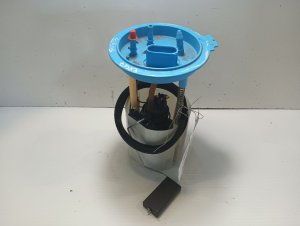
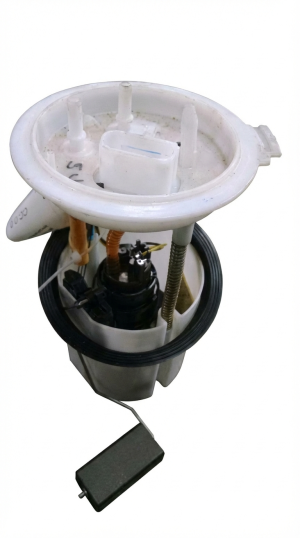
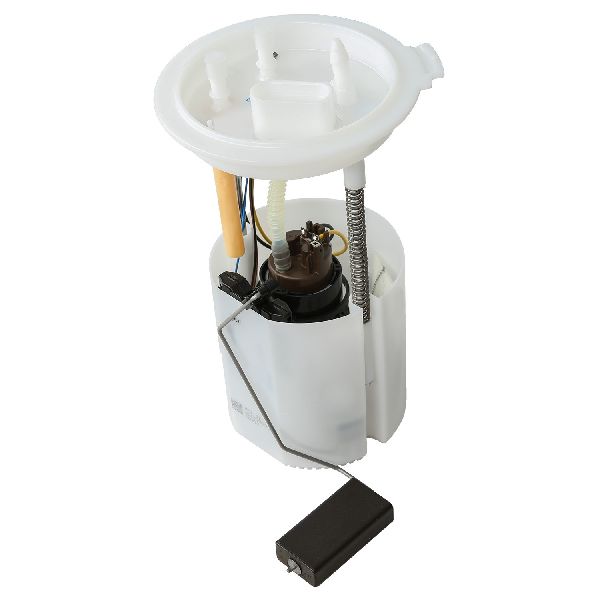
- Replacing the in-tank low-pressure fuel pump when the fault is in the high-pressure system.
- Replacing fuel injectors when the pressure supply is the root cause.
Most Likely Causes
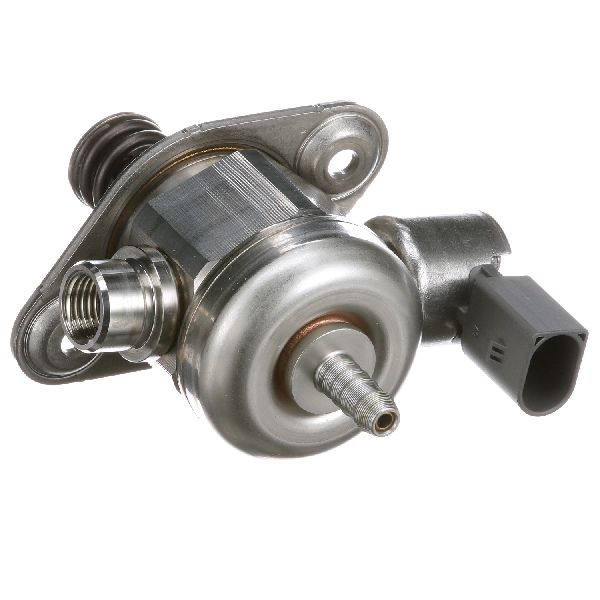
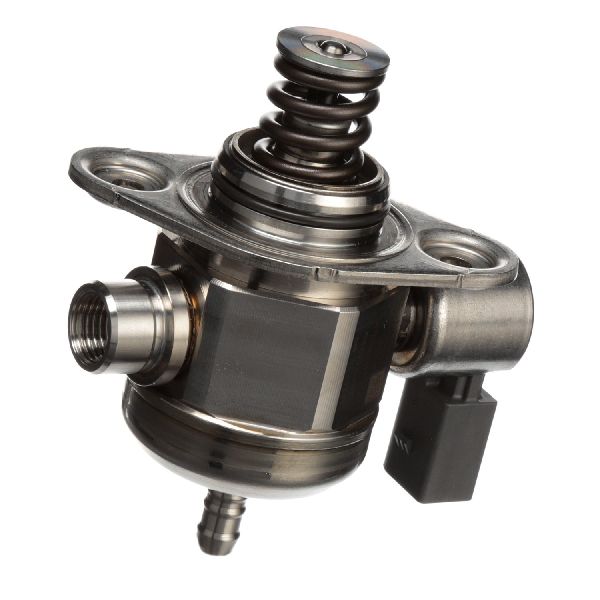
- Failing High-Pressure Fuel Pump (HPFP) 🔴 High Probability → Shop Fuel Pump The HPFP is a widely documented weak point on VW's EA888 direct-injection engines. Internal wear prevents it from generating the pressure commanded by the ECM, directly causing low pressure (P0087) which results in the timing error (P0149).
How to confirm: Use a VW-specific scan tool (like VCDS) to monitor 'Fuel Rail Pressure (actual)' vs. 'Fuel Rail Pressure (specified)' in the advanced measuring blocks. During a wide-open throttle pull in 3rd gear, the actual value will significantly lag or drop far below the specified value. A healthy system should hold pressure close to the specified value, which can exceed 200 bar (2900 PSI) under load.
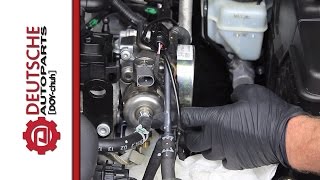
Typical fix: Replace the High-Pressure Fuel Pump. 🎬 Watch: Step-by-step guide to replacing the HPFP on your TSI engine. It is critical to also replace the roller-style cam follower at the same time to prevent a repeat failure. - Worn HPFP Cam Follower (Roller Follower) 🟡 Medium Probability → Shop Fuel Pump The HPFP is driven by a camshaft lobe via a roller-style follower. While the roller design on the EA888 Gen3 engine is much more durable than the flat tappet on older VW engines (like the EA113), the bearing can still fail under high mileage, leading to a loss of pump stroke, noise, and eventual pump and camshaft damage.
How to confirm: Physically remove the HPFP and inspect the cam follower. Check that the roller spins freely without binding and has no flat spots, scoring, or signs of disintegration. This inspection should be performed any time the HPFP is serviced.
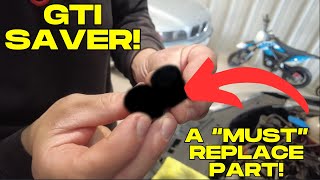
Typical fix: Replace the cam follower. 🎬 See how to properly inspect and replace the cam follower. If the follower has failed, the HPFP and the intake camshaft lobe must be carefully inspected for damage and replaced if necessary.
Est. part cost: $50-$80 - Faulty Fuel Rail Pressure Sensor (G247) ⚪ Low Probability → Shop Fuel Pressure Sensor
How to confirm: With the engine running, compare the live data reading from the sensor on a scan tool to a reading from a mechanical fuel pressure gauge connected to the high-pressure rail (use extreme caution). If the readings differ significantly, the sensor is likely faulty. However, this is an uncommon failure compared to the mechanical pump.
Typical fix: Replace the fuel pressure sensor located on the high-pressure fuel rail.
Est. part cost: $50-$100
Rare But Worth Checking
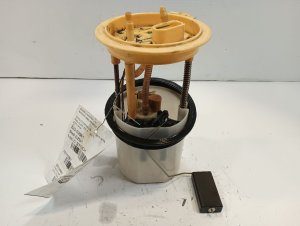
- Failing In-Tank Low-Pressure Fuel Pump (LPFP): → Shop Fuel Pump The HPFP cannot function correctly if it is not being adequately supplied with fuel from the tank. If high-pressure side diagnostics check out, test the low-pressure fuel system pressure to ensure it meets specification (typically 4-5.5 bar or 60-80 PSI). VCDS can be used to monitor the LPFP duty cycle; a high duty cycle struggling to maintain pressure can indicate a weak LPFP.
- Damaged Intake Camshaft Lobe: If the roller cam follower seizes or fails, it can damage the specific camshaft lobe that drives the HPFP. This is a major repair but must be checked if the follower has failed.
- Stretched Timing Chain: → Shop Engine Timing Chain The EA888 engine is known for potential timing chain stretch over its lifespan. Because the HPFP is mechanically timed and driven by the camshaft, a significant deviation in engine timing could theoretically contribute to a P0149 code, though this would usually be accompanied by other timing correlation codes like P0016.
Diagnosis Steps
- Scan the ECM for all stored trouble codes. Confirm if P0149 is present with P0087 and/or P053F.
- Using a capable scan tool like VCDS, access the Engine controller (01-Engine).
- Go to 'Advanced Measuring Blocks'. Select 'Fuel high pressure; specified value' and 'Fuel high pressure; actual value'. You may also want to log 'Fuel pump: low pressure: actual value' and 'Engine speed'.
- At idle, the specified and actual high-pressure values should be very close (around 40 bar or 580 PSI).
- Safely perform a wide-open throttle data log in 3rd or 4th gear (with a helper). A failing HPFP will show the 'actual' pressure failing to keep up with and dropping significantly below the 'specified' pressure under load.
- If pressure is low, relieve fuel system pressure following the manufacturer's procedure. This is a critical safety step.
- Remove the High-Pressure Fuel Pump (HPFP).
- Inspect the roller cam follower for wear, scoring, or a seized roller. This is a critical step.
- Inspect the camshaft lobe for scoring or unusual wear patterns.
- If the cam follower is worn, replace it. If the HPFP's piston tip is damaged or if the data log confirms pump failure, replace the pump. It is best practice to replace both the pump and follower together.
- If the pump and follower appear fine, test the low-pressure fuel pump's output to ensure the HPFP is receiving adequate fuel supply (around 60-80 PSI).
Parts You'll Likely Need
- High-Pressure Fuel Pump (HPFP)
(OEM #06K127025E (may be superseded by 06K127025K or other revisions))— This is the most common point of failure for the P0149/P0087 code combination on this engine.
Trusted brands: Bosch (OEM Manufacturer), Hitachi, Genuine Volkswagen
OEM price range: $350-$550
Aftermarket price range: $250-$400 - HPFP Cam Follower (Roller Style)
(OEM #06L109311)— This part is a critical wear item that sits between the camshaft and the HPFP. It should always be replaced when servicing the HPFP to prevent repeat failure.
Trusted brands: INA (OEM Manufacturer), Genuine Volkswagen
OEM price range: $50-$80
Aftermarket price range: $40-$60
Related Codes That Often Appear With This One
- P0087 — This code for 'Fuel Rail/System Pressure - Too Low' is the direct cause of P0149. The timing error is logged because the pump cannot achieve the commanded pressure. VW TSBs consistently group these codes together.
- P053F — This code for 'Cold Start Fuel Pressure Performance' indicates the system failed to build pressure during a cold start, a common symptom of a failing HPFP or cam follower. It is also mentioned in the same TSBs as P0149.
- P0300-P0304 — These are random or specific cylinder misfire codes. Insufficient fuel pressure leads to a lean air/fuel mixture, causing misfires. TSB VIN4APIN20211026 explicitly mentions this combination.
- P2293 — This code for 'Fuel Pressure Regulator 2 Performance' also points directly to a fault in the high-pressure fuel system and can be triggered by a failing HPFP or worn cam follower.
Technical Service Bulletins (TSBs) & Recalls
- VIN4APIN20211026: Customer states MIL-on with P0087 P0149 P053F in the ECM
- VIN4APIN20211013: Customer states MIL-on with P0087 P0149 P053F in the ECM
- VIN4APIN20210909: Customer states MIL-on with P0087 P0149 P053F in the ECM
- VIN4APIN20210819: Customer states MIL-on with P0087 P0149 P053F in the ECM
- VW Tech Tip 20-18-05: Addresses diagnosis for P0087 on 2014-2018 1.8L/2.0L TSI engines.
Platform-Specific Known Issues
- The provided NHTSA Technical Service Bulletins (VIN4APIN20211026, VIN4APIN20211013, etc.) confirm that Volkswagen dealers are frequently diagnosing P0149 in conjunction with P0087 and P053F, pointing to a recognized issue with the fuel system on these vehicles.
- A VW Tech Tip (20-18-05) issued in 2018 provides specific guidance for diagnosing P0087 on 2014-2018 1.8L/2.0L TSI engines, reinforcing that this is a known trouble area. A separate TSB also notes that comparing measuring blocks 103 and 106 is not an accurate way to diagnose the low-side sensor (G410) and a mechanical gauge should be used.
Mechanic-Grade Diagnostic Values
- High-Pressure Fuel Rail at Idle (Warm Engine) — expected: Approx. 40 bar (580 PSI). Failure: Pressure significantly below specification, sometimes as low as 6-12 bar (87-174 PSI), indicates a failing HPFP or drive mechanism.
- Low-Pressure Fuel System (In-tank pump output) — expected: Approx. 4.0 - 5.5 bar (60 - 80 PSI). Failure: Pressure below specification, or pressure that drops off under load, indicates a failing in-tank fuel pump (LPFP) or a clogged filter.
- Fuel Pressure Regulator Valve (N276) Resistance — expected: 1.5 to 11 Ω (at approx. 20° C). Failure: A reading of 0 Ω indicates a short circuit within the valve, requiring pump replacement.
- VCDS Heat Soak Test (Engine Off, Ignition On) — expected: After shutting off a hot engine, rail pressure should rise due to heat soak, potentially doubling from its idle value (e.g., 40 bar to over 60-80 bar) over a few minutes.. Failure: If pressure fails to rise or drops, it can indicate a leaking injector or a bad check valve in the HPFP.
Scan Tool Commands That Help
- ODIS (VW Dealer Tool): Output Diagnostic Test Mode (DTM) for Fuel Pressure Regulator Valve (N276) — This function actively commands the N276 valve on the HPFP. A technician should listen for an audible 'click' from the pump, which confirms the valve is mechanically responding to the ECM's command. A lack of a click indicates a seized valve or wiring issue.
- VCDS (Ross-Tech): Basic Settings - Fuel Pump Priming — After replacing either the low-pressure or high-pressure fuel pump, this function runs the in-tank pump to prime the system, fill the lines with fuel, and purge air before attempting to start the engine. This prevents damage from running the HPFP dry.
Wiring & Ground Locations
- Fuel Pump Relay (R2) — In the engine compartment, located in the main fuse/relay box (E-Box).. This relay provides power to the in-tank low-pressure fuel pump. A faulty relay would starve the HPFP of fuel, causing low pressure codes P0087 and P0149.
- N276 Valve Connector — The 2-pin electrical connector on the High-Pressure Fuel Pump (HPFP) itself.. This is where resistance and voltage tests are performed for the fuel pressure regulating valve. A forum user reported measuring 0.6 Ω resistance between the ECM harness connector (pin 92) and the HPFP connector, indicating good wire continuity.
Real Owner Repair Stories
- Ross-Tech Forums user 'Jguyett' (2010 VW GTI (MK6 with EA888 Gen 1, similar architecture)) — Knocking sound from HPFP area, erratic AFR and fuel trims, eventual codes P0087 and P2293.
❌ Tried (didn't work) Swapping HPFP and vacuum pump with other used units., Replacing the cam follower.
✅ What actually fixed it The user discovered the aftermarket vacuum pump gasket being used was much thicker (3 layers) than the OEM single-layer metal gasket. This incorrect thickness likely caused misalignment or improper stroke of the HPFP, leading to the pump shaft shearing. Swapping to the correct OEM gasket resolved the HPFP failure issue. - AudiWorld Forums user (Audi with dual HPFPs (similar N276 valve)) — Check engine light, very rough engine, code for N276 'short to plus'.
❌ Tried (didn't work) Initial diagnosis was uncertain.
✅ What actually fixed it The user measured the resistance of the N276 valve on the HPFP and found it was 0 ohms, indicating a dead short. New replacement HPFPs measured around 2 ohms. Replacing both HPFPs, which had the faulty internal valves, resolved the issue.
OEM Part Supersession History
06H109311B→06L109311— Updated design for the roller-style cam follower used in EA888 engines.
Heads up: The newer 06L109311 is the correct roller-style follower for the EA888 Gen3 engine in the 2014 Beetle. The older part number 06H109311B may also be a roller follower, but it's critical to use the latest revision. Do not confuse with the flat-tappet style follower from older FSI (EA113) engines, which is completely incompatible.
Helpful Videos
Used OEM Parts in Stock
New Aftermarket Parts Available


The information in this article is provided for general reference and educational purposes only. Vehicle specifications, procedures, and part compatibility can vary by production date, trim level, and region. Always consult your vehicle's factory service manual and verify part numbers before purchasing or performing repairs. Safety-critical components such as airbags, seat belts, and braking systems should be installed by a qualified professional.
- Volkswagen BEETLE CONVERTIBLE:
- 🧭 Diagnostic Flowchart
- 🎬 Helpful Videos
- 🛍️ Shop This Part
- What's Unique About the 2014-2014 Volkswagen BEETLE CONVERTIBLE
- Symptoms You May Notice
- Most Likely Causes
- Rare But Worth Checking
- Diagnosis Steps
- Parts You'll Likely Need
- Related Codes That Often Appear With This One
- Technical Service Bulletins (TSBs) & Recalls
- Platform-Specific Known Issues
- Mechanic-Grade Diagnostic Values
- Scan Tool Commands That Help
- Wiring & Ground Locations
- Real Owner Repair Stories
- OEM Part Supersession History
- 🎟️ Get 5% Off