

P0149 on 2018-2021 Volkswagen Golf: Fuel Timing Error Causes and Fixes
P0149 on a VW Golf indicates a Fuel Timing Error, almost always related to the high-pressure fuel system. It frequently appears with codes P0087 and P053F. The most common cause is a failing high-pressure fuel pump (HPFP), particularly on the 2.0T EA888 engine. A repair can cost between $600 and $1,200.
- P0149 on a 2018-2021 Golf is a serious code that points to a fuel timing problem, almost always in the high-pressure fuel system.
- Always check for companion codes P0087 and P053F. Their presence makes a failing High-Pressure Fuel Pump (HPFP) the primary suspect.
- When replacing the HPFP, it is mandatory to also inspect and likely replace the cam follower to prevent repeat failure and potential camshaft damage.
- This is not a beginner-friendly DIY repair. The high pressures in the fuel rail are dangerous, and professional service is strongly recommended.
What's Unique About the 2018-2021 Volkswagen GOLF
On the 2018-2021 Mk7.5 Golf, especially models with the 2.0T EA888 engine, P0149 is rarely an isolated code. It is strongly associated with a known issue documented in multiple Volkswagen Technical Information bulletins. These bulletins consistently group P0149 with P0087 (Fuel Rail/System Pressure - Too Low) and P053F (Cold Start Fuel Pressure Performance), pointing directly to a problem with the high-pressure fuel pump (HPFP) failing to meet pressure demands, rather than a generic timing fault.
Diagnostic Flowchart
Tap your situation to follow the diagnostic path that matches what you're seeing on this vehicle.
Symptoms You May Notice
- Check Engine Light is on
- EPC (Electronic Power Control) light may be on
- Engine runs rough or idles unevenly
- Hesitation or stumbling during acceleration
- Noticeable loss of engine power, sometimes described as 'limp mode'
- Engine is hard to start or cranks but won't start
- Increased fuel consumption
- Pungent fuel odor if a leak is present
- Replacing the in-tank low-pressure fuel pump when the problem is in the high-pressure system.
- Replacing fuel injectors when they are not the root cause. While faulty injectors can cause issues, the combination of P0149, P0087, and P053F on this car points more directly to the HPFP.
Most Likely Causes
- Failing High-Pressure Fuel Pump (HPFP) 🔴 High Probability → Shop Fuel Pump The direct injection system relies heavily on the HPFP to generate pressures over 200 bar (2900+ PSI). Wear and tear on the pump's internal piston/cylinder or its electronic regulator (N276) can lead to an inability to build or sustain pressure, causing timing and pressure deviations. This is a widely documented failure on VW/Audi EA888 engines.
How to confirm: Use a diagnostic scan tool (like VCDS) to monitor fuel rail pressure. Log 'specified' vs. 'actual' pressure readings during a wide-open throttle pull in 3rd or 4th gear. A healthy pump will show actual pressure closely tracking specified pressure. A failing pump will show a significant negative deviation, where actual pressure drops far below what is specified. At idle, pressure should be around 40-50 bar (~580-725 PSI); under load, it should exceed 200 bar (~2900 PSI).
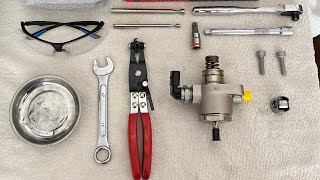
Typical fix: Replacement of the high-pressure fuel pump. 🎬 Watch this step-by-step guide on how to install a new HPFP.
Est. part cost: $300-$600 - Worn Cam Follower (Roller Follower) ⚪ Low Probability → Shop Engine Valve Tappet The HPFP on the EA888 Gen 3 engine is driven by a lobe on the camshaft via a roller-style cam follower. This design is much more durable than the flat tappet follower on older EA113 engines. While failure is rare on stock or lightly modified cars, the bearing can still fail under high mileage or extreme stress (e.g., from an upgraded HPFP), leading to improper pump actuation and potential camshaft damage.
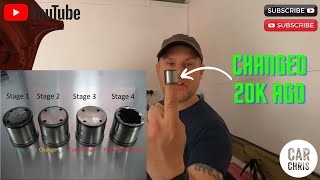
How to confirm: Remove the high-pressure fuel pump to visually inspect the cam follower. Check that the roller spins freely and has no flat spots, scoring, or signs of disintegration. This should be done whenever the HPFP is serviced.
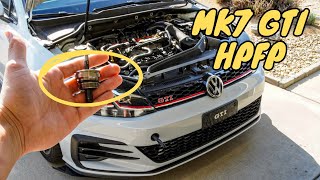
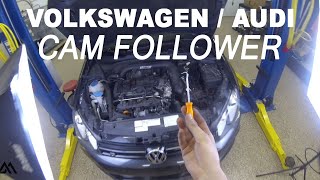
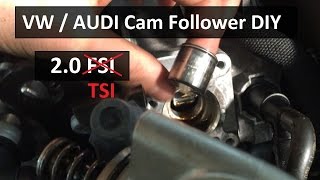
Typical fix: Replace the cam follower. 🎬 Watch a POV video on how to replace the cam follower. If the camshaft lobe is also damaged, the camshaft will require replacement, which is a much larger job.
Est. part cost: $40-$80 - Faulty Fuel Pressure Sensor (G247) ⚪ Low Probability → Shop Fuel Pressure Sensor While less common than pump failure, the sensor that reads the fuel rail pressure can fail, sending incorrect data to the ECM. This can trick the ECM into thinking there's a timing or pressure problem when there isn't one.
How to confirm: With the engine off, the fuel rail pressure sensor reading should be close to the low-pressure fuel system's pressure. If the reading is erratic, stuck at a high value, or nonsensical, the sensor is suspect. A failing sensor can sometimes be diagnosed by observing impossible pressure readings via a scan tool.
Typical fix: Replace the fuel pressure sensor located on the fuel rail.
Est. part cost: $50-$150
Rare But Worth Checking
- Stretched Timing Chain: → Shop Engine Timing Chain A significantly stretched timing chain can alter the relationship between the crankshaft and camshaft. Since the HPFP is driven by the camshaft, this can throw off the mechanical timing of the pump. A VW TSB notes that if camshaft adaptation values exceed 8 degrees, engine timing is off, which directly affects HPFP timing and can trigger these codes.
- Wiring or Connector Issues: Damaged wiring or a corroded connector for the fuel pressure sensor (G247) or the fuel pressure regulator valve (N276) on the HPFP can cause intermittent signals and trigger this code. A forum user noted that loose pins in the rail sensor plug can be a cause.
- Low-Pressure Fuel Pump (LPFP) Failure: → Shop Fuel Pump The HPFP cannot function correctly if it is not being adequately supplied with fuel from the in-tank low-pressure fuel pump. A failing LPFP can starve the HPFP, leading to a drop in high-side pressure that mimics HPFP failure. Diagnosing this requires logging both low and high-pressure fuel system data.
Diagnosis Steps
- Scan the ECM for all stored trouble codes. Note if P0149 is accompanied by P0087 and P053F, as this strongly suggests a high-pressure fuel system fault.
- Using a capable scan tool (VCDS, OBDeleven, etc.), access live data and monitor 'Fuel high pressure; specified value' and 'Fuel high pressure; actual value'.
- At a warm idle, observe the fuel pressure. The actual value should closely match the specified value, typically around 40-50 bar (580-725 PSI).
- In a safe location, perform a data-logged wide-open throttle (WOT) pull from a low RPM in 3rd or 4th gear. Watch the specified vs. actual pressure. If the actual pressure drops significantly (e.g., falls to 100 bar when 200+ is requested), this is a strong indication of a failing HPFP.
- If the pump is suspected, relieve fuel system pressure according to the manufacturer's procedure before removal. This is a critical safety step.
- Remove the HPFP for inspection. While the pump is off, inspect the roller cam follower for wear, damage, or seizure. The roller should spin smoothly.
- Inspect the camshaft lobe that drives the pump for any scoring, galling, or unusual wear patterns.
- If the pump and follower appear fine, inspect the wiring and connectors to the fuel pressure sensor (G247) and the fuel pressure regulator valve (N276) for any signs of damage or corrosion.
Parts You'll Likely Need
- High-Pressure Fuel Pump (HPFP)
(OEM #06L127025R (or supersessions like 06L127025T). Verify by VIN.)— This is the most frequent point of failure for the P0149/P0087/P053F code combination on this platform.
Trusted brands: Bosch (OEM Supplier), Hitachi (OEM Supplier)
OEM price range: $450-$650
Aftermarket price range: $300-$500 - Cam Follower (Roller Type)
(OEM #06L109311 (Verify by VIN))— This is a critical wear item that should be inspected and often replaced whenever the HPFP is serviced to prevent catastrophic failure of the pump and camshaft.
Trusted brands: INA, Genuine Volkswagen
OEM price range: $50-$80
Aftermarket price range: $40-$60 - Fuel Pressure Sensor (G247)
(OEM #06J906051D (Verify by VIN))— A less common but possible failure point that can send erroneous data and mimic a pump failure.
Trusted brands: Bosch, Genuine Volkswagen
OEM price range: $70-$150
Aftermarket price range: $50-$100
Related Codes That Often Appear With This One
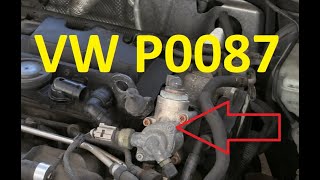
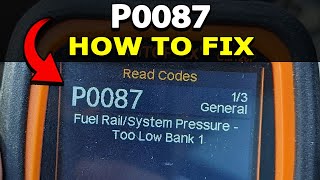
- P0087 — Stands for "Fuel Rail/System Pressure - Too Low." This code is a direct companion to P0149, as incorrect fuel timing often results from the HPFP's inability to build sufficient pressure. The provided TSBs confirm they appear together. 🎬 See how to diagnose P0087 and HPFP issues on your VW.
- P053F — Stands for "Cold Start Fuel Pressure Performance." This indicates the system failed to build the required fuel pressure during a cold start, which is a common symptom of a weak HPFP. The provided TSBs also confirm this pairing.
- P0300-P0304 — These are random or specific cylinder misfire codes. Incorrect fuel timing and pressure can lead to a lean condition, causing the engine to misfire. One of the provided TSBs mentions this association.
Technical Service Bulletins (TSBs) & Recalls
- VIN4APIN20211116: Customer states MIL-on with P0087 P0149 P053F in the ECM
- VIN4APIN20211013: Customer states MIL-on with P0087 P0149 P053F in the ECM
- VIN4APIN20210913: Customer states MIL-on with P0087 P0149 P053F in the ECM
- VIN4APIN20210819: Customer states MIL-on with P0087 P0149 P053F in the ECM
- TSB 24-15-04 / 2040923/4: Technical bulletin related to high-pressure fuel system diagnosis.
Platform-Specific Known Issues
- Volkswagen issued multiple Technical Information bulletins for 2021 models that list the customer complaint as "MIL-on with P0087 P0149 P053F in the ECM," confirming this is a recognized issue by the manufacturer.
- VW Technical Service Bulletin 24-15-04 (also known as 2040923/4) addresses issues with the high-pressure fuel system and may provide diagnostic guidance for these codes.
Helpful Videos

Used OEM Parts in Stock
New Aftermarket Parts Available


The information in this article is provided for general reference and educational purposes only. Vehicle specifications, procedures, and part compatibility can vary by production date, trim level, and region. Always consult your vehicle's factory service manual and verify part numbers before purchasing or performing repairs. Safety-critical components such as airbags, seat belts, and braking systems should be installed by a qualified professional.
- Volkswagen GOLF:
- 🧭 Diagnostic Flowchart
- 🎬 Helpful Videos
- 🛍️ Shop This Part
- What's Unique About the 2018-2021 Volkswagen GOLF
- Symptoms You May Notice
- Most Likely Causes
- Rare But Worth Checking
- Diagnosis Steps
- Parts You'll Likely Need
- Related Codes That Often Appear With This One
- Technical Service Bulletins (TSBs) & Recalls
- Platform-Specific Known Issues
- 🎟️ Get 5% Off