

P0149 on 2017-2022 Volkswagen Jetta: Fuel Timing Error Causes and Fixes
P0149 on a 2017-2022 Jetta almost always indicates a fuel pressure problem, not just a timing issue. It frequently appears with code P0087 (Fuel Pressure Too Low). The most common cause is a failing high-pressure fuel pump (HPFP), a repair that can cost between $500 and $1,200 at a shop. Before replacing the HPFP, the low-pressure fuel pump and fuel pressure sensor should be tested to avoid misdiagnosis.
- P0149 on your Jetta is a strong sign of a fuel pressure problem, not just a timing issue.
- Always check for code P0087 alongside P0149. If both are present, the high-pressure fuel pump (HPFP) is the most likely cause.
- Do not immediately replace the HPFP. Have a technician properly test the low-pressure fuel system and check for leaking injectors first to avoid a costly misdiagnosis.
- Due to the high pressures and complexity, this is not a recommended DIY repair for beginners. Seek professional service.
What's Unique About the 2017-2022 Volkswagen JETTA
For this generation of Volkswagen Jetta, P0149 is rarely an isolated code. As confirmed by multiple Volkswagen Technical Service Bulletins (TSBs), it is most often found alongside P0087 (Fuel Rail/System Pressure - Too Low) and sometimes P053F (Fuel Pressure Regulator Control Performance). This specific grouping is a strong indicator that the root cause is a mechanical failure in the high-pressure fuel system, rather than a simple sensor or timing fault. The issue is prevalent across VW models using the EA211 and EA888 direct-injection engines.
Diagnostic Flowchart
Tap your situation to follow the diagnostic path that matches what you're seeing on this vehicle.
Generation note: This range covers two Jetta generations: the A6 (Mk6, 2017-2018) and the A7 (Mk7, 2019-2022). The Mk6 used 1.4T, 1.8T, and 2.0T GLI (EA888) engines. The Mk7 uses a 1.4T or 1.5T EA211 engine (158 hp from 2022 onwards) and a 2.0T EA888 in the GLI. All are gasoline direct injection (GDI) and share a similar fuel system design with a low-pressure in-tank pump and a high-pressure engine-mounted pump, making the causes and diagnostics fundamentally the same.
Symptoms You May Notice
- Check Engine Light is on
- Sudden loss of power, especially during acceleration.
- Engine hesitation or stumbling.
- Rough or unstable idle
- Engine stalling, sometimes without warning
- Difficulty starting the engine, or extended cranking time.
- Decreased fuel economy.
- Vehicle enters 'limp mode'
- Noticeable fuel smell if a leak is present.
- Replacing the High-Pressure Fuel Pump (HPFP) when the in-tank Low-Pressure Fuel Pump (LPFP) is weak. A diagnostic check of the low-side pressure is crucial to avoid this.
- Replacing the High-Pressure Fuel Pump (HPFP) when a fuel injector is leaking. A leaking injector will prevent the system from holding pressure, mimicking the symptoms of a weak pump. A pressure leak-down test can help differentiate the two.
Most Likely Causes
- Failing High-Pressure Fuel Pump (HPFP) 🔴 High Probability → Shop Fuel Pump The direct injection engines in these Jettas rely on an HPFP to generate extremely high fuel pressures. This component is mechanically driven by the camshaft and works under high stress, making it a known failure point across many VW/Audi models with EA211 and EA888 engines.
How to confirm: A technician will use a scan tool to monitor requested vs. actual fuel rail pressure. If the actual pressure consistently fails to meet the requested pressure under load, and the low-pressure side is healthy, the HPFP is the primary suspect. A broken internal component or failed diaphragm are common failure modes.
Typical fix: Replacement of the high-pressure fuel pump and often the associated cam follower as a preventative measure.
Est. part cost: $250-$500 - Failing In-Tank Low-Pressure Fuel Pump (LPFP) 🟡 Medium Probability → Shop Fuel Pump The HPFP can only pressurize the fuel it receives. If the low-pressure pump in the tank is weak or failing, it starves the HPFP, leading to low rail pressure and triggering P0149/P0087. This can sometimes happen intermittently, especially after long drives when the pump gets hot.
How to confirm: Test the low-pressure fuel system pressure at the schrader valve/test port on the line leading to the HPFP. It should meet the manufacturer's specification (typically 50-65 PSI on the EA888 Gen 3). If the pressure is low, the LPFP or its controller is likely at fault.
Typical fix: Replacement of the in-tank fuel pump module.
Est. part cost: $200-$400 - Leaking Fuel Injector ⚪ Low Probability → Shop Fuel Injector A fuel injector can become stuck open or develop a bad seal, constantly leaking fuel into the cylinder. This prevents the fuel rail from building and holding the required pressure, mimicking a pump failure.
How to confirm: This is often misdiagnosed as a bad pump. A technician can perform a fuel pressure leak-down test. A rapid drop in pressure after the engine is off suggests a leak. Identifying the specific leaking injector may require removing the spark plugs to check for a fuel-fouled plug or using a borescope.
Typical fix: Replacement of the faulty fuel injector and its seals.
Est. part cost: $100-$250 per injector - Clogged Fuel Filter ⚪ Low Probability → Shop Fuel Filter The fuel filter is a maintenance item. If it becomes severely clogged, it can restrict fuel flow to the pumps, causing a pressure drop. This is a simple and inexpensive item that should be considered before replacing more costly components.
How to confirm: This is usually diagnosed by testing low-side fuel pressure and volume. If both are low, the filter is a likely cause before replacing an expensive pump.
Typical fix: Replacement of the fuel filter.
Est. part cost: $30-$70
Rare But Worth Checking
- Faulty Fuel Pressure Sensor: → Shop Fuel Pressure Sensor It's possible for the sensor that reads the fuel rail pressure (G247) to fail and send incorrect low-pressure data to the ECM. This is less common than a mechanical pump failure but should be ruled out by comparing scan tool readings to a mechanical gauge before replacing expensive parts.
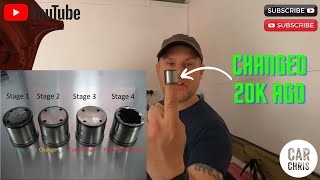
- Worn Camshaft Lobe / Cam Follower: → Shop Engine Valve Tappet The HPFP is driven by a lobe on the camshaft, with a small 'cam follower' bucket in between. If the lobe or follower wears down, the pump's piston stroke is reduced, leading to lower fuel pressure. This is a very common issue on older FSI/TSI engines and should always be inspected when replacing the HPFP.
Diagnosis Steps
- Verify the presence of P0149 and any other codes with an OBD-II scanner. Note if P0087 is also present, as this is the primary indicator.
- Using a capable scan tool (like VCDS for VW), monitor live data for 'Requested Fuel Rail Pressure' and 'Actual Fuel Rail Pressure'.
- Observe the data during idle, gentle acceleration, and wide-open throttle. If 'Actual' pressure consistently falls far below 'Requested' pressure, there is a fuel delivery issue.
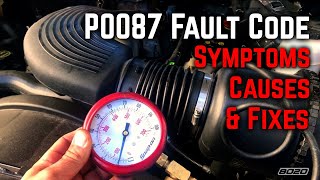
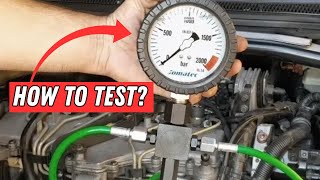
- Test the low-pressure fuel pump's output. Connect a fuel pressure gauge to the low-pressure line before the HPFP. The pressure should be stable and within spec (e.g., ~70 PSI). If low-side pressure is weak or drops under load, inspect the in-tank pump and fuel filter.
- If low-side pressure is strong but high-side pressure is weak, the main suspects are the HPFP, a leaking injector, or a worn cam follower.
- Perform a fuel pressure leak-down test. After shutting the engine off, monitor the rail pressure. A rapid drop suggests a leak, most likely from an injector or the HPFP's internal check valve.
- Visually inspect the HPFP and its cam follower. Remove the HPFP to inspect the cam follower and the camshaft lobe for wear or damage. A worn follower is a very common failure point.
- If all tests for the pumps, follower, and injectors are inconclusive, consider the fuel pressure sensor (G247) as a potential cause of false readings.
Parts You'll Likely Need
- High-Pressure Fuel Pump (HPFP)
(OEM #04E127026N / 04E127027K (1.4T EA211), 06L127025M / 06L127025N (2.0T EA888))— This is the most common component to fail and cause the P0149/P0087 code combination on VW direct injection engines.
Trusted brands: Bosch, Hitachi
OEM price range: $400-$600
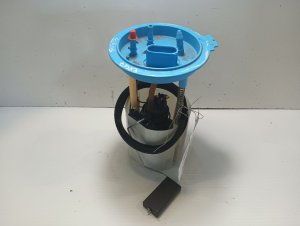
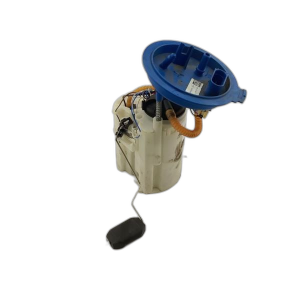
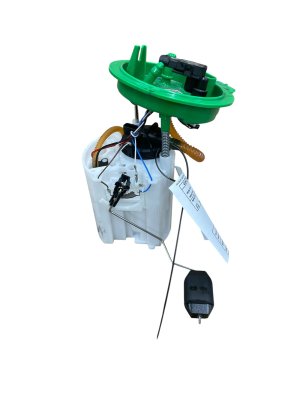
Aftermarket price range: $250-$450 - In-Tank Low-Pressure Fuel Pump — If the HPFP is starved of fuel due to a weak in-tank pump, it will cause the same symptoms. This should be tested before replacing the HPFP.
Trusted brands: VDO, Bosch
OEM price range: $300-$450
Aftermarket price range: $200-$350 - HPFP Cam Follower
(OEM #06L109311 (for EA888))— This small part is a critical wear item that sits between the camshaft and the HPFP. It is inexpensive and should always be replaced when servicing the HPFP to prevent catastrophic failure of the pump or camshaft.
Trusted brands: INA, VW Genuine
OEM price range: $30-$50
Aftermarket price range: $20-$40
Related Codes That Often Appear With This One
- P0087 — This code for 'Fuel Rail/System Pressure - Too Low' is the direct cause of P0149 in most cases. The low pressure prevents proper fuel timing.
- P053F — This code for 'Fuel Pressure Regulator Control Performance' is also mentioned in TSBs alongside P0149 and P0087, indicating a comprehensive fuel pressure delivery problem.
- P0300-P0304 — Misfire codes for random or specific cylinders can occur because the low fuel pressure leads to a lean fuel mixture that prevents proper combustion.
Technical Service Bulletins (TSBs) & Recalls
- Bulletin #VIN4APIN20211116: Notes customer complaints of MIL-on with codes P0087, P0149, and P053F.
- Bulletin #VIN4APIN20211013: Also links P0087, P0149, and P053F.
- Bulletin #VIN4APIN20210913: Again, cites the combination of P0087, P0149, and P053F.
- Bulletin #VIN4APIN20210819: Confirms the grouping of P0087, P0149, and P053F as a reported customer issue.
- VW Tech Tip 20-18-05: Provides specific diagnostic procedures for P0087 on TSI engines, emphasizing manual pressure testing to differentiate between low-side and high-side faults.
- Audi TSB 2079461/1: Although for Audi, this TSB for DTC P0087 on similar engines provides a detailed diagnostic flow, instructing to replace the HPFP if low-side pressure is stable (above 3 bar) while high-side pressure is low.
Platform-Specific Known Issues
- Volkswagen has issued multiple Technical Service Bulletins (TSBs) for 2021 models that group P0149 with P0087 and P053F, pointing to a known issue pattern related to fuel pressure.
- A specific VW Tech Tip (20-18-05) from Dec 2018 addresses diagnosis for P0087 on 2014-2018 1.8L/2.0L TSI engines, guiding technicians on how to properly test low and high-pressure sides to isolate the fault between the in-tank pump and the high-pressure system.
Mechanic-Grade Diagnostic Values
- Low-Pressure Fuel System (LPFP output) — expected: 4.0 to 7.0 bar (58 to 101 PSI), varies by ECM request. A common target for the EA888 is 50-65 PSI.. Failure: Pressure is consistently below 50 PSI or drops significantly under load.
- High-Pressure Fuel System (HPFP output) at idle — expected: Approx. 40-50 bar (580-725 PSI).. Failure: Actual pressure is significantly lower than specified pressure in VCDS measuring blocks.
- High-Pressure Fuel System (HPFP output) under load — expected: Up to 200 bar (2900 PSI) on EA888 Gen 3.. Failure: Actual pressure fails to rise and meet the requested pressure during acceleration, often triggering limp mode.
- Fuel Pressure Sensor (G247) Leak-Down Test (Engine Off) — expected: After shutting off a warm engine, pressure should rise due to heat soak (e.g., from 40 bar to over 60 bar) and then hold steady.. Failure: Pressure fails to rise, or rises and then drops steadily. A rapid drop indicates a leak from an injector or the HPFP's check valve.
Scan Tool Commands That Help
- VCDS (VAG-COM): Advanced Measuring Values (UDS Modules) or Measuring Blocks (CAN Modules) — Use this to monitor 'Fuel high pressure: actual value' vs. 'Fuel high pressure: specified value'. A significant deviation where actual is lower than specified points directly to a fuel delivery problem. Common blocks are 103, 106, 140, 230, or 231 depending on the ECU.
- VCDS (VAG-COM): Leak-Down Test (Manual Procedure) — After running the engine to operating temperature, shut it off and monitor the 'Fuel high pressure: actual value'. On a healthy system, heat soak will cause the pressure to rise and hold. If it drops, it indicates a leak, often from an injector.
Wiring & Ground Locations
- Main Engine/Body Ground Point — On the chassis frame rail, just above and behind the battery. It's a common attachment point for multiple brown ground wires.. A poor ground connection at this point can cause erratic voltage and faulty readings from various engine sensors, including the fuel pressure sensor (G247), potentially leading to an incorrect diagnosis. Ensuring this connection is clean and tight is a crucial early electrical check.
Real Owner Repair Stories
- Reddit user in /r/Volkswagen (2015 Jetta 1.8T (EA888 Gen 3)) — P0087 (Fuel Pressure Too Low) after a long idle.
❌ Tried (didn't work) The user was seeking advice before replacing parts.
✅ What actually fixed it The accepted diagnostic path was to first test the low-pressure fuel pump output at the line going into the HPFP. If pressure was below the 50-65 PSI spec, the advice was to change the fuel filter first, and if still low, replace the in-tank low-pressure pump. This confirms the standard diagnostic procedure of ruling out the low-pressure side before condemning the expensive HPFP.
OEM Part Supersession History
06L127025H / J / K→06L127025M / N / R— Revisions to improve reliability and performance of the High-Pressure Fuel Pump for the EA888 Gen 3 engine.
Heads up: While physically interchangeable, later revisions are generally more robust. It is always recommended to use the latest available part number for replacement.
Model Year Variations Within This Range
- 2022+: For 2022, the base engine was updated from the 1.4T to the 1.5T EA211 'Evo' engine. This engine uses a higher compression ratio (11.5:1) and a variable geometry turbocharger (VGT). While the fundamental direct injection fuel system is similar (LPFP and HPFP), some components and their part numbers may differ from the earlier 1.4T.
Helpful Videos


Used OEM Parts in Stock
New Aftermarket Parts Available


The information in this article is provided for general reference and educational purposes only. Vehicle specifications, procedures, and part compatibility can vary by production date, trim level, and region. Always consult your vehicle's factory service manual and verify part numbers before purchasing or performing repairs. Safety-critical components such as airbags, seat belts, and braking systems should be installed by a qualified professional.
- Volkswagen JETTA:
- 🧭 Diagnostic Flowchart
- 🎬 Helpful Videos
- 🛍️ Shop This Part
- What's Unique About the 2017-2022 Volkswagen JETTA
- Symptoms You May Notice
- Most Likely Causes
- Rare But Worth Checking
- Diagnosis Steps
- Parts You'll Likely Need
- Related Codes That Often Appear With This One
- Technical Service Bulletins (TSBs) & Recalls
- Platform-Specific Known Issues
- Mechanic-Grade Diagnostic Values
- Scan Tool Commands That Help
- Wiring & Ground Locations
- Real Owner Repair Stories
- OEM Part Supersession History
- Model Year Variations Within This Range
- 🎟️ Get 5% Off