

P0152 on 2023-2024 Jeep Wrangler: O2 Sensor High Voltage Causes and Fixes
On a 2023-2024 Wrangler, code P0152 (O2 Sensor 2/1 Circuit High) is frequently a symptom of a charging system over-voltage problem, not just a bad O2 sensor. Manufacturer TSBs link this code to P0563 (System Voltage High). Always check charging system voltage (at the battery, expecting 13.2-14.7V) and for related TSBs before replacing the O2 sensor, as the root cause is often a faulty alternator, Belt-Start Generator (BSG) on eTorque models, or a required PCM software update.
- On a 2023-2024 Jeep Wrangler, P0152 is a strong indicator to check the vehicle's charging system before replacing any parts.
- Always check for other Diagnostic Trouble Codes (DTCs), especially P0563 (System Voltage High).
- Consult a dealer or use a comprehensive scan tool to check for Technical Service Bulletins (TSBs) related to your VIN, as a software update may be the required fix.
- If the charging system voltage is normal (13.2V-14.7V), then proceed with diagnosing the Bank 2, Sensor 1 O2 sensor and its wiring.
- Ignoring a potential over-voltage condition can lead to damage of expensive electronic modules throughout the vehicle.
What's Unique About the 2023-2024 Jeep WRANGLER
For this specific generation of Jeep Wrangler (JL), P0152 is often not an isolated O2 sensor failure. Multiple manufacturer Technical Service Bulletins (TSBs) directly link P0152 to a cluster of electrical fault codes, including P0563 (System Voltage High) and P2504 (Charging System Output High). This indicates a known issue where a systemic over-voltage condition, sometimes related to a faulty Belt-Start Generator (BSG) in the eTorque mild-hybrid system or a faulty alternator, can cause various sensors, including the O2 sensor, to send erroneously high voltage signals. In many cases, the fix is a PCM software update to correct how the system handles voltage regulation, not a hardware replacement. Ignoring this connection can lead to misdiagnosis and unnecessary replacement of the O2 sensor when the root cause is in the charging system or its software.
Diagnostic Flowchart
Tap your situation to follow the diagnostic path that matches what you're seeing on this vehicle.
Symptoms You May Notice
- Check Engine Light (MIL) illuminated
- Poor fuel economy
- Rough idle or engine hesitation
- Black smoke from the exhaust
- Warning messages related to the charging system or battery
- Multiple warning lights on the instrument cluster ("Christmas tree" effect)
- Harsh or improper automatic transmission shifting
- Sudden vehicle shutdown while driving
- Immediately replacing the O2 sensor without first checking the charging system voltage. Given the numerous TSBs for this vehicle, an over-voltage condition or a required software update is a highly probable root cause and must be ruled out to avoid wasting money on a sensor that isn't broken or will quickly fail again.
Most Likely Causes
- Charging System Fault (High Voltage) or Required Software Update 🔴 High Probability Multiple TSBs (#18-003-26, #18-050-24, #08-142-24) confirm a link between P0152 and high voltage codes like P0563 and P2504. This can be caused by a faulty alternator with an internal voltage regulator failure or, on eTorque models, a failing Belt-Start Generator (BSG). In many documented cases, the root cause is a software glitch in the PCM that requires a flash update from the dealer to correct voltage regulation and sensor interpretation.
How to confirm: With the engine running, use a multimeter or scan tool to measure the voltage at the battery terminals. A healthy system reads between 13.2V and 14.7V. Readings consistently above 15V confirm an over-voltage condition. Check for accompanying DTCs P0563 or P2504. A dealer can check if your VIN is subject to a TSB or Rapid Service Update (RSU) for a PCM reflash.
Typical fix: First, have a dealer check for and apply any relevant PCM software updates per the TSBs. If voltage is still high, diagnose and repair the charging system. This may involve replacing the alternator or the Belt-Start Generator (BSG) on eTorque models, and inspecting all power and ground connections.
Est. part cost: $400-$900 - Faulty Upstream Oxygen Sensor (Bank 2, Sensor 1) 🟡 Medium Probability → Shop Oxygen Sensor Oxygen sensors are consumable parts that degrade over time. However, on this platform, the sensor often fails prematurely because a systemic over-voltage condition (the cause above) burns out the sensor's internal heater element, leading to the high voltage reading. The sensor failure is a symptom, not the root cause.
How to confirm: If charging system voltage is confirmed to be normal (13.2-14.7V), use a scan tool to graph the live data from the Bank 2, Sensor 1 O2 sensor. If the voltage is stuck high (above 0.9V) and does not fluctuate, the sensor has likely failed. This test is only valid *after* ruling out a systemic over-voltage problem. The sensor's internal heater circuit resistance can also be tested and should be between 2 and 30 ohms, with typical values between 5 and 7 ohms at room temperature.
Typical fix: Replace the Bank 2, Sensor 1 oxygen sensor. 🎬 See this walkthrough for fixing the P0152 Bank 2 sensor This is located on the driver's side, before the catalytic converter. Ensure the root cause (charging system/software) is fixed first, or the new sensor may fail again quickly.
Est. part cost: $60-$180 - Wiring or Connector Issue ⚪ Low Probability On an off-road vehicle like the Wrangler, wiring harnesses are more susceptible to damage from debris, heat from the exhaust, or moisture. A short-to-power on the O2 sensor's signal wire can cause a constant high voltage reading. A corroded or broken engine-to-body ground strap is a known issue on JL Wranglers and can cause widespread electrical problems, including erratic sensor readings.
How to confirm: Visually inspect the O2 sensor's wiring harness for any signs of melting, chafing, or corrosion, from the sensor to the PCM. With the sensor disconnected, use a multimeter to test for voltage on the signal wire in the harness-side connector; there should be none. A voltage reading indicates a short to another power source. Inspect the main engine-to-body ground strap, located on the passenger (right hand) side, which is known to corrode from catalytic converter heat.
Typical fix: Repair the damaged section of the wire or replace the connector pigtail. Replace any corroded or broken ground straps with a more robust cable.
Est. part cost: $15-$50
Rare But Worth Checking
- Leaking Fuel Injector on Bank 2: → Shop Fuel Injector A leaking injector can create a legitimately rich condition, causing the O2 sensor to read high voltage. This would typically be accompanied by misfire codes (e.g., P0300, P0302, P0304, P0306), a noticeable fuel smell, and poor fuel trim readings on a scan tool.
- Powertrain Control Module (PCM) Fault: This is a last resort. A faulty PCM can misinterpret sensor data, but all other possibilities, especially the TSB-indicated charging system issues and software updates, must be ruled out first.
Diagnosis Steps
- Connect an OBD-II scanner and check for all stored codes. Pay close attention if P0152 is accompanied by P0563, P2504, or other codes listed in the TSBs.
- Check for applicable TSBs (e.g., #18-003-26, #18-050-24) for your vehicle's VIN. A dealer may need to perform a software update, which is often the primary fix.
- Start the engine. Use a multimeter to measure the DC voltage across the battery terminals. The reading should be stable, between 13.2V and 14.7V. If it is consistently above 15V, the charging system is faulty and must be repaired first.
- If charging voltage is normal, use the scan tool to monitor live data from the Bank 2, Sensor 1 O2 sensor. A healthy sensor's voltage will fluctuate rapidly between ~0.1V and ~0.9V.
- If the voltage is stuck high (e.g., 0.9V or higher), and you have ruled out a system-wide overvoltage issue, the sensor or its wiring is the likely culprit. A specific failure threshold for some Jeeps is a voltage reading above 3.99V for 30 seconds.
- Perform a visual inspection of the O2 sensor's wiring harness and connector for damage, melting on the exhaust, or corrosion. Pay special attention to the main engine-to-body ground strap on the passenger side, which is known to fail from heat.
- If the wiring is intact and the sensor signal is stuck high (after confirming normal system voltage), test the O2 sensor's internal heater resistance. It should be between 5-7 ohms at room temperature. If it's out of spec, replace the Bank 2, Sensor 1 oxygen sensor.
- After the repair, clear the DTCs and perform a drive cycle to ensure the code does not return.
Parts You'll Likely Need
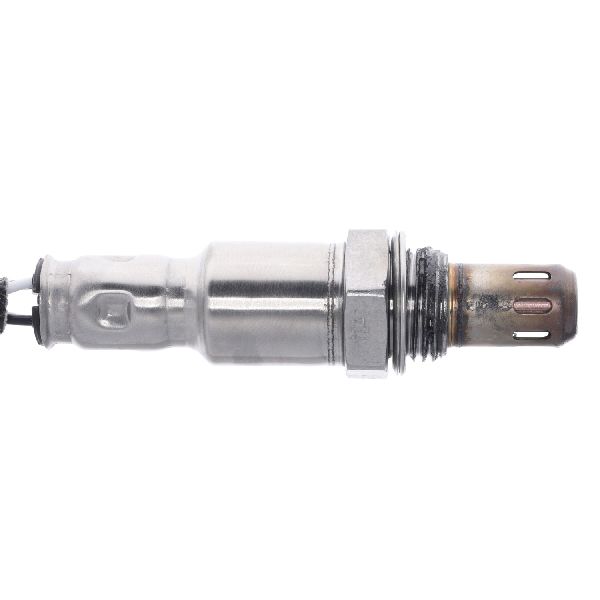
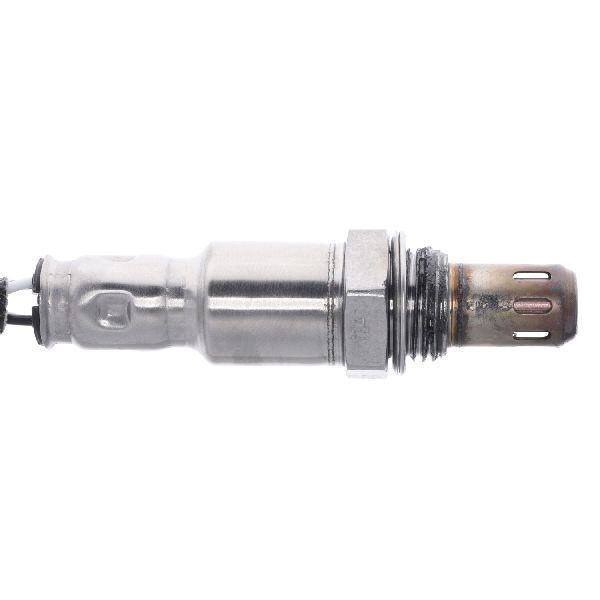
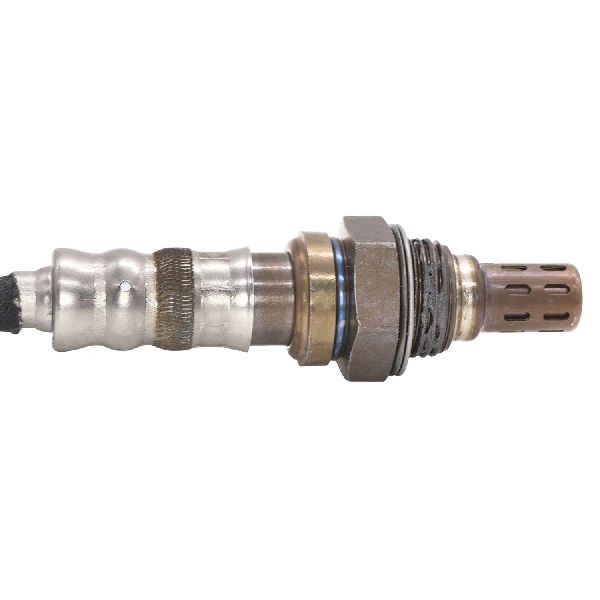
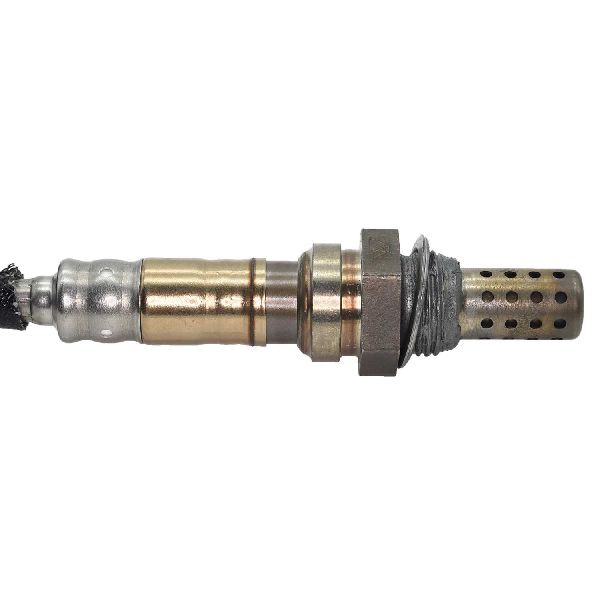
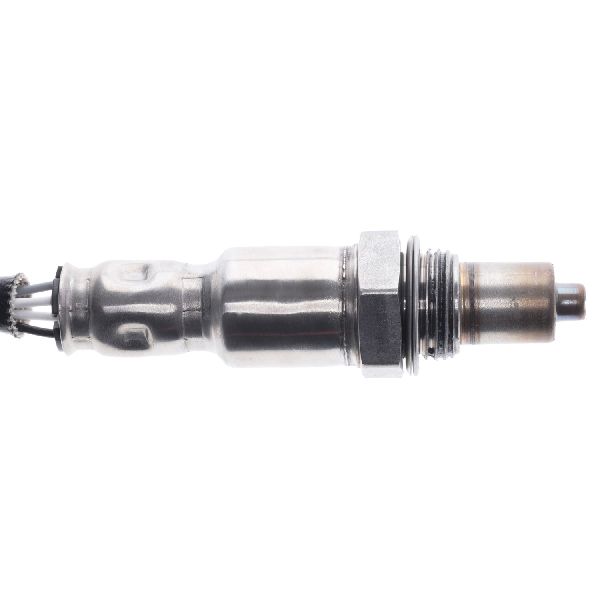
- Upstream Oxygen Sensor (Bank 2, Sensor 1)
(OEM #68224424AA)— If the charging system is confirmed to be healthy, the sensor itself is the next most likely point of failure. This part number fits various Stellantis engines, including the 3.6L V6. However, it should only be replaced after ruling out software and charging system faults.
Trusted brands: Mopar, NTK, Denso, Bosch
OEM price range: $100-$180
Aftermarket price range: $60-$110
Related Codes That Often Appear With This One
- P0563 — Indicates 'System Voltage High'. This code is explicitly linked to P0152 in manufacturer TSBs and points to a charging system problem as the root cause.
- P2504 — Indicates 'Charging System Output High'. This is another code that points directly to an over-voltage condition from the alternator or charging system, and is listed in the same TSBs.
- P0158 — This is 'O2 Sensor 2/2 Circuit High', for the downstream sensor on the same bank. When both sensors on one bank read high, it reinforces the possibility of a systemic issue like a charging fault or a severe rich condition on that bank.
- P1129 — Indicates 'Closed Loop Fueling Not Achieved'. This code is also mentioned in the TSBs alongside P0152 and suggests the PCM is unable to properly control the fuel mixture, likely due to the erratic sensor readings caused by the high voltage.
- P0052 / P0058 — These are 'O2 Sensor Heater Circuit High' codes for Bank 2. They are often set along with the sensor signal high codes and are also listed in the same TSBs, pointing to a systemic electrical fault.
Technical Service Bulletins (TSBs) & Recalls
- 18-003-26: Links P0152 with multiple other electrical and O2 sensor high circuit codes.
- 18-050-24 REV. A: Repeats the association of P0152 with high voltage and other O2 sensor codes, and specifies the fix is a PCM software reprogram.
- 08-142-24: Connects P0152 with high voltage codes, specifically mentioning eTorque models.
Platform-Specific Known Issues
- TSB #18-003-26, #18-050-24, and #08-142-24 all identify a condition where P0152 is set along with charging system high voltage codes (P2504, P0563). The fix may require a software update to the PCM or addressing a fault in the charging system, especially on models with the eTorque mild-hybrid system.
- Owner experiences on forums like jlwranglerforums.com confirm this pattern. One user with a related issue (P0158) noted that a simple sensor replacement failed to fix the problem, and the ultimate solution was a dealer-performed software update per a Rapid Response Transmittal (RRT) designed to address the overvoltage condition that destroys O2 sensor heaters.
Mechanic-Grade Diagnostic Values
- O2 Sensor Heater Circuit Resistance — expected: 5 to 7 ohms at room temperature (~70°F / 21°C).. Failure: A reading of 0 ohms (short circuit) or an open circuit (no reading) indicates a failed heater element.
- O2 Sensor Signal Circuit Voltage (Harness Side, Sensor Disconnected) — expected: 0 Volts with ignition on, engine off.. Failure: Any voltage present indicates a short-to-power in the engine wiring harness, which must be repaired.
- P0152 Set Condition Threshold — expected: Voltage does not go below 3.99 volts for a duration of 30 seconds.. Failure: This specific condition being met in live data confirms the fault the PCM is seeing.
- Engine-to-Body Ground Strap Resistance — expected: Less than 1.0 ohm between the engine block and the vehicle body/chassis.. Failure: A reading higher than 1.0 ohm indicates a poor ground connection that can cause widespread electrical issues.
Scan Tool Commands That Help
- wiTECH (or equivalent professional scanner): PCM Flash/Reprogram — This is used by dealers to apply software updates as specified in Technical Service Bulletins (TSBs). For P0152, this is a primary diagnostic step to correct known logic errors in voltage regulation before replacing hardware.
- wiTECH (or equivalent professional scanner): O2 Sensor Heater Test — This is a bidirectional command that allows the technician to manually activate the O2 sensor's heater circuit to verify its operation and check for correct current draw, helping to isolate a faulty heater from a wiring or PCM driver issue.
Wiring & Ground Locations
- Main Engine-to-Body Ground Strap — On the Jeep Wrangler JL, a critical ground strap runs from the rear of the engine/cylinder head to the body/firewall, located on the passenger (right hand) side, often routed near the catalytic converter.. This strap is known to corrode and fail due to heat from the nearby catalytic converter. A poor ground here can cause a floating ground reference for the PCM and sensors, leading to erratic voltage readings, including the high voltage seen with P0152, and a host of other seemingly unrelated electrical issues.
- Bank 2 Sensor 1 Connector — The connector for the upstream O2 sensor on the driver's side. The signal wire is circuit (K43) and the return/ground is circuit (K902) in some service diagrams.. This is the primary point for testing. Technicians test for a short-to-voltage on the signal wire (K43) at this connector and can also jump the signal and return circuits to test the integrity of the wiring back to the PCM.
- Chassis Ground Points — There are several key ground points in the engine bay, including one on the driver's side near the brake booster and others in the passenger footwell kick panel.. While the main engine ground is primary, any of these chassis grounds being loose or corroded can contribute to electrical noise and unstable sensor readings.
Real Owner Repair Stories
- jlwranglerforums.com user report (2019 Jeep Wrangler 2.0L with eTorque) — Engine surging (low/high idle), stalling, start/stop system repeatedly trying to restart the engine, popping sounds, smoke, and a smell of an electrical fire. The vehicle was throwing 'tons of codes' including BSG output voltage extremely high.
❌ Tried (didn't work) Replacing the starter initially allowed the engine to start but did not resolve the underlying issue. The battery was also found to be dead after a test drive post-BSG replacement, indicating further issues between the BCM and PCM.
✅ What actually fixed it The root cause was a catastrophic failure of the Belt-Start Generator (BSG). The final repair involved replacing the BSG and the starter (which was damaged by the BSG failure), both of which were covered under warranty. The event also caused communication errors between the BCM and PCM that needed to be resolved. - jlwranglerforums.com user report (2018 Jeep Wrangler JL Rubicon (5-year-old vehicle)) — Start/stop warning light, loss of power steering while driving, battery warning light, engine hesitation while cruising, and locker warning lights.
❌ Tried (didn't work) The owner did not list attempted fixes, but noted it took the dealership a month to diagnose the problem.
✅ What actually fixed it The problem was a severely corroded and nearly broken main engine-to-body ground strap on the passenger side. The user noted it appeared to have been 'cooked' by the heat from the catalytic converter. Replacing this single ground strap resolved all the electrical symptoms.
OEM Part Supersession History
68224424AA→N/A— This part number appears to be current and fits a wide range of Stellantis vehicles and model years from 2018-2026, including as an upstream and downstream sensor depending on the application.
Heads up: While the part number is used for multiple positions (upstream/downstream, left/right), the specific application for P0152 on a Wrangler is Bank 2 (Driver's Side), Sensor 1 (Upstream). Always verify fitment with VIN.
Model Year Variations Within This Range
- 2024: The 2024 model year marked a significant mid-cycle refresh for the Wrangler JL. While powertrain options remained largely the same, major interior and electrical changes were implemented. All 2024 models now come standard with a 12.3-inch Uconnect 5 touchscreen, replacing the smaller 7-inch and 8.4-inch screens. The electrical system was also updated, with the Willys trim receiving a standard heavy-duty electrical group, and 4xe models getting a 'Power Box' feature to supply external power. While the TSBs cover 2023-2024, these electrical system changes could introduce different diagnostic considerations or software versions for 2024 models compared to 2023.
Helpful Videos
We Have This Part in Stock

The information in this article is provided for general reference and educational purposes only. Vehicle specifications, procedures, and part compatibility can vary by production date, trim level, and region. Always consult your vehicle's factory service manual and verify part numbers before purchasing or performing repairs. Safety-critical components such as airbags, seat belts, and braking systems should be installed by a qualified professional.
- Jeep WRANGLER:
- 🧭 Diagnostic Flowchart
- 🎬 Helpful Videos
- 🛍️ Shop This Part
- What's Unique About the 2023-2024 Jeep WRANGLER
- Symptoms You May Notice
- Most Likely Causes
- Rare But Worth Checking
- Diagnosis Steps
- Parts You'll Likely Need
- Related Codes That Often Appear With This One
- Technical Service Bulletins (TSBs) & Recalls
- Platform-Specific Known Issues
- Mechanic-Grade Diagnostic Values
- Scan Tool Commands That Help
- Wiring & Ground Locations
- Real Owner Repair Stories
- OEM Part Supersession History
- Model Year Variations Within This Range
- 🎟️ Get 5% Off