

P0153 on 2021 Ram 1500: O2 Sensor Slow Response Causes and Fixes
P0153 on a 2021 Ram 1500 means the upstream oxygen sensor on Bank 2 is responding too slowly. The most common fix is replacing the Bank 2, Sensor 1 O2 sensor. However, check for exhaust leaks and software updates via TSBs before replacing parts, as a PCM reflash is a known fix, especially if other codes are present.
- P0153 means the upstream O2 sensor on Bank 2 is slow to respond.
- Before replacing the sensor, check for exhaust leaks between the engine and the sensor.
- Check for TSBs; your 2021 Ram 1500 may need a PCM software update, especially if other codes like P0133, P0171, or P0174 are present.
- If the sensor must be replaced, using an OEM (Mopar) or high-quality aftermarket (NTK, Denso) part is recommended to avoid compatibility issues.
What's Unique About the 2021-2021 Ram 1500
On the 2021 Ram 1500, code P0153 is frequently documented alongside a cluster of other codes, including P0133 (the same code for the opposite bank), lean codes (P0171, P0174), and misfire codes (P0300). This pattern is highlighted in Technical Service Bulletin (TSB) #18-050-21. This indicates that P0153 on this truck may not be an isolated sensor failure, but rather a symptom of a broader issue that requires a PCM software update to correct the sensor monitoring logic.
Diagnostic Flowchart
Tap your situation to follow the diagnostic path that matches what you're seeing on this vehicle.
Symptoms You May Notice
- Check Engine Light is on
- Decreased fuel economy
- Rough or uneven idle, especially when cold
- Hesitation during acceleration
- Possible fuel smell from the exhaust
- Hesitation during a pedal tip-in while the engine is warming up in cold ambient temperatures, as noted in TSB #18-050-21
- Replacing the O2 sensor without first checking for TSBs. If the issue is software-related, a new sensor will not fix the problem.
- Replacing the O2 sensor without first checking for exhaust leaks. An exhaust leak will cause the new sensor to report the same error.
Most Likely Causes
- Failing Bank 2, Sensor 1 Oxygen Sensor 🔴 High Probability → Shop Oxygen Sensor O2 sensors are wear-and-tear items that degrade over time from heat and contaminants like oil, coolant, or silicone. This is the most direct cause of a slow response code.
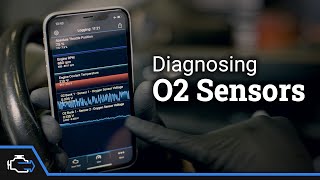
How to confirm: Use a scan tool with live data to graph the sensor's voltage. A healthy sensor will switch rapidly between ~0.1V and ~0.9V multiple times per second. A slow sensor will show lazy, rounded waves or get stuck at a certain voltage.
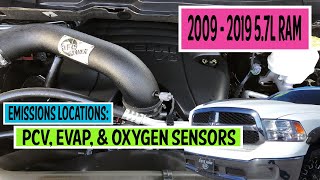
Typical fix: Replace the Bank 2, Sensor 1 (upstream) oxygen sensor. 🎬 Watch: Locate the oxygen sensors on your Ram 1500 It is highly recommended to use an OEM Mopar sensor, as some owners report aftermarket sensors failing to resolve the issue.
Est. part cost: $80-$350 - PCM Software Update Needed 🟡 Medium Probability Manufacturer TSB #18-050-21 directly links P0153 with a group of other codes (P0133, P0171, P0174, P0300). This indicates the PCM's logic for interpreting the O2 sensor data may be too sensitive, and an update is required to adjust the parameters.
How to confirm: A Ram dealership or qualified shop with access to FCA's wiTECH software can check your vehicle's VIN for open campaigns or confirm if the TSB #18-050-21 update applies.
Typical fix: The PCM is reprogrammed (flashed) with the latest manufacturer software. This is often the definitive fix when multiple related codes are present.
Est. part cost: $0-$250 - Exhaust System Leak 🟡 Medium Probability Leaks in the exhaust manifold or pipes upstream of the O2 sensor can introduce outside air, skewing the sensor's readings and causing it to respond slowly. Ram trucks with the HEMI engine are known for exhaust manifold bolts breaking, creating a leak at the manifold gasket. 🎬 See why Hemi exhaust manifold bolts frequently break
How to confirm: Visually inspect the exhaust manifold and connecting pipes for cracks or loose/broken bolts, often indicated by black soot trails. A mechanic can perform a smoke test to pinpoint the exact location of a leak.
Typical fix: Repair the leak by replacing the gasket and any broken bolts. In severe cases, the manifold itself may need replacement if warped or cracked.
Est. part cost: $20-$700 - Damaged Wiring or Connectors ⚪ Low Probability The wiring harness to the O2 sensor is exposed to high heat and road debris, which can cause wires to melt, fray, or connectors to corrode, leading to high resistance or a poor signal.
How to confirm: Visually inspect the wiring and connector for the Bank 2, Sensor 1 O2 sensor for any signs of damage, melting, or corrosion. Check for continuity and proper voltage at the connector with a multimeter.
Typical fix: Repair the damaged section of the wiring harness or replace the connector pigtail.
Est. part cost: $15-$50
Rare But Worth Checking
- Intake Air (Vacuum) Leak: A significant vacuum leak after the MAF sensor can cause a lean condition that the O2 sensor struggles to read, sometimes triggering a slow response code. This will usually be accompanied by lean codes P0171/P0174.
- Contaminated Fuel or Leaking Fuel Injectors: Poor quality fuel or a leaking fuel injector can lead to incomplete combustion, which can contaminate and damage the O2 sensor over time, causing it to become sluggish.
Diagnosis Steps
- Scan the vehicle for all DTCs. Note if P0153 appears with P0133, P0171/P0174, or P0300, as this points strongly towards the TSB fix.
- Check with a dealer for any open TSBs related to PCM updates for your VIN, specifically referencing TSB #18-050-21. If applicable, this should be the first fix performed.
- Visually inspect the exhaust system on Bank 2 (passenger side on V8 models) for any signs of cracks, rust, or black soot indicating a leak. Pay close attention to the exhaust manifold bolts, as they are a known failure point.
- Inspect the O2 sensor's wiring harness and connector for any signs of melting, corrosion, or physical damage.
- Using a scan tool with live data, monitor the voltage of the Bank 2, Sensor 1 O2 sensor at a steady 1500-2000 RPM. A healthy sensor should switch rapidly between below 0.2V and above 0.8V. 🎬 Watch: How to test O2 sensor voltage with a scan tool A slow sensor will have lazy, delayed transitions or a flat line.
- If an exhaust leak is suspected but not visible, perform a smoke test to confirm.
- If no leaks, wiring issues, or applicable TSBs are found, and the sensor is confirmed slow on the scan tool, replace the Bank 2, Sensor 1 O2 sensor with a quality OEM part.
Parts You'll Likely Need
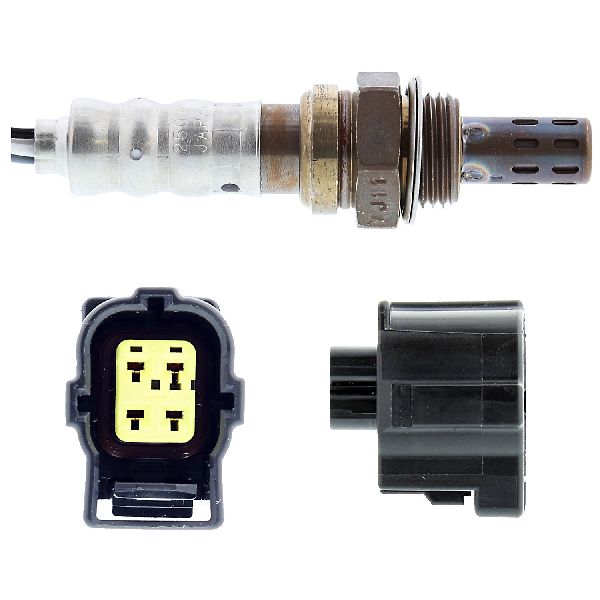
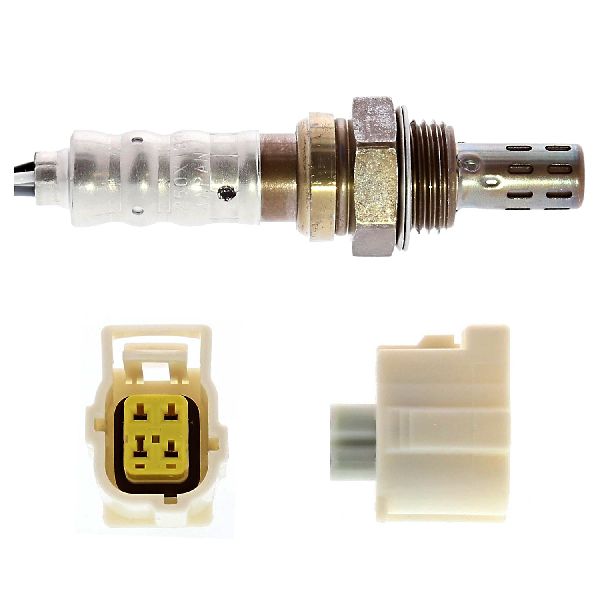
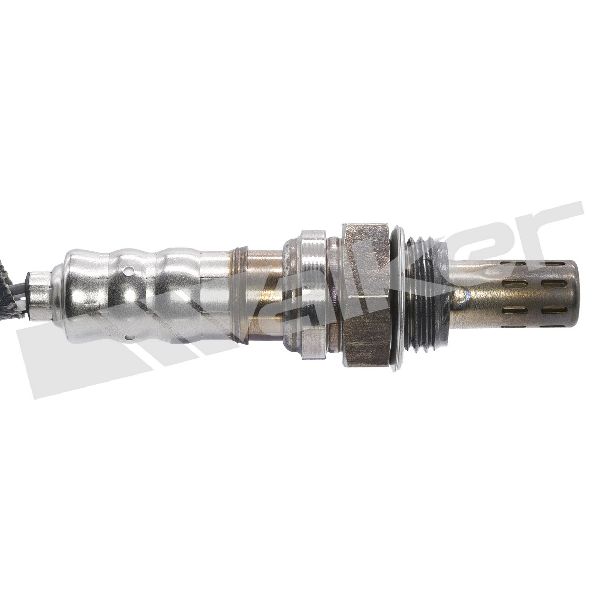
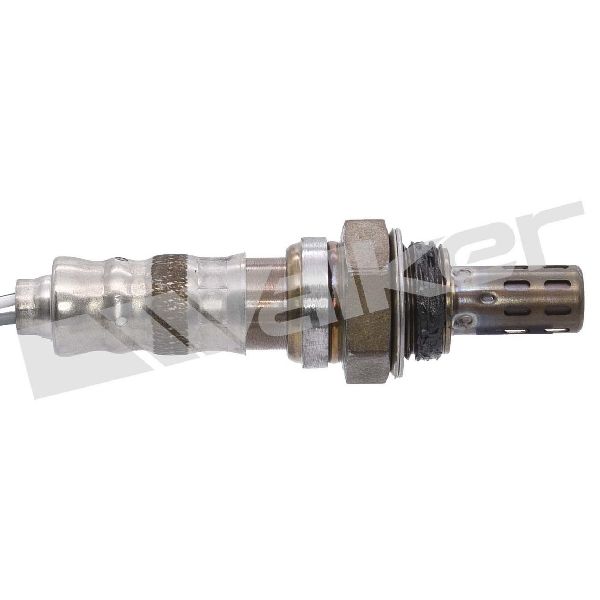
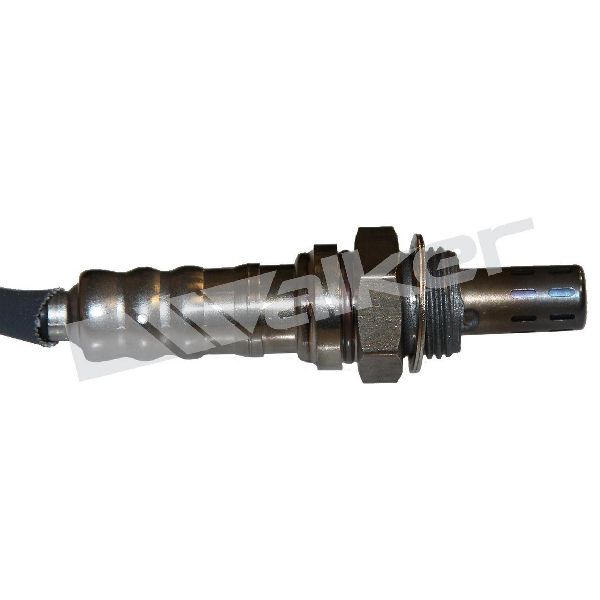
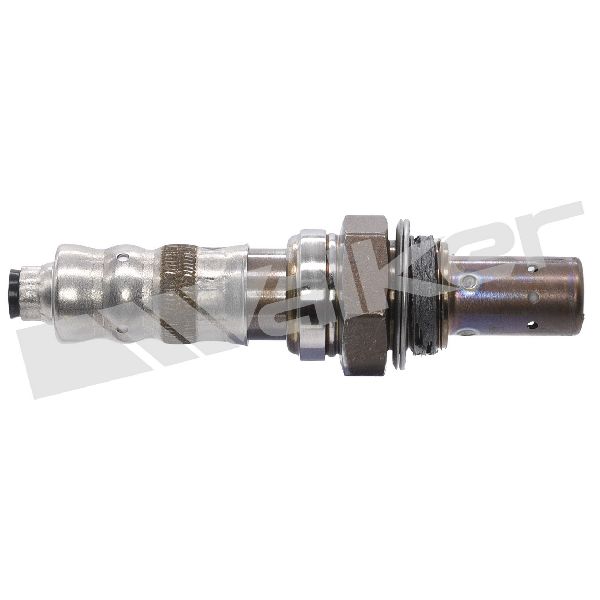
- Oxygen Sensor (Bank 2, Sensor 1)
(OEM #68144248AD (supersedes 68144248AA))— This is the upstream sensor for Bank 2. It is the primary component responsible for the signal that triggers code P0153. It is a common wear item, and using an OEM Mopar part is recommended for reliability.
Trusted brands: Mopar, NTK, Denso, Bosch
OEM price range: $80-$120
Aftermarket price range: $60-$180
Related Codes That Often Appear With This One
- P0133 — This is the identical 'Slow Response' code for the opposite engine bank (Bank 1). Seeing both together strongly suggests a systemic issue like a software glitch or a vacuum/exhaust leak affecting the whole engine, as noted in TSB #18-050-21.
- P0174 — 'System Too Lean (Bank 2)'. A slow O2 sensor can fail to correctly report a rich condition, causing the PCM to lean out the fuel mixture too much. An exhaust leak can also cause both codes simultaneously.
- P0171 — 'System Too Lean (Bank 1)'. Similar to P0174, its presence with P0153 points to a widespread engine issue, often addressed by the PCM reflash mentioned in TSB #18-050-21.
- P0300 — 'Random/Multiple Cylinder Misfire'. An incorrect air-fuel ratio caused by a faulty O2 sensor or a widespread vacuum/exhaust leak can lead to combustion instability, causing misfires. This is another code covered by TSB #18-050-21.
Technical Service Bulletins (TSBs) & Recalls
- 18-050-21: Documents P0153 appearing in a cluster with P0133, P0171, P0174, and P0300 and specifies a PCM reflash as the repair.
- 1814522: An earlier TSB number also noting that P0153 may be set with other O2 sensor, lean, and misfire codes. TSB 18-050-21 appears to be the more current and detailed bulletin.
Platform-Specific Known Issues
- TSB #18-050-21: PCM Flash for Multiple DTCs: This bulletin from Ram addresses a condition where P0153 may be set along with P0133, P0171, P0174, and P0300. The prescribed fix is to reprogram the Powertrain Control Module (PCM) with updated software. This should be the first diagnostic check if this cluster of codes is present.
- Broken Exhaust Manifold Bolts: The 5.7L HEMI engine has a known tendency for the rear-most exhaust manifold bolts to break due to heat cycles. This creates an exhaust leak right before the upstream O2 sensor, introducing fresh air and causing the sensor to generate a slow or lean signal, triggering P0153 or P0174.
Mechanic-Grade Diagnostic Values
- Upstream O2 Sensor Live Data Voltage (Scan Tool) — expected: Rapidly fluctuating signal between approximately 0.1V (lean) and 0.9V (rich) multiple times per second at steady RPM (e.g., 1200-2000 RPM).. Failure: A lazy, slow-moving waveform, or a signal that is stuck at a specific voltage. The PCM flags the code when the sensor's response time exceeds a threshold, often around 100 milliseconds.
- O2 Sensor Heater Circuit Resistance — expected: Typically between 5 and 25 Ohms, but varies by manufacturer. It's critical to compare to the specific sensor's specifications.. Failure: An extremely low (shorted) or high/infinite (open) resistance reading indicates a failed internal heater element.
- O2 Sensor Signal Circuit Voltage (Connector Disconnected, Ignition On) — expected: Approximately 5.0 volts. This is a reference voltage supplied by the PCM.. Failure: No voltage or significantly different voltage points to a problem with the PCM or the wiring between the PCM and the sensor connector.
- O2 Sensor Signal and Return Circuits Jumpered (Connector Disconnected, Ignition On) — expected: Voltage should drop from 5.0 volts to approximately 2.5 volts.. Failure: If the voltage does not drop, it indicates a problem in the return circuit or the PCM.
Scan Tool Commands That Help
- wiTECH (or equivalent professional scan tool): O2 Sensor Heater Actuation Test — This function allows the technician to command the O2 sensor's internal heater on. While monitoring the sensor's voltage, a technician can verify if the heater is working. After letting the sensor cool, the voltage should be at 5.0V. Activating the heater should cause a noticeable change, and the voltage should remain above 4.5V for at least two minutes, confirming the heater's functionality.
Wiring & Ground Locations
- Bank 2, Sensor 1 Connector — On the passenger side of the vehicle, on the exhaust pipe upstream of the catalytic converter.. This is the primary connection point for the sensor. Corrosion, damage from road debris, or melting from proximity to the exhaust can cause high resistance or short circuits, directly leading to the P0153 code. A visual inspection is the first step.
- Engine to Chassis/Firewall Ground — There are multiple ground straps and points. One key ground runs from the firewall to the back of the cylinder head. Other major grounds are located on the frame near the passenger side.. A poor ground connection between the engine and the chassis can create a floating ground, causing erratic voltage readings for engine sensors, including the O2 sensors. While the O2 sensor has a dedicated return wire, overall system ground integrity is crucial for stable sensor operation.
- O2 Sensor Connector Pinout (Typical 4-wire) — At the sensor connector.. Knowing the pinout is essential for testing. Typically, there are two wires for the heater circuit (often same color, e.g., white), one signal wire (0.1-0.9V), and one sensor ground/return wire. Testing for 12V at the heater circuit and checking for continuity on the signal and ground wires back to the PCM can isolate a wiring fault from a sensor fault.
Real Owner Repair Stories
- RamForum.com user 'shottel' (2014 Ram 1500 5.7L Hemi, 148k miles) — Persistent Check Engine Light for a year, initially P0153, later joined by P2098 (Post Catalyst Fuel Trim System Too Lean Bank 2).
❌ Tried (didn't work) Replaced passenger front (Bank 2, Sensor 1) O2 sensor with a Mopar part., Repaired broken exhaust manifold studs on passenger side., Dealer performed a PCM software update.
✅ What actually fixed it The user's thread ended before a final resolution was posted, but the next suggested step from other forum members was to check the intake manifold bolts for proper torque, as they are known to loosen and cause un-metered air leaks (vacuum leaks) that can trigger lean and slow-response O2 codes. - Bronco6G forum user (detailing a Dodge Ram issue) (2005 Dodge Ram 2500 Power Wagon 5.7 Hemi, 117k miles) — Persistent P0153 code that would return shortly after being cleared.
❌ Tried (didn't work) Replacing forward O2 sensors multiple times with aftermarket parts., Replacing all 4 O2 sensors., Using MIL eliminators., Shop replacing sensors again with OEM Mopar parts., Shop replacing mid-pipe/catalytic converters., Dealer re-flashing the computer., Shop replacing the cracked exhaust manifold and gaskets on the affected side.
✅ What actually fixed it The story is a cautionary tale of how P0153 can be a symptom, not the root cause. Despite replacing the sensor, fixing exhaust leaks, and even replacing the manifold, the code persisted. The next logical steps suggested by others, though not confirmed as the fix in the thread, were to investigate vacuum leaks (PCV valve, intake gaskets, injector O-rings) or a faulty fuel injector, as unmetered air or a bad fuel mixture can cause the sensor to read incorrectly and trigger the code.
"I Checked Everything" — The Actual Cause
- In a forum discussion, a user with a persistent P0153 performed a smoke test on the intake system via the brake booster line and found no leaks. However, other users strongly suggested checking the intake manifold bolts for proper torque (9 ft-lbs), noting they frequently loosen over time on Hemi engines and create a vacuum leak that a smoke test might not easily reveal.
When the Usual Fixes Don't Work
- Multiple owner stories highlight that replacing the O2 sensor, even with an OEM part, often does not fix a persistent P0153 code. In one case, the sensor was replaced, the PCM was flashed, and an exhaust manifold leak was repaired, yet the code returned. This strongly suggests that for the Ram 1500, P0153 should be treated as a symptom of a deeper issue—most likely an unmetered air leak (from sources like loose intake manifold bolts) or a broader software calibration problem—rather than an isolated sensor failure. The common diagnosis of a 'bad sensor' is frequently incorrect for this platform when the code is chronic.
OEM Part Supersession History
68144248AA→68144248AD— Standard part number revision by the manufacturer. This usually indicates minor improvements in materials, manufacturing process, or design.
Heads up: The parts are interchangeable. 68144248AD is the current replacement for 68144248AA.
Helpful Videos



We Have This Part in Stock

The information in this article is provided for general reference and educational purposes only. Vehicle specifications, procedures, and part compatibility can vary by production date, trim level, and region. Always consult your vehicle's factory service manual and verify part numbers before purchasing or performing repairs. Safety-critical components such as airbags, seat belts, and braking systems should be installed by a qualified professional.
- Ram 1500:
- 🧭 Diagnostic Flowchart
- 🎬 Helpful Videos
- 🛍️ Shop This Part
- What's Unique About the 2021-2021 Ram 1500
- Symptoms You May Notice
- Most Likely Causes
- Rare But Worth Checking
- Diagnosis Steps
- Parts You'll Likely Need
- Related Codes That Often Appear With This One
- Technical Service Bulletins (TSBs) & Recalls
- Platform-Specific Known Issues
- Mechanic-Grade Diagnostic Values
- Scan Tool Commands That Help
- Wiring & Ground Locations
- Real Owner Repair Stories
- "I Checked Everything" — The Actual Cause
- When the Usual Fixes Don't Work
- OEM Part Supersession History
- 🎟️ Get 5% Off