

P0156 on 2013-2016 Jaguar XF: O2 Sensor Circuit Malfunction Causes and Fixes
P0156 on a 2013-2016 Jaguar XF with a V6 or V8 engine indicates a fault with the Bank 2, Sensor 2 oxygen sensor. This is the downstream sensor on the driver's side of the vehicle (in LHD markets). The most common fix is replacing the sensor itself, which costs about $70-$150 for an aftermarket part. Before replacing, check for wiring damage and consider a potential PCM software update as per Jaguar TSBs.
- P0156 points to the downstream (post-catalyst) oxygen sensor on the driver's side (Bank 2).
- The most probable cause is a failed O2 sensor, which is a standard wear item.
- Crucially, check for applicable TSBs like JTB00392NAS3, as a PCM software update may be required along with sensor replacement to permanently fix the issue.
- Before buying parts, inspect the sensor's wiring and connector for damage, especially for contamination from coolant leaks, a known issue on these engines.
What's Unique About the 2013-2016 Jaguar XF
The 3.0L V6 (AJ126) engine in these Jaguars is a unique 90-degree design derived from the 5.0L V8 (AJ133) by removing two cylinders. This shared architecture means they have similar maintenance issues. For P0156, the problem is often more complex than just a bad sensor. Jaguar issued TSB JTB00392NAS3 because a software error in the PCM could falsely trigger this and other O2 sensor codes. The recommended fix is often to first update the PCM software before replacing any hardware. Additionally, these engines are known for plastic coolant pipe and water pump failures, which can lead to coolant contaminating the O2 sensor connectors or wiring, causing this fault.
Diagnostic Flowchart
Tap your situation to follow the diagnostic path that matches what you're seeing on this vehicle.
Generation note: This year range covers the end of the first generation (X250, 2013-2015) and the start of the second generation (X260, 2016-on). While the 3.0L V6 and 5.0L V8 engines were used in both, specific part numbers for the O2 sensors and their exact locations may differ slightly. The primary OEM part number C2D23702 has been superseded by T2H48050. Always verify parts using your vehicle's VIN.
Symptoms You May Notice
- Check Engine Light is on
- Reduced fuel economy
- Vehicle will fail an emissions test
- Slightly rough idle in some cases
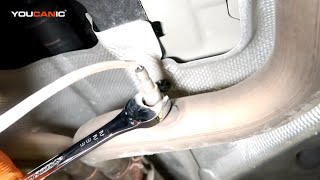
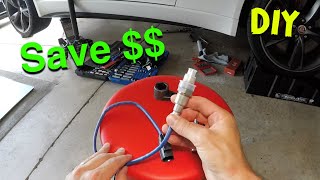
- Noticeable smell of unburnt fuel 🎬 Watch a mechanic replace an O2 sensor on an XF. from the exhaust in rare cases
- Replacing the wrong sensor (e.g., replacing the Bank 1 sensor or the upstream Sensor 1 instead of the downstream Sensor 2 on Bank 2).
- Replacing the O2 sensor when the actual fault is an intermittent wiring issue, an exhaust leak, or an outdated PCM software calibration.
Most Likely Causes
- Failed Oxygen Sensor (Bank 2, Sensor 2) 🔴 High Probability → Shop Oxygen Sensor Oxygen sensors are wear-and-tear items that degrade over time from heat and exhaust contaminants. Jaguar issued several TSBs covering a wide range of O2 sensor codes, indicating they are a common point of failure.
How to confirm: Use an OBD-II scanner with live data to monitor the voltage of 'O2S2 B2'. A healthy downstream sensor should show a relatively stable voltage, typically between 0.6V and 0.8V. If the voltage is stuck low (e.g., below 0.2V), not showing any activity, or fluctuating wildly like the upstream sensor, the sensor has likely failed. You can also test the internal heater circuit's resistance with a multimeter; a healthy sensor should have a low resistance (typically 2-10 Ohms) across the two same-colored wires.
Typical fix: Replace the Bank 2, Sensor 2 oxygen sensor. This is located on the driver's side, after the catalytic converter. 🎬 Watch this walkthrough on replacing a Bank 2 Sensor 2.
Est. part cost: $70-$150 - Damaged Wiring or Connector 🟡 Medium Probability The wiring is located under the vehicle and is exposed to heat, moisture, and road debris, which can cause corrosion or damage. TSB SSM72477 specifically mentions that diagnosis can be difficult, as no fault may be found with the harness, suggesting intermittent connection issues. Coolant leaks from known failure points (plastic pipes, water pump) can also drip down and contaminate the connectors.
How to confirm: Visually inspect the entire wiring harness from the O2 sensor to the main connector. Look for any signs of melting, chafing, corrosion in the connector pins, or breaks in the wire. Check for signs of coolant or oil contamination.
Typical fix: Repair the damaged section of the wiring harness or clean/replace the connector.
Est. part cost: $10-$50 - Exhaust Leak ⚪ Low Probability Exhaust manifold gaskets and flange connections can develop leaks over time, allowing outside air to be drawn into the exhaust stream.
How to confirm: Visually inspect the exhaust system for cracks or black soot trails, particularly around gaskets and welds between the engine and the O2 sensor. You may also hear a ticking or hissing sound from the leak, especially when the engine is cold.
Typical fix: Repair the leak by replacing the faulty gasket or exhaust component.
Est. part cost: $20-$300
Rare But Worth Checking
- Powertrain Control Module (PCM) Software Issue: TSB JTB00392NAS3 directly addresses P0156 and a host of other O2 sensor codes, stating the cause may be a software error. The fix is to reflash the PCM with updated software using a Jaguar-approved diagnostic tool. The TSB states that if the code is present, the technician should replace the sensor AND then perform the software update.
- Contamination from Fluid Leaks: The AJ126 and AJ133 engines are known for failures of plastic coolant pipes and water pumps. Leaking coolant can find its way down to the O2 sensor wiring and connectors, causing short circuits or corrosion that triggers the P0156 code. Similarly, oil leaks from valve covers can cause contamination.
Diagnosis Steps
- Read the code with an OBD-II scanner to confirm P0156 is present.
- Use the scanner's live data function to observe the voltage from 'O2S2 B2' (Oxygen Sensor 2, Bank 2). It should be relatively steady between 0.6V-0.8V. If it's stuck low (under 0.2V), high (over 0.9V), or inactive, the sensor is the primary suspect.
- Perform a thorough visual inspection of the Bank 2, Sensor 2 and its wiring harness. Look for physical damage, melting on the exhaust, or corrosion/contamination in the connector.
- Check for exhaust leaks between the cylinder head and the sensor. Listen for unusual hissing or ticking sounds.
- Test the sensor's heater circuit. Disconnect the sensor and use a multimeter to measure resistance between the two same-colored wires (usually black) on the sensor side. A good heater will show resistance, typically between 2 and 10 ohms. An open circuit (infinite resistance) means the heater is broken and the sensor needs replacement.
- If the sensor and wiring appear intact, check for the presence of Jaguar TSB JTB00392NAS3. This may require a call to a dealer with your VIN. If applicable, a PCM software update is recommended.
- If all else fails, the issue could be a rare PCM driver issue, though the software glitch is a more likely culprit on this platform.
Parts You'll Likely Need
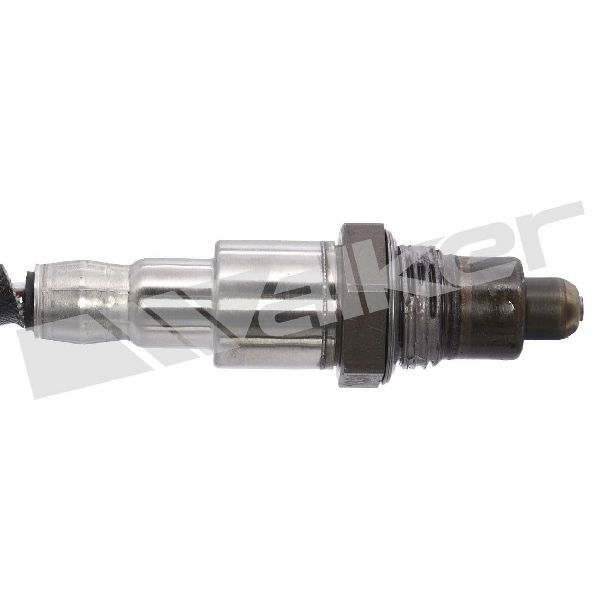
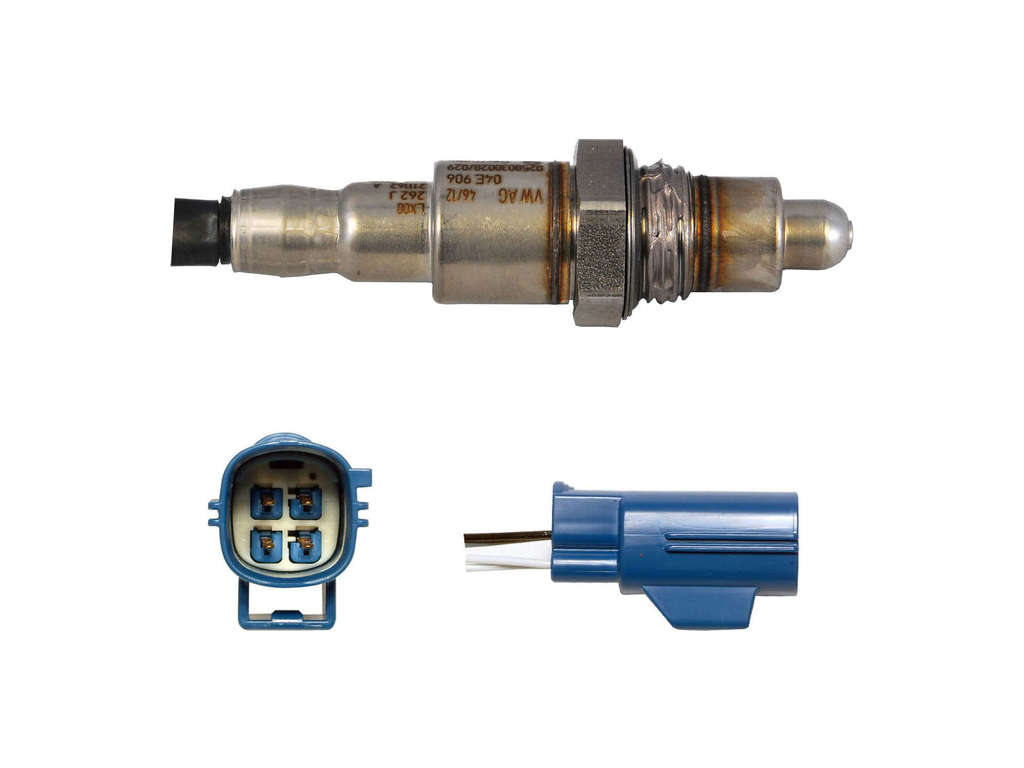
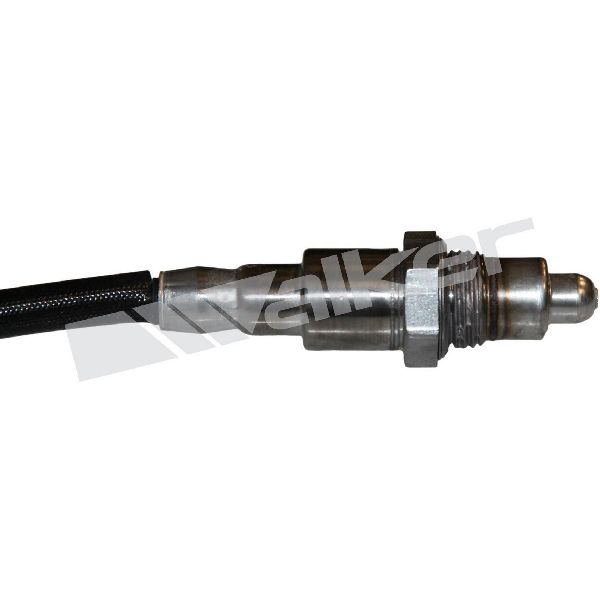
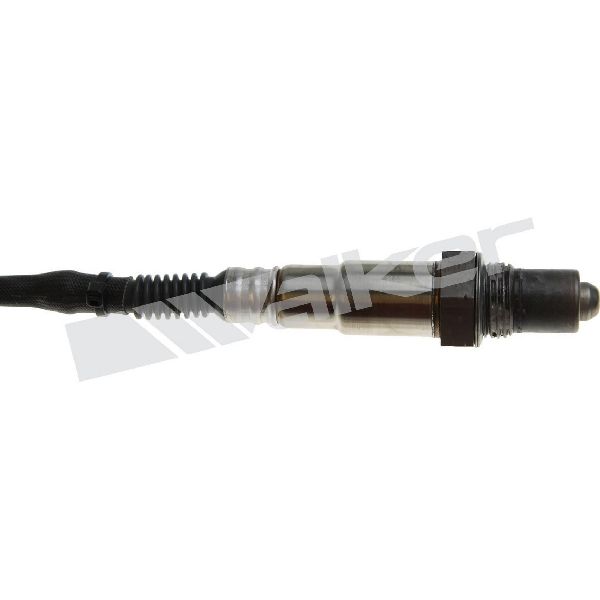
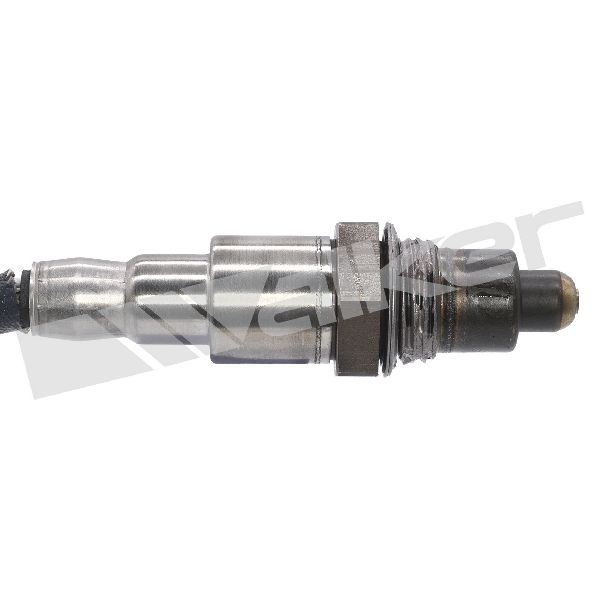
- Oxygen Sensor (Bank 2, Sensor 2)
(OEM #C2D23702 (Superseded by T2H48050))— This is the component that fails most frequently, triggering the P0156 code.
Trusted brands: Bosch, Denso, NGK/NTK
OEM price range: $180-$260
Aftermarket price range: $70-$150
Related Codes That Often Appear With This One
- P0157 — P0157 indicates 'O2 Sensor Circuit Low Voltage' for the same sensor, which is a more specific version of the general circuit malfunction reported by P0156.
- P0161 — P0161 indicates a fault in the heater circuit of the same sensor (Bank 2, Sensor 2). Since the heater is part of the sensor assembly, this code almost always points to a failed sensor.
- P0016/P0017 — While less common, if timing chain issues (a known problem on the AJ133 and to a lesser extent the AJ126) become severe, they can cause poor combustion, leading to a range of codes, including O2 sensor faults.
Technical Service Bulletins (TSBs) & Recalls
- SSM72477: Notes that diagnosis may find no fault with wiring/connectors for a range of O2 codes including P0156.
- JTB00392NAS3: The most relevant TSB. Identifies a software error as a potential cause for P0156 and other codes. Recommends replacing the failed sensor and then performing a PCM software update.
- JTB00392NAS1: An earlier version of the above TSB, also mentioning P0156 being stored in the ECM and pointing to a 'post-catalyst' cause.
- Service Action K309: A non-US campaign to update PCM software for correct O2 sensor operation on 2013-2016 XF, XJ, and F-Type models.
Platform-Specific Known Issues
- Jaguar TSB #SSM72477 mentions that for a list of O2 sensor codes including P0156, it is common that 'UPON DIAGNOSIS NO FAULT IS FOUND WITH THE WIRING HARNESS OR CONNECTOR', suggesting the root cause is often the sensor itself or an intermittent fault.
- Jaguar TSB #JTB00392NAS3 is a critical document for this code. It states a software error can be the cause and instructs technicians to replace the relevant sensor(s) AND update the PCM software.
- Service Action K309 was issued for non-North American markets to proactively update the PCM software to address 'concerns with the correct operation of the Oxygen (O2) Sensors'. This further highlights the software component of this issue.
Mechanic-Grade Diagnostic Values
- Downstream O2 Sensor (Zirconia type) Signal Voltage — expected: Relatively stable reading between 0.1V and 0.9V, typically around 0.6V-0.8V, with slow fluctuations at steady RPM.. Failure: Voltage is stuck low (below 0.1V), stuck high (above 0.9V), or completely inactive (0V) for an extended period.
- O2 Sensor Heater Circuit Resistance — expected: Typically between 2 and 25 Ohms when measured across the two same-colored wires on the sensor connector at room temperature.. Failure: An 'OL' or infinite resistance reading on a multimeter indicates an open circuit (broken heater element), requiring sensor replacement.
Hidden / Shadow Codes Worth Checking
- P1111: This is not a fault code, but an 'All Systems Go' or 'System Checks Complete' code for older Jaguar models using IDS/SDD. If this code is present alongside P0156, it means all OBD-II drive cycle monitors have completed, making the P0156 a 'hard' fault. (see via Jaguar IDS/SDD diagnostic software.)
- Unrelated Events: Within the Jaguar SDD software, fault codes that don't directly match the technician's selected symptoms are filed under 'Unrelated Events'. A technician might miss secondary codes like heater circuit faults if they only focus on the primary P0156 code. (see via Jaguar SDD software, by specifically navigating to the 'Unrelated Events' tab during a diagnostic session.)
Scan Tool Commands That Help
- Jaguar SDD (Symptom Driven Diagnostics): Live Data Monitoring / Datalogger — To observe the real-time voltage output of the Bank 2 Sensor 2. This is the primary method to confirm if the sensor is inactive, stuck, or responding incorrectly.
- Jaguar SDD (Symptom Driven Diagnostics): Vehicle Reset — After replacing a component like an O2 sensor and/or updating the PCM software, a 'Vehicle Reset' should be performed to clear adaptations and ensure all modules recognize the new state of the system.
- Jaguar SDD (Symptom Driven Diagnostics): OBDII Readiness Tests — To verify that the repair was successful, a technician can use this function to check the status of the drive cycle monitors. The Heated O2 Sensor and Catalyst monitors must show 'Complete' or 'Ready' to confirm the P0156 fault is resolved.
Wiring & Ground Locations
- Bank 2 Downstream O2 Sensor Connector (Vehicle Side) — Located on the driver's side of the transmission bell housing area (LHD vehicles). The harness runs from the sensor in the post-catalyst exhaust pipe up to this connector.. This connector is a common point for corrosion, contamination from fluid leaks, or physical damage. TSB SSM72477 notes that diagnosis can be difficult as no fault may be found, suggesting intermittent connections here.
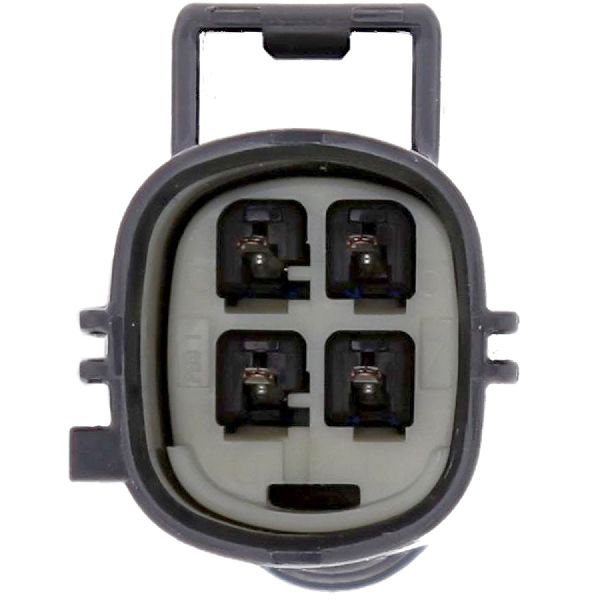
- Bank 2 Downstream O2 Sensor Wiring Colors (Vehicle Harness Side) — At the connector for the Bank 2, Sensor 2.. Knowing the wire colors is essential for testing. Based on forum discussions for similar models: Pin 1 (Blue with yellow stripe) is heater ground, Pin 2 (White with red stripe) is heater power, Pin 3 (White) is sensor ground, and Pin 4 (Brown) is the signal wire. These must be verified with a model-specific diagram.
- Sensor Ground Path — The sensor's signal is grounded through the wiring harness back to the Powertrain Control Module (PCM). While the sensor body is grounded to the exhaust, a poor body ground can cause issues on older single-wire sensors, but modern 4-wire sensors rely on the dedicated ground wire in the harness.. A break or high resistance in the sensor ground wire (Pin 3) can cause an incorrect voltage reading, leading to a P0156 code even if the sensor itself is functional.
Real Owner Repair Stories
- JaguarForums.com user 'Traveller' (2014 XF 3.0 AWD) — Check Engine Light with code P0062 (HO2S Heater Control Circuit Bank 2 Sensor 3 - a Jaguar-specific code related to the downstream sensor).
❌ Tried (didn't work) Initial confusion over which side was Bank 2 and which part number was correct. The physical keying on the sensor connectors prevents installing the wrong sensor in the wrong bank.
✅ What actually fixed it The user had conflicting information about Bank 2 location. The fix was replacing the downstream O2 sensor on the left side (driver's side in North America). The correct NTK part number for that side was 25749. The user replaced both left and right side sensors to be safe.
OEM Part Supersession History
C2D23702→C2D54166, then T2H48050— Standard part evolution and updates by the manufacturer.
Heads up: While aftermarket parts from brands like Denso, Bosch, or NTK are available, forum users strongly advise against using cheap, unbranded 'universal' sensors, as they often cause persistent issues on Jaguars. The upstream (wideband) and downstream (narrowband/zirconia) sensors are not interchangeable.
Model Year Variations Within This Range
- 2013-2015 (X250) vs 2016 (X260): The 2016 model year marked the switch to the new X260 chassis. While the 3.0L V6 engine was carried over, there can be differences in harness routing, connector locations, and the infotainment/diagnostic software interface (moving from SDD toward Pathfinder for later models). The core part, the O2 sensor itself (T2H48050), fits both generations.
Helpful Videos


We Have This Part in Stock

The information in this article is provided for general reference and educational purposes only. Vehicle specifications, procedures, and part compatibility can vary by production date, trim level, and region. Always consult your vehicle's factory service manual and verify part numbers before purchasing or performing repairs. Safety-critical components such as airbags, seat belts, and braking systems should be installed by a qualified professional.
- Jaguar XF:
- 🧭 Diagnostic Flowchart
- 🎬 Helpful Videos
- 🛍️ Shop This Part
- What's Unique About the 2013-2016 Jaguar XF
- Symptoms You May Notice
- Most Likely Causes
- Rare But Worth Checking
- Diagnosis Steps
- Parts You'll Likely Need
- Related Codes That Often Appear With This One
- Technical Service Bulletins (TSBs) & Recalls
- Platform-Specific Known Issues
- Mechanic-Grade Diagnostic Values
- Hidden / Shadow Codes Worth Checking
- Scan Tool Commands That Help
- Wiring & Ground Locations
- Real Owner Repair Stories
- OEM Part Supersession History
- Model Year Variations Within This Range
- 🎟️ Get 5% Off