

P0158 on 2017-2022 Honda CR-V: Why This Code is Impossible and What it Means
A 2017-2022 Honda CR-V cannot generate a P0158 code. This code is for 'Bank 2,' but the CR-V's 4-cylinder engine only has one bank. The correct code for this fault is P0138, which is almost always caused by a failed downstream oxygen sensor.
- P0158 is the wrong code for a 2017-2022 Honda CR-V. The correct code for this fault is P0138.
- The most common cause for a P0138 code is a failed downstream oxygen sensor (Bank 1, Sensor 2).
- Before replacing the sensor, always perform a quick visual check of the wiring and connector for obvious damage.
- This is a DIY-friendly repair for most home mechanics with basic tools and an O2 sensor socket.
- Do not replace the catalytic converter; this code points to a sensor circuit problem, not a converter failure.
What's Unique About the 2017-2022 Honda CR-V
The key issue for this platform is the engine configuration. All 2017-2022 CR-Vs use inline 4-cylinder engines, which physically lack a 'Bank 2'. Any diagnostic tool showing P0158 on this specific vehicle is likely misinterpreting the code. The actual fault lies with the Bank 1 downstream oxygen sensor, which will trigger code P0138. This guide will proceed by addressing the causes and fixes for the correct code, P0138, as that is the actionable problem.
Symptoms You May Notice
- Check Engine Light is illuminated
- Potential decrease in fuel economy
- Vehicle may fail an emissions test
- Rough idling or stalling in some cases
- Strong exhaust odor due to a rich fuel mixture
- Replacing the catalytic converter. A P0138/P0158 code points to a sensor circuit issue, not a converter efficiency issue (which would typically be a P0420 code). Always fix O2 sensor codes before addressing a P0420.
- Replacing the upstream Air/Fuel Ratio sensor (Sensor 1). This code specifically relates to the downstream sensor (Sensor 2).
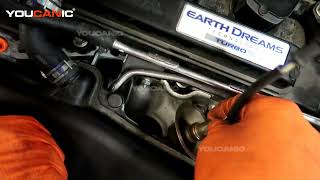
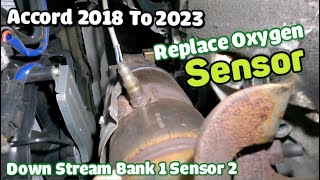
- Using a cheap, universal O2 sensor. Honda ECUs can be sensitive, and forum users frequently report that universal sensors requiring wire splicing often fail quickly or do not resolve the code. Using a direct-fit OEM (Honda) 🎬 Watch: A guide to replacing Honda upstream and downstream sensors or OE-brand (Denso, NTK) sensor is strongly recommended.
Most Likely Causes
- Faulty Downstream Oxygen Sensor (Correct Code: P0138) 🔴 High Probability → Shop Oxygen Sensor Oxygen sensors are wear-and-tear items with a finite lifespan, typically 90,000 to 120,000 miles. Contamination from engine byproducts and constant exposure to high heat eventually cause them to fail, leading to incorrect voltage readings.
How to confirm: Use a scan tool to monitor the live data for the 'Bank 1 Sensor 2' voltage. A healthy sensor should show a relatively steady voltage. If the voltage is stuck high (above 0.9V), the sensor is faulty. On some Honda models, the specific trigger is voltage remaining above 1.1V for several seconds.
Typical fix: Replace the downstream (post-catalytic converter) oxygen sensor. This is often referred to as Bank 1, Sensor 2.
Est. part cost: $50-$180 - Wiring Harness or Connector Damage (Correct Code: P0138) 🟡 Medium Probability The wiring is routed under the vehicle and is exposed to road debris, moisture, and high heat from the exhaust, which can cause corrosion, breaks, or short circuits over time. Melted insulation due to proximity to the turbocharger has been noted on platform-mate 1.5T Civics.
How to confirm: Visually inspect the wiring harness and connector leading to the downstream O2 sensor. Look for any signs of melting, chafing, corrosion, or broken wires. Check for a short to power on the signal wire using a multimeter.
Typical fix: Repair the damaged section of the wiring harness or clean/replace the corroded connector.
Est. part cost: $10-$50
Rare But Worth Checking
- Engine Running Rich: If the engine is running excessively rich due to another issue (like a leaking fuel injector), the exhaust will have very little oxygen, causing the sensor to correctly report a high voltage. This will almost always be accompanied by other trouble codes (e.g., fuel trim codes like P0172 or misfire codes). Leaking injectors are a known issue on the 1.5T engine.
- Exhaust Leak: An exhaust leak before the O2 sensor can sometimes disrupt sensor readings, though it's less common for it to cause a stuck high voltage condition. It can allow outside air to enter the exhaust stream, confusing the sensor.
- Powertrain Control Module (PCM) Fault: → Shop Engine Control Module (ECM) In very rare cases, the PCM itself can be the source of the problem. This should only be considered after all other possibilities have been exhaustively ruled out. Some Honda models have had software updates to address O2 sensor logic or related fuel/engine management that could indirectly resolve the issue.
Diagnosis Steps
- Confirm the actual trouble code with a reliable OBD-II scanner. If the vehicle is a 2017-2022 CR-V, expect to see P0138, not P0158.
- Using the scanner's live data function, observe the voltage for 'O2S B1S2' (Bank 1, Sensor 2).
- If the voltage is stuck above 0.9V (and especially if it's over 1.1V) and does not fluctuate, the sensor or its circuit is faulty.
- Perform a thorough visual inspection of the downstream oxygen sensor's wiring and connector. Look for any damage, melting, corrosion, or loose connections.
- Check the fuse for the O2 sensor heater circuit in the under-hood fuse box. A blown fuse can sometimes cause erratic sensor readings.
- If the wiring appears intact, the most probable cause is a failed oxygen sensor.
- To be certain, you can disconnect the sensor and check for voltage on the signal wire in the harness (connector side). If high voltage is still present, there is a short to power in the vehicle's wiring. If not, the sensor itself is the source of the high voltage.
- Replace the downstream oxygen sensor (Bank 1, Sensor 2).
Parts You'll Likely Need
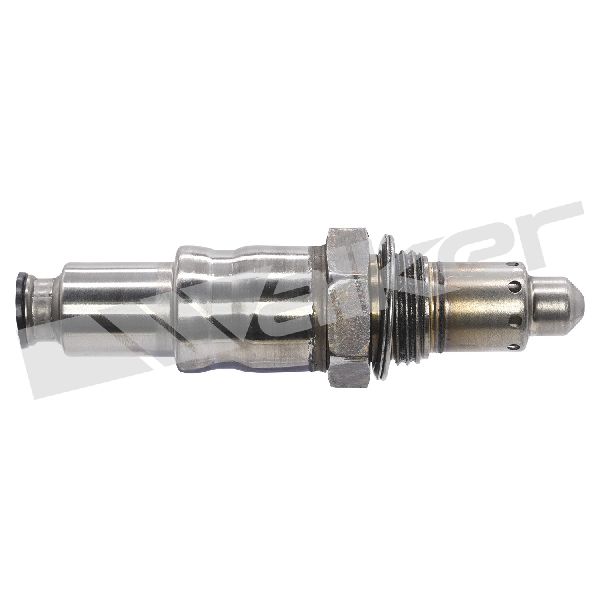
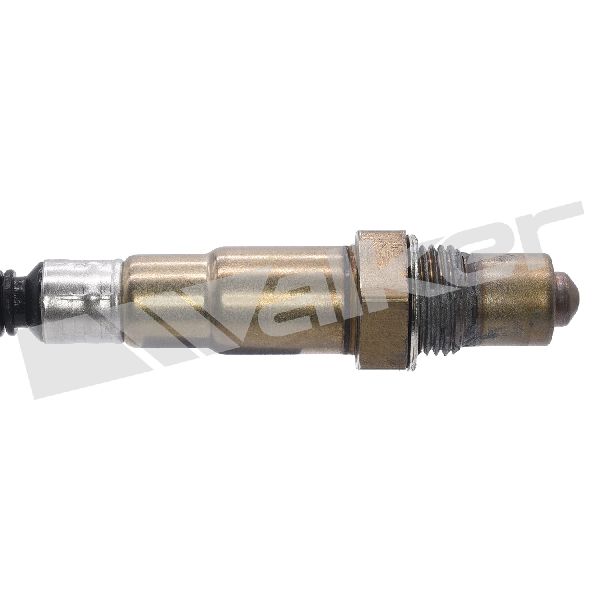
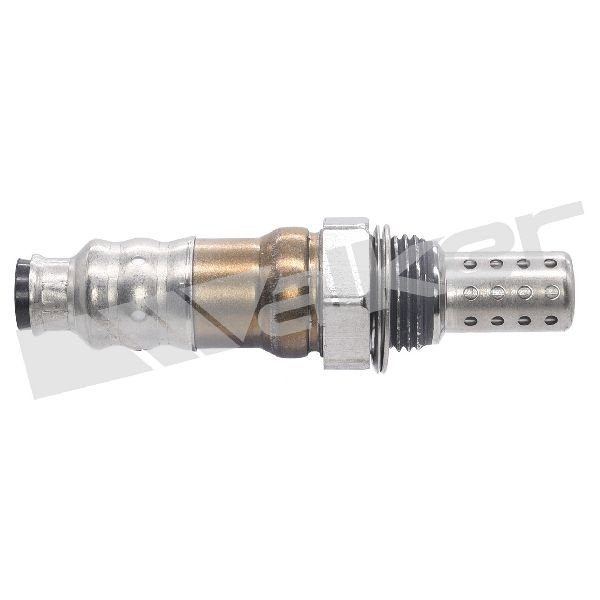
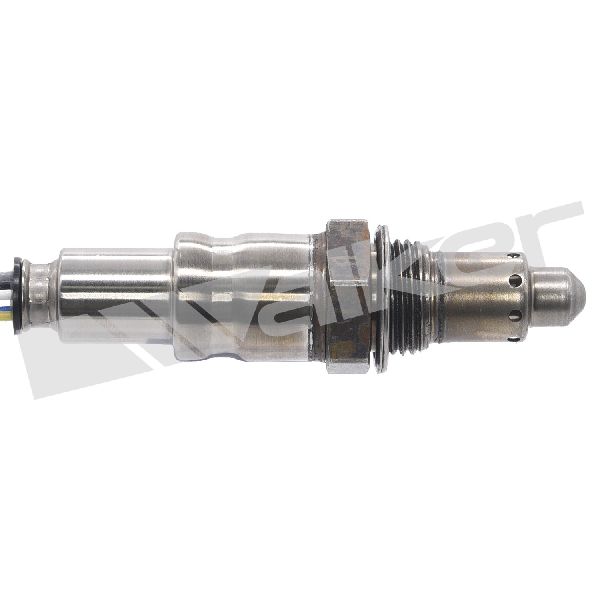
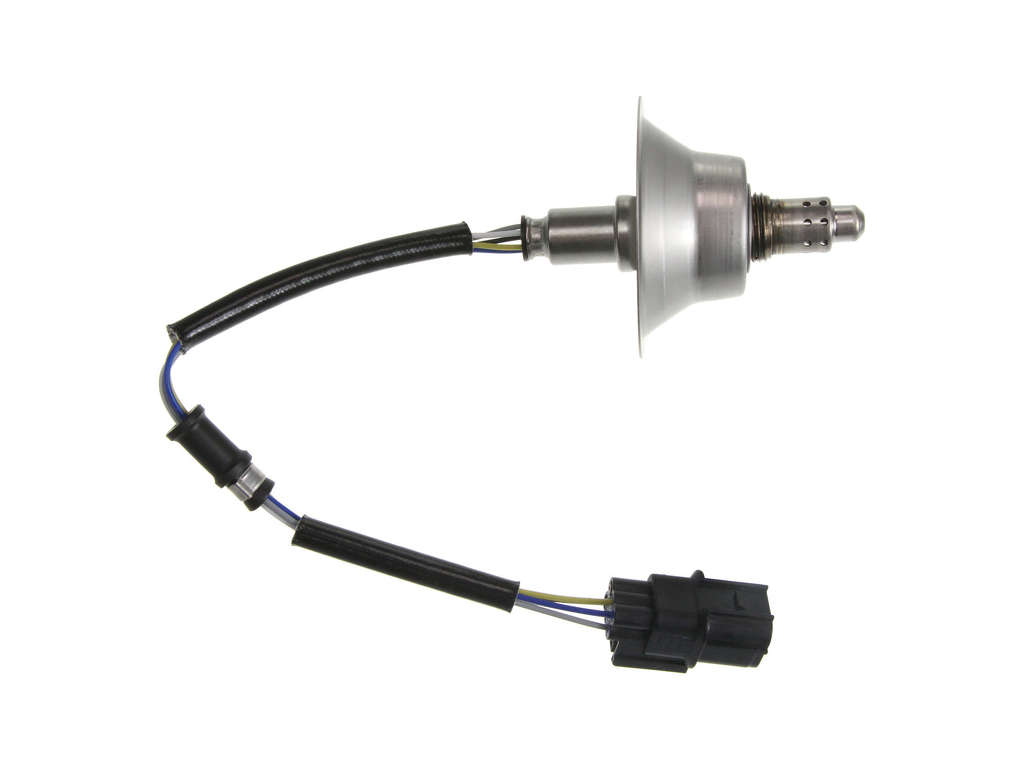
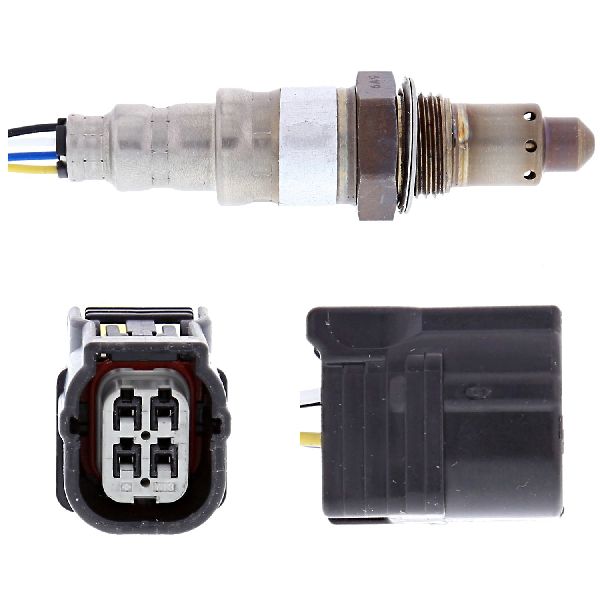
- Downstream Oxygen Sensor (Bank 1, Sensor 2)
(OEM #36532-5AA-A01 (for 1.5L Turbo engine))— This is the component that fails in the vast majority of cases for a P0138 code. The 1.5L Turbo engine is the most common in this generation.
Trusted brands: Denso (OEM supplier), NTK (NGK), Bosch
OEM price range: $120-$180
Aftermarket price range: $50-$100
Related Codes That Often Appear With This One
- P0139 — Stands for 'O2 Sensor Circuit Slow Response (Bank 1 Sensor 2)'. It often appears with P0138 as a failing sensor can become both slow to respond and biased to a high voltage reading.
- P0172 — Stands for 'System Too Rich (Bank 1)'. If a leaking fuel injector or other issue causes a rich condition, the downstream O2 sensor will correctly report high voltage (P0138) as a symptom. In this case, the root cause is the rich condition, not the O2 sensor.
Technical Service Bulletins (TSBs) & Recalls
- Honda TSB 19-082 (for Civic 1.5T): While not for the CR-V, this TSB for the platform-mate Civic addresses a P0138 code caused by exhaust heat damaging the sensor wiring. It calls for improved heat shields and wiring, indicating a potential sensitivity on the 1.5T platform.
Mechanic-Grade Diagnostic Values
- Downstream O2 Sensor (B1S2) Voltage — expected: A stable, lazy voltage fluctuating slowly around 0.4-0.5V on a healthy, warm engine.. Failure: Voltage is stuck consistently above 0.9V, and often above 1.1V, for more than 10 seconds.
- O2 Sensor Heater Circuit Resistance — expected: Between 10 and 40 Ohms for many Honda sensors. Some service documents for other models show a tighter spec of 5.4 to 7.3 Ohms.. Failure: A reading of infinite resistance (open circuit) or near zero Ohms (short circuit).
Scan Tool Commands That Help
- Honda Diagnostic System (HDS): DTC Clear & Problem Verification — After a repair, use the HDS to clear the P0138 code, then run the engine at 3,000 RPM until the radiator fan engages to confirm the fix under specific operating conditions required by the PCM.
- Honda Diagnostic System (HDS): Live Data (Data List) - HO2S S2 — This is the primary function for diagnosis. It allows you to watch the sensor's voltage in real-time to see if it's stuck high, confirming the fault condition.
- Honda Diagnostic System (HDS): Jumper Wire Test Simulation — A dealer-level diagnostic step where the sensor is disconnected and specific terminals on the harness connector are jumped. The HDS is then used to read the resulting voltage to determine if there is an open or short in the vehicle's wiring harness, isolating the fault to the harness or the sensor itself.
Wiring & Ground Locations
- Secondary HO2S (Sensor 2) 4P Connector — On the exhaust pipe, downstream of the primary catalytic converter. The connector is typically clipped to the vehicle's underbody or a bracket nearby.. This is the primary connection point for testing. All voltage, resistance, and continuity checks for the sensor and its circuit begin at this connector. It is exposed to road debris and heat, making it a potential point of failure.
- O2 Sensor Heater Fuse — Typically located in the under-hood fuse box. The specific fuse may be labeled 'AF HEATER' or similar.. The heater circuit is essential for getting the sensor to operating temperature quickly. A blown fuse will prevent the heater from working, which can cause erratic sensor readings and related codes, although it more commonly causes a P0141 (Heater Circuit Malfunction) code.
Real Owner Repair Stories
- ICARZONE MA900 Promotional Material / TSB (2022 Honda Civic Touring 1.5T (platform mate)) — Check Engine Light with code P0138 appeared after a software update.
❌ Tried (didn't work) Initial diagnosis would typically point to a failed O2 sensor.
✅ What actually fixed it A dealer-installed ECU software update, per Honda TSB 22-045, resolved the issue. The original software had overly sensitive thresholds for the O2 sensor, causing a false P0138 code.
OEM Part Supersession History
36532-5AA-A01→No supersession found.— This part number appears to be consistent for the 2017-2022 CR-V 1.5T and related Civic models.
Model Year Variations Within This Range
- 2017-2019: For the 2017-2019 model years, the base LX trim came standard with a 2.4L naturally aspirated four-cylinder engine. EX and higher trims had the 1.5L Turbo.
- 2020-2022: Following the 2020 mid-cycle refresh, the 2.4L engine was discontinued for the non-hybrid CR-V. All gasoline-powered trims (LX, EX, EX-L, Touring) came standard with the 1.5L Turbo engine. A new CR-V Hybrid model with a 2.0L Atkinson-cycle engine was also introduced.
Diagnostic Flowchart
Other Known Issues on This Vehicle
Issues unrelated to this code that are worth knowing about as an owner of this generation:
- Fuel Dilution of Engine Oil (1.5T Engine) 🔴 High — Most common on 2017-2018 models, especially in cold climates or with frequent short trips. Can occur at any mileage. (Ref: Honda issued software updates and extended warranties for affected models to mitigate the issue.)
- Failing Fuel Injectors (1.5T Engine) 🟠 Medium → Shop Fuel Injector — Can occur relatively early, sometimes between 20,000-40,000 miles, leading to cold start misfires. Can be caused by lower quality fuel.
- Prematurely Draining Battery 🟠 Medium — Widespread issue across 2017-2019 models, often attributed to a parasitic draw from control modules or an undersized battery from the factory. (Ref: A class-action lawsuit was filed regarding this issue.)
- Infotainment System Malfunctions 🟡 Low — Common on 2017-2019 models, presenting as a black/dim screen, random beeping, or uncommanded channel changes. Often resolved with a software update.
- Head Gasket Failure (1.5T Engine) 🔴 High — An emerging issue, less common than injectors but very expensive. Often appears between 40,000-70,000 miles and may be preceded by cold start misfires and coolant loss.
- Denso Fuel Pump Failure 🔴 High — Affected certain 2018-2019 models. The impeller could swell and cause the fuel pump to fail, leading to a stall or no-start condition. (Ref: Subject to a recall where the fuel pump assembly was replaced.)
Used vs. New Parts: Buying Guide for This Vehicle
When a used part is the smart pick: For this repair, a used part is almost never a smart choice. The primary cause of failure is the oxygen sensor itself, which is a wear-and-tear item with a finite lifespan. Installing a used sensor is likely to result in the same code returning in a short period.
Donor-vehicle mileage cap: roughly under 20000 miles for the part to have meaningful remaining life.
What to inspect on the donor part:
- If buying used is unavoidable, source from a very low-mileage wreck.
- Inspect the sensor tip for heavy black soot (indicating it came from a rich-running engine) or white deposits (coolant contamination). Avoid these.
- Ensure the wiring pigtail and connector are free of any cuts, melting, or corrosion.
OEM-only on this vehicle (don't cheap out):
- Oxygen Sensor: While not strictly 'OEM-only', using the original equipment brand (Denso or NTK/NGK for Honda) is highly recommended. Honda ECUs are known to be sensitive to the specific performance characteristics of their sensors, and generic or budget aftermarket brands frequently fail to resolve the code or have a short service life.
Aftermarket brands forum-validated for this vehicle:
- Denso
- NTK (also known as NGK)
Brands owners have reported issues with on this vehicle:
- Generic 'universal' sensors that require splicing wires. These are a common source of comebacks and improper readings.
Real Owner Stories
Aggregated from forums and TSBs cited above. Mileages and costs reflect what owners reported in those sources.
Honda Civic 1.5T (Platform Mate)
Symptoms: Check engine light was on with code P0138 and there was a noticeable drop in fuel economy.
What fixed it: The issue was resolved by replacing the failed O2 sensor.
Source hint: https://www.civicforums.com/forums/216-engine-problems/310344-check-engine-light-p0138.html
Honda Civic 1.5T (Platform Mate)
Symptoms: Vehicle presented with a P0138 trouble code.
What fixed it: The official fix involved repairing the sensor wiring and installing improved heat shields to prevent future damage from the exhaust.
Source hint: Honda TSB 19-082 (for Civic 1.5T)
Related OBD-II Codes
Frequently Asked Questions
My scanner shows code P0158 on my 2019 Honda CR-V, but your article says the correct code is P0138. Why the difference?
What voltage reading on my scan tool confirms a bad downstream O2 sensor on my CR-V?
I have a P0138 code. Could the wiring be the problem instead of the sensor itself?
What brand of oxygen sensor is best for a 2018 Honda CR-V?
Can I just buy a used oxygen sensor from a junkyard to save money?
My 2017 CR-V has this code and is also misfiring when I start it in the morning. Are these issues related?
Helpful Videos
We Have This Part in Stock

The information in this article is provided for general reference and educational purposes only. Vehicle specifications, procedures, and part compatibility can vary by production date, trim level, and region. Always consult your vehicle's factory service manual and verify part numbers before purchasing or performing repairs. Safety-critical components such as airbags, seat belts, and braking systems should be installed by a qualified professional.
- Honda CR-V:
- 🧭 Diagnostic Flowchart
- 🎬 Helpful Videos
- 🛍️ Shop This Part
- What's Unique About the 2017-2022 Honda CR-V
- Symptoms You May Notice
- Most Likely Causes
- Rare But Worth Checking
- Diagnosis Steps
- Parts You'll Likely Need
- Related Codes That Often Appear With This One
- Technical Service Bulletins (TSBs) & Recalls
- Mechanic-Grade Diagnostic Values
- Scan Tool Commands That Help
- Wiring & Ground Locations
- Real Owner Repair Stories
- OEM Part Supersession History
- Model Year Variations Within This Range
- Other Known Issues on This Vehicle
- Used vs. New Parts: Buying Guide for This Vehicle
- Real Owner Stories
- Honda Civic 1.5T (Platform Mate)
- Honda Civic 1.5T (Platform Mate)
- Related OBD-II Codes
- Frequently Asked Questions
- 🎟️ Get 5% Off