

P0158 on 2021-2024 Jeep Gladiator: O2 Sensor Circuit High Voltage Fixes
P0158 on your Gladiator indicates a high voltage signal from the Bank 2, Sensor 2 oxygen sensor (driver's side, after the catalytic converter). While a faulty sensor is a common cause, multiple Jeep Technical Service Bulletins (TSBs) strongly suggest a PCM software update is often the true fix, especially if other 'circuit high' codes like P0152 or P0563 (System Voltage High) are present. This indicates a potential voltage regulation issue that the software flash corrects. A new sensor costs $50
- P0158 means the driver's side, post-catalytic converter O2 sensor is sending a constant high voltage signal.
- Before buying parts, check for other codes. Multiple circuit high codes strongly suggest you need a dealer software update per existing TSBs.
- If P0158 is the only code, the most probable fix is replacing the Bank 2, Sensor 2 oxygen sensor.
- Inspect the sensor's wiring harness for damage, especially on a vehicle used for off-roading.
- This is a DIY-friendly repair for those with basic tools, but the potential need for a software update means a trip to the dealer might be unavoidable.
What's Unique About the 2021-2024 Jeep GLADIATOR
For the 2021-2024 Jeep Gladiator and its platform-mate, the Jeep Wrangler (JL), P0158 is frequently cited in manufacturer Technical Service Bulletins (TSBs) alongside a cluster of other electrical and sensor circuit high codes. A critical code often seen with P0158 in these TSBs is P0563 (System Voltage High). This pattern strongly suggests the root cause is often not an isolated O2 sensor failure but a broader software calibration issue within the Powertrain Control Module (PCM) that affects system voltage regulation. These TSBs point towards a dealer-installed software update as the necessary fix to prevent recurring sensor failures.
Diagnostic Flowchart
Tap your situation to follow the diagnostic path that matches what you're seeing on this vehicle.
Symptoms You May Notice
- Check Engine Light illuminated
- Reduced fuel economy
- Strong smell of fuel from the exhaust, indicating a rich condition
- Failing a vehicle emissions test
- Rough running engine
- Replacing the catalytic converter. The P0158 code relates to the sensor monitoring the converter, not necessarily the converter itself. A bad sensor can give false readings about converter performance.
- Immediately replacing the O2 sensor without checking for TSBs. On this specific platform, a software update is a very common fix, and replacing the sensor without the update may lead to the code returning.
Most Likely Causes
- Faulty Bank 2, Sensor 2 Oxygen Sensor 🔴 High Probability → Shop Oxygen Sensor O2 sensors are wear items exposed to extreme heat and contaminants, leading to eventual failure. An internal short is a common failure mode that results in a persistently high voltage signal. 🎬 Watch: Understanding the P0158 high voltage circuit code and its causes. However, on this platform, the failure may be induced by underlying voltage issues fixed by a TSB.
How to confirm: Use an OBD-II scanner with live data to monitor the B2S2 voltage. If it is stuck high (e.g., above 0.8V-0.9V) and does not fluctuate on a warm engine, the sensor is likely bad or receiving a constant high voltage.
Typical fix: Replace the Bank 2, Sensor 2 oxygen sensor. This is the downstream sensor on the driver's side. After replacement, clear codes and perform a drive cycle.
Est. part cost: $40 - $110 - PCM Software Update Required 🔴 High Probability Multiple TSBs (#18-049-25 REV. A, #18-071-22 REV. C, #18-044-24) have been issued for the Jeep Gladiator/Wrangler that list P0158 alongside other codes, including P0563 (System Voltage High), fixed by a PCM reflash. This indicates the logic for interpreting sensor data or regulating system voltage was flawed and can cause premature sensor failure.
How to confirm: Check with a Jeep dealership to see if your vehicle's VIN has any open campaigns or applicable TSBs. This is the most reliable method. The presence of multiple 'circuit high' codes is a strong indicator.
Typical fix: A Jeep dealer must perform a software update on the Powertrain Control Module (PCM) using the wiTECH diagnostic tool.
Est. part cost: $0 - $200 - Wiring Harness or Connector Damage ⚪ Low Probability As an off-road capable vehicle, the Gladiator's underbody wiring is susceptible to damage from debris, water, and heat from the exhaust. A forum user on JeepGladiatorForum.com reported a different O2 sensor code (P0032) caused by the harness rubbing through on the fender liner, highlighting the potential for wiring issues.
How to confirm: Visually inspect the wiring harness and connector for the Bank 2, Sensor 2 O2 sensor. Check for melting, chafing, corrosion, or breaks. Test for a short to power using a multimeter; if the sensor is unplugged and the signal wire on the harness side still shows voltage, there is a short.
Typical fix: Repair the damaged section of the wiring harness or replace the connector pigtail. Ensure the harness is properly secured away from the exhaust and moving parts.
Est. part cost: $20 - $50
Rare But Worth Checking
- Rich Fuel Condition: While a rich condition (too much fuel from a leaking injector, for example) can cause a high voltage reading, this code specifically points to a circuit fault. However, if accompanied by codes like P0172 (System Too Rich Bank 2) or misfire codes, underlying fuel system issues should be investigated.
- Exhaust Leak: An exhaust leak before the O2 sensor can introduce outside oxygen and alter readings. While this more commonly causes low voltage or erratic readings, a significant leak near the sensor could potentially disrupt its function and should be ruled out.
- Failing Powertrain Control Module (PCM): → Shop Engine Control Module (ECM) This is the least likely cause. The PCM itself can fail, but this should only be considered after exhaustively ruling out the sensor, wiring, and required software updates. Some owners have reported needing PCM replacements after multiple O2 sensor failures, even after software flashes.
Diagnosis Steps
- Plug in an OBD-II scanner and confirm that P0158 is the active code. Note any other codes present, paying close attention to other 'circuit high' or 'system voltage' codes.
- Use the scanner's live data function to observe the voltage for 'O2S2 B2' (Oxygen Sensor 2, Bank 2).
- A normal downstream sensor on a warm engine shows a relatively steady voltage. If the reading is stuck high (e.g., 0.9V or higher), it confirms the fault condition.
- Given the numerous TSBs, if P0158 is accompanied by other 'circuit high' codes (e.g., P0152, P0132, P0138) or a system voltage code (P0563), prioritize checking for PCM updates with a dealer before replacing parts. This can save significant time and money.
- Visually inspect the Bank 2, Sensor 2 O2 sensor, which is located on the driver's side exhaust pipe, after the catalytic converter. 🎬 Watch: How to locate and replace the Bank 2 Sensor 2. Look for any damage to the sensor or its wiring harness.
- Check for signs of melting on the exhaust, chafing against the frame or fender liner, and corrosion in the connector.
- If the wiring is intact and no TSBs apply (or have already been performed), the O2 sensor itself is the most likely culprit.
- Replace the Bank 2, Sensor 2 O2 sensor. Use an O2 sensor socket for easier removal. 🎬 See this walkthrough for replacing O2 sensors on a Jeep JL. Applying anti-seize compound to the new sensor's threads is recommended if not pre-applied.
- After replacement, clear the codes with the scanner and perform a complete drive cycle to ensure the Check Engine Light does not return.
Parts You'll Likely Need
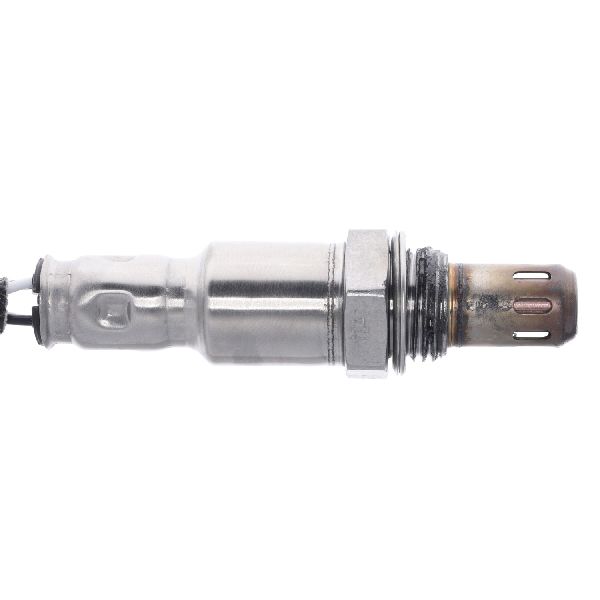
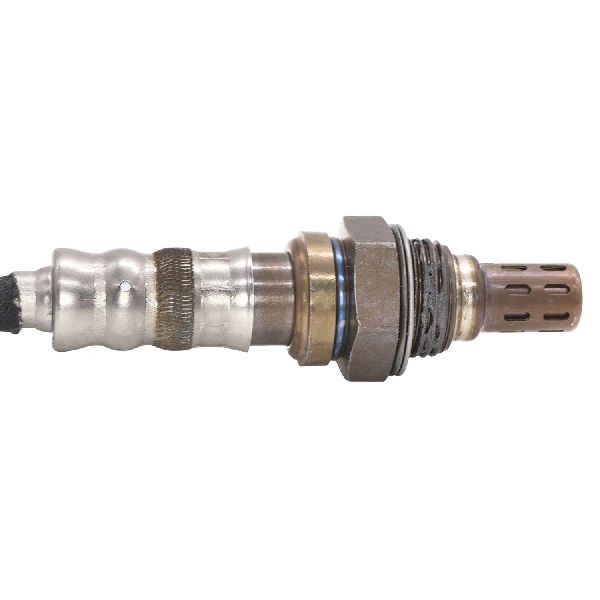
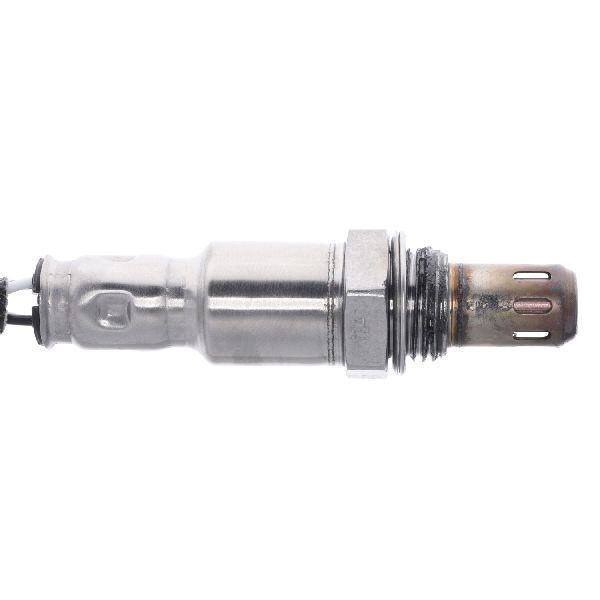
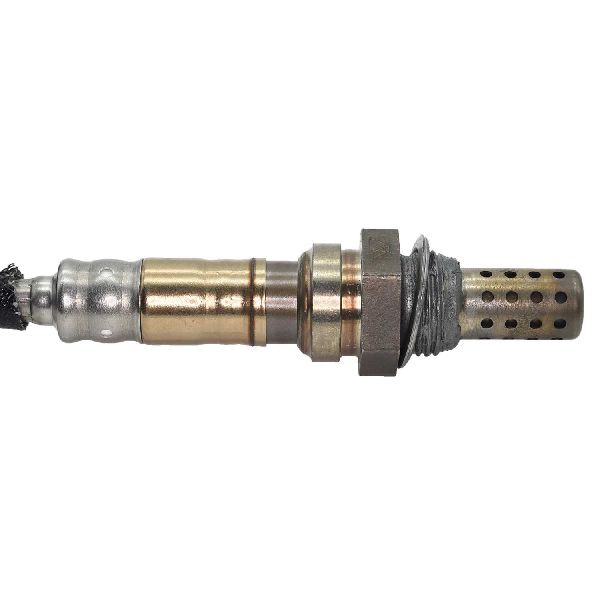
- Downstream Oxygen Sensor (Bank 2, Sensor 2)
(OEM #68224424AA)— This sensor is the most common point of failure for a P0158 code, either due to age, contamination, or an internal short circuit, which may be induced by the vehicle's voltage regulation issue.
Trusted brands: Mopar, NTK / NGK, Bosch, Denso
OEM price range: $80-$150
Aftermarket price range: $40-$110
Related Codes That Often Appear With This One
- P0152 — P0152 is 'O2 Sensor 2/1 Circuit High'. Both codes appearing together is common per TSBs #18-049-25 REV. A and #18-044-24, suggesting a systemic electrical or software issue on Bank 2.
- P0132 — P0132 is 'O2 Sensor 1/1 Circuit High'. Seeing circuit high codes for multiple O2 sensors is a strong indicator of a shared electrical problem or a needed PCM update as mentioned in TSB #18-071-22 REV. C.
- P0138 — P0138 is 'O2 Sensor 1/2 Circuit High'. Similar to other circuit high codes, its presence with P0158 points away from a single sensor failure and towards a broader issue covered by TSBs.
- P0563 — P0563 is 'Battery/System Voltage High'. Its appearance in TSBs #18-049-25 REV. A and #18-044-24 with P0158 is a critical clue, suggesting a vehicle-wide over-voltage condition could be the root cause, damaging the O2 sensors. The PCM flash corrects this behavior.
Technical Service Bulletins (TSBs) & Recalls
- 18-049-25 REV. A: For 2024 manual transmission Gladiators, lists P0158 with P0152 and, critically, P0563 (Battery/system voltage high), to be fixed by a PCM software update.
- 18-071-22 REV. C: For 2022 models, groups P0158 with a large number of other O2 sensor circuit high and heater circuit high codes, suggesting a common electrical or software cause fixed by a PCM reflash.
- 18-006-26 REV.A: For 2021 models, also lists P0158 with a cluster of other sensor circuit high codes, reinforcing the likelihood of a software-related fix.
- 18-039-24: For 2023 models, explicitly links P0158, P0152, and P0563 (System Voltage High), with the repair being a PCM software reprogram.
Platform-Specific Known Issues
- TSB-Indicated Software Fault: TSBs #18-049-25 REV. A, #18-071-22 REV. C, and #18-044-24 all list P0158 as one of several DTCs that may be resolved with a PCM software update. The inclusion of P0563 (System Voltage High) in these TSBs is a strong indicator that the root cause is a software-based voltage regulation fault that can damage the O2 sensors, not just a simple sensor failure.
- Recurring Code After Sensor Replacement: A forum user on JeepGladiatorForum.com reported a P0158 code at very low mileage (2,200 miles). The dealer replaced the O2 sensor, but the Check Engine Light returned the next day with the same code, indicating the sensor itself was not the root cause. This experience supports the TSB guidance that a software issue is often the primary problem.
- Multiple O2 Sensor and PCM Failures: → Shop Oxygen Sensor Another owner on JeepGladiator
Mechanic-Grade Diagnostic Values
- Downstream O2 Sensor (B2S2) Voltage - Live Data — expected: A relatively stable voltage, typically between 0.5V and 0.8V on a warm, running engine.. Failure: Voltage is stuck high, at or near 0.9V to 1.0V, and does not change.
- O2 Sensor Heater Circuit Resistance — expected: Approximately 4 to 30 Ohms when measured across the two heater circuit pins on a disconnected, cold sensor.. Failure: Infinite resistance (Open Loop) or zero resistance (short circuit) indicates a failed heater element inside the sensor.
- Harness Signal Wire Voltage Test (Sensor Unplugged) — expected: Near 0.5V reference voltage from the PCM with key-on, engine-off.. Failure: If the voltage on the signal wire in the harness is stuck high (e.g., 5V or 12V), it indicates a short-to-power in the wiring harness itself, not a faulty sensor.
Scan Tool Commands That Help
- wiTECH (Dealer Tool): Flash PCM / Reprogram Module — This is the required function to apply software updates specified in TSBs like #18-049-25 REV. A and #18-044-24, which often resolve a group of 'circuit high' codes including P0158.
- Advanced OBD-II Scanner (e.g., iCarsoft, BlueDriver): Live Data Graphing — Used to visually confirm if the B2S2 voltage is stuck high versus fluctuating. A flat line near 0.9V confirms the fault condition, whereas a normally functioning downstream sensor shows a much more stable, steady voltage.
Wiring & Ground Locations
- Frame Ground Points — On the frame behind the front passenger wheel, and on each side of the frame above the spare tire.. A poor engine or chassis ground can cause floating voltages and erratic sensor readings. When diagnosing electrical faults, ensuring these main ground connections are clean and tight is a crucial step.
- In-Cab Ground Studs — There are three ground points in the passenger kick panel area, and a ground stud near the center console for vehicles with front bucket seats.. These are the primary grounding locations for interior modules. While less likely to directly cause a P0158, a fault here could contribute to broader electrical issues that manifest as sensor codes.
- O2 Sensor Connector Pins — On the 4-wire sensor connector for the B2S2 sensor.. Technicians need to identify the signal, ground, and two heater circuit wires to perform multimeter tests. The two heater wires are often the same color (e.g., both black or both white). Testing for voltage and resistance at these specific pins is how a faulty sensor is differentiated from a wiring problem.
Real Owner Repair Stories
- Reddit user Round-Scientist5334 (2024 Jeep Gladiator with 3,100 miles) — Check Engine Light came on immediately after purchase.
❌ Tried (didn't work) The dealer initially replaced three of the O2 sensors, but the engine light returned within 3 miles.
✅ What actually fixed it The problem was an overcharge issue that required replacing a total of four oxygen sensors, a new PCM (Powertrain Control Module), and a new ECM (Engine Control Module) to finally resolve the recurring codes and pass smog inspection. - Jeep Gladiator Forum user (2024 Jeep Gladiator) — Check Engine Light at 4,500 miles, then again at 7,000 miles.
❌ Tried (didn't work) First dealer visit resulted in a PCM update. The light came back. Second visit, they replaced an O2 sensor. The light came back a month later.
✅ What actually fixed it The issue continued, requiring another O2 sensor replacement, another PCM-related issue, and replacement of both batteries. This highlights the recurring nature of the electrical/sensor problem on some vehicles.
When the Usual Fixes Don't Work
- While replacing the O2 sensor is a common fix, multiple owner accounts and TSBs for the 2021-2024 Gladiator platform show this often fails to resolve the issue permanently. A Reddit user reported their 2024 Gladiator required four new O2 sensors and a new PCM and ECM before the codes were resolved, demonstrating that a simple sensor swap was insufficient. This pattern strongly supports the conclusion from TSBs that a systemic software or module issue is frequently the true root cause, creating an overvoltage condition that repeatedly damages the sensors.
OEM Part Supersession History
68224424AA→N/A— This is the current Mopar part number.
Heads up: This part number is used for multiple O2 sensor locations (upstream/downstream, left/right) on various Jeep, Dodge, and Ram vehicles with the 3.6L V6 and other engines. It is critical to verify fitment for the specific Bank 2, Sensor 2 position on the Gladiator.
Model Year Variations Within This Range
- 2024: TSB #18-044-24 was released specifically for 2024 Gladiators built on or before February 01, 2024. It addresses P0158 along with other codes like P0563 (System Voltage High) and requires a PCM software update. This indicates a known software issue from the factory for this model year that was later corrected.
Helpful Videos


We Have This Part in Stock

The information in this article is provided for general reference and educational purposes only. Vehicle specifications, procedures, and part compatibility can vary by production date, trim level, and region. Always consult your vehicle's factory service manual and verify part numbers before purchasing or performing repairs. Safety-critical components such as airbags, seat belts, and braking systems should be installed by a qualified professional.
- Jeep GLADIATOR:
- 🧭 Diagnostic Flowchart
- 🎬 Helpful Videos
- 🛍️ Shop This Part
- What's Unique About the 2021-2024 Jeep GLADIATOR
- Symptoms You May Notice
- Most Likely Causes
- Rare But Worth Checking
- Diagnosis Steps
- Parts You'll Likely Need
- Related Codes That Often Appear With This One
- Technical Service Bulletins (TSBs) & Recalls
- Platform-Specific Known Issues
- Mechanic-Grade Diagnostic Values
- Scan Tool Commands That Help
- Wiring & Ground Locations
- Real Owner Repair Stories
- When the Usual Fixes Don't Work
- OEM Part Supersession History
- Model Year Variations Within This Range
- 🎟️ Get 5% Off