

P0158 on 2013-2018 Toyota RAV4: Explaining an Invalid Code and Finding the Real Fix
A P0158 code is technically impossible on a 4-cylinder RAV4. Your scanner is almost certainly misreading the real code, which is P0138. The problem is the downstream oxygen sensor (Bank 1, Sensor 2), which usually needs to be replaced. Expect to pay $60-$120 for a quality aftermarket sensor (Denso is OEM) and about 1 hour for DIY replacement.
- The code P0158 is invalid for your 4-cylinder RAV4. The actual code is P0138.
- The most likely cause is a failed downstream oxygen sensor (the one after the catalytic converter).
- Always inspect the sensor's wiring for melting or damage before buying a new sensor.
- Use a Denso or NTK branded replacement sensor, as they are the original equipment manufacturer for Toyota and are more reliable.
- Don't be alarmed if your VSC or 4WD lights come on with the check engine light; this is normal for Toyota and should clear once the engine code is fixed.
What's Unique About the 2013-2018 Toyota RAV4
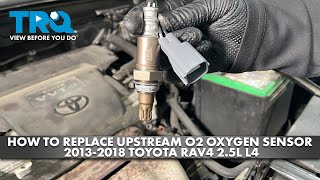
The key issue on this platform is the code itself. Getting a P0158 is a sign of a scanner error, as the 2.5L 2AR-FE engine doesn't have a 'Bank 2'. The actual problem is for code P0138. For this engine in the 2013-2018 generation, the most common fix is simply replacing the downstream O2 sensor. However, it's worth noting that Toyota issued a TSB (T-SB-0151-18) for slightly older models (2009-2012 RAV4) with the same engine where a P0138 was caused by faulty computer logic, requiring an ECM update and replacement of the *upstream* sensor to fix. 🎬 See how to replace the upstream sensor on this engine. While not officially for the 2013-2018 models, its existence shows a history of unusual causes for this code on the 2AR-FE engine and is important context if a simple sensor swap doesn't work.
Symptoms You May Notice
- Check Engine Light is on
- VSC, TRAC, and/or 4WD warning lights may also illuminate
- Decreased fuel economy
- Rough or uneven idle
- Smell of gasoline or rotten eggs from the exhaust
- Hesitation during acceleration
- Replacing the upstream Air/Fuel Ratio sensor (Bank 1, Sensor 1) first. While a faulty A/F sensor can cause issues, the P0138 code specifically points to the downstream sensor or its circuit. The only exception is the TSB for older models.
- Assuming the catalytic converter is bad. The downstream sensor's job is to monitor the converter, but a high voltage reading usually points to a rich condition or sensor fault, not a failed converter (which typically sets a P0420 code).
Most Likely Causes
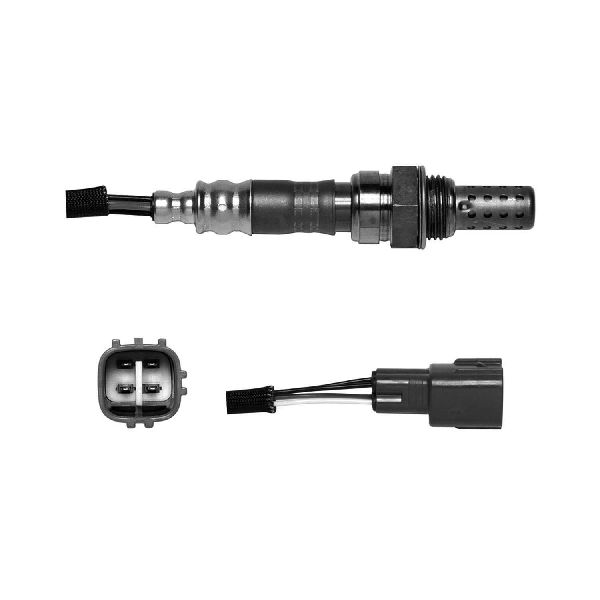
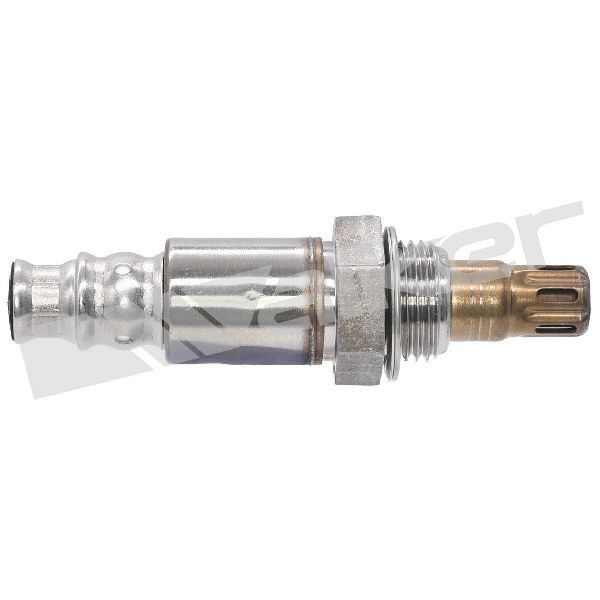
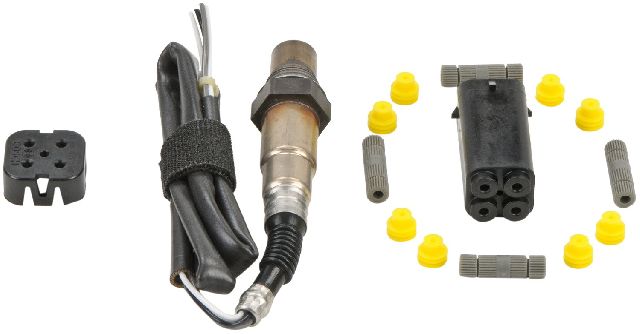
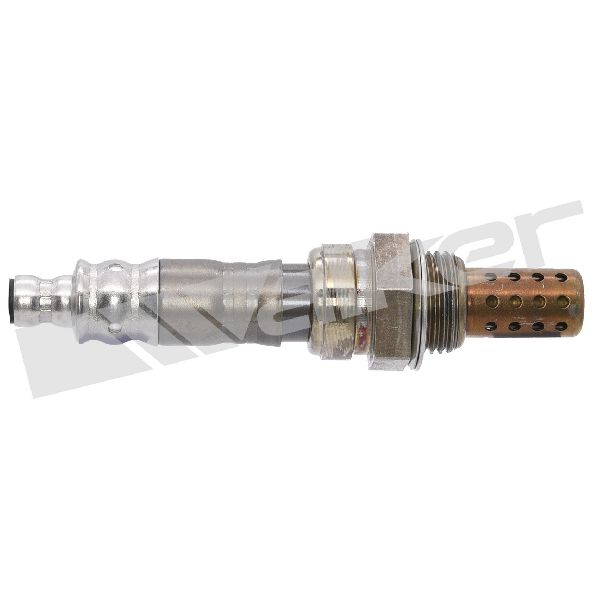
- Failed Downstream Oxygen Sensor (Bank 1, Sensor 2) 🔴 High Probability → Shop Oxygen Sensor Oxygen sensors are wear-and-tear items that fail over time due to constant exposure to extreme heat and exhaust gases. This is the most frequent cause for a P0138 code on the 2AR-FE engine.
How to confirm: Use a scan tool to monitor the live data for the 'O2S B1S2' voltage. If the engine is warm and the voltage is stuck high (e.g., 0.8V - 1.1V) and not fluctuating, the sensor has likely failed. A healthy downstream sensor should fluctuate slowly between ~0.1V and ~0.9V.
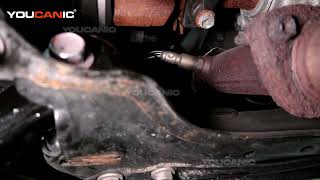
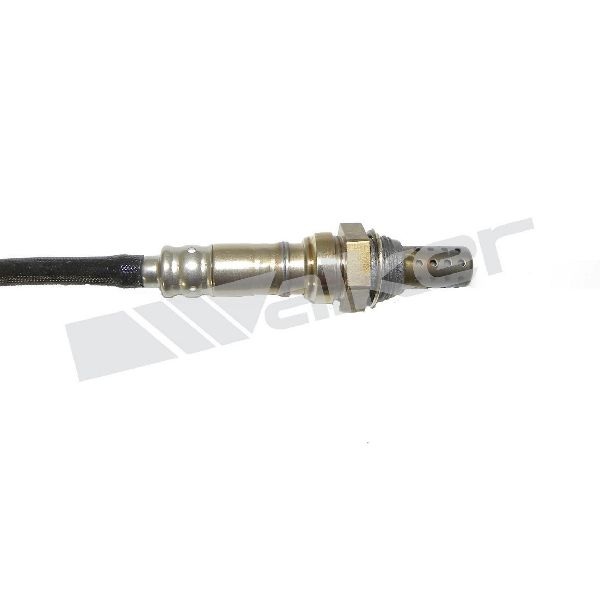
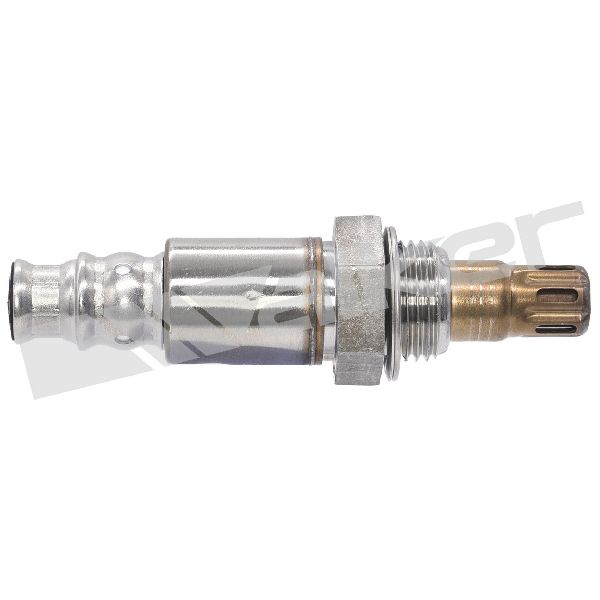
Typical fix: Replace the downstream oxygen sensor, located on the exhaust pipe after the catalytic converter. 🎬 Watch this step-by-step downstream oxygen sensor replacement guide. This often requires a special slotted socket (22mm or 7/8") to accommodate the sensor's wire.
Est. part cost: $60-$200 - Damaged Wiring or Corroded Connector 🟡 Medium Probability The sensor's wiring harness runs underneath the car and is exposed to road debris, moisture, and heat, which can lead to frayed wires, melted insulation, or corrosion in the connector pins, causing a short to voltage.
How to confirm: Visually inspect the entire wiring harness from the O2 sensor to its connection point. Look for any signs of melting, chafing, breaks, or green/white corrosion on the connector pins. Use a multimeter to check for continuity and proper voltage at the connector with the key on, engine off.
Typical fix: Repair the damaged section of the wire or clean/replace the connector. Ensure the harness is properly secured away from the hot exhaust pipe.
Est. part cost: $10-$50 - Engine Running Rich ⚪ Low Probability If the engine is genuinely running rich, the O2 sensor will correctly report a high voltage. This is less common than a sensor failure but can be caused by other failing components like leaking fuel injectors or a faulty Mass Airflow (MAF) sensor.
How to confirm: Look for other accompanying trouble codes (like P0172 - System Too Rich). Check live data for long-term fuel trim values that are significantly negative (e.g., -10% or more). Investigate potential causes like a leaking fuel injector, faulty mass airflow (MAF) sensor, or bad fuel pressure regulator.
Typical fix: Diagnose and repair the root cause of the rich condition, which could involve cleaning the MAF sensor, or replacing a fuel injector or fuel pressure regulator.
Est. part cost: $50-$400
Rare But Worth Checking
- Faulty Engine Control Module (ECM): → Shop Engine Control Module (ECM) An internal ECM fault can cause it to misinterpret the sensor signal. This is rare. A TSB (T-SB-0151-18) for older 2AR-FE engines points to an ECM logic issue causing P0138, requiring a dealer re-flash and an upstream A/F sensor replacement. While not directly applicable to 2013-2018 models, it establishes a history of ECM-related causes for this code family.
- Exhaust Leak: An exhaust leak before the oxygen sensor can sometimes, though less commonly for a high voltage code, skew sensor readings. It's more likely to cause a low voltage code (P0137), but it's worth a quick check of the exhaust flanges and gaskets for soot trails or audible leaks.
Diagnosis Steps
- Confirm the Code: First, verify the trouble code. If your scanner shows P0158, understand it's an error for P0138. Clear the codes, drive the vehicle, and see which code returns.
- Analyze Live Data: Using an OBD-II scanner, view the live data stream for 'O2 Sensor B1S2'. With the engine fully warmed up, the voltage should fluctuate slowly. If it is stuck high (above 0.8V), the sensor is likely faulty or the engine is running very rich.
- Inspect Wiring: Perform a thorough visual inspection of the downstream O2 sensor's wiring harness and connector. Look for any signs of melting, chafing, corrosion, or loose connections.
- Check for Rich Condition: If the sensor voltage isn't stuck but reads consistently high, investigate why the engine might be running rich. Check for other codes like P0172. Inspect the air filter, clean the MAF sensor, and check fuel trims.
- Test the Sensor Circuit: If wiring looks good, disconnect the sensor. With the key on, engine off, check for a reference voltage and ground at the connector to rule out a circuit issue from the ECM.
- Replace the Sensor: If the sensor voltage is stuck high and the wiring/circuit are confirmed to be good, the sensor itself is the culprit. Replace the Bank 1, Sensor 2 (downstream) oxygen sensor. Be sure to use a torque wrench and the correct O2 sensor socket for installation.
Parts You'll Likely Need
- Downstream Oxygen Sensor (Bank 1, Sensor 2)
(OEM #89465-0R040)— This is the most common failure point for a P0138 code. It is a standard wear item. Always verify fitment with your vehicle's VIN.
Trusted brands: Denso (OEM Supplier), NGK/NTK
OEM price range: $120-$180
Aftermarket price range: $60-$120
Related Codes That Often Appear With This One
- P0138 — This is the actual, correct code for the fault condition that a scanner might misreport as P0158 on a 4-cylinder engine.
- P0172 — This code means 'System Too Rich (Bank 1)' and indicates the engine is using too much fuel, which would cause the downstream O2 sensor to correctly report a high voltage.
- P0606 — On some older Toyotas, a P0606 (ECM Processor Fault) can appear as a 'ghost code' alongside P0138. In many documented cases, fixing the O2 sensor issue by replacing the sensor resolves both codes. 🎬 Watch a mechanic diagnose P0138 and related computer codes.
Technical Service Bulletins (TSBs) & Recalls
- T-SB-0151-18: Applies to 2009-2012 RAV4s (and some Camrys) with the 2AR-FE engine. It notes that a P0138 code can be caused by an ECM logic error, requiring a software update and replacement of the *upstream* A/F sensor. This is crucial context if a downstream sensor replacement on an older model doesn't fix the issue.
Platform-Specific Known Issues
- The primary vehicle-specific issue is the P0158/P0138 code misinterpretation by some OBD-II scanners. Owners should be aware that P0158 is not a valid code for this vehicle and the true fault lies with the Bank 1 Sensor 2 circuit.
Mechanic-Grade Diagnostic Values
- Downstream O2 Sensor (B1S2) Voltage — expected: Slowly fluctuating between 0.1V and 0.9V on a warm, idling engine. Should drift lazily around 0.5V if the catalytic converter is working well.. Failure: Voltage is stuck high, consistently above 0.9V and up to 1.1V or more.
- O2 Sensor Heater Circuit Resistance — expected: Approximately 11 to 16 Ohms at 68°F (20°C). Test by measuring across the two heater pins on the sensor's connector.. Failure: Resistance is significantly outside the specified range (open circuit/infinite resistance or shorted/very low resistance).
Scan Tool Commands That Help
- Toyota Techstream: Active Test: Control the Injection Volume for A/F sensor — This test, found under 'Powertrain -> Engine and ECT', allows a technician to manually make the fuel mixture richer or leaner. While performing this test, you should monitor the live data for 'O2S B1S2'. A healthy downstream sensor will show a voltage change in response to the forced rich/lean commands. If the voltage remains stuck high, it strongly points to a faulty sensor or circuit, rather than an actual rich condition.
Wiring & Ground Locations
- Engine Block/Cylinder Head Grounds — Common Toyota practice is to have main engine ground straps from the valve cover to the chassis, often near the strut towers. Also check for smaller ground wires bolted directly to the cylinder head or engine block.. A poor or corroded engine ground can cause floating voltages on sensor circuits. The ECM relies on a stable ground reference to interpret the low-voltage signal from the O2 sensor. An unstable ground can make the signal appear artificially high, triggering a P0138.
- A/F Sensor Fuse/Relay — Typically located in the main fuse/relay box in the engine compartment. Look for a fuse labeled 'A/F HEATER' or similar.. While a blown fuse usually causes a heater *circuit* code (like P0141), a problem in the heater power supply (fuse or relay) can sometimes affect the sensor's overall operation and contribute to incorrect signal voltage readings.
- Harness Chafe Points — Inspect the wiring harness where it passes near metal brackets (like ECM brackets), the upper control arms, and shock towers. Also check where the harness runs close to the hot exhaust components.. Vibration can cause the harness to rub through its protective sheathing, exposing wires. If the O2 sensor signal wire chafes and shorts to a power source wire within the same harness, it will cause a constant high voltage reading and trigger P0138.
Real Owner Repair Stories
- TundraSolutions Forum (2006 Toyota Tundra (V8, but principle is relevant)) — P0138 and P0158 codes (high voltage downstream on both banks).
❌ Tried (didn't work) Initial diagnosis pointed to the downstream O2 sensors or a wiring issue.
✅ What actually fixed it Replacing both *front* Air/Fuel Ratio sensors resolved the codes for the *rear* sensors. The user cited a Toyota technician's rule of thumb: 'whenever the voltage is high, change the front sensors, if it is low, change the rear sensors.'
When the Usual Fixes Don't Work
- While the P0138 code directly implicates the Bank 1 Sensor 2 (downstream) and its circuit, there is strong anecdotal evidence from Toyota technicians and owners that a high voltage reading can be caused by failing upstream Air/Fuel Ratio sensors. The logic is that failing upstream sensors can create an unstable fuel control environment that the downstream sensor correctly reports as a problem, even though the downstream sensor itself is functional. A TSB for slightly older models with the same engine also points to an upstream sensor replacement (in conjunction with an ECM reflash) as the fix for a P0138. Therefore, if a downstream sensor replacement does not resolve the code, the upstream A/F sensor should be the next component to investigate, not just the wiring or ECM.
OEM Part Supersession History
89465-0R040 (Toyota OEM)→Denso 234-4512 (OEM Supplier Equivalent)— Denso is the original equipment manufacturer for Toyota. The 234-4512 is their aftermarket part number that is built to the same OE specifications.
Heads up: Beware of counterfeit Denso sensors sold on platforms like eBay or Amazon. Fake sensors often have incorrect resistance values or poor construction, leading to immediate or premature failure. Purchase from reputable auto parts retailers.
Diagnostic Flowchart
Other Known Issues on This Vehicle
Issues unrelated to this code that are worth knowing about as an owner of this generation:
- Torque Converter Shudder 🔴 High — Common on 2013-2015 models. Occurs under light throttle between 25-50 mph, feels like driving over rumble strips. (Ref: T-SB-0023-15 (Rev2) and Warranty Enhancement Program (ZH1) were issued, but are now expired.)
- HVAC Blower Motor Failure 🟠 Medium — Often fails after 80,000 miles. Symptoms include no airflow, intermittent operation, or fan only working on the highest speed (which points to the resistor).
- Infotainment System Glitches 🟡 Low — Widespread reports of the Entune system freezing, rebooting, or having poor Bluetooth connectivity, typically after 40,000 miles. (Ref: Software updates were released but may not fix all issues.)
- EVAP Canister Failure 🟠 Medium — Can fail around 100,000-110,000 miles, leading to EVAP codes like P0441, P0442, or P0446.
Used vs. New Parts: Buying Guide for This Vehicle
When a used part is the smart pick: For this specific repair, a used part is NEVER recommended. Oxygen sensors are a wear-and-tear component with a finite lifespan, similar to spark plugs or brake pads. Installing a used sensor is likely to lead to a repeat failure in a short amount of time.
What to inspect on the donor part:
- Not applicable. Do not purchase a used oxygen sensor.
OEM-only on this vehicle (don't cheap out):
- While not strictly 'OEM-only', using the OEM supplier (Denso) or another top-tier brand like NTK is highly recommended. Cheap, unbranded sensors are notorious for failing quickly or being out-of-spec from the factory.
Aftermarket brands forum-validated for this vehicle:
- Denso (OEM supplier)
- NTK
Brands owners have reported issues with on this vehicle:
- Unbranded, 'no-name' sensors from online marketplaces like eBay and Amazon should be avoided. There is a high risk of receiving a counterfeit or low-quality part that will not perform correctly.
Real Owner Stories
Aggregated from forums and TSBs cited above. Mileages and costs reflect what owners reported in those sources.
2011 RAV4
Symptoms: The vehicle had a P0138 trouble code.
What fixed it: The issue was resolved by replacing the Bank 1 Sensor 2 oxygen sensor. Forum members recommended using the Denso brand for the replacement part.
Source hint: RAV4World Forums
2006 RAV4
Symptoms: The owner reported a P0138 code along with the VSC and 4WD lights being illuminated on the dashboard.
What fixed it: The problem was identified as the downstream oxygen sensor (Bank 1, Sensor 2), which is the most likely culprit for this combination of symptoms.
Source hint: Reddit r/rav4club
2009-2012 RAV4 with 2AR-FE engine
Symptoms: A persistent P0138 code, even after the downstream oxygen sensor was replaced.
What fixed it: The official fix per the TSB was to perform an ECM software update and replace the upstream A/F sensor due to a logic error in the vehicle's computer.
Source hint: T-SB-0151-18
Related OBD-II Codes
Frequently Asked Questions
My OBD-II scanner is showing code P0158 for my 2014 RAV4, but I can't find any information on it. What does it mean?
When the Check Engine Light came on for P0138, my VSC and 4WD warning lights also lit up. Is this related?
Where is the Bank 1, Sensor 2 oxygen sensor located on my RAV4?
What brand of oxygen sensor is recommended for a 2013-2018 RAV4?
I replaced the downstream O2 sensor on my older 2AR-FE engine, but the P0138 code returned. What now?
Could a bad fuel injector cause a P0138 code on my RAV4?
What special tool do I need to replace the downstream O2 sensor?
Helpful Videos
We Have This Part in Stock

The information in this article is provided for general reference and educational purposes only. Vehicle specifications, procedures, and part compatibility can vary by production date, trim level, and region. Always consult your vehicle's factory service manual and verify part numbers before purchasing or performing repairs. Safety-critical components such as airbags, seat belts, and braking systems should be installed by a qualified professional.
- Toyota RAV4:
- 🧭 Diagnostic Flowchart
- 🎬 Helpful Videos
- 🛍️ Shop This Part
- What's Unique About the 2013-2018 Toyota RAV4
- Symptoms You May Notice
- Most Likely Causes
- Rare But Worth Checking
- Diagnosis Steps
- Parts You'll Likely Need
- Related Codes That Often Appear With This One
- Technical Service Bulletins (TSBs) & Recalls
- Platform-Specific Known Issues
- Mechanic-Grade Diagnostic Values
- Scan Tool Commands That Help
- Wiring & Ground Locations
- Real Owner Repair Stories
- When the Usual Fixes Don't Work
- OEM Part Supersession History
- Other Known Issues on This Vehicle
- Used vs. New Parts: Buying Guide for This Vehicle
- Real Owner Stories
- 2011 RAV4
- 2006 RAV4
- 2009-2012 RAV4 with 2AR-FE engine
- Related OBD-II Codes
- Frequently Asked Questions
- 🎟️ Get 5% Off