

P0170 on 2011-2016 Chevrolet Cruze 1.4L Turbo: Fuel Trim Faults and Fixes
On the 1.4L Turbo Cruze, P0170 (Fuel Trim Malfunction) is almost always a companion to code P0171 (System Too Lean) and is caused by a failed PCV system. The most common fix is replacing the entire engine valve cover, which contains a failed diaphragm, and inspecting the intake manifold for a bad check valve. Expect to pay $80-$150 for an aftermarket valve cover.
- P0170 on a 1.4L Cruze almost always means you have a large vacuum leak from the PCV system, and you will likely also have a P0171 code.
- The most common failure is a two-part p
What's Unique About the 2011-2016 Chevrolet Cruze
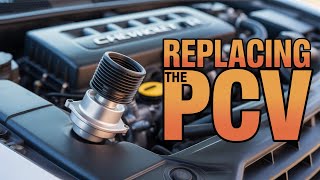
The 2011-2016 Cruze with the 1.4L turbo engine has a well-documented, widespread issue with its Positive Crankcase Ventilation (PCV) system design. Unlike many vehicles with a simple, separate PCV valve, the Cruze integrates a critical rubber diaphragm into the valve cover. A check valve in the intake manifold frequently fails, allowing turbocharger pressure into the engine crankcase, which then ruptures the diaphragm in the valve cover. This creates a massive vacuum leak that the ECM cannot compensate for, triggering the P0170 and P0171 codes.
Symptoms You May Notice
- Check Engine Light is on
- Rough or unstable idle
- Loud hissing or whistling noise from the top of the engine
- Hesitation or lack of power during acceleration
- Stalling at stops
- Oil being forced out of the oil fill cap or other seals
- Increased oil consumption
- Replacing the oxygen (O2) sensors. While a lean code is related to the O2 sensor's reading, the sensor is usually reporting the problem correctly, not causing it.
- Replacing the Mass Air Flow (MAF) sensor. While a dirty or faulty MAF can cause fuel trim issues, it is not the common cause for this specific vehicle's P0170/P0171 codes.
Most Likely Causes
- Ruptured PCV Diaphragm in Valve Cover 🔴 High Probability The diaphragm is a known weak point, and its failure is often caused by a separate failure of the intake manifold check valve. The part is integrated into the valve cover and cannot be replaced separately. GM issued a special coverage program (N202299080) to extend the warranty on this part due to the high failure rate.
How to confirm: With the engine running, listen for a distinct hissing or whistling sound from the PCV port on the valve cover. You can also try to remove the oil fill cap; if there is a very strong suction holding it down, the diaphragm is likely torn. Placing a finger over the small breather hole on the PCV cap will cause the noise to stop and the idle to change, confirming the leak.
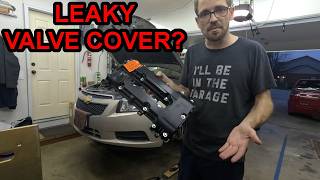
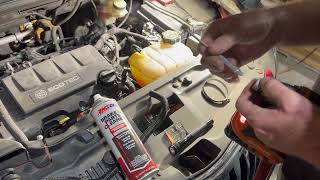
Typical fix: Replace the entire engine valve cover assembly. 🎬 Watch: Step-by-step valve cover replacement guide It is critical to also inspect the intake manifold check valve to prevent repeat failure.
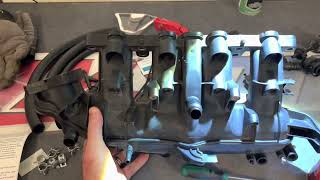
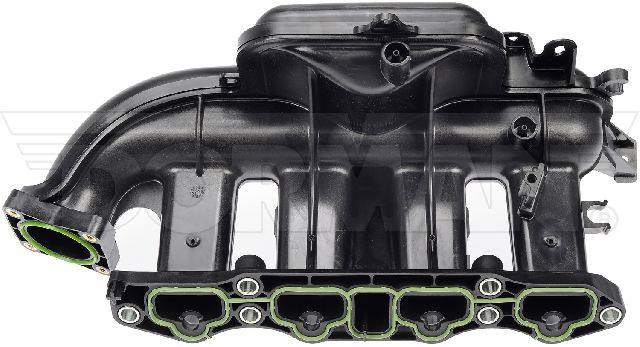
Est. part cost: $80-$150 - Failed Intake Manifold Check Valve 🔴 High Probability → Shop Engine Intake Manifold The small, orange check valve inside the intake manifold can become dislodged or damaged. This allows boost pressure to enter the crankcase, which directly causes the valve cover diaphragm to rupture. Its failure is the root cause of the most common issue.
How to confirm: Remove the PCV hose from the intake manifold and visually inspect the port. You should see a small, orange, cone-shaped check valve. If it is missing or damaged, the manifold has failed.
Typical fix: Replace the entire intake manifold. Alternatively, some aftermarket kits (e.g., from CruzeKits.com) provide an external check valve that can be installed in the PCV hose line, which is a more permanent and cost-effective solution.
Est. part cost: $150-$250 for a manifold, $75 for an external fix kit. 🎬 See how to install the external PCV fix kit
- Leaking Purge Solenoid Valve ⚪ Low Probability
How to confirm: With the engine running, disconnect the electrical connector and the hose leading from the valve to the intake manifold. There should be no vacuum present at the valve's port. If you can feel suction, the valve is stuck open and creating a vacuum leak. A Reddit user reported this as the cause after replacing the valve cover and installing a PCV fix kit didn't solve the P0171 code.
Typical fix: Replace the purge solenoid valve. 🎬 Watch: How to diagnose and replace the purge valve
Est. part cost: $25-$50
Diagnosis Steps
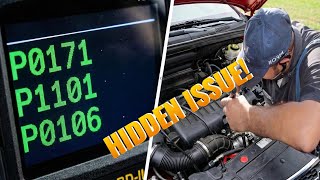
- Scan for codes. Confirm if P0170 is present with P0171, P1101, or P0106.
- With the engine running, listen for a loud hissing or whistling sound from the top of the valve cover.
- If a noise is present, place your finger over the small hole on the circular PCV cap on the valve cover. If the noise stops and the engine idle changes, the diaphragm is ruptured.
- As an alternative check, carefully try to remove the oil dipstick or oil fill cap with the engine running. If you feel strong suction or hear a loud whistle, this confirms excessive crankcase vacuum from a failed PCV diaphragm.
- Before replacing the valve cover, inspect the intake manifold. Disconnect the PCV tube that runs from the valve cover to the intake manifold. Look inside the port on the intake manifold for a small, orange, cone-shaped check valve. A flashlight may be needed. If it is missing, the intake manifold must be replaced or an external check valve kit installed to prevent the new valve cover from failing again.
- If the PCV system seems intact (or has already been repaired), check the EVAP purge solenoid for leaks by disconnecting it and checking for vacuum on the intake side port.
Parts You'll Likely Need
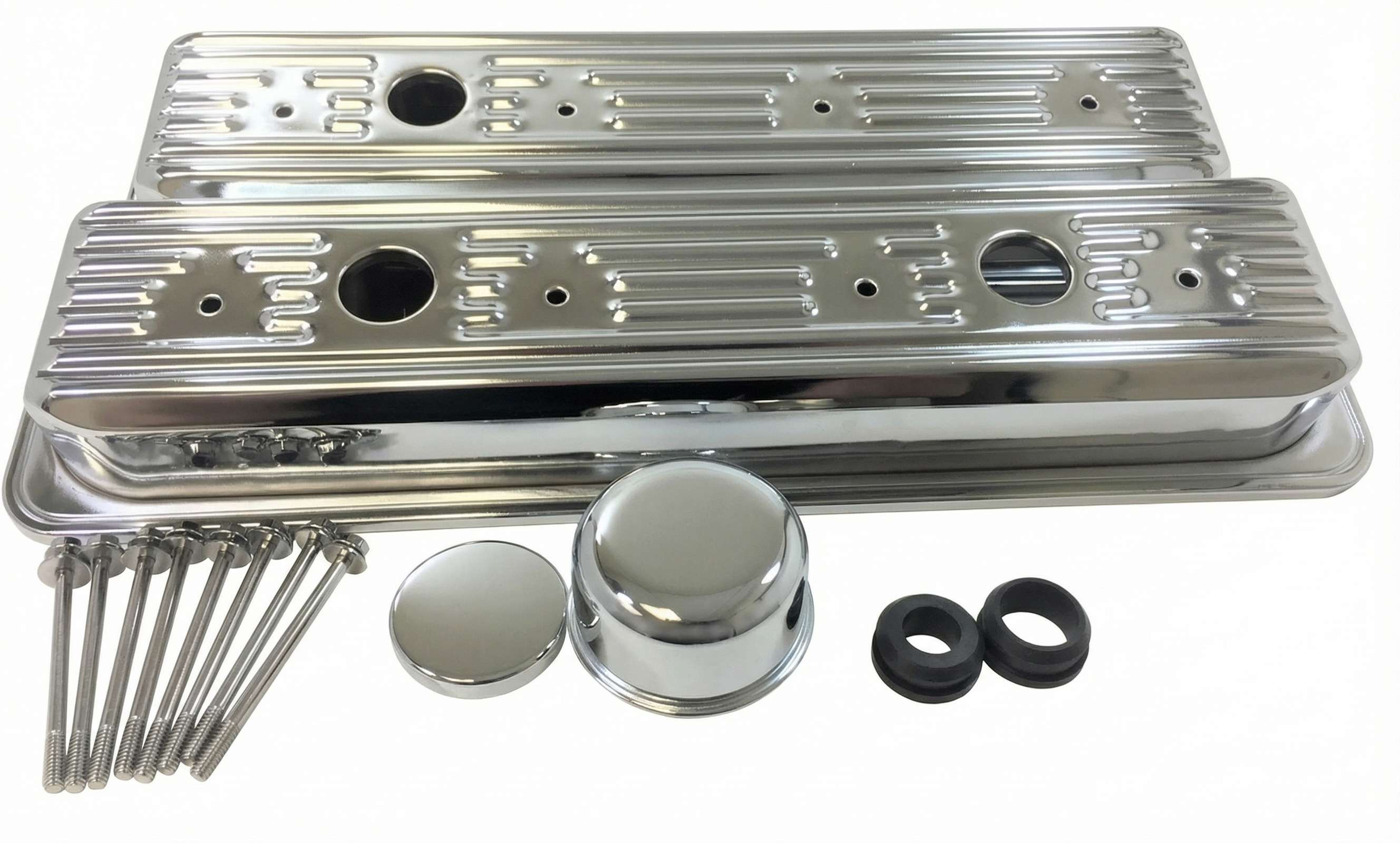
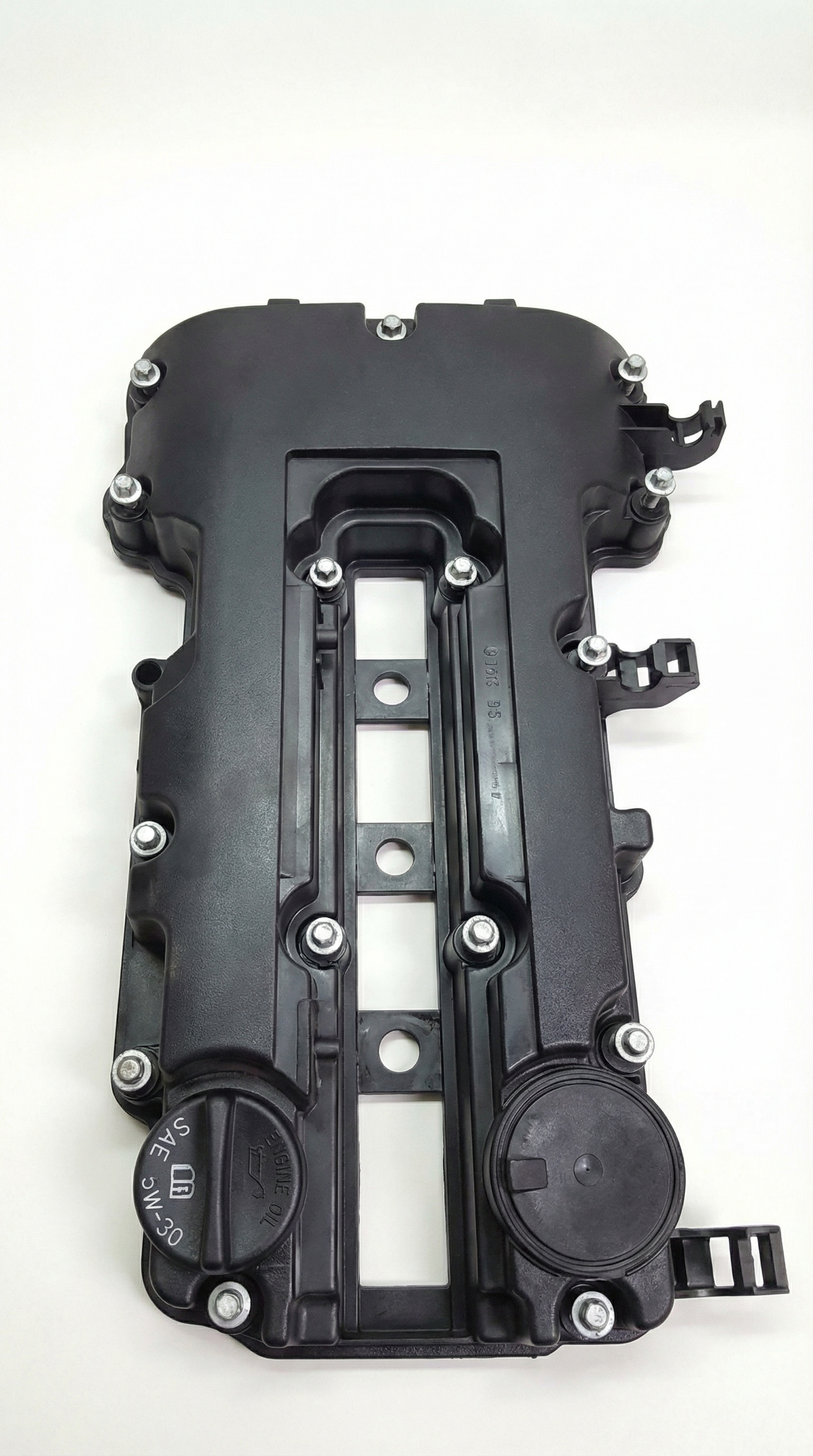
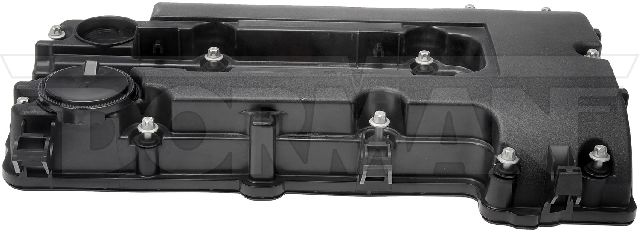
- Engine Valve Cover
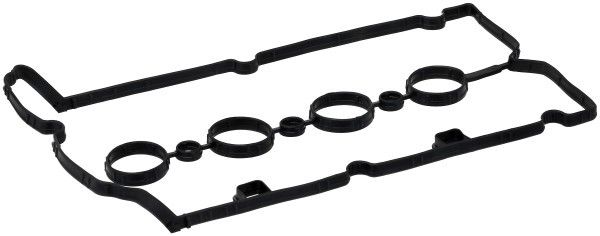
(OEM #25198874 (Supersedes 55573746))— This is the most common failure point. The PCV diaphragm inside ruptures, causing a large vacuum leak. The diaphragm is not sold separately, requiring replacement of the entire cover.
Trusted brands: ACDelco, Dorman (P/N: 264-968)
OEM price range: $150-$200
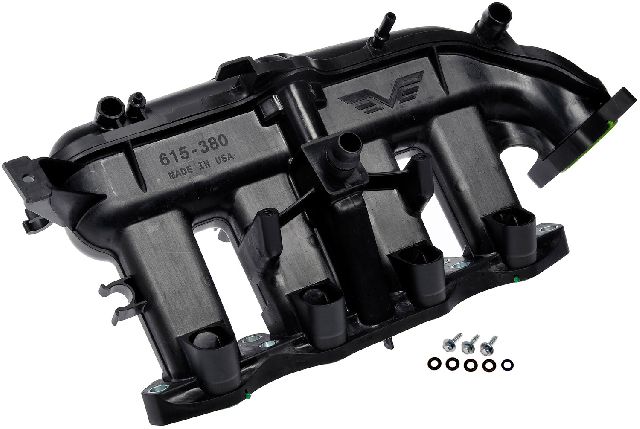
Aftermarket price range: $80-$150 - Intake Manifold
(OEM #55573171)— The check valve inside the manifold fails, which is the root cause of the valve cover failure. It must be inspected and often replaced to provide a permanent fix.
Trusted brands: ACDelco
OEM price range: $200-$300
Aftermarket price range: $150-$250 - PCV Fix Kit (External Check Valve) — An aftermarket solution to bypass the failed internal check valve in the intake manifold. This prevents having to replace the entire manifold and offers a more robust, serviceable check valve.
Trusted brands: CruzeKits.com
Aftermarket price range: $75-$90
Related Codes That Often Appear With This One
- P0171 — P0171 (System Too Lean) is the specific code for the vacuum leak condition. P0170 is a more general code indicating the fuel trim has reached its limit trying to correct the lean condition.
- P1101 — This code relates to Intake Air Flow System Performance and is often triggered by the same unmetered air (vacuum leak) from the PCV system failure.
- P0106 — This code indicates a problem with the Manifold Absolute Pressure (MAP) Sensor performance. The massive vacuum leak from the PCV failure can cause erratic readings from the MAP sensor.
Technical Service Bulletins (TSBs) & Recalls
- N202299080 (Special Coverage): Extended warranty for the engine camshaft cover (valve cover) due to PCV diaphragm failure.
- PIP5197L: Diagnostic guidance linking the intake manifold check valve to the valve cover failure.
Platform-Specific Known Issues
- GM Special Coverage N202299080: GM acknowledged the high failure rate of the PCV diaphragm in the valve cover and extended the warranty coverage for this specific part to 10 years or 120,000 miles from the vehicle's original in-service date for certain model years.
- TSB PIP5197L: This Technical Service Bulletin details the diagnostic procedure for technicians, linking the missing intake manifold check valve directly to the failure of the PCV system in the valve cover and other issues like oil consumption.
Mechanic-Grade Diagnostic Values
- Long-Term Fuel Trim (LTFT) at Idle — expected: Close to 0%, ideally within +/- 10%. Failure: Sustained values of +25% or higher. Some owners report total trims (Short Term + Long Term) reaching or exceeding +35% at idle.
- MAP Sensor Voltage (Key On, Engine Off) — expected: 4.5V - 5.0V, should be close to BARO sensor reading.. Failure: Voltage is significantly lower or shows 0V.
- MAP Sensor Voltage (Engine at Idle) — expected: 1.0V - 2.0V.. Failure: Voltage is stuck high (near the KOEO reading) or is erratic due to the massive vacuum leak from PCV failure.
- Fuel Pressure (Low-Side) — expected: 50-94 psi with the pump commanded on (engine off). At idle, it should be stable around 43-58 psi.. Failure: Pressure below 50 psi when commanding the pump on, or significantly below 43 psi at idle, could indicate a weak fuel pump, but this is a rare cause for P0170/P0171 on this vehicle.
Scan Tool Commands That Help
- GDS2 / High-End Scan Tool (e.g., Launch, Autel): Fuel Trim Reset — This function should be performed after replacing the valve cover or intake manifold. It clears the learned long-term fuel trim values, forcing the ECM to relearn the fuel mixture based on the new, correct airflow, which speeds up the validation of the repair and ensures smooth running.
Wiring & Ground Locations
- G103 — On the left front shock tower in the engine compartment.. This is a primary ground point for the Engine Control Module (ECM). A loose or corroded connection here can cause a host of erratic sensor readings and unpredictable engine behavior, potentially mimicking other faults.
- G105 — At the left front corner of the engine compartment, often near the underhood fuse block or behind the cooling fan relays.. Serves as another critical ground for the ECM and other front-end components. Ensuring this ground is clean and tight is a fundamental step in any electrical diagnosis for engine performance issues.
- MAP Sensor Connector — On the MAP sensor, which is located on the intake manifold.. When diagnosing a related P0106 or suspecting a sensor issue, this is the test point. Wire colors are typically Gray (5V Reference), Orange/Black (Low Reference/Ground), and Light Green (Signal). Verifying 5V and a clean ground (<0.1V) is essential.
Real Owner Repair Stories
- YouTube channel 'Homie Hektor' (2014 Chevrolet Cruze 1.8L (diagnosis applies to 1.4L as well)) — Check Engine Light with P0171 (System Too Lean) and P0300 (Random Misfire). Freeze frame data showed the code set at idle (686 RPM) with fuel trims at +40%.
❌ Tried (didn't work) A smoke test of the intake system showed no external leaks.
✅ What actually fixed it The EVAP purge solenoid was stuck open internally. Disconnecting the valve electrically and plugging the vacuum port to the intake manifold caused the fuel trims to immediately drop from +40% to negative values, confirming it as the source of the unmetered air. Replacing the purge solenoid resolved the lean condition.
"I Checked Everything" — The Actual Cause
- A common scenario where a smoke test may not reveal the leak is a failed EVAP purge solenoid. The valve is normally closed when the vehicle is off (when a smoke test is performed), so it will not show a leak. However, if it is mechanically stuck open, it creates a significant vacuum leak the moment the engine starts. The correct way to diagnose this is to start the engine, disconnect the electrical connector to the solenoid, and feel for vacuum at the intake manifold port of the valve.
Diagnostic Flowchart
Other Known Issues on This Vehicle
Issues unrelated to this code that are worth knowing about as an owner of this generation:
- Premature Water Pump Failure 🔴 High — Very common, often failing between 40,000 and 80,000 miles, leading to coolant leaks and potential overheating. (Ref: Special Coverage Adjustment 14371 (now expired) extended the warranty to 10 years/150,000 miles due to the high failure rate.)
- Leaking Oil Cooler / Oil Filter Housing 🟠 Medium — Common issue where seals degrade, causing oil to leak onto the exhaust manifold (creating a burning smell) or mix with the coolant ('milkshake' appearance in the reservoir).
- Cracked/Leaking Thermostat Housing 🟠 Medium — The plastic thermostat housing and water outlet are prone to cracking over time due to heat cycles, resulting in significant coolant leaks.
- Faulty Negative Battery Cable 🔴 High — A poor crimp on the negative battery cable causes a wide range of intermittent electrical issues, including flickering lights, warning messages (Service Stabilitrak), loss of power steering, and no-start conditions. (Ref: Special Coverage 14311B extended the warranty for this specific part.)
- Transmission Failure (Automatic) 🔴 High — Primarily affecting earlier models (2011-2012), owners report issues ranging from harsh shifting to complete transmission failure at relatively low mileage.
Used vs. New Parts: Buying Guide for This Vehicle
When a used part is the smart pick: For this specific P0170/P0171 repair, using used parts for the primary failure components is strongly discouraged. However, a used EVAP purge solenoid or other vacuum lines from a low-mileage donor vehicle could be a cost-effective option if those are the cause.
Donor-vehicle mileage cap: roughly under 60000 miles for the part to have meaningful remaining life.
What to inspect on the donor part:
- For any plastic or rubber components, ensure they are not brittle, cracked, or showing signs of heat stress.
- Verify the part number on the donor part matches the required part for your vehicle year.
OEM-only on this vehicle (don't cheap out):
- Engine Valve Cover: Due to the guaranteed failure of the internal PCV diaphragm, a used valve cover has a very high probability of failing shortly after installation. It is not worth the labor to install a used part.
- Intake Manifold: Similar to the valve cover, the internal check valve is a known failure point. A used manifold carries the same risk as the one being replaced.
Aftermarket brands forum-validated for this vehicle:
- ACDelco (OEM)
- CruzeKits.com (for external PCV fix kit)
Brands owners have reported issues with on this vehicle:
- Dorman: While widely available and often a complete kit, some professional mechanics and owners report a higher-than-average failure rate for Dorman valve covers and their redesigned intake manifold check valve on this specific platform. Failures within a year are mentioned in forums.
Real Owner Stories
Aggregated from forums and TSBs cited above. Mileages and costs reflect what owners reported in those sources.
2011-2016 Chevrolet Cruze 1.4L Turbo
Symptoms: A persistent P0171 code remained even after the PCV valve kit and valve cover were replaced.
What fixed it: Replacing the EVAP purge solenoid valve after discovering it was stuck open and creating a vacuum leak.
Source hint: Reddit r/cruze - P0171 After PCV Valve Kit and Valve Cover Replaced
2011-2016 Chevrolet Cruze 1.4L Turbo
Symptoms: Exhaustive PCV system failure including hissing noises and lean codes.
What fixed it: Installation of an aftermarket external check valve fix kit to address the intake manifold design flaw.
Cost: $75-$75
Source hint: CruzeTalk.com - The Definitive Gen1 PCV Issues/Fix Thread
Related OBD-II Codes
Frequently Asked Questions
Is the PCV diaphragm failure on my 2011-2016 Chevrolet Cruze covered under a warranty extension?
Why did my new valve cover fail shortly after replacement?
Can I replace just the PCV diaphragm instead of the whole valve cover?
Is there a more permanent fix for the intake manifold check valve issue than replacing the whole manifold?
How can I tell if the hissing noise on my 1.4L Turbo engine is the PCV system?
Does the P0170 code affect other vehicles besides the Cruze?
Helpful Videos
Used OEM Parts in Stock
New Aftermarket Parts Available


The information in this article is provided for general reference and educational purposes only. Vehicle specifications, procedures, and part compatibility can vary by production date, trim level, and region. Always consult your vehicle's factory service manual and verify part numbers before purchasing or performing repairs. Safety-critical components such as airbags, seat belts, and braking systems should be installed by a qualified professional.
- Chevrolet Cruze:
- 🧭 Diagnostic Flowchart
- 🎬 Helpful Videos
- 🛍️ Shop This Part
- What's Unique About the 2011-2016 Chevrolet Cruze
- Symptoms You May Notice
- Most Likely Causes
- Diagnosis Steps
- Parts You'll Likely Need
- Related Codes That Often Appear With This One
- Technical Service Bulletins (TSBs) & Recalls
- Platform-Specific Known Issues
- Mechanic-Grade Diagnostic Values
- Scan Tool Commands That Help
- Wiring & Ground Locations
- Real Owner Repair Stories
- "I Checked Everything" — The Actual Cause
- Other Known Issues on This Vehicle
- Used vs. New Parts: Buying Guide for This Vehicle
- Real Owner Stories
- 2011-2016 Chevrolet Cruze 1.4L Turbo
- 2011-2016 Chevrolet Cruze 1.4L Turbo
- Related OBD-II Codes
- Frequently Asked Questions
- 🎟️ Get 5% Off