

P0170 on 2008-2012 Chevrolet Malibu 2.4L: Fuel Trim Malfunction Causes and Fixes
On a 2008-2012 Malibu with the 2.4L engine, P0170 indicates the engine's computer can no longer maintain the proper air-fuel balance. The most common causes are a dirty or faulty Mass Airflow (MAF) sensor, vacuum leaks from cracked hoses (especially the PCV system), or a failing upstream oxygen sensor. A cracked exhaust manifold is also a very common issue on this specific engine that can cause this code. Cleaning the MAF sensor is a good first step and can often resolve the issue for under $15.
- P0170 means your Malibu's computer has lost control of the air-fuel mixture.
- Start your diagnosis with the cheapest and easiest fixes: check for obvious vacuum leaks and clean the MAF sensor.
- Be aware of the 2.4L Ecotec's tendency to consume oil, as this can foul the oxygen sensors and cause this code.
- Use a scan tool to look at live data for fuel trims and O2 sensor activity to accurately pinpoint the problem before buying parts.
What's Unique About the 2008-2012 Chevrolet Malibu
The 2.4L Ecotec engine in this generation of Malibu has a few known issues that can lead to a P0170 code. While vacuum leaks and sensor failures are common on many cars, this specific engine is also known for excessive oil consumption due to piston ring design. This oil burning can contaminate and foul the oxygen sensors, leading to incorrect readings and fuel trim problems. Additionally, a frequently cracked exhaust manifold is a well-documented problem that allows outside air into the exhaust stream, confusing the O2 sensor. Lastly, the PCV (Positive Crankcase Ventilation) system can clog, leading to pressure issues and vacuum leaks that directly impact fuel trims.
Symptoms You May Notice
- Check Engine Light is on
- Reduced fuel economy
- Engine hesitation or stumbling during acceleration
- Rough idle or stalling
- Loss of power
- Black smoke from the exhaust (if running rich)
- Strong fuel smell from the exhaust
- Replacing the oxygen sensor without checking for vacuum leaks or a dirty MAF sensor first.
- Replacing fuel injectors when the issue is actually low fuel pressure from a weak pump or clogged filter.
- Replacing the MAF and O2 sensors when the root cause is a hidden crack in the exhaust manifold.
Most Likely Causes
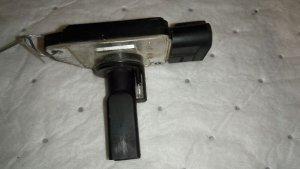
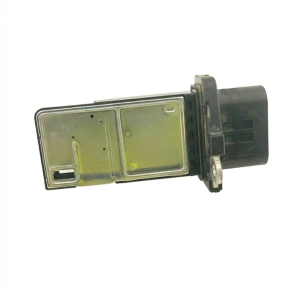
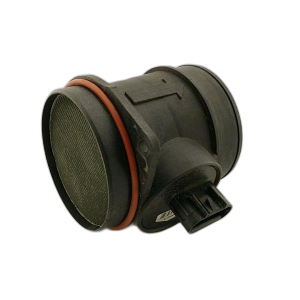
- Dirty or Faulty Mass Airflow (MAF) Sensor 🔴 High Probability → Shop Fuel Injection Air Flow Meter The MAF sensor measures the amount of air entering the engine. If it's dirty from oil vapor or debris, it will send inaccurate data to the ECM, causing incorrect fuel calculations. This is a very common cause for fuel trim codes on many vehicles.
How to confirm: Unplug the MAF sensor and see if the engine runs better (though it will set a different code). A more accurate method is to use a scan tool to monitor the MAF sensor readings at idle and under load to see if they are within the expected range. Visually inspect the sensor wires for dirt or oil contamination.
Typical fix: Clean the sensor with a dedicated MAF sensor cleaner spray. If cleaning doesn't work, the sensor needs to be replaced. This is often the first and cheapest step in diagnosis.
Est. part cost: $10-$15 (cleaner), $60-$150 (new sensor) - Vacuum Leak 🔴 High Probability With age, rubber and plastic vacuum hoses can crack, split, or become disconnected. This allows unmetered air to enter the engine after the MAF sensor, creating a lean condition that the ECM tries to correct by adding fuel. The PCV hose and intake manifold gaskets are common failure points.
How to confirm: Visually inspect all vacuum lines, the PCV hose, and the intake air duct for cracks or damage. Listen for a hissing sound at idle. A smoke test is the most effective way to find a hard-to-see leak.
Typical fix: Replace the leaking hose or gasket.
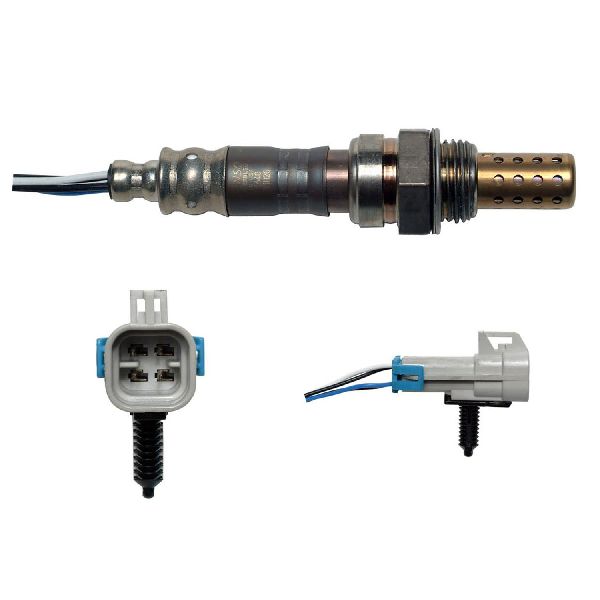
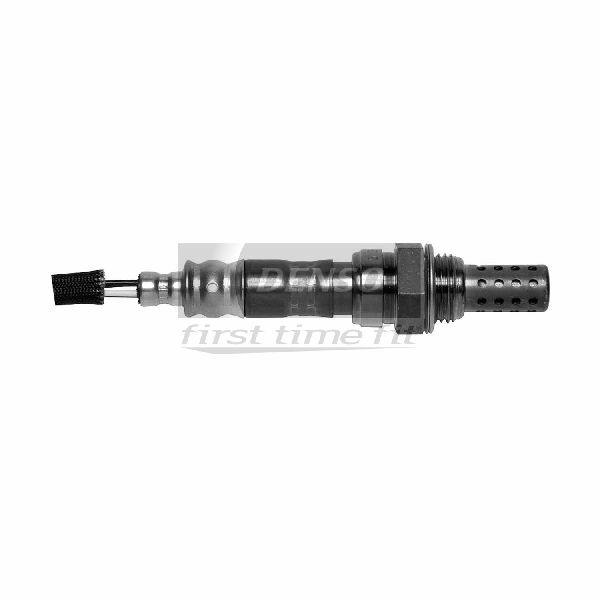
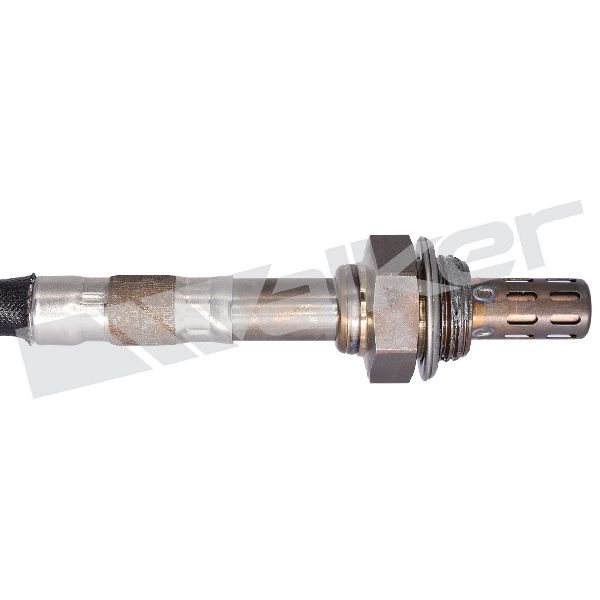
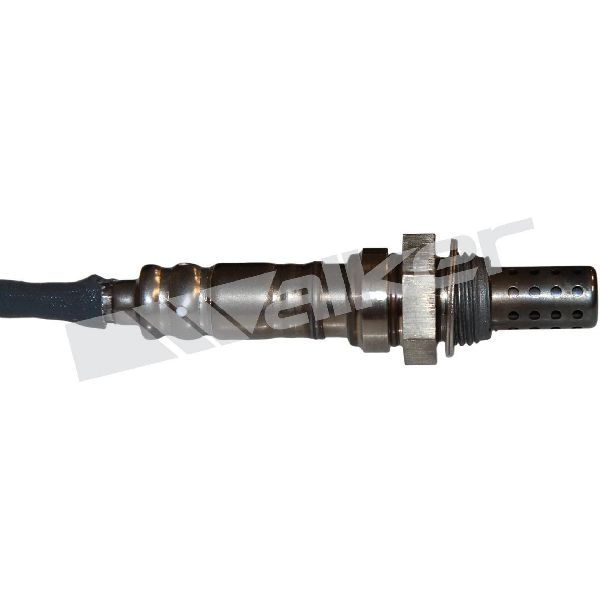
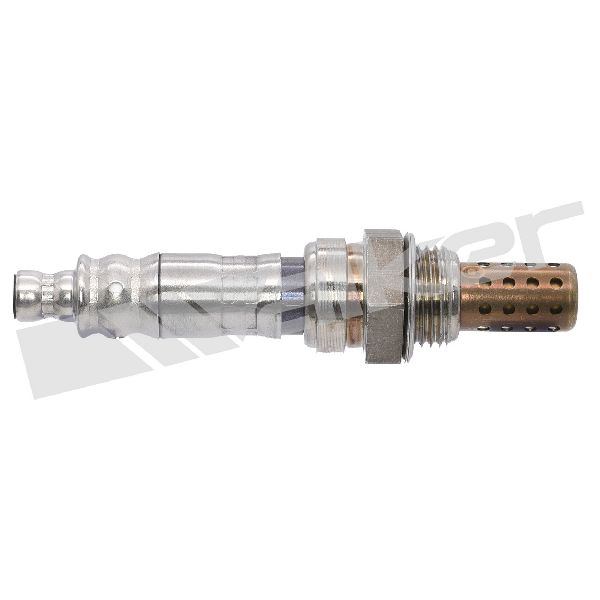
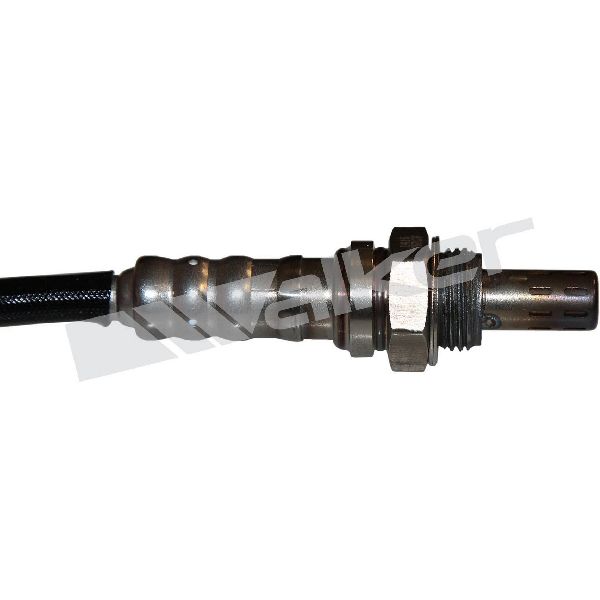
Est. part cost: $5-$50 - Failing Upstream Oxygen (O2) Sensor 🟡 Medium Probability → Shop Oxygen Sensor The upstream O2 sensor (Bank 1, Sensor 1) measures oxygen in the exhaust and is the primary sensor for fuel trim adjustments. These sensors wear out over time and can become 'lazy' or slow to respond. The oil consumption issue on the 2.4L Ecotec can also foul the sensor with deposits, causing it to fail prematurely.
How to confirm: Use a scan tool to graph the voltage of the upstream O2 sensor. A healthy sensor will switch rapidly between approximately 0.1V and 0.9V. A failing sensor will be slow to switch or have a flat-line voltage.
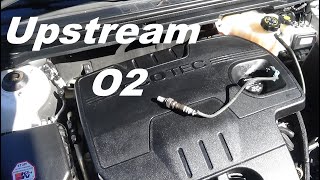
Typical fix: Replace the Bank 1, Sensor 1 oxygen sensor. 🎬 Watch: How to replace the upstream O2 sensor Using an OEM (ACDelco) or quality aftermarket (NTK, Denso) sensor is recommended.
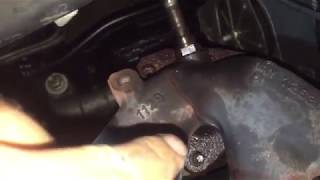
Est. part cost: $50-$120 - Cracked Exhaust Manifold 🟡 Medium Probability The original cast iron exhaust manifold on the 2.4L Ecotec is notoriously prone to cracking. A crack before the upstream O2 sensor allows oxygen to be pulled into the exhaust stream, making the sensor report a false lean condition. The ECM then adds fuel unnecessarily, maxing out the fuel trim and setting P0170.
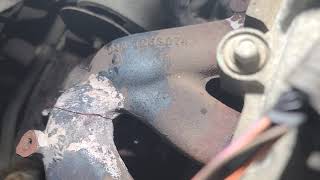
How to confirm: Visually inspect the exhaust manifold for cracks, often appearing as thin black lines of soot. 🎬 Watch: Where this manifold commonly cracks A cold start may produce a noticeable ticking or exhaust leak sound that diminishes as the metal expands and seals the crack.
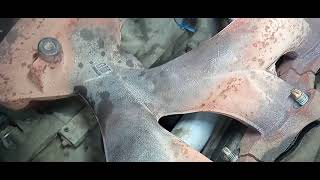
Typical fix: Replace the cracked manifold. Many owners opt for a more durable stainless steel 🎬 See this step-by-step exhaust manifold removal guide aftermarket replacement instead of another OEM cast iron part.
Est. part cost: $100-$250 (manifold), plus gaskets - Clogged or Leaking Fuel Injectors 🟡 Medium Probability Injectors can become clogged with carbon deposits over time, affecting the spray pattern and fuel delivery. One source specifically notes clogged injectors as a known cause for P0170 on the 2008-2012 Malibu. A leaking injector can cause a rich condition.
How to confirm: Perform a fuel injector balance test with a capable scan tool. You can also check the resistance of each injector with a multimeter (should be between 11-14 Ohms).
Typical fix: Run a high-quality fuel injector cleaner through the system. If that fails, the problematic injector(s) will need to be replaced.
Est. part cost: $10-$25 (cleaner), $40-$100 (per injector)
Rare But Worth Checking
- Low Fuel Pressure: A weak fuel pump or clogged fuel filter can starve the engine of fuel, causing a lean condition. Check fuel pressure at the fuel rail to confirm.
- Clogged PCV Orifice: The fixed orifice PCV system on the intake manifold can become clogged with carbon and sludge. This can increase crankcase pressure and affect air/fuel mixture, sometimes leading to blown seals. Some owners have had success cleaning this orifice with a small drill bit (by hand).
- Faulty Engine Control Module (ECM): → Shop Engine Control Module (ECM) In rare cases, the ECM itself can fail or have corrupted software, leading to a P0170 code. This should only be considered after all other possibilities have been thoroughly ruled out.
Diagnosis Steps
- Read the code with an OBD-II scanner and check for any other accompanying codes.
- Check live data on the scanner, paying close attention to Short-Term Fuel Trim (STFT) and Long-Term Fuel Trim (LTFT). Values consistently above +10% suggest a lean condition, while values below -10% suggest a rich condition. A P0170 is set when the combined trims exceed the limit, often +/- 25%.
- Visually inspect the engine bay for any obvious issues like cracked vacuum hoses, a disconnected PCV line, or a loose intake air tube.
- Inspect and clean the Mass Airflow (MAF) sensor using a dedicated cleaner. Allow it to dry completely before reinstalling.
- Carefully inspect the exhaust manifold for cracks. Listen for a ticking noise on a cold start which may indicate a leak.
- If a lean condition is suspected, perform a smoke test to check for vacuum leaks that are not visible to the naked eye.
- Use the scan tool to monitor the upstream (Bank 1, Sensor 1) oxygen sensor voltage. It should fluctuate rapidly. If it's slow or stuck, it's likely faulty.
- Check fuel pressure using a fuel pressure gauge to rule out a weak fuel pump or faulty regulator.
- If a rich condition is suspected, test the fuel injectors for proper resistance and consider a professional cleaning or balance test.
Parts You'll Likely Need
- Mass Airflow Sensor Cleaner — Cleaning the MAF sensor is the cheapest and often most effective first step in diagnosing and fixing a fuel trim issue.
Trusted brands: CRC, WD-40 Specialist
OEM price range: N/A
Aftermarket price range: $10-$15 - Upstream Oxygen Sensor (Bank 1 Sensor 1)
(OEM #12637234)— This is the primary sensor for fuel control. It's a common wear item and can be fouled by the oil consumption issues known to affect this engine.
Trusted brands: ACDelco, Denso (Part #234-4668), NTK
OEM price range: $80-$120
Aftermarket price range: $50-$90 - Mass Airflow (
Related Codes That Often Appear With This One
- P0171 — P0171 (System Too Lean) often accompanies P0170 when the fuel trim has maxed out while trying to add fuel to correct a lean condition caused by a vacuum leak or bad MAF.
- P0172 — P0172 (System Too Rich) can appear with P0170 if the fuel trim has maxed out while trying to remove fuel to correct a rich condition, such as from a leaking injector.
- P0300 — A random misfire code can be triggered because the severe air-fuel imbalance from the P0170 fault prevents proper combustion.
- P0420 — If the vehicle is run for an extended period with a rich or lean condition, it can damage the catalytic converter, leading to a P0420 (Catalyst System Efficiency Below Threshold) code.
Platform-Specific Known Issues
- Excessive oil consumption due to piston ring design can lead to fouled oxygen sensors, contributing to this code.
- The 2.4L Ecotec engine in this platform is known to develop cracks in the exhaust manifold, which can cause exhaust leaks and trigger fuel trim codes.
Mechanic-Grade Diagnostic Values
- Fuel Injector Resistance — expected: 11 to 14 Ohms. Failure: A reading of infinity (open circuit), near zero (short circuit), or a value outside the 11-14 Ohm range indicates a faulty injector.
- Fuel Pressure (cranking or at idle) — expected: 50 to 60 PSI. Failure: Pressure significantly below 50 PSI indicates a weak fuel pump or clogged filter, which can cause a lean condition.
- Engine Ground Voltage Drop (e.g., G107 on transmission) — expected: 50 mV or less. Failure: A voltage reading significantly higher than 50 mV between the ground point and the negative battery post (with the engine running) indicates a poor ground connection that can cause erratic sensor signals.
Scan Tool Commands That Help
- GDS2/Tech2: Fuel Trim Reset — After replacing a component that significantly affects the air-fuel mixture (like a MAF sensor, O2 sensor, or fixing a large vacuum leak), a fuel trim reset can clear the old learned values (LTFT) and allow the ECM to adapt to the new part more quickly.
- GDS2/Tech2: Fuel Injector Balance Test — This command individually fires each injector and measures the corresponding pressure drop in the fuel rail to identify a clogged or underperforming injector that may not be electrically faulty but is causing a lean or rich condition in one cylinder.
Wiring & Ground Locations
- G101 — Located at the front of the engine on the lower block.. This ground serves the Engine Control Module (ECM), Mass Air Flow (MAF) sensor, and Intake Air Temperature (IAT) sensor. A poor connection here can cause incorrect readings from the MAF sensor, directly impacting fuel trim calculations.
- G107 — Located on the transmission housing.. A poor ground at this location can cause erratic signals from various engine sensors controlled by the ECM, potentially leading to incorrect fuel adjustments.
Real Owner Repair Stories
- go-parts.com owner submissions (2008-2012 Chevrolet Malibu 2.4L) — Check Engine Light with P0133 (O2 Sensor Slow Response), often accompanied by fuel trim codes like P0170/P0171, and a ticking noise on cold starts.
❌ Tried (didn't work) Replacing the oxygen sensor with a generic aftermarket brand sometimes did not resolve the issue.
✅ What actually fixed it The root cause was a cracked original cast iron exhaust manifold. Replacing the manifold resolved the exhaust leak and allowed the O2 sensor to read correctly. - go-parts.com owner submissions (2008-2012 Chevrolet Malibu 2.4L with ~100,000 miles) — Check Engine Light with P0133 and related fuel trim codes.
❌ Tried (didn't work) Initial diagnostics focusing only on the sensor itself.
✅ What actually fixed it The oxygen sensor was fouled with oil deposits due to the engine's known excessive oil consumption problem related to piston rings. While replacing the sensor fixed the code temporarily, the underlying oil consumption issue needed to be addressed for a long-term fix.
"I Checked Everything" — The Actual Cause
- A common scenario for a P0170 or P0171 (lean) code on this engine is a smoke test that shows no vacuum leaks, but the actual cause is a crack in the exhaust manifold. The crack, located before the upstream O2 sensor, pulls unmetered oxygen into the exhaust stream, fooling the sensor into reporting a lean condition. This is not an intake-side leak and will not be found with a standard smoke test of the intake manifold.
Model Year Variations Within This Range
- 2009-2012: The LE9 2.4L engine was introduced in 2009 as a flex-fuel (E85) compatible version of the LE5. While mechanically very similar, the LE9 has specific components like different valves, valve seats, and fuel injectors to withstand the corrosive effects of ethanol. This introduces the flex fuel sensor as a potential, though less common, cause for fuel trim codes on LE9-equipped vehicles.
- 2008: Early 2008 models were equipped with a 4-speed automatic transmission (4T45). Partway through the 2008 model year, this was replaced by the 6-speed automatic (6T40) for better fuel economy. This does not directly affect the cause of a P0170 code but is a key difference within the model range.
- 2010: Partway through the 2010 model year, the small GM badges were removed from the front doors. This is a cosmetic change with no impact on diagnostics.
Diagnostic Flowchart
Other Known Issues on This Vehicle
Issues unrelated to this code that are worth knowing about as an owner of this generation:
- Excessive Oil Consumption 🔴 High — Very common, especially on 2010-2012 models. Can start as early as 60,000 miles. Caused by poorly designed piston rings. (Ref: A class-action lawsuit led to an extended warranty for this issue on some GM vehicles with this engine, like the Equinox.)
- Timing Chain Stretch and Tensioner Failure 🔴 High — Common around 100,000 miles. Caused by faulty tensioners and exacerbated by low oil levels from oil consumption. Can lead to catastrophic engine damage.
- Cracked Exhaust Manifold 🟠 Medium — Extremely common across all model years. Can happen at various mileages. Results in a loud ticking noise, especially when cold.
- Electric Power Steering (EPS) Failure 🔴 High — Common issue where power steering assist is suddenly lost. Caused by faulty torque sensors or the EPS motor/module. (Ref: Recall 14116 / TSB 15356 provided an extended warranty (10 years/150k miles), which may now be expired for most vehicles.)
- Transmission Control Module (TCM) Failure 🟠 Medium — Can cause harsh shifting, getting stuck in gear, and setting codes like P0700.
- Coolant Leaks 🟠 Medium — Water pumps and intake manifold gaskets are known to leak coolant.
Used vs. New Parts: Buying Guide for This Vehicle
When a used part is the smart pick: For this vehicle, obtaining a used exhaust manifold from a junkyard is a very sensible option, provided it is inspected thoroughly for cracks. As it is a solid metal component without electronic parts, a good used one functions identically to a new one. Other large mechanical parts like an intake manifold could also be sourced used.
Donor-vehicle mileage cap: roughly under 80000 miles for the part to have meaningful remaining life.
What to inspect on the donor part:
- For an exhaust manifold, check for hairline cracks, especially around the collector and flange welds. Look for a fine black soot line which indicates a crack.
- Ensure all mounting studs are intact and not broken off.
- Check for excessive rust or pitting, particularly in salt-belt regions, which can compromise the integrity of the metal.
- Verify the donor vehicle was not in a severe front-end collision that could have damaged the part.
OEM-only on this vehicle (don't cheap out):
- Engine Control Module (ECM) - Aftermarket or used ECMs can have compatibility and programming issues. A new or remanufactured unit programmed with the vehicle's VIN is the most reliable option.
Aftermarket brands forum-validated for this vehicle:
- Oxygen Sensors: NTK and Denso are highly recommended OEM suppliers. Owners report fewer issues with these brands compared to generic or some Bosch sensors on this platform.
- Exhaust Manifold: Dorman is a widely available aftermarket option that often includes new gaskets and hardware. For a performance upgrade, ZZPerformance (ZZP) offers stainless steel headers that are a popular choice for Ecotec engines.
Brands owners have reported issues with on this vehicle:
- Generic/unbranded oxygen sensors: Forum users and mechanics have reported that cheap, unbranded O2 sensors may not meet the specific switching frequency required by the GM ECM, leading to the code returning even after replacement.
Real Owner Stories
Aggregated from forums and TSBs cited above. Mileages and costs reflect what owners reported in those sources.
2010-2012 Chevrolet Malibu 2.4L Ecotec — ~60000 miles
Symptoms: Excessive oil consumption leading to fouled oxygen sensors and fuel trim issues.
What fixed it: The context notes that piston ring design issues required an extended warranty/lawsuit resolution for oil consumption, which contributes to sensor fouling.
Source hint: vehicle_specific_issues and known_issues sections regarding piston ring design
2008-2012 Chevrolet Malibu 2.4L Ecotec — ~100000 miles
Symptoms: Loud ticking noise especially when cold; P0170 code set due to false lean condition.
What fixed it: Replacement of the cracked cast iron exhaust manifold, often with a more durable stainless steel aftermarket version.
Source hint: common_causes: Cracked Exhaust Manifold
Related OBD-II Codes
Frequently Asked Questions
Is there an extended warranty for the oil consumption issues on my 2010-2012 Malibu 2.4L?
Why is my 2.4L Ecotec making a ticking noise on cold starts along with the P0170 code?
Should I use a specific brand of oxygen sensor for my Bank 1 Sensor 1 replacement?
Can I just clean the MAF sensor on my Malibu instead of buying a new one?
What are the common failure points for vacuum leaks on the 2008-2012 Malibu 2.4L?
Is the P0170 code related to the timing chain issues known on this engine?
Helpful Videos
Used OEM Parts in Stock
New Aftermarket Parts Available

The information in this article is provided for general reference and educational purposes only. Vehicle specifications, procedures, and part compatibility can vary by production date, trim level, and region. Always consult your vehicle's factory service manual and verify part numbers before purchasing or performing repairs. Safety-critical components such as airbags, seat belts, and braking systems should be installed by a qualified professional.
- Chevrolet Malibu:
- 🧭 Diagnostic Flowchart
- 🎬 Helpful Videos
- 🛍️ Shop This Part
- What's Unique About the 2008-2012 Chevrolet Malibu
- Symptoms You May Notice
- Most Likely Causes
- Rare But Worth Checking
- Diagnosis Steps
- Parts You'll Likely Need
- Related Codes That Often Appear With This One
- Platform-Specific Known Issues
- Mechanic-Grade Diagnostic Values
- Scan Tool Commands That Help
- Wiring & Ground Locations
- Real Owner Repair Stories
- "I Checked Everything" — The Actual Cause
- Model Year Variations Within This Range
- Other Known Issues on This Vehicle
- Used vs. New Parts: Buying Guide for This Vehicle
- Real Owner Stories
- 2010-2012 Chevrolet Malibu 2.4L Ecotec — ~60000 miles
- 2008-2012 Chevrolet Malibu 2.4L Ecotec — ~100000 miles
- Related OBD-II Codes
- Frequently Asked Questions
- 🎟️ Get 5% Off