

P0170 on 2012-2020 Chevrolet Sonic 1.4L Turbo: Fuel Trim Causes and Fixes
On the 1.4L Turbo Sonic, P0170 almost always points to a vacuum leak from a failed PCV system. The most likely cause is a ruptured diaphragm in the valve cover, often caused by a missing check valve in the intake manifold. Expect to replace the valve cover and potentially the intake manifold. This is a very common, well-documented issue for this engine.
- P0170 on a 1.4L Turbo Sonic is almost certainly a P0171 (System Too Lean) condition caused by a vacuum leak.
- The most common cause is a failed PCV system, specifically a ruptured diaphragm in the valve cover.
- Before replacing the valve cover, you MUST inspect the intake manifold for a small, orange check valve. If it's missing, the intake manifold must also be replaced to prevent a repeat failure.
- Diagnosing this issue often requires no special tools; a strong suction at the oil cap when the engine is running is a clear sign of failure.
What's Unique About the 2012-2020 Chevrolet Sonic
The 1.4L Turbo engine used in the Sonic (and Chevy Cruze/Trax/Buick Encore) has a well-documented, widespread issue with its Positive Crankcase Ventilation (PCV) system. A small, orange check valve inside the intake manifold is prone to failing and getting sucked into the engine. This failure exposes a diaphragm in the valve cover to excessive vacuum and boost pressure, causing it to rupture. This creates a massive unmetered vacuum leak through the crankcase, which is the root cause for P0170 or the more specific P0171 (System Too Lean) code in the vast majority of cases for this engine.
Symptoms You May Notice
- Check Engine Light is on
- Rough or unstable idle
- Hissing or whistling noise from the engine bay at idle, often near the valve cover
- Poor acceleration and reduced engine power
- Increased oil consumption, sometimes with blue smoke from the exhaust
- Stalling when coming to a stop
- Difficulty removing the oil cap while the engine is running due to strong vacuum
- Replacing the oxygen sensors first. While a faulty O2 sensor can cause fuel trim issues, on the 1.4L Turbo Sonic, the PCV system is a far more likely culprit for a lean-related P0170/P0171 code.
- Replacing only the valve cover without checking the intake manifold check valve. If the check valve is missing, the new valve cover's PCV diaphragm will be exposed to boost pressure and will fail again in a short amount of time, often within a few hundred miles.
- Assuming a bad MAF sensor. While possible, the symptoms of the PCV failure (hissing, strong vacuum at oil cap) are very specific and point directly to the more common issue.
Most Likely Causes
- Ruptured PCV Diaphragm in Valve Cover 🔴 High Probability The diaphragm is a known weak point. Its failure is almost always a direct consequence of another common issue: a missing intake manifold check valve, which exposes the diaphragm to excessive vacuum and boost pressure it was not designed to handle.
How to confirm: With the engine running, try to remove the oil cap. If there is very strong suction holding it down, the PCV diaphragm has likely failed. You may also hear a distinct hissing sound from a small hole on top of the circular PCV valve assembly on the valve cover. Some owners also report suction at the oil dipstick tube.
Typical fix: Replace the entire valve cover assembly. The PCV diaphragm is integrated into the cover and is not sold separately by GM. This repair MUST be done in conjunction with inspecting and, if necessary, replacing the intake manifold.
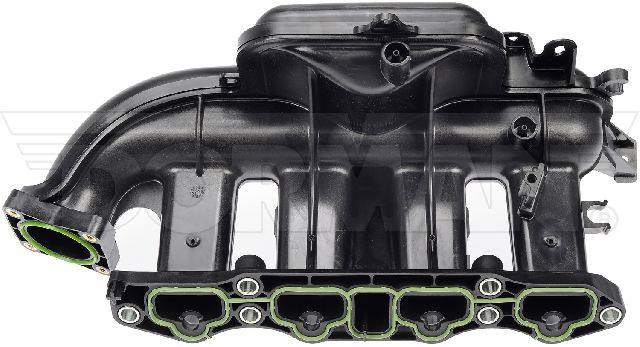
Est. part cost: $60-$150 - Missing/Damaged Intake Manifold Check Valve 🔴 High Probability → Shop Engine Intake Manifold This small, orange, rubber check valve inside the intake manifold is known to degrade, break, and get ingested by the engine. Its absence directly leads to the failure of the PCV diaphragm in the valve cover by exposing it to turbocharger boost pressure.
How to confirm: Remove the PCV hose from the intake manifold port. Using a flashlight, look inside the port. You should see a small, orange, circular check valve with a cross in the middle. If it is missing or damaged, the intake manifold must be replaced. Wiping inside the port with a cotton swab can help confirm its presence if oil is obscuring the view.
Typical fix: Replace the entire intake manifold. The check valve is not available as a separate part from GM. Some aftermarket companies, like Dorman, have released redesigned intake manifolds that claim to prevent this failure.
Est. part cost: $150-$300 - Leaking or Cracked PCV Hoses/Tubes 🟡 Medium Probability The plastic and rubber hoses in the PCV system can become brittle over time due to heat and oil exposure, leading to cracks and vacuum leaks. The corrugated tube between the intake manifold and the air intake duct is a common failure point.
How to confirm: Perform a visual inspection of all PCV hoses for obvious cracks or damage. A smoke test is the most effective way to find small, hard-to-see leaks.
Typical fix: Replace the damaged hose or tube.
Est. part cost: $20-$50
Rare But Worth Checking
- Faulty Mass Airflow (MAF) Sensor: → Shop Fuel Injection Air Flow Meter A dirty or failing MAF sensor can under-report the amount of air entering the engine, causing the ECM to command less fuel and create a lean condition. Cleaning it with a dedicated MAF sensor cleaner is a good first step before replacement.
- Failing Upstream Oxygen Sensor: → Shop Oxygen Sensor An O2 sensor that is old or contaminated may incorrectly report a lean condition, causing the ECM to add fuel unnecessarily until it hits its limit. This is less common than the PCV system failures and should be considered after vacuum leaks are ruled out.
- Clogged Fuel Injectors: If injectors are dirty and not delivering enough fuel, it can lead to a lean condition. This is less likely than the common PCV vacuum leaks.
- Leaking Valve Cover Gasket: While the primary issue is the internal PCV diaphragm, an external leak from the valve cover gasket itself can also introduce unmetered air and contribute to lean codes. Oil leaking into the spark plug wells is a common symptom.
Diagnosis Steps
- Check for Stored Codes: Confirm P0170 is present and check for other related codes like P0171, P1101, or P0300.
- Inspect PCV System for Vacuum Leaks: With the engine running at idle, listen for a distinct hissing or whistling sound around the valve cover.
- Perform Oil Cap Test: Carefully 🎬 Watch: How to diagnose the P0171 lean code try to remove the engine oil cap with the engine idling. If there is extremely strong suction holding it on, the PCV diaphragm in the valve cover has almost certainly ruptured. The engine idle may stumble or change significantly when the cap is removed.
- Inspect Intake Manifold Check Valve: This is the most critical step. Disconnect the PCV tube from the port on the driver's side of the intake manifold. Use a light to look inside the port. If the small, orange, circular valve is missing, the intake manifold is faulty and must be replaced.
- Check Fuel Trims: Use an OBD-II scanner to monitor Short-Term (STFT) and Long-Term (LTFT) fuel trims. High positive numbers (LTFT consistently at or near +25%) confirm a significant lean condition that the ECM is trying to correct.
- Perform a Smoke Test: If the PCV system appears intact but a vacuum leak is still suspected, introduce smoke into the intake system to check for other vacuum leaks from cracked hoses, gaskets, or seals.
- Inspect MAF and Oxygen Sensors: If no vacuum leaks are found, inspect and clean the MAF sensor. Monitor the upstream O2 sensor's voltage with a scanner to ensure it is fluctuating correctly.
Parts You'll Likely Need
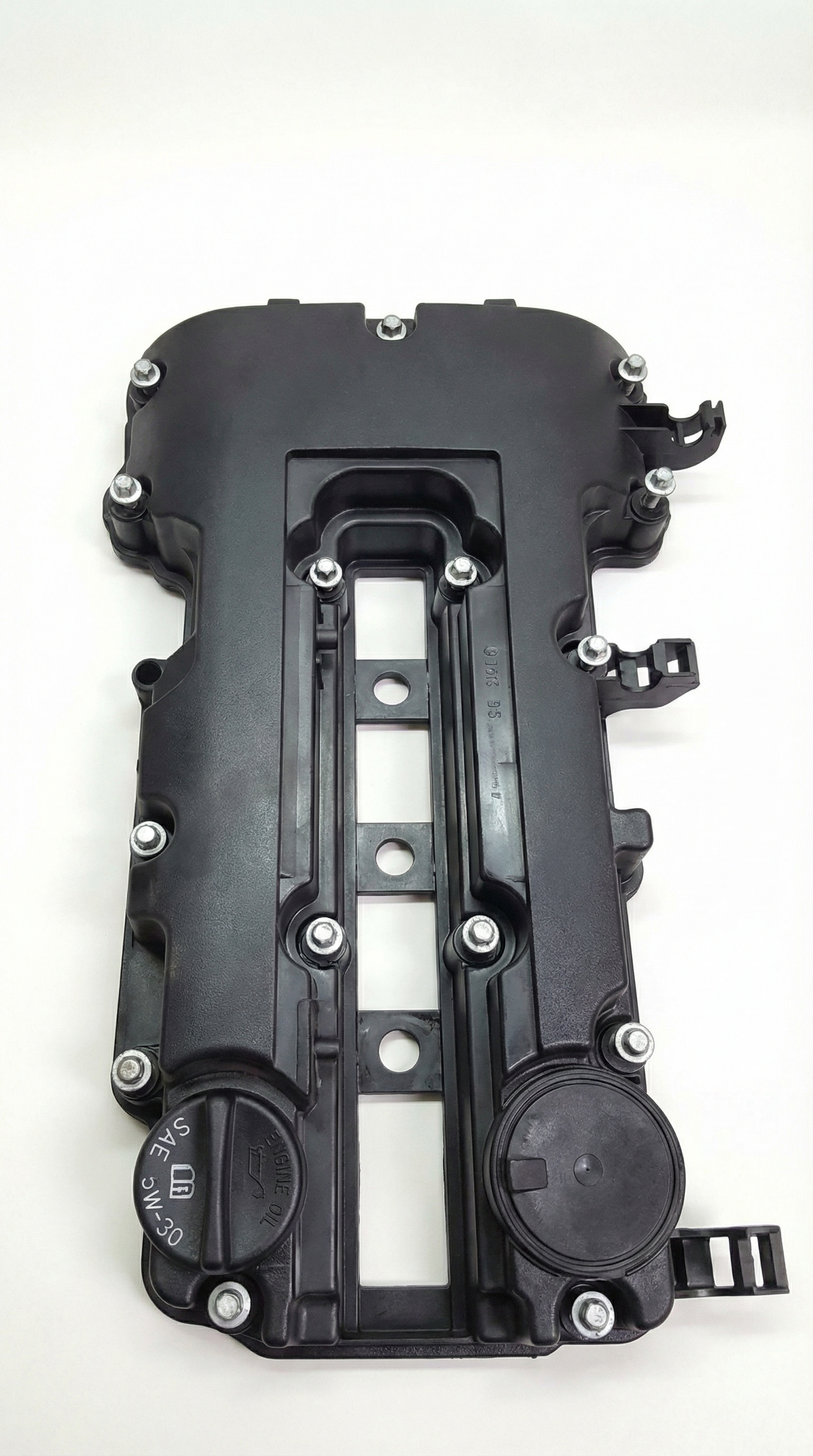
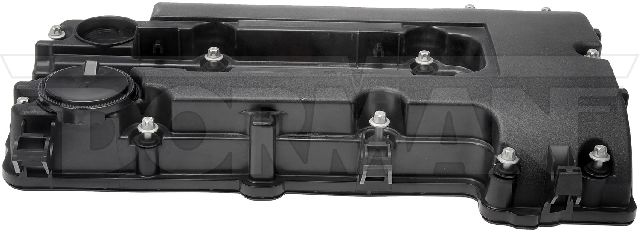
- Valve Cover / Camshaft Cover
(OEM #25198874, 25200449)— The integrated PCV diaphragm is the most common failure point causing a massive vacuum leak. The entire cover must be replaced.
Trusted brands: ACDelco, Dorman (part # 264-968)
OEM price range: $100-$180
Aftermarket price range: $60-$120 - Intake Manifold
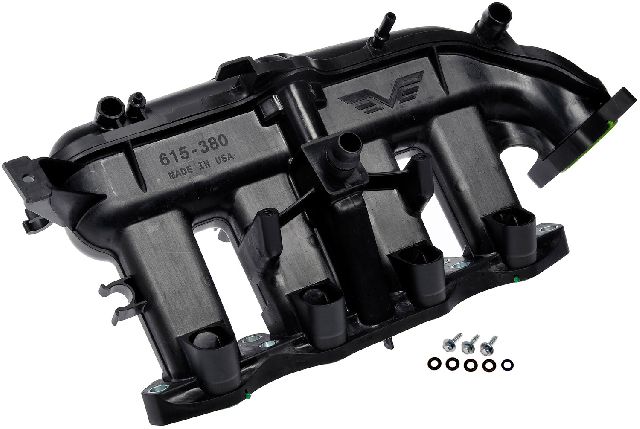
(OEM #55573171, 25200449)— The internal check valve fails and falls out, which then causes the valve cover PCV diaphragm to rupture. It is a required replacement if the check valve is found to be missing.
Trusted brands: ACDelco, Dorman (part # 615-380, often sold as a kit with the valve cover) 🎬 See this step-by-step replacement walkthrough
OEM price range: $250-$350
Aftermarket price range: $150-$250
Related Codes That Often Appear With This One
- P0171 — P0171 (System Too Lean Bank 1) is the more specific code that usually accompanies or follows P0170. P0170 indicates a general fuel trim problem, and P0171 specifies that the problem is a lean condition.
- P1101 — This code relates to MAF sensor performance and is often triggered by the large unmetered airflow from the PCV system leak, which the ECM cannot reconcile with expected values.
- P0300 — A random/multiple cylinder misfire code can be set because a severe lean condition prevents proper combustion.
- P0106 — This MAP/Barometric Pressure Sensor code can be triggered by the erratic vacuum signal caused by the failed PCV system.
- P0299 — Turbocharger Underboost. This can be triggered if the PCV system failure creates a significant enough vacuum/boost leak that affects turbo performance.
Technical Service Bulletins (TSBs) & Recalls
- PIP5197 (multiple revisions A-J): Mentions diagnos
Platform-Specific Known Issues
- A GM service bulletin (PIP5197 and its revisions like PIP5197J) addresses issues related to the PCV system on the 1.4L engine, including codes like P0171 and P0106, pointing towards the valve cover and intake manifold issues. The bulletin provides diagnostic steps for checking crankcase pressure and inspecting the intake check valve.
- Some aftermarket solutions exist, such as kits from companies like CruzeKits.com, which provide an external check valve to install, potentially avoiding the need to replace the entire intake manifold if that is the only failure.
Mechanic-Grade Diagnostic Values
- Long-Term Fuel Trim (LTFT) at Idle — expected: -5% to +5%. Failure: Sustained positive values of +25% or higher, with some cases showing it maxed out near +34%.
- Mass Airflow (MAF) Sensor Reading at Warm Idle — expected: Approximately 1.4-1.8 g/s.. Failure: Significantly lower readings, or readings that do not increase smoothly with RPM.
- Low-Pressure Fuel System Pressure (at idle) — expected: 50-60 PSI.. Failure: Pressure below 40-45 PSI, erratic readings, or pressure that drops under load.
- Upstream O2 Sensor (Bank 1 Sensor 1) Voltage — expected: Constantly fluctuating between approximately 0.1V and 0.9V on a warm engine.. Failure: Slow or no fluctuation, or voltage stuck at a specific level.
Scan Tool Commands That Help
- GDS2 (GM Tech Tool): Injector Balance Learn Procedure — After replacing a fuel injector, this procedure may be required to reset learned values and ensure the ECM correctly controls the new component for optimal fuel trim.
Wiring & Ground Locations
- G107 — On the lower left rear of the engine block.. This is a primary engine and powertrain ground. A loose or corroded connection here can cause erratic sensor readings and contribute to various powertrain codes.
- G105 — On the frame rail, under the battery tray.. A critical ground point mentioned in a GM service bulletin (PIC5574A) for causing multiple intermittent electrical issues. A poor ground here can affect ECM and sensor operation.
- G101 — At the front of the engine, lower block area.. Reported to be a ground for the Engine Control Module (ECM) and the Mass Air Flow (MAF) sensor. A fault here could directly impact the sensors involved in fuel trim calculation.
Real Owner Repair Stories
- Reddit user on r/cruze (Chevrolet Cruze 1.4L Turbo (same engine platform)) — Persistent P0171 code.
❌ Tried (didn't work) Replaced the valve cover with a Dorman part., Installed a PCV valve fix kit.
✅ What actually fixed it The user found a vacuum leak at the EVAP purge valve. They identified it by spraying water around the valve with the engine running and noticing a change in idle speed.
"I Checked Everything" — The Actual Cause
- A persistent P0171 after addressing the common PCV valve cover and intake manifold issues was traced to a leaking EVAP purge valve. This type of leak can sometimes be missed by a smoke test if the valve is not commanded open during the test, but was found by spraying water on the component and listening for an idle change.
OEM Part Supersession History
25198874 (Valve Cover)→25209141— Standard part revision by the manufacturer.
Heads up: The new part number is a direct replacement for the old one.55573171, 55577314, 55581014 (Intake Manifold)→25200449 (current GM PN)— Standard part revision by the manufacturer.
Heads up: Aftermarket alternatives like the Dorman 615-380 are designed to replace these OEM numbers and claim an improved internal check valve design.
Model Year Variations Within This Range
- 2012-2020: The 1.4L LUJ/LUV engine and its PCV system design remained consistent throughout the entire model run for the Chevrolet Sonic. The causes, symptoms, and repair procedures for a P0170 code are identical across all years.
Diagnostic Flowchart
Other Known Issues on This Vehicle
Issues unrelated to this code that are worth knowing about as an owner of this generation:
- Leaking Water Pump 🔴 High — Very common, often occurs between 60,000 and 120,000 miles. Can lead to overheating if not addressed. (Ref: GM Special Coverage Adjustment 14371A/B extended warranty coverage to 10 years or 150,000 miles for some model years.)
- Cracked/Leaking Plastic Thermostat Housing 🟠 Medium — Common failure item due to plastic construction becoming brittle from heat cycles. Often replaced with more durable aftermarket aluminum versions.
- Leaking Plastic Coolant Outlet (Water Outlet) 🟠 Medium — Similar to the thermostat housing, this plastic component is prone to cracking and causing coolant leaks. Many owners upgrade to aftermarket aluminum parts.
- Turbocharger Coolant Line Leaks 🟠 Medium — The coolant feed and return lines for the turbocharger can leak at the fittings or crimps over time.
- Oil Leaks from Oil Cooler/Filter Housing 🟠 Medium — The seals and gaskets in the oil filter housing/cooler assembly can degrade over time, leading to significant oil leaks.
Used vs. New Parts: Buying Guide for This Vehicle
When a used part is the smart pick: For this specific repair involving the valve cover and intake manifold, using a part from a salvage yard is strongly discouraged. The failure is due to a well-known design flaw in non-serviceable components (PCV diaphragm and check valve). A used part has a very high likelihood of having the same defect or failing shortly after installation.
What to inspect on the donor part:
- Not applicable, as used parts are not recommended for this repair.
OEM-only on this vehicle (don't cheap out):
- While not strictly OEM-only, it is critical to use a NEW part, either from GM/ACDelco or a reputable aftermarket manufacturer that has addressed the original design flaw.
Aftermarket brands forum-validated for this vehicle:
- Dorman (Intake Manifold 615-380, Valve Cover 264-968, Kit 615-380KIT) is a widely available aftermarket option that claims to have a redesigned intake manifold to prevent the check valve failure.
Brands owners have reported issues with on this vehicle:
- While Dorman is a common choice, at least one owner reported long-term issues with a Dorman intake manifold causing a PCV line solenoid to stick, and recommended using a genuine GM part instead for longevity. Buyers should inspect any aftermarket part for quality control issues like casting flash before installation.
Real Owner Stories
Aggregated from forums and TSBs cited above. Mileages and costs reflect what owners reported in those sources.
2012-2020 Chevrolet Sonic 1.4L Turbo
Symptoms: Check engine light on with P0171, and the owner found it very difficult to remove the oil cap while the engine was running due to a strong vacuum.
What fixed it: Replacement of the valve cover because the PCV diaphragm had failed.
Source hint: SonicOwnersForum.com
2011-2016 Chevrolet Cruze 1.4L Turbo
Symptoms: Repeated valve cover failures and lean codes. The owner discovered the root cause was a missing orange check valve inside the intake manifold.
What fixed it: Replacing the intake manifold to restore the check valve and prevent further PCV diaphragm ruptures.
Source hint: Cruzetalk.com
2012-2020 Chevrolet Sonic 1.4L Turbo
Symptoms: P0170/P0171 codes present; mechanics identified the valve cover and intake manifold as the primary culprits due to the widespread nature of the PCV design flaw.
What fixed it: Replacing the valve cover and intake manifold.
Source hint: Reddit r/ChevySonic
Related OBD-II Codes
Frequently Asked Questions
I hear a whistling noise from my 1.4L Sonic's engine bay and have a P0170 code. What is likely wrong?
Can I just replace the PCV diaphragm on my 2014 Sonic to fix the P0170 code?
Why did my valve cover fail again shortly after I replaced it?
Is there a GM service bulletin for these PCV and fuel trim issues on the 1.4L Turbo engine?
Are there any alternatives to buying a whole new intake manifold if my check valve is missing?
Does the Chevrolet Sonic share this P0170/P0171 issue with other GM vehicles?
Helpful Videos
Used OEM Parts in Stock
New Aftermarket Parts Available


The information in this article is provided for general reference and educational purposes only. Vehicle specifications, procedures, and part compatibility can vary by production date, trim level, and region. Always consult your vehicle's factory service manual and verify part numbers before purchasing or performing repairs. Safety-critical components such as airbags, seat belts, and braking systems should be installed by a qualified professional.
- Chevrolet Sonic:
- 🧭 Diagnostic Flowchart
- 🎬 Helpful Videos
- 🛍️ Shop This Part
- What's Unique About the 2012-2020 Chevrolet Sonic
- Symptoms You May Notice
- Most Likely Causes
- Rare But Worth Checking
- Diagnosis Steps
- Parts You'll Likely Need
- Related Codes That Often Appear With This One
- Technical Service Bulletins (TSBs) & Recalls
- Platform-Specific Known Issues
- Mechanic-Grade Diagnostic Values
- Scan Tool Commands That Help
- Wiring & Ground Locations
- Real Owner Repair Stories
- "I Checked Everything" — The Actual Cause
- OEM Part Supersession History
- Model Year Variations Within This Range
- Other Known Issues on This Vehicle
- Used vs. New Parts: Buying Guide for This Vehicle
- Real Owner Stories
- 2012-2020 Chevrolet Sonic 1.4L Turbo
- 2011-2016 Chevrolet Cruze 1.4L Turbo
- 2012-2020 Chevrolet Sonic 1.4L Turbo
- Related OBD-II Codes
- Frequently Asked Questions
- 🎟️ Get 5% Off