

P0170 on 1995-2001 Ford Explorer 4.0L SOHC: Fuel Trim Malfunction Causes and Fixes
P0170 on a 1995-2001 Ford Explorer 4.0L SOHC indicates a Fuel Trim Malfunction on Bank 1. This is most often caused by a dirty or faulty Mass Air Flow (MAF) sensor or significant vacuum leaks, particularly from deteriorated intake manifold gaskets or a cracked PCV hose elbow. Cleaning the MAF sensor and thoroughly inspecting for vacuum leaks are the most effective first steps.
- P0170 means the fuel adjustment on the passenger side of the engine has hit its limit.
- Before buying any parts, inspect for vacuum leaks, especially the PCV hose elbow behind the throttle body.
- The second step should be to clean the Mass Air Flow (MAF) sensor with dedicated cleaner.
- Given the age of the vehicle, the intake manifold gaskets are a highly probable cause if a vacuum leak is suspected but not easily found.
- This code is often accompanied by P0171 (lean code), pointing strongly towards unmetered air (vacuum leaks) or a faulty MAF sensor.
What's Unique About the 1995-2001 Ford Explorer
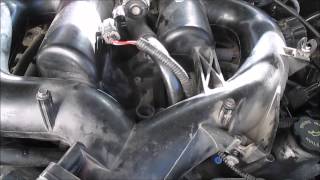
The second-generation Explorer with the 4.0L SOHC V6 is well-known for specific issues that can lead to fuel trim problems. While a dirty MAF sensor is a primary suspect on many Fords, this particular engine is notoriously prone to vacuum leaks from deteriorated upper and lower intake manifold gaskets (O-rings). A classic symptom of this is a rough idle when cold that improves 🎬 Watch: Diagnose rough idle and lean codes on this engine as the engine warms up and the plastic intake manifold expands, partially sealing the leak. Another extremely common failure point is the PCV hose elbow near the throttle body, which degrades over time from oil vapor exposure, causing a significant unmetered air leak. These vacuum leaks often manifest as lean codes (P0171/P0174), but can also present as the more general P0170 as the PCM struggles to make a consistent correction.
Symptoms You May Notice
- Check Engine Light is on
- Rough or fluctuating idle, sometimes stalling at stops
- Hesitation or stumbling during acceleration
- Reduced fuel economy
- Engine stalling, especially at stops
- Misfiring
- Hissing sound from the engine bay indicating a vacuum leak
- Replacing the O2 sensor without checking for vacuum leaks or a dirty MAF sensor first. While the O2 sensor can be the cause, it is often just reporting the problem created by another component.
- Replacing the fuel pump without verifying fuel pressure with a gauge.
- Assuming the intake gaskets are fine without performing a smoke test. Hairline cracks are very common and often not visible.
Most Likely Causes
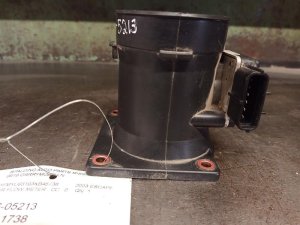
- Dirty or Faulty Mass Air Flow (MAF) Sensor 🔴 High Probability → Shop Fuel Injection Air Flow Meter The MAF sensor's delicate wires can become contaminated with dirt and oil over time, leading to inaccurate airflow readings. A dirty air filter can accelerate this contamination. This is a very common issue on many Ford vehicles from this era.
How to confirm: Inspect the MAF sensor wires for contamination. Use a scan tool to monitor MAF sensor readings (grams/second) at idle and compare them to specifications (approximately 4.0 g/s for a 4.0L engine). Unplugging the MAF sensor may cause the engine to run better (in a default mode), indicating the sensor is providing bad data.
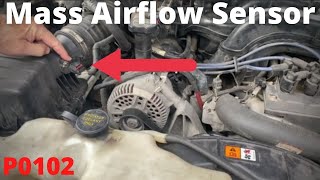
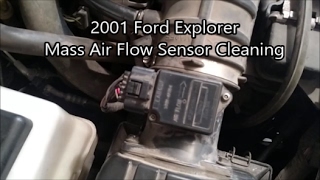
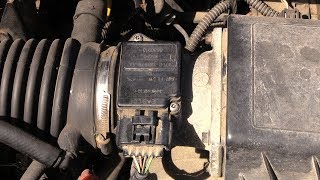
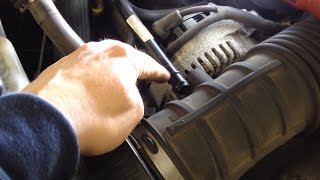
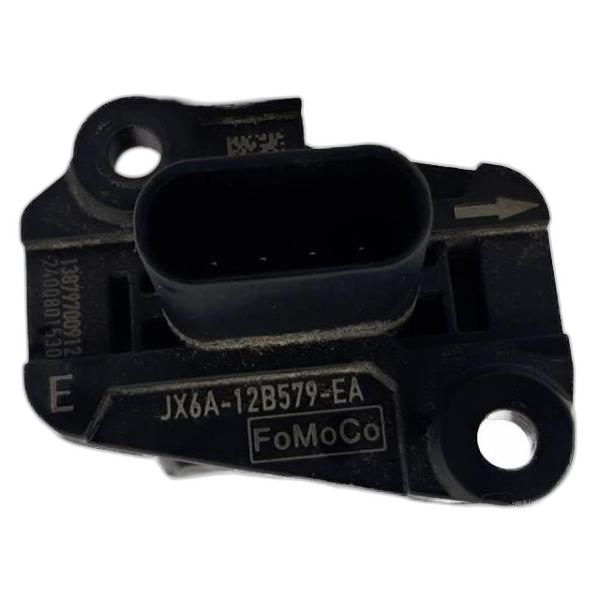
Typical fix: First, try cleaning the sensor with a dedicated MAF sensor cleaner spray. 🎬 See how to clean a Ford MAF sensor Do not use brake cleaner or other solvents. If cleaning doesn't work, the sensor must be replaced. The Motorcraft part number varies by year, for example 1L5F-12B579-AB for 1999-2003 models.
Est. part cost: $10-$15 for cleaner, $70-$150 for a new sensor - Vacuum Leaks (Intake Manifold Gaskets, PCV Hose) 🔴 High Probability The 4.0L SOHC engine is notorious for intake manifold gasket leaks and cracked PCV hose elbows. The rubber O-rings for the intake manifold harden and crack over time, and the PCV elbow degrades from oil vapor. These are arguably the most common sources of fuel trim issues on this platform.
How to confirm: Listen for a hissing sound near the top of the engine. Perform a smoke test to visually identify the source of the leak. You can also carefully spray short bursts of starter fluid or brake cleaner around the intake area; a change in engine RPM will indicate a leak. Pay special attention to the seam where the upper and lower intake manifolds meet.
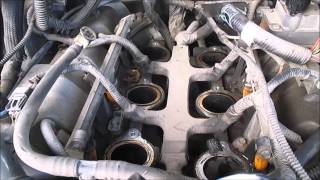
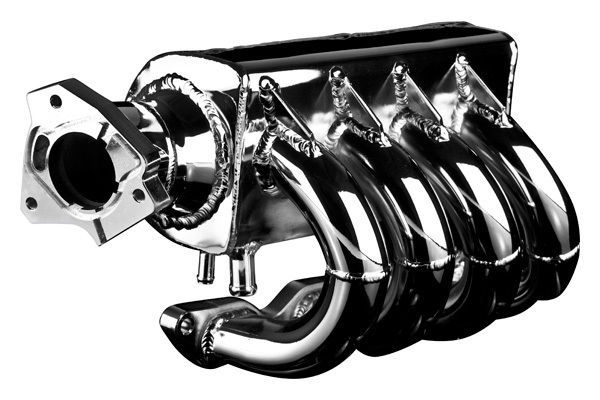
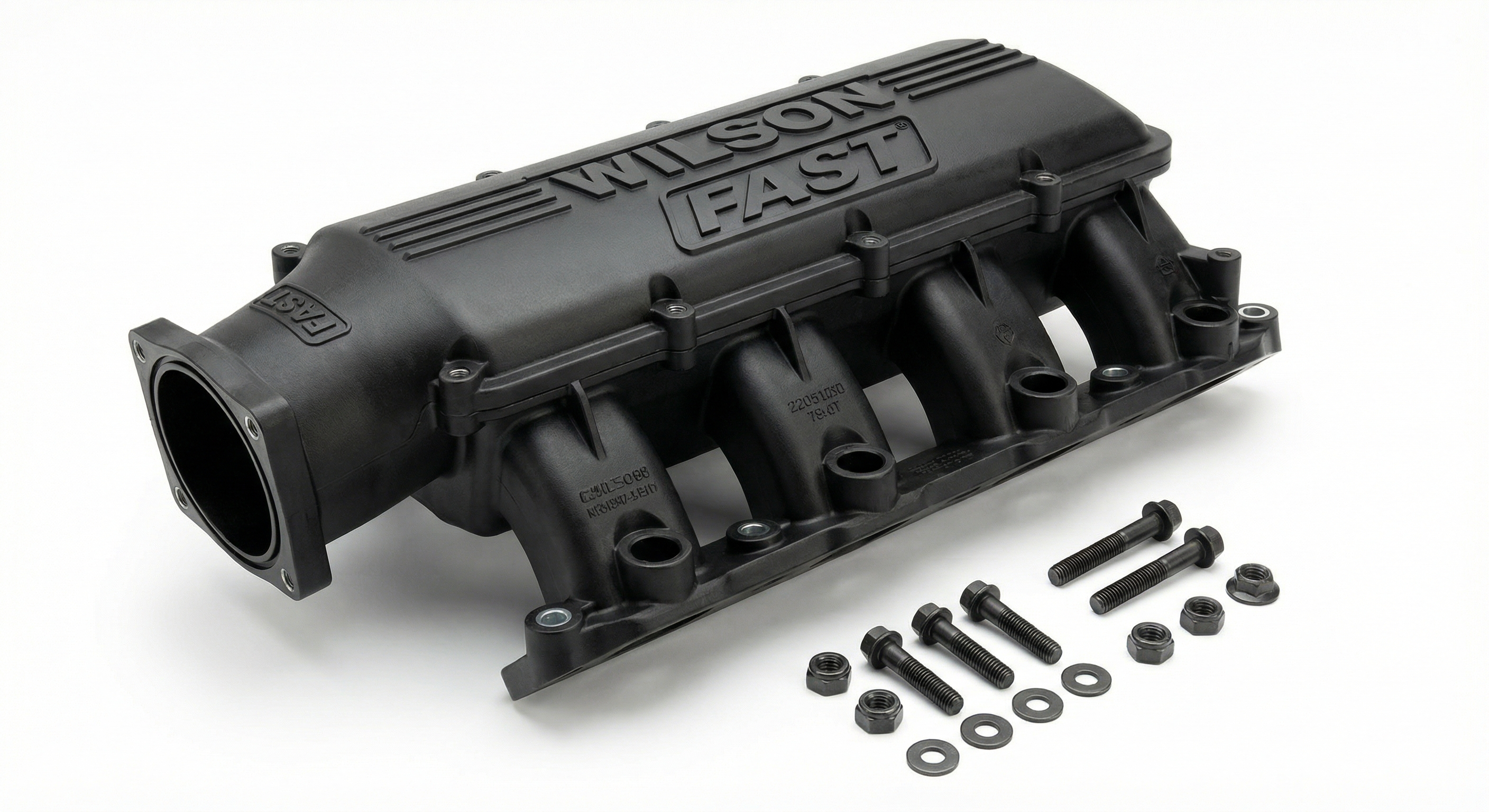
Typical fix: Replace the cracked or leaking component. For the intake manifold, this involves replacing the upper and lower intake O-ring gaskets (Fel-Pro and Victor Reinz are reputable brands 🎬 Watch: Step-by-step intake manifold gasket replacement). For the PCV system, replace the faulty hose or elbow. The Motorcraft part number for the elbow is often 4L2Z-6762-AA.
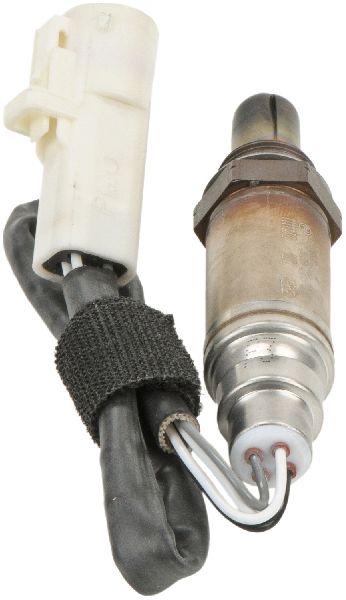
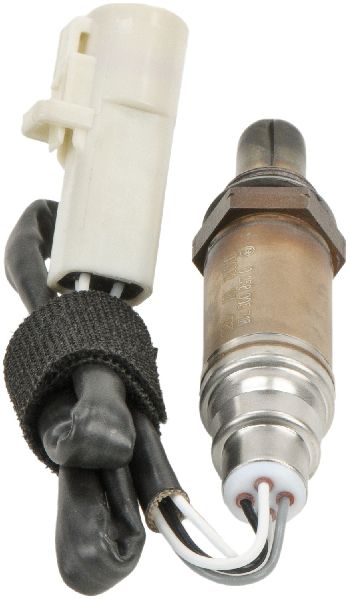
Est. part cost: $5-$20 for PCV hose, $20-$60 for intake gaskets - Faulty Front Oxygen (O2) Sensor 🟡 Medium Probability → Shop Oxygen Sensor O2 sensors are wear items and have a finite lifespan, typically around 100,000 miles. A lazy or biased sensor can send incorrect voltage signals to the PCM, causing it to make improper fuel adjustments.
How to confirm: Use a scan tool to graph the Bank 1 Sensor 1 (B1S1) O2 sensor voltage. A healthy sensor should switch rapidly between approximately 0.1V and 0.9V. A sensor that is stuck or slow to respond is faulty.
Typical fix: Replace the Bank 1 (passenger side), upstream (before the catalytic converter) O2 sensor. Using Motorcraft or Bosch brand sensors is highly recommended for longevity and proper function.
Est. part cost: $40-$80 - Incorrect Fuel Pressure ⚪ Low Probability A failing fuel pressure regulator or a weak fuel pump can cause fuel pressure to be too high or too low, throwing off the entire fuel system calibration.
How to confirm: Connect a fuel pressure gauge to the fuel rail's Schrader valve. Check the pressure with the key on, engine off (KOEO) and at idle, and compare it to the manufacturer's specifications (typically 60-65 psi for this engine).
Typical fix: Replace the faulty fuel pressure regulator or fuel pump.
Est. part cost: $40-$100 for regulator, $150-$300 for pump assembly
Rare But Worth Checking
- Leaking Fuel Injector: A fuel injector stuck open on Bank 1 can cause a rich condition that the PCM tries to correct, potentially setting a P0170. This would likely be accompanied by a specific misfire code for that cylinder and possibly a P0172 (Rich) code.
- Exhaust Leak Before O2 Sensor: → Shop Oxygen Sensor A crack in the exhaust manifold or a leaking gasket before the upstream O2 sensor can allow outside air to be pulled into the exhaust stream. This makes the O2 sensor read a false lean condition, causing the PCM to add too much fuel and potentially trigger a P0170 if the condition is erratic.
- Contaminated Engine Oil: Engine oil heavily saturated with fuel can cause vapors to be drawn through the PCV system, enriching the air-fuel mixture and potentially leading to a P0170 code.
Diagnosis Steps
- Read the code with an OBD-II scanner and check for any other stored codes. Note the freeze frame data to see engine conditions when the code was set.
- Inspect the air intake system between the MAF sensor and the throttle body for any loose clamps or cracked hoses.
- Inspect and clean the Mass Air Flow (MAF) sensor using a dedicated cleaner. Let it dry completely before reinstalling.
- Thoroughly inspect all vacuum lines for cracks or disconnections, paying close attention to the PCV hose elbow near the throttle body, which is a known failure point.
- Perform a smoke test to check for vacuum leaks, especially around the upper and lower intake manifold gaskets. This is the most reliable way to find hidden leaks on this engine.
- Use a scan tool to monitor live data for the short-term (STFT) and long-term (LTFT) fuel trims, as well as the O2 sensor voltage for Bank 1, Sensor 1. Look for fuel trims at their maximum limit and an O2 sensor that is slow or stuck.
- If vacuum leaks and the MAF sensor are ruled out, test the Bank 1 upstream O2 sensor for proper operation by graphing its voltage.
- If the issue persists, test fuel pressure at the fuel rail's Schrader valve to rule out a faulty fuel pump or pressure regulator.
Parts You'll Likely Need
- Mass Air Flow (MAF) Sensor Cleaner — This is the cheapest and easiest first step. Contamination is a very common cause of MAF sensor failure on Fords.
Trusted brands: CRC, Liqui Moly
Aftermarket price range: $10-$15 - PCV Hose Elbow
(OEM #4L2Z-6762-AA)— This specific part is a known weak point on the 4.0L SOHC engine, frequently cracking and causing a major vacuum leak.
Trusted brands: Motorcraft, Dorman
OEM price range: $15-$30
Aftermarket price range: $5-$20 - Intake Manifold Gasket Set (Upper & Lower) — The O-ring style gaskets used on the 4.0L SOHC intake manifold are a very common failure point, leading to vacuum leaks that cause lean conditions.
Trusted brands: Fel-Pro, Victor Reinz
OEM price range: $40-$80
Aftermarket price range: $20-$60 - Upstream Oxygen Sensor (Bank 1) — A lazy or failed O2 sensor can provide incorrect data to the PCM, directly causing fuel trim malfunctions. It's a common wear item.
Trusted brands: Motorcraft, Bosch, NTK
OEM price range: $60-$100
Aftermarket price range: $40-$80
Related Codes That Often Appear With This One
- P0171 — System Too Lean (Bank 1). This is very common with P0170 as the underlying cause is often a vacuum leak or faulty MAF sensor leading to a lean condition.
- P0174 — System Too Lean (Bank 2). If the cause is a component affecting both banks (like the MAF sensor or a large vacuum leak), you may see lean codes for both sides of the engine.
- P0300-P0306 — Random or specific cylinder misfire codes. An incorrect air/fuel ratio can lead to incomplete combustion and misfires.
- P0172 — System Too Rich (Bank 1). If the fault (like a bad O2 sensor or fuel pressure regulator) causes an overly rich mixture, this code may appear alongside P0170.
Technical Service Bulletins (TSBs) & Recalls
- While no specific TSB for P0170 on this platform was found, TSBs related to lean codes (P0171/P0174) often point to the same root causes, such as intake manifold gasket leaks. TSBs for later models like 16-0134 for 2015-16 Super Duty trucks mention P0170 requiring a PCM reflash, but this is not applicable to the 1995-2001 Explorer.
- Manufacturer service bulletins for other Ford vehicles, such as TSB Bulletin #TSB 19-2344 and TSB Bulletin #TSB 19-2343, note that P0170 can be triggered by various strategies within the Powertrain Control Module (PCM) software, requiring a software update to correct the condition.
Platform-Specific Known Issues
- The 4.0L SOHC V6 is widely known for developing vacuum leaks at the upper and lower intake manifold gaskets due to the original O-rings hardening over time.
- The rubber PCV hose elbow located near the throttle body is prone to deteriorating from oil vapor exposure, leading to cracks and significant unmetered air leaks.
Mechanic-Grade Diagnostic Values
- Fuel Pressure (1998+ Returnless System) — expected: 60-65 psi with Key On, Engine Off (KOEO) and Key On, Engine Running (KOER).. Failure: Pressure below 55-60 psi can indicate a weak fuel pump or faulty regulator. Pressure that bleeds down quickly after the pump primes may indicate a leak or bad check valve.
- Long Term Fuel Trim (LTFT) on a Scan Tool — expected: Ideally within +/- 5%. Adjustments up to +/- 10% are often acceptable.. Failure: Sustained values at or near the maximum limit (often +25% for lean or -25% for rich) indicate the PCM can no longer compensate, triggering the code.
- Lower Intake Manifold Bolt Torque — expected: Tighten in a specific sequence in multiple steps, with a final torque of 11-13 lb-ft (14-18 Nm).. Failure: Incorrect or uneven torque can lead to a poor seal, causing a vacuum leak immediately after a gasket replacement.
- Upper Intake Plenum Bolt Torque — expected: Final torque of 156-172 inch-pounds (approx. 13-14 lb-ft).. Failure: Over-tightening can crack the plastic plenum; under-tightening can cause leaks.
Hidden / Shadow Codes Worth Checking
- Mode $06, Test ID $53 (TID $53): On many Ford vehicles, this test ID corresponds to the misfire monitor. It provides raw misfire counts per cylinder for the current and last ten driving cycles, even if the count is not high enough to set a P030x code. (see via A scan tool capable of displaying Mode $06 data is required. The data is presented as Test IDs (TIDs) and Component IDs (CIDs). The technician must look up the specific TIDs for Ford to interpret the values.)
Wiring & Ground Locations
- Main Engine Grounds — Key ground points are typically located on the engine block, from the block to the firewall, and from the battery negative terminal to the chassis/fender.. A poor ground connection for the PCM or critical sensors (like O2 or MAF sensors) can introduce electrical noise or voltage offsets, causing incorrect readings that lead to fuel trim errors. Service manuals show ground distribution diagrams which can be used to trace ground wires (by color) from a component back to their chassis termination point.
- PCM Connector — The Powertrain Control Module (PCM) is typically mounted on the passenger side of the firewall, in the engine bay.. Technicians may need to test for voltage and continuity at the PCM connector pins for sensors like the MAF and O2 sensors to rule out wiring harness issues between the sensor and the computer.
Real Owner Repair Stories
- Reddit user in /r/Ford (2002 Ford Explorer Sport Trac 4.0L SOHC) — Long Term Fuel Trims at +25% on both banks. The leaner condition worsened with higher RPMs.
❌ Tried (didn't work) Extensive vacuum leak search (5+ hours), Used a smoke machine, Swapped intake manifold with a junkyard part, Cleaned the MAF sensor, Swapped MAF with three different used sensors
✅ What actually fixed it The user suspected a failing fuel pump that was providing insufficient volume, even though the fuel pressure reading (55 psi KOEO, 65 psi KOER) was within spec. The fact that the engine ran leaner with more RPM strongly pointed to a fuel delivery volume issue rather than a vacuum leak. - AcuraZine forum user (Not specified, but general P0170/P0171 diagnosis) — P0170 and P0171 codes present.
❌ Tried (didn't work) Initial diagnosis pointed towards multiple possibilities.
✅ What actually fixed it The final fix was replacing the upstream oxygen sensor, which had gone bad. The spark plugs were also found to be black and fouled (from the incorrect mixture) and were replaced at the same time. The computer was reset by unhooking the battery to clear the old fuel trim adaptations. - NHTSA ODI #10860362 — An owner of a Ford vehicle reported a check engine light with codes P008A (low fuel pressure) and P0170. The report noted the issue was related to the fuel system and suggested a fuel delivery problem.
"I Checked Everything" — The Actual Cause
- In one documented case, extensive smoke testing and even swapping the intake manifold revealed no vacuum leaks. The root cause was a weak fuel pump that could maintain adequate pressure at idle (65 psi) but could not deliver enough fuel volume under load, causing the engine to run leaner as RPMs increased. This is a classic fuel volume issue that pressure testing alone will not reveal.
OEM Part Supersession History
XF2Z-12B579-AA→1L2Z-12B579-ARM (remanufactured)— Part update/revision.
Heads up: The part number for the MAF sensor can vary by model year. 1L5F-12B579-AB is listed for 1999-2003 models, while XF2Z-12B579-AA is listed for 1999-2001 models. Always verify the correct part number for the specific vehicle's VIN.
Model Year Variations Within This Range
- 1998-2001: Starting in 1998, Ford switched the Ranger/Explorer platform to a mechanical 'returnless' fuel system. This system operates at a higher fuel pressure (approx. 60-65 psi) and has the fuel pressure regulator located inside the fuel tank with the pump. Pre-1998 models used a lower pressure (35-45 psi) return-style system with the regulator on the fuel rail. This is a critical difference when diagnosing fuel pressure.
- 1997-2001: The 4.0L SOHC V6 was introduced in 1997 as a new optional engine, primarily for higher trims like the Eddie Bauer and Limited. The older 4.0L OHV engine remained the base engine. By 2001, the OHV engine was discontinued, making the SOHC the standard V6. This guide is specific to the SOHC engine.
Diagnostic Flowchart
Other Known Issues on This Vehicle
Issues unrelated to this code that are worth knowing about as an owner of this generation:
- Timing Chain Cassette Failure 🔴 High — Very common, especially on 1997-2002 models. Often presents as a rattling or grinding noise ('death rattle') from the front or rear of the engine, particularly on startup. Failure can lead to catastrophic engine damage. (Ref: Multiple TSBs were issued, including TSB 02-7-6, advising on tensioner replacement as a first step.)
- Cracked Plastic Thermostat Housing 🟠 Medium — Extremely common. The two-piece plastic housing is prone to developing cracks along its seam, causing significant coolant leaks onto the top of the engine. Often replaced with a metal aftermarket version.
- 5R55E Automatic Transmission Problems 🔴 High — Common across this generation. Issues include delayed/harsh shifting, loss of reverse, or a flashing O/D light. Problems can stem from a failed servo bore case, bad solenoid pack, or worn bands. (Ref: Numerous TSBs exist for various transmission drivability concerns and fluid leaks.)
- Heater Blend Door Actuator Failure 🟡 Low — Common issue where the plastic blend door or its actuator fails, resulting in the heater being stuck on the hottest setting or an inability to change vent positions.
Used vs. New Parts: Buying Guide for This Vehicle
When a used part is the smart pick: Structural, non-wear parts like the plastic intake manifold or the fuel rail can be sourced from a junkyard. These parts rarely fail unless physically damaged, and a used part is a cost-effective alternative to a new one.
Donor-vehicle mileage cap: roughly under 150000 miles for the part to have meaningful remaining life.
What to inspect on the donor part:
- For an intake manifold, inspect it meticulously for any hairline cracks, especially around bolt holes and seams.
- Check the donor vehicle's mileage and general condition; avoid parts from engines that show signs of severe overheating or neglect.
- When pulling a MAF sensor, check the donor's air filter. A filthy filter suggests the MAF may have been exposed to more contaminants.
OEM-only on this vehicle (don't cheap out):
- Mass Air Flow (MAF) Sensor
- Oxygen (O2) Sensors
Aftermarket brands forum-validated for this vehicle:
- Intake Gaskets: Fel-Pro, Victor Reinz
- O2 Sensors: Bosch, NTK/NGK
- MAF Sensors: Motorcraft (OEM), Delphi, Standard Motor Products (SMP)
Brands owners have reported issues with on this vehicle:
- Unbranded, 'white-box' electronic sensors (MAF, O2) from online marketplaces are frequently cited on forums as being poorly calibrated, failing quickly, or being dead-on-arrival.
Real Owner Stories
Aggregated from forums and TSBs cited above. Mileages and costs reflect what owners reported in those sources.
2003 Ford Explorer 4.0L SOHC
Symptoms: Vehicle was throwing P0172 and P0175 codes (rich conditions), which are related fuel trim malfunctions on this same engine architecture.
What fixed it: Cleaning or replacing the MAF sensor and checking for vacuum leaks, as these are the primary drivers for fuel trim codes on the 4.0L SOHC.
Source hint: TheRangerStation.com thread titled '2003 4.0 SOHC P0172 P0175'
Ford Explorer 4.0L SOHC
Symptoms: P0170 and P0174 codes persisted even after installing new intake gaskets and isolator bolts.
What fixed it: Further investigation into the intake system and fuel trim adjustments, as the 4.0L SOHC is notorious for vacuum leaks at the upper and lower intake manifold gaskets.
Source hint: ExplorerForum.com thread titled 'P0170 and P0174 still after new intake gaskets and isolator bolts'
Related OBD-II Codes
Frequently Asked Questions
Does TSB 16-0134 regarding a PCM reflash apply to my 1995-2001 Ford Explorer?
I hear a hissing sound from the engine bay of my 4.0L SOHC; could this be related to P0170?
What is the specific Motorcraft part number for the PCV elbow that often fails on this vehicle?
Can I use any solvent to clean the MAF sensor on my Explorer?
What should the MAF sensor readings be at idle for the 4.0L engine?
Is there a specific brand of intake gaskets recommended for the 4.0L SOHC engine?
Helpful Videos
Used OEM Parts in Stock
New Aftermarket Parts Available


The information in this article is provided for general reference and educational purposes only. Vehicle specifications, procedures, and part compatibility can vary by production date, trim level, and region. Always consult your vehicle's factory service manual and verify part numbers before purchasing or performing repairs. Safety-critical components such as airbags, seat belts, and braking systems should be installed by a qualified professional.
- Ford Explorer:
- 🧭 Diagnostic Flowchart
- 🎬 Helpful Videos
- 🛍️ Shop This Part
- What's Unique About the 1995-2001 Ford Explorer
- Symptoms You May Notice
- Most Likely Causes
- Rare But Worth Checking
- Diagnosis Steps
- Parts You'll Likely Need
- Related Codes That Often Appear With This One
- Technical Service Bulletins (TSBs) & Recalls
- Platform-Specific Known Issues
- Mechanic-Grade Diagnostic Values
- Hidden / Shadow Codes Worth Checking
- Wiring & Ground Locations
- Real Owner Repair Stories
- "I Checked Everything" — The Actual Cause
- OEM Part Supersession History
- Model Year Variations Within This Range
- Other Known Issues on This Vehicle
- Used vs. New Parts: Buying Guide for This Vehicle
- Real Owner Stories
- 2003 Ford Explorer 4.0L SOHC
- Ford Explorer 4.0L SOHC
- Related OBD-II Codes
- Frequently Asked Questions
- 🎟️ Get 5% Off