

P0170 on 1996-2002 Toyota 4Runner 3.4L V6: Fuel Trim Malfunction Causes and Fixes
On the 3.4L V6 4Runner, P0170 is almost always caused by a dirty or faulty Mass Airflow (MAF) sensor. Start by cleaning the MAF sensor; if that doesn't work, a new Denso sensor is the most likely fix. Other potential causes include a failing fuel pump or a vacuum leak from a cracked PCV hose. Expect to pay ~$15 for cleaner or ~$100-$200 for a new OEM sensor.
- Start by cleaning the Mass Airflow (MAF) sensor with dedicated cleaner; this is the most common and cheapest fix.
- If cleaning the MAF doesn't work, it has likely failed. Replace it with a Denso or genuine Toyota part.
- If the code persists, the next most likely culprit is the front oxygen sensor (Bank 1, Sensor 1).
- Check for obvious vacuum leaks (cracked hoses) around the air intake.
- Always use the correct part for your specific model year, as sensors changed around 1998-1999.
What's Unique About the 1996-2002 Toyota 4Runner
The 5VZ-FE engine in the 3rd Generation 4Runner is known for its reliability, but it is particularly sensitive to the health of its Mass Airflow (MAF) sensor. Unlike many other vehicles where a fuel trim code might point to a variety of issues, on this specific platform, the P0170 code is overwhelmingly linked to a dirty or failing MAF sensor. Owners and technicians familiar with this engine will almost always check and clean the MAF as the very first diagnostic step. Using aftermarket sensors is highly discouraged, as the engine's ECU is calibrated for the specific output of the OEM Denso parts.
Symptoms You May Notice
- Check Engine Light is on
- Poor or reduced fuel economy
- Hesitation or stumbling during acceleration
- Rough idle
- Loss of power, especially under load or on inclines
- Sputtering or backfiring into the intake when trying to accelerate
- Replacing the oxygen sensor before cleaning or testing the MAF sensor. The MAF is the most likely culprit and should always be addressed first.
- Replacing the fuel filter or pump without first confirming low fuel pressure with a gauge or performing a basic fuel delivery test.
Most Likely Causes
- Dirty or Faulty Mass Airflow (MAF) Sensor 🔴 High Probability → Shop Fuel Injection Air Flow Meter The MAF sensor wire can become contaminated with dirt, oil (especially from over-oiled aftermarket air filters), or other debris, causing it to send inaccurate airflow readings to the ECU. This is the most common cause for P0170 on the 5VZ-FE engine and is the first thing that should be checked.
How to confirm: Inspect the MAF sensor's two small wires (one is inside the housing) for contamination. The first step is to clean it with dedicated MAF sensor cleaner. If cleaning doesn't resolve the issue, the sensor itself has likely failed. A scan tool should show 3.3-4.7 g/s at idle and 12.9-18.3 g/s at 2500 RPM; readings below this indicate a bad sensor.
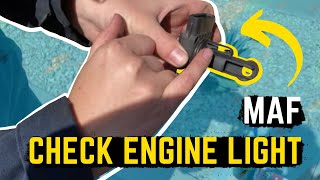
Typical fix: Clean the sensor with a dedicated MAF sensor cleaner spray. 🎬 Watch: How to clean your 4Runner's MAF sensor If the code returns, replace the sensor with a new OEM Denso unit.
Est. part cost: $10-$15 for cleaner, $100-$200 for a new sensor - Failing Fuel Pump or Clogged Fuel Filter 🟡 Medium Probability → Shop Fuel Filter A weak or failing fuel pump cannot supply adequate fuel pressure, leading to a lean condition, hesitation, and significant power loss. The ECU will try to compensate by increasing fuel trim until it hits its limit, triggering P0170. This has been a confirmed fix in owner forums after the MAF was ruled out.
How to confirm: A key symptom is the engine hesitating or dying under heavy throttle but running okay with gentle acceleration. Spraying a small amount of starting fluid or brake cleaner into the intake while the engine is running will cause RPMs to jump up, indicating a lack of fuel. The definitive test is to measure fuel pressure with a gauge. It should be 38-44 psi with the engine running and vacuum hose to the regulator disconnected.
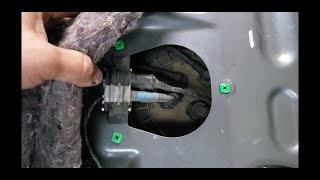
Typical fix: Replace the fuel pump and/or fuel filter. Accessing the pump is often done by lifting the truck bed or dropping the fuel tank. 🎬 See how to replace the fuel pump without dropping the tank
Est. part cost: $150-$300 for an OEM Denso fuel pump assembly - Faulty Front Oxygen (O2) / Air-Fuel Ratio (A/F) Sensor 🟡 Medium Probability → Shop Oxygen Sensor The front O2 sensor (Bank 1, Sensor 1) measures the oxygen content in the exhaust and is a primary input for fuel trim adjustments. As these sensors age, they can become slow to respond or send incorrect voltage signals, causing the ECU to make improper fuel corrections.
How to confirm: Use an OBD-II scanner with live data capability to monitor the voltage of the Bank 1 Sensor 1. For older models with traditional O2 sensors, it should fluctuate rapidly between approximately 0.1V and 0.9V in closed loop. For newer models with A/F sensors, the voltage should be steady around 3.3V. A sensor that is stuck, slow, or has incorrect voltage is likely faulty.
Typical fix: Replace the Bank 1, Sensor 1 (front/upstream) oxygen sensor. It is located on the passenger side exhaust manifold.
Est. part cost: $80-$180 for an OEM Denso sensor - Vacuum Leak ⚪ Low Probability Over time, rubber vacuum hoses can crack, and intake gaskets can become brittle, allowing unmetered air to enter the engine after the MAF sensor. This extra air creates a lean condition that the ECU tries to correct for. A common failure point is the PCV hose.
How to confirm: Visually inspect all vacuum lines, especially the PCV hose and intake ducting, for cracks or disconnections. With the engine running, carefully spray short bursts of brake cleaner or a propane torch (unlit) around the intake manifold gaskets and vacuum hose connections. A change in engine idle indicates a leak.
Typical fix: Replace the cracked vacuum hose or leaking gasket.
Est. part cost: $5-$50
Rare But Worth Checking
- Leaking or Clogged Fuel Injector: A single fuel injector on Bank 1 that is stuck open (causing a rich condition) or clogged (causing a lean condition) can throw off the fuel trim for the entire bank.
Diagnosis Steps
- Read the code with an OBD-II scanner to confirm P0170 is present. Note any other codes.
- Visually inspect the air intake system between the MAF sensor and the throttle body for any cracks, loose clamps, or disconnected hoses.
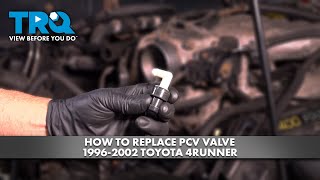
- Inspect all vacuum hoses connected to the intake manifold for cracks or damage, paying close attention to the PCV hose 🎬 Watch: How to replace the PCV valve and hose that runs across the top of the engine.
- Remove and clean the Mass Airflow (MAF) sensor using dedicated MAF sensor cleaner spray. Be sure to spray the delicate inner wire as well. Let it dry completely before reinstalling.
- Disconnect the battery for 15 minutes to reset the ECU's fuel trims. Reconnect and drive the vehicle to see if the code returns.
- If the code returns, use a scan tool with live data to monitor Short Term Fuel Trim (STFT) and Long Term Fuel Trim (LTFT) for Bank 1. High positive numbers (e.g., >15%) suggest a lean condition (vacuum leak, bad MAF, weak fuel pump), while high negative numbers suggest a rich condition (leaky injector).
- Test for a fuel delivery problem: With the engine idling, carefully spray a 1-2 second burst of brake cleaner or starting fluid into the air intake. If the engine RPMs immediately jump up and smooth out, it strongly suggests a lack of fuel.
- If a fuel delivery issue is suspected, connect a fuel pressure gauge to the fuel rail. Check that the pressure is within OEM specifications at idle and under load.
- Monitor the Bank 1, Sensor 1 O2/AF sensor voltage on a scan tool. It should fluctuate rapidly (O2) or hold steady around 3.3V (A/F). If it's slow, stuck, or unresponsive, it's likely bad.
- If a lean condition is suspected and fuel pressure is good, perform a smoke test to definitively locate vacuum leaks.
Parts You'll Likely Need
- Mass Airflow (MAF) Sensor
(OEM #22204-21010 (for approx. 1999-2002), 22250-20020 (for approx. 1996-1998))— This is the most common failure point for code P0170 on this engine. The original part is manufactured by Denso. Always use an OEM Denso part for replacement.
Trusted brands: Denso (OEM), Toyota (Genuine)
OEM price range: $120-$200
Aftermarket price range: $40-$90 (Not Recommended) - Front Air/Fuel Ratio Sensor (Bank 1 Sensor 1)
(OEM #89467-35011 (Common for 1999-2002 CA emissions), 89467-35040 (Federal). Part varies significantly by year and emissions type (Federal vs. California), verify with VIN.)— This sensor provides the primary feedback for fuel control. An aged or failed sensor will cause incorrect fuel trims. Denso is the OEM manufacturer.
Trusted brands: Denso (OEM), Toyota (Genuine)
OEM price range: $150-$220
Aftermarket price range: $60-$120 - MAF Sensor Cleaner — This is a required first step before replacing any parts. Often, cleaning the sensor is all that is needed to fix the code.
Trusted brands: CRC, WD-40
OEM price range: $10-$15
Aftermarket price range: $10-$15 - PCV Valve and Hose
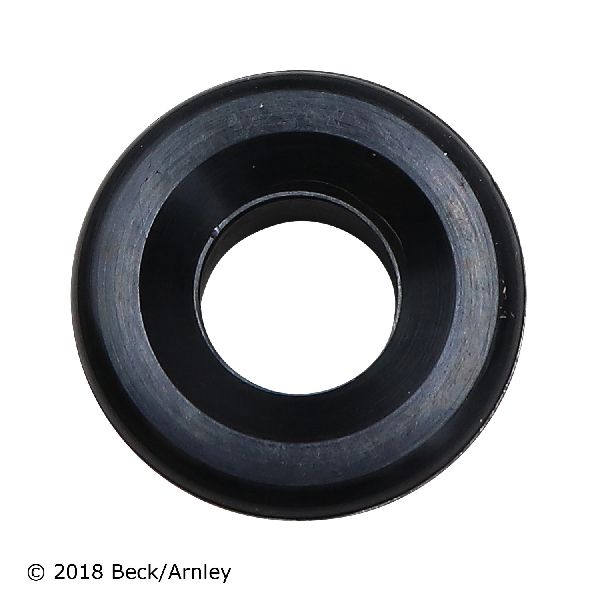
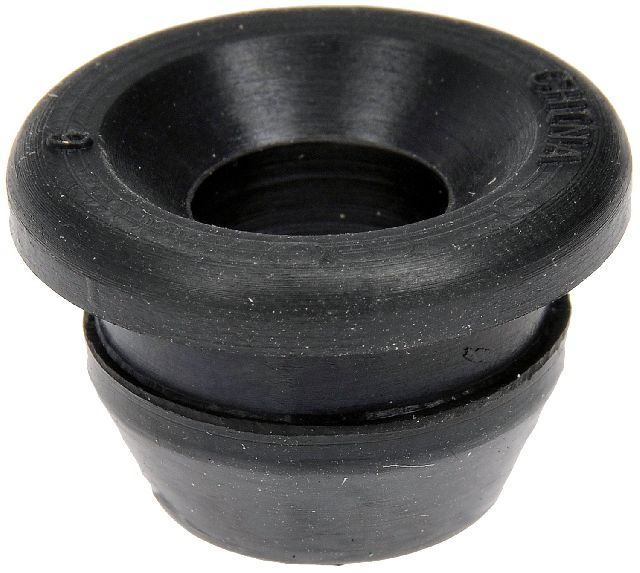
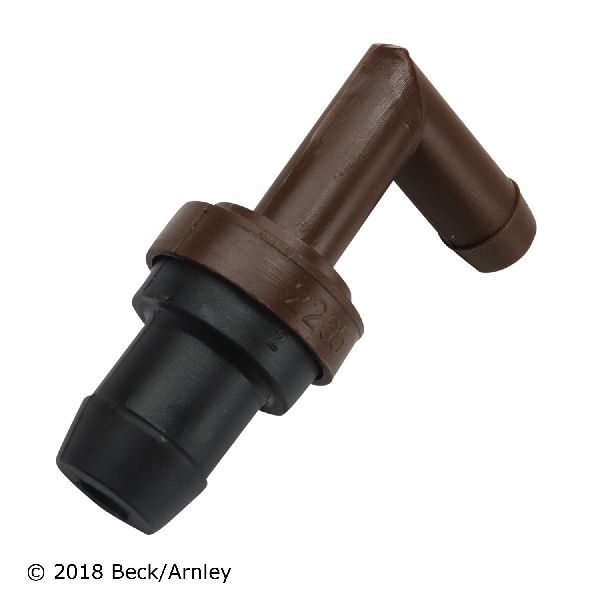
(OEM #Valve: 12204-62010, Hose: 12261-62041)— The PCV hose becomes brittle and cracks over time, creating a significant vacuum leak. The valve can also get clogged. It's an inexpensive and common repair.
Trusted brands: Toyota (Genuine)
OEM price range: $10-$25
Aftermarket price range: $5-$15
Related Codes That Often Appear With This One
- P0171 — If the underlying problem is a lean condition (like a vacuum leak or dirty MAF), the ECU may eventually also set P0171 (System Too Lean Bank 1) alongside P0170.
- P0172 — If the underlying problem is a rich condition (like a leaking injector), the ECU may eventually also set P0172 (System Too Rich Bank 1).
Platform-Specific Known Issues
- PCV System Degradation: The Positive Crankcase Ventilation (PCV) hose, which runs across the top of the engine, is a known weak point. It becomes hard and brittle with age and heat cycles, leading to cracks that create a significant unmetered air (vacuum) leak. This is a common cause for lean-related codes like P0171 and can contribute to P0170. The PCV valve itself can also become clogged. Inspecting and replacing the hose and valve is a cheap and easy preventative measure.
- Intake Manifold Gasket Leaks: → Shop Engine Intake Manifold While less common than hose leaks, the intake manifold gaskets can also fail over time, allowing unmetered air to enter the cylinders. This is more likely on higher-mileage engines. A smoke test is the most effective way to diagnose a leaking intake gasket if no other vacuum leaks are found.
Mechanic-Grade Diagnostic Values
- Fuel Pressure (at fuel rail) — expected: 38 - 44 psi (265 - 304 kPa) with vacuum hose to regulator disconnected.. Failure: Pressure below this range indicates a weak fuel pump, clogged filter, or faulty regulator.
- Fuel Pressure (at fuel rail, idle) — expected: 33 - 38 psi (226 - 265 kPa) with vacuum hose connected.. Failure: Incorrect pressure points to a faulty fuel pressure regulator or vacuum line issue.
- MAF Sensor Airflow Rate (Live Data) — expected: 3.3 - 4.7 g/s at hot idle; 12.9 - 18.3 g/s at 2500 RPM (no load).. Failure: Readings significantly lower than this range suggest a dirty or failing MAF sensor.
- Fuel Injector Resistance — expected: Approximately 13.8 Ohms at 68°F (20°C).. Failure: Resistance outside of this specification indicates a faulty injector coil.
- Air/Fuel Ratio Sensor Heater Resistance (1999+ models) — expected: 0.8 - 1.4 Ohms at 68°F (20°C) between the two black wires.. Failure: An open circuit (infinite resistance) or a dead short (0 ohms) indicates a failed heater element, requiring sensor replacement.
Scan Tool Commands That Help
- Toyota Techstream: Active Test -> Control the Fuel Pump — This command allows the technician to turn the fuel pump on without the engine running. It is essential for safely and accurately testing fuel pressure and checking for fuel delivery volume without cranking the engine.
- Toyota Techstream: Data List -> Fuel Trim & A/F Sensor Values — Monitoring the Short Term (STFT) and Long Term (LTFT) fuel trims for Bank 1 is the primary way to see what the ECU is trying to do. Simultaneously watching the A/F or O2 sensor output helps determine if the sensor is responding correctly to the trim adjustments or if it is the source of the problem.
Wiring & Ground Locations
- EB — Near the throttle body on the engine.. This is a primary engine ground point. A poor connection here can affect sensor readings, including the MAF and O2/A/F sensors, leading to incorrect fuel trim adjustments.
- IC — Left (driver's side) kick panel.. This is a ground point for components inside the cabin, which can include the Engine Control Module (ECM). A loose or corroded ground here can cause erratic ECM behavior and phantom codes.
- MAF Sensor Connector — On the MAF sensor itself, located on the air intake tube just after the air filter box.. The pins for the MAF sensor signal (VG), ground (E2G), and intake air temp (THA) are located here. Technicians can back-probe these pins to check for correct voltage signals and resistance, verifying the sensor's and wiring's integrity.
Real Owner Repair Stories
- Tacoma World forum user 'Russianman92' (1995 Toyota Tacoma 3RZ (similar fuel system principles to 5VZ-FE)) — Severe lack of power, hesitation after 2k RPM, sputtering, backfiring into the intake, would not accelerate but could be gently revved up slowly. Threw code P0170.
❌ Tried (didn't work) Cleaned the MAF sensor, Swapped the Fuel Pressure Regulator, Checked for vacuum leaks with brake cleaner
✅ What actually fixed it The fuel pump was failing and could not provide enough fuel under load. The user confirmed a lack of fuel by spraying brake cleaner into the intake, which allowed the engine to rev up perfectly. Replacing the fuel pump resolved all symptoms and cleared the P0170 code.
OEM Part Supersession History
22250-20020→N/A, distinct part for early models— This is the Karman-Vortex style MAF sensor used on approximately 1996-1998 models.
Heads up: This part is physically and electronically different from the later hot-wire MAF and cannot be interchanged.22204-07010 / 22204-21010→Current OEM part is often 22204-21010.— This is the hot-wire style MAF sensor used on approximately 1999-2002 models.
Heads up: This part is not backward-compatible with vehicles designed for the 22250-20020 Karman-Vortex MAF.
Model Year Variations Within This Range
- 1996-1998: These earlier models typically use a Karman-Vortex style MAF sensor (P/N 22250-20020) and a traditional Zirconia (narrowband) front oxygen sensor. The diagnostic approach is similar, but the specific part numbers and test values for these sensors are different from later years.
- 1999-2002: These later models switched to a hot-wire MAF sensor (e.g., P/N 22204-21010) and a wideband Air/Fuel Ratio (A/F) sensor for the front/upstream position. A/F sensors operate differently and have different live data signatures (steady voltage around 3.3V) compared to the fluctuating voltage of older O2 sensors.
Diagnostic Flowchart
Other Known Issues on This Vehicle
Issues unrelated to this code that are worth knowing about as an owner of this generation:
- Automatic Transmission Cooler Failure ('Pink Milkshake') 🔴 High — Common on higher-mileage (100k-200k miles) vehicles with the original radiator. The internal transmission cooler inside the radiator can rupture, mixing coolant and automatic transmission fluid.
- Lower Ball Joint Failure 🔴 High — A well-documented, dangerous failure point across all 1996-2002 years. The design puts the joint under tension, and failure can be catastrophic, causing the wheel to collapse. A recall was issued for 2001-2002 models, but the design is similar on all years. Replacement with OEM parts is strongly recommended. (Ref: Toyota Recall 05V225000 (for 2001-2002 models))
- Frame Rust/Rot 🔴 High — Very common, especially in the rust belt. Key areas to inspect are the rear section of the frame, near the spare tire, and on the passenger side where the A/C condensation drips. Toyota had a frame replacement program for Tacomas, but not officially for 4Runners, though the issue is similar.
- Leaking Valve Cover Gaskets 🟠 Medium — Extremely common as the engine ages. Oil leaks onto the exhaust manifolds, causing a burning smell, or can drip into the alternator on the driver's side, causing electrical problems.
Used vs. New Parts: Buying Guide for This Vehicle
When a used part is the smart pick: For this repair, used parts are generally not recommended for the key electronic components. However, sourcing parts like vacuum hoses, intake ducting, or a fuel pump access cover from a junkyard vehicle can be a cost-effective option if they are in good condition.
Donor-vehicle mileage cap: roughly under 150000 miles for the part to have meaningful remaining life.
What to inspect on the donor part:
- For hoses, check for pliability and absence of cracks or swelling.
- For hard parts, look for minimal corrosion and no visible damage.
- Avoid parts from vehicles that show signs of being poorly maintained or having had engine fires.
OEM-only on this vehicle (don't cheap out):
- Mass Airflow (MAF) Sensor
- Air/Fuel Ratio (A/F) Sensor / Oxygen Sensor
- Fuel Pump
Aftermarket brands forum-validated for this vehicle:
- Denso (This is the Original Equipment Manufacturer for most of these parts; it is the best choice outside of a Toyota-branded box.)
Brands owners have reported issues with on this vehicle:
- Unbranded or 'white-box' electronic sensors from online marketplaces. Owners consistently report that the 5VZ-FE's ECU is very sensitive and does not perform correctly with the out-of-spec signals from cheap aftermarket MAF and A/F sensors, often leading to the same or new codes returning quickly.
Real Owner Stories
Aggregated from forums and TSBs cited above. Mileages and costs reflect what owners reported in those sources.
1st Gen Toyota Tacoma (3.4L 5VZ-FE)
Symptoms: The owner ruled out the MAF and vacuum leaks, but the vehicle suffered from a lack of fuel under load.
What fixed it: Replacing the fuel pump.
Source hint: Tacoma World: P0170 Fuel Trim Bank 1 (Solution)
Toyota 4Runner (3.4L 5VZ-FE)
Symptoms: P0170 code and bad fuel economy.
What fixed it: Performing multiple maintenance items: cleaning the MAF sensor, replacing the PCV valve, and changing spark plugs.
Source hint: YotaTech: fuel trim code p0170 and bed fuel economy
Related OBD-II Codes
Frequently Asked Questions
What is the most common cause of P0170 on the 5VZ-FE 3.4L V6 engine?
How can I tell if my 4Runner's P0170 is caused by a fuel pump rather than the MAF sensor?
What are the specific MAF sensor readings I should look for on my scan tool for this engine?
Is there a specific vacuum hose on the 3.4L V6 that I should check first?
My 4Runner has an A/F sensor instead of a traditional O2 sensor; what voltage should I see?
What is the recommended fuel pressure for the 1996-2002 4Runner when diagnosing a lean condition?
Helpful Videos

We Have This Part in Stock


The information in this article is provided for general reference and educational purposes only. Vehicle specifications, procedures, and part compatibility can vary by production date, trim level, and region. Always consult your vehicle's factory service manual and verify part numbers before purchasing or performing repairs. Safety-critical components such as airbags, seat belts, and braking systems should be installed by a qualified professional.
- Toyota 4Runner:
- 🧭 Diagnostic Flowchart
- 🎬 Helpful Videos
- 🛍️ Shop This Part
- What's Unique About the 1996-2002 Toyota 4Runner
- Symptoms You May Notice
- Most Likely Causes
- Rare But Worth Checking
- Diagnosis Steps
- Parts You'll Likely Need
- Related Codes That Often Appear With This One
- Platform-Specific Known Issues
- Mechanic-Grade Diagnostic Values
- Scan Tool Commands That Help
- Wiring & Ground Locations
- Real Owner Repair Stories
- OEM Part Supersession History
- Model Year Variations Within This Range
- Other Known Issues on This Vehicle
- Used vs. New Parts: Buying Guide for This Vehicle
- Real Owner Stories
- 1st Gen Toyota Tacoma (3.4L 5VZ-FE)
- Toyota 4Runner (3.4L 5VZ-FE)
- Related OBD-II Codes
- Frequently Asked Questions
- 🎟️ Get 5% Off