

P0170 on 2000-2009 Volvo S60 5-Cylinder: Fuel Trim Fixes & Causes
On a first-generation Volvo S60, code P0170 is most often caused by a failing Mass Airflow (MAF) sensor or a clogged PCV breather system. Always use an OEM Bosch MAF sensor for replacement. Start diagnosis by cleaning the MAF sensor, checking for vacuum leaks, and performing the 'glove test' on the PCV system before replacing parts.
- P0170 on a 2000-2009 S60 is not a generic problem; it's usually caused by one of three specific issues: a bad MAF sensor, a clogged PCV system, or a vacuum leak.
- Always check the PCV system using the 'glove test' before buying expensive parts. A clogged PCV system is a very common and well-documented issue on this engine.
- If you replace the MAF sensor, spend the extra money on an OEM Bosch part. Cheaper aftermarket sensors are known to cause persistent problems on these cars.
- Start with the cheapest and easiest checks first: inspect for obvious air intake leaks and test the PCV system. A smoke test is the best way to find hidden vacuum leaks.
What's Unique About the 2000-2009 Volvo S60
The P2 platform S60 is particularly susceptible to this code due to two common failure points: the Bosch Mass Airflow (MAF) sensor and the Positive Crankcase Ventilation (PCV) system. The MAF sensor can become contaminated or fail, sending incorrect air readings to the ECU. More unique to this platform is the PCV system, often called the oil trap or breather box, which is prone to clogging with oil sludge and carbon, especially with infrequent oil changes. A clogged PCV system creates excess crankcase pressure, which can force oil past seals and unmetered air/oil vapor into the intake, disrupting fuel trims and triggering the P0170 code.
Symptoms You May Notice
- Check Engine Light is on
- Rough or unstable idle
- Engine hesitation or stumbling during acceleration
- Reduced engine power
- Poor fuel economy
- Engine stalling, especially when coming to a stop
- Whistling noise from the engine, which may indicate a clogged PCV system or a vacuum leak
- Black smoke from the tailpipe if running excessively rich
- Replacing the MAF sensor with a cheap aftermarket part often fails to solve the problem or introduces new ones due to incorrect calibration.
- Replacing the O2 sensors when the root cause is a significant vacuum leak or a clogged PCV system.
- Assuming the MAF is bad without first checking for simple, large air leaks in the intake hose between the sensor and the throttle body.
Most Likely Causes
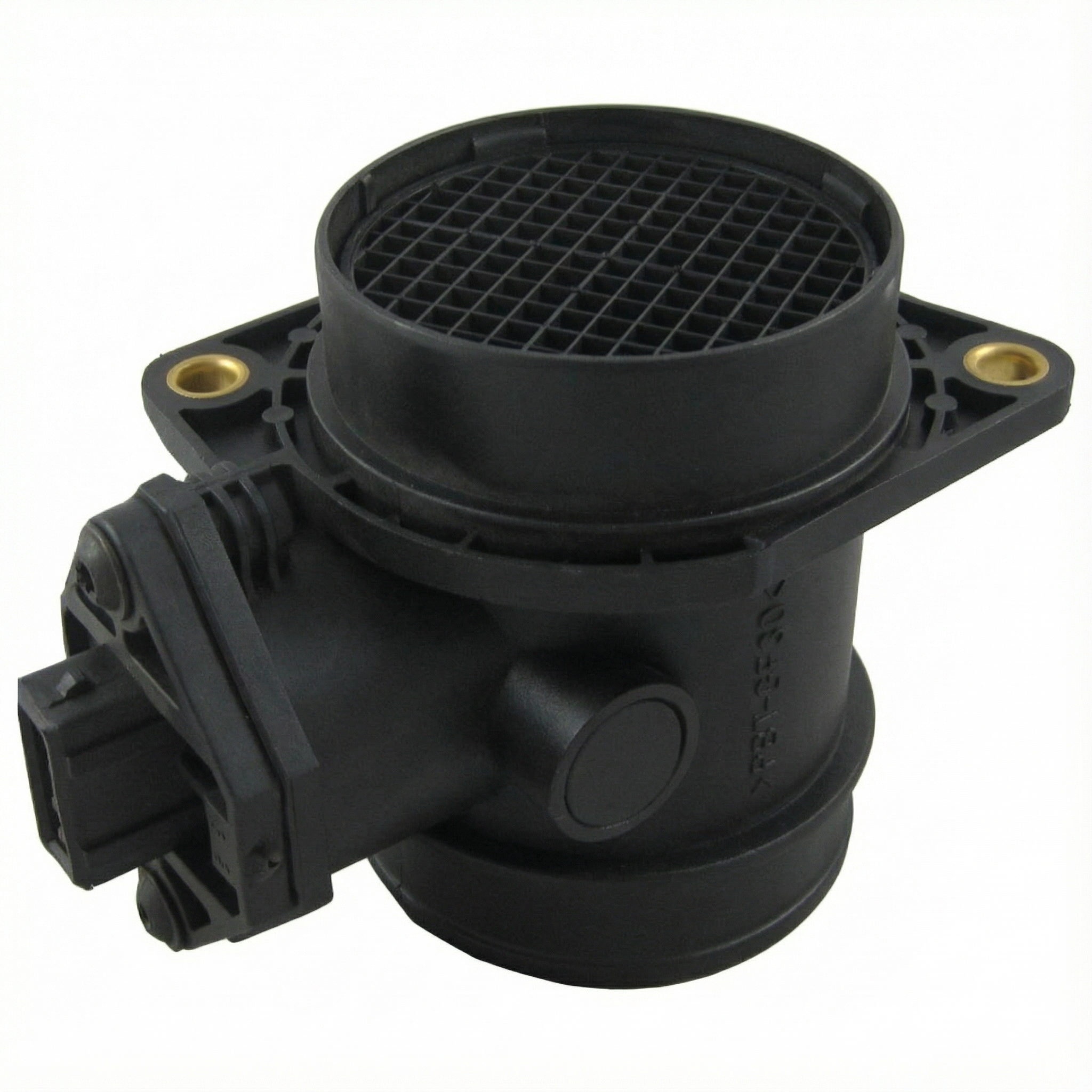
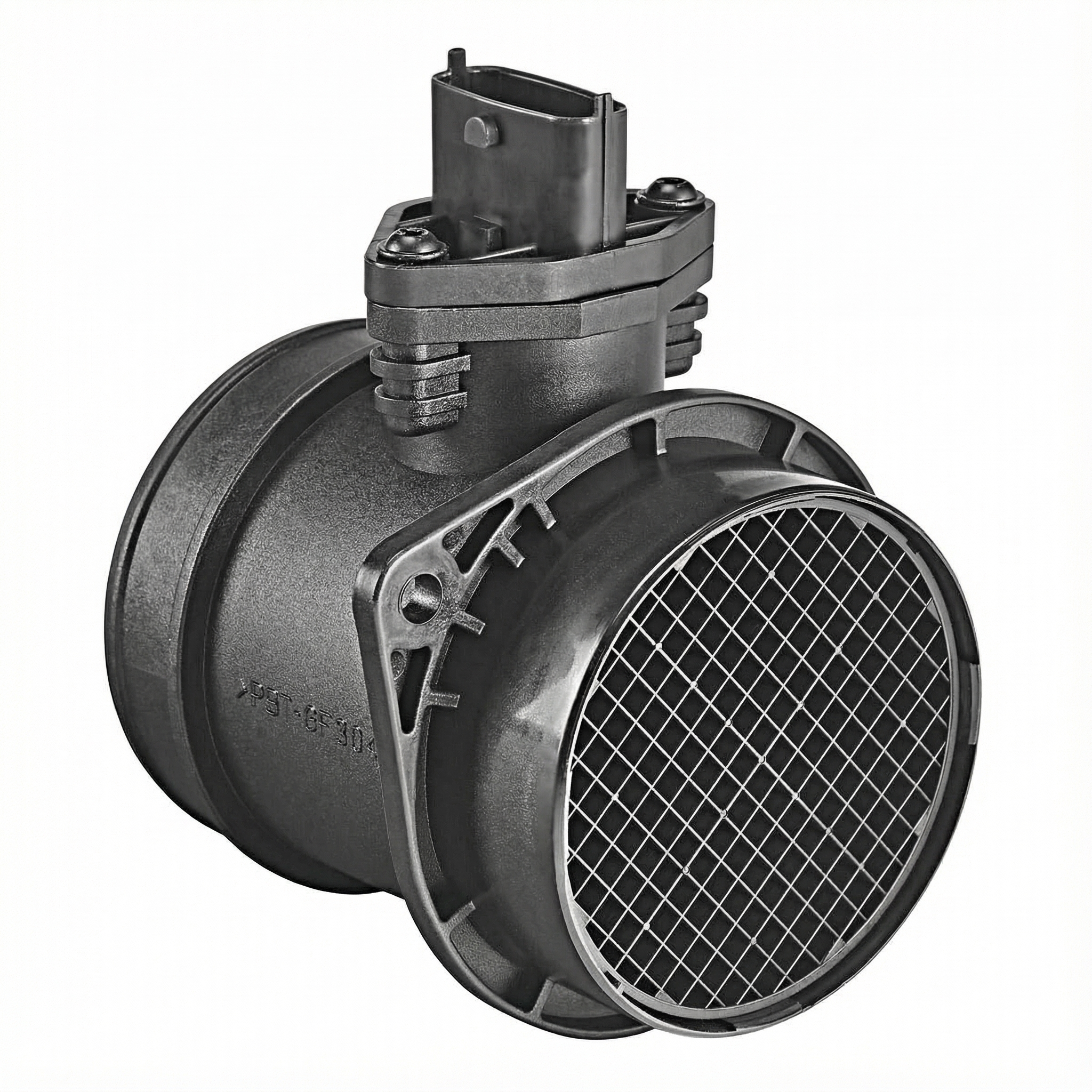
- Failing or Dirty Mass Airflow (MAF) Sensor 🔴 High Probability → Shop Fuel Injection Air Flow Meter The hot-wire MAF sensor used in the S60 is sensitive to dirt and oil contamination, which can happen over time or be accelerated by a faulty PCV system. Using non-OEM (Bosch) sensors is a frequent cause of recurring issues, as their calibration may not match Volvo's requirements.
How to confirm: Unplug the MAF sensor with the engine off. Start the engine. If the idle stabilizes and drivability improves, the MAF sensor is likely faulty as the ECU is now using a default map. You can also clean the sensor with dedicated MAF cleaner. A scan tool showing erratic or out-of-spec airflow readings (e.g., significantly different from 3-5 g/s at a stable, warm idle) points to a bad sensor.
Typical fix: Replace the MAF sensor. It is highly recommended to use an OEM Bosch part to avoid further issues.
Est. part cost: $150-$250 - Clogged PCV Breather System 🔴 High Probability The PCV system, including the oil trap box and its associated hoses, is a known weak point on the Volvo 5-cylinder engine. Infrequent oil changes or use of conventional oil can accelerate clogging.
How to confirm: Perform the 'glove test': with the engine running at idle, remove the oil filler cap and place a thin rubber glove over the opening. If the glove inflates, there is positive crankcase pressure, indicating a clogged PCV system. If it gets sucked in slightly, the system is working correctly. A smoking dipstick tube is another clear sign of excessive pressure.
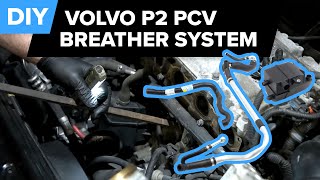
Typical fix: Replace the entire PCV breather system as a kit, including the oil trap box, and all associated hoses. This is a labor-intensive job as it is located under the intake manifold. 🎬 Watch: Full walkthrough of the PCV breather system replacement.
Est. part cost: $100-$200 - Vacuum Leaks 🟡 Medium Probability Rubber and plastic hoses become brittle with age and heat cycles. Common leak points include the large air intake hose between the MAF and throttle body, small vacuum lines connected to the intake manifold vacuum tree, and the turbo inlet hose.
How to confirm: Visually inspect all vacuum hoses for cracks or disconnection. A smoke test is the most effective method to find hard-to-see leaks. Listening for a hissing sound at idle can also pinpoint larger leaks.
Typical fix: Replace the cracked or leaking hose(s).
Est. part cost: $10-$100 - Faulty Front Oxygen (O2) Sensor 🟡 Medium Probability → Shop Oxygen Sensor The front O2 sensor (also called an Air/Fuel Ratio sensor) provides the primary data for fuel trim adjustments. They have a finite lifespan and can fail or become 'lazy', sending slow or incorrect data to the ECU.
How to confirm: Use a scan tool to monitor the front O2 sensor voltage. A healthy sensor should fluctuate rapidly between approximately 0.1 and 0.9 volts. A lazy or stuck sensor reading indicates failure.
Typical fix: Replace the front (pre-catalytic converter) oxygen sensor. Use a quality OEM-spec brand like Bosch or Denso.
Est. part cost: $100-$200
Rare But Worth Checking
- Failing Fuel Pressure Sensor: A recall (Volvo Recall #181 / NHTSA 07V226000) was issued for some 2003-2004 models for a cracking fuel pressure sensor. A failing sensor can provide incorrect fuel pressure data to the ECU, leading to improper fuel delivery and triggering fuel trim codes.
- Dirty or Failing Electronic Throttle Module (ETM): A dirty throttle body can cause erratic airflow at idle, which the ECU may struggle to compensate for. Early models (1999-2002) are also famous for ETM failure, which can cause a host of drivability issues including stalling and limp mode, sometimes accompanied by fuel trim codes.
- Leaking Fuel Injectors: An injector that is stuck open or leaking can cause a rich condition that the ECU cannot correct, triggering the code.
Diagnosis Steps
- Read all fault codes with an OBD-II scanner. Note any other codes that are present, such as P0101 or P0171/P0172.
- Perform the 'glove test' to check for positive crankcase pressure, which indicates a clogged PCV system.
- Inspect the entire air intake tract from the air filter box to the throttle body for cracks, loose clamps, or disconnections. Pay close attention to the accordion-style hoses.
- If no obvious leaks are found, perform a smoke test to identify any hidden vacuum leaks.
- With the engine off, unplug the MAF sensor. Start the engine. If the idle smooths out, the MAF is highly suspect. Do not drive the vehicle for an extended period with the MAF unplugged.
- Use a scan tool to monitor live data. Check MAF sensor readings (should be ~3-5 g/s at warm idle), and short-term/long-term fuel trims (STFT/LTFT). High positive trims (>10%) suggest a lean condition (vacuum leak), while high negative trims suggest a rich condition.
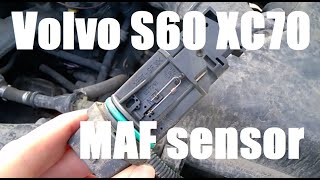
- If the MAF sensor is suspected, try cleaning it with dedicated MAF sensor cleaner. 🎬 See how to safely remove and clean your MAF sensor. If this doesn't work, replace it with a Bosch OEM part.
- If the PCV system is clogged, replace the oil trap and all associated hoses as a complete kit.
- If other causes are ruled out, test the front O2 sensor for proper operation using a scan tool and replace if it appears lazy or non-responsive.
Parts You'll Likely Need
- Mass Air Flow (MAF) Sensor
(OEM #Bosch 0280218088, 0280218089, 0280218446 (varies by engine/year))— This is one of the most common failure points for code P0170 on this vehicle.
Trusted brands: Bosch
OEM price range: $200-$250
Aftermarket price range: $50-$180 - PCV Breather System Kit
(OEM #Kit numbers vary, e.g., Genuine Volvo KIT-P2NALATE1P17 or 8692211 (box only).)— The PCV system is a known weak point that clogs over time, leading to fuel trim issues. It's best to replace the entire system (box and hoses).
Trusted brands: Genuine Volvo, FCP Euro Kit, Rein
OEM price range: $150-$200
Aftermarket price range: $80-$150 - Front Oxygen Sensor
(OEM #Bosch 17070, 17137 (varies by engine/year))— A failing front O2 sensor provides incorrect data for fuel mixture calculations, directly causing fuel trim problems.
Trusted brands: Bosch, Denso
OEM price range: $180-$250
Aftermarket price range: $100-$180
Related Codes That Often Appear With This One
- P0101 — Mass Air Flow (MAF) Circuit Range/Performance. This code often appears with P0170 because a faulty or dirty MAF sensor is a primary cause for both issues.
- P0171 / P0172 — System Too Lean (P0171) or System Too Rich (P0172). P0170 is a more general fuel trim malfunction code, while P0171 or P0172 specifies the direction of the failure (lean or rich). Your vehicle may set one of these instead of, or in addition to, P0170.
Technical Service Bulletins (TSBs) & Recalls
- Volvo Recall 181 / NHTSA Campaign 07V291000 - Relates to a potentially faulty fuel pressure sensor on 2003-2004 models that could cause drivability issues and fault codes.
Platform-Specific Known Issues
- A recall (Volvo Recall #181, NHTSA ID 07V226000) was issued for the 2003-2004 S60 and V70 concerning a faulty fuel pressure sensor that could crack and send an incorrect signal to the ECU. This could lead to a loss of power, stalling, or a Check Engine Light with fuel-related codes.
Mechanic-Grade Diagnostic Values
- Mass Airflow (MAF) Sensor Reading at Idle — expected: 3.5 - 4.5 g/s at a stable, warm idle with no electrical load.. Failure: Readings significantly above this range (e.g., >6 g/s) can indicate a post-MAF vacuum leak. Readings that are stuck or erratic indicate a failing sensor.
- Long Term Fuel Trim (LTFT) - Bank 1 — expected: Between -10% and +10%. Ideally close to 0%.. Failure: A value consistently above +10% indicates the ECU is adding fuel to compensate for a lean condition (e.g., vacuum leak). A value below -10% indicates the ECU is removing fuel to compensate for a rich condition (e.g., leaking injector). A code is often set when the sum of STFT and LTFT exceeds +/- 25%.
- Fuel Pressure (at fuel rail sensor) — expected: ~3.8 bar (55 psi) at idle.. Failure: Pressure that is significantly low, high, or unstable (especially when hot) can indicate a failing fuel pressure sensor or fuel pump.
Hidden / Shadow Codes Worth Checking
- ECM-250A: Long-term fuel trim, lower limit. This is the Volvo-specific code for a 'System Too Rich' (P0172) condition, indicating the ECU has reached its maximum limit for reducing fuel. (see via Volvo VIDA diagnostic software or an advanced professional scanner with Volvo-specific capabilities.)
- ECM-250B: Long-term fuel trim, upper limit. This is the Volvo-specific code for a 'System Too Lean' (P0171) condition, indicating the ECU has reached its maximum limit for adding fuel. (see via Volvo VIDA diagnostic software or an advanced professional scanner with Volvo-specific capabilities.)
Scan Tool Commands That Help
- Volvo VIDA or advanced scanners (e.g., YOUCANIC): Resetting adaptation of fuel and air mixture / Fuel Trim Reset — This should be performed after replacing a major fuel system component like the MAF sensor, O2 sensor, or fuel injectors. It clears the learned long-term fuel trim values, forcing the ECU to create a new fuel map with the new parts, which can resolve persistent issues and improve performance.
Wiring & Ground Locations
- Engine Block Ground Strap — A key ground strap runs from the top of the engine (near the timing belt cover) to the chassis on the passenger side strut tower.. Corrosion or a poor connection at this primary ground point can introduce electrical noise and unstable voltages to all engine sensors, including the MAF and O2 sensors, leading to erratic readings and fuel trim codes.
- MAF Sensor Connector — The electrical connector on the Mass Airflow Sensor itself.. The wiring at this connector can become brittle from heat and vibration, causing intermittent connections or breaks in the wires for power, ground, or signal, directly causing MAF-related codes like P0101 and P0170.
Real Owner Repair Stories
- volvoXC.com forum user (2006 XC70, 123k miles) — Slightly rough idle and P0170 code.
❌ Tried (didn't work) Replacing the MAF sensor, PCV system service
✅ What actually fixed it A complete throttle body cleaning with a new gasket resolved the code and idle issues. The throttle body was extremely dirty, causing it to stick. - Volvo Forums user (2006 XC70, 180k miles) — Rough start and idle, CEL with P0170.
❌ Tried (didn't work) Replacing MAF sensor with an aftermarket part, Replacing spark plugs and coils
✅ What actually fixed it An independent Volvo shop diagnosed and fixed two issues: a dirty throttle body that needed cleaning, and a faulty rear (post-catalyst) oxygen sensor that was replaced.
"I Checked Everything" — The Actual Cause
- A cracked intake manifold gasket can cause a vacuum leak that doesn't show up during a standard smoke test. The leak may only appear under specific engine vacuum or temperature conditions, making it very difficult to diagnose. The fix is to replace the intake manifold gasket.
- A leaking brake booster is a significant vacuum leak that is often overlooked. It won't be found with a smoke test of the intake manifold. It can be diagnosed by clamping the vacuum hose to the booster and observing if fuel trims improve.
- A stuck-open EVAP purge valve can create a vacuum leak that is intermittent and may not be present when a smoke test is performed.
OEM Part Supersession History
8670114→31342363— Part update/revision for the Mass Airflow sensor.
Heads up: While multiple Bosch part numbers exist, it is critical to match the correct part number to the vehicle's specific year and engine configuration (e.g., Turbo vs. N/A, 2.4L vs 2.5L). Using the wrong Bosch sensor, even if it fits physically, can cause persistent P0170/P0101 codes.
Model Year Variations Within This Range
- 2000-2002: These early P2 models used a Magneti Marelli Electronic Throttle Module (ETM), which had a very high failure rate due to a design flaw. A failing ETM can cause erratic idle and stalling, which can contribute to or be misdiagnosed as a P0170 issue. An extended warranty program was offered for these parts.
- 2003-2009: Volvo switched to a more reliable Bosch ETM starting in 2003. While still requiring occasional cleaning, the outright electronic failure is much less common than on the earlier Marelli units.
- 2005-2009: Facelift models from 2005 onward feature a more modern high-speed CAN bus electrical architecture. This changes how modules communicate but does not fundamentally alter the mechanical causes of P0170. However, diagnostics may require newer software (VIDA 2014D, for example) to communicate with all modules correctly.
Diagnostic Flowchart
Other Known Issues on This Vehicle
Issues unrelated to this code that are worth knowing about as an owner of this generation:
- Electronic Throttle Module (ETM) Failure 🔴 High — Very common on 1999-2002 models. A software update and cleaning was offered, but replacement is often necessary. (Ref: Volvo extended the warranty to 10 years/200,000 miles in the US and offered software/cleaning solutions elsewhere.)
- Driver Information Module (DIM) Failure 🟠 Medium — Extremely common across the P2 platform, especially 2002-2004 models. Symptoms include intermittent or total loss of gauges and display information. (Ref: No recall, but a well-known issue. The cause is typically cracked solder joints on the main processor, which can be repaired by specialists.)
- Automatic Transmission Shift Issues (Aisin AW55-50/51SN) 🔴 High — Common on early P2 models (2001-2003). Symptoms include harsh shifting, 'shift flares' between 2nd-3rd gear, or a 'Transmission Service Required' message. Often caused by failing valve body solenoids or outdated control module software. (Ref: No recall, but numerous software updates were released. Solenoid replacement is a common DIY/shop repair.)
- Front Upper Strut Mount Failure 🟠 Medium — Common across 2001-2009 models. Owners report loud clunking or popping noises from the front suspension when going over bumps or turning the steering wheel.
- Clogged PCV System 🔴 High — A chronic issue, especially on turbo models or if oil changes are neglected. Leads to high crankcase pressure, oil leaks from cam/main seals, and can cause P0170.
Used vs. New Parts: Buying Guide for This Vehicle
When a used part is the smart pick: For purely mechanical, non-electronic, and non-wear items, a used part can be a good value. This includes components like the intake manifold, the plastic turbo inlet pipe (if inspected carefully for cracks), or a throttle body from a post-2003 Bosch-equipped car.
Donor-vehicle mileage cap: roughly under 100000 miles for the part to have meaningful remaining life.
What to inspect on the donor part:
- For a turbo inlet pipe, squeeze and flex it to check for hidden cracks, especially on the underside.
- For an intake manifold, ensure all mounting points are intact and there are no visible cracks.
- Verify the donor vehicle's mileage and check for signs of front-end collision damage, which could have stressed plastic components.
OEM-only on this vehicle (don't cheap out):
- Mass Airflow (MAF) Sensor: Aftermarket MAF sensors are the #1 cause of repeat problems. Only use a genuine Bosch sensor matching the correct part number for your vehicle.
- PCV Breather System Kit: While some aftermarket kits (like Rein) are considered high quality, many use inferior hoses that collapse or degrade quickly. Genuine Volvo or a reputable OEM-equivalent kit is the safest bet.
- Fuel Pressure Sensor: Given its criticality and the previous recall, using a genuine Volvo or OEM part is strongly advised.
Aftermarket brands forum-validated for this vehicle:
- Bosch (for MAF, O2 Sensors, ETM)
- Denso (for O2 Sensors)
- Rein (for PCV System Kits)
Brands owners have reported issues with on this vehicle:
- Unbranded or 'white-box' Mass Airflow Sensors from online marketplaces.
- Any PCV kit with thin, flimsy-feeling hoses.
Real Owner Stories
Aggregated from forums and TSBs cited above. Mileages and costs reflect what owners reported in those sources.
2003 Volvo S60 5-cylinder
Symptoms: The vehicle experienced a loss of power, would stall unexpectedly, and the Check Engine Light came on with fuel-related codes.
What fixed it: The issue was traced to a faulty fuel pressure sensor that was prone to cracking, which was replaced under a manufacturer recall.
Source hint: Volvo Recall 181 / NHTSA Campaign 07V291000
2001 Volvo S60 5-cylinder — ~175000 miles
Symptoms: Engine had a very rough and unstable idle, hesitated badly during acceleration, and would sometimes stall, triggering fuel trim codes.
What fixed it: Replacement of the Electronic Throttle Module (ETM), which was a well-known failure point on early P2 platform models and covered under an extended warranty.
Source hint: Known issue: Electronic Throttle Module (ETM) Failure on 1999-2002 models
Related OBD-II Codes
Frequently Asked Questions
What is the 'glove test' and why is it important for a P0170 code on my S60?
I need to replace the Mass Airflow (MAF) sensor. Does the brand matter?
My 2004 S60 is stalling and has a Check Engine Light. Could this be related to a recall?
My mechanic suggested a 'smoke test' to diagnose P0170. Is this a standard procedure?
My scan tool shows high positive long-term fuel trims (LTFT). What does this indicate on my Volvo?
I'm hearing a whistling noise from the engine along with the P0170 code. Are these related?
Helpful Videos

We Have This Part in Stock

The information in this article is provided for general reference and educational purposes only. Vehicle specifications, procedures, and part compatibility can vary by production date, trim level, and region. Always consult your vehicle's factory service manual and verify part numbers before purchasing or performing repairs. Safety-critical components such as airbags, seat belts, and braking systems should be installed by a qualified professional.
- Volvo S60:
- 🧭 Diagnostic Flowchart
- 🎬 Helpful Videos
- 🛍️ Shop This Part
- What's Unique About the 2000-2009 Volvo S60
- Symptoms You May Notice
- Most Likely Causes
- Rare But Worth Checking
- Diagnosis Steps
- Parts You'll Likely Need
- Related Codes That Often Appear With This One
- Technical Service Bulletins (TSBs) & Recalls
- Platform-Specific Known Issues
- Mechanic-Grade Diagnostic Values
- Hidden / Shadow Codes Worth Checking
- Scan Tool Commands That Help
- Wiring & Ground Locations
- Real Owner Repair Stories
- "I Checked Everything" — The Actual Cause
- OEM Part Supersession History
- Model Year Variations Within This Range
- Other Known Issues on This Vehicle
- Used vs. New Parts: Buying Guide for This Vehicle
- Real Owner Stories
- 2003 Volvo S60 5-cylinder
- 2001 Volvo S60 5-cylinder — ~175000 miles
- Related OBD-II Codes
- Frequently Asked Questions
- 🎟️ Get 5% Off