

P0171 on 2013-2017 BMW X3: Causes for System Too Lean (Bank 1) on the N20 Engine
On the 2013-2017 BMW X3 with the N20 turbo engine, code P0171 is most often caused by a failed PCV system, which is integrated into the valve cover. This creates a large vacuum leak. Replacing the entire valve cover assembly is the typical fix, costing between $250 for an aftermarket part and $600+ for OEM. Other common causes include a cracked turbocharger intake pipe and a contaminated MAF sensor.
- P0171 on a BMW X3 with the N20 engine is almost always caused by unmetered air entering the engine after the MAF sensor.
- The most likely culprit is a failed PCV system, which is built into the valve cover. Check for strong suction at the oil filler cap as a primary diagnostic step.
- Before replacing any expensive parts like oxygen sensors or fuel pumps, perform a thorough smoke test to find vacuum leaks. Check the valve cover and the turbo intake pipe first.
- If no vacuum leaks are found, the next logical step is to clean the Mass Airflow (MAF) sensor with a dedicated cleaner.
- Do not immediately replace the oxygen sensor; it is almost always doing its job correctly by reporting the lean condition.
What's Unique About the 2011-2017 BMW X3
The N20 engine in the F25 X3 is a direct-injection, turbocharged engine. While many engines get lean codes from simple vacuum hose leaks, the N20's most common failure point is the Positive Crankcase Ventilation (PCV) valve diaphragm. This diaphragm is integrated directly into the plastic valve cover, meaning a small, non-serviceable part failure requires replacing the entire valve cover assembly. 🎬 Watch: Step-by-step guide to replacing the N20 valve cover assembly. This design makes a very common wear item a more involved and expensive repair than on many other vehicles. However, some aftermarket companies now offer diaphragm-only repair kits.
Generation note: The 2011-2017 year range covers the F25 generation of the BMW X3. However, the N20 2.0L Turbo engine was primarily used in the xDrive28i models from 2013-2017, replacing the older N52 inline-6 engine. This guide is specific to the N20-equipped models.
Symptoms You May Notice
- Check Engine Light illuminated
- Rough or unstable idle
- Engine hesitation or stumbling on acceleration
- Reduced power and poor performance
- Hissing or whistling noise from the engine bay, particularly around the valve cover, indicating a vacuum leak.
- Increased fuel consumption, sometimes drastically.
- In severe cases, the engine may stall
- Difficulty removing the oil filler cap with the engine running due to excessive crankcase vacuum
- Replacing the upstream oxygen (O2) sensor. The O2 sensor is usually just accurately reporting the lean condition caused by a vacuum leak or fuel delivery issue. It is rarely the root cause of the P0171 code on its own.
Most Likely Causes
- Failed PCV Valve / Valve Cover 🔴 High Probability → Shop Engine Valve Cover The PCV diaphragm is made of rubber that becomes brittle and tears over time due to engine heat cycles. It is integrated into the valve cover, making it a well-documented failure point on the N20 engine across multiple BMW models.
How to confirm: With the engine running, try to remove the oil filler cap. A failed PCV diaphragm will create extreme vacuum in the crankcase, making the cap very difficult to remove. You may also hear a loud sucking or whistling noise from the round PCV cap on the valve cover. A smoke test is definitive and will show smoke being drawn into the oil cap opening or directly into the PCV valve itself. 🎬 See how to perform a smoke test on the N20 intake.
Typical fix: The OEM-approved fix is to replace the entire valve cover assembly, which includes a new gasket and bolts. Alternatively, several aftermarket companies sell just the PCV diaphragm and cap as a standalone kit, which is a much cheaper but more involved repair that involves prying off the old cap.
Est. part cost: $30 (diaphragm kit) - $650 (OEM valve cover) - Cracked Turbocharger Intake Pipe 🟡 Medium Probability The flexible, ribbed plastic intake pipe that runs from the airbox/MAF sensor to the turbocharger inlet can become brittle from heat and vibration, developing cracks. This is a very common failure point that allows unmetered air to enter the engine post-MAF sensor.
How to confirm: Visually inspect the flexible, ribbed section of the intake pipe for cracks or splits, especially on the underside. Squeezing the pipe may reveal hidden cracks. A smoke test will quickly show leaks from this area.
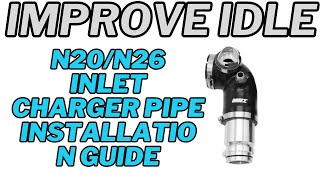
Typical fix: Replace the turbocharger intake pipe. Both OEM and more durable aftermarket (e.g., silicone) versions are available. 🎬 Watch: How to install a more durable turbo inlet pipe upgrade.
Est. part cost: $50-$150 - Dirty or Faulty Mass Airflow (MAF) Sensor 🟡 Medium Probability → Shop Fuel Injection Air Flow Meter Oil vapor from the PCV system or fine dust can contaminate the MAF sensor's delicate wires, causing it to under-report the amount of air entering the engine. The DME then injects too little fuel, creating a lean condition.
How to confirm: First, try cleaning the sensor with a dedicated MAF sensor cleaner spray; never touch the sensor wires. If cleaning doesn't resolve the issue or if fuel trims don't improve, the sensor may need replacement. Unplugging the MAF sensor and seeing if the engine runs better can be a diagnostic clue, as the DME will revert to a base map. However, this is not a definitive test.
Typical fix: Clean the sensor with MAF cleaner. If the problem persists, replace the MAF sensor with a quality OEM-supplier brand like Bosch.
Est. part cost: $10 (cleaner) - $200 (new sensor) - Leaking Fuel Injector Seals or Faulty Injectors ⚪ Low Probability → Shop Fuel Injector The Teflon seals on the direct fuel injectors can degrade over time, creating a small vacuum leak at the cylinder head. Less commonly, an injector can become clogged and deliver insufficient fuel. This is harder to diagnose and usually considered after more common causes are ruled out.
How to confirm: This is more difficult to diagnose. It may require swapping injectors between cylinders to see if misfires or fuel trim issues follow. A professional may be needed to perform flow testing. It is critical that new injectors are coded to the DME using diagnostic software, as each injector has a specific flow-rate value stamped on it that the computer needs.
Typical fix: Replace the faulty fuel injector and its Teflon seal. New injectors must be calibrated to the engine computer (DME).
Est. part cost: $50-$250 per injector
Rare But Worth Checking
- Failing High-Pressure Fuel Pump (HPFP): → Shop Fuel Pump While more likely to cause other codes or more severe symptoms, a weak HPFP can lead to low fuel pressure under load, contributing to a lean condition.
- Exhaust Leak Before Oxygen Sensor: → Shop Oxygen Sensor A crack in the exhaust manifold or a leaking gasket before the upstream O2 sensor can allow outside air to be drawn in, making the sensor read lean. This is uncommon but possible.
- Leaking Oil Filter Housing Gasket (OFHG): While primarily known for causing oil leaks, a severely degraded OFHG can in some cases create a vacuum leak, as it is sealed against the engine block. This is a very common wear item on the N20 engine.
Diagnosis Steps
- Read Fault Codes: Use a BMW-capable OBD-II scanner to confirm P0171 and the corresponding BMW code (e.g., 118001) and check for any other stored codes.
- Check Fuel Trims: View live data on the scanner. Look at Long Term Fuel Trim (LTFT) for Bank 1. A value consistently above +15%, and especially over +25%, confirms a significant lean condition that the DME is trying to correct.
- Check PCV System: With the engine idling, carefully try to remove the oil filler cap. If there is extreme suction holding it on, or a loud whistling/sucking sound, the PCV valve in the valve cover has likely failed.
- Basic Visual Inspection: Check for obvious issues like a loose oil filler cap, disconnected hoses, or visible cracks in the intake air pipe between the MAF sensor and the turbo.
- Perform a Smoke Test: This is the most effective way to find vacuum leaks. Introduce smoke into the intake system (after the MAF sensor) and look for smoke escaping from the valve cover (especially the round PCV cap), intake pipe, gaskets, or vacuum hoses.
- Clean the MAF Sensor: If no vacuum leaks are found, remove and clean the MAF sensor using a dedicated MAF cleaner spray. Allow it to dry completely before reinstalling.
- Test Fuel Pressure: If the above steps do not reveal the cause, the fuel system should be checked. This involves testing the pressure from both the low-pressure and high-pressure fuel pumps, which may require specialized tools and software.
Parts You'll Likely Need
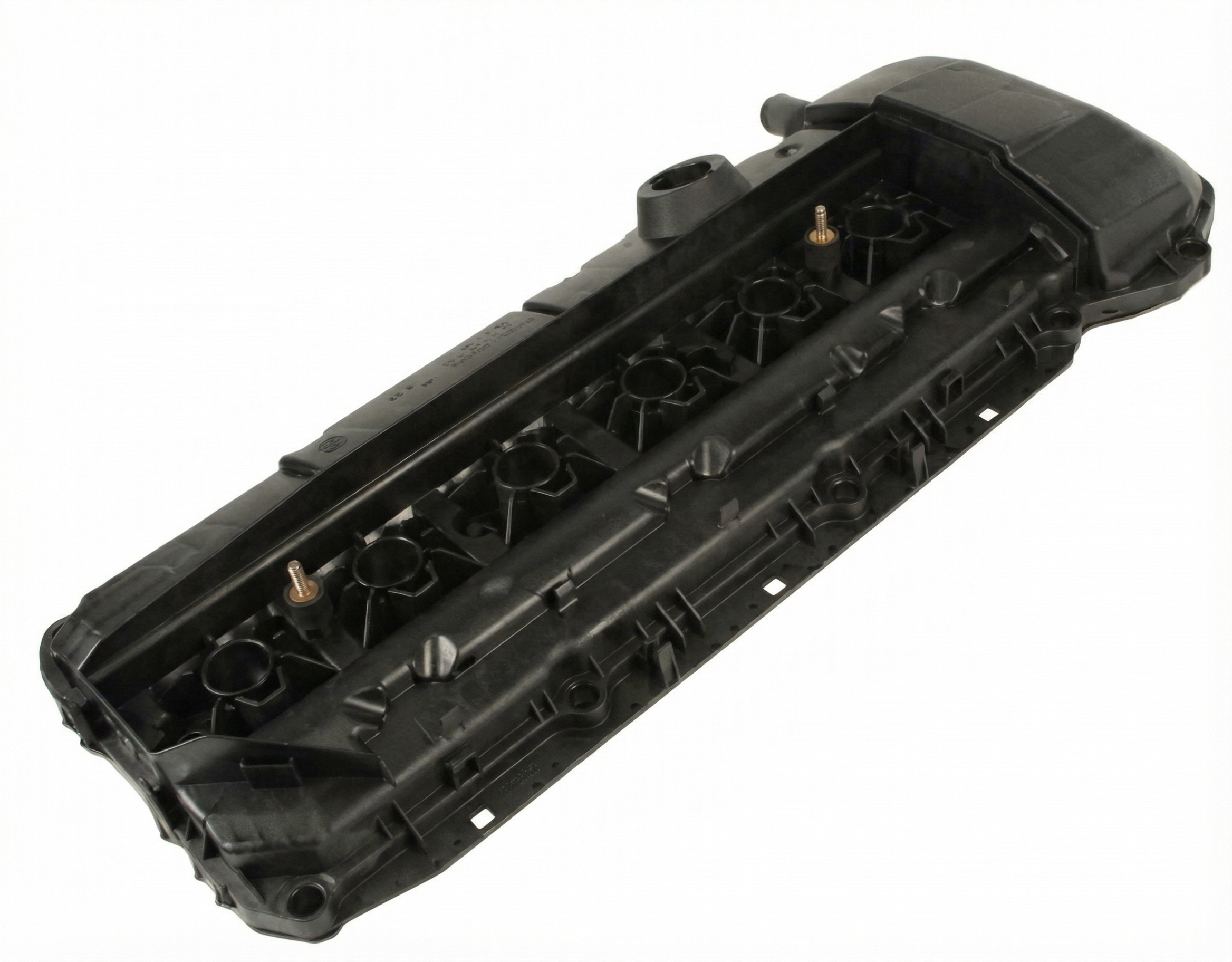
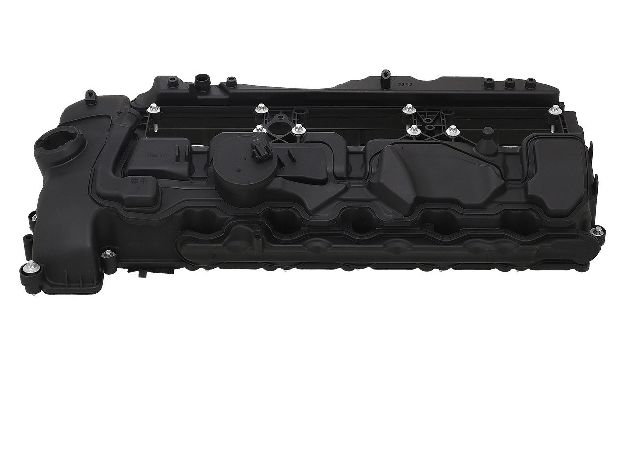
- Valve Cover Assembly
(OEM #11127588412)— This is the most common cause. The PCV diaphragm fails and is integrated into the cover, requiring replacement of the entire assembly for an OEM fix.
Trusted brands: BMW (OEM), Elring, Vaico, Rein
OEM price range: $500-$650
Aftermarket price range: $150-$300 - Turbocharger Intake Pipe
(OEM #13717605638)— The plastic becomes brittle and cracks, creating a significant unmetered air leak before the turbo.
Trusted brands: BMW (OEM), Rein, FTP Motorsport (Upgrade)
OEM price range: $100-$150
Aftermarket price range: $40-$80 - Mass Airflow (MAF) Sensor
(OEM #13627593624)— Can become contaminated and provide incorrect airflow readings to the DME. Often replaced after vacuum leaks are ruled out.
Trusted brands: Bosch
OEM price range: $250-$350
Aftermarket price range: $150-$220 - PCV Diaphragm Repair Kit — A cost-effective alternative to replacing the entire valve cover. Repairs the most common failure point (the diaphragm) for a fraction of the price.
Trusted brands: Vaico
Aftermarket price range: $25-$50
Related Codes That Often Appear With This One
- P0174 (System Too Lean Bank 2) - Not applicable to the N20 as it only has one bank.
- P030x (Cylinder Misfire) - A lean condition can lead to misfires in one or more cylinders.
- 118001 (Mixture control: Fuel-air mixture, too lean) - This is the BMW-specific code that corresponds to the generic P0171.
- 11A002 (High-pressure fuel, plausibility: pressure too low) - Can occur if a failing HPFP is the root cause.
- 102001 (Air mass too high) - Can accompany the lean codes, indicating a discrepancy between measured and expected airflow.
Technical Service Bulletins (TSBs) & Recalls
- SIB 11 03 17: 'N20 AND N26 ENGINE TIMING CHAIN AND OIL PUMP DRIVE CHAIN: LIMITED WARRANTY EXTENSION'. This bulletin details the extended warranty (7 years/70,000 miles) for the timing chain components due to defects in materials of the guides. It is not directly related to P0171 but is a critical issue for the N20 engine.
Platform-Specific Known Issues
- The N20 engine was subject to a class-action lawsuit and extended warranty program (not a recall) for premature timing chain guide failure. While not a direct cause of P0171, it's a critical issue for owners to be aware of for this engine. A failing timing chain can cause catastrophic engine damage.
Mechanic-Grade Diagnostic Values
- Low-Pressure Fuel Pump (LPFP) Pressure — expected: ~70-85 PSI. Failure: Pressure consistently below 70 PSI, especially under load. A reading as low as 20 PSI indicates clear failure.
- High-Pressure Fuel Pump (HPFP) Pressure at Idle — expected: 7.5 MPa (approx. 1087 PSI). Failure: Significantly lower readings, such as 1-1.5 MPa (145-217 PSI), when the target is much higher, indicate a failing HPFP.
- High-Pressure Fuel Pump (HPFP) Pressure Under Load — expected: Up to 20 MPa (approx. 2900 PSI). Failure: Failure to reach target pressure under acceleration is a key sign of a weak HPFP.
- Long Term Fuel Trim (LTFT) at Idle — expected: Ideally close to 0%, but under +/- 10% is generally acceptable.. Failure: Sustained values of +20% or higher strongly indicate a vacuum leak or fuel delivery issue that the DME is compensating for.
Hidden / Shadow Codes Worth Checking
- 118001: Mixture control: Fuel-air mixture, too lean. This is the primary BMW-specific equivalent of P0171. (see via BMW-specific diagnostic tools like ISTA, or higher-end OBD-II scanners.)
- 118401: Mixture control: Fuel-air mixture, too lean, large deviation. Indicates a more severe lean condition than 118001. (see via BMW-specific diagnostic tools like ISTA.)
- 11A002: High-pressure fuel, plausibility: Pressure too low. Often appears when a failing HPFP is the root cause of the lean condition. (see via BMW-specific diagnostic tools like ISTA.)
- 102001: Air mass too high. Can be triggered alongside lean codes when there's a discrepancy between what the MAF sensor reports and what the DME calculates. (see via BMW-specific diagnostic tools like ISTA.)
Scan Tool Commands That Help
- ISTA (or equivalent professional scanner): Reset adaptations / Clear adaptations — This should be performed after replacing a major component causing the lean code, such as a valve cover, MAF sensor, or fuel pump. It clears the long-term fuel trim values, forcing the DME to re-learn the fuel map with the new, correct parameters.
- ISTA (or equivalent professional scanner): Register new fuel injectors — It is mandatory to perform this function when replacing fuel injectors. Each injector has a specific flow rate value that must be programmed into the DME to ensure correct fueling and prevent lean or rich conditions.
Real Owner Repair Stories
- Bimmerpost user (2012 BMW 328i (F30) with N20 engine) — P0171 lean code, LTFT at 29.69% at idle.
❌ Tried (didn't work) Replaced MAF sensor, Replaced ignition coils, Replaced spark plugs, Performed a smoke test which revealed no leaks
✅ What actually fixed it The previous owner or a shop had installed the wrong type of fuel injectors (EU6 version in a car requiring EU5). After swapping in the correct EU5 injectors and coding them with ISTA, the lean code was resolved. - Reddit r/BmwTech user (2012 F10 5-series with N20 engine) — P0171, consistently high LTFT of +20%, poor fuel economy.
❌ Tried (didn't work) Replaced 4 new coils and plugs, Replaced HPFP and 4 new injectors, Replaced both upstream and downstream oxygen sensors, Replaced MAF sensor, Multiple smoke tests at different shops found no leaks
✅ What actually fixed it The user's story was unresolved in the thread, but a top-rated technician comment pointed out that after all those parts were replaced, the next step is to measure crankcase pressure to definitively test the PCV system in the valve cover, even if a smoke test is negative. This highlights that even with a new-ish valve cover, the PCV can fail and may not show up on a standard smoke test. - NHTSA ODI #11456966 (BMW 328I) — An owner reported that the car experienced a misfire and rough idle, followed by powertrain warning lights. Diagnostic scanning revealed a P0171 code along with an O2 sensor code.
"I Checked Everything" — The Actual Cause
- A user on a Bimmerpost forum reported chasing a P0171 code on a 2012 N20. After replacing the MAF, coils, and plugs with no success, a smoke test also came back clean. The ultimate cause was found to be incorrect fuel injectors (EU6 spec) installed in a car that required EU5 spec injectors. The physical difference is subtle, but the flow characteristics are different enough to cause a persistent lean code that a smoke test would never find.
When the Usual Fixes Don't Work
- While the valve cover/PCV and intake boot are the most common culprits, there are many documented cases on forums where these have been replaced without fixing the P0171 code. In one such case, after a smoke test passed and multiple parts were replaced, the actual cause was incorrect fuel injectors (EU6 instead of EU5) having been installed by a previous owner. This highlights the importance of verifying part numbers, especially on a vehicle with unknown history, before continuing to replace common-fail items.
OEM Part Supersession History
13517584461→13518604229— Updated design for the High-Pressure Fuel Pump (HPFP).
Heads up: Models built before March 2014 often require a special wiring adapter harness (PN 12518638006) to fit the updated pump.
Model Year Variations Within This Range
- 2011-2014 (pre-March): When replacing the High-Pressure Fuel Pump (HPFP), early N20 engines require a wiring adapter harness (PN 12518638006) to connect the updated HPFP (PN 13518604229) to the older engine harness. Later models do not need this adapter.
Diagnostic Flowchart
Other Known Issues on This Vehicle
Issues unrelated to this code that are worth knowing about as an owner of this generation:
- Timing Chain Guide Failure 🔴 High — Very common, especially on 2012-2015 models. Can occur any time after 50,000 miles. A whining noise from the front of the engine is the primary warning sign. (Ref: SIB 11 03 17 (Warranty Extension), Class Action Lawsuit Settlement)
- Oil Filter Housing Gasket (OFHG) Leak 🟠 Medium — Extremely common. Gasket typically hardens and starts leaking between 60,000 and 100,000 miles, dripping oil onto the accessory belt and alternator.
- Valve Cover & Gasket Oil Leak 🟠 Medium → Shop Engine Valve Cover — Common. The plastic valve cover can warp or crack, and the gasket hardens over time, causing oil to leak onto the exhaust manifold, creating a burning smell. Often occurs after 70,000 miles.
Used vs. New Parts: Buying Guide for This Vehicle
When a used part is the smart pick: For this repair, buying used parts is generally not recommended for the primary failure items. The key components that cause P0171 (valve cover, intake pipe, MAF sensor) fail due to age, heat, and wear. A used part from a junkyard is likely to have similar wear and could fail soon after installation.
Donor-vehicle mileage cap: roughly under 40000 miles for the part to have meaningful remaining life.
What to inspect on the donor part:
- For a valve cover, inspect the area around the PCV cap for any signs of cracking or oil residue, which might indicate a failing diaphragm.
- For an intake pipe, squeeze the flexible ribbed section to check for any brittleness or hidden cracks that aren't visible.
- Verify the donor vehicle's mileage; lower is always better.
OEM-only on this vehicle (don't cheap out):
- Mass Airflow (MAF) Sensor: Many forum users report issues with non-OEM or non-Bosch MAF sensors causing persistent or new codes. It is highly recommended to use the OEM supplier (Bosch) for this part.
- High-Pressure Fuel Pump (HPFP): Given the criticality of this component and the potential for engine damage upon failure, using a new OEM (Bosch) or Genuine BMW pump is the safest choice.
Aftermarket brands forum-validated for this vehicle:
- Valve Cover: Rein, Elring, Vaico are reputable OEM suppliers.
- Turbo Intake Pipe: Rein (OEM style), FTP Motorsport (upgraded silicone).
Brands owners have reported issues with on this vehicle:
- Unbranded or 'no-name' MAF sensors from online marketplaces are a frequent source of problems.
- Extremely cheap plastic valve covers may use lower-quality plastic or gaskets that can warp or fail prematurely.
Real Owner Stories
Aggregated from forums and TSBs cited above. Mileages and costs reflect what owners reported in those sources.
2012-2016 BMW 328i N20
Symptoms: Persistent P0171 lean codes in cold weather, with Long Term Fuel Trim (LTFT) values reaching +29%. Fuel trims would sometimes decrease with throttle and sometimes increase.
What fixed it: The owner discussed replacing parts and investigating vacuum leaks, which are common causes for these symptoms on the N20 platform.
Source hint: Bimmerpost (F30 Forum): 328i N20 - P0171 Lean codes all time
2013 BMW X3 N20
Symptoms: Struggling with a P0171 code after an engine replacement.
What fixed it: The discussion highlights the necessity of coding new fuel injectors to the DME, as each has a specific flow value that must be programmed to avoid fuel trim issues.
Source hint: Bimmerpost (X3 F25 Forum): 2013 X3 N20 Engine Replaced - P0171 Error Code - HELP!
BMW N20
Symptoms: Chasing a P0171 code and replacing numerous parts including the High Pressure Fuel Pump (HPFP), injectors, O2 sensors, and MAF without success.
What fixed it: The solution suggested was focusing on a vacuum leak specifically from a failed PCV in the valve cover.
Source hint: Reddit (r/BmwTech): P0171 System too lean - weird issues with BMW N20
NHTSA Reported Incident
Symptoms: An owner reported a misfire and rough idle, followed by powertrain warning lights. Diagnostic scanning revealed a P0171 code along with an O2 sensor code.
What fixed it: Documented in NHTSA ODI #11456966.
Source hint: NHTSA ODI #11456966
Related OBD-II Codes
Frequently Asked Questions
Does SIB 11 03 17 apply to my 2011-2017 BMW X3 with the N20 engine?
Why is it so hard to remove my oil filler cap while the engine is running?
Can I just replace the PCV valve on my X3, or do I need a whole new valve cover?
Is there a common plastic part that cracks and causes P0171 on the N20?
Do I need to do anything special if I replace a fuel injector to fix a lean condition?
Will cleaning the MAF sensor fix my P0171 code?
Helpful Videos
Used OEM Parts in Stock
New Aftermarket Parts Available


The information in this article is provided for general reference and educational purposes only. Vehicle specifications, procedures, and part compatibility can vary by production date, trim level, and region. Always consult your vehicle's factory service manual and verify part numbers before purchasing or performing repairs. Safety-critical components such as airbags, seat belts, and braking systems should be installed by a qualified professional.
- BMW X3:
- 🧭 Diagnostic Flowchart
- 🎬 Helpful Videos
- 🛍️ Shop This Part
- What's Unique About the 2011-2017 BMW X3
- Symptoms You May Notice
- Most Likely Causes
- Rare But Worth Checking
- Diagnosis Steps
- Parts You'll Likely Need
- Related Codes That Often Appear With This One
- Technical Service Bulletins (TSBs) & Recalls
- Platform-Specific Known Issues
- Mechanic-Grade Diagnostic Values
- Hidden / Shadow Codes Worth Checking
- Scan Tool Commands That Help
- Real Owner Repair Stories
- "I Checked Everything" — The Actual Cause
- When the Usual Fixes Don't Work
- OEM Part Supersession History
- Model Year Variations Within This Range
- Other Known Issues on This Vehicle
- Used vs. New Parts: Buying Guide for This Vehicle
- Real Owner Stories
- 2012-2016 BMW 328i N20
- 2013 BMW X3 N20
- BMW N20
- NHTSA Reported Incident
- Related OBD-II Codes
- Frequently Asked Questions
- 🎟️ Get 5% Off