

P0171 on 2000-2006 BMW X5 3.0L: M54 Lean Code Causes and Fixes
On a 2000-2006 BMW X5 with the 3.0L M54 engine, code P0171 is almost always caused by a vacuum leak from aged rubber or plastic parts. The most likely culprits are cracked intake boots or a failed Crankcase Ventilation (CCV) system. A smoke test is the best way to find the leak before buying parts. It is extremely common for this code to appear with P0174 (System Too Lean, Bank 2), as the root causes affect the entire engine.
- P0171 on the E53 X5 3.0L almost always points to a vacuum leak.
- Do not replace the oxygen sensors first. They are likely working correctly.
- A smoke test is the fastest and most accurate way to diagnose the problem. It will save you time and money.
- The most common leaks are from the intake boots (especially the lower one), the CCV system hoses, and the DISA valve O-ring.
- If you have high mileage, consider replacing the entire CCV system and both intake boots as a set to prevent future issues.
What's Unique About the 2000-2006 BMW X5
The M54 engine, while known for its smoothness, is notorious for vacuum leaks as it ages. The plastic and rubber compounds used for the extensive crankcase ventilation (CCV) system and intake tract become brittle from constant exposure to heat and oil vapor. Consequently, P0171 on this specific X5 is overwhelmingly caused by a physical breach in the intake system rather than a faulty sensor or fuel pump, which might be more common on other vehicles. These leaks are so common that many owners replace the entire CCV system and intake boots as preventative maintenance around 100,000 miles.
Symptoms You May Notice
- Rough or unstable idle, sometimes 'bouncing' up and down
- Hesitation or stumbling during acceleration
- Reduced fuel economy
- A distinct whistling or hissing sound from the engine bay at idle
- Difficulty starting the engine, especially when cold
- Misfires, which may trigger additional codes (P0300-P0303)
- Excessive oil consumption (if the CCV system is the cause)
- Replacing the pre-catalyst oxygen (O2) sensors. The O2 sensors are almost always functioning correctly by reporting the lean condition. The fault lies with unmetered air or a fuel delivery problem, not the sensor itself. Replacing them is an expensive and ineffective fix for this code.
Most Likely Causes
- Cracked/Torn Intake Boots 🔴 High Probability The rubber boots, especially the lower one with accordion-style ribs connecting to the idle control valve, are subjected to constant heat and vibration, causing them to crack and create large vacuum leaks.
How to confirm: Visually inspect the upper and lower intake boots for cracks, especially in the folds and at the connection points. A smoke test will definitively show a leak from this area. Spraying carb cleaner near the boots with the engine running may cause a change in idle speed, indicating a leak.
Typical fix: Replace both the upper and lower intake boots. It is recommended to replace them as a pair. The upper boot is part number 13541705209 and the lower boot is 13541438759.
Est. part cost: $40-$80 - Failed Crankcase Ventilation (CCV) System 🔴 High Probability The plastic hoses and the oil separator valve itself become extremely brittle and clog with oil sludge and condensation, especially in colder climates. A failure in this system creates a massive internal vacuum leak. The 'cold climate' version with insulated hoses is a highly recommended upgrade for all climates due to its improved durability.
How to confirm: A loud whistling or 'howling' noise from the engine is a strong indicator. Another test is to try to remove the oil filler cap while the engine is running; if there is extreme vacuum holding it on, the CCV has failed. A smoke test will show smoke billowing from the failed component or being drawn into the oil dipstick tube.
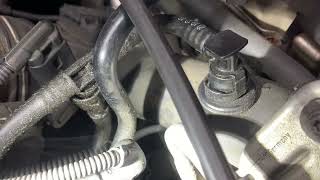
Typical fix: Replace the entire CCV system, including the oil separator valve and all four associated hoses. 🎬 See this step-by-step CCV system replacement walkthrough. This is sold as a complete kit. The cold climate version kit is part number 11617534237K.
Est. part cost: $70-$200 - Leaking DISA Valve O-Ring 🟡 Medium Probability The original O-ring on the DISA (Differentiated Intake System) valve is a flat, molded seal that hardens and flattens over time, losing its ability to seal against the intake manifold. This is a very common and often overlooked leak point.
How to confirm: With the engine running, spray brake cleaner or a similar combustible fluid around the DISA valve housing. If the engine RPM changes, a leak is present. A smoke test will also reveal the leak. The valve itself can also fail internally, creating a rattling noise.
Typical fix: Remove the DISA valve (two Torx T40 bolts), carefully scrape out the old, flat seal, and install a new, round Viton or Fluorosilicone O-ring. 🎬 Watch: How to fix your DISA valve for just a few dollars. Many aftermarket kits are available for this specific purpose, such as a 2-214 size O-ring.
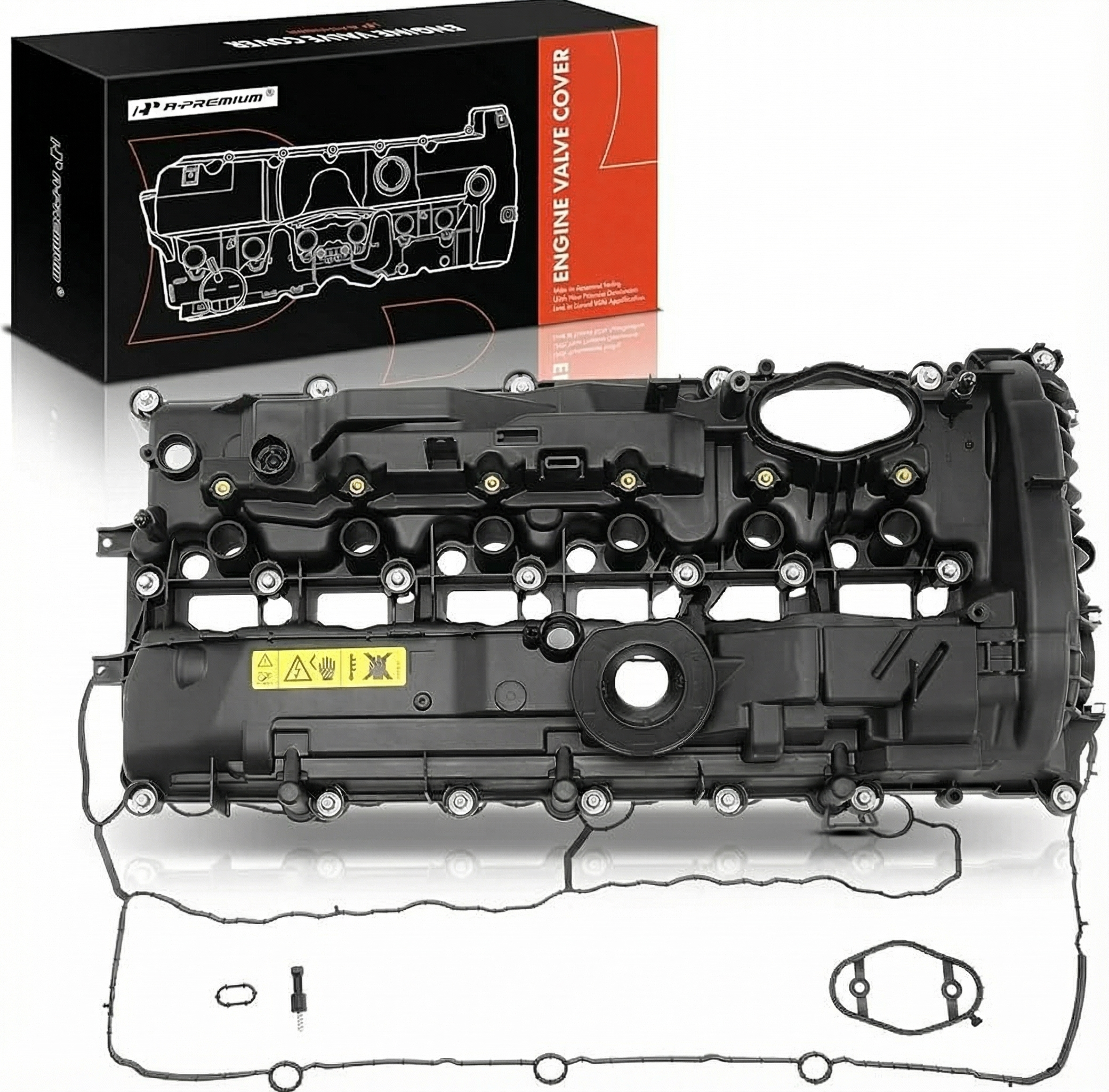
Est. part cost: $5-$20 - Leaking Valve Cover Gasket 🟡 Medium Probability → Shop Engine Valve Cover The gasket becomes hard and brittle with age, allowing unmetered air to be drawn into the crankcase, which then enters the intake via the CCV system. A failed CCV can also create excess crankcase pressure and blow out an already weak gasket.
How to confirm: Look for oil leaking from the edges of the valve cover, especially onto the exhaust manifold which will cause a burning oil smell. A smoke test may show smoke escaping from the gasket edges. The leak is often most prominent at the rear corners of the engine.
Typical fix: Replace the valve cover gasket, along with the 15 grommets for the retaining nuts and the spark plug well seals. This is often sold as a complete kit.
Est. part cost: $30-$70 - Clogged Fuel Filter / Failing Fuel Pressure Regulator ⚪ Low Probability → Shop Fuel Filter On the M54, the fuel filter and fuel pressure regulator are a single, integrated unit. If it becomes clogged or the regulator fails, it can reduce fuel pressure and cause a lean condition across both banks. This is less common than vacuum leaks but becomes a primary suspect if no leaks are found.
How to confirm: Perform a fuel pressure test at the fuel rail schrader valve. The pressure should be approximately 3.5 bar (50.7 psi) at idle. If pressure is low, or if it drops quickly after shutting the engine off, the filter/regulator assembly is the likely cause.
Typical fix: Replace the fuel filter and regulator assembly, which is located under the vehicle on the driver's side. The OEM part number is typically 16146757196.
Est. part cost: $50-$100
Rare But Worth Checking
- Leaking Oil Dipstick Guide Tube O-Ring: The O-ring at the base of the dipstick tube where it enters the oil pan can fail, creating a vacuum leak into the crankcase. This is often overlooked but easy to check during a smoke test. It is often replaced during a CCV system overhaul.
- Faulty Mass Airflow (MAF) Sensor: → Shop Fuel Injection Air Flow Meter Less common than vacuum leaks, a dirty or failing MAF sensor can under-report the amount of air entering the engine, causing the DME to inject too little fuel. Cleaning the sensor with a dedicated MAF cleaner is a good first step. A failing sensor might read around 4 g/s at idle, which seems normal, but fail to report correctly under load.
- Leaking Fuel Injector O-Rings: → Shop Fuel Injector The o-rings that seal the fuel injectors to the intake manifold can become hard and crack, allowing a small amount of unmetered air to enter each cylinder runner. This is more likely to cause a single-bank code but can contribute to a dual-bank lean condition.
Diagnosis Steps
- Scan for codes. Note if P0171 is present alone or with P0174. If both are present, a large 'global' vacuum leak is almost certain. Note the Long Term Fuel Trim (LTFT) values; numbers above +10% indicate a significant lean condition.
- Perform a visual inspection. Look for obvious cracks in the upper and lower intake boots, especially the accordion section of the lower boot. Check for brittle or broken vacuum lines and caps.
- Listen to the engine at idle. A loud whistling or hissing sound is a clear sign of a vacuum leak.
- Check CCV function. With the engine idling, carefully try to remove the oil filler cap. If it is held on by strong vacuum and is difficult to remove, the CCV valve has failed and is stuck open.
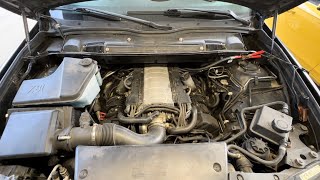
- Perform a smoke test. This is the most effective method. 🎬 Watch: How to find vacuum leaks using a smoke machine. Introduce smoke into the intake system after the MAF sensor. Smoke will emerge from any cracks or bad gaskets, pinpointing the exact location of the leak(s). Common leak points are the intake boots, CCV hoses, DISA valve seal, valve cover gasket, and oil dipstick tube o-ring.
Parts You'll Likely Need
- Crankcase Ventilation (CCV) System Kit (Cold Climate Version)
(OEM #11617534237K)— This is the most comprehensive fix for the most common failure point. The kit replaces the brittle valve and all four insulated hoses. - Upper and Lower Intake Boots
(OEM #13541705209, 13541438759)— These rubber boots are a primary failure point for vacuum leaks due to cracking. - DISA Valve O-Ring
(OEM #N/A (Aftermarket Viton/Fluorosilicone recommended))— The original seal flattens and fails, creating a common vacuum leak. - Valve Cover Gasket Kit
(OEM #11129070990)— The gasket and grommets harden and leak oil externally and unmetered air internally. - Fuel Filter / Pressure Regulator
(OEM #16146757196)— A potential cause of lean codes if no vacuum leaks are present.
Related Codes That Often Appear With This One
- P0174 — System Too Lean (Bank 2). This code is the counterpart for the second bank of cylinders (4-6). Since the most common causes are large vacuum leaks that affect the entire engine (intake boots, CCV), it is very common to see both P0171 and P0174 together. If you have both codes, a large, 'global' vacuum leak is almost certain.
- P0300-P0306 — Cylinder Misfire Codes. A severe lean condition prevents proper combustion, leading to misfires. The specific code (e.g., P0301 for cylinder 1) can sometimes help pinpoint a localized issue like a single bad fuel injector, though it's often a random misfire code (P0300) caused by a large vacuum leak.
Mechanic-Grade Diagnostic Values
- Long-Term Fuel Trim (LTFT) — expected: Below +/- 5%. Failure: Sustained positive values above +10% confirm the DME is adding significant fuel to compensate for a lean condition. Values may approach or exceed +25% before setting a code.
- Mass Air Flow (MAF) Sensor at idle — expected: Approximately 3.0-4.0 g/s for a 3.0L M54 engine at warm idle with no accessories on. A common rule of thumb is 1 g/s per liter of displacement.. Failure: Readings significantly lower than 3.0 g/s (e.g., 2.0-2.5 g/s) at idle may indicate a failing MAF that is under-reporting airflow, causing a lean condition.
- Fuel Pressure at fuel rail (engine running) — expected: ~3.5 bar (50.7 psi).. Failure: Pressure significantly below 3.0 bar (~44 psi) while idling or revving indicates a failing fuel pump or clogged fuel filter/regulator assembly.
- Fuel Pressure Bleed-Down (engine off) — expected: Pressure should hold above 3.0 bar (43.5 psi) for at least 20 minutes after the engine is shut off.. Failure: A rapid drop in pressure after shutdown points to a leaking fuel injector, a bad check valve in the fuel pump, or a leak in the fuel line.
Hidden / Shadow Codes Worth Checking
- 2882: DME: Fuel Trim, Bank 1, Permissible Range Exceeded (Lean) (see via BMW-specific diagnostic software like INPA, ISTA, or advanced scanners like Foxwell. This is the manufacturer-specific equivalent of P0171.)
- 2883: DME: Fuel Trim, Bank 2, Permissible Range Exceeded (Lean) (see via BMW-specific diagnostic software like INPA, ISTA, or advanced scanners. This is the manufacturer-specific equivalent of P0174 and is almost always present with 2882.)
Scan Tool Commands That Help
- INPA/ISTA: Reset Fuel Trim Adaptations — This function should be performed after a vacuum leak or fuel system component has been replaced. It clears the long-term fuel trim values stored by the DME, forcing it to re-learn the fuel mixture from a zero baseline. Failing to do this can cause the engine to run poorly until it adapts on its own.
Wiring & Ground Locations
- Engine Ground Strap — On the E53 X5, the main engine-to-chassis ground strap is located on the lower passenger side (right side) of the engine, running from the engine mount area to the chassis frame rail. It is best accessed from underneath the vehicle.. A corroded or loose ground strap can cause erratic voltage signals for all engine sensors, including the MAF and Oxygen sensors. This can lead to incorrect readings and phantom lean or rich codes. While not a common cause for P0171 specifically, it can cause a host of bizarre electrical issues and is a critical component to check.
Real Owner Repair Stories
- r/e46 Reddit user (BMW E46 330i (M54 engine)) — Persistent P0171 and P0174 codes returning 20-45 minutes after clearing, despite the car running fine with no misfires. LTFTs were high (+11%).
❌ Tried (didn't work) Smoke test (found and fixed initial leaks), Replaced pre-cat O2 sensors, Replaced MAF sensor with OEM Bosch unit
✅ What actually fixed it The user suspected a fuel delivery issue. Another user in the thread confirmed they had the same issue and resolved it by replacing the fuel pump, which had a faulty check valve causing the fuel rail to lose pressure. After replacing the pump, their codes went from P0171/P0174 to just P0174, indicating the next step was the fuel filter/regulator. - NHTSA ODI #11456966 (BMW 328i) — An owner reported that their car experienced a misfire and rough idle, followed by powertrain warning lights. Diagnostic scanning revealed code P0171 along with an O2 sensor code.
"I Checked Everything" — The Actual Cause
- After performing a smoke test that showed no leaks and replacing the MAF and O2 sensors, a common culprit is the integrated fuel filter and pressure regulator assembly. If the regulator fails or the filter is severely clogged, it cannot supply the 3.5 bar (50.7 psi) of fuel pressure required, starving the engine for fuel and causing a lean condition that a smoke test will not find.
- A weak fuel pump can also be the cause. Even if it provides adequate pressure at idle, it may not be able to keep up with demand under load, leading to lean codes. A fuel pressure test that includes checking pressure under load and a bleed-down test is crucial if no vacuum leaks are found.
OEM Part Supersession History
Standard CCV System→Cold Climate Version CCV System (e.g., Kit 11617534237K)— The standard CCV system was prone to clogging with a yellowish sludge ('mayonnaise') from oil and condensation, especially in cold weather or on cars driven short distances. This could cause the system to freeze and fail, leading to high crankcase pressure.
Heads up: The Cold Climate Version is a direct, recommended upgrade for all climates due to its insulated hoses which help keep the system warm and prevent condensation buildup. It is fully compatible.
Model Year Variations Within This Range
- 2000-2002 (approx.): Early M54 engines used the Siemens MS43 DME. These systems had a separate Intake Air Temperature (IAT) sensor located on the intake manifold.
- 2003-2006 (approx.): Later M54 engines used the Siemens MS45 DME. On these systems, the IAT sensor was integrated into the Mass Airflow (MAF) sensor, and there is no separate sensor on the manifold. This can change diagnostic steps when troubleshooting sensor-related issues.
Diagnostic Flowchart
Other Known Issues on This Vehicle
Issues unrelated to this code that are worth knowing about as an owner of this generation:
- Cooling System Failure 🔴 High — Very common after 80,000-100,000 miles. The plastic expansion tank, radiator end tanks, water pump, and thermostat housing are all prone to cracking.
- VANOS Seal Degradation 🟠 Medium — Extremely common with age and mileage (typically over 70,000 miles). The original Buna-rubber seals wear out, causing loss of low-end torque, rough cold idle, and poor fuel economy.
- Oil Filter Housing Gasket (OFHG) Leak 🟠 Medium — A very common oil leak source. The gasket between the oil filter housing and the engine block hardens and leaks oil down the side of the engine.
- Window Regulator Failure 🟡 Low — Common failure. The plastic clips that hold the window to the regulator break, causing the window to fall into the door.
- Final Stage Resistor (FSU) Failure 🟡 Low — Common electrical failure, also known as the 'hedgehog'. It causes the HVAC blower fan to run erratically, at only one speed, or not at all.
- Transfer Case Actuator Motor Gear Failure 🟠 Medium — The plastic gear inside the actuator motor wears out, causing 4x4, ABS, and Brake warning lights to illuminate on the dash.
Used vs. New Parts: Buying Guide for This Vehicle
When a used part is the smart pick: For this repair, used parts are generally not recommended for the primary failure items. The key culprits (intake boots, CCV system, gaskets) are all rubber and plastic components that degrade with heat and time. A used part from a donor vehicle will have similar age and wear, offering a very short-term fix at best. The only exception might be hard components like a DISA valve body or an intake manifold if the original is physically cracked, but even then, the seals must be replaced with new ones.
Donor-vehicle mileage cap: roughly under 50000 miles for the part to have meaningful remaining life.
What to inspect on the donor part:
- For intake boots: Squeeze the rubber. If it feels hard, brittle, or makes crackling sounds, it's no good.
- For CCV components: Avoid. It's impossible to know the internal condition or if micro-cracks are present.
- For DISA valve: Check for flap rattle and ensure the pin is secure. However, the critical O-ring must be replaced with a new part.
OEM-only on this vehicle (don't cheap out):
- Mass Airflow (MAF) Sensor: The M54 is very sensitive to MAF readings. While OEM-brand (Siemens/VDO) is acceptable, cheap aftermarket MAF sensors are a very common cause of persistent, hard-to-diagnose running issues.
- Crankcase Ventilation (CCV) System: While some aftermarket kits exist, the OEM 'Cold Climate' version is a well-documented, reliable solution. Poor quality aftermarket CCV kits can fail quickly or have incorrect vacuum regulation, causing more problems.
Aftermarket brands forum-validated for this vehicle:
- German Auto Solutions (G.A.S.): Offers a high-end, redesigned CCV system made from metal that relocates the separator and is considered a permanent, albeit expensive, fix by many enthusiasts.
- Febi-Bilstein: Offers a quality reproduction of the 'Cold Climate' CCV kit that is a reliable alternative to the Genuine BMW parts.
- Elring, Victor Reinz: For gaskets like the valve cover gasket and DISA O-ring, these are reputable OEM suppliers.
Brands owners have reported issues with on this vehicle:
- URO Parts: While some of their products have improved, historically URO has been associated with poor-fitting plastic and rubber components that fail prematurely. For critical parts like the CCV system or intake boots, it's often considered a gamble.
- Unbranded eBay/Amazon kits: Extremely cheap, unbranded CCV kits and intake boots are notorious for failing within months due to poor quality materials that cannot withstand engine bay heat and oil vapor.
Real Owner Stories
Aggregated from forums and TSBs cited above. Mileages and costs reflect what owners reported in those sources.
2000-2006 BMW X5 M54 3.0L
Symptoms: Check engine soon light on with codes P0171 and P0174; vacuum leak suspected.
What fixed it: Inspection and replacement of the intake boots and DISA valve.
Source hint: Reddit r/BMW thread titled 'check engine soon vacuum leak p0171 p0174'
2000-2006 BMW X5 M54 3.0L
Symptoms: P0171 and P0174 codes present; owner performed a DIY CCV replacement.
What fixed it: Replacement of the CCV system.
Source hint: xoutpost.com thread 'p0171 p0174 diy ccv replacement lessons learned'
2000-2006 BMW 330i (E46) M54 — ~100000 miles
Symptoms: Lean codes P0171 and P0174; owner followed a comprehensive guide for cold weather CCV issues.
What fixed it: Installation of the cold weather CCV kit with insulated hoses.
Source hint: e46fanatics.com thread 'diy the most complete cold weather ccv diy available'
Related OBD-II Codes
Frequently Asked Questions
I hear a loud whistling sound from my X5's engine at idle. Is this related to P0171?
Why is it recommended to use the 'cold climate' CCV kit (part #11617534237K) for my M54 engine?
Can a bad valve cover gasket cause a P0171 lean code on the X5 3.0L?
I'm seeing P0171 and P0174 together on my BMW. What does this mean?
Is there a specific part number for the intake boots that often crack on the 3.0L X5?
How can I test if my DISA valve is the source of the P0171 code?
Helpful Videos


Used OEM Parts in Stock
New Aftermarket Parts Available



The information in this article is provided for general reference and educational purposes only. Vehicle specifications, procedures, and part compatibility can vary by production date, trim level, and region. Always consult your vehicle's factory service manual and verify part numbers before purchasing or performing repairs. Safety-critical components such as airbags, seat belts, and braking systems should be installed by a qualified professional.
- BMW X5:
- 🧭 Diagnostic Flowchart
- 🎬 Helpful Videos
- 🛍️ Shop This Part
- What's Unique About the 2000-2006 BMW X5
- Symptoms You May Notice
- Most Likely Causes
- Rare But Worth Checking
- Diagnosis Steps
- Parts You'll Likely Need
- Related Codes That Often Appear With This One
- Mechanic-Grade Diagnostic Values
- Hidden / Shadow Codes Worth Checking
- Scan Tool Commands That Help
- Wiring & Ground Locations
- Real Owner Repair Stories
- "I Checked Everything" — The Actual Cause
- OEM Part Supersession History
- Model Year Variations Within This Range
- Other Known Issues on This Vehicle
- Used vs. New Parts: Buying Guide for This Vehicle
- Real Owner Stories
- 2000-2006 BMW X5 M54 3.0L
- 2000-2006 BMW X5 M54 3.0L
- 2000-2006 BMW 330i (E46) M54 — ~100000 miles
- Related OBD-II Codes
- Frequently Asked Questions
- 🎟️ Get 5% Off