

P0171 on 2015-2018 Cadillac Escalade: System Too Lean Causes and Fixes
P0171 on a 2015-2018 Escalade is most often caused by unmetered air entering the engine. A top suspect is a manufacturing defect in the air filter housing, as noted in GM TSB #PIP5446A, where excess plastic flashing disrupts the MAF sensor. Other common causes include a dirty MAF sensor or vacuum leaks from aged PCV hoses or intake gaskets.
- First, inspect the air filter housing for excess plastic flashing near the MAF sensor, as this is a known issue (TSB #PIP5446A).
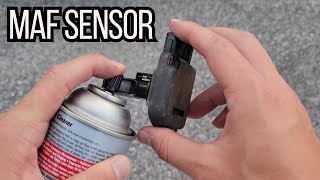
- If no flashing is found, the next step is to clean the Mass Airflow (MAF) sensor with a dedicated cleaner.
- If the code persists, perform a smoke test to check for vacuum leaks, paying close attention to PCV hoses and intake manifold gaskets.
- Do not replace the oxygen sensor unless it has been specifically tested and proven faulty; it is usually just reporting the problem correctly.
What's Unique About the 2015-2018 Cadillac ESCALADE
The 2015-2018 Escalade, with its direct-injected 6.2L L86 V8, is subject to a specific manufacturing flaw. A well-documented GM Technical Service Bulletin, PIP5446A, points to excess plastic flashing inside the air filter housing lid, right where the Mass Airflow (MAF) sensor is seated. This defect causes turbulent, un-metered airflow, tricking the sensor and leading to lean codes. While vacuum leaks are a common cause on all trucks, this specific, documented issue with the air intake assembly is a primary suspect unique to this platform and its contemporaries like the GMC Yukon Denali and Chevrolet Silverado.
Diagnostic Flowchart
Tap your situation to follow the diagnostic path that matches what you're seeing on this vehicle.
Symptoms You May Notice
- Check Engine Light is on
- Rough or shaky idle
- Engine hesitation or sputtering when applying the throttle, especially at low speeds (0-30%)
- Reduced engine power
- Harsh 1-2 and 2-3 transmission shifts
- Engine misfires, which may trigger a P0300 code
- Replacing the oxygen (O2) sensor. The P0171 code means the O2 sensor is correctly detecting a lean condition, not that the sensor itself has failed. Replacing it is unlikely to fix the root cause.
Most Likely Causes
- Excess Casting Flash in Air Filter Housing 🔴 High Probability → Shop Air Cleaner Assembly A known manufacturing defect documented in GM TSB #PIP5446A affects 2015-2018 Escalades. Excess plastic flashing near the MAF sensor disrupts airflow, causing incorrect sensor readings and a lean condition.
How to confirm: Visually inspect the inside of the air filter housing lid, specifically in the area surrounding the MAF sensor, for any rough or excess plastic molding. It may look like a poorly finished edge or a thin piece of plastic partially obstructing the airflow path.
Typical fix: Replace the air filter housing lid (also called the air cleaner assembly). It is important to inspect the new part for the same defect before installation. The part number is often cited as ACDelco 23262352.
Est. part cost: $50-$150 - Dirty or Faulty Mass Airflow (MAF) Sensor 🔴 High Probability → Shop Fuel Injection Air Flow Meter The MAF sensor is sensitive to contamination from dust and oil vapors from the PCV system. An improperly seated or damaged air filter can allow debris to contaminate the sensor. A loose air filter housing can also cause this issue.
How to confirm: Remove the MAF sensor and inspect its delicate wires for dirt or debris. Cleaning it with a dedicated MAF sensor cleaner and observing fuel trim data with a scan tool can confirm the diagnosis. If cleaning doesn't resolve the issue, the sensor may be faulty.
Typical fix: First, attempt to clean the sensor with a specialized MAF sensor cleaner. If the code returns, replace the MAF sensor with a quality part. The OEM part is ACDelco 23262343.
Est. part cost: $10 (cleaner) - $150 (sensor) - Vacuum Leak (PCV System, Intake Gaskets) 🟡 Medium Probability PCV hoses can become brittle and crack over time due to engine heat and age, creating a vacuum leak. Intake manifold gaskets can also shrink and fail, allowing unmetered air to enter the engine, a classic issue on many GM V8s.
How to confirm: Listen for a hissing sound around the engine bay at idle. A smoke test is the most effective method to definitively locate leaks 🎬 Watch: How to find vacuum leaks on a Chevy truck from gaskets, PCV tubes, or other vacuum lines. You can also carefully spray brake cleaner around suspected areas; a change in engine RPM indicates a leak.
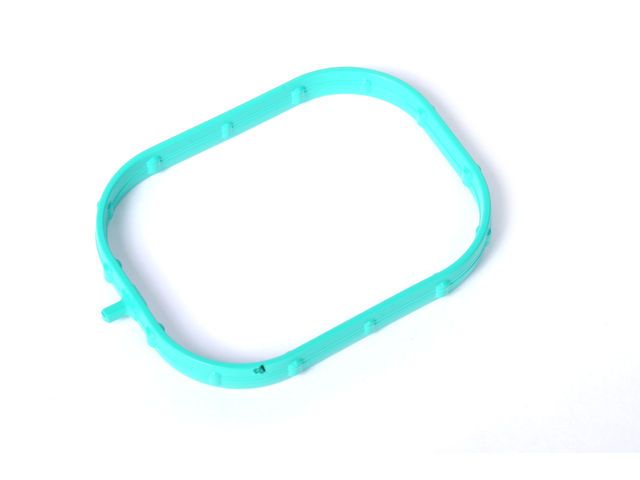
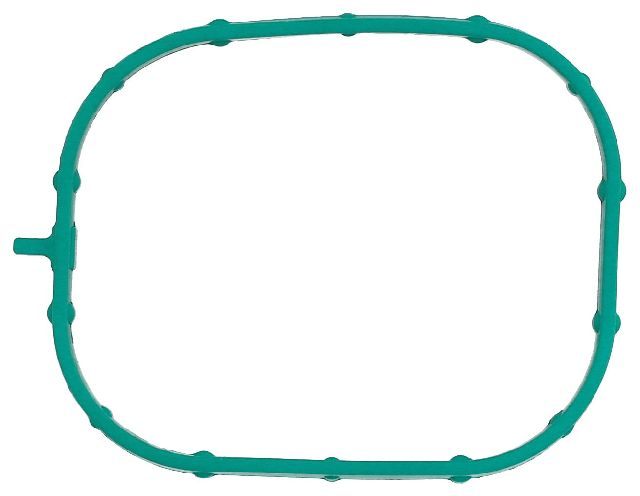
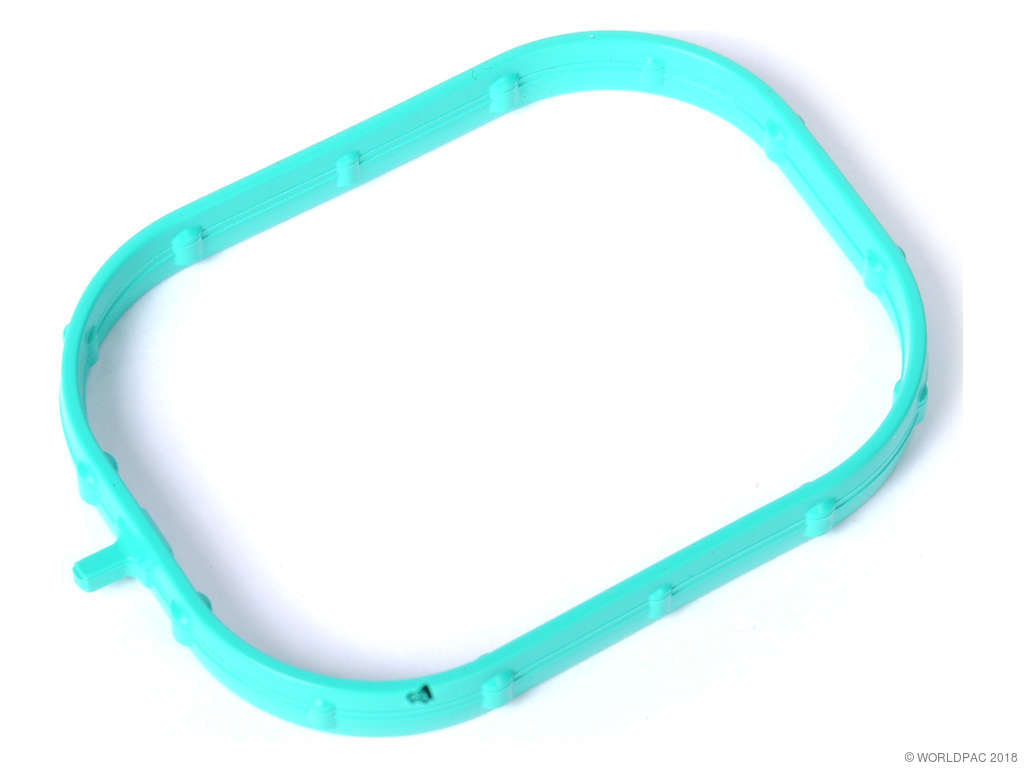
Typical fix: Replace the cracked hose or failed gasket. If replacing intake manifold gaskets, using an updated part design (e.g., Fel-Pro MS98016T for older generations, check for equivalent for L86) is recommended. Some older GM V8s had updated gaskets that changed from orange to teal green.
Est. part cost: $20-$200 - Low Fuel Pressure ⚪ Low Probability While less common, a weak high-pressure fuel pump (a component of the direct injection system) or a failing in-tank lift pump can reduce fuel delivery, leading to a lean condition. A clogged fuel filter can also be a cause.
How to confirm: Test the fuel pressure at the fuel rail using a fuel pressure gauge to ensure it is within the manufacturer's specifications. Diagnosing the high-pressure pump requires advanced scan tool data to monitor commanded vs. actual pressure.
Typical fix: Replace the failing fuel pump or clogged fuel filter/strainer.
Est. part cost: $200-$800+
Rare But Worth Checking
- Exhaust Leak Before the Oxygen Sensor: → Shop Oxygen Sensor A crack in the exhaust manifold or a leaking exhaust gasket before the upstream O2 sensor can allow outside air into the exhaust stream. This tricks the sensor into thinking the engine is running lean, causing it to incorrectly add fuel.
- Cracked Valve Cover: → Shop Engine Valve Cover In some cases, the plastic valve cover itself can crack at the PCV port nipple. This creates a vacuum leak that is difficult to spot and can mimic a simple failed PCV hose. If a new hose doesn't fix the leak, inspect the valve cover port itself for hairline cracks.
Diagnosis Steps
- Check for other stored DTCs. Codes like P0174, P0101, or P0300 are crucial clues.
- Inspect the air filter housing for casting flash near the MAF sensor, as described in TSB #PIP5446A. This should be the first check on these specific vehicles.
- Remove and inspect the MAF sensor for contamination. Clean it with dedicated MAF sensor cleaner and reinstall. Check that the air filter housing is securely fastened.
- Visually inspect all vacuum hoses, especially the PCV lines that run from the valve covers to the intake manifold, for cracks, disconnection, or brittleness.
- Perform a smoke test to check for unmetered air leaks from the intake manifold gaskets, throttle body, and vacuum system. This is the most reliable way to find vacuum leaks.
- Using a scan tool, monitor long-term and short-term fuel trims (LTFT and STFT). High positive numbers (>15-20%) confirm a lean condition. Watch to see if trims decrease when RPMs are raised; if they do, it strongly suggests a vacuum leak.
- Check fuel pressure to rule out a weak fuel pump or clogged filter.
- If all else fails, inspect the exhaust system for leaks upstream of the Bank 1 O2 sensor and check the valve covers for cracks near PCV ports.
Parts You'll Likely Need
- Air Cleaner Assembly Lid
(OEM #ACDelco 23262352)— This is the specific fix for the known issue described in TSB #PIP5446A, where casting flash inside the housing disrupts airflow and causes lean codes.
Trusted brands: ACDelco
OEM price range: $75-$150
Aftermarket price range: $50-$100 - Mass Airflow (MAF) Sensor
(OEM #ACDelco 23262343)— If cleaning the original sensor doesn't resolve the issue, or if a P0101 code is also present, the sensor itself may have failed and is providing incorrect airflow data to the ECM.
Trusted brands: ACDelco, Delphi
OEM price range: $100-$180
Aftermarket price range: $60-$120 - Intake Manifold Gaskets — These gaskets can degrade over time, causing a vacuum leak that allows unmetered air into the engine, a very common cause for lean codes on GM V8s.
Trusted brands: ACDelco, Fel-Pro
OEM price range: $60-$100
Aftermarket price range: $30-$60
Related Codes That Often Appear With This One
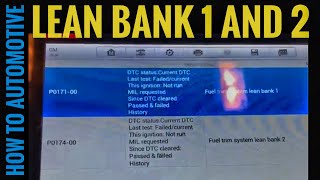
- P0174 — This is the 'System Too Lean' code for Bank 2 (passenger side). When P0171 and P0174 appear together, it strongly suggests a problem affecting the entire engine, like the MAF sensor, a major vacuum leak (intake gasket, purge valve), or a fuel delivery issue. This is a critical clue that the problem is not a single faulty injector. 🎬 Watch: How to diagnose lean codes on GM engines
- P0101 — This code indicates a problem with the MAF sensor circuit range or performance. It is often seen with P0171, especially in cases related to TSB #PIP5446A where casting flash disrupts airflow, causing erratic sensor readings.
- P0300 — This code for a 'Random/Multiple Cylinder Misfire' can be a direct result of a severe lean condition. The air-fuel mixture may be too lean to ignite properly, leading to misfires.
Technical Service Bulletins (TSBs) & Recalls
- PIP5446A: Addresses a harsh shift, sputter, rough idle, and codes P0101, P0171, P0172, P0174, and/or P0175 caused by cast flashing near the Mass Air Flow sensor. This TSB applies to a wide range of 2014-2018 GM trucks and SUVs with 4.3L, 5.3L, and 6.2L engines.
Platform-Specific Known Issues
- TSB #PIP5446A: Air Filter Housing Casting Flash: → Shop Air Cleaner Assembly A notable issue for this vehicle is excess casting flash in the air filter housing near the MAF sensor, which can cause rough idle, hesitation, harsh shifts, and set P0171/P0174 codes. The fix is to replace the air filter housing lid.
Mechanic-Grade Diagnostic Values
- Mass Air Flow (MAF) Rate at Idle (Warm Engine) — expected: 2 to 7 grams/second (g/s). A common rule of thumb is the g/s value should approximate the engine displacement in liters (e.g., ~6.2 g/s for the 6.2L engine).. Failure: A reading significantly lower than expected suggests unmetered air (vacuum leak) is entering the engine after the sensor.
- Mass Air Flow (MAF) Rate at 2500 RPM — expected: 15 to 25 grams/second (g/s). Failure: A slow or low reading can indicate a dirty sensor or an air leak downstream.
- Low-Side Fuel Pressure (Key-On, Engine-Off Prime) — expected: 55-60 psi (379-414 kPa). Failure: Pressure below this range indicates a weak in-tank fuel pump or a clogged filter.
- High-Side Fuel Rail Pressure (Direct Injection) — expected: Approximately 30 MPa (4,352 psi) at startup, rising with engine load.. Failure: Pressure that does not meet commanded pressure on a scan tool indicates a problem with the high-pressure fuel pump (HPFP) or rail pressure sensor.
- Upstream Oxygen Sensor (O2S1) Voltage — expected: Rapidly fluctuating between approximately 0.1V and 0.9V.. Failure: A sensor that is slow to respond or biased low (e.g., stuck below 0.45V) could be faulty, but more often it is correctly reporting a lean condition.
- MAF Sensor Connector - Ignition Feed Pin — expected: ~12V with key on, engine off.. Failure: No voltage indicates a wiring or fuse issue supplying power to the sensor.
Scan Tool Commands That Help
- GDS2 / Professional Scan Tool: Injector Balance Test — To identify if a single fuel injector is clogged or failing, which would cause a lean condition on only one bank. This helps rule out a fuel delivery issue specific to one cylinder.
- GDS2 / Professional Scan Tool: EVAP Purge/Seal — To command the EVAP purge valve closed while monitoring fuel trims. If the lean condition corrects itself when the valve is commanded shut, it indicates the valve is stuck open or leaking, creating a vacuum leak.
Wiring & Ground Locations
- MAF Sensor Connector (ACDelco 23262343) — On the air filter housing lid, where the intake tube begins.. This 8-pin connector provides power, ground, and signal paths for both the MAF and integrated IAT sensor. Key pins to test are the Ignition 1 Voltage (often Pink wire, should be ~12V), Ground (Black/White wire), and MAF Signal (often Yellow wire). A loss of power or ground will cause incorrect readings and trigger lean codes.
Real Owner Repair Stories
- Cruze/Sonic Owners Forum (Chevy Cruze/Sonic (similar PCV design)) — P0171, rough idle, whistling noise from engine.
❌ Tried (didn't work) Visual inspection of hoses and valve cover exterior.
✅ What actually fixed it The internal diaphragm of the PCV system, which is integrated into the valve cover, had ruptured. This created a vacuum leak through the small vent hole on the cover. Replacing the entire valve cover assembly resolved the issue. - Reddit r/FordExplorer (2018 Ford Explorer 3.5L EcoBoost) — P0171 and P0174, high positive fuel trims.
❌ Tried (didn't work) Smoke test (no leaks found), Cleaning fuel injectors, Replacing intake manifold seals
✅ What actually fixed it Replacing all fuel injectors and the fuel rail pressure sensor. This indicates a fuel delivery problem (clogged injectors or a biased sensor) that could not be found with a smoke test.
"I Checked Everything" — The Actual Cause
- An exhaust leak before the upstream O2 sensor. An intake smoke test will show no leaks, but air is drawn into the exhaust pipe through a cracked manifold or bad gasket, causing the O2 sensor to read a false lean condition. The proper method is to also smoke test the exhaust system from the tailpipe.
- Clogged or failing fuel injectors. The system may be perfectly sealed from vacuum leaks, but if the injectors are not delivering the commanded amount of fuel, the result is a lean mixture. This requires a fuel pressure test and potentially an injector balance test to diagnose.
OEM Part Supersession History
N/A (Older GM V8s)→N/A (Newer Design)— Improved sealing material to prevent shrinking and cracking.
Heads up: For many GM V8 engines, the original intake manifold gaskets were orange. The updated, improved replacement gaskets are a distinct teal green color. Using the new design is critical for a lasting repair.ACDelco 23262343→N/A— N/A
Heads up: This part number can be confusingly listed as a 'Mass Airflow Sensor', 'Humidity Sensor', or 'Multi-Purpose Air Sensor' by different vendors. It is an 8-terminal sensor that integrates both the MAF and IAT (Intake Air Temperature) functions.
Model Year Variations Within This Range
- 2015-2018: The 6.2L V8 engine across this range is the Gen V L86 with direct injection and Active Fuel Management (AFM). There are no significant internal engine or fuel system changes within this specific model year range that would alter the diagnosis for P0171. The major change to Dynamic Fuel Management (DFM) occurred in the 2019+ L87 engine.
Helpful Videos
We Have This Part in Stock


The information in this article is provided for general reference and educational purposes only. Vehicle specifications, procedures, and part compatibility can vary by production date, trim level, and region. Always consult your vehicle's factory service manual and verify part numbers before purchasing or performing repairs. Safety-critical components such as airbags, seat belts, and braking systems should be installed by a qualified professional.
- Cadillac ESCALADE:
- 🧭 Diagnostic Flowchart
- 🎬 Helpful Videos
- 🛍️ Shop This Part
- What's Unique About the 2015-2018 Cadillac ESCALADE
- Symptoms You May Notice
- Most Likely Causes
- Rare But Worth Checking
- Diagnosis Steps
- Parts You'll Likely Need
- Related Codes That Often Appear With This One
- Technical Service Bulletins (TSBs) & Recalls
- Platform-Specific Known Issues
- Mechanic-Grade Diagnostic Values
- Scan Tool Commands That Help
- Wiring & Ground Locations
- Real Owner Repair Stories
- "I Checked Everything" — The Actual Cause
- OEM Part Supersession History
- Model Year Variations Within This Range
- 🎟️ Get 5% Off