

P0171 on 2011-2016 Chevrolet Cruze: Lean Code Causes and Fixes
On a 2011-2016 Chevy Cruze, especially the 1.4L Turbo, code P0171 is almost always caused by a failed PCV system diaphragm inside the valve cover. This creates a vacuum leak, causing a lean condition. A secondary, but related, failure is a check valve inside the intake manifold which often fails first, causing the valve cover issue. Replacing the entire valve cover assembly is the most common fix, often along with the intake manifold or an aftermarket check valve kit.
- For a 2011-2016 Chevy Cruze, P0171 is most likely not an issue with your sensors, but a physical failure in the PCV system.
- The primary suspect is a torn diaphragm inside the valve cover, which requires replacing the entire cover.
- Listen for a distinct whistling or hissing at idle—this is a tell-tale sign of the specific failure.
- Check for associated codes like P1101 and P0106, as they strongly point to the same vacuum leak issue.
- Before buying parts, confirm the failure by checking for strong suction at the oil cap or a hissing sound from the PCV port on the valve cover.
What's Unique About the 2011-2016 Chevrolet CRUZE

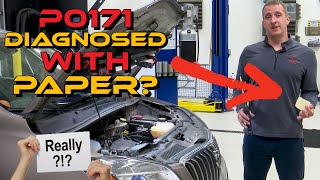
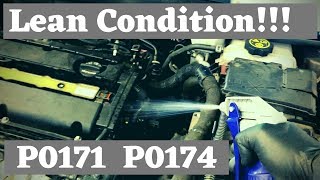
The 2011-2016 Cruze, particularly the 1.4L Turbo model, has a well-documented weakness in its Positive Crankcase Ventilation (PCV) system. Unlike many cars with a simple, replaceable PCV valve, the Cruze integrates a critical PCV diaphragm into the engine's valve cover (also called the camshaft cover). This rubber diaphragm is prone to tearing, creating a significant unmetered vacuum leak that is a primary cause for the P0171 code. 🎬 Watch: How to diagnose and fix a lean condition This failure is often precipitated by the failure of a small, non-serviceable check valve located inside the intake manifold, which, when it fails, allows pressurized boost to enter the crankcase and rupture the diaphragm in the valve cover.
Diagnostic Flowchart
Tap your situation to follow the diagnostic path that matches what you're seeing on this vehicle.
Generation note: The 2011-2016 year range primarily covers the first generation (2011-2015) and the 2016 'Cruze Limited', which was a carryover of the first generation. A redesigned second generation was also introduced in 2016. The common P0171 issues discussed here are specific to the first-generation platform and its 1.4L and 1.8L engines.
Symptoms You May Notice

- Check Engine Light is on
- Rough, unstable, or surging idle.
- Loud whistling, hissing, or squealing noise from the engine bay, especially at idle. 🎬 See how to identify that hissing noise and rough idle
- Engine may hesitate or stumble on acceleration.
- Engine stalling at stops.
- Noticeable vacuum suction when trying to remove the oil filler cap while the engine is running, making it difficult to remove.
- A high-pitched chirp or squeal from the engine's belt area, indicating a potential front crankshaft seal leak caused by high crankcase vacuum.
- Replacing only the oxygen (O2) sensors. The O2 sensor is usually correctly reporting the lean condition, it is not the cause of it.
- Replacing the MAP or MAF sensor without diagnosing the vacuum leak. While these sensors are involved in airflow measurement, the root cause is typically the unmetered air from the PCV system.
- Replacing only the valve cover without checking the intake manifold check valve. If the intake check valve is missing, boost pressure will quickly destroy the diaphragm in the new valve cover, leading to a repeat failure.
Most Likely Causes

- Failed PCV Diaphragm in Valve Cover 🔴 High Probability → Shop Engine Valve Cover The rubber diaphragm inside the non-serviceable PCV assembly, which is part of the valve cover, is known to tear or rupture. This is the most common failure point for this code on the 1.4L and 1.8L engines. This is often a secondary failure caused by a bad intake manifold check valve on 1.4L Turbo models. GM acknowledged this widespread issue with Special Coverage N202299080, extending the warranty on the part.
How to confirm: With the engine running, listen for a distinct whistling or hissing sound from the top of the engine. You can also place a finger over the small rectangular hole on the PCV cap on the valve cover; if the hissing stops and the idle smooths out, the diaphragm is bad. Another definitive test is to try removing the oil cap with the engine running; strong suction that makes the cap difficult to remove confirms a failed diaphragm.
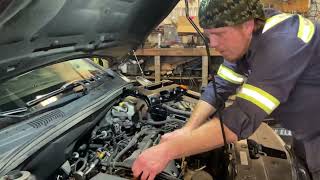
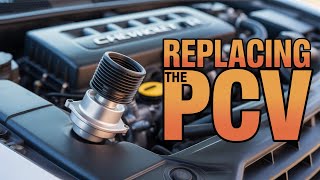
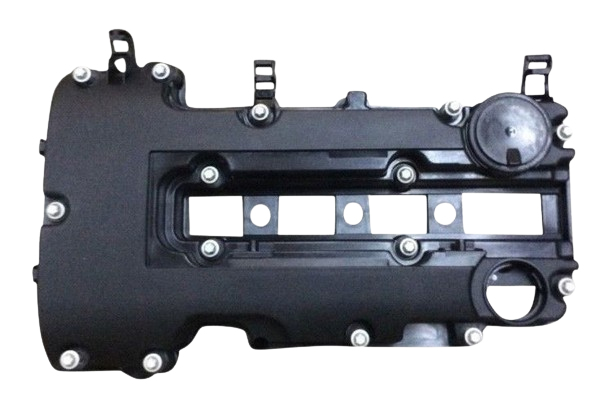
Typical fix: Replace the entire valve cover 🎬 Watch this step-by-step valve cover replacement walkthrough (camshaft cover) assembly. The PCV diaphragm is not sold as a separate GM part, though some aftermarket diaphragm-only kits exist of varying quality.
Est. part cost: $50 - $150 - Failed Intake Manifold Check Valve 🔴 High Probability → Shop Engine Intake Manifold On the 1.4L Turbo engine, a small orange or black check valve inside the intake manifold can fail, become dislodged, or get sucked into the engine. This failure allows turbo boost pressure into the crankcase, which then over-pressurizes the system and ruptures the weaker PCV diaphragm in the valve cover. This is often the root cause of the entire problem.
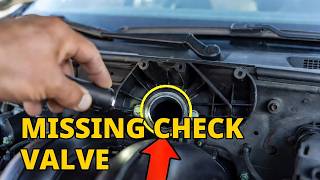
How to confirm: Remove the PCV tube connecting the valve cover to the intake manifold. Use a flashlight to visually inspect the port on the intake manifold. A small orange or black check valve should be visible inside. If it is missing, the intake manifold has failed internally.
Typical fix: Replace the entire intake manifold. A popular, more permanent aftermarket solution involves installing an external check valve kit (like those from CruzeKits.com) which reroutes the vacuum line and prevents future internal failure.
Est. part cost: $100 - $250 for manifold, $75 for external kit - Cracked or Disconnected Vacuum Hoses ⚪ Low Probability → Shop Vacuum Hose The corrugated plastic PCV hose running from the valve cover to the turbo inlet is known to become brittle and crack, creating a vacuum leak. Other plastic and rubber hoses can also degrade over time.
How to confirm: Visually inspect all vacuum lines, especially the PCV tube between the valve cover and turbo inlet, for cracks, brittleness, or loose connections. A smoke test is the most effective way to find small, hidden leaks.
Typical fix: Replace the damaged hose or line. Some aftermarket PCV kits include a more durable replacement for the failure-prone corrugated hose.
Est. part cost: $10 - $50
Rare But Worth Checking
- Leaking Front Crankshaft Seal: → Shop Engine Crankshaft This is usually a secondary failure. The failed PCV system creates excessive crankcase vacuum, which can pull air past the front crankshaft seal (on the driver's side of the engine). This causes a high-pitched chirp or squeal and contributes to the lean condition. If you hear this noise, suspect a bad seal caused by the primary PCV issue. Removing the oil dipstick will often make the noise stop temporarily, confirming the diagnosis.
- Faulty EVAP Purge Solenoid Valve: → Shop Vapor Canister A purge valve stuck open can create a vacuum leak, pulling unmetered fuel vapors into the intake manifold at the wrong time, which can cause or contribute to a P0171 code. This can sometimes be misdiagnosed as the main PCV issue.
- Dirty or Faulty Mass Airflow (MAF) Sensor: → Shop Fuel Injection Air Flow Meter While less common than the PCV issue on this car, a dirty MAF sensor can under-report the amount of air entering the engine, leading the ECU to command too little fuel.
- Weak Fuel Pump or Clogged Fuel Filter: → Shop Fuel Filter If the engine isn't receiving enough fuel due to low pressure, it can trigger a lean code. This is less likely than a vacuum leak but should be checked if vacuum issues are ruled out.
Diagnosis Steps

- Scan for all fault codes. Note if P0171 is present with P1101, P0106, P0299, or P0300, which strongly points to the common PCV failure.
- With the engine running at idle, listen for a distinct whistling or hissing sound from the top of the engine near the valve cover.
- If a noise is present, carefully try to remove the oil filler cap. If the noise stops and there is strong suction holding the cap on, the PCV diaphragm in the valve cover has failed.
- As a secondary check, place a finger over the small rectangular port on the round PCV housing on the valve cover. If this stops the noise or changes the idle, the diaphragm is confirmed bad.
- BEFORE ordering a valve cover, you MUST check the intake manifold (1.4L Turbo only). Disconnect the PCV hose and look inside the manifold port with a flashlight. If the small orange/black check valve nipple is missing, the intake manifold has failed and is the root cause.
- If the PCV system seems intact, perform a smoke test on the intake system to check for other vacuum leaks from hoses or gaskets, paying close attention to the EVAP purge valve and its lines.
- If no vacuum leaks are found, check fuel pressure to ensure the fuel pump and filter are functioning correctly.
- As a final step, inspect and clean the Mass Airflow (MAF) sensor.
Parts You'll Likely Need
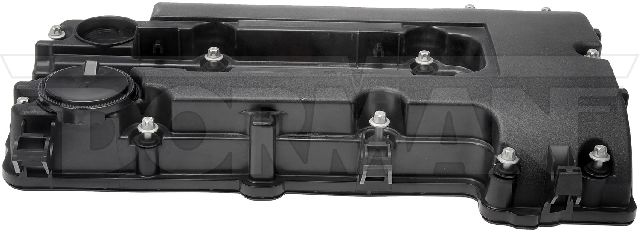
- Camshaft Cover (Valve Cover)
(OEM #25198874 (supersedes 55573746))— This is the most frequent fix. The part contains the integrated, non-serviceable PCV diaphragm that fails and causes the vacuum leak. GM has updated this part number multiple times.
Trusted brands: ACDelco (OEM), Dorman
OEM price range: $90 - $150
Aftermarket price range: $50 - $100 - Intake Manifold
(OEM #55573171)— Required if the internal PCV check valve is missing (1.4L Turbo only). This is often the root cause of the valve cover failure.
Trusted brands: ACDelco (OEM), Dorman (OE Fix 615-380)
OEM price range: $150 - $250
Aftermarket price range: $100 - $180
Related Codes That Often Appear With This One
- P1101 — Intake Air Flow System Performance. This code is often set alongside P0171 because the massive vacuum leak from the PCV system causes a discrepancy between what the MAF sensor expects and what the MAP sensor reads.
- P0106 — Manifold Absolute Pressure (MAP) Sensor Performance. This is also triggered by the erratic vacuum signal caused by the failed PCV diaphragm.
- P0299 — Turbocharger Underboost Condition. A significant vacuum leak in the PCV system can affect the turbo's ability to build and hold boost pressure properly, as seen in NHTSA complaint #11266552.
- P0300 — Random/Multiple Cylinder Misfire Detected. A severe lean condition starves the cylinders of fuel, leading to incomplete combustion and misfires, especially at idle.
Technical Service Bulletins (TSBs) & Recalls
- Bulletin #N202299080: Addresses rough idle and P0171 by replacing the engine camshaft cover under a special coverage program.
- Bulletin #19NA114: Advises technicians to test PCV performance before replacing the camshaft cover for a P0171 code.
- Bulletin #PI0850A: Links a whistle noise, rough running, and P0171, pointing to a common engine compartment fault.
Platform-Specific Known Issues
- A known design flaw in the PCV system where the intake manifold check valve fails, which then causes the diaphragm inside the valve cover to rupture, is the leading cause of P0171.
- GM issued Technical Service Bulletin N202299080 which created a "Special Coverage" program (an extended warranty) to replace the engine camshaft cover for this exact issue for 10 years or 120,000 miles.
- TSB PIP5197L explicitly details the diagnostic procedure of checking for the missing intake manifold non-return valve and then inspecting the PCV orifice on the camshaft cover, confirming the link between the two components.
- Owner forums are filled with threads detailing this exact failure pattern, with many recommending aftermarket external PCV kits as a more permanent solution than replacing with another OEM intake manifold.
Mechanic-Grade Diagnostic Values
- Long Term Fuel Trim (LTFT) at Idle — expected: Close to 0% (+/- 5%). Failure: Stuck at a high positive value, often +25% or higher, indicating the ECU is adding maximum fuel to compensate for a vacuum leak.
- Mass Airflow (MAF) Sensor Reading at Idle — expected: Approximately 1.5-2.5 g/s for a 1.4L engine at normal operating temperature.. Failure: A significantly higher reading at idle can indicate unmetered air entering the system after the sensor. A reading that does not increase smoothly with RPM can indicate a faulty sensor.
- Low-Side Fuel Pressure (Engine Off, Pump Primed) — expected: 50 - 94 PSI.. Failure: Pressure below 50 PSI may indicate a weak fuel pump or a clogged filter, which could cause a lean condition.
- Low-Side Fuel Pressure at Idle — expected: Approximately 58 PSI (400 kPa).. Failure: Significantly lower pressure (e.g., 40-45 PSI) suggests a fuel delivery issue, though vacuum leaks are a more common cause for P0171.
Scan Tool Commands That Help
- GDS2 (GM Techline Software): Fuel Trim Reset — After replacing a component that caused a vacuum leak (like a valve cover or intake manifold), this function should be used to clear the learned long-term fuel trim values, allowing the ECU to relearn faster.
- GDS2 (or high-end bidirectional scanner): EVAP Purge/Seal — To test the EVAP purge solenoid. A technician can command the valve open and closed to check for proper function and see if it's sticking, which would create a vacuum leak.
- GDS2 (or high-end bidirectional scanner): Fuel Pump On/Off — To test fuel pressure without the engine running. The command turns the in-tank fuel pump on, allowing for a clean pressure reading to diagnose a potential fuel delivery issue.
- GDS2 (or high-end bidirectional scanner): Fuel Trim Learn Data — GM's software provides specific data PIDs like 'Fuel Trim Learn with Purge' vs 'Without Purge'. Observing these can help differentiate between a general vacuum leak and a leak from the EVAP system.
Wiring & Ground Locations
- G103 — On the left front shock tower in the engine compartment.. This is a major ground point for the Engine Control Module (ECM). A corroded or loose connection here can cause erratic behavior from the ECM and incorrect sensor readings, potentially leading to false trouble codes.
- G105 — Located at the left front corner of the engine compartment, often near the underhood fuse block.. This ground serves multiple components, including the ECM. Ensuring it is clean and tight is a crucial step when diagnosing any electronic issue.
- ECM Connector X1/X2 — The two large multi-pin connectors on the Engine Control Module.. Specific pins on these connectors provide ground for the ECM (e.g., Pin 20 and 35 on one connector, 1, 3, and 5 on the other for some models). Verifying ground integrity directly at the ECM connector is an advanced diagnostic step if a grounding issue is suspected.
Real Owner Repair Stories
- ScannerDanner Forum user 'vb4me' (2011 Chevrolet (Holden) Cruze 1.4L Turbo) — P0171, LTFT at +30% at idle, improving with RPM. Smoke test showed a large leak but no visible smoke.
❌ Tried (didn't work) Smoke test (found and fixed one small leak, but the main problem persisted), Checking the PCV diaphragm in the valve cover (it was fine)
✅ What actually fixed it The EVAP purge solenoid was faulty. Disconnecting the valve electrically caused the fuel trims to immediately start dropping towards normal, confirming it was the source of the unmetered air. - Reddit user in r/cruze (2013 Chevrolet Cruze 1.4L Turbo) — P0171, P1101, P0507 (rough/high idle) after replacing valve cover.
❌ Tried (didn't work) Replacing the valve cover assembly., Replacing the MAF sensor., Replacing the valve cover gasket previously.
✅ What actually fixed it The user had not yet checked the intake manifold for the missing check valve, which is the likely root cause for the repeat failure and continued codes. The community directed them to check this next. - YouTube video by 'Homie Hektor' (2014 Chevrolet Cruze 1.8L) — P0171 and P0300 (random misfire). Fuel trims were at +40%.
❌ Tried (didn't work) A smoke test was performed and showed NO external vacuum leaks.
✅ What actually fixed it A faulty EVAP purge solenoid was stuck open internally. This was confirmed by unplugging the electrical connector, disconnecting the inlet hose, and observing the fuel trims drop dramatically. The old valve could be blown through by mouth, while the new one could not.
"I Checked Everything" — The Actual Cause
- In multiple documented cases, a standard smoke test of the intake system revealed no leaks, yet the P0171 code persisted. The actual cause was an EVAP purge solenoid that was stuck open internally. This acts as a hidden vacuum leak, pulling air from the charcoal canister into the intake manifold. This type of leak is not always found with a smoke test unless the test procedure specifically includes isolating and testing the purge valve itself.
When the Usual Fixes Don't Work
- While the valve cover and intake manifold are the most common culprits for P0171 on the 1.4L Cruze, there are numerous confirmed cases where these parts were replaced (sometimes multiple times) without fixing the code. In many of these instances, the final solution was a faulty EVAP purge solenoid valve stuck open, creating a vacuum leak that was not immediately obvious. One owner confirmed this fix after spraying water near the EVAP valve and noticing a change in idle. Another technician confirmed it by watching fuel trims drop to normal after disconnecting the valve's vacuum line. This highlights the importance of not stopping diagnosis after addressing the most common failure point.
OEM Part Supersession History
55573746→25198874, and subsequently 25205388 (verify latest with dealer)— Revisions to the valve cover assembly to improve the durability of the integrated PCV diaphragm.GM 55573171 (Intake Manifold)→Dorman OE Fix 615-380 (Aftermarket)— The Dorman part is a popular aftermarket alternative that often includes a redesigned, more robust internal check valve to prevent the common failure.
Model Year Variations Within This Range
- 2011-2016 (1.4L Turbo LUJ/LUV Engine): This engine is highly prone to the specific failure pattern of the intake manifold check valve failing, which then causes the valve cover PCV diaphragm to rupture. This is the primary cause of P0171 on the 1.4L.
- 2011-2016 (1.8L LUW Engine): The 1.8L engine is naturally aspirated and has a different PCV system design. While it also has a diaphragm in the valve cover that can fail and cause P0171, it does NOT have the associated intake manifold check valve issue. On the 1.8L, the valve cover is a common cause, but other vacuum leaks (hoses, EVAP valve) are also frequent culprits.
Helpful Videos
Used OEM Parts in Stock
New Aftermarket Parts Available


The information in this article is provided for general reference and educational purposes only. Vehicle specifications, procedures, and part compatibility can vary by production date, trim level, and region. Always consult your vehicle's factory service manual and verify part numbers before purchasing or performing repairs. Safety-critical components such as airbags, seat belts, and braking systems should be installed by a qualified professional.
- Chevrolet CRUZE:
- 🧭 Diagnostic Flowchart
- 🎬 Helpful Videos
- 🛍️ Shop This Part
- What's Unique About the 2011-2016 Chevrolet CRUZE
- Symptoms You May Notice
- Most Likely Causes
- Rare But Worth Checking
- Diagnosis Steps
- Parts You'll Likely Need
- Related Codes That Often Appear With This One
- Technical Service Bulletins (TSBs) & Recalls
- Platform-Specific Known Issues
- Mechanic-Grade Diagnostic Values
- Scan Tool Commands That Help
- Wiring & Ground Locations
- Real Owner Repair Stories
- "I Checked Everything" — The Actual Cause
- When the Usual Fixes Don't Work
- OEM Part Supersession History
- Model Year Variations Within This Range
- 🎟️ Get 5% Off