

P0171 on 2007-2010 Chevrolet Silverado 2500: Lean Code Causes and Fixes
On a 2007-2010 Silverado 2500 with the 6.0L V8, a P0171 code is most often caused by a vacuum leak from a cracked PCV tube on the driver's side of the engine. A dirty Mass Airflow (MAF) sensor is the next most likely culprit. Start by inspecting the PCV tube and cleaning the MAF sensor before moving to more complex diagnostics like a smoke test for intake gasket leaks.
- P0171 means your truck's engine is running with too much air on the driver's side bank.
- Before buying any parts, carefully inspect the PCV tube on the driver's side for cracks, as this is a known issue (TSB #PIP5341).
- The second step should be to clean the Mass Airflow (MAF) sensor with dedicated cleaner, as this is a cheap, easy, and very common fix.
- If you also have a P0174 code, the problem is affecting the whole engine. This makes a dirty MAF sensor or a leak at the intake manifold itself more likely.
- Do not replace the oxygen sensor first. It is almost always just reporting the problem correctly.
What's Unique About the 2007-2010 Chevrolet SILVERADO 2500
On these GMT900 trucks, plastic and rubber components in the engine bay are known to become brittle from years of heat cycles. This makes them prone to cracking and causing vacuum leaks. A specific GM Technical Service Bulletin (PIP5341) points directly to the PCV tube becoming cracked from rubbing against the engine cover, making it a primary suspect for a P0171 code on this specific truck. Additionally, the original intake manifold gaskets used a plastic frame that is known to degrade and cause vacuum leaks, especially noticeable during cold starts.
Diagnostic Flowchart
Tap your situation to follow the diagnostic path that matches what you're seeing on this vehicle.
Generation note: This year range covers the GMT900 generation, which was introduced for the 2007 model year and used the 6.0L LY6 V8 from 2007-2009 and the L96 V8 from 2010 onwards. However, Chevrolet also sold the previous 'Classic' GMT800 generation during 2007. While the causes for P0171 are very similar (vacuum leaks, MAF sensors), the exact location and part numbers for components like PCV hoses may differ between the two generations. The intake manifold gasket issue is particularly common on the GMT800 platform.
🎬 Watch: Step-by-step intake manifold replacement for GMT800 modelsSymptoms You May Notice
- Check Engine Light is on
- Rough idle, especially when stopped or on a cold start.
- Hesitation or stumbling during acceleration.
- Reduced engine power
- Poor fuel economy.
- A hissing sound from the engine bay, indicating a vacuum leak.
- Replacing the Bank 1 Oxygen Sensor. The P0171 code means the oxygen sensor is *detecting* a lean condition, not that the sensor itself is bad. It is usually doing its job correctly by reporting a problem that exists elsewhere, like a vacuum leak.
Most Likely Causes
- Cracked PCV Tube / Hose 🔴 High Probability → Shop PCV Valve Hose A GM Technical Service Bulletin (PIP5341) specifically calls out this issue. The plastic tube on the driver's side of the intake manifold can become brittle and crack, often from rubbing against the engine cover, creating a significant vacuum leak.
How to confirm: Visually inspect the PCV hose that connects to the driver's side valve cover and runs to the intake manifold. Pay close attention to the connection points and any areas where it might rub. A smoke test will definitively show a leak, often appearing as a puff of smoke from the back of the engine near the valve cover.
Typical fix: Replace the cracked PCV tube assembly. It is often recommended to protect the new tube with wire loom or conduit to prevent future rubbing.
Est. part cost: $20-$50 - Dirty or Failing Mass Airflow (MAF) Sensor 🔴 High Probability → Shop Fuel Injection Air Flow Meter The MAF sensor is sensitive to dirt and oil, especially if an aftermarket oiled air filter is used. A dirty sensor under-reports the amount of air entering the engine, causing the computer to inject too little fuel.
How to confirm: Remove the sensor from the air intake tube and inspect the small wires. If they appear dirty, clean them ONLY with dedicated MAF sensor cleaner. Do not touch the wires. A scan tool showing fuel trims that are high at idle but improve (move closer to zero) at 🎬 See this walkthrough on how to fix a P0171 code higher RPMs (like 2500 RPM) is a classic sign of a vacuum leak, whereas a MAF issue may show trims that are consistently high or worsen with RPM.
Typical fix: First, try cleaning the sensor with MAF sensor cleaner. If the problem persists, replace the MAF sensor.
Est. part cost: $10 (cleaner) - $150 (new sensor) - Leaking Intake Manifold Gaskets 🟡 Medium Probability → Shop Engine Intake Manifold The original gaskets on the 6.0L V8 use a plastic frame that can become brittle and crack over time, causing a vacuum leak. The leak is often more noticeable on a cold start, causing a rough idle that may improve as the engine warms up and the parts expand.
How to confirm: A classic sign is a rough idle on cold starts that smooths out as the engine warms. A smoke test is the most reliable way to confirm a leak at the intake manifold sealing surface. Another method is to carefully spray carb cleaner or a propane torch (unlit) around the gasket area with the engine running; a change in idle RPM indicates a leak.
Typical fix: Replace the intake manifold gaskets. It is highly recommended to use updated gaskets with a metal carrier design, such as Fel-Pro P/N MS 96587 or the newer MS98016T, for better durability.
Est. part cost: $40-$80 - Weak Fuel Pump or Clogged Fuel Filter ⚪ Low Probability → Shop Fuel Filter
How to confirm: Connect a fuel pressure gauge to the fuel rail. For this platform, pressure should be around 55-62 PSI with the key on or engine running. A lean condition that worsens under acceleration (higher RPM) can point to a fuel delivery issue, as opposed to a vacuum leak which is more prominent at idle.
Typical fix: Replace the failing fuel pump module or the clogged fuel filter.
Est. part cost: $20 (filter) - $300+ (pump)
Rare But Worth Checking
- Exhaust Leak Before Oxygen Sensor: → Shop Oxygen Sensor A crack in the exhaust manifold or a leaking flange gasket can allow outside air to be sucked into the exhaust stream. The upstream O2 sensor will read this extra oxygen and incorrectly report a lean condition.
- Clogged Fuel Injectors: → Shop Fuel Injector If one or more injectors on Bank 1 are partially clogged, they won't deliver the commanded amount of fuel, leading to a lean condition on that bank.
- Stuck Open EVAP Purge Valve: → Shop Vapor Canister The EVAP purge solenoid can sometimes stick open, creating a constant vacuum leak as it pulls unmetered air and fuel vapors from the charcoal canister. This can trigger lean codes.
Diagnosis Steps
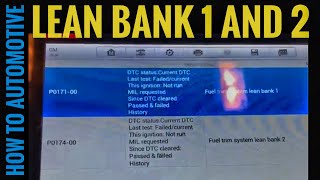
- Check for other trouble codes. If P0174 is also present, focus on 🎬 Watch: How to diagnose P0171 and P0174 on your Silverado causes that affect both engine banks, like the MAF sensor, intake gaskets, or PCV system.
- Visually inspect the engine bay for any obvious disconnected or cracked vacuum hoses, especially the PCV tube on the driver's side valve cover going to the intake manifold, as cited in TSB #PIP5341.
- Using a scan tool, observe the long-term fuel trim (LTFT) and short-term fuel trim (STFT) values at idle. LTFT values above +10% confirm a lean condition, with values near +25% indicating a severe problem.
- Differentiate between a vacuum leak and a MAF/fuel issue. Raise engine RPM to 2,500 and hold. If fuel trims improve (move toward 0), a vacuum leak is the most likely cause. If they stay high or get worse, suspect the MAF sensor or fuel delivery.
- Remove and clean the Mass Airflow (MAF) sensor using only dedicated MAF sensor cleaner. Allow it to dry completely before reinstalling.
- After cleaning the MAF, clear the codes and drive the vehicle to see if the code returns. Monitor fuel trims to see if they have returned to normal.
- If the code persists, perform a smoke test to systematically check for vacuum leaks from the intake manifold gaskets, throttle body gasket, PCV hoses, and the EVAP purge valve.
- If no vacuum leaks are found, test the fuel pressure using a fuel pressure gauge. It should be 58-62 PSI at idle. Rule out a weak fuel pump or clogged filter.
Parts You'll Likely Need
- PCV Tube / Hose Assembly (Dirty Air)
(OEM #12597720)— This is a known failure point identified in GM service bulletin PIP5341 for causing vacuum leaks that trigger P0171. The plastic becomes brittle and cracks where it rubs the engine cover.
Trusted brands: ACDelco, Dorman (P/N 46021)
OEM price range: $30-$50
Aftermarket price range: $20-$40 - Mass Airflow (MAF) Sensor
(OEM #213-4222 (ACDelco))— A dirty or failed MAF sensor is a very common cause of lean codes on these trucks by providing incorrect airflow readings to the ECM.
Trusted brands: ACDelco, Delphi, Spectra Premium
OEM price range: $120-$180
Aftermarket price range: $60-$120 - Intake Manifold Gasket Set
(OEM #89060413 (GM Original))— The original plastic-framed gaskets are prone to cracking and causing vacuum leaks, especially when the engine is cold. Upgraded designs are recommended.
Trusted brands: ACDelco, Fel-Pro (P/N MS 96587)
OEM price range: $60-$90
Aftermarket price range: $30-$60
Related Codes That Often Appear With This One
- P0174 — This is the 'System Too Lean' code for Bank 2 (passenger side). When P0171 and P0174 appear together, it strongly suggests a problem affecting the entire engine, such as a dirty MAF sensor, a large vacuum leak at the intake manifold, a stuck EVAP purge valve, or a fuel delivery issue.
- P0101 — This code indicates a problem with the Mass Airflow (MAF) sensor circuit. A faulty MAF sensor is a direct cause of incorrect fuel mixture calculations and will often appear with P0171 and P0174.
- P0300 — This code for 'Random/Multiple Cylinder Misfire' often accompanies lean codes. The incorrect air/fuel mixture can cause incomplete combustion, leading to misfires across multiple cylinders.
Technical Service Bulletins (TSBs) & Recalls
- PIP5341: Notes that a rough idle with P0171 and/or P0174 is often caused by a vacuum leak from the positive crankcase ventilation (PCV) tube rubbing on the engine cover.
Platform-Specific Known Issues
- TSB #PIP5341: This Preliminary Information bulletin from GM notes that a rough idle accompanied by codes P0171 and/or P0174 can be caused by the PCV tube on the left side of the engine developing a vacuum leak from rubbing against the engine cover. The fix is to replace the tube and protect it with conduit.
Mechanic-Grade Diagnostic Values
- Fuel Pressure (Key on, Engine off or Idling) — expected: 55-62 PSI. Failure: Pressure below 55 PSI indicates a potential issue with the fuel pump, filter, or pressure regulator.
- Upstream O2 Sensor Voltage (at idle) — expected: Fluctuating rapidly between approximately 0.1V (lean) and 0.9V (rich).. Failure: A sensor that is stuck with a low voltage (e.g., under 0.3V) is reading a constant lean condition. A sensor that is flatlined around 450mV and not switching is likely failed.
- Mass Airflow (MAF) Sensor Reading (at idle) — expected: Approximately 4-6 g/s for a 6.0L V8 at normal idle speed (around 600-700 RPM).. Failure: Significantly lower readings can indicate a dirty or failing sensor, causing the ECM to underestimate airflow and command too little fuel. A reading of 4.82 g/s was noted in one case with high fuel trims.
- Injector Pulse Width (at idle) — expected: Around 2.5 ms at normal idle.. Failure: A lean condition will cause the ECM to increase pulse width to compensate. Intermittent jumps to over 8ms have been observed with misfires.
Scan Tool Commands That Help
- Tech 2 / GDS2: Fuel Injector Balance Test — This test is used when a single cylinder or bank is suspected of being lean due to a clogged injector. The tool deactivates injectors one by one while the engine is running; if disabling an injector causes no change in engine RPM or smoothness, that injector is not contributing properly.
- Tech 2 / GDS2: Fuel Trim Reset — After performing a repair for a lean condition, such as replacing a MAF sensor or fixing a vacuum leak, resetting the fuel trims will force the ECM to relearn the air/fuel mixture from a baseline of zero, providing immediate feedback on whether the repair was successful.
- Tech 2 / GDS2: EVAP Purge/Seal — To diagnose a stuck-open EVAP purge valve, a technician can command the valve closed with the scan tool. If fuel trims improve immediately, it confirms the valve was the source of the unmetered air (vacuum leak).
Wiring & Ground Locations
- G103 / G107 — On the GMT900 platform, there are critical engine and ECM grounds located on the rear of the driver's side cylinder head and on the engine block itself. G103 is often found on the cowl, above the brake booster.. The ECM and critical sensors like the MAF and O2 sensors rely on clean ground connections for accurate readings. A corroded or loose engine ground can introduce voltage offsets, causing sensors to report incorrect data and leading the ECM to make improper fuel adjustments, potentially causing lean codes.
- MAF Sensor Connector — On the air intake tube, between the air filter housing and the throttle body.. The MAF sensor connector has pins for 12V power (Pink wire), ground (Black/White wire), and the signal output (Yellow wire). Verifying 12V ignition power and a solid ground at the connector is a critical step before condemning the sensor itself.
Real Owner Repair Stories
- ScannerDanner Forum User (2008 Chevrolet Silverado 2500 HD 6.0L) — P0171 and P0174 codes, rough idle, slight miss. Long term fuel trims stuck at +24%.
❌ Tried (didn't work) Replaced all 8 fuel injectors, Replaced fuel pump, Replaced MAP sensor, Replaced Mass Airflow (MAF) sensor, Replaced intake gaskets, Replaced all 4 O2 sensors (twice), Smoke tested the intake with no leaks found
✅ What actually fixed it The forum thread suggests checking for E85/contaminated fuel as a next step, as the high alcohol content would require more fuel volume, mimicking a lean condition if the vehicle is not flex-fuel capable or if the alcohol sensor has failed. The final resolution was not posted, but this highlights a critical diagnostic path when all common parts have been replaced. - YouTube - Schrodingers Box (2005 Silverado 1500 5.3L (similar LM7 engine)) — P0171 and P0174 codes, especially in cold weather.
❌ Tried (didn't work) Replaced fuel injectors, Replaced intake manifold gaskets (Fel-Pro), Performed smoke test (no leaks found), Pinched off vacuum lines to isolate systems
✅ What actually fixed it The root cause was a faulty aftermarket (Delphi) Mass Airflow (MAF) sensor that had been installed months earlier to troubleshoot a separate issue. Even though it was a new part from a reputable brand, it was not reading airflow correctly, causing the lean codes. Replacing it with a different MAF sensor finally resolved the issue.
"I Checked Everything" — The Actual Cause
- A leaking brake booster diaphragm or check valve can cause a significant vacuum leak, triggering P0171 and P0174. This may not show up on a smoke test because the smoke fills the large volume of the booster without immediately showing an external leak, or the check valve prevents smoke from entering. This is often accompanied by a hard brake pedal or a hissing sound when the brakes are applied.
- In cases where both P0171 and P0174 are present and fuel trims are high across the board, but a smoke test reveals no leaks, a weak fuel pump can be the culprit. The system isn't leaking unmetered air; rather, it's unable to deliver the commanded amount of fuel, which the O2 sensors interpret as a lean condition. A fuel pressure test is required to confirm this.
OEM Part Supersession History
Fel-Pro MS 96587→Fel-Pro MS 98016T— The MS98016T is an updated PermaDryPlus design. While the MS96587 is a significant upgrade over the OEM plastic gaskets with its metal carrier, the MS98016T features improved sealing technology.
Heads up: Both parts are generally compatible with the 2007-2010 6.0L engine, but the MS98016T is considered the more modern and robust repair option. Some kits may also include different throttle body gaskets to cover all variations.
Model Year Variations Within This Range
- 2007-2009 vs 2010: The 2007-2009 models primarily used the 6.0L LY6 V8, while the 2010 model year introduced the L96 V8. The L96 added Flex-Fuel (E85) capability. This is a critical distinction, as a non-Flex-Fuel LY6 running E85 will set lean codes P0171/P0174 because its fuel system is not calibrated for the higher volume of fuel required. An L96 could have a failed fuel composition sensor, leading to similar issues.
Helpful Videos
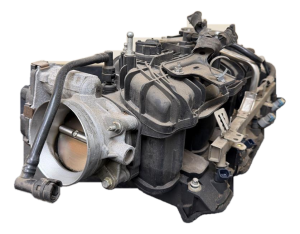
Used OEM Parts in Stock
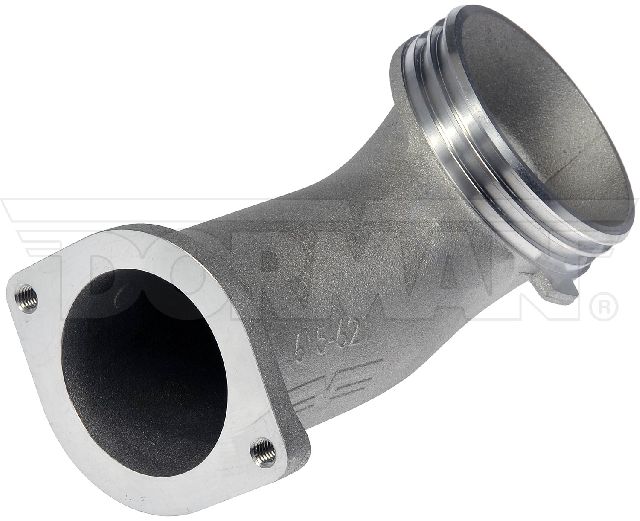
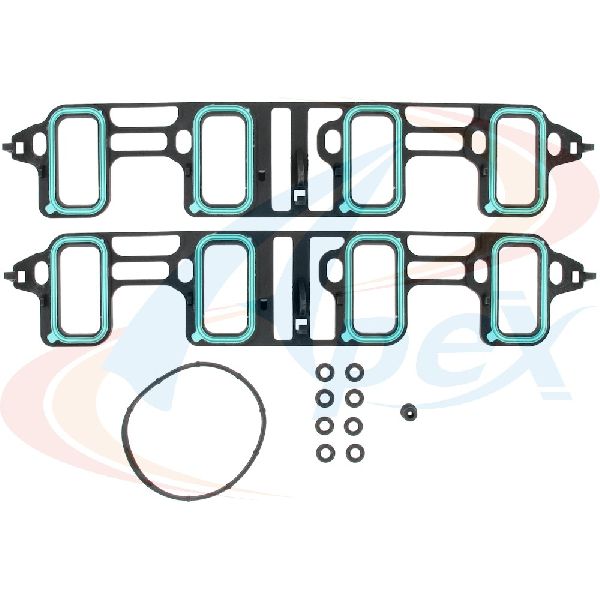
New Aftermarket Parts Available



The information in this article is provided for general reference and educational purposes only. Vehicle specifications, procedures, and part compatibility can vary by production date, trim level, and region. Always consult your vehicle's factory service manual and verify part numbers before purchasing or performing repairs. Safety-critical components such as airbags, seat belts, and braking systems should be installed by a qualified professional.
- Chevrolet SILVERADO 2500:
- 🧭 Diagnostic Flowchart
- 🎬 Helpful Videos
- 🛍️ Shop This Part
- What's Unique About the 2007-2010 Chevrolet SILVERADO 2500
- Symptoms You May Notice
- Most Likely Causes
- Rare But Worth Checking
- Diagnosis Steps
- Parts You'll Likely Need
- Related Codes That Often Appear With This One
- Technical Service Bulletins (TSBs) & Recalls
- Platform-Specific Known Issues
- Mechanic-Grade Diagnostic Values
- Scan Tool Commands That Help
- Wiring & Ground Locations
- Real Owner Repair Stories
- "I Checked Everything" — The Actual Cause
- OEM Part Supersession History
- Model Year Variations Within This Range
- 🎟️ Get 5% Off