

P0171 on 2013 Chevrolet Silverado 3500: Lean Code Causes and Fixes
For a 2013 Silverado 3500 with the 6.0L V8, a P0171 code is most often caused by a vacuum leak. Check the PCV tube on the driver's side valve cover first, as it's a known failure point mentioned in GM Technical Service Bulletin PIP5341. Other common causes include a dirty MAF sensor or, very frequently on this platform, a failing intake manifold gasket. A classic sign of a vacuum leak is high positive fuel trims at idle that decrease as RPMs increase.
- P0171 on your 2013 Silverado 3500 almost always means there is a vacuum leak.
- Start your diagnosis by inspecting the PCV tube on the driver's side valve cover for cracks; this is a known issue documented by GM.
- The second most likely cause is a failed intake manifold gasket, a common problem on the 6.0L V8.
- Before replacing any parts, clean the Mass Air Flow (MAF) sensor with the correct cleaner as a simple and inexpensive diagnostic step.
- Do not replace the oxygen sensors first; they are typically just reporting the problem, not causing it.
What's Unique About the 2013-2013 Chevrolet SILVERADO 3500
On this generation of GM V8 trucks (GMT900), including the 6.0L (L96) in the Silverado 3500, the P0171 code is frequently tied to specific, well-documented vacuum leak points. A technical service bulletin (PIP5341) points directly to a PCV tube that can crack or collapse, creating a significant unmetered air leak. Additionally, the intake manifold gaskets are a very common failure item that degrades over time, allowing unmetered air to enter the intake ports and causing identical symptoms.
Diagnostic Flowchart
Tap your situation to follow the diagnostic path that matches what you're seeing on this vehicle.
Symptoms You May Notice
- Check Engine Light is on
- Rough idle or stalling, especially when cold
- Hesitation or lack of power during acceleration
- Reduced fuel economy
- Hissing sound from the engine bay due to a vacuum leak
- Long crank times before the engine starts
- Replacing the oxygen (O2) sensor. The O2 sensor is usually doing its job correctly by reporting the lean condition. Replacing it without fixing the underlying air or fuel problem will not solve the issue and the code will return.
Most Likely Causes
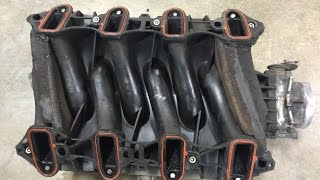
- Leaking Intake Manifold Gaskets 🔴 High Probability → Shop Engine Intake Manifold The intake manifold gaskets on the 6.0L V8 are a very common failure item. Over time, the gasket material, originally an orange or black plastic carrier with rubber seals, degrades, flattens, and cracks, allowing unmetered air to enter the intake ports directly at the cylinder head.
How to confirm: With the engine running, spray short bursts of brake cleaner or an unlit propane torch around the area where the intake manifold meets the cylinder heads. If the engine RPM changes or fuel trims on a scan tool react, a leak is present. A smoke test is the most definitive way to confirm the leak location and severity.
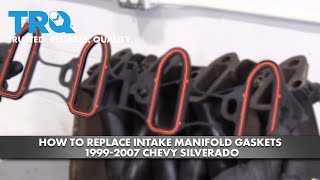
Typical fix: Replace the intake manifold gaskets. 🎬 Watch: Step-by-step guide to replacing your intake manifold gaskets. This is an involved repair but is often the permanent solution. It is recommended to also replace the knock sensors and harness located under the intake manifold at the same time. Clean the throttle body and MAF sensor during the repair.
Est. part cost: $40-$100 - Cracked or Disconnected PCV Tube 🔴 High Probability → Shop PCV Valve Hose A GM Technical Service Bulletin (PIP5341) specifically identifies a vacuum leak from the PCV tube on the left (driver's) side of the engine as a direct cause for P0171 and rough idling. The hose can become brittle from heat and crack, or the rubber ends can soften and collapse.
How to confirm: Visually inspect the PCV tube running from the driver's side valve cover to the intake manifold. Check for cracks, brittleness, soft spots, or a complete disconnection. The leak may be on the underside and hard to see. A smoke test will quickly reveal a leak here.
Typical fix: Replace the PCV tube assembly. In some cases, the valve cover itself, which has an integrated PCV baffle, may need replacement if it is the source of the leak.
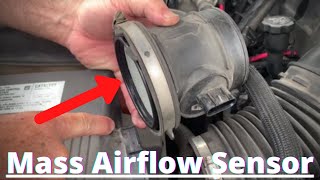
Est. part cost: $20-$50 - Dirty or Faulty Mass Air Flow (MAF) Sensor 🟡 Medium Probability → Shop Fuel Injection Air Flow Meter The MAF sensor measures the amount of air entering the engine. If the sensing wire becomes contaminated with dirt, oil, or debris, it will under-report the airflow, causing the computer to inject too little fuel, leading to a lean condition.
How to confirm: Remove the sensor from the air intake tube. Visually inspect the small wires inside. If they appear dirty, clean them ONLY with a dedicated MAF sensor cleaner spray. 🎬 See how to safely clean your MAF sensor. Do not touch the wires. On a scan tool, a healthy MAF sensor on a 6.0L engine should read around 5-6 grams/second at a warm, stable idle.
Typical fix: Clean the MAF sensor. If cleaning doesn't resolve the issue or the code returns, the sensor may need to be replaced. Aftermarket sensors can sometimes cause issues, so an OEM/ACDelco part is often recommended.
Est. part cost: $10 for cleaner, $70-$150 for a new sensor - Weak Fuel Pump or Clogged Fuel Filter ⚪ Low Probability → Shop Fuel Filter If the fuel system cannot deliver enough fuel to meet the engine's demand, it will create a lean condition. This is less common than vacuum leaks but can occur as the vehicle ages. The fuel filter is a maintenance item and can become restricted.
How to confirm: Connect a fuel pressure gauge to the Schrader valve on the fuel rail. For the 6.0L V8, pressure should be around 55-62 PSI with the key on, engine off (KOEO) and should hold steady. If pressure is low or bleeds off quickly, suspect the fuel filter or pump.
Typical fix: Replace the fuel filter first as it is a routine maintenance item. If pressure is still low, the fuel pump module, which is located in the fuel tank, will likely need replacement.
Est. part cost: $20-$40 for a filter, $200-$400 for a fuel pump assembly
Rare But Worth Checking
- Exhaust Leak Before the Oxygen Sensor: → Shop Oxygen Sensor A crack in the exhaust manifold or a bad flange gasket can allow outside air to be drawn into the exhaust stream. The Bank 1 oxygen sensor will read this extra air and incorrectly report a lean condition to the computer. This is a common cause if you hear ticking noises from the exhaust manifold area, especially when cold.
- Leaking Brake Booster: A ruptured diaphragm in the brake booster creates a significant vacuum leak, which can trigger a P0171 code. This is usually accompanied by a hard brake pedal and a hissing sound when the brakes are applied.
- Stuck Open EVAP Purge Valve: → Shop Vapor Canister The EVAP purge solenoid can stick open, creating a constant vacuum leak as it pulls fuel vapors from the charcoal canister. This can sometimes cause a lean code, especially at idle.
Diagnosis Steps
- Read the freeze frame data with a scan tool to see the engine conditions (RPM, load, temperature) when the code was set. Note the long-term and short-term fuel trim values. 🎬 Watch: How to diagnose lean codes on a Silverado. High positive numbers (e.g., +25%) confirm the lean condition.
- Visually inspect the entire air intake system from the air filter to the throttle body for any cracks, loose clamps, or disconnected hoses.
- Specifically inspect the PCV tube on the driver's side valve cover for cracks or damage, as noted in TSB #PIP5341.
- Perform a vacuum leak test. With the engine running, listen for hissing sounds. Carefully spray carb cleaner or use an unlit propane torch around the intake manifold gaskets to see if the engine idle changes. A smoke machine is the most effective tool for finding leaks.
- Remove and clean the Mass Air Flow (MAF) sensor using dedicated MAF sensor cleaner. Allow it to dry completely before reinstalling. Check the MAF reading in g/s at idle; it should be close to the engine's displacement in liters (e.g., ~6.0 g/s for the 6.0L engine).
- If no vacuum leaks are found and cleaning the MAF doesn't help, test the fuel pressure. It should be between 55-62 PSI at KOEO and hold pressure.
- If fuel pressure is low, consider replacing the fuel filter. If pressure remains low, the fuel pump may be at fault.
- Check for exhaust leaks between the cylinder head and the upstream O2 sensor. A ticking noise is a common indicator.
Parts You'll Likely Need
- Intake Manifold Gasket Set
(OEM #89060436)— These gaskets are a very common failure point on GM 6.0L V8 engines, leading to vacuum leaks that trigger lean codes. The updated design is more robust.
Trusted brands: ACDelco, Fel-Pro (MS96587), Mahle
OEM price range: $60-$100
Aftermarket price range: $40-$80 - PCV Tube / Hose
(OEM #12590632)— This specific part is cited in a TSB as a common failure point causing vacuum leaks and a P0171 code. It becomes brittle and cracks over time.
Trusted brands: ACDelco, Dorman
OEM price range: $30-$50
Aftermarket price range: $20-$40 - Mass Air Flow (MAF) Sensor
(OEM #23256991 (replaces 10393948))— A dirty or failing MAF sensor is a frequent cause of incorrect air-fuel ratio calculations. Cleaning is the first step, but replacement is sometimes necessary if readings remain incorrect.
Trusted brands: ACDelco, Delphi, Bosch
OEM price range: $120-$180
Aftermarket price range: $70-$150
Related Codes That Often Appear With This One
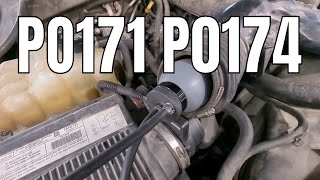
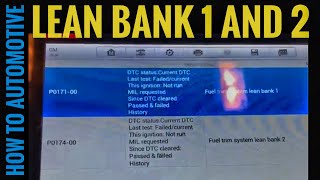
- P0174 — P0174 is 'System Too Lean (Bank 2)'. If both P0171 and P0174 are present, it strongly suggests a problem affecting the entire engine, such as a dirty MAF sensor, intake manifold gasket leak, or low fuel pressure.
- P0300 — P0300 is 'Random/Multiple Cylinder Misfire'. A lean condition can cause misfires across multiple cylinders, especially under load or at idle, because the air-fuel mixture is not optimal for combustion.
Technical Service Bulletins (TSBs) & Recalls
- PIP5341: Addresses a rough running engine with P0171/P0174 caused by a vacuum leak from the PCV tube.
- PI1438: Notes that P0171 can be one of several codes that appear intermittently with the check engine light, particularly on Bi-Fuel (CNG) models, and provides diagnostic tips.
Platform-Specific Known Issues
- The 2013 Silverado 3500 was available with a 6.0L V8 gas engine or a 6.6L Duramax diesel. The P0171 code applies to the gasoline engine, as diesels operate differently.
- GM issued Technical Service Bulletin #PIP5341 specifically for rough idle and codes P0171/P0174, pointing to a vacuum leak at the PCV tube on the left side of the engine.
- The intake manifold gaskets are a particularly well-known weak point on this engine series. Many owners on forums report this as the ultimate fix after chasing other potential causes. The updated Fel-Pro MS96587 gaskets are often recommended by DIYers as a durable replacement.
Mechanic-Grade Diagnostic Values
- Mass Air Flow (MAF) Sensor Reading at Idle — expected: Approximately 5.0 to 7.0 grams/second (g/s) for a 6.0L engine at warm idle. A common rule of thumb is the g/s value should be slightly more than the engine displacement in liters.. Failure: A reading significantly lower than 5.0 g/s can indicate a vacuum leak (unmetered air entering after the sensor). An erratic reading that doesn't increase smoothly with RPM suggests a faulty sensor.
- Mass Air Flow (MAF) Sensor Reading at 2500 RPM — expected: 15 to 25 g/s. Failure: A slow, non-linear, or hesitant rise in the g/s value as RPMs increase points to a dirty or failing sensor.
- Fuel Pressure (KOEO - Key On, Engine Off) — expected: 55-62 PSI. Failure: Pressure below 55 PSI indicates a potential issue with the fuel pump, clogged filter, or fuel pressure regulator. Pressure that drops quickly after the pump primes can indicate a bad check valve in the fuel pump assembly.
- Long Term Fuel Trim (LTFT) — expected: Within +/- 10% at idle and under load.. Failure: A sustained positive value of +20% or higher, especially at idle, strongly suggests a vacuum leak. If the trim level decreases as RPMs increase, it further confirms a vacuum leak.
Scan Tool Commands That Help
- GM Tech2 / GDS2: Fuel Trim Reset — After a repair, such as replacing intake gaskets or a MAF sensor, resetting the fuel trims forces the ECM to relearn the air/fuel mixture from a baseline of zero instead of trying to adjust from the previously learned incorrect values. This provides immediate feedback on whether the repair was successful.
- GM Tech2 / GDS2: Fuel Pump Relay/Fuel Pump Command — This bidirectional control allows the technician to turn the fuel pump on and off manually. It's used to verify the electrical circuit to the pump is working and to test fuel pressure without needing to crank the engine.
- GM Tech2 / GDS2: EVAP Purge/Seal — This function commands the EVAP purge solenoid open and closed. It can be used to test if the valve is sticking open (a common cause of a vacuum leak) by commanding it closed and watching for a change in fuel trims or by using it in conjunction with a smoke machine to check for leaks in the EVAP system.
Wiring & Ground Locations
- G104 / G105 — G104 is typically located at the left rear of the engine block. G105 is at the left front of the engine compartment.. G104 is a primary ground for the Engine Control Module (ECM). A poor or corroded connection at this point can cause erratic sensor readings and incorrect calculations by the ECM, potentially leading to false lean codes or other drivability issues.
- G103 — Located on the cowl at the left rear of the engine compartment, often near or above the brake booster.. This ground serves the Body Control Module (BCM) and Data Link Connector (DLC). While not a direct engine ground, a poor connection here can cause communication issues between modules, which can sometimes manifest as strange engine-related problems.
Real Owner Repair Stories
- SilveradoSierra.com forum user (2013 Silverado 6.0L) — P0171 and P0174 codes, rough idle, high positive fuel trims at idle that improved with increased RPM.
❌ Tried (didn't work) Cleaned MAF sensor, Replaced MAF sensor, Replaced fuel filter, Smoke tested the EVAP system
✅ What actually fixed it The final fix was replacing the intake manifold gaskets. A smoke test performed directly at the intake manifold confirmed a significant leak around the gasket seals, which was the root cause of the lean codes.
"I Checked Everything" — The Actual Cause
- In some cases, a smoke test may not reveal a leak, but the issue is still air/fuel related. If a smoke test passes, the next most likely cause is a dirty or failing Mass Air Flow (MAF) sensor that is under-reporting airflow. Even if it looks clean, the sensor's electronics can fail. Another possibility is an intermittent low fuel pressure condition caused by a failing Fuel Pump Driver Module (FPDM), which may not be caught during a static fuel pressure test in the shop.
Helpful Videos
Used OEM Parts in Stock
New Aftermarket Parts Available



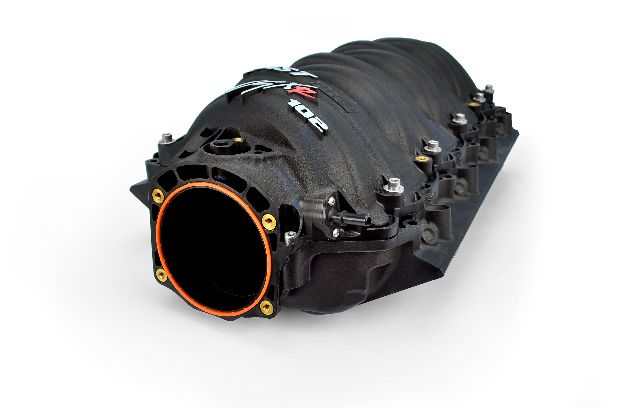

The information in this article is provided for general reference and educational purposes only. Vehicle specifications, procedures, and part compatibility can vary by production date, trim level, and region. Always consult your vehicle's factory service manual and verify part numbers before purchasing or performing repairs. Safety-critical components such as airbags, seat belts, and braking systems should be installed by a qualified professional.
- Chevrolet SILVERADO 3500:
- 🧭 Diagnostic Flowchart
- 🎬 Helpful Videos
- 🛍️ Shop This Part
- What's Unique About the 2013-2013 Chevrolet SILVERADO 3500
- Symptoms You May Notice
- Most Likely Causes
- Rare But Worth Checking
- Diagnosis Steps
- Parts You'll Likely Need
- Related Codes That Often Appear With This One
- Technical Service Bulletins (TSBs) & Recalls
- Platform-Specific Known Issues
- Mechanic-Grade Diagnostic Values
- Scan Tool Commands That Help
- Wiring & Ground Locations
- Real Owner Repair Stories
- "I Checked Everything" — The Actual Cause
- 🎟️ Get 5% Off