

P0171 on 2012-2019 Chevrolet Sonic 1.8L: Lean Code Causes and Fixes
On the 1.8L Sonic, code P0171 is most often caused by a cracked air intake duct between the air filter box and the throttle body. A failed PCV valve diaphragm inside the valve cover is the second most likely cause. Both are common, DIY-friendly repairs costing between $50 and $150.
- For a P0171 code on a 2012-2019 Sonic 1.8L, immediately inspect the flexible air intake hose for cracks; this is the most likely culprit.
- If the intake hose is intact, the next most probable cause is a failed PCV diaphragm within the valve cover, identifiable by a hissing sound at idle.
- Do not replace the oxygen sensor; it is almost certainly not the cause of the lean code.
- A smoke test is the most reliable way to confirm the source of the vacuum leak if it is not immediately obvious.
- Check if your vehicle falls under GM's Special Coverage program (16139) for the air intake duct, which could result in a no-cost repair at a dealership.
What's Unique About the 2012-2019 Chevrolet Sonic
While many vehicles can get a P0171 code, the 1.8L engine in the Chevrolet Sonic and its platform-mate, the Chevrolet Cruze, have two extremely common failure points that account for the vast majority of cases. The primary culprit is the flexible air intake duct, which becomes brittle and cracks in the ribbed sections, creating a large vacuum leak. The second is a failed PCV valve diaphragm, which is integrated into the valve cover and requires replacing the entire cover when it tears. Unlike the 1.4L turbo Sonic engine which has a more complex PCV failure chain involving the intake manifold, the 1.8L's issues are more straightforward.
Symptoms You May Notice
- Check Engine Light is on
- Rough or unstable idle, sometimes erratic
- Hesitation or loss of power during acceleration
- Reduced fuel economy
- Hissing or whistling sound from the engine bay
- Stalling, especially when coming to a stop
- Engine misfires, which may trigger a P0300 code
- Replacing the upstream oxygen (O2) sensor. The O2 sensor is accurately reporting the lean condition; it is the messenger, not the cause of the problem.
- Replacing the Mass Airflow (MAF) sensor without diagnosis. While a MAF sensor can cause P0171, it is far more likely that a vacuum leak is present downstream of the sensor.
Most Likely Causes
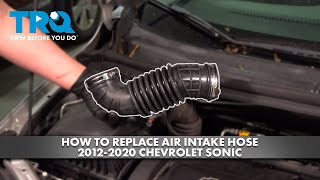
- Torn or Cracked Air Intake Duct 🔴 High Probability → Shop Engine Air Intake Resonator The flexible, ribbed portion of the plastic air duct between the MAF sensor and the throttle body becomes brittle with age and heat, developing cracks that allow unmetered air to enter the engine. This is the most common failure on the 1.8L Sonic. GM issued a special coverage program for this exact issue.
How to confirm: Remove the air duct completely. Flex and bend the ribbed sections while inspecting closely for hidden cracks or splits, which are often not visible when the part is installed. A smoke test will also quickly identify a leak from this component.
Typical fix: Replace the entire air intake duct assembly.
Est. part cost: $40-$80 - Failed PCV Valve Diaphragm (in Valve Cover) 🔴 High Probability → Shop PCV Valve The rubber PCV diaphragm is integrated into the valve cover. It is known to tear or rupture, creating a significant vacuum leak. This is a common design flaw on many GM engines of this era, including the platform-mate Chevy Cruze. Manufacturer Bulletin #N202299080 notes that if the engine runs rough, especially during idle, the Malfunction Indicator Light would illuminate with a P0171 or other airflow related DTC, requiring a camshaft cover replacement.
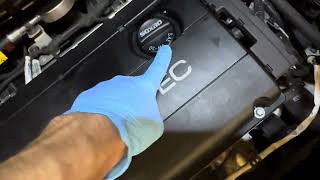
How to confirm: With the engine running at idle, listen for a distinct hissing or whistling sound from the top of the engine. You can also place your finger over the small breather hole on the circular cap on the valve cover; if you feel strong suction, the diaphragm is torn. Removing the oil dipstick may cause the sound to change or stop, and the engine may stumble, further confirming the internal vacuum leak.
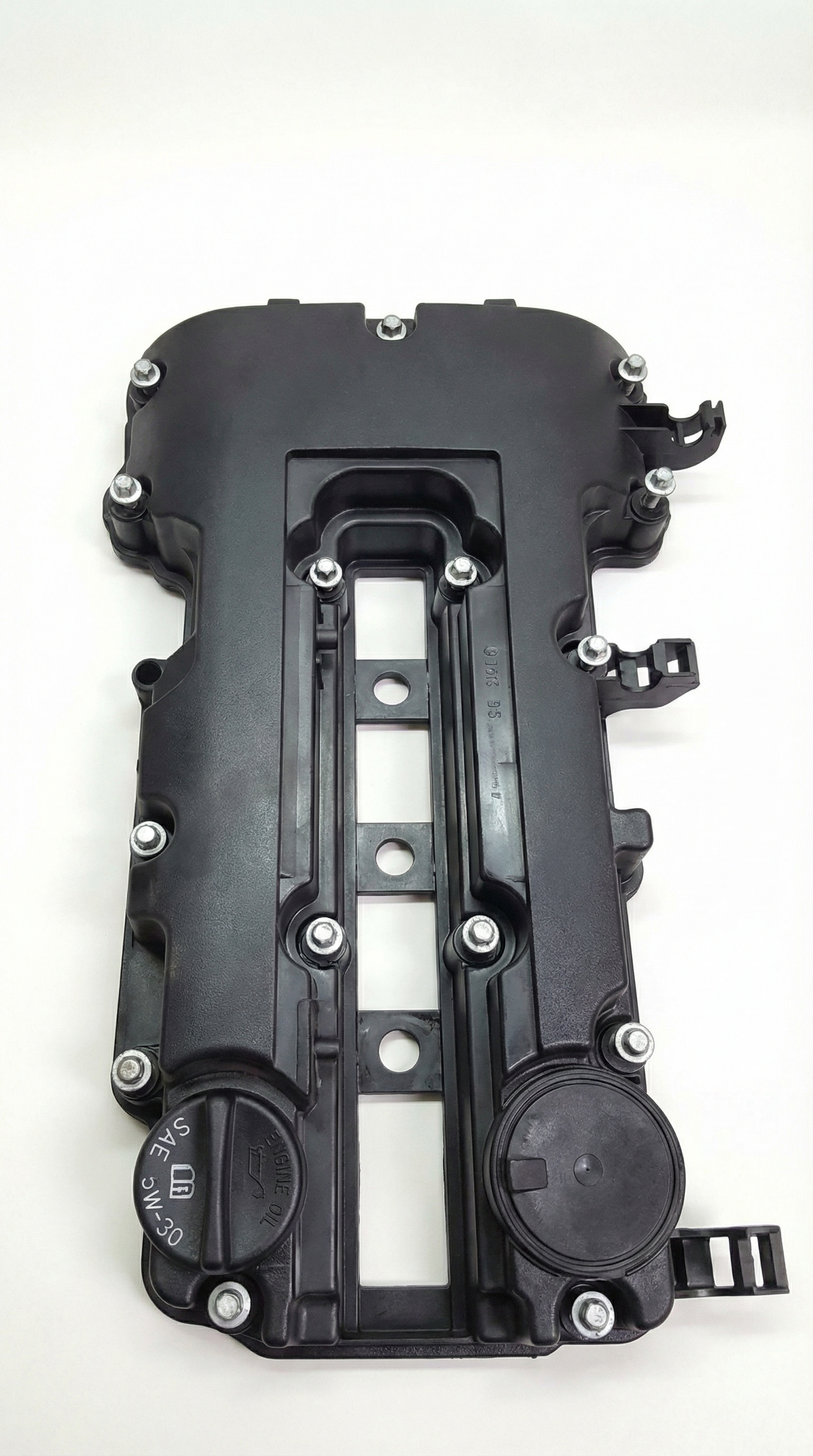
Typical fix: Replace the entire valve cover (camshaft cover) assembly, as the diaphragm is not serviced separately.
Est. part cost: $70-$150 - Stuck Open EVAP Purge Solenoid Valve 🟡 Medium Probability → Shop Vapor Canister The EVAP purge valve can fail and stick open, creating a constant vacuum leak that the ECM does not command. This introduces unmetered fuel vapors into the intake manifold. This is a common failure on many GM vehicles and can occur with or without an accompanying EVAP code like P0496.
How to confirm: With the engine running at idle, disconnect the electrical connector and the hose leading from the valve to the intake manifold. Place your finger over the valve's port; if you feel any suction at idle, the valve is stuck open and must be replaced. A scan tool can also be used to monitor fuel trims while performing this test; trims should drop significantly when the vacuum source is blocked.
Typical fix: Replace the EVAP purge solenoid valve.
Est. part cost: $20-$50
Rare But Worth Checking
- Leaking Intake Manifold Gaskets: → Shop Engine Intake Manifold While less common than the intake duct or valve cover, the gaskets between the plastic intake manifold and the cylinder head can fail, causing a lean condition that is most noticeable at idle. A smoke test is the best way to confirm this.
- Weak Fuel Pump or Clogged Fuel Filter: → Shop Fuel Filter If the engine isn't receiving enough fuel due to low pressure, it can cause a lean condition. This should be considered only after all potential vacuum leaks have been thoroughly ruled out. A fuel pressure test is required for diagnosis.
- Dirty or Failing Mass Airflow (MAF) Sensor: → Shop Fuel Injection Air Flow Meter A MAF sensor contaminated with dirt or oil can under-report the amount of air entering the engine, causing the ECM to deliver too little fuel. While possible, this is much less common than vacuum leaks on the Sonic 1.8L. Cleaning the sensor with a dedicated MAF cleaner is a good first step before replacement.
- Cracked Plastic Intake Manifold: → Shop Engine Intake Manifold In rare cases, the intake manifold itself can develop a hairline crack, often at a casting seam or stress point. One owner on YouTube documented a failure at a plastic stop for the internal tuning valve, which he was able to repair with epoxy. This type of leak can be very difficult to find without a smoke test.
Diagnosis Steps
- Visually inspect the engine bay for any obvious disconnected vacuum hoses or cracked plastic components.
- Specifically inspect the air intake duct. Remove it from the vehicle and flex the ribbed sections to check for hidden cracks. This is the most common cause.
- With the engine idling, listen for a hissing or whistling noise from the valve cover area. If a noise is present, or if there is strong suction at the PCV breather port, the valve cover diaphragm has failed. Manufacturer TSB #19NA114 provides information to technicians to test the PCV for proper performance specifically before replacing the camshaft cover to correct a P0171.
- Check the EVAP purge solenoid. With the engine idling, disconnect the electrical connector and the hose from the solenoid to the intake and check for suction. There should be none at idle.
- If no leaks are found, use a scan tool to monitor Short-Term Fuel Trim (STFT) and Long-Term Fuel Trim (LTFT). High positive numbers (e.g., LTFT > 15%) confirm the lean condition and can show the severity. A code often sets when total trim exceeds 25-30%.
- Perform a smoke test. This is the most effective way to find less obvious vacuum leaks from sources like intake manifold gaskets or other small hoses.
- If no vacuum leaks can be found, investigate the fuel system by checking fuel pressure to rule out a weak pump or clogged filter.
Parts You'll Likely Need
- Engine Air Intake Hose / Duct
(OEM #95089363 (supersedes 96958301))— This is the most common failure point causing P0171 on the 1.8L Sonic. The flexible ribs crack from heat and age.
Trusted brands: ACDelco, GM Genuine
OEM price range: $60-$90
Aftermarket price range: $30-$50 - Engine Valve Cover / Camshaft Cover
(OEM #25198874)— The second most common cause. The integrated PCV diaphragm ruptures, creating a vacuum leak. The entire cover must be replaced.
Trusted brands: ACDelco, Dorman
OEM price range: $120-$180
Aftermarket price range: $70-$120 - EVAP Canister Purge Solenoid Valve
(OEM #55573017 (cross-references to 55567453, CP780, PV703))— A common cause of vacuum leaks on many GM vehicles. It can fail by sticking open, leading to a P0171 code.
Trusted brands: ACDelco, Bosch
OEM price range: $30-$50
Aftermarket price range: $15-$30
Related Codes That Often Appear With This One
- P1101 — This code for 'Intake Air Flow System Performance' is often set alongside P0171 because a vacuum leak causes the MAF sensor's reading to not match the expected airflow based on throttle position and engine speed. GM's TSB for the cracked intake duct specifically lists P1101 as a related code.
- P0496 — This code for 'EVAP Flow During a Non-Purge Condition' indicates the EVAP purge valve is stuck open, which is a type of vacuum leak that directly causes the P0171 lean condition.
- P0300 — A severe lean condition can lead to combustion instability and random misfires across the cylinders, triggering a P0300 code. Fixing the root cause of the P0171 will typically resolve the P0300 as well.
Technical Service Bulletins (TSBs) & Recalls
- GCUS-9-3731 (also known as 16139): Special Coverage for the 1.8L engine air cleaner outlet duct on certain 2012-2014 Sonics. The TSB notes this crack can cause DTC P0171 or P0101.
- Bulletin #N202299080: This manufacturer bulletin addresses cases where the Malfunction Indicator Light illuminates with a P0171 or other airflow related DTC, instructing dealers to replace the engine camshaft cover as necessary.
- Bulletin #19NA114: Provides technical guidance to test the PCV for proper performance before replacing the camshaft cover to correct a MIL On with DTC P0171.
Platform-Specific Known Issues
- GM issued a Special Coverage program (GCUS-9-3731 / 16139) for the cracking air cleaner outlet duct on some 2012-2014 Sonic models, extending the warranty for this specific part to 10 years or 120,000 miles. Owners should check with a dealership with their VIN to see if their vehicle is covered, even if outside the original warranty period.
Mechanic-Grade Diagnostic Values
- Long-Term Fuel Trim (LTFT) at Idle — expected: Close to 0%, ideally within +/- 10%.. Failure: Sustained values of +25% or higher indicate a significant lean condition that the ECM is compensating for. Some owners report values exceeding +35% with a major vacuum leak.
- Mass Airflow (MAF) Sensor Reading at Idle — expected: Approximately 1.4-1.8 g/s at normal operating temperature with no electrical load.. Failure: Significantly lower readings can indicate a large unmetered air leak downstream of the sensor (as air is bypassing it). Readings that don't increase smoothly with RPM can indicate a faulty sensor.
- Low-Pressure Fuel System Pressure — expected: Approximately 43-58 PSI.. Failure: Pressure below the specified range indicates a potential weak fuel pump or clogged filter, which could cause a lean condition after vacuum leaks are ruled out.
- Fuel Injector Internal Resistance — expected: 11.8 - 12.5 Ohms.. Failure: A reading of infinity (OL) indicates an open coil, while a reading near zero indicates a short. A clogged injector, however, will test good with a multimeter but may still cause a lean condition.
Scan Tool Commands That Help
- GDS2 / Tech2 or equivalent professional scan tool: Fuel Trim Reset — After replacing a component that caused a vacuum leak or fuel delivery issue (e.g., valve cover, intake hose, fuel pump), resetting the learned fuel trim values will force the ECM to relearn the new baseline immediately, which can confirm the repair and prevent driveability issues during the relearn period.
- GDS2 / Tech2 or equivalent professional scan tool: EVAP Purge/Seal — To test the EVAP purge solenoid. The tool can command the valve to close while the engine is running. If the fuel trims improve (decrease) when the valve is commanded shut, it confirms the valve was stuck open and leaking.
Wiring & Ground Locations
- G105 — Left front of the engine compartment, near the underhood fuse block, sometimes under the battery tray.. This is a primary ground for the Engine Control Module (ECM) and other critical sensors. A loose or corroded connection here can cause unstable reference voltage for sensors like the MAF and O2 sensors, leading to incorrect readings and false lean codes.
- G107 — Lower left rear of the engine block.. This is a critical engine block ground. A poor connection can cause a variety of difficult-to-diagnose electrical issues and unpredictable sensor behavior for the entire engine management system.
- MAF Sensor Connector — On the air intake tube, between the air filter housing and the throttle body.. The MAF sensor connector has pins for power, ground, and signal. A voltage test can be performed here. With the key on, engine off, you should find a 12V power feed, a 5V reference, and a ground pin. A poor connection or damaged wire here will directly impact the air reading sent to the ECM.
Real Owner Repair Stories
- YouTube user 'Fix it All' (2013 Chevy Sonic 1.8L) — P0171 code. Shop quoted $2600 for a new intake manifold.
❌ Tried (didn't work) Initial diagnosis pointed to a leaking intake manifold.
✅ What actually fixed it The plastic intake manifold has an internal rotary tuning valve with a small plastic stop. This stop had cracked and broken, creating a vacuum leak directly into the manifold that was very difficult to locate. The user cleaned the area with brake cleaner while pulling a vacuum on the manifold with a shop vac, then sealed the crack with JB Weld epoxy, fixing the leak for free. - YouTube user 'Homie Hektor' (2014 Chevrolet Cruze 1.8L (same engine)) — P0171 and P0300, fuel trims at +40%.
❌ Tried (didn't work) A smoke test was performed and showed NO external vacuum leaks.
✅ What actually fixed it The EVAP purge solenoid was stuck open internally, causing a significant vacuum leak that the smoke test did not reveal. The fix was confirmed by disconnecting the solenoid's inlet hose at idle and observing the fuel trims drop dramatically on a scan tool. Replacing the EVAP purge solenoid resolved both codes. - YouTube user 'Repairs and Stuff' (2014 Chevy Sonic 1.8L) — P0171 and P2270, car kept stalling.
❌ Tried (didn't work) Initial diagnosis was unclear.
✅ What actually fixed it The PCV diaphragm in the valve cover had failed. This was confirmed by observing strong suction at the oil dipstick tube with the engine running. Replacing the entire valve cover assembly fixed the stalling and cleared the codes.
"I Checked Everything" — The Actual Cause
- In multiple documented cases on the 1.8L engine, a smoke test will pass (show no leaks), but the P0171 is caused by a faulty EVAP purge solenoid that is stuck open internally. This type of leak is best found by monitoring fuel trims on a scan tool while disconnecting the solenoid's vacuum line to see if the trims immediately improve.
- A loose oil filler cap or improperly seated oil dipstick can introduce unmetered air through the PCV system, causing a P0171 code, but may not show up on a smoke test if the test pressure is not high enough to overcome the crankcase volume.
OEM Part Supersession History
25198874 (Valve Cover)→25209141— Standard part number evolution by GM. It is unclear if there were specific design changes to address the PCV diaphragm failure, but the new part number is the current official replacement.96958301 (Air Intake Duct)→95089363— Standard part number evolution. The replacement part is functionally identical.
Model Year Variations Within This Range
- 2012-2016: While the causes of P0171 are consistent across the 2012-2019 range, some part numbers for related components like fuel injectors may have different OEM numbers for early vs. late models. For example, some catalogs list fuel injector 55570284 for 2011-2015 models. Always verify the correct part number with the vehicle's VIN.
Diagnostic Flowchart
Other Known Issues on This Vehicle
Issues unrelated to this code that are worth knowing about as an owner of this generation:
- Cracked Plastic Thermostat Housing 🔴 High — Very common failure point for both 1.4L and 1.8L engines. The plastic becomes brittle and leaks coolant, often onto the transmission housing.
- Timing Belt Replacement (1.8L Engine) 🔴 High — The 1.8L engine uses a timing belt that requires replacement at 97,500 miles. Failure of this belt will cause catastrophic interference engine damage. It is a critical maintenance item.
- Automatic Transmission Problems 🟠 Medium — Most common on 2012-2015 models. Issues include hesitant shifting, unusual noises, and in some cases, turbine shaft fractures which were subject to a recall on some 2012 models. (Ref: Recall on some 2012 models for transmission turbine shaft fracture.)
- Failed Ignition Coil Pack (1.8L Engine) 🟠 Medium — The single coil-on-plug cassette is a frequent cause of random misfires (P0300). The plastic housing can crack, causing spark to arc to the cylinder head.
Used vs. New Parts: Buying Guide for This Vehicle
When a used part is the smart pick: For this repair, using used parts is generally not recommended for the common failure items. The intake duct and valve cover fail due to heat and age, so a used part from a junkyard is likely to have the same brittleness or wear as the part being replaced and may fail soon after installation.
Donor-vehicle mileage cap: roughly under 40000 miles for the part to have meaningful remaining life.
What to inspect on the donor part:
- For an intake duct: Must be perfectly clean, flexible, and show no signs of cracking when flexed by hand.
- For a valve cover: Inspect for any hairline cracks, especially around bolt holes. Ensure the PCV port is clean and unobstructed. Avoid parts from engines with heavy sludge buildup.
OEM-only on this vehicle (don't cheap out):
- Mass Airflow (MAF) Sensor
- Oxygen (O2) Sensor
Aftermarket brands forum-validated for this vehicle:
- ACDelco (OEM for GM)
- Bosch (Often OE for sensors and solenoids)
Brands owners have reported issues with on this vehicle:
- Dorman Valve Cover (264-968): While a popular and widely available option, some owners have reported premature failure of the integrated PCV diaphragm within a year. Others have reported fitment issues causing oil leaks, requiring a return to an OEM part.
Real Owner Stories
Aggregated from forums and TSBs cited above. Mileages and costs reflect what owners reported in those sources.
2013 Chevrolet Sonic LT 1.8L
Symptoms: Intermittent rough idle for about 2 years; Check Engine Light came on while driving at approximately 38 mph. No other noticeable changes in performance.
What fixed it: The owner had not found a fix at the time of posting, though a mechanic ruled out the MAF sensor and initial vacuum leak checks. Another user suggested the air intake hose accordion section.
Source hint: Sonic Owners Forum
2015 Chevrolet Sonic 1.8L
Symptoms: P0171 code and fuel trim system lean condition.
What fixed it: Replacing the air intake hose, specifically checking the accordion/ribbed section for cracks.
Source hint: Reddit r/MechanicAdvice
2013 Chevrolet Sonic 1.8L
Symptoms: P0171 code caused by a rare vacuum leak.
What fixed it: Repairing a cracked intake manifold at a factory defect point using epoxy.
Source hint: YouTube video titled '2013 Chevy sonic 1.8 p0171 mystery solved free saved $2800'
2012-2014 Chevrolet Sonic 1.8L
Symptoms: DTC P0171 or P0101 caused by a crack in the air cleaner outlet duct.
What fixed it: Replacement of the air cleaner outlet duct under Special Coverage 16139.
Source hint: GCUS-9-3731 (also known as 16139)
Documented NHTSA Reports
NHTSA ODI #11384224
Symptoms: An owner reported a ticking sound that worsened over time before the Check Engine Light illuminated with codes P0171, P0496, P1101, and P2270.
NHTSA ODI #10723024
Symptoms: The Check Engine Light came on and a dealership diagnosis found codes P0101 and P0171. The throttle body intake tube was torn, allowing unmetered air to enter the engine.
NHTSA ODI #11243204
Symptoms: An owner reported codes P0171 and P0420 and attempted to fix the issue by replacing the thermostat, catalytic converter, and both O2 sensors.
Related OBD-II Codes
Frequently Asked Questions
Is there a special warranty for the cracked air intake duct on my 2012-2014 Chevrolet Sonic?
My 1.8L Sonic has a P0171 and a whistling sound from the engine. Can I just replace the PCV valve?
How can I tell if my P0171 code is caused by the EVAP purge solenoid without a scan tool?
Can a cracked air intake duct cause codes other than P0171?
Why did my mechanic suggest a smoke test for my Sonic's P0171 code?
Does the Chevy Cruze suffer from the same P0171 issues as the Sonic?
Helpful Videos
Used OEM Parts in Stock
New Aftermarket Parts Available


The information in this article is provided for general reference and educational purposes only. Vehicle specifications, procedures, and part compatibility can vary by production date, trim level, and region. Always consult your vehicle's factory service manual and verify part numbers before purchasing or performing repairs. Safety-critical components such as airbags, seat belts, and braking systems should be installed by a qualified professional.
- Chevrolet Sonic:
- 🧭 Diagnostic Flowchart
- 🎬 Helpful Videos
- 🛍️ Shop This Part
- What's Unique About the 2012-2019 Chevrolet Sonic
- Symptoms You May Notice
- Most Likely Causes
- Rare But Worth Checking
- Diagnosis Steps
- Parts You'll Likely Need
- Related Codes That Often Appear With This One
- Technical Service Bulletins (TSBs) & Recalls
- Platform-Specific Known Issues
- Mechanic-Grade Diagnostic Values
- Scan Tool Commands That Help
- Wiring & Ground Locations
- Real Owner Repair Stories
- "I Checked Everything" — The Actual Cause
- OEM Part Supersession History
- Model Year Variations Within This Range
- Other Known Issues on This Vehicle
- Used vs. New Parts: Buying Guide for This Vehicle
- Real Owner Stories
- 2013 Chevrolet Sonic LT 1.8L
- 2015 Chevrolet Sonic 1.8L
- 2013 Chevrolet Sonic 1.8L
- 2012-2014 Chevrolet Sonic 1.8L
- Documented NHTSA Reports
- NHTSA ODI #11384224
- NHTSA ODI #10723024
- NHTSA ODI #11243204
- Related OBD-II Codes
- Frequently Asked Questions
- 🎟️ Get 5% Off