

P0171 on 2005-2008 Ford Escape Hybrid: Lean Code Causes and Fixes
This code means your engine is running 'lean' (too much air, not enough fuel). The most common causes are a dirty Mass Airflow (MAF) sensor or vacuum leaks from old, cracked hoses like the PCV hose. Cleaning the MAF sensor is a cheap first step. Also check for a corroded Fuel Pump Driver Module (FPDM) near the rear wheel.
- P0171 means your engine has too much air or too little fuel.
- Start your diagnosis by inspecting for cracked vacuum hoses (especially the PCV hose) and cleaning the MAF sensor.
- A scan tool that can read live fuel trim data is extremely helpful for confirming a lean condition.
- Don't immediately replace the oxygen sensor; it is usually just reporting the problem, not causing it.
- If you experience stalling, also inspect the Fuel Pump Driver Module (FPDM) for corrosion, as it's a known issue on this platform.
What's Unique About the 2005-2008 Ford Escape Hybrid
The 2.3L Atkinson-Cycle engine in the first-generation Escape Hybrid is generally reliable, but like many Ford engines of this era, it is sensitive to vacuum leaks and MAF sensor contamination. Owners report that aged rubber hoses, especially for the PCV (Positive Crankcase Ventilation) system, are a frequent source of unmetered air, triggering the P0171 code. Additionally, the Fuel Pump Driver Module (FPDM) is mounted to the frame where it is susceptible to corrosion, which can cause erratic fuel pressure and a lean condition. While the hybrid system itself doesn't directly cause this code, ensuring the gasoline engine runs efficiently is critical for overall vehicle performance and fuel economy.
Symptoms You May Notice
- Check Engine Light is on
- Reduced fuel economy
- Rough or unstable idle
- Hesitation or stumbling during acceleration
- Engine stalling at stops
- Audible hissing sound from the engine bay at idle
- Replacing the oxygen (O2) sensor. While a faulty O2 sensor can cause a P0171, it's much less common than vacuum leaks or MAF sensor issues. The O2 sensor is usually doing its job correctly by reporting the lean condition caused by another component. It should be considered only after other causes are ruled out.
Most Likely Causes
- Vacuum Leak (e.g., PCV hose, intake gaskets) 🔴 High Probability Rubber hoses and gaskets become brittle with age and heat cycles, leading to cracks that allow unmetered air to enter the engine after the MAF sensor. The PCV hose is a particularly common failure point. In related Ford designs, NHTSA ODI #10199477 notes that a broken vacuum hose from the intake manifold to the brake booster can trigger this code, requiring manifold removal for repair.
How to confirm: Visually inspect all vacuum lines for cracks or disconnections. The PCV hose is often cracked on the underside, making it hard to see. Listen for a hissing sound at idle. A professional smoke test is the most effective way to find small leaks. Spraying brake cleaner or unlit propane around suspected areas and listening for a change in engine idle can also pinpoint a leak.
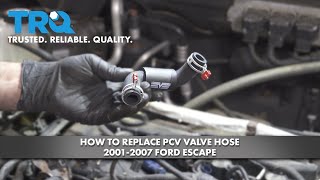
Typical fix: Replace the cracked hose or failed gasket. The PCV hose is often sold as a kit. 🎬 Watch this guide to locate and replace the PCV hose.
Est. part cost: $20-$60 for hoses, $40-$100 for intake gaskets - Dirty or Faulty Mass Airflow (MAF) Sensor 🔴 High Probability → Shop Fuel Injection Air Flow Meter The MAF sensor's sensing wire can become contaminated with dirt and oil over time, causing it to inaccurately measure the amount of air entering the engine.
How to confirm: With a scan tool, observe MAF readings at idle and while driving. A dirty sensor will often report lower-than-actual airflow. Cleaning the sensor is a simple diagnostic step. In one documented case, a MAF at 1120 RPM was reading 5 g/s, which was considered potentially high and warranted investigation.
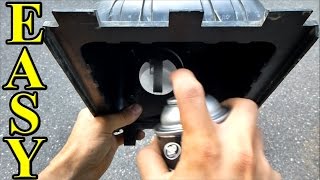
Typical fix: Clean the sensor with a dedicated MAF sensor cleaner spray. Do not use brake or carb cleaner. 🎬 See how to properly clean your MAF sensor step-by-step. If cleaning doesn't work, the sensor must be replaced.
Est. part cost: $10 for cleaner, $70-$150 for a new sensor - Low Fuel Pressure (Weak Pump or Clogged Filter) 🟡 Medium Probability A failing fuel pump, clogged fuel filter, or a failing Fuel Pump Driver Module (FPDM) can restrict fuel flow, preventing the system from delivering enough fuel to match the air entering the engine. NHTSA ODI #10395302 reports a case where a vehicle stalled in an intersection with P0171 and required an inertia switch replacement.
How to confirm: Connect a fuel pressure gauge to the fuel rail and verify the pressure is within the manufacturer's specifications, which should be around 39-40 PSI at idle for this engine. With a scan tool, monitor the Fuel Rail Pressure (FRP) PID; wild fluctuations can point to a failing FPDM.
Typical fix: Replace the clogged fuel filter, the failing fuel pump, or the corroded FPDM.
Est. part cost: $20-$40 for a filter, $50-$100 for an FPDM, $200-$400 for a fuel pump assembly - Clogged Fuel Injectors ⚪ Low Probability → Shop Fuel Injector Fuel deposits can build up in injectors over time, restricting fuel flow and causing a lean condition in one or more cylinders.
How to confirm: This is more difficult to diagnose. A mechanic can perform a fuel injector balance test to compare the flow rate of each injector. Sometimes a bottle of quality fuel injector cleaner is tried as a first, low-cost step.
Typical fix: Professional fuel system cleaning or replacement of the clogged injector(s).
Est. part cost: $50-$100 per injector
Rare But Worth Checking
- Exhaust Leak Before the Upstream Oxygen Sensor: → Shop Oxygen Sensor A crack in the exhaust manifold or a leaking gasket can allow outside air to be pulled into the exhaust stream. The upstream O2 sensor will detect this extra oxygen and incorrectly report a lean condition to the PCM.
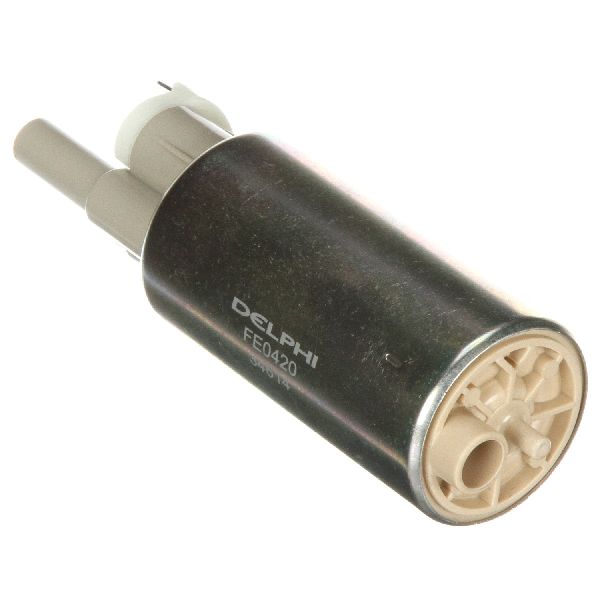
- Failing Fuel Pump Driver Module (FPDM): → Shop Fuel Pump On these Escapes, the FPDM is mounted to the frame near the driver's side rear wheel well and is highly prone to corrosion where the aluminum body contacts the steel frame. This corrosion can destroy the module's electronics, leading to intermittent or complete loss of fuel pressure. This can trigger a P0171 code, often along with other codes like P1235 (Fuel Pump Control Out Of Range) or U0109.
- EVAP System Issues: As noted in NHTSA ODI #11465263, an inability to bleed up the fuel tank caused by EVAP issues can lead to P0171, causing the engine to putter and hesitate after refueling.
Diagnosis Steps
- Read the freeze frame data with a scan tool to understand the engine conditions when the code was set. Note the engine temperature, RPM, and load.
- Check long-term fuel trim (LTFT) and short-term fuel trim (STFT) values. High positive numbers (e.g., LTFT + STFT combined approaching or exceeding +25%) confirm the PCM is adding fuel to compensate for a lean condition.
- Visually inspect the engine bay for any obvious issues, such as disconnected vacuum hoses, cracked air intake tubing between the MAF sensor and throttle body, or audible hissing sounds.
- Clean the Mass Airflow (MAF) sensor using a dedicated MAF sensor cleaner. This is a low-cost, high-impact first step.
- If a vacuum leak is suspected but not visible, perform a smoke test to pinpoint the source of the leak. Pay close attention to the PCV hose and intake manifold gaskets.
- Test the fuel pressure. Connect a gauge to the fuel rail's Schrader valve; pressure should be stable around 40 PSI at idle. Alternatively, monitor Fuel Rail Pressure on a scan tool while driving to check for dropouts.
- Inspect the Fuel Pump Driver Module (FPDM), located on the frame near the driver's side rear wheel, for corrosion between the module's aluminum body and the steel frame.
- Inspect the exhaust manifold and pipe leading to the first oxygen sensor for any signs of leaks (soot trails, audible ticking).
Parts You'll Likely Need
- Mass Airflow (MAF) Sensor Cleaner — Often, the MAF sensor is just dirty, not broken. Cleaning it is a common, inexpensive first step.
Trusted brands: CRC, Liqui Moly
OEM price range: N/A
Aftermarket price range: $10-$15 - PCV Valve Hose
(OEM #Motorcraft KCV-226 (Ford P/N: 5L8Z-6758-AA or similar))— This hose is a very common source of vacuum leaks on this engine as it deteriorates over time. It is often hidden and cracks on the bottom.
Trusted brands: Motorcraft, Dorman
OEM price range: $25-$40
Aftermarket price range: $15-$30 - Mass Airflow (MAF) Sensor
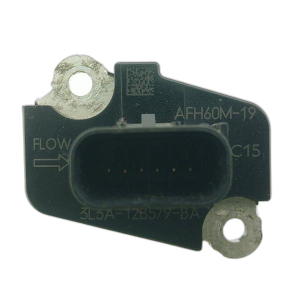
(OEM #Motorcraft AFLS131 (Ford P/N: 3L3A-12B579-BA or similar))— If cleaning the sensor does not resolve the issue, the sensor itself may have failed.
Trusted brands: Motorcraft, Bosch, Denso
OEM price range: $120-$180
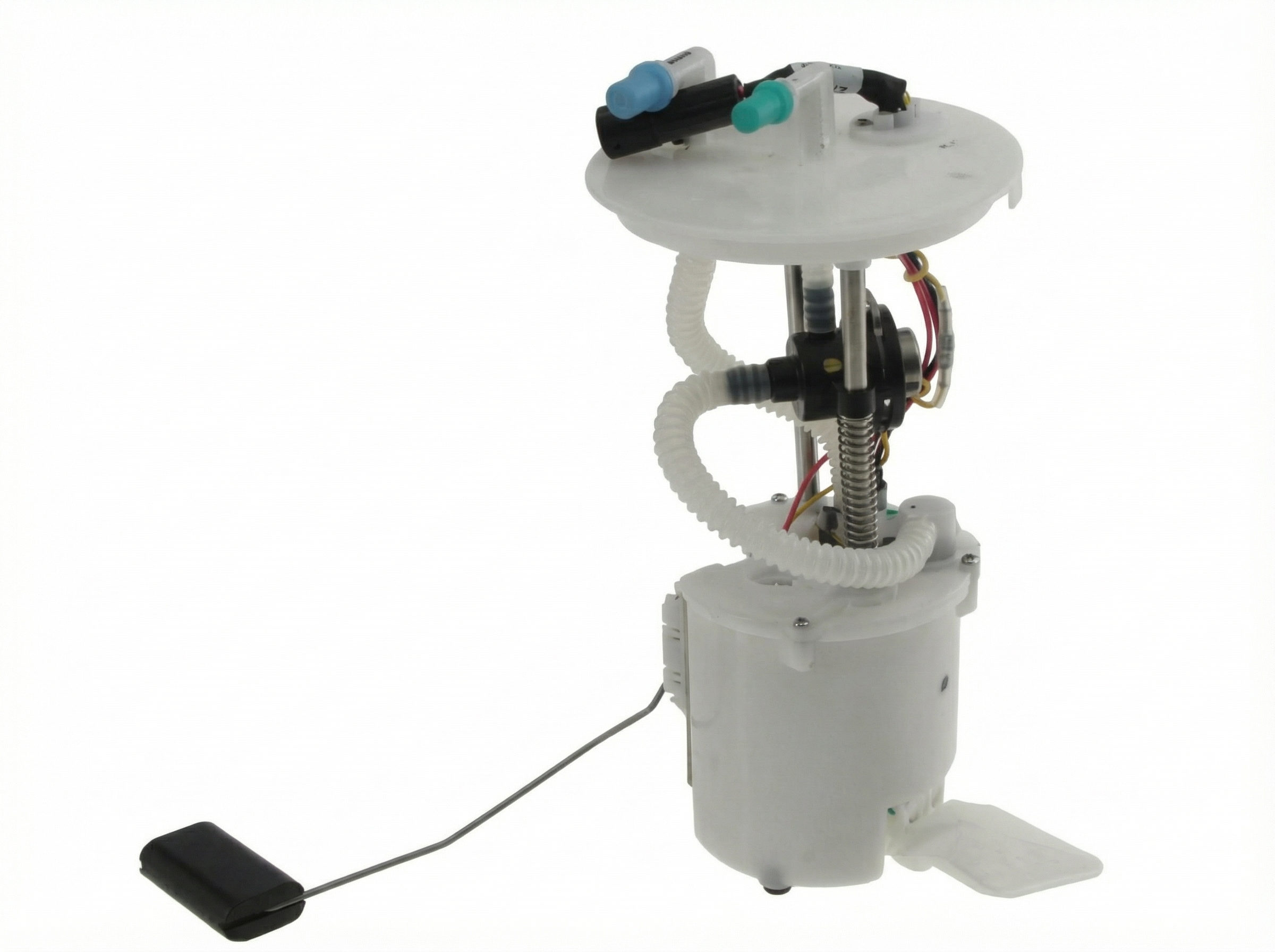
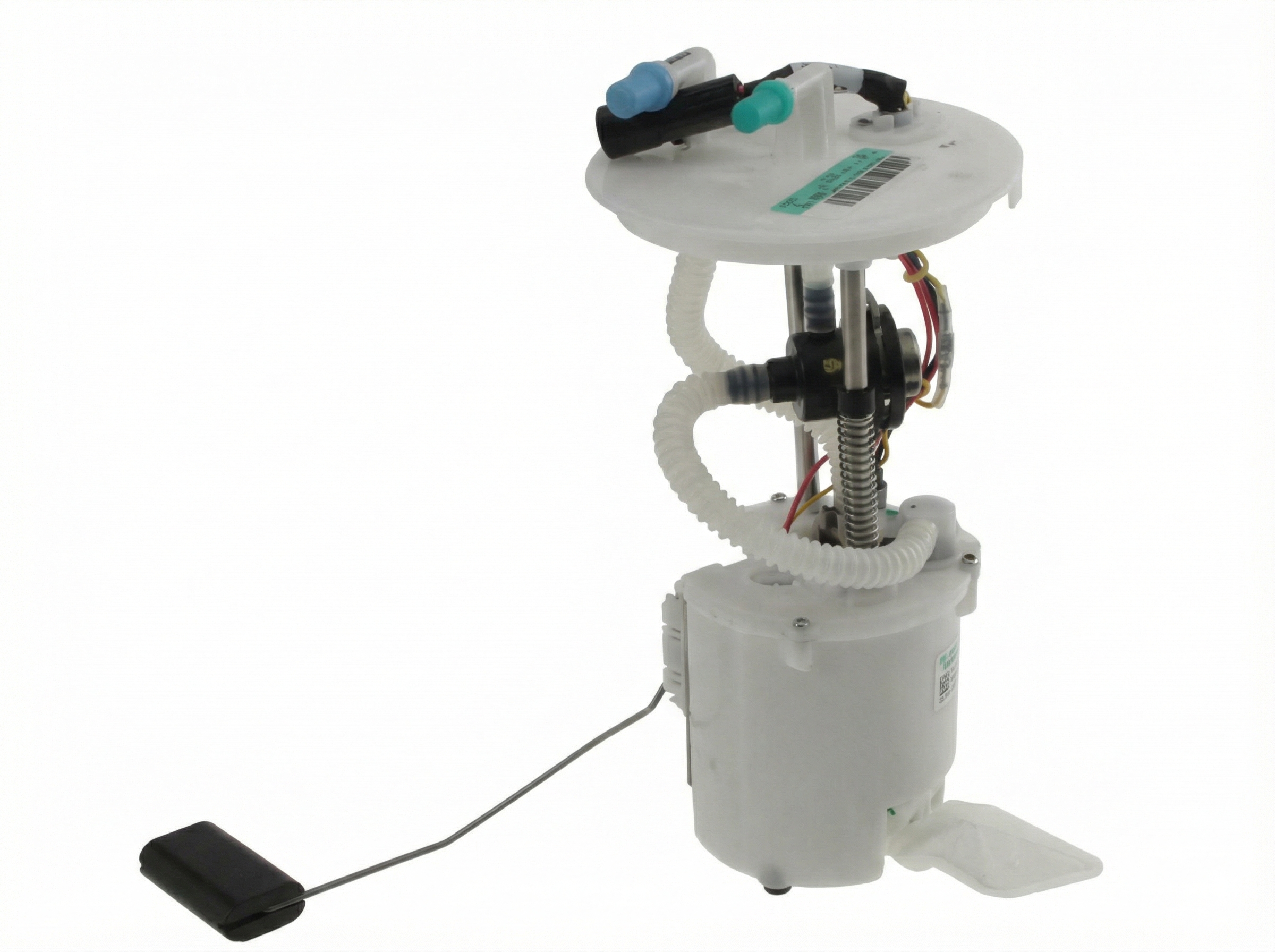
Aftermarket price range: $70-$120 - Fuel Pump Driver Module (FPDM)
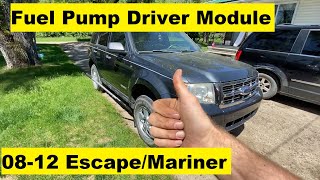
(OEM #Dorman 590-001 (Replaces various Ford P/Ns))— The original module corrodes due to its mounting location, causing intermittent fuel pressure and lean codes. Aftermarket replacements often include spacers to prevent recurrence. 🎬 Watch a walkthrough on replacing a corroded fuel pump module.
Trusted brands: Dorman, Motorcraft
OEM price range: $70-$120
Aftermarket price range: $50-$80
Related Codes That Often Appear With This One
- P0174 — This code is for 'System Too Lean (Bank 2)'. It will not appear on the 4-cylinder Escape, but if you see P0171 and P0174 on a V6 Ford, it indicates a problem affecting the entire engine, like a MAF sensor or vacuum leak.
- P0300 — A 'Random/Multiple Cylinder Misfire' can occur because a severe lean condition prevents proper combustion.
- P1235 — This code for 'Fuel Pump Control Out Of Range' often accompanies P0171 when the Fuel Pump Driver Module (FPDM) is failing due to corrosion.
Technical Service Bulletins (TSBs) & Recalls
- While no TSB is directly issued for P0171 on this model, related TSBs and recalls for other systems can be relevant. For example, Ford Recall 14S19 for the MECS pump addresses a critical hybrid component failure that can cause stalling and driveability issues.
- NHTSA ODI #10178978 references Ford TSB 03-16-1, which involves replacing isolator bolts and port seals under the upper intake to address lean bank codes on similar Ford fuel systems.
Platform-Specific Known Issues
- The PCV hose is notoriously difficult to inspect and replace. It is located under the intake manifold and often requires removing other components for access. The crack is typically on the underside of a bend, making it impossible to see without a mirror or removing the part.
- A user on the Electric Vehicle Forums reported that after replacing their cracked PCV valve and hose, the P0171 code was resolved.
Mechanic-Grade Diagnostic Values
- Long Term and Short Term Fuel Trims (LTFT + STFT) — expected: Combined value should be close to 0%, ideally within +/- 10%.. Failure: A sustained combined positive value approaching or exceeding +25% confirms a lean condition the PCM is trying to correct.
- Fuel Trim behavior when RPM is raised to 2500-3000 — expected: If a vacuum leak is present, the high positive fuel trim values will decrease and move back toward 0.. Failure: If fuel trims do not improve (remain highly positive) at higher RPM, the issue is more likely related to fuel delivery (weak pump, clogged filter) rather than a vacuum leak.
- Mass Air Flow (MAF) Sensor Reading at Idle — expected: Approximately 2.5-4.0 grams/second (g/s) at a stable, warm idle. This value should be roughly equal to engine displacement in liters (2.3L ≈ 2.3-3.0 g/s).. Failure: A reading significantly lower than expected suggests a dirty or failing MAF sensor. A reading of 5 g/s at 1120 RPM was noted as potentially high and worth investigating in one forum post.
- Fuel Pressure at Fuel Rail (Key On, Engine Off or Idling) — expected: 39-40 PSI.. Failure: Pressure significantly below 39 PSI, or pressure that fluctuates wildly, indicates a problem with the fuel pump, fuel filter, or Fuel Pump Driver Module (FPDM).
Wiring & Ground Locations
- C175B at PCM — The Powertrain Control Module (PCM) is located at the rear center of the firewall.. This connector contains the pins for the MAF sensor. Pin 32 is the MAF sensor signal (LB/RD wire), and Pin 43 is the MAF sensor signal return (TN/LB wire). Pin 41 is the general signal return (GY/RD wire). Pins 47, 48, and 49 are all grounds (BK wires). Testing for voltage, continuity, and shorts at these pins is critical for diagnosing a faulty MAF sensor or wiring.
- G100 / G101 — On the firewall in the rear of the engine compartment.. These are primary engine and PCM ground points. Corrosion or a loose connection at these locations can cause erratic behavior from sensors like the MAF and O2 sensors, leading to incorrect readings and false lean codes.
- G103 — Located at the right front of the engine compartment.. Another key engine bay ground point. A bad ground here can affect various engine sensors and actuators involved in the fuel and air systems.
- Battery Negative Post Ground — On the fender sidewall, directly below the main engine fuse box.. A user reported that corrosion at this main battery ground point, and an adjacent 3-wire engine ground, caused widespread electrical issues that could manifest as sensor problems.
Real Owner Repair Stories
- BobIsTheOilGuy forum user (Ford vehicle with similar engine design (V6, but same PCV hose issue)) — P0171 and P0174 codes (lean on both banks), some engine pinging, but no major drivability issues.
❌ Tried (didn't work) Initially suspected O2 sensors but ruled them out since both banks had codes.
✅ What actually fixed it The PCV hose had collapsed, deteriorated, and developed a hole, creating a significant vacuum leak. Replacing the hose with an updated Ford part (which has ribs to prevent collapse) and also fixing a small pinhole in the brake booster hose resolved the codes. - CarKiller forum user (2006 Ford Escape Hybrid) — P0171 code.
❌ Tried (didn't work) Replacing the MAF sensor., Taking it to a trusted auto shop which could not find any issues.
✅ What actually fixed it The user was advised to replace the PCV valve and associated hoses, which is a very common failure point. The thread concludes with the user acquiring the PCV valve for a self-repair, which is the implied final fix for this common issue. - NHTSA ODI #10322944 — An owner reported taking their vehicle to a repair shop for P0171 and P0174 codes. Diagnostics confirmed air leaks in the air hose assembly, which required replacing the air tube assembly to resolve the lean condition.
"I Checked Everything" — The Actual Cause
- While not a direct story, it's noted that a small amount of smoke leakage around the Intake Manifold Runner Control (IMRC) shafts during a smoke test is considered normal by Ford and PCM calibrations account for it. A technician might chase this 'leak' unnecessarily when the real problem lies elsewhere.
OEM Part Supersession History
3L3A-12B579-BA→3L3Z-12B579-BA— Part number update/revision by Ford.
Heads up: These part numbers are generally interchangeable for the specified applications. The OEM part is also sold under the Motorcraft number AFLS131. Many aftermarket cross-references exist.
Model Year Variations Within This Range
- 2008: The 2008 model year received a significant interior and exterior refresh. This included a completely redesigned dashboard, center console, and front grille/fascia. While the 2.3L hybrid powertrain remained the same as the 2005-2007 models, the interior redesign means some access points for dash-related components (like grounds or modules) may differ. The major powertrain components related to P0171 are unchanged. The engine was updated to a 2.5L version in 2009.
Diagnostic Flowchart
Other Known Issues on This Vehicle
Issues unrelated to this code that are worth knowing about as an owner of this generation:
- Motor Electronics Coolant System (MECS) Pump Failure 🔴 High — Very common. The original brushed pumps are prone to failure, often after 50,000-100,000 miles, causing the hybrid electronics to overheat and the vehicle to enter a 'Stop Safely Now' limp mode. (Ref: NHTSA Recall 14V526000 (Ford Recall 14S19) was issued to replace the original pump with an improved brushless design. TSB 08-24-5 also addresses this.)
- HVAC Blend Door Actuator Failure 🟠 Medium — Common failure. Owners report a clicking or 'percolating' sound from the dash, or inability to control cabin temperature. There are multiple actuators in the dash, with varying difficulty to replace.
- High Voltage Battery Cooling Fan Failure 🔴 High — A frequent issue as these vehicles age. Failure of one or both fans (located in the rear cargo area) prevents the high voltage battery from being cooled, which causes the PCM to disable EV mode and run the engine constantly to compensate. (Ref: Ford issued a service kit (Part # 5M6Z-10C659-B) with improved fans and instructions.)
- High Voltage Battery Degradation / Failure 🔴 High — Inevitable with age and mileage. Symptoms include poor fuel economy, lack of electric-only (EV) mode, and codes like P0A7D (Hybrid Battery Low State of Charge). Replacement is expensive.
- Spongy or Inconsistent Brakes 🟠 Medium — Frequently reported by owners. The regenerative braking system can give the pedal a different feel than conventional brakes. However, rust buildup on rotors from infrequent use (due to regenerative braking doing most of the work) can also contribute to a spongy feel.
Used vs. New Parts: Buying Guide for This Vehicle
When a used part is the smart pick: For this vehicle, obtaining used parts like intake manifolds, throttle bodies, or engine wiring harnesses from a low-mileage donor can be cost-effective. These parts have low failure rates and are not wear items. A used MAF sensor can be a gamble but might work as a cheap diagnostic swap.
Donor-vehicle mileage cap: roughly under 120000 miles for the part to have meaningful remaining life.
What to inspect on the donor part:
- Check for the vehicle's overall condition; avoid parts from wrecked or poorly maintained vehicles.
- For hoses like the PCV hose, inspect carefully for any signs of cracking, softness, or oil saturation. It's often better to buy this new.
- When buying a used MAF sensor, ensure the connector pins are clean and the sensor element is not physically damaged.
OEM-only on this vehicle (don't cheap out):
- While not a direct cause of P0171, if O2 sensors are replaced during diagnosis, using OEM (Motorcraft) or OEM-supplier (Denso, NTK) is highly recommended. Cheaper sensors are known to have a high failure rate or cause performance issues.
Aftermarket brands forum-validated for this vehicle:
- Dorman for the Fuel Pump Driver Module (FPDM). The Dorman 590-001 is a well-regarded 'OE FIX' part that includes redesigned bushings (standoffs) to prevent the corrosion that plagues the original part.
- Motorcraft for all sensors and hoses to ensure perfect fit and function.
- Hitachi is a reputable OEM supplier for MAF sensors.
Brands owners have reported issues with on this vehicle:
- Unnamed, no-brand 'white box' MAF sensors and O2 sensors from online marketplaces. These often have poor calibration and can cause more problems than they solve. One user review noted a Dorman FPDM did not work as well as the Motorcraft original, but many other reviews praise the Dorman redesign.
Real Owner Stories
Aggregated from forums and TSBs cited above. Mileages and costs reflect what owners reported in those sources.
2006 Ford Escape Hybrid 2.3L
Symptoms: Check engine light on with P0171; freeze frame data showed specific fuel trim and MAF g/s values during diagnosis.
What fixed it: Diagnosis and repair of vacuum leaks, specifically inspecting the PCV hose which is often cracked on the underside.
Source hint: CarKiller - '2006 Ford Escape Hybrid P0171' (https://carkiller.com/2006-ford-escape-hybrid-p0171/)
2005-2008 Ford Escape Hybrid 2.3L
Symptoms: P0171 code triggered by a contaminated sensing wire inaccurately measuring airflow.
What fixed it: Replacing the bad MAF sensor.
Source hint: Reddit r/fordescape - 'P0171 Fuel system too lean bank 1' (https://www.reddit.com/r/fordescape/comments/s1a1z7/p0171_fuel_system_too_lean_bank_1/)
2005-2007 Ford Escape Hybrid 2.3L
Symptoms: Lean codes and fuel delivery issues caused by corrosion on the module body.
What fixed it: Replacement of the Fuel Pump Driver Module (FPDM) due to corrosion between the module and the frame.
Source hint: Go-Parts Blog - 'P1235 on 2005-2007 Ford Escape Hybrid'
2005-2008 Ford Escape Hybrid 2.3L
Symptoms: The P0171 code appeared faster after an initial attempt to fix a leak.
What fixed it: Replacing the PCV valve and the notoriously difficult-to-access PCV hose located under the intake manifold.
Source hint: Electric Vehicle Forums - 'Getting P0171 code after replacing PCV valve & hose' (https://www.myev.com/threads/getting-p0171-code-after-replacing-pcv-valve-hose.383/)
Related OBD-II Codes
Frequently Asked Questions
Is there a recall for the 2005-2008 Ford Escape Hybrid that causes stalling and driveability issues like P0171?
I hear a hissing sound from my engine bay at idle along with the P0171 code. What is the most likely cause?
Can a corroded part near the rear wheel cause a lean code on my Escape Hybrid?
What should the fuel pressure be for the 2.3L Atkinson-Cycle engine when diagnosing P0171?
Can I use standard carburetor cleaner to fix a P0171 code caused by the MAF sensor?
Why is my Escape Hybrid running the engine constantly and showing poor fuel economy alongside lean codes?
Helpful Videos

Used OEM Parts in Stock
New Aftermarket Parts Available


The information in this article is provided for general reference and educational purposes only. Vehicle specifications, procedures, and part compatibility can vary by production date, trim level, and region. Always consult your vehicle's factory service manual and verify part numbers before purchasing or performing repairs. Safety-critical components such as airbags, seat belts, and braking systems should be installed by a qualified professional.
- Ford Escape Hybrid:
- 🧭 Diagnostic Flowchart
- 🎬 Helpful Videos
- 🛍️ Shop This Part
- What's Unique About the 2005-2008 Ford Escape Hybrid
- Symptoms You May Notice
- Most Likely Causes
- Rare But Worth Checking
- Diagnosis Steps
- Parts You'll Likely Need
- Related Codes That Often Appear With This One
- Technical Service Bulletins (TSBs) & Recalls
- Platform-Specific Known Issues
- Mechanic-Grade Diagnostic Values
- Wiring & Ground Locations
- Real Owner Repair Stories
- "I Checked Everything" — The Actual Cause
- OEM Part Supersession History
- Model Year Variations Within This Range
- Other Known Issues on This Vehicle
- Used vs. New Parts: Buying Guide for This Vehicle
- Real Owner Stories
- 2006 Ford Escape Hybrid 2.3L
- 2005-2008 Ford Escape Hybrid 2.3L
- 2005-2007 Ford Escape Hybrid 2.3L
- 2005-2008 Ford Escape Hybrid 2.3L
- Related OBD-II Codes
- Frequently Asked Questions
- 🎟️ Get 5% Off