

P0171 on 2000-2004 Ford Focus 2.0L Zetec: Causes and Fixes for Lean Code
On a 2000-2004 Ford Focus with the 2.0L Zetec engine, code P0171 is almost always caused by a vacuum leak from a cracked or collapsed PCV hose assembly located under the intake manifold. This hose deteriorates from heat and oil exposure. Replacing this hose assembly, often requiring intake manifold removal, is the most common and definitive fix.
- For a 2000-2004 Focus with a 2.0L Zetec engine, P0171 is most likely caused by a cracked PCV hose under the intake manifold.
- Do not replace the oxygen sensor without first performing a smoke test to check for vacuum leaks.
- Symptoms include a rough idle, stalling, and a hissing sound from the engine.
- Replacing the PCV hose assembly often requires removing the intake manifold, so plan to replace the intake gaskets at the same time.
What's Unique About the 2000-2004 Ford Focus
The first-generation Ford Focus with the 2.0L Zetec engine is notorious for a specific failure that causes the P0171 code. The rubber hoses and elbows of the Positive Crankcase Ventilation (PCV) system, especially the one located under the intake manifold, are highly prone to degrading from exposure to oil vapors and heat from the nearby exhaust manifold. This causes the hoses to soften, collapse, or tear, creating a significant vacuum leak that is the number one cause of this code on this specific vehicle. This issue is so common that many owners and mechanics consider the PCV hose a routine maintenance item.
Symptoms You May Notice
- Check Engine Light is on
- Rough or unstable idle, sometimes surging or hunting
- Engine stalling, especially when coming to a stop or when the A/C is on
- Hesitation or stumbling during acceleration
- Audible hissing or sucking sound from the engine bay, particularly from under the intake manifold
- Reduced power
- Poor fuel economy
- Difficulty starting the engine, requiring longer cranking times
- Replacing the oxygen sensor first. While an O2 sensor can be the cause, it is far more likely that the sensor is accurately reporting a problem caused by a vacuum leak. Always perform a smoke test or thoroughly check for vacuum leaks before replacing the O2 sensor.
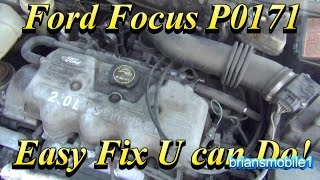
- Replacing the MAF sensor without cleaning it first. Often, contamination is the issue, 🎬 Watch: An easy fix for the P0171 code you can do. and a simple cleaning with the correct product can restore function and save money.
Most Likely Causes
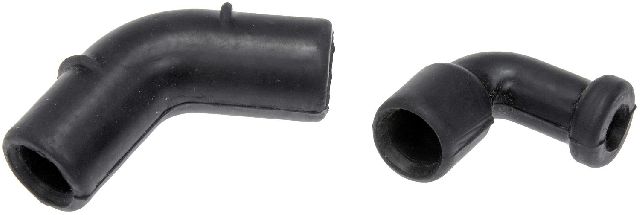
- Cracked or Collapsed PCV Hose Assembly 🔴 High Probability → Shop PCV Valve Hose The rubber material of the PCV hoses, particularly the elbow under the intake manifold, degrades over time from heat and oil vapor exposure, leading to cracks and collapse. The location is difficult to access, tucked between the intake manifold and the firewall.
How to confirm: Visually inspect the PCV hoses, especially the main hose that runs under the intake manifold. It is often difficult to see without a mirror and flashlight. A smoke test is the most effective way to confirm a leak in this area. 🎬 Watch: How to find vacuum leaks using a smoke machine. You may hear a distinct hissing sound near the back of the intake manifold. Another method is to carefully spray brake cleaner near the suspected area with the engine running; a change in engine RPM indicates a leak.
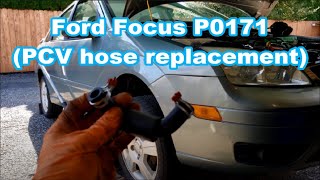
Typical fix: Replace the entire PCV hose assembly. Due to its location, this often requires removing the intake manifold for access, though some have managed to do it from below by removing the starter motor. It is also recommended to replace the PCV valve at the same time. 🎬 See this DIY guide for replacing the PCV valve and hoses.
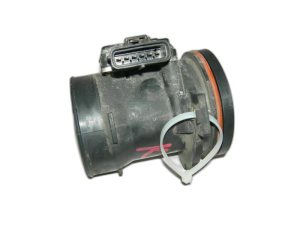
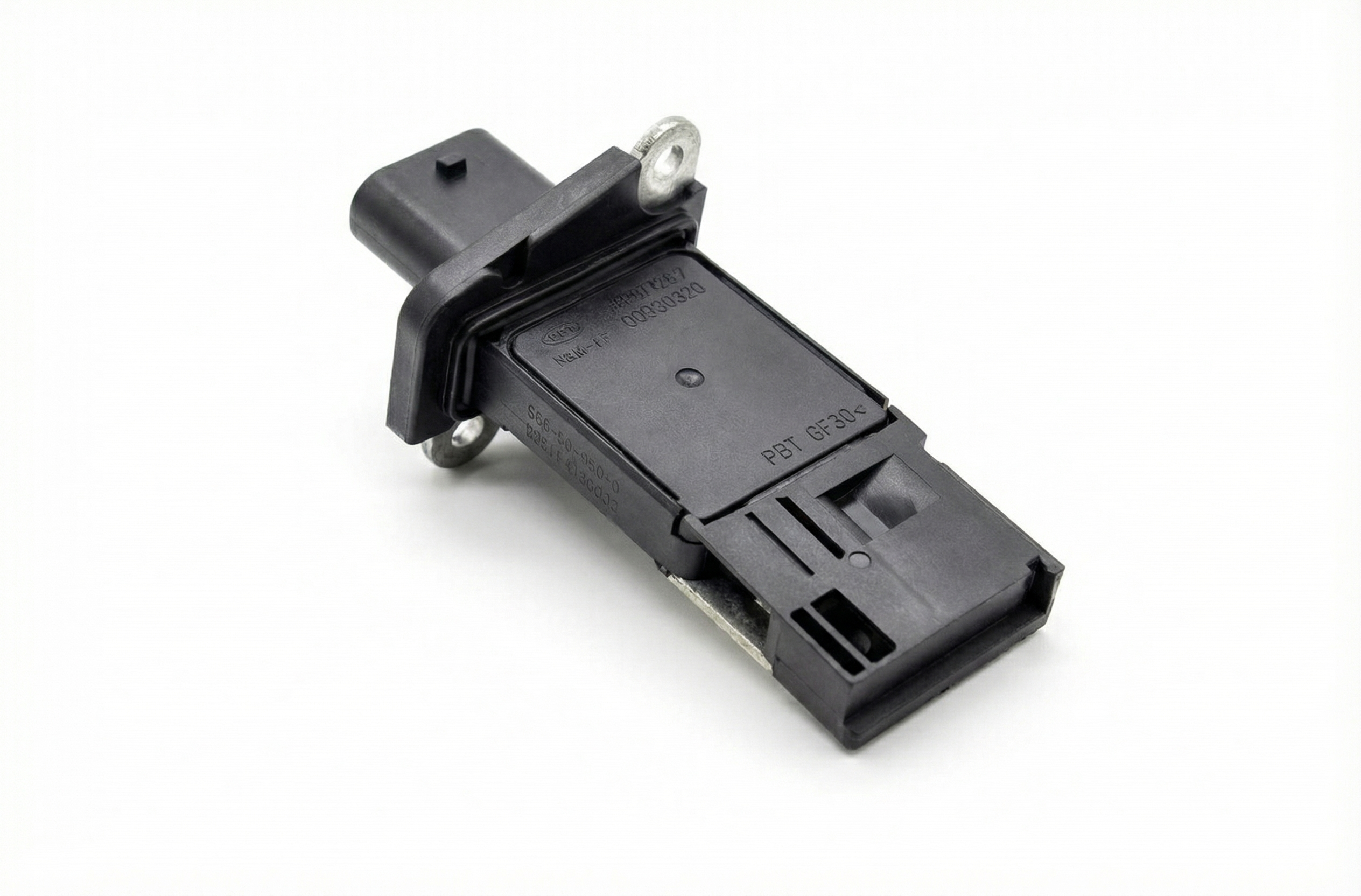
Est. part cost: $20-$50 - Dirty or Faulty Mass Airflow (MAF) Sensor 🟡 Medium Probability → Shop Fuel Injection Air Flow Meter Oil and dirt can contaminate the sensor's delicate wire, causing it to inaccurately measure the amount of air entering the engine. This is a common issue on many Ford vehicles of this era.
How to confirm: Unplug the MAF sensor while the engine is idling. If the idle smooths out, the sensor is likely faulty. A more precise test is to use an OBD-II scanner to monitor MAF sensor readings (grams/sec). Before replacing, always try cleaning the sensor with a dedicated MAF sensor cleaner spray. Do not use brake or carburetor cleaner, as it will damage the sensor.
Typical fix: Clean the MAF sensor with a specialized cleaner. If cleaning doesn't resolve the issue, replace the MAF sensor.
Est. part cost: $50-$100 - Leaking Intake Manifold Gaskets ⚪ Low Probability → Shop Engine Intake Manifold
How to confirm: With the engine running, spray a small amount of brake cleaner or starting fluid around the intake manifold mating surface. If the engine RPM changes, a leak is present. A smoke test is a safer and more definitive method.
Typical fix: Replace the intake manifold gaskets. This is often done at the same time as the PCV hose replacement, as the manifold must be removed for that job anyway.
Est. part cost: $20-$50 - Failing Upstream Oxygen (O2) Sensor ⚪ Low Probability → Shop Oxygen Sensor
How to confirm: Use an OBD-II scanner with live data to monitor the Bank 1 Sensor 1 voltage. A healthy sensor's voltage should fluctuate rapidly between ~0.1V and ~0.9V. If the sensor's reading is stuck low (below ~0.2V) or is very slow to respond, it has likely failed.
Typical fix: Replace the upstream (pre-catalytic converter) oxygen sensor. It is critical to rule out vacuum leaks first, as the O2 sensor is often accurately reporting a lean condition caused by something else.
Est. part cost: $40-$80
Rare But Worth Checking
- Low Fuel Pressure: Can be caused by a weak fuel pump or a clogged fuel filter. The fuel filter on the Focus is located near the fuel tank. Check fuel pressure at the fuel rail with a gauge to confirm. It should be within the manufacturer's specified range (typically 35-65 PSI for this model).
- Clogged Fuel Injectors: → Shop Fuel Injector If one or more injectors are dirty and not delivering enough fuel, it can cause a lean condition. This would often be accompanied by a misfire code for a specific cylinder (e.g., P0301, P0302).
- Leaking Valve Cover Gasket: → Shop Engine Valve Cover On the Zetec engine, the valve cover gasket is known to leak oil, particularly into the spark plug wells. While this primarily causes misfires due to fouled plugs and coils, a severely degraded gasket could potentially create a small, unmetered air leak into the crankcase system, contributing to a lean code.
Diagnosis Steps
- Read the trouble codes with an OBD-II scanner and confirm that P0171 is present. Note any other codes, like P030x or P2195.
- With the engine running, listen for an audible hissing sound, paying close attention to the area under and behind the intake manifold.
- Perform a comprehensive visual inspection of all vacuum lines and the air intake boot between the MAF sensor and the throttle body for cracks or loose connections.
- Perform a smoke test to definitively identify the location of any vacuum leaks. This is the most reliable method for finding the common PCV hose leak on this engine.
- If no vacuum leaks are found, remove and clean the Mass Airflow (MAF) sensor using only dedicated MAF sensor cleaner.
- If the problem persists, use a scanner to check live data for the upstream O2 sensor (B1S1) and long-term fuel trims (LTFT). A stuck or lazy O2 sensor may need replacement.
- Check fuel pressure at the fuel rail using a pressure gauge to rule out a weak fuel pump or clogged filter.
- As a final step, consider testing fuel injectors for proper flow and spray pattern.
Parts You'll Likely Need
- PCV Breather Hose Assembly
(OEM #YS4Z-6758-BA (Tube Assembly from 10/25/99); YS4Z-6N664-BA (Hose to Intake Manifold, for models before 6/03/00))— This is the most frequent failure point causing a P0171 code on the 2.0L Zetec engine due to material degradation from heat and oil. It is critical to order based on the vehicle's production date.
Trusted brands: Motorcraft, Dorman (e.g., Dorman 47057)
OEM price range: $35-$60
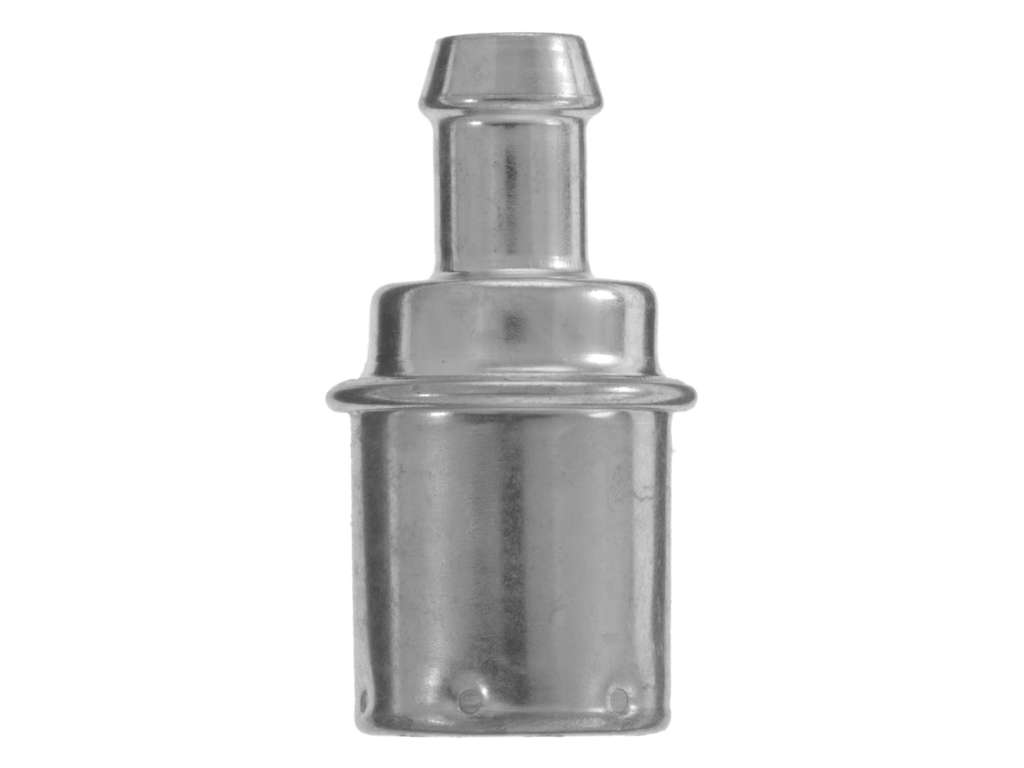
Aftermarket price range: $20-$40 - PCV Valve
(OEM #YS4Z-6A666-BA)— It is inexpensive and good practice to replace the PCV valve whenever servicing the PCV hoses, as it can become clogged or stuck.
Trusted brands: Motorcraft
OEM price range: $5-$15
Aftermarket price range: $5-$10 - Intake Manifold Gasket Set — These should be replaced whenever the intake manifold is removed, which is often necessary to access the PCV hose.
Trusted brands: Fel-Pro, Motorcraft
OEM price range: $30-$50
Aftermarket price range: $20-$40 - Mass Airflow (MAF) Sensor Cleaner — A dirty MAF sensor is a common secondary cause, and cleaning it is a cheap and easy diagnostic step before replacement.
Trusted brands: CRC, WD-40 Specialist
OEM price range: $10-$15
Aftermarket price range: $10-$15
Related Codes That Often Appear With This One
- P0174 — This code is for 'System Too Lean (Bank 2)'. It is not applicable to the 4-cylinder Zetec engine, which only has one bank.
- P0300-P0304 — A lean condition can cause misfires. P0300 indicates random misfires, while P0301-P0304 would point to misfires in specific cylinders.
- P2195 — O2 Sensor Signal Biased/Stuck Lean (Bank 1, Sensor 1). This code often appears with P0171 and indicates the upstream O2 sensor is consistently reading a lean condition, reinforcing the diagnosis.
Technical Service Bulletins (TSBs) & Recalls
- TSB 03-16-1: While this TSB is for the 3.8L engine, it discusses similar lean code issues (P0171/P0174) caused by vacuum leaks from PCV systems and intake gaskets, highlighting a common diagnostic pattern for Ford vehicles of this era. It specifically warns against replacing parts like the MAF or O2 sensors before addressing the root cause.
- TSB 98-23-10: An older TSB that discusses P0171/P0174 codes on Ford vehicles and points to a dirty MAF sensor as a potential cause, reinforcing it as a common issue across the brand.
Platform-Specific Known Issues
- The PCV hose assembly located directly under the intake manifold is a well-documented, extremely common failure point that is the primary cause of P0171 on this engine.
Mechanic-Grade Diagnostic Values
- Fuel Pressure — expected: 35-65 PSI at the fuel rail. Some sources state a more narrow 38-42 PSI.. Failure: Pressure below 35 PSI indicates a weak fuel pump, clogged filter, or faulty regulator.
- Long Term Fuel Trim (LTFT) at Idle — expected: Close to 0%, typically within +/- 5%.. Failure: A high positive value (e.g., +15% to +25% or more) at idle that decreases as RPMs increase strongly suggests a vacuum leak.
- Mass Airflow (MAF) Sensor Reading at Idle — expected: Approximately 2.0 to 4.0 grams/second (g/s) for a 2.0L engine. This equates to roughly 0.3-0.5 lb/min.. Failure: A reading that is significantly lower than expected at idle can indicate a vacuum leak downstream of the sensor. A reading that does not increase smoothly and linearly with RPM can indicate a dirty or failing sensor.
- MAF Sensor Signal Voltage — expected: A steady voltage at idle that rises smoothly as the engine is revved.. Failure: Voltage that does not rise with engine RPM, or has spikes and gaps, indicates a faulty sensor.
Scan Tool Commands That Help
- Ford IDS / Professional Scan Tool: Key On, Engine Off (KOEO) and Key On, Engine Running (KOER) Self-Tests — These are built-in Ford diagnostic routines that command the PCM to check all sensors and actuators. The KOEO test checks for circuit faults and sensor integrity with the engine off. The KOER test runs with the engine idling and can actively test components like the EGR system and O2 sensor heaters, which can help identify faults that only occur when the engine is running.
Wiring & Ground Locations
- MAF Sensor Connector — On the air intake tube, between the air filter box and the throttle body.. The MAF sensor requires a 12V power supply, a ground, and returns a signal voltage to the PCM. A poor connection or damaged wire at this connector can cause incorrect MAF readings, leading to a P0171 code. The Ford 4-wire MAF has a unique design with two ground wires (one chassis, one PCM ground) and must be plugged in for accurate circuit testing.
Real Owner Repair Stories
- Focaljet Forums (2002 Ford Focus Zetec) — P0171 code, rough idle.
❌ Tried (didn't work) Replaced PCV valve and hose assembly, Replaced intake manifold gaskets, Cleaned MAF sensor
✅ What actually fixed it The O-ring at the base of the oil dipstick tube was cracked and leaking, creating a vacuum leak. Replacing the small O-ring resolved the P0171 code.
"I Checked Everything" — The Actual Cause
- In some cases, a smoke test may not reveal a small leak from the oil dipstick tube O-ring. If all common vacuum hoses and gaskets check out, remove the dipstick tube (typically one bolt) and inspect the O-ring at its base where it enters the engine block. A cracked or hardened O-ring here can be a small but persistent unmetered air source.
Documented NHTSA Reports
- NHTSA ODI #11467635 describes a P0171 system too lean code occurring alongside a bad vacuum line to the tank and an air leak, which resulted in the car stalling.
- An owner reported in NHTSA ODI #11453268 that after a P0171 diagnosis, the vehicle consistently stalls after putting gasoline in the car and acts like it is going to stall while driving.
- NHTSA ODI #11465263 notes that after filling the tank with fresh gas, the engine would putter and hesitate to stay on, throwing code P0171 and P1450.
- In NHTSA ODI #11375191, an owner experienced a lack of power and codes P0171 and P1450, discovering that the fuel tank had collapsed and was deformed.
- NHTSA ODI #11257911 reports a persistent P0171 code where the fuel tank appeared deformed upon inspection under the car.
OEM Part Supersession History
YS4Z-6758-BA→YS4Z-6758-A, YS4Z-6758-AA— Part revision by Ford.
Heads up: YS4Z-6758-BA is the tube assembly used on models from 10/25/99 onward. The interchange numbers YS4Z-6758-A and YS4Z-6758-AA are subsequent revisions and should be compatible. Always verify with VIN, as early 2000 models had a different design.
Model Year Variations Within This Range
- 2000 (before 06/03/2000): Early production models used a different PCV hose that connects to the intake manifold, part number YS4Z-6N664-BA. Later models integrated this into a single larger assembly. Ordering the wrong part for an early 2000 model is a common mistake.
Diagnostic Flowchart
Other Known Issues on This Vehicle
Issues unrelated to this code that are worth knowing about as an owner of this generation:
- Cracked Plastic Thermostat Housing 🔴 High — Extremely common. The plastic housing becomes brittle with age and heat cycles, leading to cracks and sudden, major coolant loss.
- Passenger-Side Engine Mount Failure 🟠 Medium — Very common, especially on vehicles over 80,000 miles. The hydraulic mount collapses, causing severe vibration at idle and in gear.
- Leaking Valve Cover Gasket 🟠 Medium → Shop Engine Valve Cover — Widespread issue. The gasket hardens and leaks oil into the spark plug wells, causing misfires, and also leaks externally onto the exhaust manifold.
- Failing Door Lock Actuators 🟡 Low — Common electrical failure. Actuators fail, causing doors to not lock or unlock with the power system. This was part of a massive recall for later Focus models but is also a common failure on the Mk1. (Ref: While major recalls (e.g., 16S30, 20S30) targeted later models, the underlying failure pattern is seen on Mk1s as a common repair.)
- Timing Belt Replacement Interval 🔴 High — This is a required maintenance item, typically every 120,000 miles. While the Zetec is a non-interference engine (meaning belt failure won't destroy the valves), it will leave the driver stranded.
Used vs. New Parts: Buying Guide for This Vehicle
When a used part is the smart pick: For this repair, buying used parts is generally not recommended due to the nature of the failures. The primary culprits are rubber and plastic components that degrade with heat and time. A used PCV hose or gasket set from a junkyard vehicle will likely be in similar or worse condition than the part being replaced.
Donor-vehicle mileage cap: roughly under 10000 miles for the part to have meaningful remaining life.
What to inspect on the donor part:
- If a used part must be sourced (e.g., a discontinued bracket), inspect for any signs of cracking, brittleness, or oil saturation.
- Hoses should be pliable and not feel hard or crunchy when squeezed.
OEM-only on this vehicle (don't cheap out):
- PCV Breather Hose Assembly
Aftermarket brands forum-validated for this vehicle:
- Motorcraft (for OEM parts)
- Fel-Pro (for gaskets)
Brands owners have reported issues with on this vehicle:
- While Dorman offers a replacement PCV hose (47057), some owners report fitment issues or premature failure compared to the OEM Motorcraft part. It is often considered a budget option, but the OEM part is preferred given the labor involved in replacement.
Real Owner Stories
Aggregated from forums and TSBs cited above. Mileages and costs reflect what owners reported in those sources.
2005 Ford Focus 2.0L
Symptoms: Check engine light with code P0171, surging RPM, and engine stalling.
What fixed it: Replacing the PCV hose and addressing the vacuum leak.
Source hint: Reddit (r/FordFocus) thread titled '2005 Ford Focus 2.0 5 Speed with CEL P0171. Is the most likely cause the PCV valve?'
Ford Focus (LS-LT) 2.0L Zetec
Symptoms: Vacuum leak confirmed by spraying brake cleaner near the suspected area and hearing a change in engine RPM.
What fixed it: Replacement of the split PCV hose and PCV valve.
Source hint: Australian Ford Forums post titled 'LS Focus PCV Valve & Hose replacement; Intake Manifold Guide'
Related OBD-II Codes
Frequently Asked Questions
I hear a hissing sound coming from behind the intake manifold on my Zetec Focus. Is this related to the P0171 code?
Does TSB 03-16-1 apply to my 2.0L Focus?
Can I use brake cleaner to clean my MAF sensor to fix the P0171 code?
Is it true I have to remove the intake manifold to fix the PCV hose leak?
Should I replace my O2 sensor first since it's reporting the lean condition?
Are there other Ford models that have this same P0171 issue with the Zetec engine?
Helpful Videos

Used OEM Parts in Stock
New Aftermarket Parts Available


The information in this article is provided for general reference and educational purposes only. Vehicle specifications, procedures, and part compatibility can vary by production date, trim level, and region. Always consult your vehicle's factory service manual and verify part numbers before purchasing or performing repairs. Safety-critical components such as airbags, seat belts, and braking systems should be installed by a qualified professional.
- Ford Focus:
- 🧭 Diagnostic Flowchart
- 🎬 Helpful Videos
- 🛍️ Shop This Part
- What's Unique About the 2000-2004 Ford Focus
- Symptoms You May Notice
- Most Likely Causes
- Rare But Worth Checking
- Diagnosis Steps
- Parts You'll Likely Need
- Related Codes That Often Appear With This One
- Technical Service Bulletins (TSBs) & Recalls
- Platform-Specific Known Issues
- Mechanic-Grade Diagnostic Values
- Scan Tool Commands That Help
- Wiring & Ground Locations
- Real Owner Repair Stories
- "I Checked Everything" — The Actual Cause
- Documented NHTSA Reports
- OEM Part Supersession History
- Model Year Variations Within This Range
- Other Known Issues on This Vehicle
- Used vs. New Parts: Buying Guide for This Vehicle
- Real Owner Stories
- 2005 Ford Focus 2.0L
- Ford Focus (LS-LT) 2.0L Zetec
- Related OBD-II Codes
- Frequently Asked Questions
- 🎟️ Get 5% Off