

P0171 on 1999-2003 Ford Windstar 3.8L V6: Lean Code Causes and Fixes
P0171 on a 1999-2003 Ford Windstar almost always indicates a vacuum leak from failed upper intake manifold gaskets and isolator bolts. The original rubber components degrade from heat and oil vapor from the PCV system. Expect to pay around $70-$150 for a complete gasket and bolt kit (e.g., Fel-Pro MS 98011 T-1) to perform this common repair.
- P0171 on a 1999-2003 Windstar is almost certainly caused by a vacuum leak.
- The most probable source of the leak is failed upper intake manifold gaskets and isolator bolts due to degradation from PCV oil vapor.
- Do not replace oxygen sensors or the MAF sensor before confirming and fixing all vacuum leaks, as per Ford's own TSB.
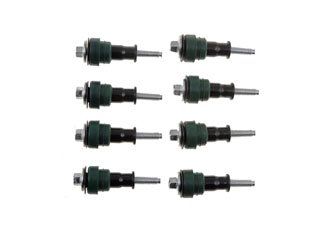
- Use an updated gasket and bolt kit (e.g., Fel-Pro MS 98011 T-1) with improved materials for a permanent repair.
- While performing the repair, it is critical to clean the EGR ports and wise to replace any questionable PCV hoses.
What's Unique About the 1999-2003 Ford Windstar
The 3.8L V6 Essex engine in this generation of Windstar is notorious for developing vacuum leaks around the intake manifold. The original design uses plastic gaskets and black rubber isolator bolt grommets that degrade, shrink, and harden over time due to heat and oil exposure from the PCV system. This is such a common failure that Ford issued multiple Technical Service Bulletins (TSBs) with updated, more resilient parts (green rubber). While a lean code can have many causes, on this specific vehicle, the intake leaks are the primary suspect by a wide margin, often appearing with its companion code P0174 for the other bank.
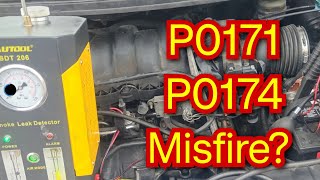
🎬 Watch: A helpful overview of P0171 causes and potential fixes.Symptoms You May Notice
- Check Engine Light is on (often with P0174 as well)
- Rough or unstable idle, sometimes hunting for idle speed
- Hesitation or stumbling during acceleration
- Reduced fuel economy
- Stalling at stops
- A faint whistling or hissing sound from the engine bay at idle
- Replacing oxygen (O2) sensors. The O2 sensors are correctly reporting the lean condition; they are the messenger, not the cause. TSB 03-16-1 explicitly states not to replace HEGOs.
- Replacing the PCM. Ford explicitly advises against replacing the PCM for this issue in TSB 03-16-1, as it is almost never the root cause.
- Replacing the MAF sensor without first confirming the absence of vacuum leaks. While a dirty MAF can be a cause, it's far less probable than intake leaks on this engine.
Most Likely Causes
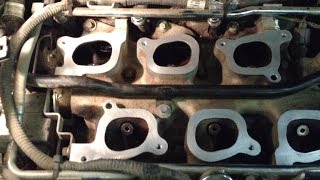
- Leaking Upper Intake Manifold Gaskets and Isolator Bolts 🔴 High Probability → Shop Engine Intake Manifold The original intake gaskets and, more critically, the isolator bolt grommets are made of a black rubber material that is not sufficiently resistant to oil vapors from the PCV system. The rubber swells, softens, and eventually loses its ability to maintain clamping force on the intake manifold, creating a vacuum leak between the upper and lower intake sections. Ford's updated parts use a more resilient green rubber material. Ford TSB 03-16-1 directly addresses this failure.
How to confirm: With the engine running, spray short bursts of brake cleaner or an unlit propane torch around the seam where the upper and lower intake manifolds meet. A change in engine idle (stumbling or speeding up) confirms a leak. A professional smoke test is the safest and most definitive method, often showing smoke billowing from under the intake plenum. Pushing down on the plastic upper intake manifold while the engine is running may also change the idle, indicating a leak.
Typical fix: Replace the upper intake manifold gaskets (port seals) and the isolator bolts with the updated, oil-resistant versions. This is a well-documented DIY repair. 🎬 Watch: Step-by-step upper intake manifold gasket and isolator bolt replacement. The Fel-Pro MS 98011 T-1 kit is a popular all-in-one solution. While the intake is off, it is critical to clean the EGR ports in the lower intake manifold, as they are often clogged with carbon.
Est. part cost: $70-$150 - Leaking PCV System Hoses 🟡 Medium Probability Rubber hoses become brittle and crack with age and heat. The elbow connectors are particularly prone to failure. The main hose connecting the PCV valve to the intake can become oil-soaked, causing it to swell and lose its seal at the connection point, creating an unmetered air leak. TSB 03-16-1 notes that if the fuel pressure regulator vacuum line is loose due to oil contamination, it should be replaced.
How to confirm: Visually inspect all PCV and vacuum hoses for cracks, mushiness, or loose connections. Pay close attention to the elbow connectors and the large hose running from the valve cover to the intake snorkel.
Typical fix: Replace the cracked or damaged PCV hoses. It is often recommended to replace these hoses preventatively when performing the intake gasket repair.
Est. part cost: $15-$50 - Dirty or Faulty Mass Airflow (MAF) Sensor ⚪ Low Probability → Shop Fuel Injection Air Flow Meter While far less common than vacuum leaks on this platform, a MAF sensor can become contaminated with dirt or oil, causing it to under-report the amount of air entering the engine. The PCM then injects too little fuel, creating a lean condition. This is often misdiagnosed as the primary cause when it's usually a secondary issue or not the issue at all.
How to confirm: Unplug the MAF sensor with the engine off, then start the vehicle. If the drivability issues improve, the MAF sensor is likely faulty. The best first step is to clean the sensor with dedicated MAF sensor cleaner. If cleaning doesn't help, replacement may be necessary. TSB 03-16-1 explicitly warns *not* to replace the MAF for this code, as it's rarely the root cause.
Typical fix: Clean the MAF sensor's hot wires with a dedicated MAF sensor cleaner spray. Do not touch the wires. If cleaning does not resolve the issue, replace the sensor.
Est. part cost: $10 (cleaner), $60-$120 (new sensor)
Rare But Worth Checking
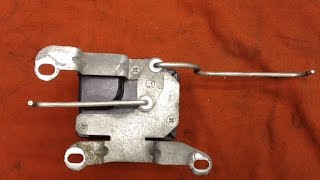
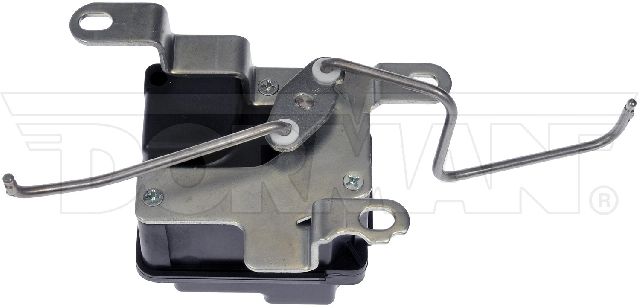
- Leaking IMRC (Intake Manifold Runner Control) Shaft Seals: The lower intake manifold has shafts for the IMRC system that can leak vacuum where the shafts pass through the manifold housing. This is a more involved and expensive repair, as it often requires replacing the entire lower intake manifold assembly. A technician in a forum noted this is a known, albeit less common, leak point. 🎬 See how to diagnose and repair common IMRC system failures.
- Low Fuel Pressure: A weak fuel pump or clogged fuel filter can restrict fuel flow, causing a lean condition. This is less likely than a vacuum leak if the code appears primarily at idle and fuel trims improve under load. TSB 03-16-1 mentions that vapor lock from high-volatility winter fuels in warm weather can also cause this.
Diagnosis Steps
- Check for other stored trouble codes. P0174 is very common to see with P0171.
- Visually inspect the engine bay for any obvious vacuum leaks, such as disconnected or cracked hoses, especially around the PCV system and intake air snorkel.
- Perform a vacuum leak test. The most common method is to carefully spray a flammable substance like brake cleaner or unlit propane around the intake manifold gasket seams and vacuum hose connections while listening for a change in engine RPM. A professional smoke test is the safest and most effective method, and will likely show smoke escaping from the isolator bolt area.
- If no vacuum leaks are found, inspect and clean the Mass Airflow (MAF) sensor using a dedicated cleaner. Do not touch the sensor wires.
- If the problem persists, check fuel pressure using a fuel pressure gauge to rule out a weak fuel pump or clogged filter. TSB 03-16-1 notes that the vacuum line to the fuel pressure regulator can become loose from oil contamination and should be checked.
- Examine the short-term and long-term fuel trim data with a scan tool. High positive fuel trims at idle that decrease as RPMs increase strongly suggest a vacuum leak.
- While the intake manifold is off for gasket replacement, inspect and clean the EGR ports in the lower manifold, as they are prone to clogging.
Parts You'll Likely Need
- Intake Manifold Gasket and Isolator Bolt Kit
(OEM #Fel-Pro MS 98011 T-1 (aftermarket kit), Dorman 615-177 (aftermarket manifold))— This is the definitive fix for the most common cause of P0171 on this engine. The kit includes the updated gaskets and oil-resistant isolator bolts needed to properly seal the intake manifold. The Fel-Pro kit is widely cited as the go-to repair part.
Trusted brands: Fel-Pro, Motorcraft, Dorman
OEM price range: $100-$150
Aftermarket price range: $70-$120 - PCV Valve and associated hoses/elbows
(OEM #9E498 (for fuel pressure regulator vacuum line))— Hoses are prone to cracking or becoming oil-soaked and loose, creating a vacuum leak. It's wise to replace these inexpensive parts as a preventative measure during the intake gasket job. TSB 03-16-1 specifically calls out replacing the fuel pressure regulator vacuum line if it's loose.
Trusted brands: Gates, Motorcraft
OEM price range: $20-$40
Aftermarket price range: $15-$30
Related Codes That Often Appear With This One
- P0174 — P0174 is the lean code for Bank 2 (the bank closer to the radiator). Since the most common cause is a vacuum leak from the central upper intake manifold, it affects all cylinders on both banks. It is extremely common for both P0171 and P0174 to appear together.
Technical Service Bulletins (TSBs) & Recalls
- TSB 03-16-1: The primary TSB for this issue. Details P0171/P0174 caused by leaking isolator bolts and port gaskets. Recommends replacing gaskets, bolts, and potentially the LH valve cover to mitigate oil contamination from the PCV system.
Platform-Specific Known Issues
- Ford Technical Service Bulletin (TSB) 03-16-1 specifically addresses codes P0171 and P0174 on the 1999-2003 Windstar. It details the procedure for replacing the intake port gaskets and isolator bolts. It also recommends replacing the left-hand valve cover with an updated design to reduce oil contamination of the PCV system, which is the root cause of the rubber degradation.
- A YouTube video by 'FordTechMakuloco' titled 'Ford Windstar P0171 P0174 Upper Intake Manifold Gasket Replacement' provides a detailed visual guide for the repair, showing the failed black rubber components and the updated green ones.
Mechanic-Grade Diagnostic Values
- Long-Term Fuel Trim (LTFT) at idle — expected: -5% to +5%. Failure: Sustained positive values greater than +10%, often approaching +25% or more, strongly indicate a vacuum leak. The PCM is adding fuel to compensate for unmetered air.
- LTFT at 2500 RPM (steady cruise) — expected: Should be closer to 0% than the idle reading.. Failure: If high positive fuel trims at idle decrease significantly (move toward 0%) at higher RPM, it confirms a vacuum leak, which has less effect as engine airflow increases. If trims remain high, it points toward a fuel delivery issue.
- Mass Airflow (MAF) Sensor Reading at Idle — expected: Approximately 3.5 to 5.0 grams/second (g/s) for a 3.8L engine at normal idle speed (around 700 RPM).. Failure: A significantly lower reading (e.g., under 3.0 g/s) suggests the sensor is dirty or failing, causing the PCM to incorrectly calculate a lower fuel need, leading to a lean condition.
- Fuel Pressure (Key On, Engine Off) — expected: 35-45 PSI. Failure: Pressure below 35 PSI indicates a potential weak fuel pump, clogged filter, or faulty regulator.
Scan Tool Commands That Help
- Ford IDS (or equivalent high-level scanner): Reset Keep Alive Memory (KAM) — After performing repairs, especially intake gasket replacement or MAF sensor cleaning/replacement. This clears the learned long-term fuel trim adjustments, forcing the PCM to relearn fuel strategy with the new, correct baseline, which can resolve persistent idle and drivability issues. TSB 03-16-1 specifically calls for this.
- Ford IDS (or equivalent high-level scanner): Power Balance Test — If a misfire is suspected along with the lean codes, this test can help identify which specific cylinder(s) are contributing less power, narrowing down the search for a potential clogged injector or cylinder-specific issue that might be contributing to the lean reading.
Wiring & Ground Locations
- G106 — Located on the lower left front of the engine compartment.. This is a primary engine ground. A poor connection here can cause erratic behavior from various engine sensors, including the MAF and O2 sensors, potentially leading to incorrect readings and false lean codes.
- G110 — Located on the left front of the engine.. Another critical engine ground point. Corrosion or looseness can affect sensor readings and PCM function.
- PCM (Powertrain Control Module) — Located behind the right side of the dashboard, mounted through the firewall.. Knowing the PCM location is essential for any circuit testing of sensor inputs (like MAF, O2) or outputs (injector pulse). The main harness ground for the PCM is often located in the driver or passenger kick panel area (G200/G201).
Real Owner Repair Stories
- YouTube user comment on IMRC repair video (2002 Ford Windstar 3.8L) — Intermittent pre-ignition (pinging). No check engine light codes were present.
❌ Tried (didn't work) Service tech at a dealership could not find a cause and advised using mid-grade (89 octane) fuel.
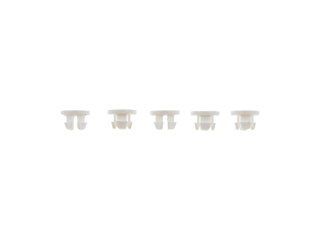
✅ What actually fixed it The owner researched 'ford windstar 3.8 preignition' and found information on IMRC bushings. Upon inspection, the rear IMRC actuator rod was found disconnected due to a broken plastic bushing. Replacing the bushing with a Dorman #47099 kit for $5 resolved the pre-ignition problem completely. - Edmunds Car Forums user 'tmant' (Ford Windstar (year not specified, but in a thread with 98/99 models)) — Check Engine Light on, in addition to a transmission problem.
❌ Tried (didn't work) Not specified, diagnosis went straight to the cause.
✅ What actually fixed it The engine light was caused by a crack in the lower intake manifold. This was noted as a separate issue from the more common upper intake gasket failure and required replacement of the lower manifold itself. - NHTSA ODI #10178978 — An owner reported a Check Engine Light with code P0171 and successfully resolved the issue by following the repair procedure in Ford TSB 03-16-1, which involved replacing the isolator bolts and port seals under the upper intake.
- NHTSA ODI #10219019 — A report describes a CEL revealing codes P0171, P0174, and P0131. The owner performed a comprehensive repair by replacing the isolator bolts, port seals, clamshell seal, and oxygen sensors.
- NHTSA ODI #10249970 — One owner noted that after diagnostic codes P0171 and P0174 appeared, the engine would not run smoothly. Interestingly, resetting the PCM memory allowed the vehicle to run fine for about a hundred miles before the issue returned.
"I Checked Everything" — The Actual Cause
- A smoke test on the intake system may come back clean if the leak is from the IMRC (Intake Manifold Runner Control) shaft seals on the lower intake manifold. These seals are deep in the engine valley and a standard smoke test might not show a definitive plume of smoke there, leading a technician to believe there are no vacuum leaks. The leak is often only detectable by spraying carb cleaner or propane directly on the ends of the IMRC shafts and listening for an RPM change.
- A lean code can be caused by a crack in the exhaust manifold or a leaking exhaust flange gasket located *before* the upstream oxygen sensor. This allows outside air (oxygen) to be drawn into the exhaust stream. The O2 sensor detects this extra oxygen and incorrectly reports a lean condition to the PCM, which then tries to add fuel, resulting in high positive fuel trims and a P0171/P0174, even though no vacuum leak exists on the intake side.
- Extreme Fuel Economy Loss: According to NHTSA ODI #10112262, a severe lean condition (P0171/P0174) can lead to an extreme loss in gas mileage, with one owner reporting a drop down to approximately 10 MPG.
Documented NHTSA Reports
- NHTSA ODI #10203595: An owner experiencing codes P0171 and P0174 found that the required fix involved the replacement of the vacuum line, isolator bolts, valve cover, and port seals as specified in the manufacturer TSB.
OEM Part Supersession History
XF2Z-9S479-AA (Isolator Bolts with Black Rubber)→Included in kits with green rubber grommets, as specified in TSB 03-16-1.— The original black rubber material was not resistant to oil vapor from the PCV system, causing it to swell, soften, and lose clamping force.
Heads up: Using the old black rubber bolts will lead to a repeat failure. The TSB explicitly states not to reuse them.Original LH Valve Cover (Pre-2001)→3F2Z-6582-BA— The original valve cover design allowed excessive oil pullover into the PCV system, which was the root cause of the intake gasket/grommet failure. The updated cover has a revised internal baffle to reduce oil contamination.YF1Z-9424-GC (Lower Intake Manifold)→2F2Z-9424-A— Part number update/revision.
Heads up: The original part number is listed as replaced by the new one, suggesting direct compatibility.
Model Year Variations Within This Range
- 1996-1998 vs 1999-2003: The IMRC (Intake Manifold Runner Control) system is different. While the P0171 code is primarily about the upper intake gaskets on the 99-03 models, owners of earlier models should be aware that their IMRC systems have different potential failure points. The 99-03 models use the split-port intake design where the isolator bolt leak is prevalent.
Diagnostic Flowchart
Other Known Issues on This Vehicle
Issues unrelated to this code that are worth knowing about as an owner of this generation:
- Cracked Rear Axle 🔴 High — Extremely common, especially in 'salt belt' states, leading to a major recall (NHTSA 10V385000). Can fracture without warning. (Ref: Recall 10S13, 15S27.)
- Front Subframe Corrosion/Fracture 🔴 High — Widespread in corrosion-prone areas, causing separation of control arm mounts or steering components, leading to loss of control. Subject of a recall (11S16). (Ref: Recall 11S16)
- Catastrophic Transmission Failure 🔴 High — The AX4N/4F50N transmission is a notorious weak point, often failing suddenly and completely (loss of forward gears) well before 150,000 miles. Many owners report needing multiple replacements.
- Head Gasket Failure (earlier 3.8L) 🟠 Medium — While the intake gasket is the main issue on 1999-2003 models, the 3.8L Essex engine family, in general, had a reputation for head gasket failures in earlier years (pre-1999), though it can still occur on these models.
Used vs. New Parts: Buying Guide for This Vehicle
When a used part is the smart pick: A used lower intake manifold from a junkyard can be a cost-effective option if yours is confirmed to be cracked, as new OEM units can be expensive or hard to find. However, it is a gamble. A used upper plastic intake is generally not recommended as the failure-prone gaskets are integrated.
Donor-vehicle mileage cap: roughly under 80000 miles for the part to have meaningful remaining life.
What to inspect on the donor part:
- Thoroughly inspect a used lower intake manifold for any hairline cracks, especially around the bolt holes and coolant passages.
- Check the IMRC butterfly valves for smooth operation and minimal side-to-side play in the shafts.
- Ensure all mating surfaces are flat and free of deep pitting or corrosion, especially around the coolant ports.
- Avoid any manifold that shows signs of heavy oil sludge or coolant contamination.
Aftermarket brands forum-validated for this vehicle:
- Fel-Pro: Universally recommended for the intake gasket and isolator bolt kit (MS 98011 T-1).
- Dorman: Offers complete replacement upper (615-177) and lower (615-477) intake manifolds that are considered reliable alternatives to OEM.
- Motorcraft: The OEM choice for hoses and sensors, though often more expensive.
Brands owners have reported issues with on this vehicle:
- Unbranded, 'white-box' intake gasket kits from online marketplaces should be avoided. The quality of the rubber is critical for this repair, and cheap materials are likely to fail prematurely.
Real Owner Stories
Aggregated from forums and TSBs cited above. Mileages and costs reflect what owners reported in those sources.
1999-2003 Ford Windstar 3.8L V6
Symptoms: Check engine light on with codes P0171 and P0174, rough or unstable idle, and a faint whistling or hissing sound from the engine bay at idle.
What fixed it: Replacement of the upper intake manifold gaskets (port seals) and the isolator bolts with updated green rubber versions, along with cleaning the carbon-clogged EGR ports.
Source hint: FordTechMakuloco YouTube video 'Ford Windstar P0171 P0174 Upper Intake Manifold Gasket Replacement'
1999-2003 Ford Windstar 3.8L V6
Symptoms: Lean codes P0171 and P0174, along with a loose fuel pressure regulator vacuum line due to oil contamination.
What fixed it: Following TSB 03-16-1 to replace intake gaskets and isolator bolts, and replacing the oil-soaked vacuum line to the fuel pressure regulator.
Source hint: TSB 03-16-1
Ford Windstar 3.8L V6
Symptoms: P0171, P0174, P0420, P1131, P1151, P0316, and P0305 codes all present simultaneously.
What fixed it: Repairing the isolator bolts and addressing the vacuum leak issues associated with the intake manifold.
Source hint: Ford Truck Enthusiasts Forums thread 'Isolator bolts and misfire cyl. 5? .. (P0420, P1131, P1151, P0171, P0174, P0316, and P0305)'
Related OBD-II Codes
Frequently Asked Questions
Does Ford TSB 03-16-1 apply to my 1999-2003 Windstar with a P0171 code?
Should I replace my Mass Airflow (MAF) sensor to fix this lean code?
What specific parts are recommended for the intake manifold repair?
Why do the original Ford intake gaskets fail on the 3.8L V6?
Is there a specific maintenance step I should perform while the intake manifold is removed?
Does the PCV system require any other modifications besides new hoses?
Helpful Videos

We Have This Part in Stock


The information in this article is provided for general reference and educational purposes only. Vehicle specifications, procedures, and part compatibility can vary by production date, trim level, and region. Always consult your vehicle's factory service manual and verify part numbers before purchasing or performing repairs. Safety-critical components such as airbags, seat belts, and braking systems should be installed by a qualified professional.
- Ford Windstar:
- 🧭 Diagnostic Flowchart
- 🎬 Helpful Videos
- 🛍️ Shop This Part
- What's Unique About the 1999-2003 Ford Windstar
- Symptoms You May Notice
- Most Likely Causes
- Rare But Worth Checking
- Diagnosis Steps
- Parts You'll Likely Need
- Related Codes That Often Appear With This One
- Technical Service Bulletins (TSBs) & Recalls
- Platform-Specific Known Issues
- Mechanic-Grade Diagnostic Values
- Scan Tool Commands That Help
- Wiring & Ground Locations
- Real Owner Repair Stories
- "I Checked Everything" — The Actual Cause
- Documented NHTSA Reports
- OEM Part Supersession History
- Model Year Variations Within This Range
- Other Known Issues on This Vehicle
- Used vs. New Parts: Buying Guide for This Vehicle
- Real Owner Stories
- 1999-2003 Ford Windstar 3.8L V6
- 1999-2003 Ford Windstar 3.8L V6
- Ford Windstar 3.8L V6
- Related OBD-II Codes
- Frequently Asked Questions
- 🎟️ Get 5% Off