

P0171 on 2004-2011 GMC Canyon: System Too Lean Causes and Fixes
Code P0171 on a 2004-2011 GMC Canyon means the engine is running too lean (too much air, not enough fuel). The most common causes are vacuum leaks from a cracked PCV hose behind the intake or a bad intake manifold gasket. Also, check for faulty MAP sensor wiring as noted in GM Technical Service Bulletin PIP4409F, a well-documented issue on this platform.
- P0171 means your GMC Canyon's engine has too much air and not enough fuel.
- The most likely cause is a vacuum leak. Thoroughly inspect the PCV hose behind the intake and the intake manifold gaskets.
- Check the wiring to the MAP sensor for hidden breaks, as specified in GM TSB PIP4409F.
- Before replacing any parts, try cleaning the Mass Airflow (MAF) sensor with a dedicated cleaner.
- Do not immediately replace the oxygen sensor; it is usually just reporting the problem, not causing it.
What's Unique About the 2004-2011 Gmc CANYON
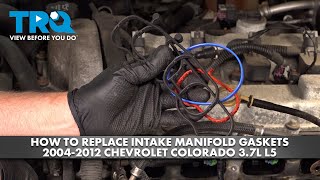
For the first-generation GMC Canyon and its platform mates with the Atlas I4 and I5 engines, this code is frequently linked to specific, well-documented weak points. A very common issue is a cracked rubber or plastic PCV hose located behind the intake manifold, which introduces unmetered air. Additionally, a crucial GM Technical Service Bulletin (PIP4409F) points to potential breaks within the Manifold Absolute Pressure (MAP) sensor's wiring harness, which can cause this code along with others like P0106 and P0300. Intake manifold gaskets are another known failure point on these trucks 🎬 Watch: Step-by-step intake manifold gasket replacement guide., leading to vacuum leaks that are often discussed in owner forums.
Diagnostic Flowchart
Tap your situation to follow the diagnostic path that matches what you're seeing on this vehicle.
Symptoms You May Notice
- Check Engine Light is on
- Rough or erratic idle
- Engine hesitation or stumbling during acceleration
- Reduced engine power
- Engine misfires (may be accompanied by code P0300)
- Pinging or knocking sounds from the engine
- Hissing sound from the engine bay indicating a vacuum leak
- Replacing the upstream oxygen (O2) sensor first. The O2 sensor is usually just accurately reporting the lean condition caused by a vacuum leak, wiring fault, or fuel delivery issue; it is not the cause itself.
Most Likely Causes
- Vacuum Leak (PCV Hose, Intake Gasket, etc.) 🔴 High Probability The PCV hose, often made of rubber or plastic, is located at the back of the intake and is known to become brittle, crack, or collapse over time. The intake manifold gaskets on the I4 and I5 engines are also a frequent failure point, causing unmetered air to enter the engine and trigger P0171.
How to confirm: Perform a visual inspection of all vacuum hoses for cracks or disconnection, paying close attention to the PCV hose assembly. Use a smoke machine to fill the intake system and look for smoke escaping from gaskets or hoses. Alternatively, carefully spray carb cleaner or brake cleaner around suspected leak points with the engine idling; a noticeable change in idle speed or sound indicates a leak.
Typical fix: Replace the cracked hose or faulty gasket. The PCV hose is a relatively simple replacement. The intake manifold gasket is a more involved repair but well-documented in DIY videos.
Est. part cost: $15-$150 - Broken Manifold Absolute Pressure (MAP) Sensor Circuit 🔴 High Probability → Shop Manifold Absolute Pressure Sensor TSB #PIP4409F specifically calls out that circuits for the MAP sensor can break inside the insulation, usually within a few inches of the sensor connector, leading to several codes including P0171. This is a very common and often overlooked cause on this platform.
How to confirm: Inspect the wiring harness going to the MAP sensor. With the engine running, gently wiggle the wires near the connector. If the engine stumbles or the idle changes, it strongly suggests a broken wire inside the insulation. This is often called a 'wiggle test'.
Typical fix: Repair the broken wire(s) in the MAP sensor harness. Often a new pigtail connector is spliced in.
Est. part cost: $15-$30 for a wiring pigtail - Faulty or Dirty Mass Airflow (MAF) Sensor 🟡 Medium Probability → Shop Fuel Injection Air Flow Meter The MAF sensor can become contaminated with dirt, oil, and debris, causing it to inaccurately measure the air entering the engine. Over-oiled aftermarket air filters are a common source of contamination.
How to confirm: Remove the MAF sensor and inspect the sensing wire. If it appears dirty, clean it ONLY with a dedicated MAF sensor cleaner. Do not touch the wire or use other chemicals like brake or carb cleaner, as they can damage the sensor. If cleaning doesn't resolve the issue, the sensor may need replacement.
Typical fix: Clean the MAF sensor. If the problem persists, replace the sensor.
Est. part cost: $70-$150 - Low Fuel Pressure (Weak Pump or Clogged Filter) ⚪ Low Probability While not specific to the platform, fuel pump failure can occur. Some owners in forums have noted that fuel pressure below the specified 62 PSI can contribute to a lean condition, even if it seems close to spec.
How to confirm: Connect a fuel pressure gauge to the fuel rail's test port. Check that the pressure is within the manufacturer's specified range (typically 55-62 PSI for these trucks). If pressure is low, the fuel filter or fuel pump may be at fault.
Typical fix: Replace the clogged fuel filter first, as it is a routine maintenance item. If pressure is still low, the fuel pump likely needs to be replaced.
Est. part cost: $25-$40 for a fuel filter, $150-$300 for a fuel pump.
Rare But Worth Checking
- Exhaust Leak Before the Oxygen Sensor: → Shop Oxygen Sensor A crack in the exhaust manifold or a leaking exhaust gasket before the upstream O2 sensor can draw in outside air, making the sensor incorrectly report a lean condition. Cracked exhaust manifolds are a separate known issue on these trucks.
- Faulty Upstream Oxygen (O2) Sensor: → Shop Oxygen Sensor While often replaced unnecessarily, an old, slow-responding O2 sensor can sometimes be the root cause, sending incorrect lean signals to the computer. This should be considered after all other possibilities, especially vacuum leaks and wiring issues, are ruled out.
Diagnosis Steps
- Read all stored fault codes with an OBD-II scanner. Note any other codes that are present, especially P0300 or P0106.
- Check for relevant Technical Service Bulletins (TSBs), specifically PIP4409F regarding MAP sensor wiring.
- Perform a 'wiggle test' on the MAP sensor wiring harness with the engine running. Listen for any change in idle that would indicate an internal wire break.
- Perform a thorough visual inspection of the engine bay. Look for cracked, disconnected, or brittle vacuum hoses, especially the PCV hose assembly behind the intake manifold.
- With the engine running, listen for hissing sounds that could indicate a vacuum leak.
- Perform a smoke test on the intake system to definitively identify any vacuum leaks from gaskets or hoses. This is the most reliable method.
- Remove and inspect the Mass Airflow (MAF) sensor. Clean it with dedicated MAF sensor cleaner if it appears dirty.
- Connect a fuel pressure gauge and verify fuel pressure is within specification (55-62 PSI) to rule out a weak fuel pump or clogged filter.
- Inspect the exhaust system from the engine to the first O2 sensor for any signs of leaks or cracks.
- If all other tests fail, consider testing the upstream oxygen sensor's response with a scan tool to ensure it is not faulty.
Parts You'll Likely Need
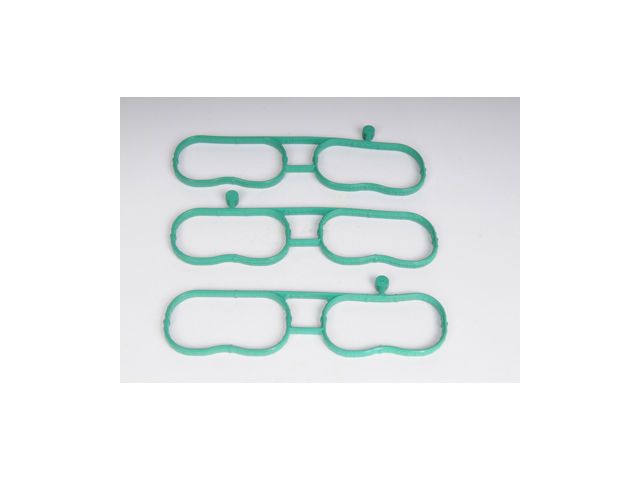
- Intake Manifold Gasket Set
(OEM #ACDelco 19256623 (for 3.7L I5))— A common failure point on the Atlas engines, causing a vacuum leak that triggers P0171.
Trusted brands: Fel-Pro (e.g., MS 97008 for 2.9L), ACDelco, Mahle
OEM price range: $50-$90
Aftermarket price range: $25-$60 - PCV Hose / Breather Hose
(OEM #GM 15123628)— The rubber/plastic hose becomes brittle and cracks over time, creating a significant vacuum leak. This part fits the I4 and I5 engines.
Trusted brands: ACDelco, Dorman
OEM price range: $20-$40
Aftermarket price range: $10-$25 - MAP Sensor Pigtail Connector — Used to repair the broken wiring near the MAP sensor as described in TSB PIP4409F.
Trusted brands: ACDelco, Dorman
OEM price range: $25-$40
Aftermarket price range: $15-$30 - Mass Airflow (MAF) Sensor — Can become contaminated and provide inaccurate airflow readings. Cleaning is often sufficient, but replacement is sometimes necessary.
Trusted brands: Delphi, Bosch, ACDelco
OEM price range: $120-$200
Aftermarket price range: $70-$150
Related Codes That Often Appear With This One
- P0300 — Random/Multiple Cylinder Misfire. A lean air-fuel mixture can fail to ignite properly, causing misfires across multiple cylinders. This code is explicitly mentioned alongside P0171 in TSB PIP4409F.
- P0106 — Manifold Absolute Pressure/Barometric Pressure Circuit Range/Performance. This code often appears with P0171 when there is a MAP sensor or wiring issue, as noted in TSB PIP4409F.
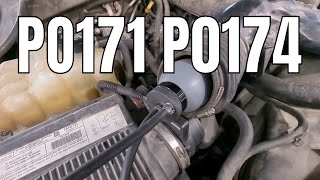
- P0174 — System Too Lean (Bank 2). This code would only appear on the 5.3L V8 engine option, indicating a lean condition on the opposite cylinder bank. The causes are typically shared (e.g., vacuum leak, MAF sensor).
Technical Service Bulletins (TSBs) & Recalls
- PIP4409F: Details an intermittent rough run and SES light with codes P0106, P0107, P0171, P0300, etc. The cause is identified as broken MAP sensor circuit wires inside the insulation near the connector. The fix is to inspect and repair the wiring.
Platform-Specific Known Issues
- TSB PIP4409F: A known issue where the wiring for the Manifold Absolute Pressure (MAP) sensor can break internally, while the outer insulation remains intact. This can cause P0171 and other related codes. The fix is to inspect the harness (especially within inches of the connector) and repair the broken wire, often by splicing in a new pigtail connector.
Mechanic-Grade Diagnostic Values
- Long Term Fuel Trim (LTFT) at Idle — expected: Within +/- 5% is ideal; values approaching +12.5% or higher indicate a lean condition and will set the code.. Failure: High positive fuel trim at idle that decreases significantly when RPM is raised to 2,500 RPM strongly suggests a vacuum leak.
- Long Term Fuel Trim (LTFT) at 2,500 RPM (constant) — expected: Within +/- 5% is ideal.. Failure: If fuel trim remains high (or gets higher) at 2,500 RPM, it points towards a fuel delivery issue (weak pump, clogged filter) rather than a vacuum leak.
- Mass Airflow (MAF) Sensor Reading — expected: Approximately 4 grams/second at idle, and 13 grams/second at 2500 RPM.. Failure: Readings significantly lower than expected suggest a dirty or failing MAF sensor, causing the ECU to not command enough fuel.
- Fuel Pressure — expected: 55-62 PSI with key on, engine off. Pressure should hold steady.. Failure: Pressure below 55 PSI indicates a weak pump or clogged filter. If pressure drops quickly after turning the key off, the check valve in the fuel pump assembly is likely bad, which can cause extended cranking but not typically a P0171.
- Upstream Oxygen Sensor Voltage — expected: Should actively fluctuate between 0.1V and 0.9V on a warm engine.. Failure: A sensor that is slow to respond or is 'stuck' low (e.g., below 0.45V) may be faulty, but this should be tested only after confirming no vacuum leaks exist.
Scan Tool Commands That Help
- Tech 2 / GDS2 or equivalent: EVAP Purge/Seal — To diagnose a potentially stuck-open EVAP purge solenoid. A technician can command the valve closed and then perform a smoke test or check for vacuum at the valve's inlet port. If vacuum is present when commanded closed, the valve has failed.
Wiring & Ground Locations
- G101 — Lower left side of the engine.. This is a primary ground for the Engine Control Module (ECM) and Transmission Control Module (TCM). A poor connection here can cause erratic behavior from the entire engine management system, leading to incorrect sensor readings and codes like P0171.
- G103 — On the cowl in the left rear of the engine compartment, above the brake booster.. This ground serves the Body Control Module (BCM) and the Data Link Connector (DLC). A fault here can cause communication issues with scan tools, making diagnosis difficult.
- MAP Sensor Pinout — At the MAP sensor connector.. Per TSB PIP4409F, the wiring is a weak point. Knowing the pinout is crucial for testing. Typically: Pin A = Sensor Ground, Pin B = MAP Signal (to ECM), Pin C = 5V Reference (from ECM). A technician can back-probe these wires to check for correct voltage and ground.
Real Owner Repair Stories
- Common narrative from multiple owner forums and mechanic videos (2007 GMC Canyon 3.7L I5) — Check Engine Light with P0171, rough idle, and slight hesitation on acceleration.
❌ Tried (didn't work) Cleaned the MAF sensor., Replaced the upstream O2 sensor., Replaced the PCV valve.
✅ What actually fixed it The intake manifold gasket had developed a vacuum leak. After performing a smoke test, smoke was seen seeping from the corner of the intake manifold where it meets the cylinder head. Replacing the intake manifold gasket resolved the lean code and rough idle.
"I Checked Everything" — The Actual Cause
- A common scenario is a mechanically stuck-open EVAP purge solenoid. This creates a vacuum leak, but since it's part of the emissions system, it may be overlooked during a standard intake smoke test. The definitive test is to start the engine, disconnect the hose leading from the purge solenoid to the intake, and place your finger over the port on the solenoid itself. If you feel vacuum at idle, the valve is stuck open and must be replaced.
- In rare cases, a crack on the top of the fuel pump module assembly can allow unmetered air to be drawn into the fuel system on the suction side. This will not be found with an intake smoke test. Symptoms may include the P0171 code being more prevalent when the fuel tank is low. Diagnosis requires dropping the fuel tank and visually inspecting the pump module.
Model Year Variations Within This Range
- 2004-2006: These models used the 2.8L LK5 I4 and 3.5L L52 I5 engines. Parts like the intake manifold gasket are specific to this engine family.
- 2007-2011: These models used the updated 2.9L LLV I4 and 3.7L LLR I5 engines, which included Variable Valve Timing (VVT) and a revised cylinder head design. The intake manifold gaskets for these engines are different from the earlier 2004-2006 models and are not interchangeable.
Helpful Videos



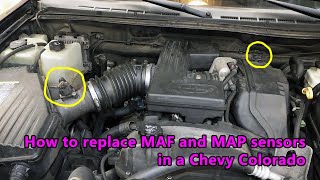

We Have This Part in Stock






The information in this article is provided for general reference and educational purposes only. Vehicle specifications, procedures, and part compatibility can vary by production date, trim level, and region. Always consult your vehicle's factory service manual and verify part numbers before purchasing or performing repairs. Safety-critical components such as airbags, seat belts, and braking systems should be installed by a qualified professional.
- Gmc CANYON:
- 🧭 Diagnostic Flowchart
- 🎬 Helpful Videos
- 🛍️ Shop This Part
- What's Unique About the 2004-2011 Gmc CANYON
- Symptoms You May Notice
- Most Likely Causes
- Rare But Worth Checking
- Diagnosis Steps
- Parts You'll Likely Need
- Related Codes That Often Appear With This One
- Technical Service Bulletins (TSBs) & Recalls
- Platform-Specific Known Issues
- Mechanic-Grade Diagnostic Values
- Scan Tool Commands That Help
- Wiring & Ground Locations
- Real Owner Repair Stories
- "I Checked Everything" — The Actual Cause
- Model Year Variations Within This Range
- 🎟️ Get 5% Off