

P0171 on 2007-2014 GMC Yukon: System Too Lean Causes and Fixes
Code P0171 on a 2007-2014 GMC Yukon most often means there is a vacuum leak, typically from a cracked PCV tube or a bad intake manifold gasket. Cleaning the Mass Airflow (MAF) sensor is another common, simple fix. Expect repair costs to range from under $20 for a DIY cleaning to over $500 for a professional intake gasket replacement. Using an updated intake manifold gasket set (e.g., Fel-Pro MS98016T) with a metal frame is highly recommended over the failure-prone OEM plastic design.
- P0171 on a 2007-2014 Yukon means the engine has too much air or not enough fuel on Bank 1.
- The most likely culprits are a vacuum leak from either the intake manifold gaskets or a cracked PCV tube.
- Before replacing any parts, inspect for vacuum leaks and try cleaning the Mass Airflow (MAF) sensor.
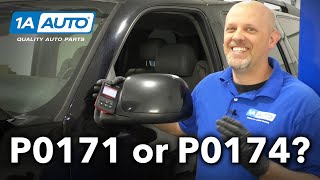
- If both P0171 and P0174 are present, the problem is almost certainly a vacuum leak or sensor issue affecting the whole engine.
- Using an updated intake gasket set with a metal frame can prevent a repeat failure.
What's Unique About the 2007-2014 Gmc YUKON
On this generation of GMC Yukon (GMT900), with V8 engines like the 5.3L and 6.0L, the P0171 code is very frequently linked to two specific issues: cracked intake manifold gaskets and vacuum leaks from the PCV tube system. The original intake gaskets used a plastic frame that becomes brittle and fails over time, especially with exposure to heat cycles, causing a vacuum leak that is often more pronounced in cold weather. Additionally, a specific TSB (PIP5341) was issued for these trucks regarding a cracked PCV tube on the driver's side of the engine causing a rough idle and setting this exact code.
Diagnostic Flowchart
Tap your situation to follow the diagnostic path that matches what you're seeing on this vehicle.
Symptoms You May Notice
- Check Engine Light is on
- Rough or unstable idle, especially when cold
- Hesitation or lack of power during acceleration
- Reduced fuel economy
- Hissing or whistling noise from the engine bay
- Engine misfires (may be accompanied by code P0300)
- Replacing the oxygen sensors first. While a faulty O2 sensor can cause this code, the issue on these trucks is far more likely to be a vacuum leak (intake gasket, PCV hose) or a dirty MAF sensor. Always diagnose for unmetered air before replacing sensors.
Most Likely Causes
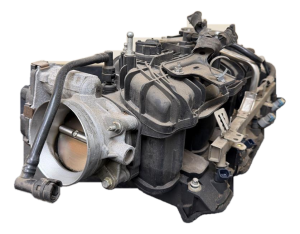
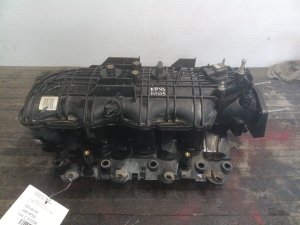
- Leaking Intake Manifold Gasket 🔴 High Probability → Shop Engine Intake Manifold The original gaskets on GM V8s of this era have a plastic frame that is known to crack and deform from engine heat, allowing unmetered air to enter the intake ports. This issue is especially noticeable during cold weather startups, where the leak is more pronounced until the engine warms up and materials expand.
How to confirm: With the engine running, spray short bursts of brake cleaner, starting fluid, or even water around the area where the intake manifold meets the cylinder heads. If the engine's idle speed changes, stumbles, or produces steam from the exhaust (if using water), it confirms a leak. A smoke machine is the safest and most definitive method. Watching long-term fuel trims on a scan tool will show high positive numbers (e.g., >20%) at idle that decrease as RPMs increase, which is a classic sign of a vacuum leak.
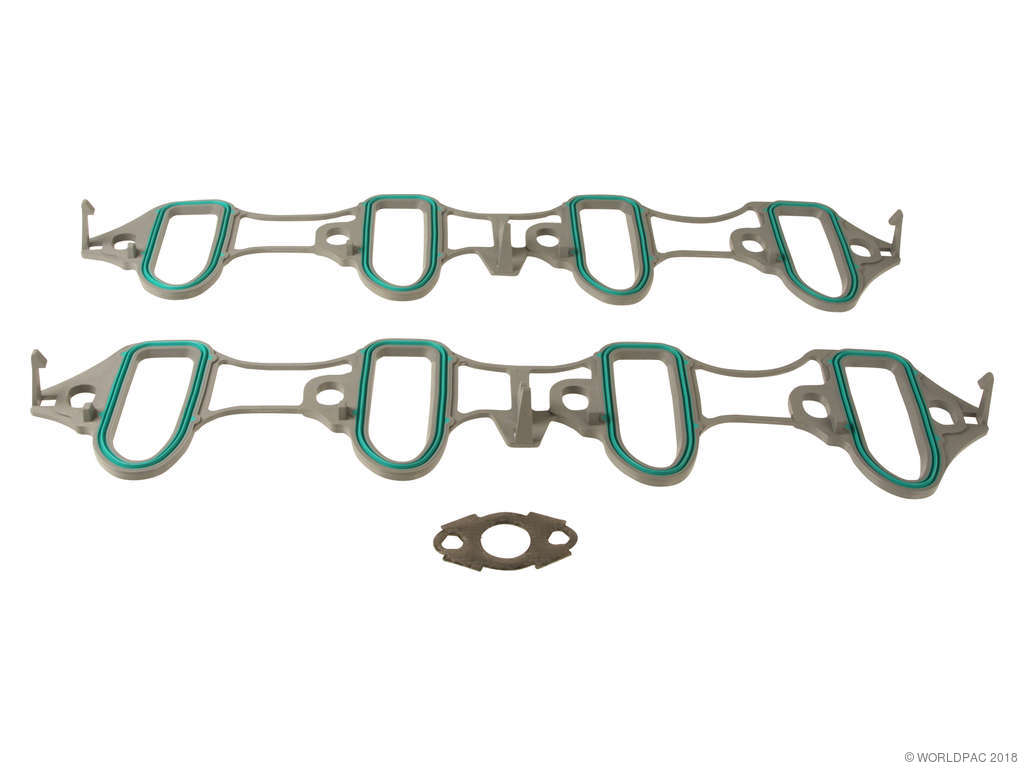
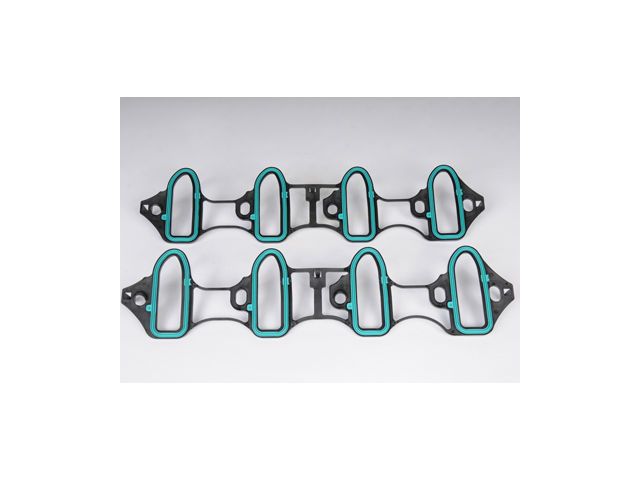
Typical fix: Replace the intake manifold gaskets. It is highly recommended to use an updated gasket set with a metal frame, such as Fel-Pro MS98016T, for better durability and sealing compared to the OEM plastic design. While the intake is off, it is a good time to inspect and potentially replace the knock sensors and harness underneath.
Est. part cost: $40-$100 - Cracked or Disconnected PCV Tube 🔴 High Probability → Shop PCV Valve Hose A GM Technical Service Bulletin (PIP5341) specifically calls out a cracked Positive Crankcase Ventilation (PCV) tube as a cause for P0171 on these trucks. The tube, typically located on the driver's side valve cover running to the intake manifold, is made of plastic and rubber that become brittle and can easily crack or break, creating a significant vacuum leak.
How to confirm: Visually inspect all PCV hoses, especially the tube on the driver's side of the engine, for cracks, breaks, or loose connections. The nipple on the intake manifold is also prone to breaking. A smoke machine can also quickly reveal the source of the leak.
Typical fix: Replace the cracked PCV tube assembly. Common replacement part numbers include ACDelco 12597774.
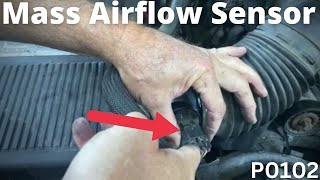
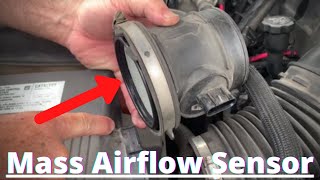
Est. part cost: $20-$60 - Dirty or Faulty Mass Airflow (MAF) Sensor 🟡 Medium Probability → Shop Fuel Injection Air Flow Meter The MAF sensor measures the amount of air entering the engine. If the sensing element is contaminated with dirt or oil (often from an over-oiled aftermarket air filter), it will under-report the airflow, causing the computer to inject too little fuel for the actual amount of air.
How to confirm: Remove the sensor from the intake tube and inspect the small wires. If they appear dirty, cleaning is the first step. If cleaning doesn't resolve the issue, the sensor may be faulty. A scan tool can also be used to monitor MAF readings to see if they are rational.
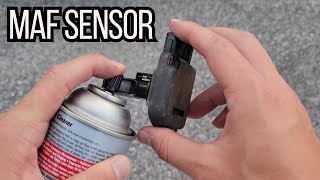
Typical fix: Clean the MAF sensor using a dedicated MAF sensor cleaner spray. Do not touch the delicate sensor wires. If cleaning fails, replace the sensor.
Est. part cost: $10 (cleaner) or $70-$150 (new sensor) - Low Fuel Pressure ⚪ Low Probability While less common than vacuum leaks, a failing fuel pump or a faulty Fuel Pump Driver Module (FPDM) can cause low fuel pressure, leading to a lean condition. The FPDM, located on the frame rail, can fail from corrosion or heat.
How to confirm: Connect a fuel pressure gauge to the fuel rail's test port. The pressure should meet the manufacturer's specifications (typically 55-62 PSI for non-Flex Fuel, or 48-54 PSI for Flex Fuel models) at idle. If pressure is low, further diagnosis of the pump, filter, and FPDM is needed.
Typical fix: Replace the failing component. This could be the fuel filter, the fuel pump (located inside the fuel tank), or the Fuel Pump Driver Module.
Est. part cost: $20-$50 (filter) or $200-$400 (fuel pump assembly)
Rare But Worth Checking
- Exhaust Leak Before Oxygen Sensor: → Shop Oxygen Sensor A crack in the exhaust manifold or a leaking exhaust gasket before the upstream O2 sensor can allow outside air into the exhaust stream. This tricks the O2 sensor into thinking the engine is running lean, causing the computer to add unnecessary fuel.
- Failing Upstream Oxygen Sensor: → Shop Oxygen Sensor While often replaced unnecessarily, a slow or failing O2 sensor can send incorrect lean readings to the computer. This should be considered after all potential vacuum leaks and fuel delivery issues have been ruled out.
- Clogged Fuel Injector(s): → Shop Fuel Injector A partially clogged fuel injector on Bank 1 will restrict fuel flow to one or more cylinders, causing a localized lean condition that can trigger P0171 without affecting Bank 2.
Diagnosis Steps
- Check for other stored trouble codes. If P0174 is also present, focus on causes that affect both engine banks.
- Use a scan tool to observe Short-Term Fuel Trim (STFT) and Long-Term Fuel Trim (LTFT) for Bank 1. High positive numbers (e.g., LTFT > 15%) confirm the computer is adding significant fuel to compensate for a lean condition.
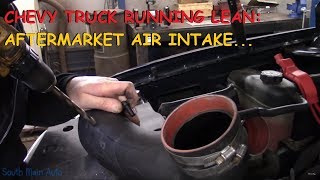
- Visually inspect the entire air intake system from the air filter to the throttle body for any loose clamps or cracked hoses.
- Carefully inspect the PCV tube and its connections on the driver's side valve cover and intake manifold for cracks or breaks, as noted in TSB PIP5341.
- With the engine idling, listen for a hissing or whistling sound that would indicate a vacuum leak.
- If a leak is suspected but not visible, use a smoke machine to pressurize the intake system and find the source of the leak. Alternatively, cautiously spray short bursts of brake cleaner or water around the intake manifold gaskets and vacuum hoses; a change in engine RPM will pinpoint the leak.
- Remove and clean the Mass Airflow (MAF) sensor using a dedicated cleaner. Allow it to dry completely before reinstalling.
- If no vacuum leaks are found and cleaning the MAF sensor doesn't help, test the fuel pressure to ensure the fuel pump, filter, and fuel pump driver module are functioning correctly.
- As a final step, check the upstream oxygen sensor data with a scan tool to see if it is responding correctly or if it is 'stuck' in a lean reading.
Parts You'll Likely Need
- Intake Manifold Gasket Set
(OEM #ACDelco 19207929 (Original Style))— This is a very common failure point on 2007-2014 GM V8 engines, causing vacuum leaks that trigger P0171 and P0174. The updated metal-frame design is recommended for longevity.
Trusted brands: ACDelco, Fel-Pro (MS98016T is a popular updated design)
OEM price range: $60-$110
Aftermarket price range: $40-$80 - PCV Valve Tube / Hose
(OEM #ACDelco 12597774)— As identified in a manufacturer TSB, this hose is prone to cracking and is a frequent cause of vacuum leaks on this platform.
Trusted brands: ACDelco, Dorman
OEM price range: $30-$60
Aftermarket price range: $20-$40 - Mass Airflow (MAF) Sensor Cleaner — Often, the MAF sensor is just dirty and cleaning it is a simple, inexpensive first step that can resolve the code.
Trusted brands: CRC, WD-40
Aftermarket price range: $10-$15
Related Codes That Often Appear With This One
- P0174 — P0174 is the same 'System Too Lean' code, but for Bank 2. When both P0171 and P0174 are present, it strongly suggests a problem that affects the entire engine, such as a MAF sensor issue, a large vacuum leak from the intake manifold gaskets, or low fuel pressure.
- P0300 — This code indicates random or multiple cylinder misfires. A lean condition can cause misfires because the air-fuel mixture fails to ignite properly. It's very common to see this alongside P0171/P0174 caused by a bad intake gasket.
Technical Service Bulletins (TSBs) & Recalls
- Bulletin #PIP5341: Mentions a rough idle and lean codes (P0171/P0174) caused by a cracked PCV tube on the left side of the engine. The fix is to replace the tube and cover it with conduit to prevent future damage.
Platform-Specific Known Issues
- A known issue involves the intake manifold gaskets failing, particularly in colder weather, leading to lean codes P0171 and P0174 upon startup. Owners report the idle is very rough when cold but smooths out as the engine warms up and the gaskets expand to seal the leak.
- The plastic nipple for the PCV hose on the intake manifold can become brittle and break off during hose inspection or replacement, requiring a more involved repair.
Mechanic-Grade Diagnostic Values
- Fuel Pressure (Key ON, Engine OFF) - Non-Flex Fuel — expected: 55-62 psi (380-427 kPa). Failure: Pressure below 55 psi indicates a potential weak fuel pump, clogged filter, or failing FPDM.
- Fuel Pressure (Key ON, Engine OFF) - Flex Fuel (VIN 'Z') — expected: 48-54 psi (331-372 kPa). Failure: Pressure below 48 psi. Note that Flex Fuel models operate at a slightly lower pressure.
- Long-Term Fuel Trim (LTFT) at idle — expected: Close to 0% (+/- 5%). Failure: Sustained positive values above +10% indicate the PCM is compensating for a lean condition. A value of +12.5% or higher will typically trigger the Check Engine Light.
- Mass Airflow (MAF) Sensor Reading — expected: Approximately 4-5 g/s at idle, increasing with RPM (e.g., 13 g/s at 2500 RPM).. Failure: Readings that are illogically low for the given RPM, or readings that do not increase smoothly with engine speed.
Wiring & Ground Locations
- G103 — On the front of the passenger side cylinder head.. This is a primary engine ground. A poor connection here can cause erratic signals from sensors connected to the ECM, potentially leading to incorrect fuel calculations.
- G104 — On the left rear corner of the engine, mounted to the left cylinder head.. This grounds the ignition coil capacitor and other critical engine components. Electrical noise from a bad ground can interfere with sensor readings, including those that influence fuel trim.
- G102 — Located at the left rear of the engine, grounding the 8 ignition coils.. A faulty ground for the ignition coils can lead to weak spark and incomplete combustion, which can be misinterpreted by the O2 sensors and contribute to fuel trim issues.
Real Owner Repair Stories
- Reddit user in r/MechanicAdvice (Vehicle with P0171 and misfires) — Check Engine Light with P0171, random misfires, and a hard brake pedal.
❌ Tried (didn't work) Initial diagnosis focused on common vacuum leaks around the intake.
✅ What actually fixed it The brake booster was found to be leaking internally, creating a large, unmetered vacuum leak. Replacing the brake booster resolved the lean code and hard pedal symptom.
"I Checked Everything" — The Actual Cause
- A smoke test may not reveal an internal diaphragm leak in the brake booster. This type of leak often only occurs when the engine is running (creating vacuum) and the brake pedal is depressed. Symptoms like a hissing sound when braking or a hard pedal are key indicators that point toward the booster, even if a smoke test on the intake hoses is clean.
OEM Part Supersession History
ACDelco 19207929 (or similar plastic carrier gasket)→Fel-Pro MS98016T (Upgraded Design)— The original OEM intake manifold gaskets use a plastic carrier that becomes brittle and cracks from engine heat cycles, leading to vacuum leaks. The Fel-Pro MS98016T uses a more durable aluminized steel carrier with integrated torque limiters to prevent cracking and provide a more reliable seal.Original '07-'08 Driver's Side Valve Cover→ACDelco 12570427— The updated valve cover for 2007-2008 models features a redesigned PCV baffle where a hole was relocated. This change was primarily to address oil consumption issues but is part of the PCV system that can cause lean codes if not functioning correctly.
Heads up: Models from 2009-2014 use a different valve cover (e.g., 12642655), indicating further design changes. Ensure the correct part is used for the specific model year.
Model Year Variations Within This Range
- 2007-2014: Flex Fuel models (often designated by a 'Z' in the 8th VIN position) have different fuel pressure specifications (48-54 psi) compared to non-Flex Fuel models (55-62 psi). Using the wrong spec during diagnosis can lead to misdiagnosing the fuel pump.
- 2007-2008 vs 2009-2014: The design of the driver's side valve cover, which contains the fixed PCV orifice, was updated for 2009+ models. The earlier 2007-2008 models also had an updated part available under a TSB to address oil consumption. These parts are not always interchangeable.
- Early vs. Late Generation: Early models (approx. 2007-2008) often came standard with a 4-speed automatic transmission on non-Denali trims, while later models standardized the 6-speed automatic across the board. The 4.8L V8 was also phased out during the generation.
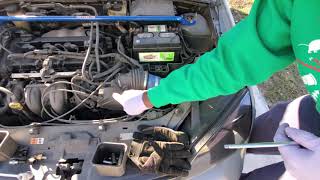
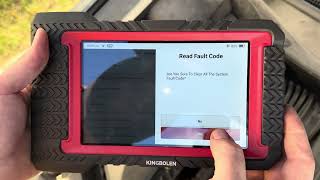
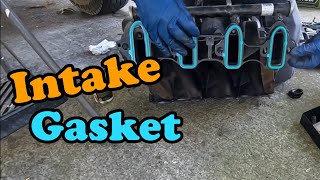
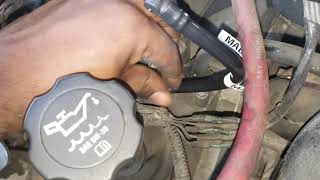
Helpful Videos


Used OEM Parts in Stock
New Aftermarket Parts Available



The information in this article is provided for general reference and educational purposes only. Vehicle specifications, procedures, and part compatibility can vary by production date, trim level, and region. Always consult your vehicle's factory service manual and verify part numbers before purchasing or performing repairs. Safety-critical components such as airbags, seat belts, and braking systems should be installed by a qualified professional.
- Gmc YUKON:
- 🧭 Diagnostic Flowchart
- 🎬 Helpful Videos
- 🛍️ Shop This Part
- What's Unique About the 2007-2014 Gmc YUKON
- Symptoms You May Notice
- Most Likely Causes
- Rare But Worth Checking
- Diagnosis Steps
- Parts You'll Likely Need
- Related Codes That Often Appear With This One
- Technical Service Bulletins (TSBs) & Recalls
- Platform-Specific Known Issues
- Mechanic-Grade Diagnostic Values
- Wiring & Ground Locations
- Real Owner Repair Stories
- "I Checked Everything" — The Actual Cause
- OEM Part Supersession History
- Model Year Variations Within This Range
- 🎟️ Get 5% Off