

P0171 on 2013-2017 Honda Accord: Causes and Fixes for System Too Lean
For a 2013-2017 Honda Accord, a P0171 code is most often caused by a cracked air intake duct (especially on the 2.4L engine) or a dirty Mass Airflow (MAF) sensor. A replacement intake duct costs around $30-$50, and cleaning the MAF sensor is a simple DIY task. On V6 models, faulty fuel injectors are also a strong possibility.
- First, thoroughly inspect the rubber air intake hose for cracks; this is the most likely cause.
- If the intake hose is intact, the next step is to clean the Mass Airflow (MAF) sensor with a dedicated cleaner.
- Do not replace the oxygen sensor unless all other potential causes, especially vacuum leaks, have been definitively ruled out.
- A scan tool that can read live fuel trim data is extremely helpful for confirming a lean condition and verifying the fix.
What's Unique About the 2013-2017 Honda Accord
The 9th generation Honda Accord, particularly with the 2.4L engine, is notorious for the rubber air intake duct developing cracks over time. This allows unmetered air to enter the engine after the Mass Airflow (MAF) sensor, which is a very common and primary suspect for a P0171 code on this specific vehicle. While other causes are possible, this simple mechanical failure is a frequent first check for mechanics and owners. For the 3.5L V6, faulty fuel injectors are also a known issue that can cause this code.
Symptoms You May Notice
- Check Engine Light is on
- Rough or unstable idle
- Hesitation or lack of power during acceleration
- Reduced fuel economy
- Engine stalling, especially when coming to a stop
- Hissing sound from the engine bay indicating a vacuum leak
- Replacing the oxygen (A/F) sensor first. The sensor is often correctly reporting a lean condition caused by a vacuum leak (especially the intake boot) or MAF issue. Replacing the sensor without diagnosing the underlying cause will not fix the problem.
Most Likely Causes
- Cracked or Torn Air Intake Duct 🔴 High Probability → Shop Engine Air Intake Resonator The flexible rubber of the intake duct, located between the air filter box and the throttle body, can become brittle and crack with age and heat cycles, allowing unmetered air to enter the system. This is the most common cause for P0171 on the 2.4L engine.
How to confirm: Visually inspect the entire air intake duct, especially the accordion-like flexible sections, for any cracks, tears, or loose connections. A smoke test is the most definitive way to find a leak. The crack is often on the underside and hard to see without removing the duct.
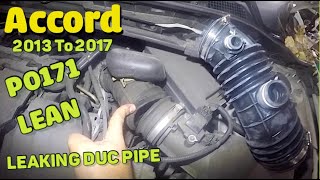
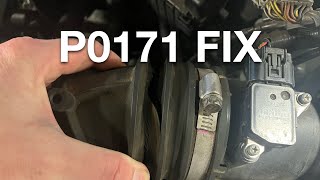
Typical fix: Replace the air intake duct. 🎬 Watch this quick guide on fixing a broken intake duct.
Est. part cost: $30-$60 - Dirty or Faulty Mass Airflow (MAF) Sensor 🔴 High Probability → Shop Fuel Injection Air Flow Meter The MAF sensor measures the amount of air entering the engine. If the sensing wire becomes contaminated with dirt or oil (sometimes from an over-oiled aftermarket air filter), it will under-report the airflow, causing the PCM to inject too little fuel for the actual amount of air.
How to confirm: Remove the MAF sensor and inspect the small wires for debris. Cleaning it with a dedicated MAF sensor cleaner is a good first step. If cleaning doesn't resolve the issue, the sensor may need replacement.
Typical fix: Clean the MAF sensor with specialized cleaner. If the problem persists, replace the MAF sensor.
Est. part cost: $10-$15 for cleaner, $70-$150 for a new sensor - Vacuum Leak 🟡 Medium Probability Beyond the main intake duct, other vacuum hoses, the PCV valve system, or intake manifold gaskets can degrade or fail, creating a leak. A leak in the brake booster vacuum line is also a possibility.
How to confirm: Perform a smoke test to find the source of the leak. Alternatively, you can carefully spray short bursts of brake cleaner or starting fluid around potential leak points with the engine running; a change in engine idle indicates a leak.
Typical fix: Replace the failed hose, gasket, or valve.
Est. part cost: $5-$100 depending on the part - Low Fuel Pressure / Clogged Fuel Injectors ⚪ Low Probability → Shop Fuel Injector On 3.5L V6 models, faulty or clogged fuel injectors are a more common cause for P0171 than on the 2.4L. This is a known issue on the related Acura TLX 3.5L, which has a TSB for the problem. In a cross-manufacturer example, NHTSA ODI #11090772 describes a Honda dealer finding P0171 and requiring a fuel pipe set replacement to resolve the lean condition.
How to confirm: Check fuel pressure using a fuel pressure gauge connected to the fuel rail. The pressure should be within the manufacturer's specification (approx. 390-440 kPa or 57-64 psi). Clogged injectors can be diagnosed by observing fuel trim data with a scan tool or performing an injector balance test.
Typical fix: Replace the weak fuel pump, clogged fuel filter, or faulty fuel pressure regulator. Clean or replace clogged fuel injectors. For the V6, injectors are often replaced as a set.
Est. part cost: $150-$400 for a fuel pump, $835-$998 for professional fuel injector replacement.
Rare But Worth Checking
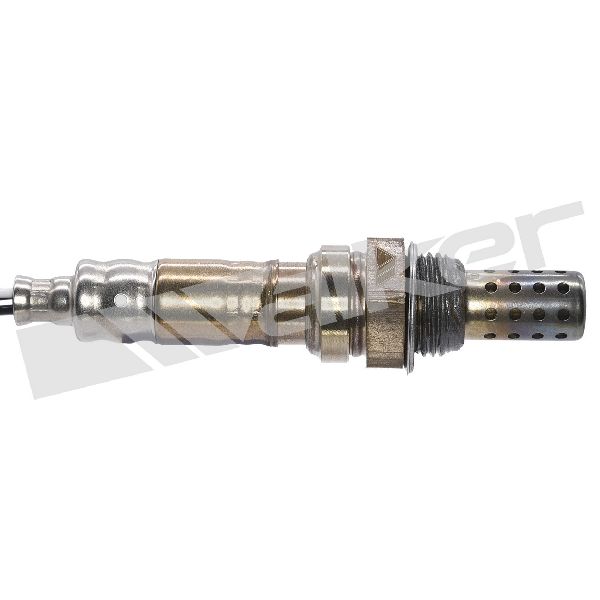
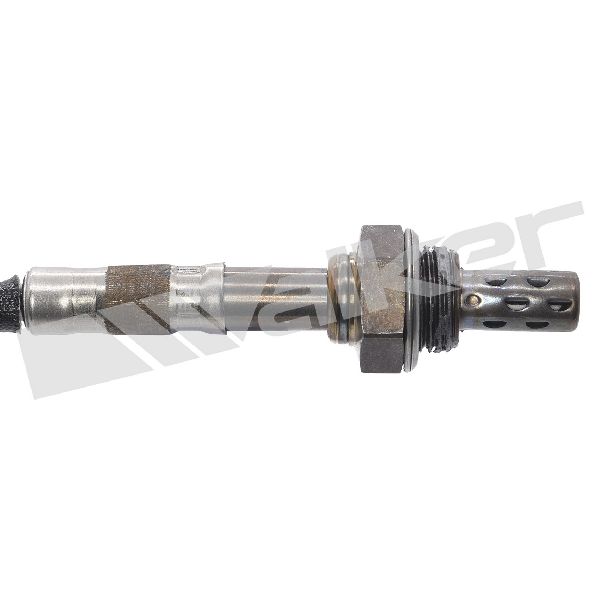
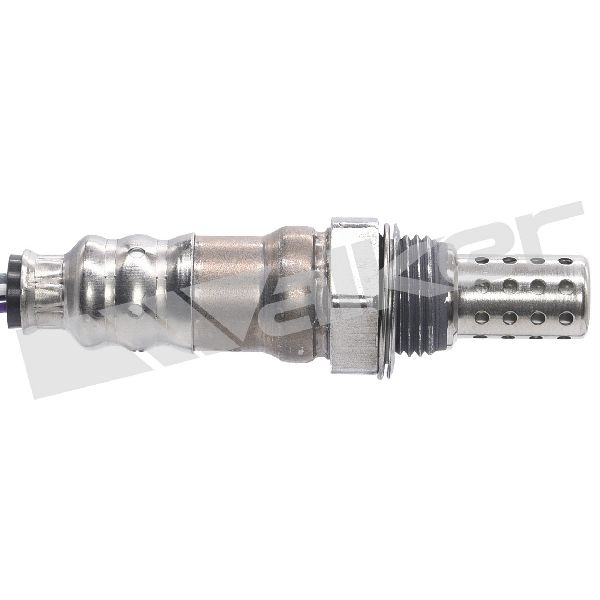
- Faulty Primary Oxygen (Air/Fuel Ratio) Sensor: → Shop Oxygen Sensor While an O2 sensor can cause a P0171, it's more often a symptom than the root cause. A failing sensor might 'lie' and report a lean condition, but it's more common for it to be accurately reporting a lean condition caused by something else. Consider this after ruling out vacuum leaks and MAF issues.
- Exhaust Leak: A leak in the exhaust manifold or pipe before the primary oxygen sensor can draw in outside air, causing the sensor to incorrectly read a lean condition.
Diagnosis Steps
- Read the code and check for any other stored codes with an OBD-II scanner.
- Check the freeze frame data to see the engine conditions (RPM, load, etc.) when the code was set.
- Visually inspect the air intake duct between the air filter box and the throttle body for any cracks or tears. Pay close attention to the ribbed, flexible sections. This is a very common failure point.
- Inspect all accessible vacuum hoses for cracks, disconnection, or brittleness.
- With the engine running, listen for any hissing sounds that could indicate a vacuum leak.
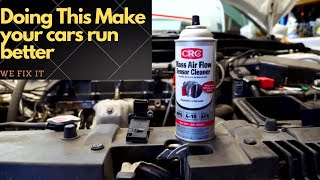
- Remove and clean the Mass Airflow (MAF) sensor using a dedicated MAF sensor cleaner. Do not touch the sensor wires. Allow it to dry completely before reinstalling. 🎬 See how to safely clean your Accord's MAF sensor.
- If a leak is suspected but not visible, perform a smoke test to pinpoint the source of the unmetered air.
- Check fuel pressure to ensure the fuel pump and regulator are functioning correctly. It should be 57-64 psi.
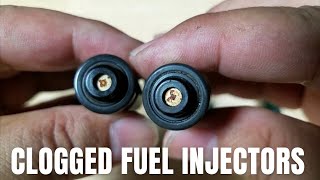
- If you have a V6 and misfire codes, investigate the fuel injectors as a primary cause. 🎬 Follow this step-by-step guide to diagnose clogged fuel injectors.
- If all else fails, test the primary air/fuel ratio sensor's operation using a scan tool with live data capabilities.
Parts You'll Likely Need
- Air Intake Duct/Hose
(OEM #2.4L: 17228-5A2-A00 (Air Flow Tube), 3.5L: 17228-5G0-A00 (Air Flow Tube))— This is the most frequent point of failure leading to a P0171 code on this specific Accord generation due to the rubber cracking over time, especially on the 2.4L engine.
Trusted brands: Honda (OEM), Dorman (696-050 for 2.4L), HPS (Silicone upgrade)
OEM price range: $30-$45
Aftermarket price range: $25-$50 - Mass Airflow (MAF) Sensor Cleaner — Cleaning a dirty MAF sensor is a cheap and effective first step in diagnosis and can often resolve the issue without replacing parts.
Trusted brands: CRC, WD-40 Specialist
Aftermarket price range: $10-$15 - Air/Fuel Ratio Sensor (Upstream Oxygen Sensor) — If vacuum leaks and MAF issues are ruled out, a slow or failing A/F sensor can be the culprit.
Trusted brands: Denso, NTK
OEM price range: $150-$250
Aftermarket price range: $80-$160
Related Codes That Often Appear With This One
- P0174 — On V6 models, P0174 (System Too Lean, Bank 2) may appear with P0171. This indicates both cylinder banks are lean, often pointing to a common cause like a MAF sensor, fuel pressure issue, or a major vacuum leak before the intake splits.
- P0300-P0306 — Random or specific cylinder misfire codes can accompany P0171. On the V6, this combination strongly suggests faulty fuel injectors.
- P0455 — An EVAP system large leak code (P0455) can sometimes appear alongside P0171, potentially indicating a vacuum leak related to the EVAP purge valve or associated hoses.
Technical Service Bulletins (TSBs) & Recalls
- TSB 16-002: Addresses a grinding starter motor on 2013-2016 V6 models due to improper clearance with the torque converter ring gear.
- TSB 19-042: Provides a warranty extension for failing LED daytime running lights on 2016-2017 models.
- TSB 16-088: Pertains to the VTC actuator causing a rattle on cold starts for 2.4L engines.
Platform-Specific Known Issues
- The rubber air intake hose is highly prone to developing cracks in its flexible sections, causing a significant vacuum leak that is the number one cause of P0171 on these cars.
- On 3.5L V6 models, faulty fuel injectors are a known problem that can cause P0171, often accompanied by misfire codes. This issue is formally recognized by Acura with a TSB for the same engine family.
Mechanic-Grade Diagnostic Values
- Low-Side Fuel Pressure — expected: 390-440 kPa (57-64 psi). Failure: Pressure below this range indicates a weak fuel pump, clogged filter, or faulty regulator.
- MAF Sensor Reading at Idle (2.4L Automatic) — expected: 6.5 - 9.1 g/s. Failure: Readings outside this range suggest a faulty or dirty MAF sensor, or a significant vacuum leak.
- MAF Sensor Reading at Idle (2.4L Manual) — expected: 5.5 - 7.7 g/s. Failure: Readings outside this range suggest a faulty or dirty MAF sensor, or a significant vacuum leak.
- Long Term Fuel Trim (LTFT) — expected: Should not exceed +/- 10%. Failure: A sustained LTFT greater than +10% to +15% is a clear indicator of a lean condition that the PCM is trying to correct.
- MAF Sensor Connector Voltage (Key On, Engine Off) — expected: One pin should show 12V (battery voltage).. Failure: No voltage indicates a wiring or fuse issue supplying power to the sensor.
- MAF Sensor Signal Voltage at Idle — expected: Approximately 1.0V. Failure: Voltage that fluctuates wildly at a steady idle can indicate a failing sensor.
Scan Tool Commands That Help
- Honda HDS (or equivalent professional scanner): Reset PCM — After replacing a component like a MAF or A/F sensor, a PCM reset is required to clear learned fuel trim values and force the system to relearn with the new part.
- Honda HDS (or equivalent professional scanner): Idle Learn Procedure — After a PCM reset or throttle body service, this procedure must be performed to allow the engine to establish a stable idle.
- Honda HDS (or equivalent professional scanner): DI Fuel Pressure Test — For direct-injection models (V6 starting in 2016), this function specifically tests the high-pressure fuel system, which is a separate potential cause of lean codes.
- Bidirectional Scan Tool: EVAP Purge Solenoid Test — To command the EVAP purge solenoid open and closed to test for a stuck-open valve, which would create a vacuum leak.
Wiring & Ground Locations
- G101 — On the engine, typically on the driver's side of the intake manifold or on the cylinder head.. This is a primary engine harness and ECU ground. A poor connection here can cause erratic sensor readings from the MAF, A/F sensor, and others, leading to incorrect fuel calculations and codes like P0171.
- MAF/IAT Sensor Connector — On the air intake duct, between the air filter box and the throttle body.. This 5-pin connector provides power, ground, and signal lines for both the Mass Airflow and Intake Air Temperature sensors. A loose or corroded pin can directly cause P0171. Pin 1: 5V (IAT), Pin 2: IAT Signal, Pin 3: 12V+ (MAF Power), Pin 4: Ground, Pin 5: MAF Signal.
Real Owner Repair Stories
- YouTube video on an 8th Gen Accord (similar issue) (2008 Honda Accord, 204,000 miles) — P0171 System Too Lean code.
❌ Tried (didn't work) The owner immediately identified the likely cause, but the diagnostic process shown involves checking multiple items.
✅ What actually fixed it The primary cause was a large tear in the rubber air intake boot. The owner also cleaned the MAF sensor, cleaned the throttle body, and added fuel injector cleaner as part of a comprehensive service while addressing the main fault. - ScannerDanner Forum user (2008 Honda Odyssey (similar J35 V6 engine and systems)) — High positive fuel trims (15-20%) but not always setting a code.
❌ Tried (didn't work) Checked for vacuum leaks (none found)., MAF sensor readings appeared normal., Replacing only the upstream A/F sensors provided temporary improvement but the high trims returned.
✅ What actually fixed it Replacing all four oxygen sensors (both upstream A/F sensors and both downstream O2 sensors) finally resolved the high fuel trims. The user noted that on these Hondas, the downstream sensors do contribute to fuel trim calculations and can become skewed with age, even if they pass basic tests. - NHTSA ODI #11653707 — An owner of a similar Honda model reported that the P0171 code was associated with the vehicle stalling several times, eventually leading to the car being unable to drive in either Drive or Reverse.
- NHTSA ODI #10522171 — A report on a related Honda platform noted that the check engine light kept going on and off, with the dealer repeatedly finding code P0171 (Fuel System Too Lean) during multiple service visits.
"I Checked Everything" — The Actual Cause
- A faulty PCV valve can sometimes pass a smoke test at low pressure but will leak vacuum when the engine is running, pulling in unmetered air from the crankcase. If a smoke test reveals no leaks, it is still worth testing the PCV system by pinching the vacuum hose to it while observing short-term fuel trims. If the trims drop significantly, the PCV valve is leaking.
OEM Part Supersession History
17228-5A2-A00→No official supersession found, this remains the current part number.— N/A
Heads up: This part number is specific to the 2.4L engine. The V6 engine uses a different part (17228-5G0-A00).
Model Year Variations Within This Range
- 2016-2017: The 3.5L J35 V6 engine received updates for the 2016 model year facelift, including the addition of direct injection. While the port-injected 2013-2015 V6 is susceptible to injector issues, the direct-injected models have both a low-pressure and a high-pressure fuel system. A P0171 code on a 2016-2017 V6 could also be related to the high-pressure fuel pump or high-pressure injectors, adding diagnostic complexity.
Diagnostic Flowchart
Other Known Issues on This Vehicle
Issues unrelated to this code that are worth knowing about as an owner of this generation:
- Grinding or Failed Starter Motor (V6 Models) 🔴 High — Common on 2013-2015 V6 models, often occurring around 50,000 miles. Can cause a no-start condition, leaving the driver stranded. (Ref: Honda TSB 16-002 describes a clearance issue between the starter and torque converter ring gear. The fix involves replacing the starter and repositioning the ring gear.)
- VTC Actuator Rattle at Cold Startup (2.4L Models) 🟠 Medium — A loud, brief rattle lasting ~2 seconds on a cold start. While not immediately damaging, it is a sign of a failing VTC actuator. The issue is widespread on K24 engines. (Ref: Honda TSB 16-088 (and others like 09-010 for earlier models) addresses this by replacing the VTC actuator.)
- Burnt Out LED Daytime Running Lights (DRL) 🟡 Low — Very common on 2016-2017 models. The LED strip in the headlight assembly fails, often melting the lens. It's a cosmetic and potential safety-inspection issue. (Ref: Honda TSB 19-042 extended the warranty for this issue to 10 years/unlimited miles, as the fix requires replacing the entire headlight assembly.)
- Variable Cylinder Management (VCM) Issues (3.5L V6 Models) 🟠 Medium — Long-term concerns include increased oil consumption, fouled spark plugs, and engine vibrations as the system deactivates cylinders to save fuel. A class-action lawsuit covered models up to 2013.
- Weak or Failing Battery 🟡 Low — The stock battery, especially in 4-cylinder models, is often cited by owners as being undersized and prone to premature failure. (Ref: Recall 17V-418 (Honda TSB 17-057) was issued for a related battery management sensor, but not the battery itself.)
Used vs. New Parts: Buying Guide for This Vehicle
When a used part is the smart pick: A used Air Intake Duct (17228-5A2-A00) from a junkyard can be a cost-effective fix, provided it's from a low-mileage donor and the rubber is still pliable. Other simple mechanical parts like vacuum hoses or brackets are also good candidates for used parts.
Donor-vehicle mileage cap: roughly under 60000 miles for the part to have meaningful remaining life.
What to inspect on the donor part:
- For the air intake duct, squeeze the flexible accordion sections. They should feel soft and pliable, not hard, crunchy, or brittle.
- Visually inspect the entire surface for hairline cracks, especially on the bottom side and in the valleys of the ribs.
- Check that the connection points are not stretched or deformed.
OEM-only on this vehicle (don't cheap out):
- Air/Fuel Ratio Sensor (Upstream O2 Sensor)
- Mass Airflow (MAF) Sensor
Aftermarket brands forum-validated for this vehicle:
- Denso (for A/F and MAF sensors - often the OEM supplier)
- NTK (for A/F and O2 sensors - often the OEM supplier)
- Dorman (for the air intake duct, as a budget alternative)
- HPS (for a silicone air intake duct, which is more durable than the OEM rubber)
Brands owners have reported issues with on this vehicle:
- Unnamed, no-brand 'white box' electronic sensors (MAF, A/F) from online marketplaces. These frequently have poor calibration and can cause performance issues or fail prematurely.
Real Owner Stories
Aggregated from forums and TSBs cited above. Mileages and costs reflect what owners reported in those sources.
2013-2017 Honda Accord 2.4L
Symptoms: Check Engine Light on; visual inspection revealed a large tear in the boot.
What fixed it: Replacing the cracked air intake hose.
Source hint: driveaccord.net thread titled 'P0171 code'
2013-2015 Honda Accord 3.5L V6 — ~50000 miles
Symptoms: Grinding noise during startup, though unrelated to the lean code, it is a frequent failure on this specific powertrain.
What fixed it: Replacing the starter and repositioning the ring gear per TSB 16-002.
Source hint: TSB 16-002
Related OBD-II Codes
Frequently Asked Questions
Is there a TSB for the P0171 code on my 3.5L V6 Honda Accord?
I have a 2.4L Accord with a rough idle and P0171; what is the most likely part to check first?
Can I just clean the sensor on my 2013-2017 Accord instead of replacing it?
What is the specific fuel pressure specification for diagnosing a lean condition on this model?
Does the VTC actuator rattle on my 2.4L Accord cause the P0171 code?
Are the fuel injectors a common failure point for the P0171 code on the V6 models?
Helpful Videos
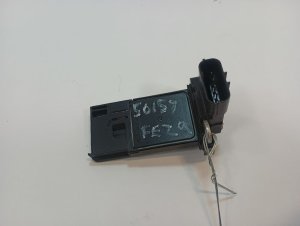
Used OEM Parts in Stock
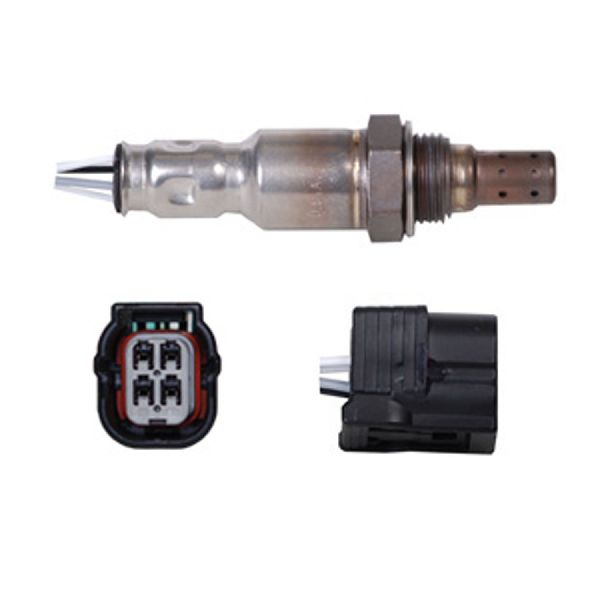
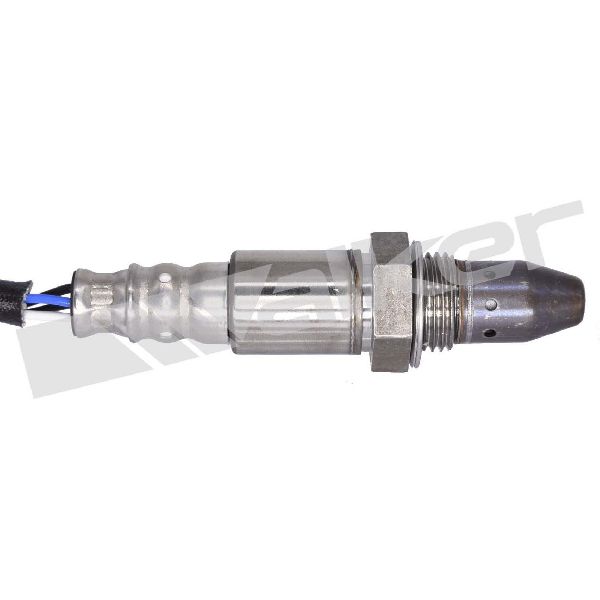
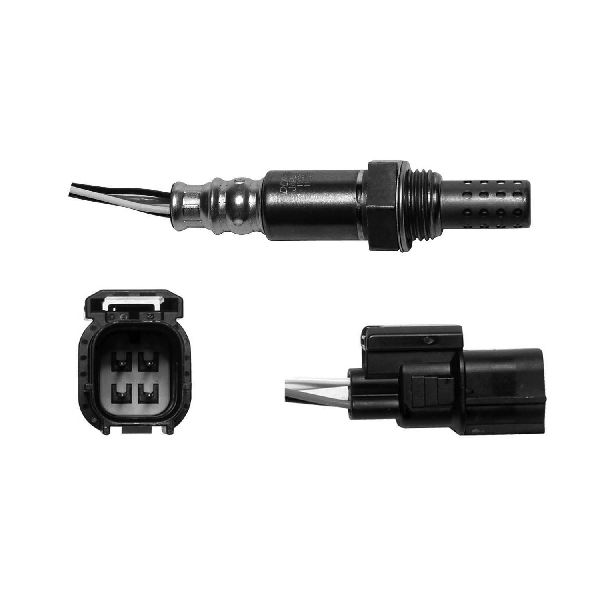
New Aftermarket Parts Available

The information in this article is provided for general reference and educational purposes only. Vehicle specifications, procedures, and part compatibility can vary by production date, trim level, and region. Always consult your vehicle's factory service manual and verify part numbers before purchasing or performing repairs. Safety-critical components such as airbags, seat belts, and braking systems should be installed by a qualified professional.
- Honda Accord:
- 🧭 Diagnostic Flowchart
- 🎬 Helpful Videos
- 🛍️ Shop This Part
- What's Unique About the 2013-2017 Honda Accord
- Symptoms You May Notice
- Most Likely Causes
- Rare But Worth Checking
- Diagnosis Steps
- Parts You'll Likely Need
- Related Codes That Often Appear With This One
- Technical Service Bulletins (TSBs) & Recalls
- Platform-Specific Known Issues
- Mechanic-Grade Diagnostic Values
- Scan Tool Commands That Help
- Wiring & Ground Locations
- Real Owner Repair Stories
- "I Checked Everything" — The Actual Cause
- OEM Part Supersession History
- Model Year Variations Within This Range
- Other Known Issues on This Vehicle
- Used vs. New Parts: Buying Guide for This Vehicle
- Real Owner Stories
- 2013-2017 Honda Accord 2.4L
- 2013-2015 Honda Accord 3.5L V6 — ~50000 miles
- Related OBD-II Codes
- Frequently Asked Questions
- 🎟️ Get 5% Off