

P0171 on 1999-2007 Jaguar S-Type: Causes and Fixes for Lean Condition
On a 1999-2007 Jaguar S-Type, P0171 is almost always caused by a vacuum leak from a cracked or deteriorated rubber hose. The most common culprits are a small elbow hose under the intake manifold or the PCV breather hose. A smoke test is the best way to find the leak, though spraying carb cleaner around suspect areas while monitoring fuel trims can also pinpoint it.
- P0171 on a Jaguar S-Type almost always means there is a vacuum leak.
- Do not replace parts like oxygen sensors before performing a smoke test to find the leak.
- On 3.0L V6 models, the most likely culprits are the IMT O-rings and a small PCV hose hidden under the intake manifold.
- If both P0171 and P0174 are present, it confirms a significant leak affecting the whole engine.
- Fixing this issue is crucial to restore performance, fuel economy, and prevent long-term engine damage.
What's Unique About the 1999-2007 Jaguar S-Type
The Jaguar S-Type, particularly the 3.0L V6 model which shares its engine architecture with the Lincoln LS, is highly susceptible to vacuum leaks due to numerous rubber and plastic components in the engine bay that become brittle and crack from age and heat cycles. While the code P0171 points to a single bank, it's often triggered by a large vacuum leak that affects the entire intake system, frequently causing its companion code, P0174 (System Too Lean, Bank 2), to appear as well. Owners consistently report that hard-to-find cracked hoses are the root cause, more so than faulty sensors. The V8 models, especially the supercharged 'R' version, can also suffer from unique leak points like the brake booster hose connection at the intake elbow.
Generation note: The 1999-2007 S-Type covers two main phases: pre-facelift (1999-2002) with 3.0L V6 and 4.0L V8 engines, and post-facelift (2003-2007) with updated 3.0L V6 and 4.2L V8s. While the specific layout of hoses differs slightly, all are highly prone to age-related vacuum leaks which are the primary cause of P0171. The 3.0L V6 is most famous for the PCV hose under the intake manifold. The 4.2L V8s, particularly the STR, have known issues with the brake booster vacuum line connection.
Symptoms You May Notice
- Check Engine Light is on
- Rough or unstable idle, sometimes stalling at stops
- Hesitation or surging during acceleration
- Reduced engine power, sometimes triggering a "Restricted Performance" message
- A hissing or sucking sound from the engine bay, indicating a vacuum leak
- Poor fuel economy
- Engine RPMs fluctuate intermittently
- Replacing the oxygen sensor first. While a bad O2 sensor is a possibility, it's far less common than a vacuum leak on these vehicles. A Ford/Jaguar TSB for similar platforms specifically warns against this. Always diagnose for leaks before replacing sensors.
- Assuming a single P0171 code means the leak is isolated to Bank 1. A small vacuum leak can sometimes manifest on only one bank initially before it's large enough to affect both.
Most Likely Causes
- Cracked Vacuum Hose(s) 🔴 High Probability → Shop Vacuum Hose The engine bay contains numerous rubber and plastic hoses for the PCV system, brake booster, and other vacuum-operated components. These hoses become hard and brittle with age and crack, creating unmetered air leaks. The most notorious is the elbow-shaped PCV breather hose located under the lower intake manifold on the 3.0L V6. It often cracks on the underside where it's not visible.
How to confirm: Perform a smoke test. This involves feeding low-pressure smoke into the intake system and watching for where it escapes. This is the most effective method. 🎬 Watch: EricTheCarGuy shows you how to find any vacuum leak. Alternatively, with the engine running, carefully spray short bursts of brake cleaner or carb cleaner around vacuum lines; a sudden change in engine idle or a drop in Short Term Fuel Trim (STFT) values on a scanner indicates the leak's location.
Typical fix: Replace the cracked hose. Common culprits include the PCV breather hose under the intake manifold (3.0L V6), the brake booster hose and its check valve/connector, and small elbow connectors on the top of the engine.
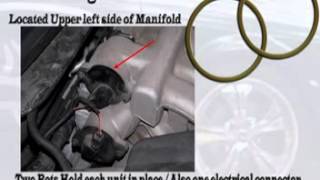
Est. part cost: $15-$75 - Leaking IMT Valve O-Rings 🟡 Medium Probability On the 3.0L V6, the Intake Manifold Tuning (IMT) valves, located on the side of the intake manifold, are sealed with O-rings that are known to perish and leak. There are two valves, and the lower one is more difficult to access. This allows unmetered air to enter the intake.
How to confirm: Visually inspect the O-rings for cracking or flattening. You can also spray brake cleaner around the IMT valve housings with the engine running and listen for an idle change or watch fuel trims on a scanner. The leak is often more apparent on the lower valve.
Typical fix: Replace the two IMT valve O-rings 🎬 See this walkthrough on replacing your Jaguar's IMT O-rings. (Part No. XR843536). Some owners apply a small amount of sealant like Toyota FIPG as a temporary fix. While the upper O-ring is easy, the lower one may require removing the intake manifold for proper access.
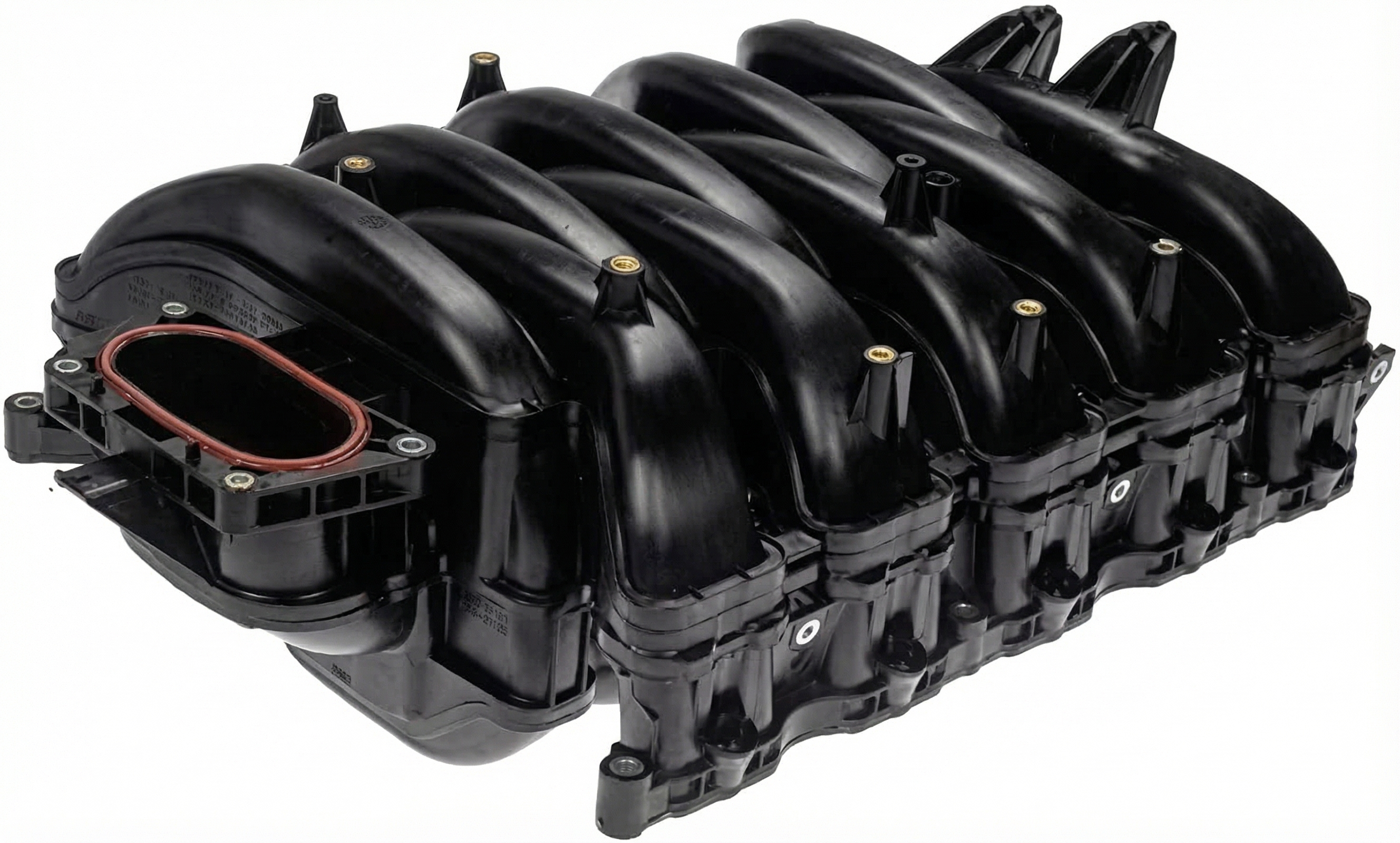
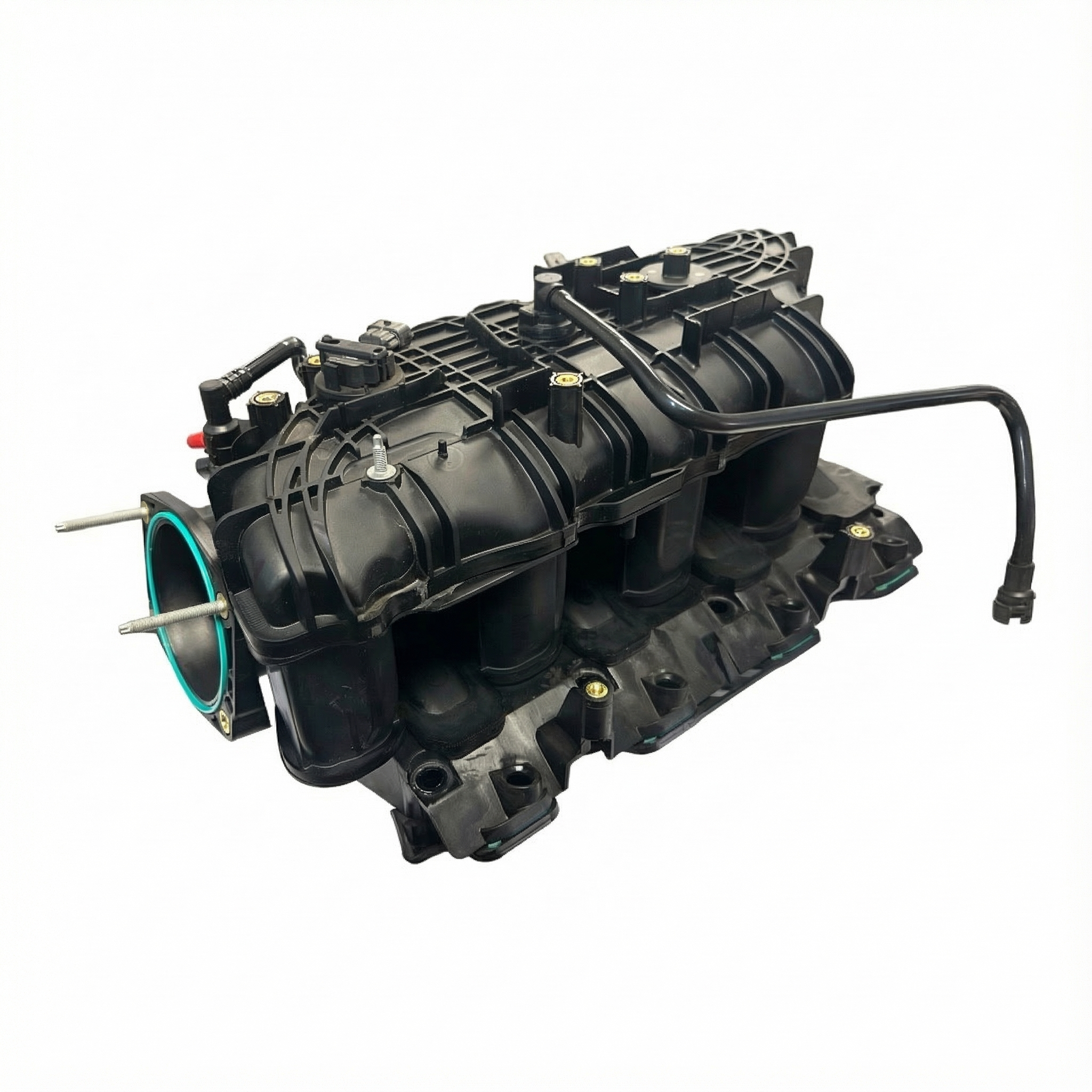
Est. part cost: $10-$20 - Leaking Intake Manifold Gaskets 🟡 Medium Probability → Shop Engine Intake Manifold The gaskets sealing the upper (plenum) and lower intake manifold sections can compress, dry out, and fail over time, creating a vacuum leak. This is a common issue on both the V6 and V8 engines after high mileage or previous repairs.
How to confirm: A smoke test is the best confirmation. Spraying carb cleaner around the gasket mating surfaces while the engine is running may also cause a change in idle speed, pinpointing the leak. Re-using old gaskets after a repair is a very common reason for these leaks to develop.
Typical fix: Replace the upper and lower intake manifold gaskets. It is highly recommended to replace these gaskets anytime the intake manifold is removed for another service, such as replacing the under-manifold PCV hose.
Est. part cost: $40-$100 - Dirty or Faulty Mass Airflow (MAF) Sensor ⚪ Low Probability → Shop Fuel Injection Air Flow Meter While less common than vacuum leaks, the MAF sensor can become contaminated, especially if an over-oiled aftermarket air filter is used. A dirty sensor will under-report the amount of air entering the engine, causing the computer to command too little fuel.
How to confirm: Remove the MAF sensor and inspect the delicate sensing wires for dirt or contamination. Cleaning it with a dedicated MAF sensor cleaner spray is a good first step. Do not touch the wires. If cleaning doesn't help, the sensor may be faulty.
Typical fix: Clean the MAF sensor with a specific MAF cleaner spray. If cleaning doesn't resolve the issue, replace the sensor with a quality OEM or aftermarket part.
Est. part cost: $70-$200
Rare But Worth Checking
- Weak Fuel Pump or Clogged Fuel Filter: → Shop Fuel Filter If the engine isn't receiving enough fuel due to low pressure, it can cause a lean condition. This usually affects both banks (P0171 & P0174). Check fuel pressure at the fuel rail to confirm it is within specification.
- Clogged Fuel Injectors: → Shop Fuel Injector A partially clogged injector on Bank 1 can restrict fuel flow to one or more cylinders, leading to a lean code for that bank. This is less likely to be the cause if both P0171 and P0174 are present.
- Failing Upstream Oxygen Sensor: → Shop Oxygen Sensor The sensor itself can become slow or biased, incorrectly reporting a lean condition. This is a common misdiagnosis and should only be considered after thoroughly ruling out all possible vacuum leaks and fuel delivery issues.
- Leaking Brake Booster Hose/Check Valve: On V8 models in particular, the quick-release connector where the brake booster vacuum hose attaches to the intake elbow can develop a leak. The internal O-ring fails. 🎬 Watch: How to fix the brake booster seal on 4.2L engines. This can be diagnosed by spraying the connection with carb cleaner and watching for a change in fuel trims.
Diagnosis Steps
- Read the fault codes with an OBD-II scanner. Note if P0174 is also present, which strongly indicates a vacuum leak.
- Use the scanner to observe live data, specifically Short-Term Fuel Trim (STFT) and Long-Term Fuel Trim (LTFT) at idle. High positive numbers (e.g., >15-20%) confirm the computer is adding fuel to combat a lean condition.
- Perform a thorough visual inspection of the engine bay for any obviously disconnected, cracked, or broken vacuum hoses, especially around the air intake duct and PCV system.
- Perform a smoke test. This is the most reliable way to find the source of the unmetered air leak. Pay close attention to the PCV hoses (especially the one under the intake on V6 models), IMT valve seals, brake booster hose connection, and intake manifold gaskets.
- If a smoke machine is unavailable, carefully spray carb cleaner in short bursts around potential leak points with the engine idling. Listen for a change in engine RPM or watch the STFT values on your scanner. A dip in STFT towards zero or negative confirms you've found the leak.
- If no vacuum leak is found, check fuel pressure. Connect a fuel pressure gauge to the schrader valve on the fuel rail to ensure it's within specification.
- If fuel pressure is good, consider cleaning the Mass Airflow (MAF) sensor with a dedicated cleaner. Do not touch the sensor wires.
- As a last resort, if all other possibilities have been exhausted, consider that the upstream oxygen sensor on Bank 1 may be faulty.
Parts You'll Likely Need
- PCV Breather Hose (Under Intake Manifold, 3.0L V6)
(OEM #XR845730)— This elbow-shaped hose is a notoriously common failure point. It is hidden under the lower intake manifold and cracks on the underside from heat and age, causing a significant vacuum leak that is impossible to see without disassembly.
Trusted brands: Jaguar (OEM), URO Parts
OEM price range: $40-$60
Aftermarket price range: $25-$40 - IMT Valve O-Rings (3.0L V6)
(OEM #XR843536)— These two green or black O-rings dry out and crack, allowing unmetered air to leak past the IMT valve housings on the side of the intake manifold. This is a very common, inexpensive, and easy part to replace to rule out a leak source.
Trusted brands: Jaguar (OEM), Fel-Pro, Victor Reinz
OEM price range: $15-$25
Aftermarket price range: $5-$15 - Intake Manifold Gasket Set (Upper and Lower)
(OEM #XR843536 (Upper), C2S14519 (Upper))— If the gaskets between the plastic upper and lower intake manifolds fail, they create a vacuum leak that often triggers both P0171 and P0174 codes. These should always be replaced when the manifold is removed for any other service.
Trusted brands: Fel-Pro, Mahle, Victor Reinz
OEM price range: $80-$120
Aftermarket price range: $40-$70
Related Codes That Often Appear With This One
- P0174 — System Too Lean (Bank 2). This code is the counterpart to P0171 for the other engine bank. When both appear together, it strongly suggests a large vacuum leak that affects the entire engine, such as a cracked intake hose, bad manifold gaskets, or faulty IMT seals.
- P1111 — System Pass. This is not a fault code. It indicates that all OBD-II system readiness checks have completed since the codes were last cleared. It's common to see this alongside any active fault codes and does not indicate a problem.
Technical Service Bulletins (TSBs) & Recalls
- Ford TSB 03-16-1 (for platform mates, advises against replacing O2 sensors for P0171/P0174 before checking for vacuum leaks)
- Ford TSB 04-17-4 (details procedures for checking fuel trims to diagnose vacuum leaks)
- Ford TSB 05-3-1 (MAF Sensor Diagnostic Service Tip, indicating diagnosis can be tricky and other causes should be investigated)
Platform-Specific Known Issues
- Hidden PCV Hose Crack (3.0L V6): → Shop PCV Valve Hose The most common cause of P0171/P0174 on the 3.0L V6 is the PCV breather elbow hose under the intake manifold. It cracks on the bottom from heat exposure. A video on YouTube by 'P0171 P0174 Jaguar S Type (1999-2007)' shows that the top of the hose can look perfect, but the bottom will have a large split, making visual inspection without removal impossible. This requires removing the upper and lower intake manifolds to access.
- Brake Booster Hose Connector Leak (V8 STR): On supercharged 4.2L V8 models (S-Type R), a common leak point is the quick-disconnect fitting where the brake booster vacuum line enters the intake elbow. A user on JaguarForums detailed finding this leak by spraying carb cleaner on the fitting and watching the short-term fuel trims go from +25 down to 0 instantly. The internal O-ring in the fitting fails.
- Lincoln LS Part Interchangeability: Because the 3.0L V6 is shared with the Lincoln LS, many of the problematic vacuum and PCV hoses are interchangeable. A YouTube video creator noted that the Lincoln LS part number 3W4Z-6767-CA can be used as a substitute for the Jaguar breather hose and is often more readily available at local auto parts stores.
Mechanic-Grade Diagnostic Values
- Fuel Pressure at Idle (V6) — expected: 3.3 bar (47.9 psi). Failure: Significantly lower pressure (e.g., below 40 psi) indicates a potential fuel delivery issue (pump, filter, regulator).
- Fuel Pressure at Idle (V8 Naturally Aspirated) — expected: 3.0 bar (43.5 psi). Failure: Low pressure points to a fuel delivery problem.
- Mass Air Flow (MAF) Rate at Idle — expected: Approx. 3.0 g/s for 3.0L V6, and 4.2-6.0 g/s for 4.2L V8. General rule is ~1 g/s per liter of displacement.. Failure: A reading significantly lower than expected (e.g., 0.6-0.8 g/s) suggests the sensor is under-reporting airflow, which can cause a lean condition.
- Mass Air Flow (MAF) Rate at 2500 RPM — expected: 15 to 25 g/s, depending on engine size.. Failure: A non-linear or lower-than-expected reading as RPMs increase indicates a failing MAF sensor.
- Long Term Fuel Trim (LTFT) at Idle — expected: Close to 0%, ideally within +/- 5%.. Failure: Sustained positive values above +15% or +20% confirm the ECU is compensating for a lean condition, strongly suggesting a vacuum leak.
- Ground Point Voltage Drop — expected: Well under 0.5V (500mV). Failure: A higher voltage reading while cranking the engine indicates a poor ground connection, which can cause erratic sensor readings.
Scan Tool Commands That Help
- Jaguar IDS/SDD or compatible: Reset Fuel Trims / Clear Adaptations — After a repair, such as fixing a vacuum leak or replacing a MAF sensor, the long-term fuel trims should be reset. Otherwise, the ECU will continue to use the old, incorrect learned values, which can mask the success of the repair or cause poor performance. A hard reset (disconnecting the battery and touching the terminals) can also achieve this.
Wiring & Ground Locations
- Main Engine Grounding Strap — On the right (passenger side in US) of the vehicle, located directly under the starter, connecting the engine/transmission to the frame.. A poor main engine ground can cause fluctuating or incorrect readings from critical sensors like the MAF and O2 sensors, leading the ECU to miscalculate the air/fuel mixture.
- Coil Pack Ground (V8) — On the front side of the passenger cylinder head. Can be misidentified as being at the 'center of engine'.. While not a direct cause of P0171, a loose coil ground can cause misfires. An intermittent misfire may not set a misfire code but can introduce unburnt oxygen into the exhaust, which an O2 sensor will interpret as a lean condition.
- Bulkhead Ground Point (G4) — Located on the firewall/bulkhead, inboard of the starter relay, where the diagonal engine bay bracing rods attach.. This is a key grounding point for various engine bay components. Corrosion or looseness here can affect multiple systems and contribute to erratic sensor behavior.
Real Owner Repair Stories
- Jaguar Forums user (2003 S-Type R (4.2L Supercharged V8)) — P0171 and P0174 codes, Restricted Performance light, especially at idle. Short term fuel trims were +20% to +25%.
❌ Tried (didn't work) Visual inspection, listening for leaks.
✅ What actually fixed it A leak from the brake booster vacuum hose connection at the intake elbow. The leak was only found by spraying carb cleaner on the connection while watching live STFT data, which immediately dropped to negative values. The engine idle did not noticeably change. The fix involved replacing the faulty quick-release fitting/o-ring. - Jaguar Forums user (2003 S-Type 3.0L V6) — P0171 and P0174 codes, hissing/suction noise from the brake pedal area.
❌ Tried (didn't work) Changing IMT O-rings.
✅ What actually fixed it A faulty brake booster. The diagnosis was confirmed by disconnecting the booster's vacuum hose from the intake, plugging the intake port, and observing the fuel trims return to normal. The booster itself was leaking vacuum internally. - Jaguar Forums user (Jaguar XJ (similar engine architecture)) — P0171 code and Restricted Performance message at idle.
❌ Tried (didn't work) Multiple attempts to find a vacuum leak.
✅ What actually fixed it A bad O-ring on the engine oil dipstick. The worn O-ring was allowing unmetered air to be drawn into the crankcase, creating a vacuum leak. Replacing the small O-ring resolved the code and smoothed the idle. - Jaguar Forums user (2003 S-Type R (4.2L Supercharged V8)) — P0171 and P0174 codes, oil leak.
❌ Tried (didn't work) Replacing MAF o-ring, fuel filter, and a vacuum hose.
✅ What actually fixed it The EVAP purge canister was cracked. The mechanic suspected a leak from the dipstick tube O-ring, but the final culprit was the purge canister, likely damaged during a previous spark plug change. - Owner Complaint NHTSA ODI #10524356 — An owner reported that their vehicle displayed codes P0171 and/or P0174 in conjunction with fuel tank vapor leakage.
"I Checked Everything" — The Actual Cause
- A user with a 2003 4.2L S-Type reported P0171/P0174 codes and had a professional smoke test performed at a Jaguar dealership, which found no leaks. After the codes returned, the owner self-diagnosed using carb cleaner and monitoring fuel trims, discovering a significant leak at the brake booster vacuum line connection to the intake elbow that the smoke test had missed. The previous 'fix' by a shop involved simply putting putty over the rotted fitting instead of replacing it.
- On a 2004 XJ8 with the same lean codes, the owner performed a smoke test and fixed a leak in the intake hose, but the codes remained. The actual cause was an internal vacuum leak in the brake booster. This was confirmed when disconnecting and plugging the booster's vacuum line caused the long-term fuel trims to drop from 19.5% to 12% almost immediately.
OEM Part Supersession History
Unknown→C2S40863— This is the part number for the notorious PCV breather hose under the intake for the 3.0L V6.
Heads up: A compatible part from the Lincoln LS (which shares the engine) is 3W4Z-6767-CA and may be more readily available at local auto parts stores.
Model Year Variations Within This Range
- 1999-2002 (Pre-Facelift): These models used the 3.0L V6 and 4.0L V8 engines. The vacuum hose layout and some specific components differ from the later models. The 5-speed automatic transmission was used.
- 2002.5/2003-2007 (Post-Facelift): A significant facelift occurred. Engines were updated to a revised 3.0L V6 and a new 4.2L V8 (both naturally aspirated and supercharged). A new 6-speed ZF automatic transmission was introduced. While still prone to vacuum leaks, some hose routing and part numbers changed. For example, the PCV system on the 4.2L V8 has different common failure points (like the brake booster connection) than the 3.0L V6 (under-intake hose).
Diagnostic Flowchart
Real Owner Stories
Aggregated from forums and TSBs cited above. Mileages and costs reflect what owners reported in those sources.
1999-2007 Jaguar S-Type 3.0L V6
Symptoms: P0171 and P0174 codes with a hidden vacuum leak that could not be seen during a standard visual inspection.
What fixed it: Removed the upper and lower intake manifolds and replaced the PCV breather elbow hose. The top of the hose looked perfect, but the bottom had a large split from heat exposure.
Source hint: YouTube video by 'P0171 P0174 Jaguar S Type (1999-2007)'
Jaguar S-Type R (4.2L V8 Supercharged)
Symptoms: Short-term fuel trims (STFT) spiked to +25, indicating a massive lean condition.
What fixed it: Replaced the internal O-ring in the quick-disconnect fitting where the brake booster vacuum line enters the intake elbow. The leak was found by spraying carb cleaner on the fitting, which instantly dropped the STFT to 0.
Source hint: JaguarForums thread 'str-p0171-p0174-dtc-solved-151351'
Jaguar S-Type 3.0L V6
Symptoms: Unmetered air entering the intake causing a lean condition, traced to the side of the intake manifold.
What fixed it: Replaced the two IMT valve O-rings (Part No. XR843536). Some owners applied Toyota FIPG sealant as a temporary fix before replacing the O-rings.
Source hint: Article context regarding IMT Valve O-Rings (citations 11, 19, 33)
Related OBD-II Codes
Frequently Asked Questions
Where is the PCV breather hose located on the 3.0L V6 Jaguar S-Type?
Can I use Lincoln LS parts to fix the vacuum leak on my 3.0L V6 S-Type?
What are the IMT valves and do they cause P0171 on the S-Type?
I have a supercharged 4.2L V8 S-Type R. Where should I look for vacuum leaks?
Should I replace my oxygen sensors if I get P0171 and P0174?
Could an aftermarket air filter cause P0171 on my S-Type?
Helpful Videos

We Have This Part in Stock

The information in this article is provided for general reference and educational purposes only. Vehicle specifications, procedures, and part compatibility can vary by production date, trim level, and region. Always consult your vehicle's factory service manual and verify part numbers before purchasing or performing repairs. Safety-critical components such as airbags, seat belts, and braking systems should be installed by a qualified professional.
- Jaguar S-Type:
- 🧭 Diagnostic Flowchart
- 🎬 Helpful Videos
- 🛍️ Shop This Part
- What's Unique About the 1999-2007 Jaguar S-Type
- Symptoms You May Notice
- Most Likely Causes
- Rare But Worth Checking
- Diagnosis Steps
- Parts You'll Likely Need
- Related Codes That Often Appear With This One
- Technical Service Bulletins (TSBs) & Recalls
- Platform-Specific Known Issues
- Mechanic-Grade Diagnostic Values
- Scan Tool Commands That Help
- Wiring & Ground Locations
- Real Owner Repair Stories
- "I Checked Everything" — The Actual Cause
- OEM Part Supersession History
- Model Year Variations Within This Range
- Real Owner Stories
- 1999-2007 Jaguar S-Type 3.0L V6
- Jaguar S-Type R (4.2L V8 Supercharged)
- Jaguar S-Type 3.0L V6
- Related OBD-II Codes
- Frequently Asked Questions
- 🎟️ Get 5% Off