

P0171 on 2011-2015 Kia Optima 2.4L GDI: Causes and Fixes for System Too Lean
For the 2011-2015 Kia Optima, a P0171 code is most often caused by a cracked PCV hose or a dirty MAF sensor. Start by inspecting the PCV system for leaks and cleaning the MAF sensor before suspecting more expensive parts. Also, be aware of a specific ECU software update (TSB-ENG160R1) that may be required.
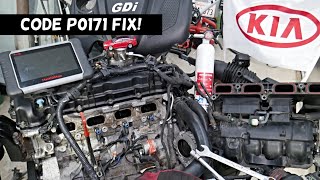
- Start your diagnosis by inspecting the PCV hose for cracks, as it is the most likely cause of P0171 on this vehicle.
- Before replacing any parts, spend $10 on a can of MAF sensor cleaner and clean the sensor.
- Do not replace the oxygen sensor first; it is usually just reporting the lean condition.
- If you have a 2012-2015 model, contact a Kia dealer to see if your vehicle needs the TSB-ENG160R1 software update.
What's Unique About the 2011-2015 Kia Optima
On this specific generation of Optima with the 2.4L GDI engine, the PCV (Positive Crankcase Ventilation) system is a known weak point. The hoses can become brittle and crack, creating vacuum leaks that are a primary cause of P0171. Additionally, for 2012-2015 models, Kia released a Technical Service Bulletin (TSB-ENG160R1) for an ECU software update to correct logic that could falsely trigger this code, sometimes along with P0420. This platform is also subject to major engine recalls (e.g., SC147) for bearing failure, which can create a host of engine problems.
Symptoms You May Notice
- Check Engine Light is on
- Rough or unstable idle
- Hesitation or stumbling during acceleration
- Reduced engine power
- Poor fuel economy
- Engine stalling, especially at a stop
- High engine RPM (e.g., 3000 RPM) on startup before dropping.
- Replacing the upstream oxygen (O2) sensor. The O2 sensor is often just accurately reporting the lean condition caused by another component, like a vacuum leak. While the sensor can fail, it should not be the first part replaced without proper diagnosis.
Most Likely Causes
- Cracked or Leaking PCV Hose/Valve 🔴 High Probability → Shop PCV Valve Hose The PCV hose and valve on the 2.4L GDI engine are frequently reported by owners and mechanics to become brittle and crack, causing a significant unmetered air leak. A stuck-open PCV valve is a common cause of vacuum leaks on this engine.
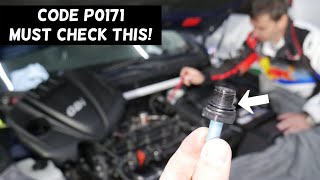
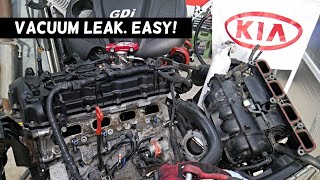
How to confirm: Visually inspect the PCV hose that connects the valve cover to the intake manifold for cracks, breaks, or loose connections. A smoke test is the most definitive way to find this and other vacuum leaks. The PCV valve (Part No. 26740-2G000) should rattle when shaken; if not, it is stuck and should be replaced. 🎬 Watch: How to check for this common PCV failure.
Typical fix: Replace the PCV valve and any damaged hoses. The PCV valve itself is inexpensive and often replaced as a maintenance item.
Est. part cost: $15-$60 - Dirty or Faulty Mass Airflow (MAF) Sensor 🟡 Medium Probability → Shop Fuel Injection Air Flow Meter The MAF sensor measures air entering the engine. If it's dirty from oil vapors or dust, it can under-report airflow, causing the ECM to inject too little fuel.
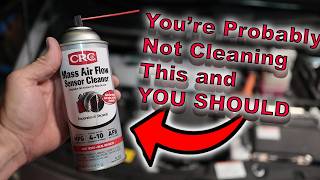
How to confirm: Unplug the MAF sensor with the engine running. If the idle smooths out, the sensor is likely the issue. A more accurate method is to clean it with dedicated MAF sensor cleaner. Do not touch the sensor's delicate wires or use harsh chemicals like brake cleaner. 🎬 See this quick guide on cleaning your MAF sensor safely.
Typical fix: Clean the sensor with MAF sensor cleaner. If cleaning does not resolve the issue (the code returns), the sensor must be replaced.
Est. part cost: $10 (cleaner) - $150 (sensor) - ECU Software Update Required 🟡 Medium Probability Kia issued Technical Service Bulletin TSB-ENG160R1 for 2012-2015 Optimas, indicating the original engine control logic could improperly trigger P0171, especially along with P0420, due to being overly sensitive during events like long decelerations.
How to confirm: A Kia dealership can check your vehicle's VIN to see if this software update has been performed. This is often a necessary step if no physical faults can be found. The corresponding Hyundai TSB is 16-FL-005.
Typical fix: The dealership performs a software update on the Engine Control Unit (ECU). Per the TSB, this is the only fix required if P0171 appears alone.
Est. part cost: $0-$200 (dealer labor) - Other Vacuum Leaks (Intake Gasket, Hoses) ⚪ Low Probability Any air leak after the MAF sensor can cause a lean code. This includes a leaking intake manifold gasket or other cracked vacuum lines.
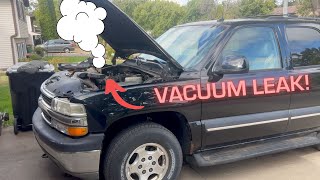
How to confirm: Perform a smoke test. This involves feeding pressurized smoke into the intake system to see where it escapes, revealing the source of the leak. 🎬 Watch: How to find hidden vacuum leaks with a smoke machine.
Typical fix: Replace the specific leaking gasket or hose.
Est. part cost: $10-$100
Rare But Worth Checking
- Weak Fuel Pump or Clogged Fuel Filter: → Shop Fuel Filter If the engine is starved of fuel due to low pressure, it will cause a lean condition. This can be checked with a fuel pressure test at the fuel rail. The 2013-2014 models were also recalled for a cracking low-pressure fuel hose.
- Clogged Fuel Injectors: → Shop Fuel Injector GDI engines are susceptible to carbon buildup on the injector tips and within the intake valves, which can disrupt the spray pattern or restrict fuel flow. This is less common than vacuum leaks but a possibility on higher-mileage vehicles.
- Exhaust Leak (before O2 sensor): A crack in the exhaust manifold or a bad gasket can allow oxygen into the exhaust stream, tricking the upstream O2 sensor into reading a false lean condition.
Diagnosis Steps
- Read the code with an OBD-II scanner and check for any other stored codes.
- Check long-term fuel trim (LTFT) data with a scanner. A high positive number (e.g., +15% or more) confirms the lean condition.
- Visually inspect the entire intake system for obvious cracks or disconnected hoses, paying close attention to the PCV hose running from the valve cover to the intake manifold.
- Listen for hissing sounds around the engine bay at idle, which can indicate a vacuum leak.
- If no obvious leaks are found, perform a smoke test to definitively identify any unmetered air leaks.
- Remove and clean the Mass Airflow (MAF) sensor using a dedicated cleaner. Allow it to dry completely before reinstalling.
- If the issue persists, check fuel pressure using a fuel pressure gauge to rule out a weak fuel pump or clogged filter.
- Contact a Kia dealership with your VIN to check if TSB-ENG160R1 (for 2012-2015 models) applies and has been performed.
- As a final step, consider testing the upstream oxygen sensor and checking for clogged fuel injectors, which may be related to carbon buildup.
Parts You'll Likely Need
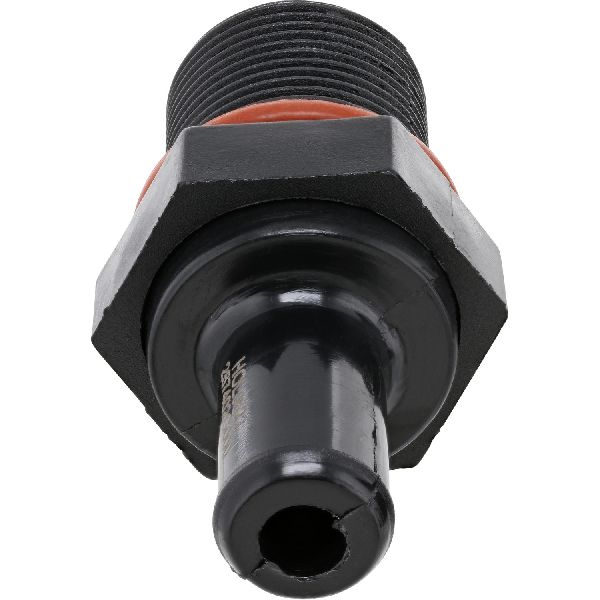
- PCV Valve
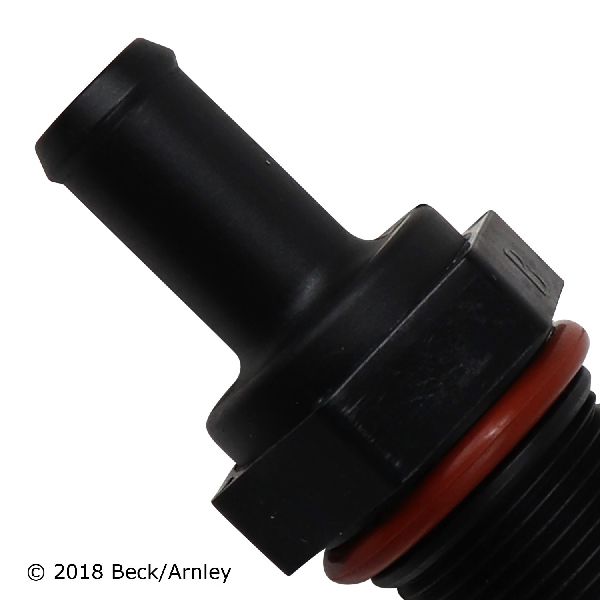
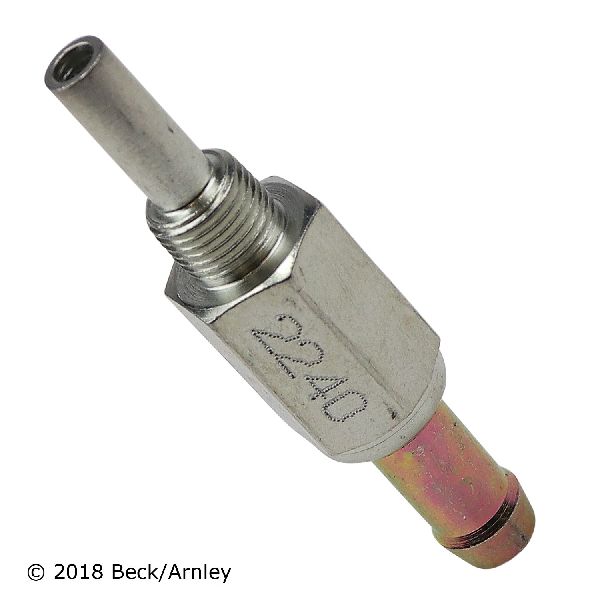
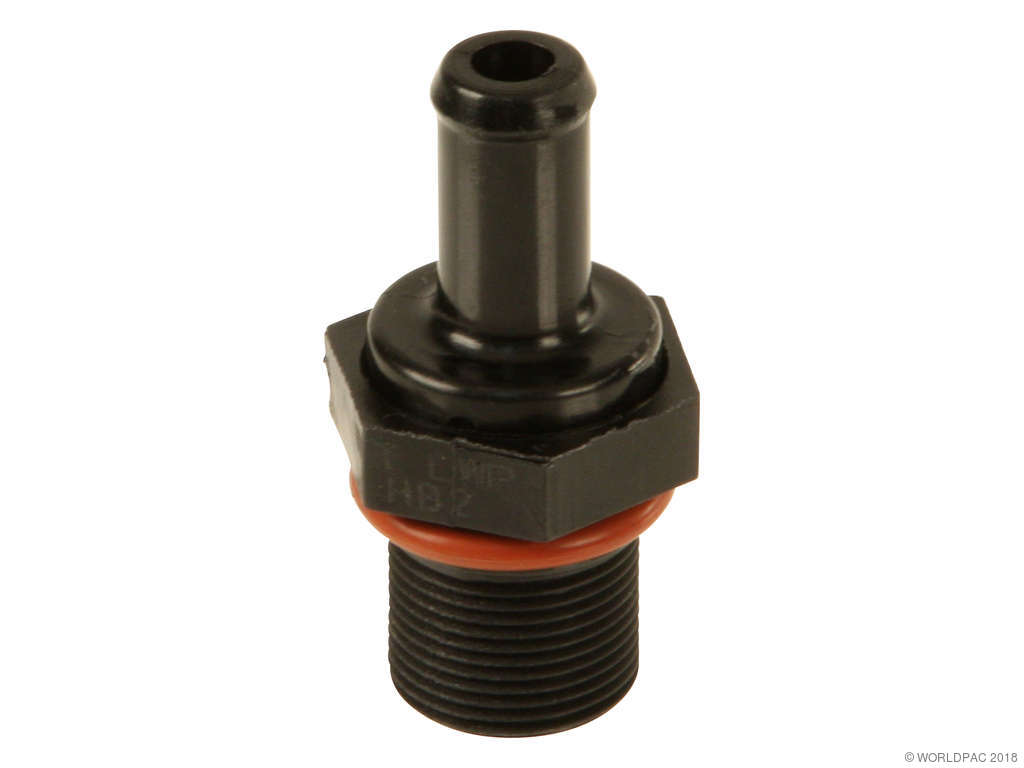
(OEM #26740-2G000)— This valve is a common failure point that gets stuck open, creating a vacuum leak. It's an inexpensive and easy part to replace during diagnosis.
Trusted brands: Kia (OEM), Hyundai (OEM), Standard Motor Products (V509)
OEM price range: $9-$15
Aftermarket price range: $5-$10 - PCV Hose
(OEM #26720-2G751)— This is the most frequently reported failure point on this engine leading to a P0171 code due to vacuum leaks from cracks.
Trusted brands: Kia (OEM), Hyundai (OEM)
OEM price range: $20-$40
Aftermarket price range: $15-$30 - Mass Airflow (MAF) Sensor Cleaner — Cleaning the MAF sensor is a cheap and effective diagnostic step that often resolves the issue if it's caused by a dirty sensor.
Trusted brands: CRC, WD-40 Specialist
Aftermarket price range: $10-$15
Related Codes That Often Appear With This One
- P0420 — Catalyst System Efficiency Below Threshold. A long-term lean condition can cause high combustion temperatures, which may damage the catalytic converter over time. Also, the TSB for the ECU update (ENG160R1) specifically mentions P0171 appearing with P0420 as a known software issue.
- P1326 — Knock Sensor Detection System. This code is directly related to the Theta II engine bearing failure issue and will put the car into limp mode. The underlying engine problem can cause various other codes, including P0171, due to poor combustion.
Technical Service Bulletins (TSBs) & Recalls
- TSB-ENG160R1: For some 2012-2015 Optima models, Kia released an ECU software upgrade to resolve P0171 that may appear with a P0420 code. The TSB notes this is to fix overly sensitive logic.
- Hyundai TSB 16-FL-005: A corresponding bulletin for the 2011-2014 Hyundai Sonata with the same 2.4L GDI engine, addressing the same P0171/P0420 issue with an ECU update.
Platform-Specific Known Issues
- A damaged or leaking PCV valve was identified as the cause for a P0171 code and was covered under the powertrain warranty for one owner.
- Kia issued safety recalls for potential fuel leaks on some 2011-2014 Optimas (SC172, SC187), which relate to fuel delivery and could be relevant context for fuel system issues.
- The underlying cause of many issues on this platform is the Theta II engine defect, which led to a massive class-action lawsuit and recalls (like SC147) for connecting rod bearing wear and engine seizure.
Mechanic-Grade Diagnostic Values
- Long-Term Fuel Trim (LTFT) at idle — expected: -5% to +5%. Failure: Sustained positive values of +12.5% or higher, which triggers the code.
- Mass Air Flow (MAF) Sensor Reading — expected: Approximately 4 g/s at idle, 8 g/s at 1500 RPM, and 13 g/s at 2500 RPM.. Failure: A reading other than zero with the key on and engine off, or readings that do not increase smoothly with RPM.
- High-Pressure Fuel Pump (GDI) Pressure — expected: Approximately 0.5 MPa (72.5 PSI).. Failure: Pressure significantly below specification, especially under load.
- GDI Fuel Injector Resistance — expected: 12.0 Ohms to 14.5 Ohms.. Failure: A reading of 'OL' (Open Loop/infinite resistance) or a reading near zero ohms indicates a failed injector coil.
Scan Tool Commands That Help
- Kia GDS (or advanced aftermarket): Injector Actuator Test / Bidirectional Control — Used to manually command a specific fuel injector to fire. If the engine's idle does not change when an injector is activated or deactivated, it points to a problem with that injector or its circuit, helping to isolate the fault without swapping parts.
Wiring & Ground Locations
- Engine Ground Cable (91860-2T011) — Main ground strap for the engine block for some 2012-2013 Korea-built models.. A poor engine ground can cause erratic voltage and incorrect readings from critical sensors like the MAF, O2 sensors, and fuel pump, leading the ECU to miscalculate fuel trims and trigger a P0171 code.
- Interior Fuse Box — Located behind a removable cover on the driver's side dashboard, to the left of the steering wheel.. This panel contains fuses for the ECU and sensor circuits (e.g., O2 sensor heater). A blown fuse or poor connection here can disable a component required for correct air-fuel mixture control, leading to a lean code.
Real Owner Repair Stories
- YouTube Commenter on 'KIA OPTIMA CODE P0171 FUEL SYSTEM TOO LEAN BANK 1 FIX' (2013 Kia Optima) — P0171 code, rough idle, and poor acceleration.
❌ Tried (didn't work) Cleaned MAF sensor, Replaced spark plugs, Smoke tested for vacuum leaks (none found)
✅ What actually fixed it Replacing the EVAP Purge Control Valve (also called canister purge solenoid). The valve was stuck open, creating a constant vacuum leak that the smoke test did not pinpoint effectively.
"I Checked Everything" — The Actual Cause
- A common scenario is a faulty EVAP canister purge solenoid valve. If the valve is stuck *open*, it creates a vacuum leak that can cause a P0171, especially after refueling. Conversely, if the valve is stuck *closed* and fails to open when commanded, the ECU doesn't see the expected mixture change from fuel vapors, which can also contribute to the lean code calculation. A standard smoke test primarily checks for leaks (stuck open valve) and will not identify a valve that is failing to actuate.
Model Year Variations Within This Range
- 2012-2015: These model years are specifically mentioned in TSB-ENG160R1 for a potential ECU software update to fix false P0171 codes. The 2011 model is not included in this bulletin.
- 2011-2013 vs 2014-2015: The 2014 model year marked a mid-generation facelift. While the core 2.4L GDI engine (G4KJ) remained, there were slight variations in power ratings (200 hp for 2011-2013 vs. 192 hp for 2014-2015) and trim, but these changes do not alter the primary causes or diagnostic procedures for P0171.
Diagnostic Flowchart
Other Known Issues on This Vehicle
Issues unrelated to this code that are worth knowing about as an owner of this generation:
- Catastrophic Engine Failure (Rod Bearing Wear) 🔴 High — Widespread across the entire 2011-2015 model range. Caused by manufacturing debris left in the engine. (Ref: Recall SC147; NHTSA Consent Order (20-11-27))
- Excessive Engine Oil Consumption 🔴 High — Very common. Often a precursor to engine failure. Kia considers over 1 quart per 1,000 miles to be excessive. (Ref: TSB ENG222 (Oil Consumption Test Procedure))
- Cracked Low-Pressure Fuel Hose 🔴 High — Common enough to warrant a recall. The hose can crack due to engine bay heat, causing a fuel leak and fire risk. (Ref: NHTSA Recall 18V907000)
- GDI Carbon Buildup 🟠 Medium — A common issue on all GDI engines after 30,000+ miles. Fuel does not wash over the intake valves, leading to carbon deposits that can restrict airflow and cause drivability issues.
- Steering Coupler Disintegration 🟠 Medium — A common problem where the flexible steering coupler wears out, causing a clicking noise and play in the steering wheel.
Used vs. New Parts: Buying Guide for This Vehicle
When a used part is the smart pick: Used parts can be a cost-effective option for major mechanical components that are not prone to electronic failure or rapid wear, such as a cracked intake manifold or a complete used engine assembly (given the Theta II issues). Simple hoses can also be sourced used if they are pliable and show no signs of cracking or swelling.
Donor-vehicle mileage cap: roughly under 75000 miles for the part to have meaningful remaining life.
What to inspect on the donor part:
- For hoses: Squeeze the hose to ensure it is not brittle or hard. Check for any visible cracks, especially at bends.
- For PCV valves: Shake the valve vigorously. A healthy valve should produce a distinct rattling sound, indicating the internal plunger is free. If it's silent, it's stuck.
- For electronic sensors: Visually inspect connectors for corrosion or damage. Ask for the donor vehicle's mileage and any available history.
OEM-only on this vehicle (don't cheap out):
- Mass Airflow (MAF) Sensor
- Oxygen (O2) Sensors
- Fuel Injectors
Aftermarket brands forum-validated for this vehicle:
- Bosch (for MAF and O2 sensors)
- Delphi (for MAF sensors)
- NTK (for O2 sensors)
- Standard Motor Products (for PCV valves and injectors)
Brands owners have reported issues with on this vehicle:
- Unbranded, 'no-name' electronic sensors from online marketplaces are frequently cited in forums as being poorly calibrated and causing persistent issues.
Real Owner Stories
Aggregated from forums and TSBs cited above. Mileages and costs reflect what owners reported in those sources.
2012 Kia Optima 2.4L GDI
Symptoms: Rough idling, slow acceleration, and a high RPM surge to 3000 RPM on startup before dropping.
What fixed it: The owner sought advice for these symptoms which are classic indicators of the P0171 lean condition often caused by the PCV system or MAF sensor.
Source hint: Reddit r/MechanicAdvice - 'HELP!!! P0171 Code-system too lean bank 1, been to 3 mechanics'
2021 Kia K5 EX — 59200 miles
Symptoms: Check engine light illuminated shortly before the powertrain warranty expired.
What fixed it: Replacement of a damaged/leaking PCV valve.
Cost: $0-$0
Source hint: Reddit r/kia owner report
Related OBD-II Codes
Frequently Asked Questions
Does Kia TSB-ENG160R1 apply to my 2013 Optima if I have both P0171 and P0420?
What is the specific part number for the PCV valve on the 2.4L GDI engine?
Could the P0171 code be related to the major Theta II engine recalls?
Is there a way to check if my MAF sensor is causing the lean code without buying a new one?
Are there any fuel system recalls for the 2011-2014 Optima that might affect fuel delivery?
Does the Hyundai Sonata have the same P0171 issues as the Optima?
Helpful Videos

We Have This Part in Stock


The information in this article is provided for general reference and educational purposes only. Vehicle specifications, procedures, and part compatibility can vary by production date, trim level, and region. Always consult your vehicle's factory service manual and verify part numbers before purchasing or performing repairs. Safety-critical components such as airbags, seat belts, and braking systems should be installed by a qualified professional.
- Kia Optima:
- 🧭 Diagnostic Flowchart
- 🎬 Helpful Videos
- 🛍️ Shop This Part
- What's Unique About the 2011-2015 Kia Optima
- Symptoms You May Notice
- Most Likely Causes
- Rare But Worth Checking
- Diagnosis Steps
- Parts You'll Likely Need
- Related Codes That Often Appear With This One
- Technical Service Bulletins (TSBs) & Recalls
- Platform-Specific Known Issues
- Mechanic-Grade Diagnostic Values
- Scan Tool Commands That Help
- Wiring & Ground Locations
- Real Owner Repair Stories
- "I Checked Everything" — The Actual Cause
- Model Year Variations Within This Range
- Other Known Issues on This Vehicle
- Used vs. New Parts: Buying Guide for This Vehicle
- Real Owner Stories
- 2012 Kia Optima 2.4L GDI
- 2021 Kia K5 EX — 59200 miles
- Related OBD-II Codes
- Frequently Asked Questions
- 🎟️ Get 5% Off