

P0171 on 2018-2020 Lexus ES350: System Too Lean Causes and Fixes
Code P0171 on a 2018-2020 Lexus ES350 means the engine is running lean. The most common causes are a dirty Mass Airflow (MAF) sensor, a vacuum leak from a cracked intake hose or failed intake manifold gasket, or a failing fuel pump. Cleaning the MAF sensor is a simple first step. A major recall (NHTSA 20V-682) for the low-pressure fuel pump on these models makes it a significant possibility.
- P0171 means Bank 1 is running lean (too much air or not enough fuel).
- Start your diagnosis by cleaning the Mass Air Flow (MAF) sensor with dedicated cleaner.
- Thoroughly inspect for vacuum leaks, especially the large intake hose and intake manifold gaskets.
- Be aware of the TSB and recall related to the low-pressure fuel pump, which is a known issue on these models.
- If both P0171 and P0174 are present, the cause is almost certainly something that affects the whole engine, like the MAF sensor, a fuel pump, or a large vacuum leak.
What's Unique About the 2018-2020 Lexus ES350
This year range covers two different generations and engines: the 2018 model (sixth generation) with the 2GR-FE engine and the 2019-2020 models (seventh generation) with the newer 2GR-FKS direct-injection engine. While both can suffer from common lean code causes like vacuum leaks, a major safety recall (NHTSA Campaign ID: 20V-682) was issued for a failing low-pressure Denso fuel pump that affects 2018-2020 ES350 models. This pump failure can cause stalling, rough running, and trigger P0171/P0174 and P0087 codes. A Technical Service Bulletin (L-SB-0005-23) also specifically links P0171/P0174 and P0087 to potential fuel pump issues. The newer 2GR-FKS engine has both port and direct injectors, and carbon buildup on the direct injectors can also lead to lean conditions not typically seen on the older 2GR-FE.
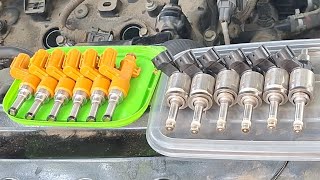
🎬 Watch: How to resolve lean codes caused by direct injector issues.Diagnostic Flowchart
Tap your situation to follow the diagnostic path that matches what you're seeing on this vehicle.
Generation note: The 2018 ES350 is the final year of the sixth generation (XV60) and uses the 3.5L 2GR-FE V6 engine. The 2019 and 2020 models are part of the seventh generation (XZ10) and feature the updated 3.5L 2GR-FKS V6 engine with D-4S dual injection (port and direct). While many causes are similar, the fuel delivery systems and intake designs have differences. The fuel pump recall (20V-682) applies to all three model years.
Symptoms You May Notice
- Check Engine Light is on
- Rough or high idle
- Engine hesitation or stumbling on acceleration
- Reduced engine power
- Hard starting condition (especially noted in TSB for 2018 models)
- Decreased fuel economy
- Whining noise from the rear seat area (indicating a failing fuel pump).
- Rotten egg smell from the exhaust under acceleration (due to inefficient catalytic converter operation with a lean mixture).
- Replacing the Air/Fuel (O2) sensor immediately. The sensor is often just doing its job by reporting the lean condition, which is actually caused by a vacuum leak or fuel delivery issue. Always diagnose before replacing sensors by checking fuel trims and looking for the root cause.
Most Likely Causes
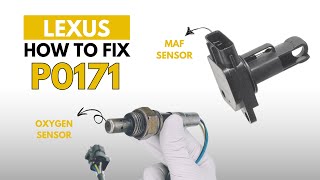
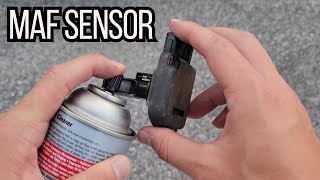
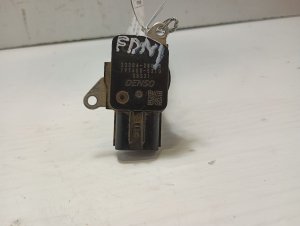
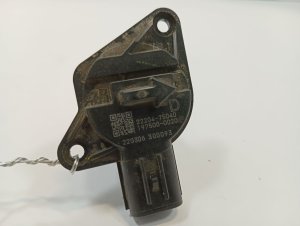
- Dirty or Faulty Mass Air Flow (MAF) Sensor 🔴 High Probability → Shop Fuel Injection Air Flow Meter The MAF sensor measures the air entering the engine. If the sensing wire is contaminated with dirt or oil, it will under-report the amount of air, causing the ECM to inject too little fuel for the actual airflow, creating a lean condition. This is a very common first point of failure for lean codes on modern Toyotas.
How to confirm: Inspect the sensor for contamination. A scan tool can show MAF readings; erratic or out-of-spec values are a key indicator. Cleaning the sensor with a dedicated, non-residual MAF sensor cleaner is a common and easy first diagnostic step.
Typical fix: Clean the sensor with a dedicated MAF sensor cleaner spray. Let it dry completely before reinstalling. If cleaning doesn't resolve the issue or the readings are still incorrect, the sensor must be replaced. Denso is the OEM supplier.
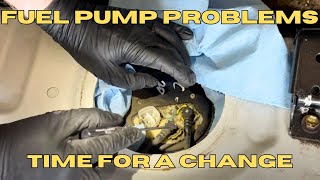
Est. part cost: $10-$15 for cleaner, $100-$200 for a new Denso sensor. - Failing Low-Pressure Fuel Pump 🔴 High Probability → Shop Fuel Pump A weak fuel pump cannot supply enough fuel to the injectors, leading to a lean condition. A massive safety recall (NHTSA: 20V-682, Toyota: 20LA01) was issued for 2018-2020 ES350 models for a defective Denso low-pressure fuel pump where the impeller can deform and fail. This directly causes low fuel pressure and can trigger P0171 and P0087.
How to confirm: Check if the vehicle's VIN is part of the recall on the NHTSA website. Connect a fuel pressure gauge to the fuel rail and check if the pressure is within the manufacturer's specifications (this is the definitive test). A scan tool may also show related codes like P0087 (Fuel Rail/System Pressure – Too Low).
Typical fix: If covered by the recall, a Lexus dealer will replace the low-pressure fuel pump assembly with an improved part for free. If not covered, the in-tank low-pressure fuel pump assembly must be replaced.
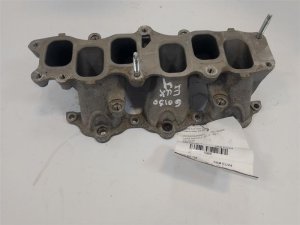
Est. part cost: $0 if recall applies, otherwise $250-$400 for an OEM-quality fuel pump assembly. - Vacuum Leak (Intake Hose, Gasket, or Purge Valve) 🟡 Medium Probability Unmetered air can enter the engine after the MAF sensor through cracks in the flexible air intake hose, failed intake manifold gaskets, or a stuck-open EVAP purge valve. This extra air leans out the air/fuel mixture, causing high positive fuel trims, especially at idle.
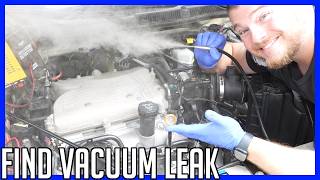
How to confirm: Visually inspect the intake hose for cracks. Listen for a hissing sound at idle. A smoke test is the most effective way to find the source of a vacuum leak. For the purge valve, check if it's stuck open by applying vacuum or checking its state with a scan tool.
Typical fix: Replace the cracked hose or the failed intake manifold gaskets. If the purge valve is faulty, it needs to be replaced. The upper intake plenum gasket is a common failure point.
Est. part cost: $50-$150 for an intake hose, $20-$60 for intake gaskets, $40-$90 for a purge valve. - Faulty Air/Fuel Ratio Sensor (Oxygen Sensor) ⚪ Low Probability → Shop Oxygen Sensor The primary A/F sensor (Bank 1, Sensor 1) can become slow or biased with age, sending an incorrect 'lean' signal to the ECM. While possible, it's more common for the sensor to be correctly reporting a problem caused by something else. Misdiagnosing this is very common.
How to confirm: Use a scan tool to monitor the sensor's voltage activity. A healthy sensor will switch rapidly. A lazy or stuck sensor needs replacement.
Typical fix: Replace the Bank 1 Air/Fuel Ratio sensor. Denso is the OEM brand.
Est. part cost: $120-$220 for a Denso sensor.
Rare But Worth Checking
- Clogged Fuel Injectors: → Shop Fuel Injector More common on the 2019+ 2GR-FKS engine with direct injection. Carbon buildup on the injector tips can disrupt the spray pattern and reduce fuel flow, causing a lean condition in one or more cylinders.
- Exhaust Leak: A leak in the exhaust manifold or pipe before the first A/F sensor can draw in outside air, making the sensor falsely detect a lean condition.
Diagnosis Steps
- Read Codes & Check Recalls: Use an OBD-II scanner to confirm P0171 and check for any other codes (like P0174 or P0087). Note the freeze frame data. Immediately check the vehicle's VIN on the NHTSA website for open recalls, especially the fuel pump recall (20V-682).
- Analyze Fuel Trims: Use a scan tool to monitor Short-Term (STFT) and Long-Term Fuel Trim (LTFT) values at idle and at 2,500 RPM. High positive numbers (e.g., LTFT >15%) confirm the lean condition. If trims are high at idle but improve (move closer to zero) at higher RPM, a vacuum leak is likely. If they stay high or worsen at higher RPM, a fuel delivery issue (pump) or MAF sensor issue is more probable.
- Inspect for Vacuum Leaks: Visually inspect the air intake tube between the air filter box and throttle body for cracks or loose clamps. Listen for hissing noises around the intake manifold at idle. Check all PCV and vacuum hoses.
- Clean the MAF Sensor: Disconnect and remove the MAF sensor. Spray the delicate wires inside with a dedicated MAF sensor cleaner. Do not touch the wires. Let it dry completely before reinstalling.
- Perform a Smoke Test: If a vacuum leak is suspected but not visible, a smoke test is the most reliable method to pinpoint the source of the leak around gaskets, hoses, and the EVAP purge valve.
- Check Fuel Pressure: If vacuum leaks and the MAF sensor are ruled out, test the fuel pressure at the fuel rail to check for a weak fuel pump or clogged filter. This is a critical step given the known fuel pump issues on this platform.
- Test the A/F Sensor: If all else fails, test the Bank 1 A/F sensor's response using a capable scan tool to ensure it isn't faulty or slow to respond.
Parts You'll Likely Need
- Mass Air Flow Sensor
(OEM #Denso 197-6110 (for 2GR-FE) or Denso 197-6160 (for 2GR-FKS))— Often gets dirty and misreads airflow, a very common cause for P0171. Cleaning is the first step, but replacement is common if cleaning fails.
Trusted brands: Denso (OEM)
OEM price range: $150-$220
Aftermarket price range: $70-$140 - Intake Manifold Gasket (Plenum Gasket)
(OEM #17176-31130)— The upper intake manifold (plenum) gasket can degrade over time, causing a vacuum leak that affects both banks, often triggering P0171 and P0174.
Trusted brands: Lexus (OEM), Fel-Pro
OEM price range: $25-$40
Aftermarket price range: $15-$30
Related Codes That Often Appear With This One
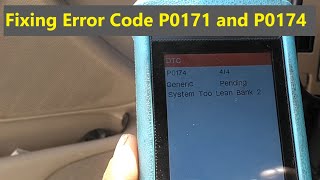
- P0174 — This is the identical 'System Too Lean' code but for Bank 2. When both appear together, it strongly suggests a problem common to both banks, like a faulty MAF sensor, a major vacuum leak at the intake plenum, or low fuel pressure from a failing pump.
- P0087 — This code means 'Fuel Rail / System Pressure – Too Low'. It directly points to a fuel delivery problem, such as a failing fuel pump, as noted in TSB L-SB-0005-23 and the major fuel pump recall.
- P0505 — This 'Idle Air Control System' code can appear alongside lean codes if a large vacuum leak is present, as the computer is struggling to control the idle speed due to the unmetered air. A ClubLexus user reported this code appearing with P0171/P0174 before finding a faulty purge valve.
Technical Service Bulletins (TSBs) & Recalls
- LSB000523: Mentions a combination of hard start and DTCs P0171/P0174 and P0087, indicating a potential fuel pressure problem on 2018 models.
Platform-Specific Known Issues
- TSB #LSB000523 notes that some 2018 models may exhibit a hard start and set P0171/P0174 along with P0087, pointing towards a fuel pressure issue.
- A recall was issued for the low-pressure fuel pump on certain 2018-2020 Lexus models, which could fail and cause the engine to stall.
Mechanic-Grade Diagnostic Values
- Low-Pressure Fuel System Pressure (2GR-FKS) — expected: 196 to 833 kPa (28 to 121 psi). Failure: Pressure below 196 kPa (28 psi) indicates a weak low-pressure fuel pump or blockage.
- High-Pressure Fuel System Pressure at 3000 RPM (2GR-FKS) — expected: 2,400 to 19,500 kPa (348 to 2828 psi). Failure: Pressure significantly below the range at 3000 RPM can indicate a failing high-pressure fuel pump.
- Long-Term Fuel Trim (LTFT) — expected: Close to 0%, ideally within +/- 5%.. Failure: Sustained values greater than +15% to +20% confirm the ECM is compensating for a significant lean condition, which will trigger P0171.
- Mass Air Flow (MAF) Sensor Reading at Idle — expected: Approximately 2.5-4.5 grams/second for a warm 3.5L V6 engine at idle.. Failure: A reading significantly lower than expected for the engine displacement suggests the sensor is dirty and under-reporting airflow, causing a lean condition.
Scan Tool Commands That Help
- Techstream: Active Test: Control the Injection Volume for A/F Sensor — This function allows a technician to manually increase or decrease fuel injection volume by a set percentage (e.g., +/- 12.5%) while monitoring the A/F sensor voltage. It directly tests the sensor's ability to respond to mixture changes, helping to confirm if the sensor is lazy or biased, or if it is correctly reporting a lean condition caused by another component.
- Techstream: Utility: All Readiness — After a repair and clearing codes, this function can be used to check the status of the fuel system monitor without having to complete a full, lengthy drive cycle. It helps to quickly verify if the fix was successful.
Wiring & Ground Locations
- Engine Ground Points (General) — Key ground points for the 2GR engine family are typically located on the cylinder heads, the engine block near the transmission bell housing, and from the block to the chassis.. A poor engine ground can cause incorrect or noisy readings from critical sensors like the A/F ratio sensors and MAF sensor, potentially leading to false lean codes. While not a common cause, it's a fundamental check if sensor readings are erratic without a clear cause.
Real Owner Repair Stories
- ClubLexus user (2019 ES350, 19k miles) — Intermittent Check Engine Light with P0171 and P0174. High idle on startup. Fuel trims in the high +30s at idle, but improve to near-normal levels under acceleration.
❌ Tried (didn't work) Cleaning the MAF sensor (worked temporarily), Adding fuel injector cleaner, Checking and re-tightening the gas cap
✅ What actually fixed it The user reported that the intermittent lean codes (P0171/P0174) and the idle control code (P0505) were ultimately resolved by replacing a faulty EVAP Purge Valve. The valve was likely sticking open intermittently, creating a vacuum leak. - ClubLexus user (Lexus RX350 (with same 2GR-FE engine as 2018 ES350)) — P0171 and P0174, high long-term fuel trims (+25% or more).
❌ Tried (didn't work) Replacing all 4 O2 sensors, Replacing MAF sensor, Replacing numerous vacuum lines, Replacing intake manifold and plenum gaskets, Cleaning fuel injectors, Replacing valve cover gaskets, Having a dealership perform a smoke test (found no leaks)
✅ What actually fixed it The root cause was a leak in the shaft of the ACIS (Acoustic Control Induction System) valve within the intake manifold. This type of leak was not detectable by a standard smoke test because the valve had to be actuated for the leak to appear. The entire intake manifold assembly had to be replaced to fix the worn valve shaft.
"I Checked Everything" — The Actual Cause
- A well-documented case on a related Lexus V6 involved chasing P0171/P0174 for months. Multiple smoke tests performed by a dealer and an independent shop showed no leaks. The final cause was discovered to be a worn shaft on the ACIS (Acoustic Control Induction System) butterfly valve inside the plastic intake manifold. This created an intermittent vacuum leak that only appeared under specific operating conditions when the valve was actuated, which is why a static smoke test did not reveal it. The fix required replacing the entire intake manifold assembly.
OEM Part Supersession History
Not specified, but multiple revisions exist→17176-31130— This is the current OEM part number for the upper intake manifold (plenum) gasket for the 2GR-FKS engine used in the 2019-2020 ES350.
Heads up: This part is specified for the 3.5L V6 and should not be confused with gaskets for the 4-cylinder hybrid models. Always verify with VIN.
Model Year Variations Within This Range
- 2018 vs 2019-2020: The engine changed from the 2GR-FE (port injection only) in 2018 to the 2GR-FKS (D-4S dual port and direct injection) for 2019-2020. This introduces a high-pressure fuel system and direct injectors as potential failure points for P0171 on the newer models that do not exist on the 2018 model.
Helpful Videos

![How to Fix LEXUS P0171 Engine Code in 3 Minutes [2 DIY Methods / Only $8.37]](https://img.youtube.com/vi/aSScm5FzfMo/mqdefault.jpg)
We Have This Part in Stock

The information in this article is provided for general reference and educational purposes only. Vehicle specifications, procedures, and part compatibility can vary by production date, trim level, and region. Always consult your vehicle's factory service manual and verify part numbers before purchasing or performing repairs. Safety-critical components such as airbags, seat belts, and braking systems should be installed by a qualified professional.
- Lexus ES350:
- 🧭 Diagnostic Flowchart
- 🎬 Helpful Videos
- 🛍️ Shop This Part
- What's Unique About the 2018-2020 Lexus ES350
- Symptoms You May Notice
- Most Likely Causes
- Rare But Worth Checking
- Diagnosis Steps
- Parts You'll Likely Need
- Related Codes That Often Appear With This One
- Technical Service Bulletins (TSBs) & Recalls
- Platform-Specific Known Issues
- Mechanic-Grade Diagnostic Values
- Scan Tool Commands That Help
- Wiring & Ground Locations
- Real Owner Repair Stories
- "I Checked Everything" — The Actual Cause
- OEM Part Supersession History
- Model Year Variations Within This Range
- 🎟️ Get 5% Off